
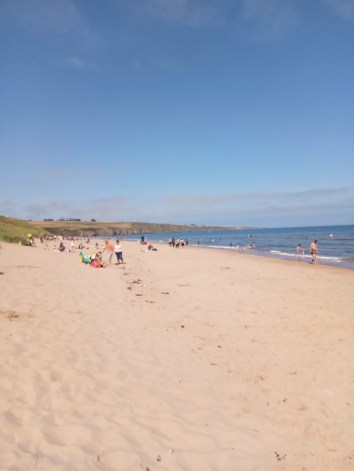
 First seen in early spring, nearly twenty years ago, the beach stretched endlessly around the curve of the bay, a shimmering cream expanse of sand uninterrupted by not much more than a man and a dog, idly kicking at the silvery waves. No sound but those waves, breaking, gathering energy, re-forming, breaking again – and the gulls, plovers and oystercatchers worrying at the interface between water and land. The red stones of a ruined castle tottered in the dunes, crumbling, threatening to fall. Where the river splayed lazily, yet with energy, into the sea, flat, smooth stones in many colours could be harvested for an optical feast, to be drawn and painted, rearranged, and consigned to garden corners.
Today the summer sun is hot, but the breeze is cool from the sea. The car park has been extended, a café predictably offers burgers, ice cream, soothing teas and toilets. The waves still break, but the birds have gone elsewhere, or fly over the sea waiting for humans to depart and their time to come. Chattering voices, laughter, cries of anger or delight dominate the soundscape. Dogs bark and race from one human party to another in confused joy. The tide of visitors troops through the dunes on the new boardwalks, and dissipates like the outflow of the river onto the sand. Small parcels of beach are claimed by towels, windbreaks and throw-away barbecues. As more people arrive, the parcels become smaller and smaller, and new claims are struck in between those established an hour earlier.
Hardy men and women swim and lay gasping in the cold, but glorious, water. Someone turns on a small music centre. The breaking waves are silenced by it. Children, many cossetted in protective wetsuits, others bare-skinned and incautious, run in and out of the sea. Their enjoyment – or fear – is lovingly recorded on a dozen mobile phones and instantly broadcast and archived on Facebook. They do little harm, these day-tripping hordes, few leave litter, they pick up their dogs’ excrement. They are out of doors and they are enjoying it. Most look up from their phones from time to time, and see the beach, the waves, the dazzling horizon. Some don’t. Their loss.
Follow the river up from the beach and behind the dunes, and human sounds recede. The wind still lives in the reedbed; the water warbles with life. Crickets grate away in the dry grass, birds can once more be heard calling and chattering in the scrubby pines. All along the riverbank, great sweeps of purple thistle, white yarrow, pink campion and yellow sowthistle dance and shout their presence to the quiet hoverflies and bumblebees. Harebells – the Scottish bluebell – sprawl untidily over sandy banks, lifting their china-blue trumpets to a sun that suddenly feels gentle and kind.
Clouds fly and form and merge and stream away in an endless sky.
One human walks alone.
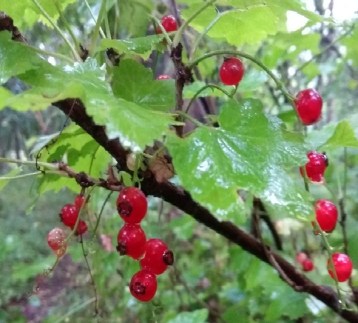 In the dense shade of a triumphant elder spinney, a smattering of redcurrant bushes blooms and fruits, scant rich redness catching the eye as the berries ripen. They are small and sour, yet somehow incandescently flavoursome. Where the track narrows to a muddy path, wild gooseberries make a wee thicket. Their fruits are also tiny, and round. Are they genuinely wild?
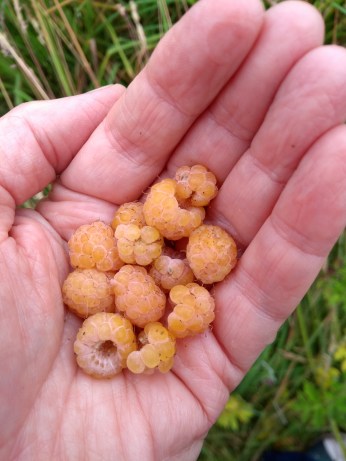 diminutive rasps are a pale golden yellow. They hide behind fiercely protective stands of nettle, and amid the jaggy stems of the hawthorn. These are the sweetest, most succulent of the feral berries. They melt in the mouth and almost dissolve in the hand. Any attempts to gather a large quantity fail; they are nought but juice by the time they get home. Those who know about them keep a close eye, and say nothing, then give the game away when it’s picking time by beating narrow paths through the grass and nettles to get at this choice fruit.

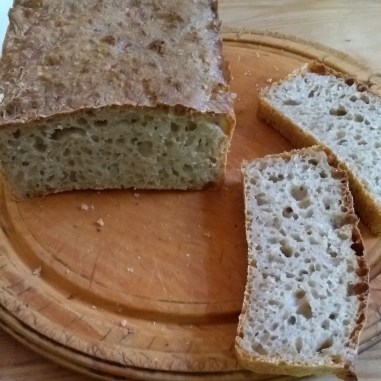
 But was it really meant to look like this? Was dough meant to get all over the walls and floor? Why was I reduced to scraping and pouring the wet, sticky mess into bread tins? And when the book said “knead”, was it some kind of a joke, when “stir” or “whisk” might have been more appropriate verbs?


 Broad-crowned and rooted like mountains, they are the very epitome of strength. In the minds of humans, they are usually labelled “he” and associated with male-ness. Strong, protective, enduring, courageous …. dominant, powerful, overbearing, masterful? Strange to note (if not surprising) that trees thought of as “she” (such as the Silver Birch, Devon’s “Lady of the Woods”) are graceful, delicate, drooping and indecisive in form. And is it only Devon Men who have “hearts of oak”?

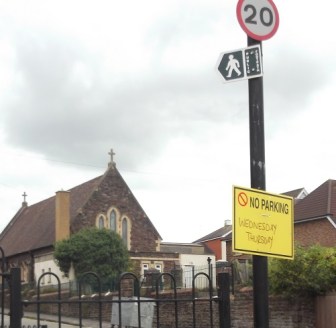 Decades later, I still “walk in vectors” – and remember Simon – in many situations. Getting across tracts of city is one such. Townscapes forbid, direct, coerce the pedestrian.


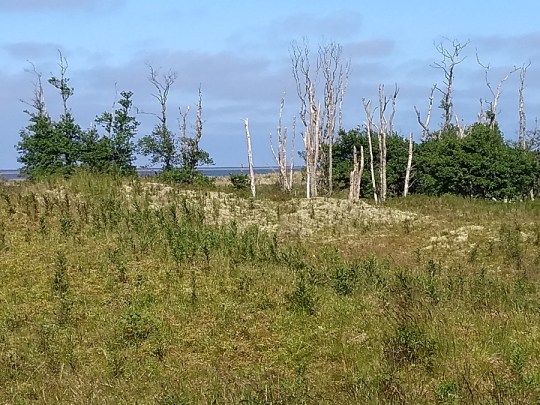
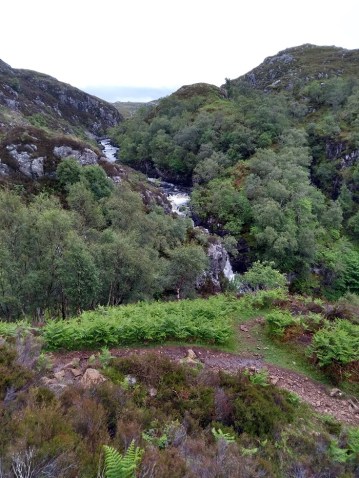 But last week I was in Assynt again, and if there were many changes, it was the trees I noticed first. It’s nearly 26 years since the first ever community buy-out of land in the area by the Assynt Crofters Trust, and there have been others in the area since. The first trees I found myself looking at were less than 25 years old. I walked in vibrant young woodland at Little Assynt, above the shores of the great loch. Deer fencing surrounded large tracts of land. Birch, rowan, hazel, Scots pine…… willows, elders, hollies and even aspen…… planted by Culag Community Woodland Trust or regenerated naturally within the fences. Outwith the fences, though, trees were also regenerating, especially birch and willow. Sheep, ironically, seem to have been cleared to the coasts. Deer pose for tourists around townships, but their numbers are controlled. Bluebells and primroses are appearing under the bracken.
 midgies to produce more trees, all from seed they’ve gathered locally. They’re pretty excited that after last summer, the aspens have flowered – a rare event in a species that prefers to clone itself vegetatively – bringing welcome genetic diversity into the local tree stock. At the Falls of Kirkaig, we bumped into a naturalist friend from near home in Perthshire (Scotland being such a gloriously small country), who had observed the same phenomenon. So, there we were, all getting excited about the future of a tree species in a place I’d remembered as treeless.
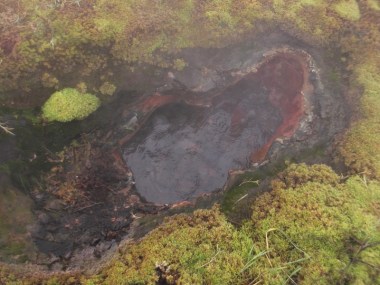 Everyone should leave their comfort zone behind from time to time, though, and if you venture into The Moss there are rewards. It’s called “moss”, because in most cases that’s what makes it – sphagnum mosses of breathtaking colour and beauty, slowly expanding and dying away to leave peat. Mosses are primitive plants dependent on water for reproduction, and you can be sure the brightest patches will be the wettest. Sphagnum holds an incredible quantity of water. Its uses range from wound dressings (it is naturally antiseptic) and hanging baskets to impromptu disposable nappies when walking with babies! Rushes, too, are useful – think matting, cattle bedding and rushlights – and if you can balance on the clumps as stepping stones, they will see you across a wet patch of moor.
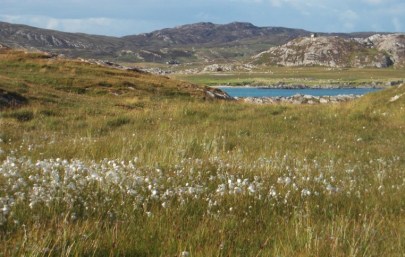 Finally, there is the alluring bog cotton-grass – a guarantee of treacherous wetland just waiting to suck you down – but such an unusual flower and how beautiful waving massed in a moorland wind – white woolly standards raised to announce a weird, wonderful and ominously wet world of plants!

