When Clouds Don’t Float on High….

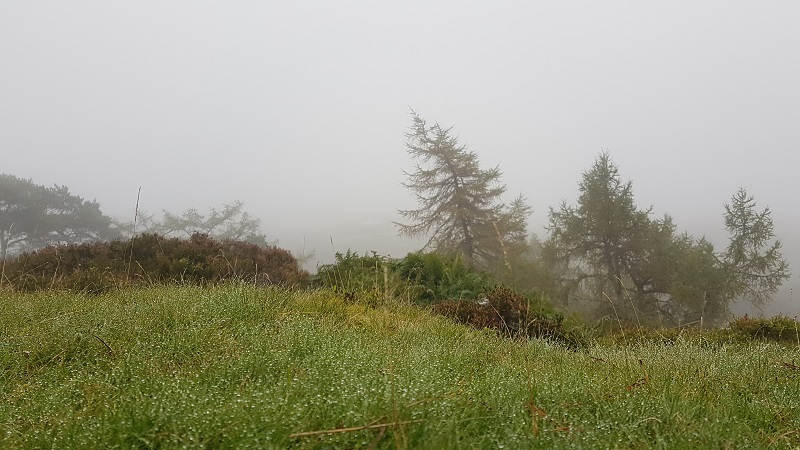
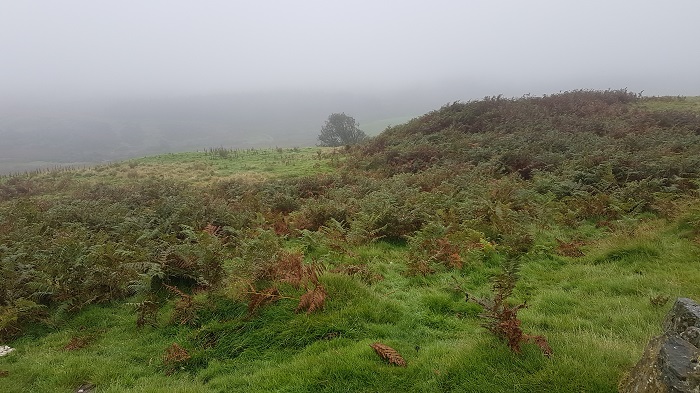
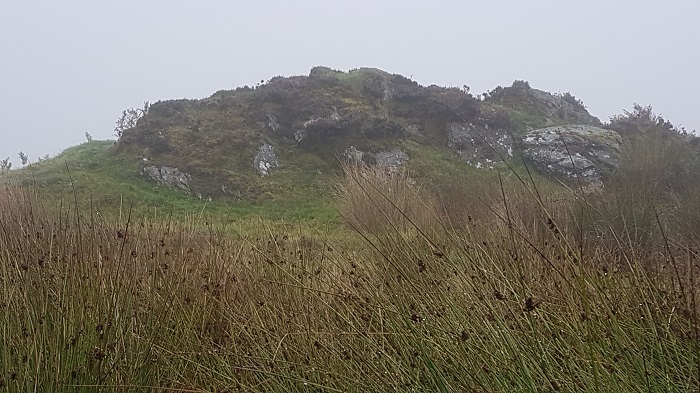
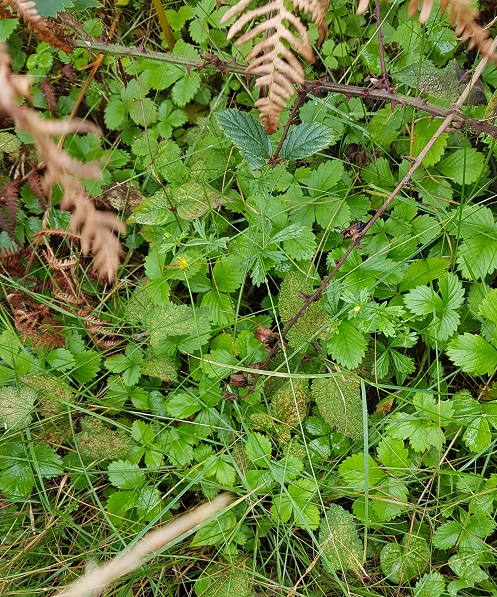
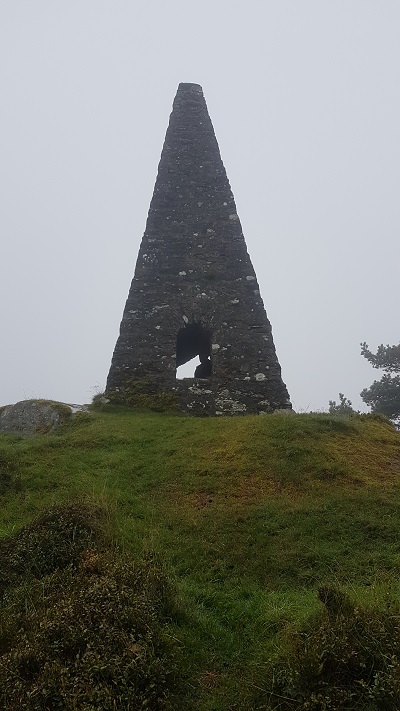
Sunday looked a bit damp from the bedroom window, but we wanted a walk, and we wanted to be in the hills, so with beginners’ minds, not choked with assumptions about walks in bad weather not being enjoyable, we set off to Little Glenshee, to walk the Obney hills to the Obelisk on Craig Gibbon that overlooks Glen Garr. As we neared the ford, we realised we were not going to get any fantastic views from the Highland Boundary Fault over the flatlands of lowland Perthshire. The cloud base, already low, was decidedly sinking like a lead balloon. I wondered where Wordsworth was actually wandering when he spoke about “a cloud that floats on high”. It is not in the nature of any self-respecting cloud to float. Sink, envelop, infiltrate, surround, creep into you…. Not float. Anyway, we donned the waterproofs and walked.

And this is what came of it.

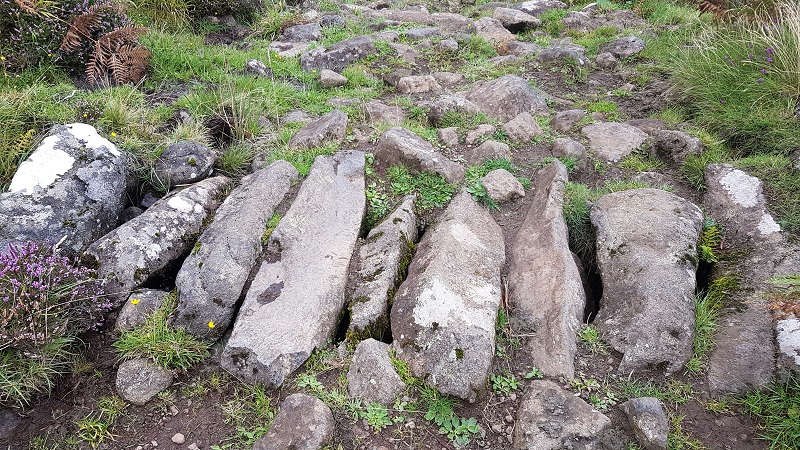
First came the rocks; a stony uphill path;
clear water running over
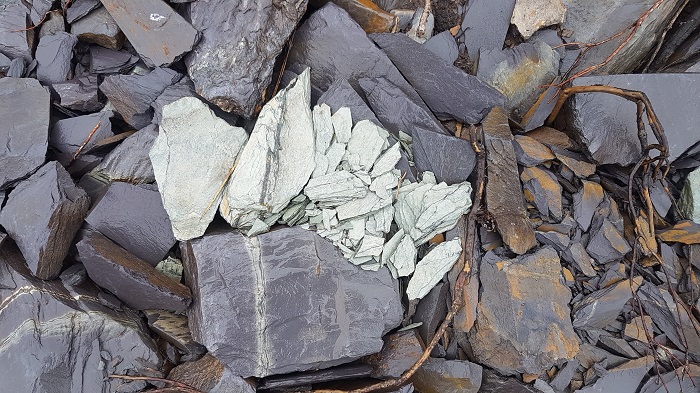
the blue slates, the shambles of old quarries.
Upthrust from the plain, the sudden rise of hills unseen but
felt in thigh and chest, heartbeat thundering in swaddled air;
stones shiny, metamorphic, tale-telling, momentous.

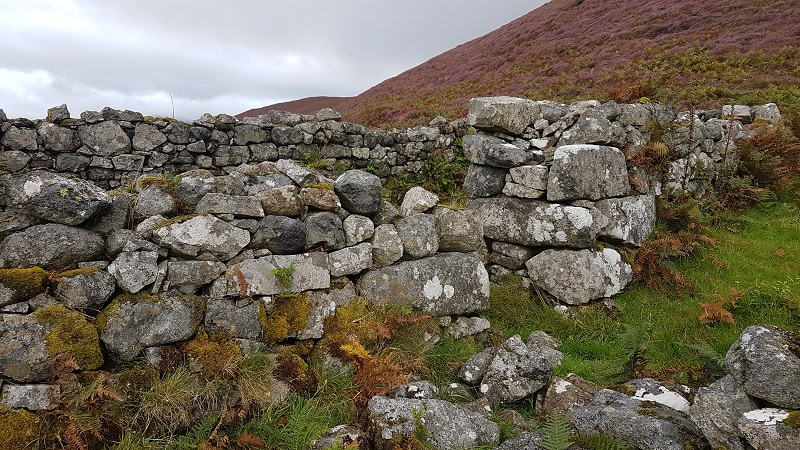
Stones too, marked on the map,
rearing through a drenching mist:
“Cairn (remains of)” – markers, unknown burials or
merely outcrops – “Pile of Stones”: piles which shrink
as you approach across heather and fescue grass.

Then, the little things that lie
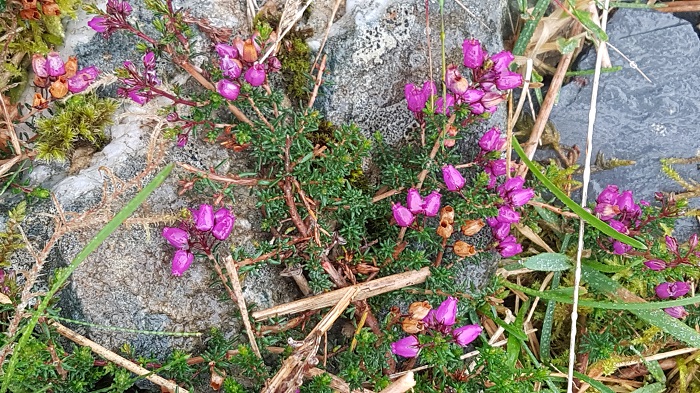
beside the track: startling pink of late-flowering heaths
pounce on you from the greyness of descending cloud;
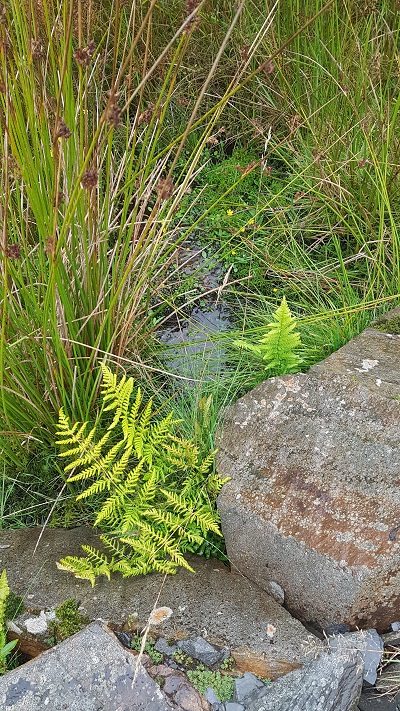
tiny water buttercups, iridescent ferns.
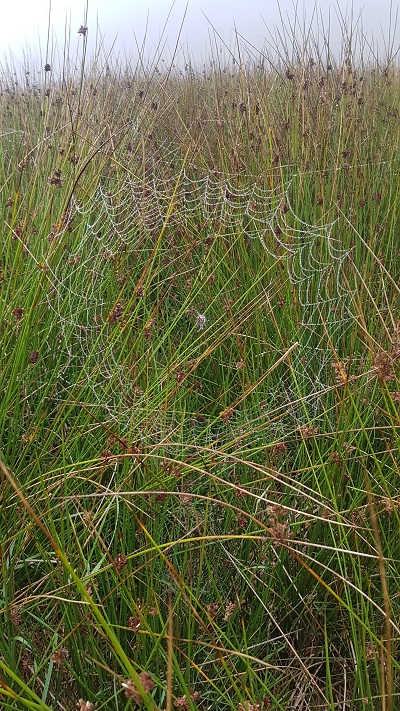
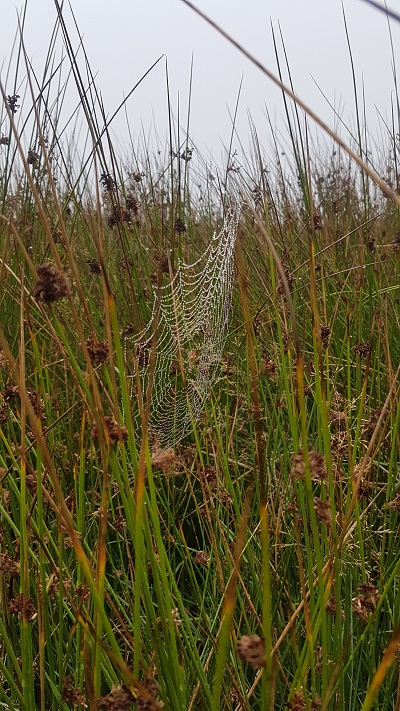
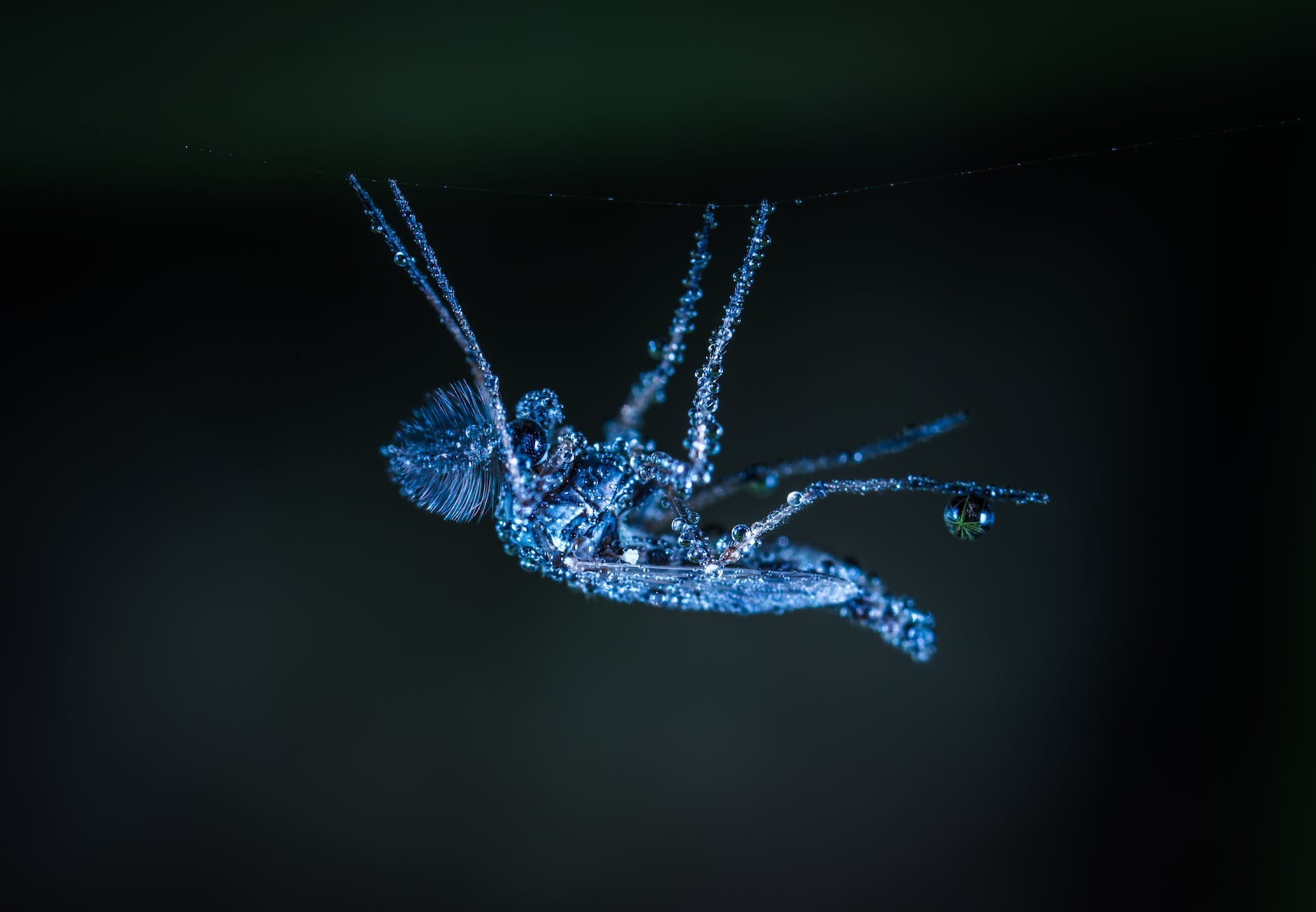
And the spiders! Stalwart and smug in their jewel-encrusted orb webs,
Waiting in pole position even though there’s
Building still to be done. Every stem, every
firework explosion of rush and moor-grass holds a magical web.
Higher up, orb spiders fade away, their places taken
by crowded, ill-designed but functional hammock webs,
their makers hiding from shame or cunning, or just from the rain.
The democracy of glistening crystal water-gems adorns them all.

And so, the water: the cloud paints
every surface, you included, wet without knowing how.
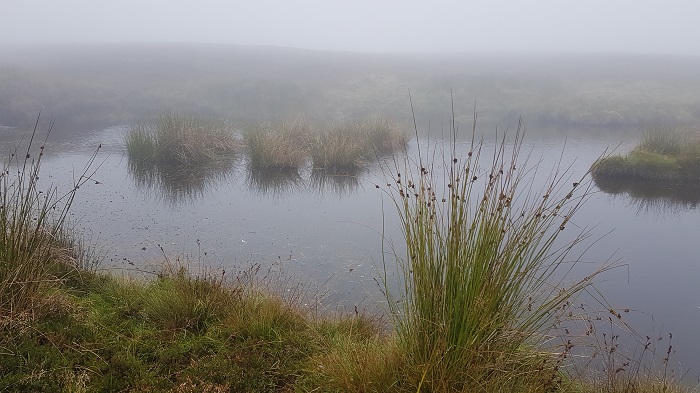
A little pool, no more, stretches in the mind…
Arthurian legend, told by the poet:
“…and fling him far into the middle mere. Watch
what thou see-est, and lightly bring me word….”

No arm today “clothed in white samite, mystic, wonderful”
rises to catch a sword, no lady in this lake.
Just the mist weaving between the rushes and the ripples.
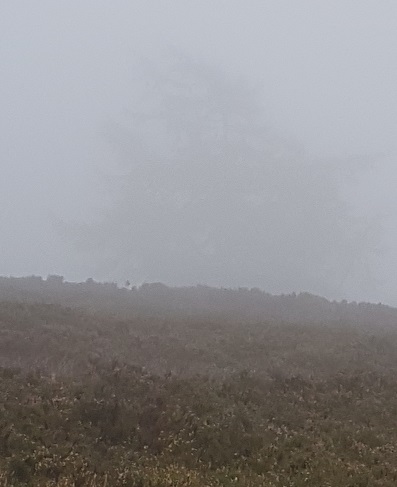
Mist magnifies the shade of a ghostly tree,
Tall as a mountain, shivering in and out of focus
-is it there, or is it just your eyes?

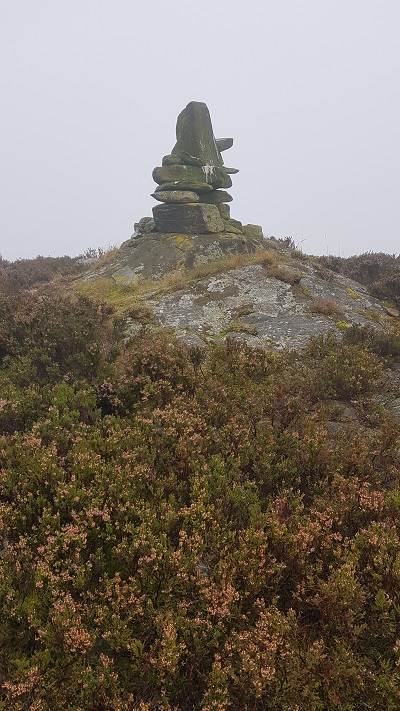
And finally, the Obelisk….

The track seemed to go on forever. We had no way of knowing how much further it was to the Obelisk, since there was no chance of picking out landmarks with visibility only 20m or less, and the risk that the map would dissolve if we got it out. We waved in the direction of the much-vaunted views that weren’t there. But I was happy having my vision curtailed; there was so much to see close by, so much that surprised and intrigued. The cloud muffled sound: occasionally, red grouse materialised and flew off – “go back! go back! go back!” – or a plaintive meadow pipit called damply.

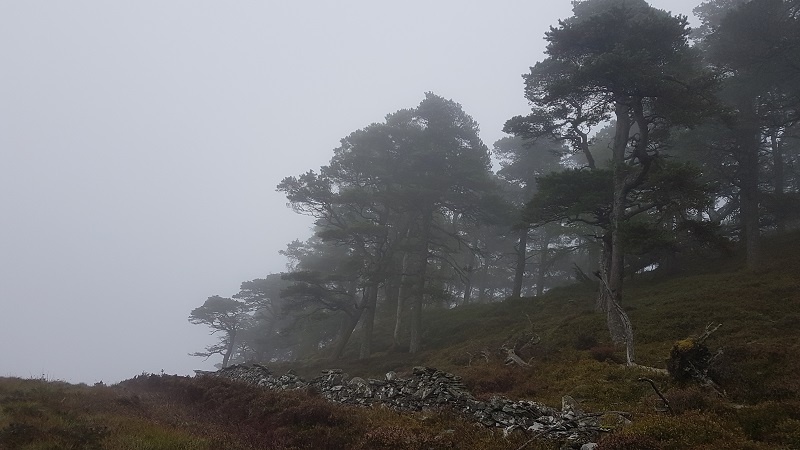
Then on our right, where the view would have been, a monstrous hill seemed to rise sheer from a deep valley we knew wasn’t on the map. But no, it was surely a bank of darker cloud – there are no hills that high here. It faded in and out of sight, until the penny dropped – it was the start of the trees in the midst of which the Obelisk stands. But so tall! And so far away, across a great canyon of a valley. “Not going there,” we said, as the track ended abruptly and we ignored ourselves to head south towards the top of Craig Gibbon. I don’t know how mist and cloud so trick the eye, but the great gulf was actually just a slight dip in the terrain, and the supernaturally gigantic trees were but mature pines and larches clustered on top of the little summit.

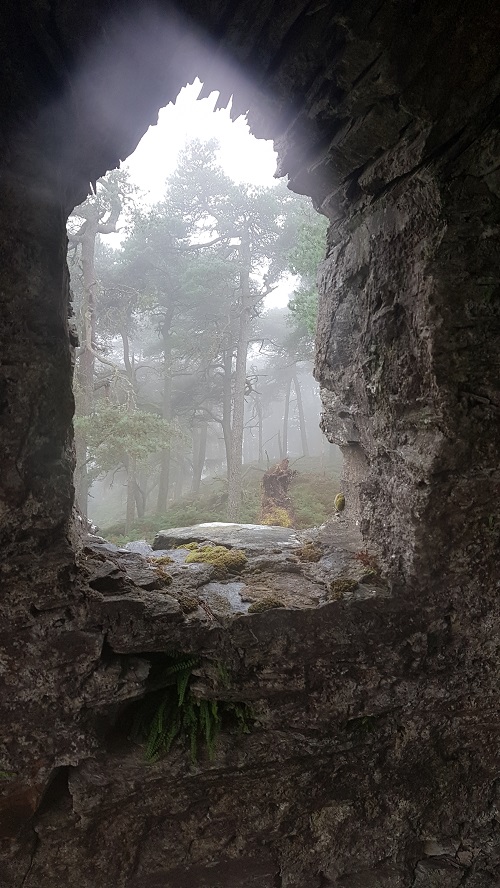
The Obelisk itself, looming like an ancient pyramid from the foggy tangles of tree and heath, was a wonderful thing that day. Its history is rather pedestrian – just an expression of a 19th century landowner’s ego who wanted everyone to see how far his land stretched. But the cloud slithered into its window-spaces; ferns flourished on the wet grey stone. Tiny frogs hopped among the slippery, exposed pine roots, and there were wild blaeberries for lunch.

The Road to Grulin

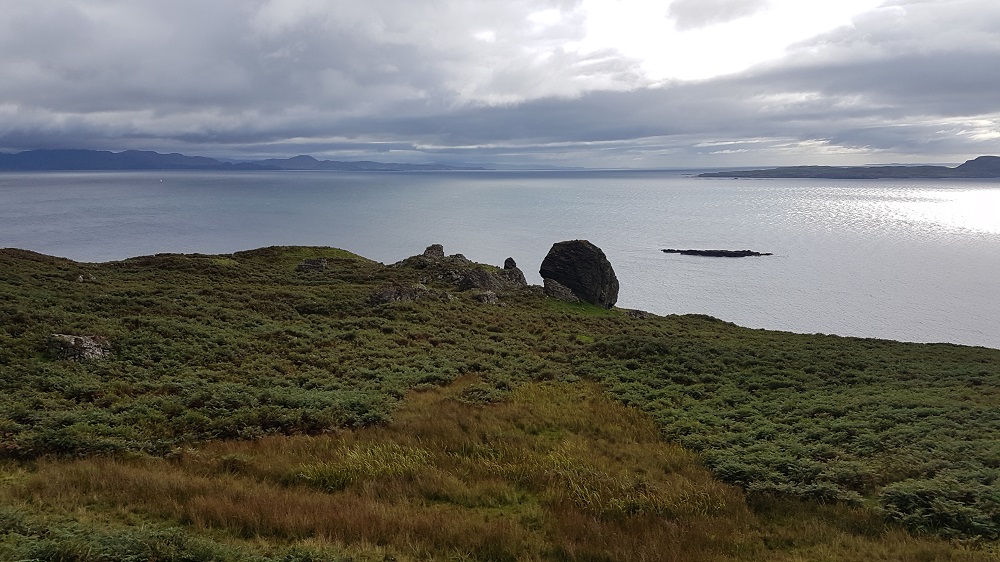
The track we follow is purposeful. It has the directness and air not just of going somewhere, but of having been going there for a long, long, time. We get to it from another determined little track, that rises up from the calm waters of Galmisdale Bay, through woodland to the uplands of a hill farm. Side-stepping the sheep and their copious leavings, ignoring the bull who is also ignoring us as he lounges among his harem, we skirt the farmhouse and its hollyhocks, and turn onto the Grulin track.

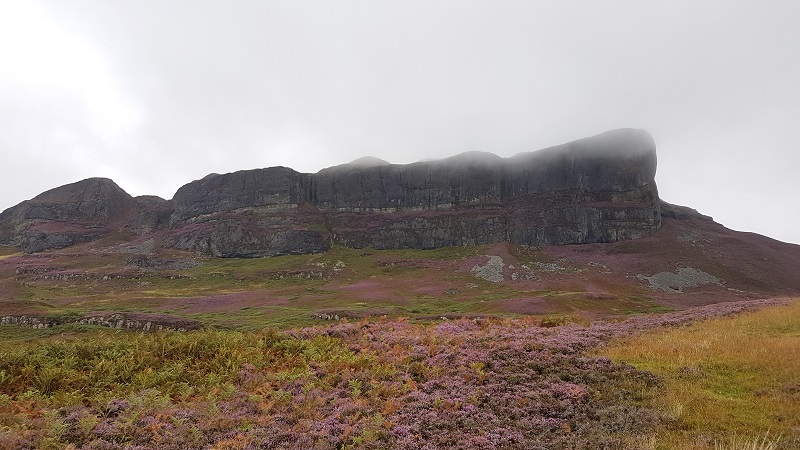
Straight, easy, well-founded with centuries of stone and tamped by more recent ATVs seeking sheep, the track passes the remains of a fort on the left; hut circles lurk in the grass and bracken between track and cliff edge – we know they’re there but cannot discern them. To our right looms the monstrous tower of An Sgurr, the dramatic reminder of an outpouring of volcanic pitchstone that dominates the Island of Eigg.

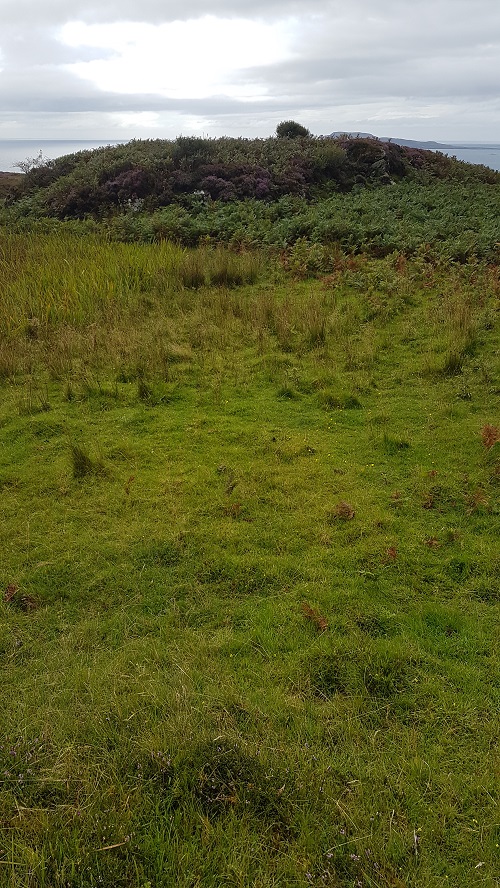
The track becomes a path; there are a few boggy bits, and lots of ups and downs, but it is still clear, still purposeful. So many feet have imbued it with purpose. The first thing we notice that hints we are approaching Grulin Uachdrach or Upper Grulin are some angled, straight lines of raised turf. They are buried dry stone walls, created long ago from the stony, rubble-laden landscape we traverse. They mark irregular fields and enclosures that would outlie and tangle with the settlement itself. Bracken and heather, with snatches of rush and bog cotton form the matrix of vegetation, but suddenly I am arrested by an open, grassy mound to my right.

I know from the map we are not quite at Upper Grulin. But I head off for that mound, and feel a prickle in my spine, a sudden silence in my head. On the edge of that sunny clearing, I stop. The wind is stilled. Are there walls beneath me or not? I walk through – or is it over? – the softly waving pale green grass, and step – is it outside? – into the tufts of fern and heath. I think, am I walking someone else’s path, or one created by my imagination? And then there it is – a small patch of stinging nettle, the signature of the midden. Someone lived here once. So I follow their path, and it leads around the cnoc to a south-facing rocky bank covered in wild strawberries. I get it. I, too, would have passed the midden to get fruit for my porridge every summer morning.
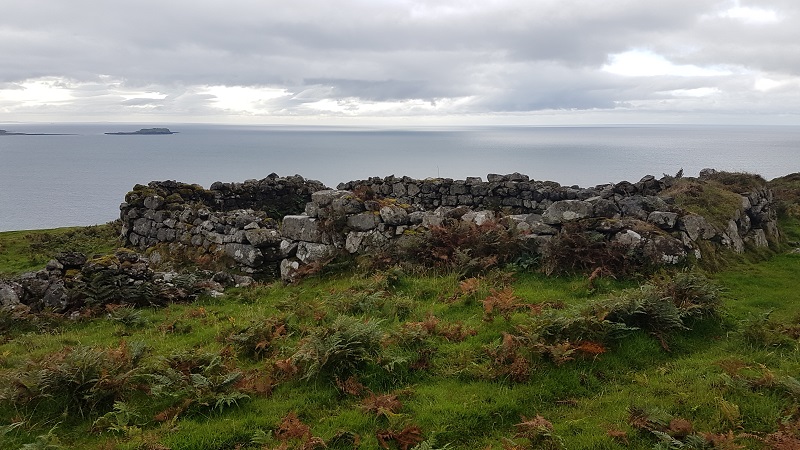
Most of the ruins are more visible, and soon they come into view. Indeed, the first is roofed and is in good repair, with new windows and fresh white paint. It was the one house left for the shepherd when the whole village (which had held 103 people) was forced to leave – “cleared” is the unsavoury term they used for it – by the landowner in 1853 to make way for Cheviot sheep to graze the rich pastures.

The rest of the buildings are dunts in the bracken, crumbling walls, the hint of a doorway, nothing above lintel height. We continue on the track, now more rocky and difficult, to Grulin Iachdrach (Lower Grulin). Springs gush from the rocks near the path; we cross one by a rough bridge of massive unhewn rocks lain long ago. Later, we founder in a bog – the sort you hop quickly without stopping and your fingers crossed. A kestrel hovers above the ruins, claiming it as territory. Some houses of Lower Grulin are easy to access. All retain their tell-tale nettle patch after 160 years. I stop at a doorway and wonder, can I enter? Eventually I quietly ask permission, and apologise, and go through. Again, the silence, within and without. The questions, the unknown answers; long sea journeys to Nova Scotia; what is left? What is lost? What remains?

The “18 unroofed buildings, 6 enclosures and a field system” drily described in the notes on the 1880 Ordnance Survey map of Eigg to sum up Grulin are not all that’s there. A fort, probably Iron Age, sits perched on a rocky outcrop. Shielings, shelters, kilns and other buildings have been identified.  And what remains is that silence – a telling scream of silence. Whatever the end story for the 14 families who were given no choice, that screaming stillness can almost be tasted, bitter and lingering.

But, on this island which has taken control of its fate, this crime can never be committed again.

The Countryside Code Fungal Appendix

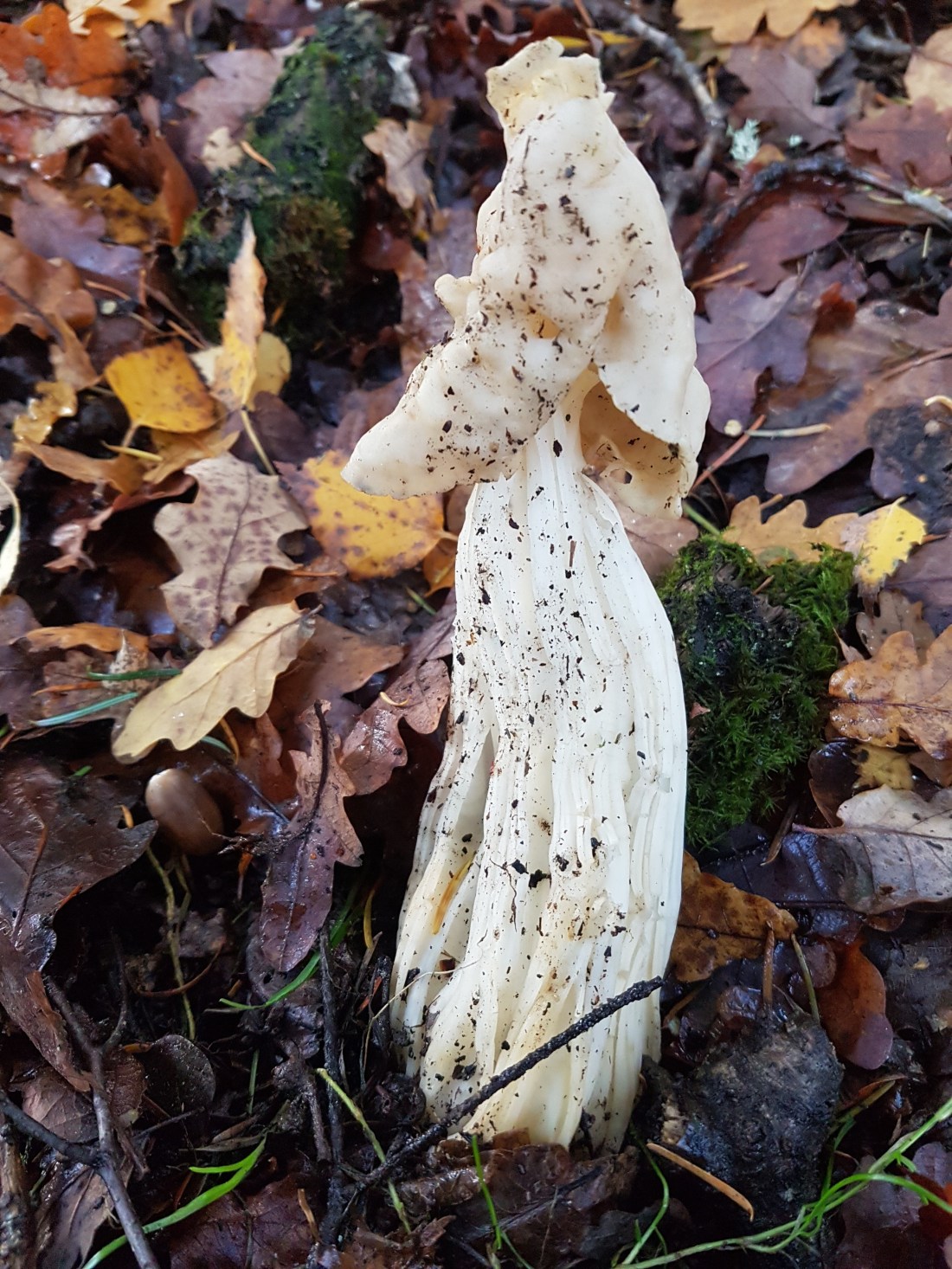
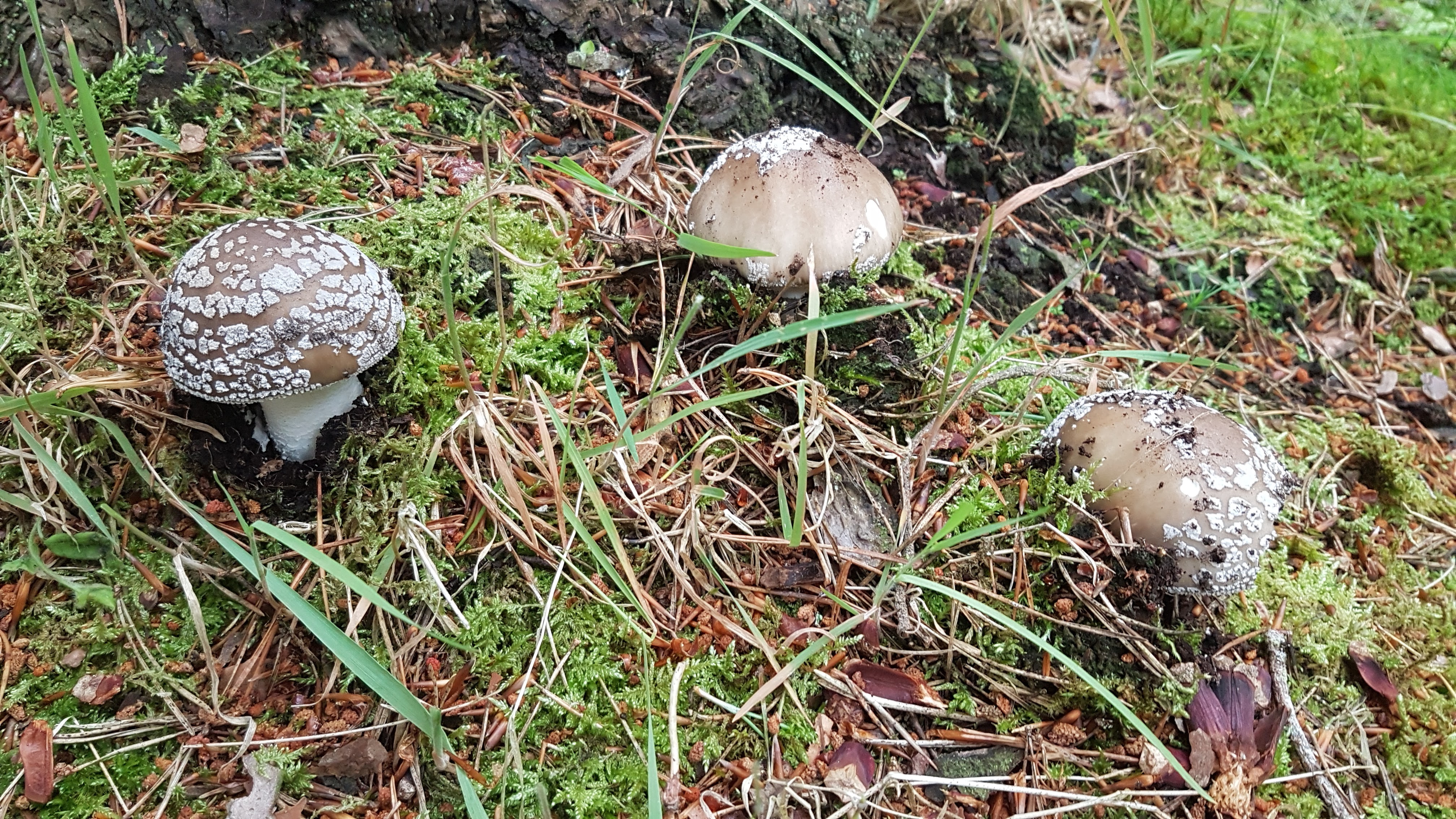
  1. If you are out in the countryside and find a mushroom you think is poisonous, do not panic and trample or kick it to ****. It cannot kill you unless you eat it. It doesn’t even want to kill you and it cannot chase after you either. It is a beautiful organism trying to reproduce itself. Leave it alone. (Oh – and do not eat it) (Photo above is an example – isn’t it lovely!)
  2. If you find a mushroom and you don’t know what it is or if you can eat it or not, see 1. The same applies. If you want to identify it, take a photo and maybe one specimen.
  3. If you find a mushroom, that you 100% know you can eat and you want to, pick – but adhere to these sub-directives:
    * Don’t pick the whole blooming lot – never more than your personal needs
    That includes large mushrooms like Chicken of the Woods growing on trees – never take it all
    * Always leave plenty of young and old (reproducing) specimens behind
    * If there’s only one or very few, leave them for others to enjoy, including other fungus-eating species such as deer
    * Keep your big feet from trampling the site and all the ecosystem it holds to bits. Tread lightly and avoid damaging vegetation
    * If you carry an open-weave basket, your dinner will arrive home in better shape and may even shed some spores along the way
  4. With particular reference to Giant Puffballs: these are not footballs – they are not spherical. Nor are they rugby balls, golf balls, cricket balls or any other species of ball. Therefore, do not treat them as one. If you would like to eat one, pick it carefully, take it home, and share it with like-minded friends before cooking it. This is because if you try to eat a full-sized Giant Puffball on your own, you will be feeling nauseous by day three. They are way too big for one forager.
  5. If you have children, take them foraging and teach them why fungi are so important to life on earth. Let them learn what’s safe to pick and what to leave alone as you do. Introduce them to this appendix to the Countryside Code.

(If you don’t know yet why fungi are so important, Entangled Life by Merlyn Sheldrake is a good read.)

Fascination with Fasciation ….. and the danger of writers’ prompts

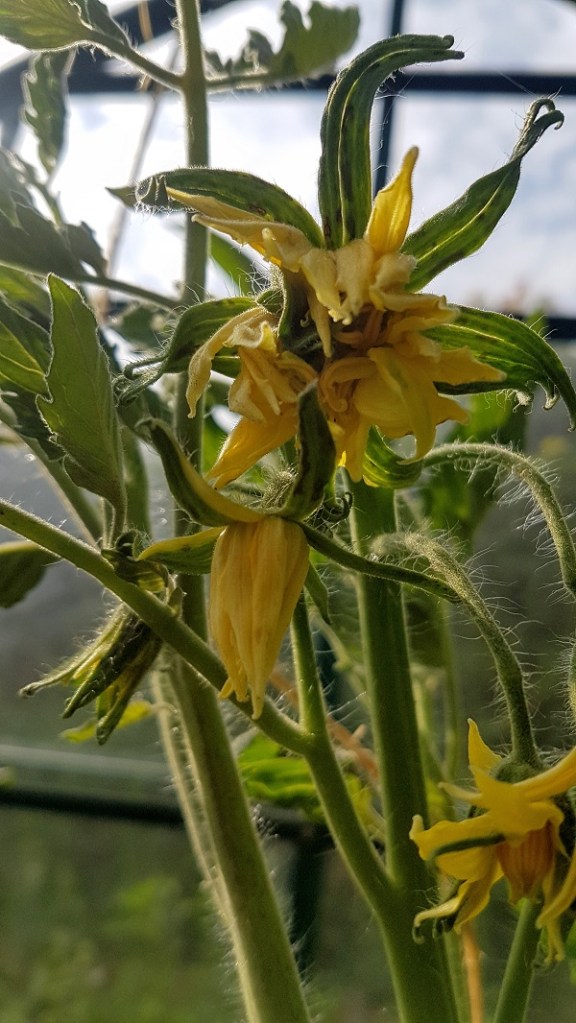
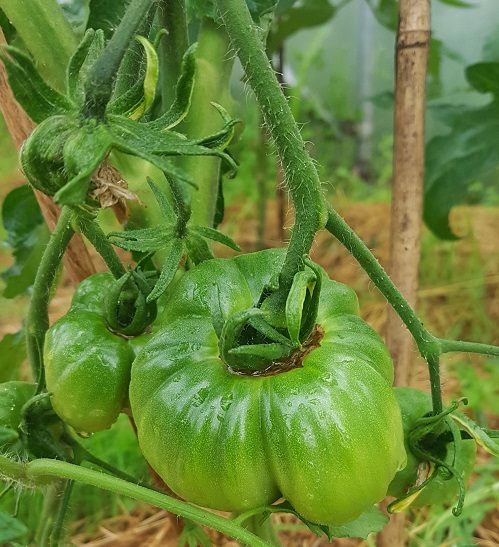
Fresh back from holiday and the torture that was the M6 from Junction 17 onwards, I fairly skittered through the unread emails, merely scanning those of interest. One from the writers’ group: a meeting I’d missed, and a writers’ prompt that had me immediately dashing back to the greenhouse to inspect the Gkousiari tomatoes. Before we left, they had been showing distinct signs of fasciation – had it become more apparent in my absence?

Fasciation is an odd thing that happens to plants, usually affecting stems or flowers. You see a daisy or a dandelion, and it looks like two or more flowers have been fused together….. daaandeellioon…. A mutant! you think, and you’d not be wrong, because it’s a genetic mess going on. Stems look suspiciously chunky or double, shoots flatten and spread instead of actually shooting. It’s like bits of the plant have welded together.

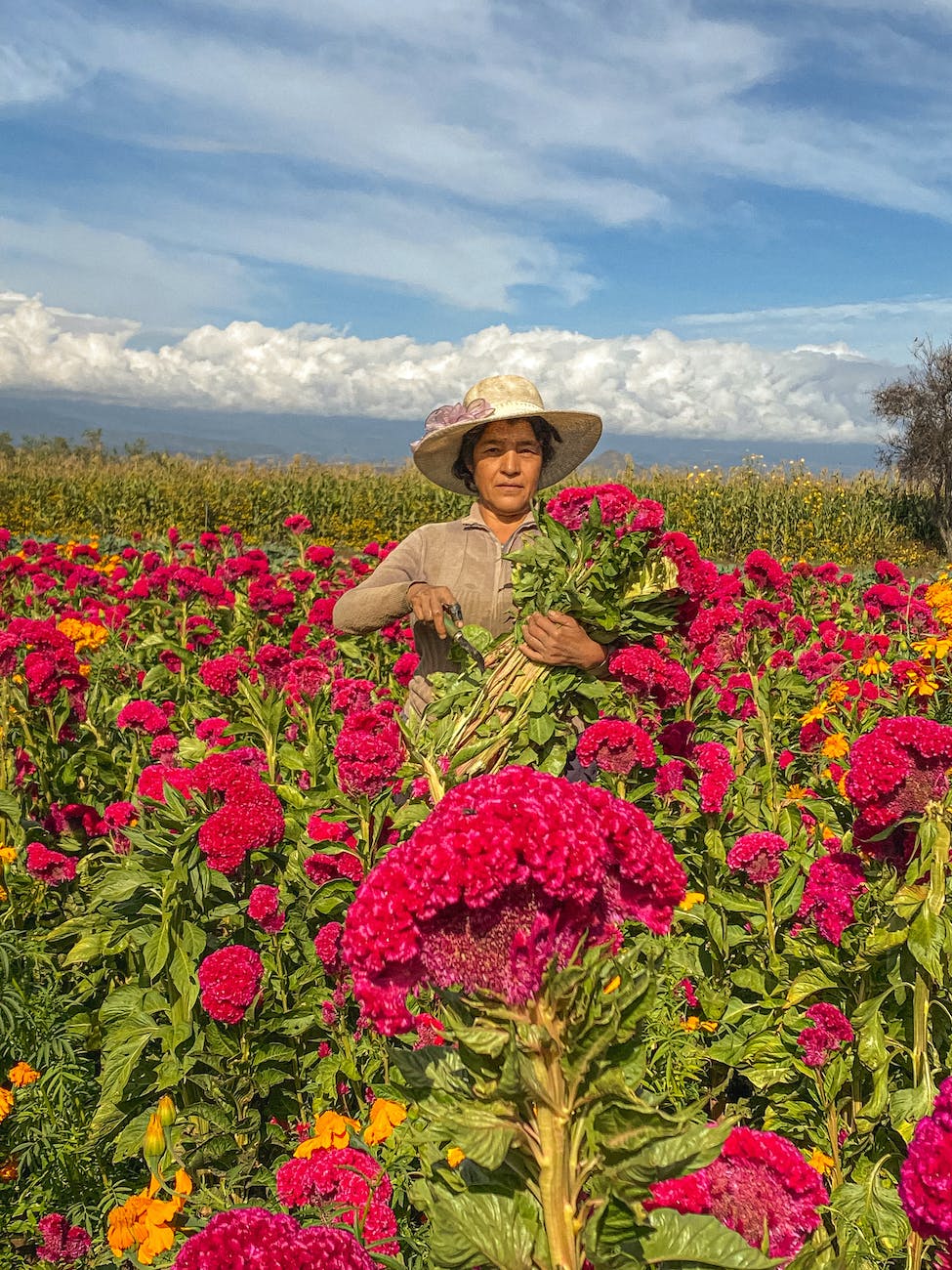
Photo by Luis Ariza on Pexels.com

Because fasciation is a trait that can be carried genetically, small fortunes have been made by encouraging it, producing house plants like Celosia, the Cock’s Comb flower (above), or flat-stemmed willows from cuttings.

Anyway. The fasciated look is also adopted by plants that are triploid (having an extra set of chromosomes in their genes) or tetraploid (four sets instead of two). Celosia is tetraploid, and the fasciation is carried in the seed. Back to tomatoes.

You know the massive “beefsteak” varieties like Marmande or Brandywine? The monstrous, flat-bottomed, often split or distorted fruits begin as equally confusing and enormous flowers. They are usually triploid and have way too many chromosomes! ‘Gkousiari’ is an unknown variety, Gkousiari being merely the name of the Greek market gardeners who bred it. It’s one I’m growing out for Perthshire Seed Library to get a locally-adapted strain, so I didn’t know what to expect. When we left for Devon, stocky, slightly flattened stems were leading to suspiciously large and over-stuffed flowers. Now I can confirm a superabundance of chromosomes, and big, beefy tomatoes forming.

I also re-checked the email. Oh. Ah well, that’ll teach me to read properly. Anyway, fasciation IS fascinating. Isn’t it?

Equinox: A Hiatus

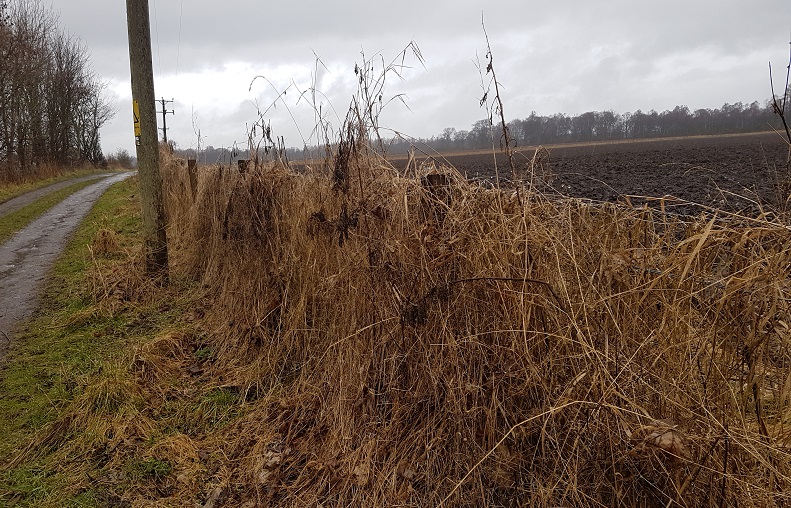
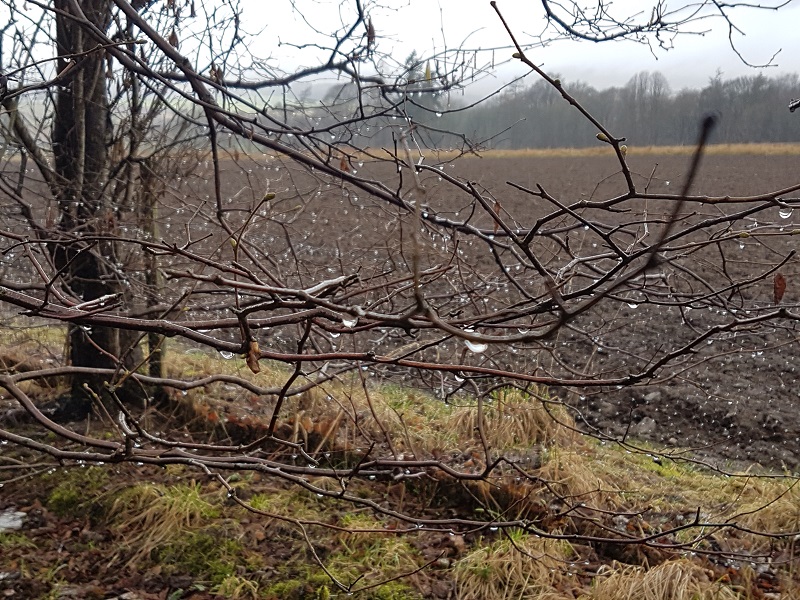
One day to the equinox; officially the first day of spring. It rains, a sullen, dreich miasma and the horizon is drowned in mist and low cloud once again. No cloud of cheery celandines yet line the ditches; no coltsfoot flowers; no green dazzle of new growth erupting from the tired, forlorn and hang-dog leavings of winter stems of grass.

There was a start to spring, a couple of weeks ago, when the sun was gentle and warm and the birds practised their calls. A blue tit inspected a nest box, and rooks set-to in earnest up in the rookery tree. Today, the only sound is the drip-drip-drip of rain. And even that’s muffled.

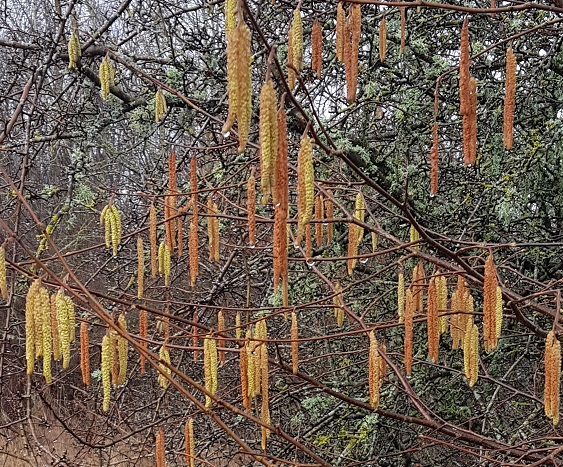
In the soggy brown fields, where the cover crop was optimistically ploughed in a fortnight ago, soil trickles away downhill in the empty furrows. No fuzz of pink from swelling buds tints the distant birch trees, no lighter hues on the sycamores and maples. On the hazels, the merry festoons of bright yellow and cream catkins are turning brown, but no buds are opening to take their place.

Spring’s not here. I rake in the squelching soundscape of a muddy woodland walk for the chiff-chaff, first of the warblers to arrive in March, but he is not here either. I wonder if this is the day I have for so long dreaded and feared – the “what if” day. What if the the birds of summer do not return? What if I never see another swallow? What if the flowers of spring are, finally, poisoned to death? What if nests fail and nestlings starve for want of insects and worms?

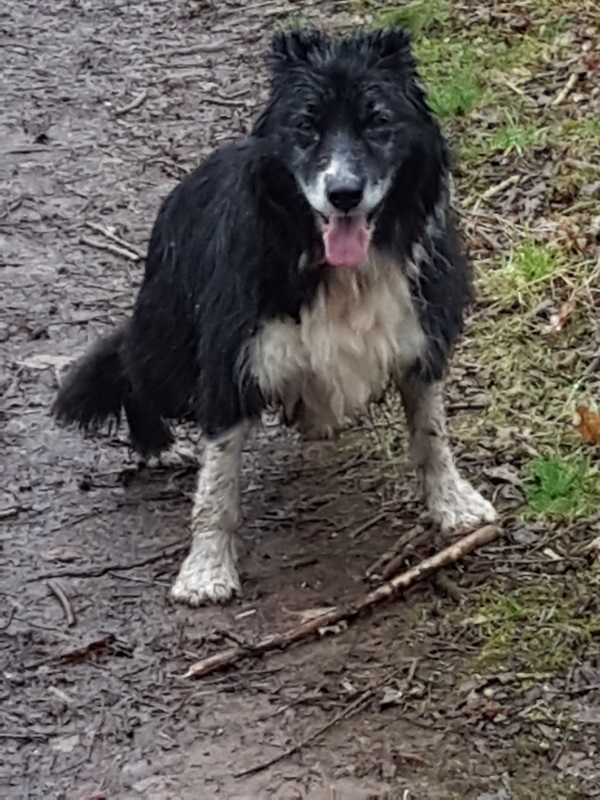
I do not want to follow this thought. Spring is late and it makes me weary and anxious. My elderly dog plods on, keen to get back in the dry, tired, arthritic legs dragging, stumbling at times yet still showing interest in sticks, at least on the way back. I think, will spring come in time for him to enjoy it, to sit in the healing sun and watch the world go by, an old dog at the end of life but still game?

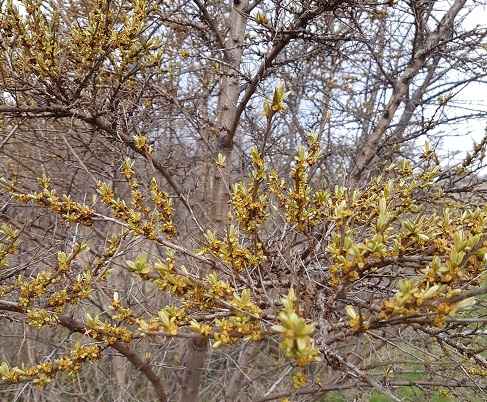
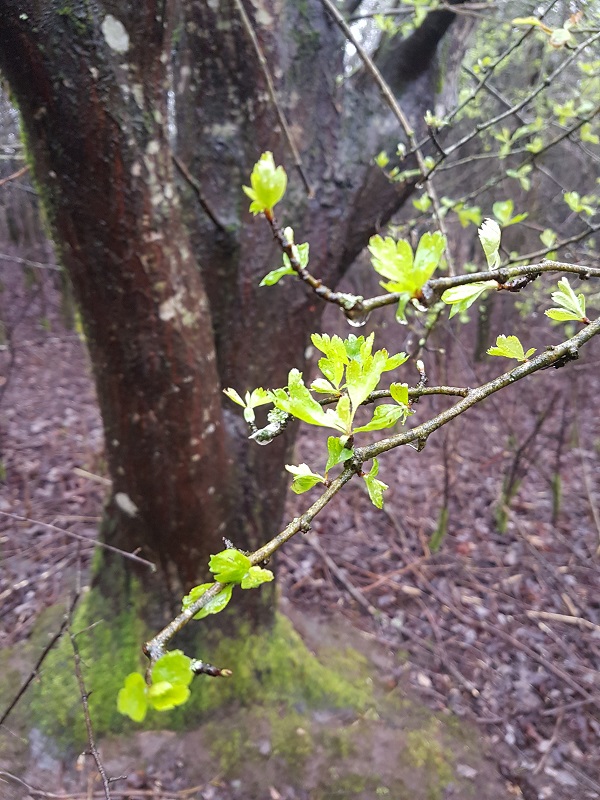
On the way home, I find some of those precocious hawthorns in the depth of the wood which always burst into leaf prematurely and give me my ritual mouthful of hedgerow “bread and cheese”. Today it tastes of even less than usual, but I chew away, get in the door, dry off the dog and put on the kettle.

At least there’s tea.

Stone from Fife

It was a cold day of freezing fog and dull skies here on the Perthshire fringe of the Highland Boundary Fault, impenetrable and forbidding. So I went to Kirkcaldy with Andrew for the ride, and because if we’re looking for better weather, Fife or Dundee are our go-to destinations.

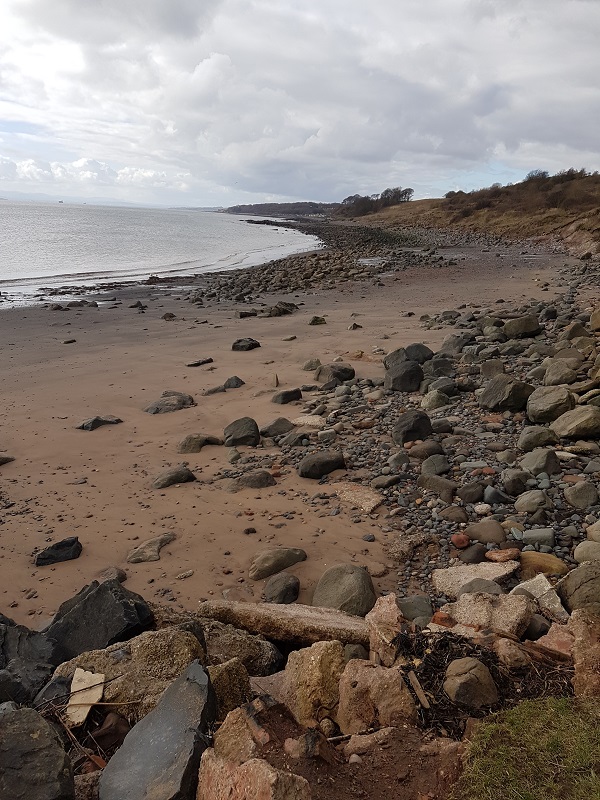
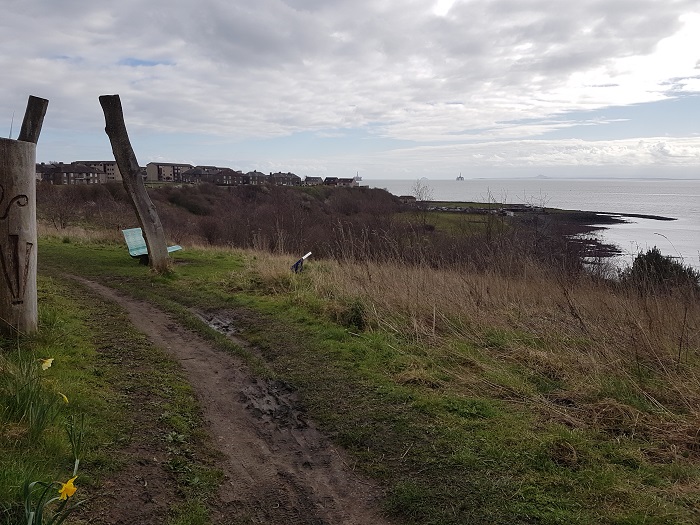
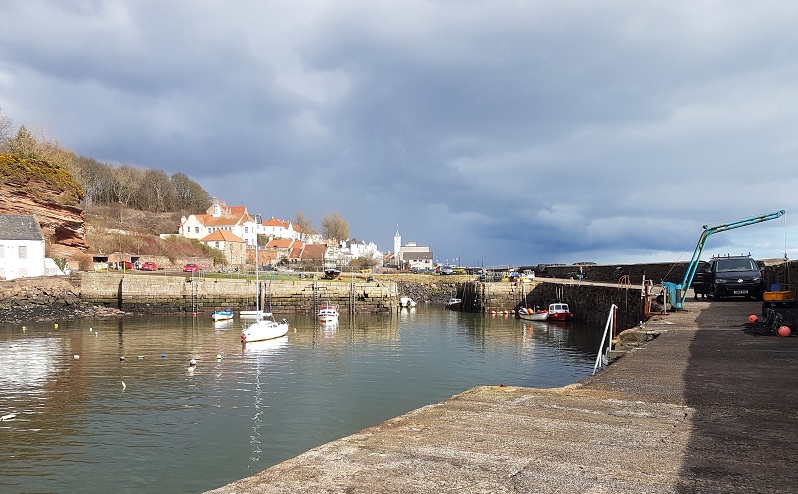
While he was busy pruning trees at Ravenscraig walled garden, I marched down the hill to Dysart harbour, and set off eastwards along the coastal path. Visitors to Fife usually end up either at St. Andrews or the picturesque East Neuk fishing villages, giving the old coal mining settlements of west Fife a wide berth. But I was deeply embroiled in a crime novel by one of my favourite authors, Val McDermid, at the time, and wanted to inspect the haunting locations described, where fictional things had happened and fictional people had so convincingly disappeared, for myself. In so doing, I soon met the ghosts of this once-thriving industry, and the sensed the buried but unforgotten lives of the coal towns and their protagonists.

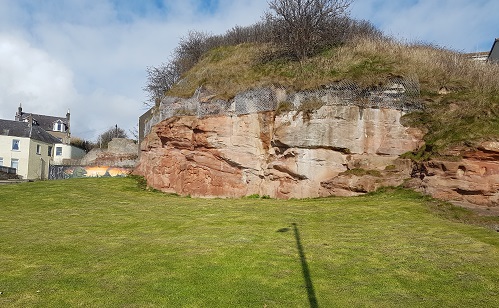
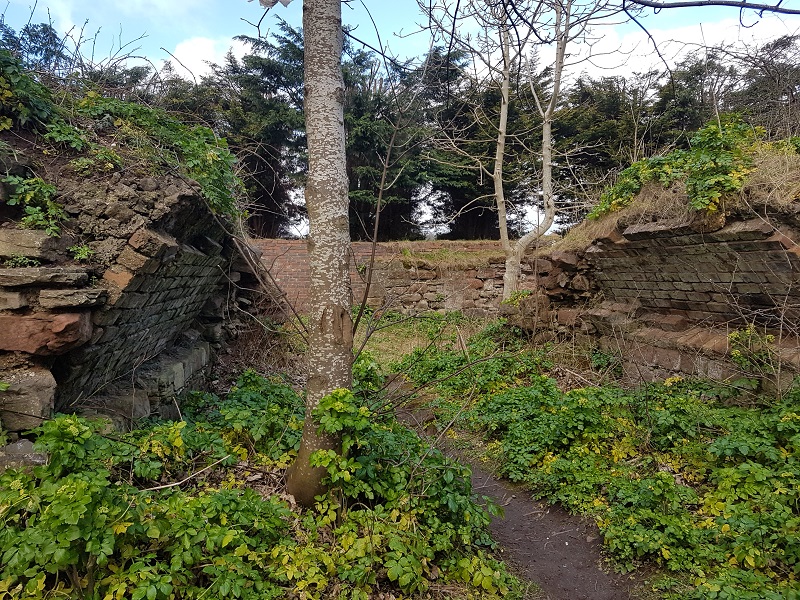
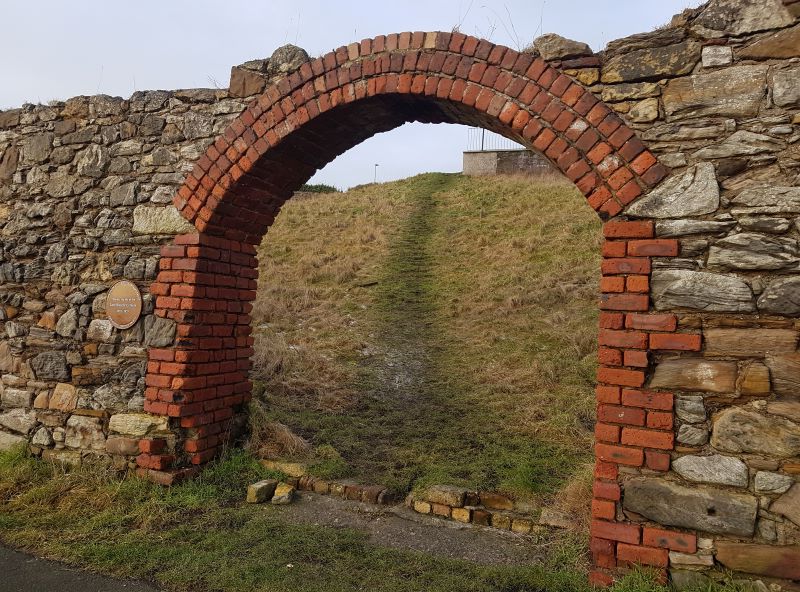
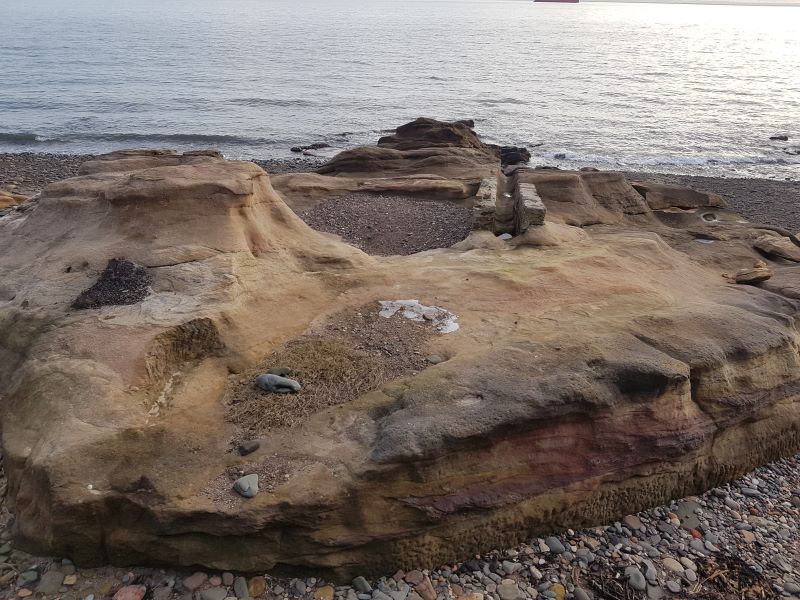
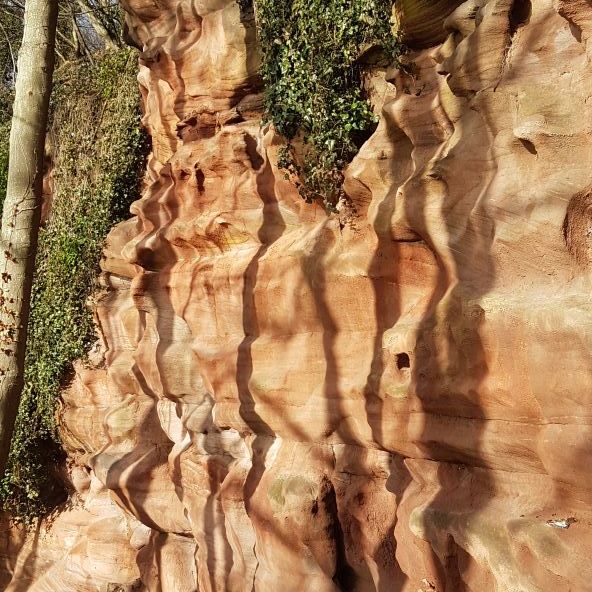
A brick arch in a collapsing stone wall, a desire line path passing through it towards some dilapidated buildings, was all that marked the site of the Lady Blanche Colliery. I walked quickly along the fringe of the beach, where great outcrops of red sandstone, eroded into surreal shapes, looked soft enough to sleep on. Coal seams are found as a layer in a fairly predictable array of sedimentary rocks; where you find this sandstone, you are going to come to layers of  shale and mudstone and where they end, you are likely to find the black stuff; ancient plant material from the Carboniferous, compressed by the weight of the rocks and the seas that came to swamp the landscape. Coal. You still find lumps of it, wave-worn, on Fife beaches. Through the middle of one gingery sandstone outcrop a channel had been dug seawards, emphasised by two sturdy walls. Something to do with the mine, or the fishing? I’m no engineer, and couldn’t work that one out.

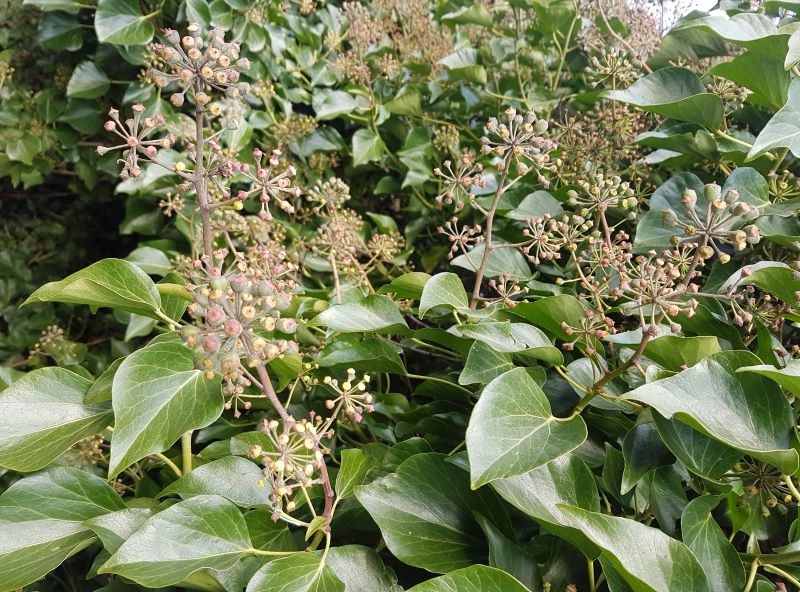
The path veered inland and upwards, skirting a barren-looking stretch of eroding land. I smelt the Winter Heliotrope before I saw the flowers and the foliage that cloaked the steep cliffs. It’s a garden plant, that when it escapes, does so in style and quickly naturalises, especially in difficult sites and thin soils. It is so sweet-smelling you feel for it, flowering away in January when pollinators are scarce, and self-respecting native Scottish wild flowers are keeping their powder dry. But a little further on, I found wild ivy with some flowers on, too, draping itself luxuriantly over sheer cliffs. It usually flowers in November and December – valuable late nectar for bees – and by January bears ripe berries cherished by wild birds. But this was Fife, remember, and Fife does things differently. Already, the temperature was rising and a watery sun floating in and out of tangibility above the Firth.

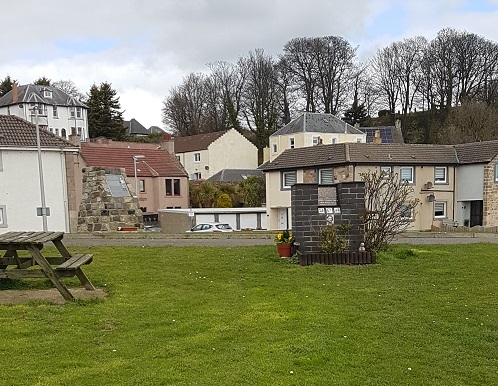
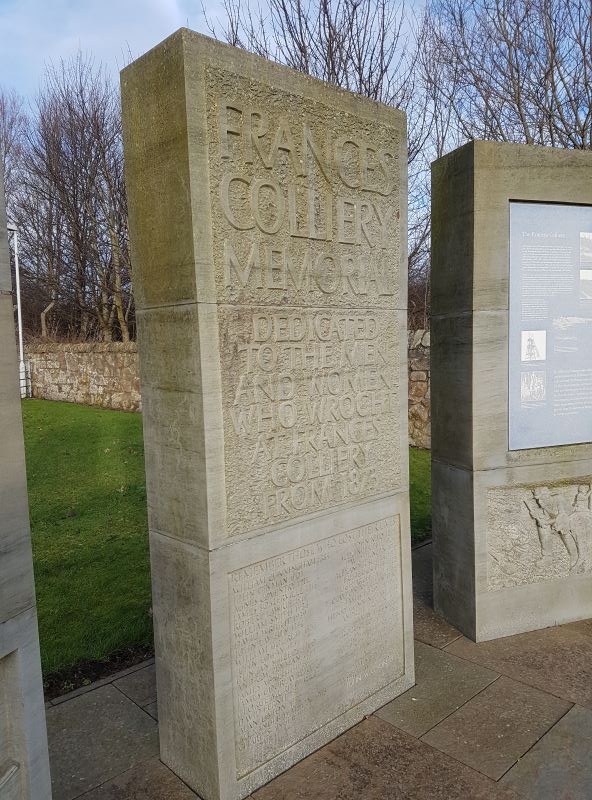
On the very edge of Dysart, I found a striking monument to the miners of the Frances Colliery, bearing the names of all those who had lost their lives there. I found myself muttering the names out loud to myself. What a life it was for miners and their families, the precarity, the solidarity, the tragedy. Something often romanticised, yet here was the bald truth; people died, regularly. Among the names, one jumped out. Agnes Coventry, died 1911. What was a woman doing to get killed at a coal mine? Later, I found out, from the fabulous Durham Mining Museum website, that Agnes had been working at the picking table “when bending under a revolving shaft to reach some dirt which had been lifted off the tables, her clothes were caught by the shaft, and practically torn off. She was removed to the hospital and appeared to be progressing favourably, but she collapsed and died late the same day from shock. The shaft was cased in, but one of the boards which had become loose had been removed and not replaced.” Coal does not just claim its victims underground.

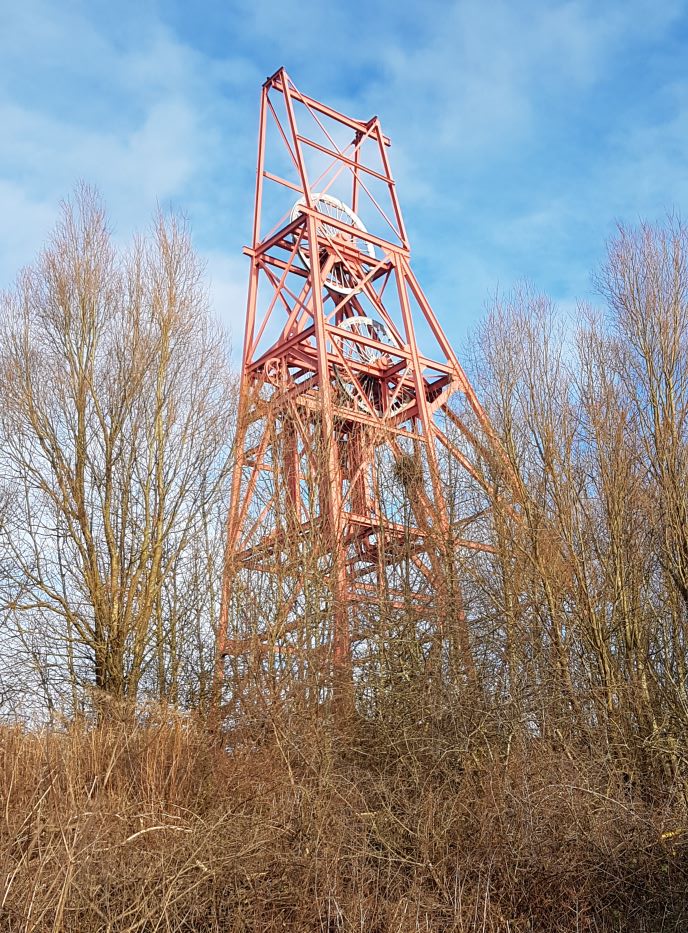
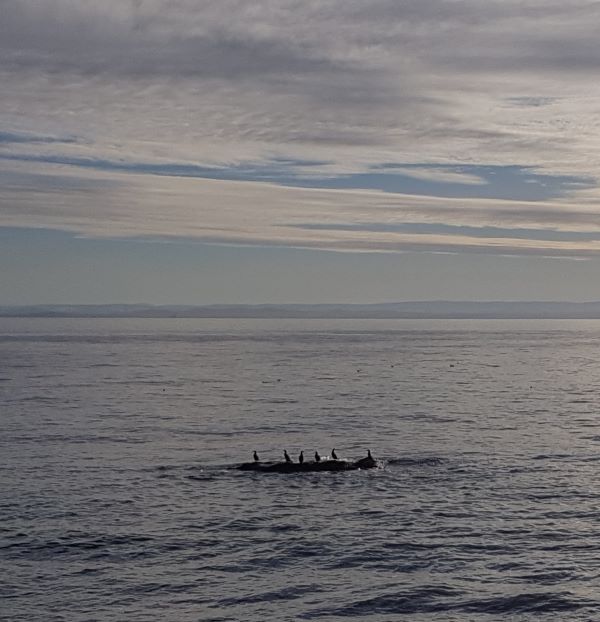
At the top of the cliffs, the path skirted a sinister looking industrial estate, and passed the winding gear of the old colliery, towering over the landscape and lives it once dominated and frowning down on what was now a shimmering sea where strings of cormorants stood drying their wings on half-submerged rocks. The sun, between streaks of cloud, coupled with the uphill climb to tell me I had too many layers on. I took off the thick, fleece-lined woollen jacket under my impenetrably water and windproof coat and stuffed it, protesting, into my rucksack.

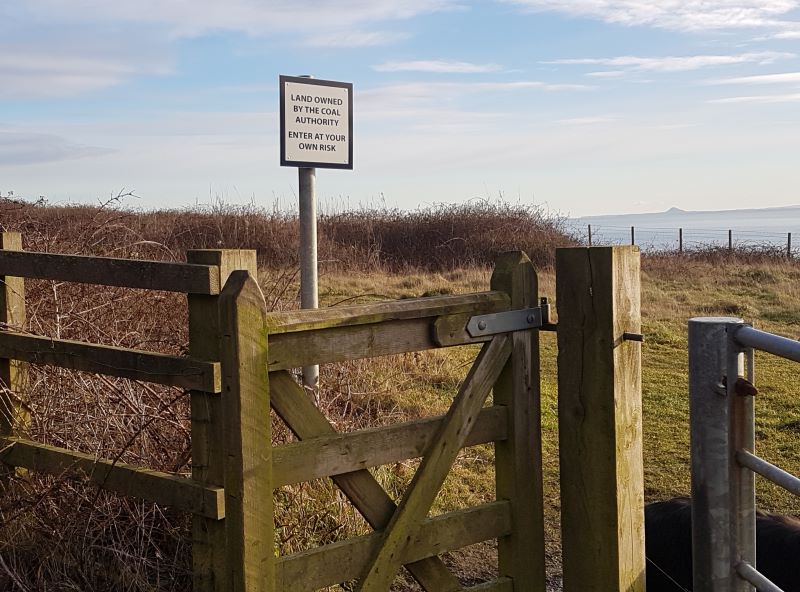
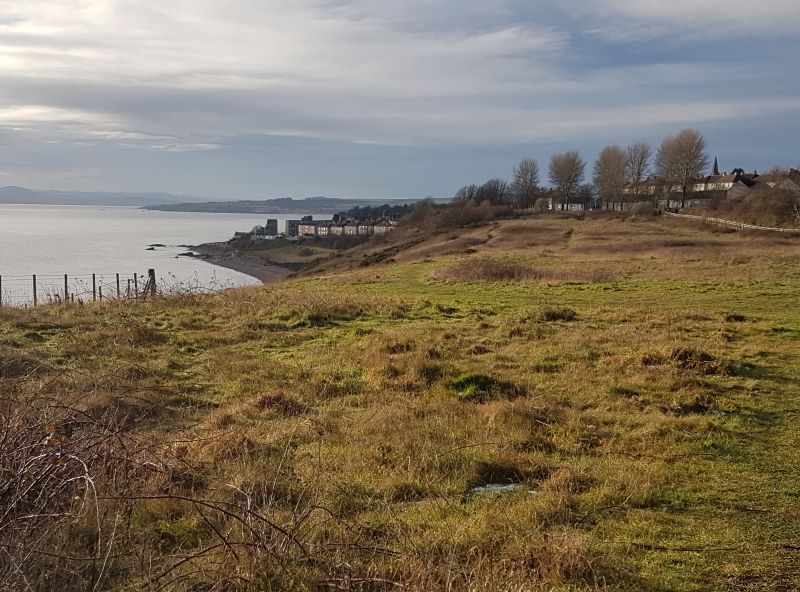
There were great stretches of January-whitened grass and sunken hollows between the path and the cliff edges, badly fenced off, punctuated by warning signs declaring it the property of the Coal Authority. In the distance, several walkers had ignored the proclaimed dangers and were wandering along established desire line paths or admiring the sun-kissed view back towards Dysart. What lay beneath their feet? I ventured through a gate onto the headland for a bit, but soon returned to the path, spooked by signs about sheer drops and risk of landslip.

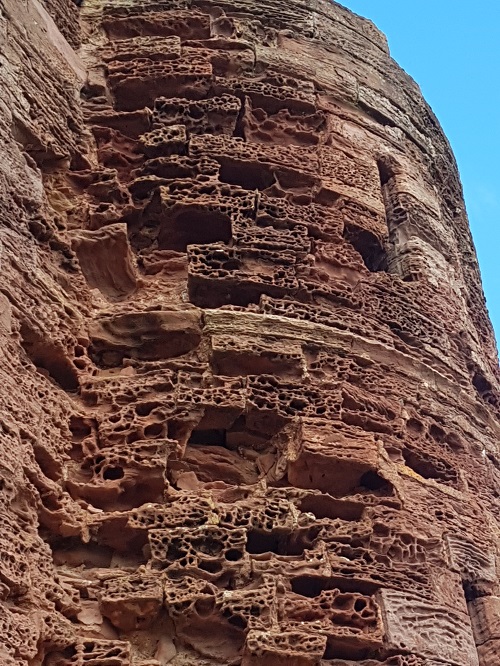
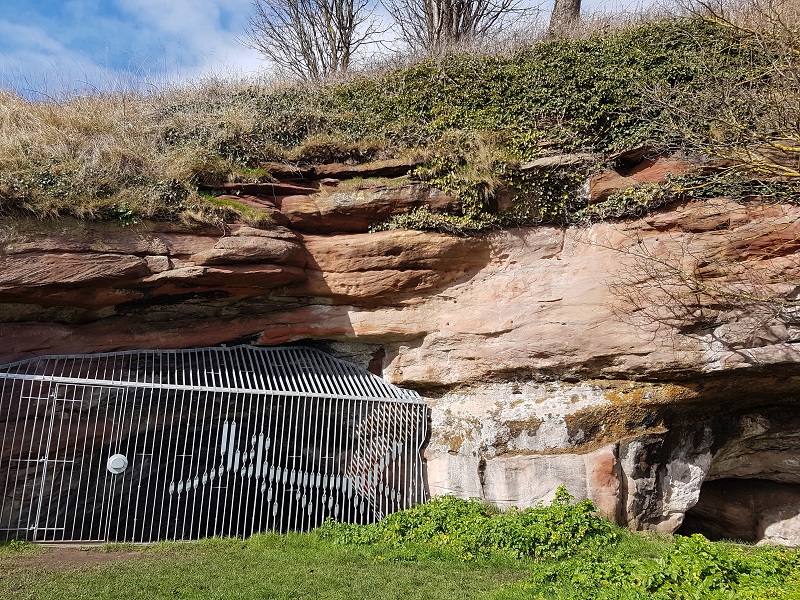
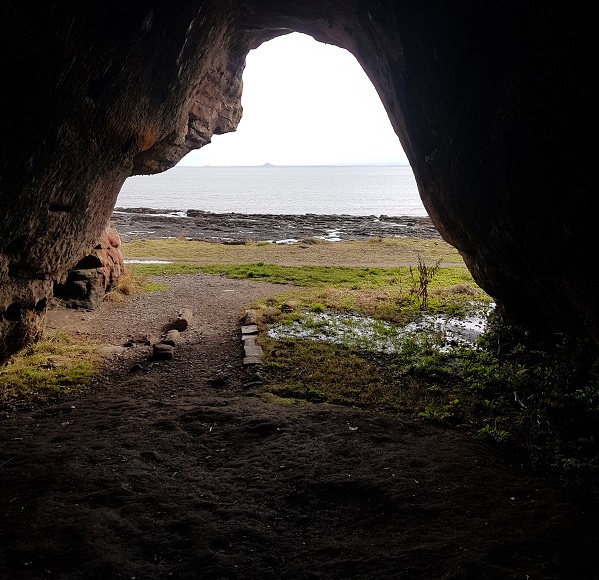
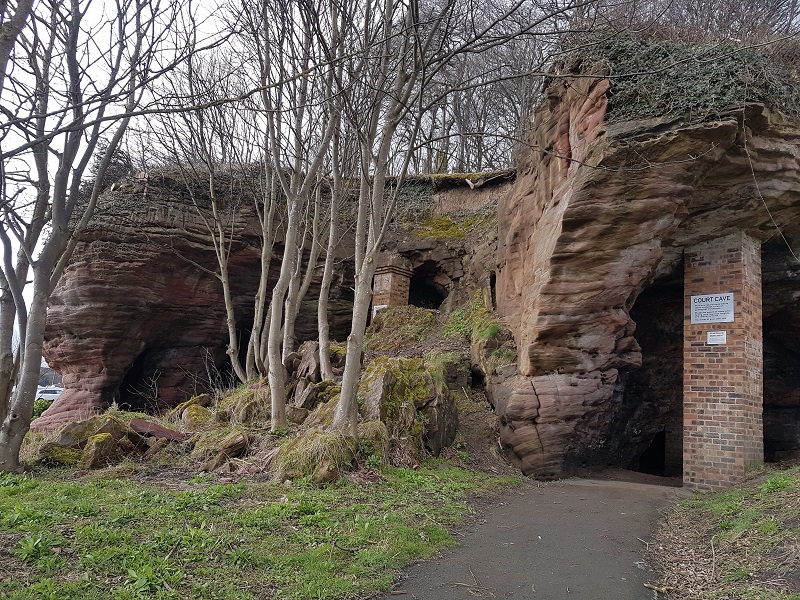
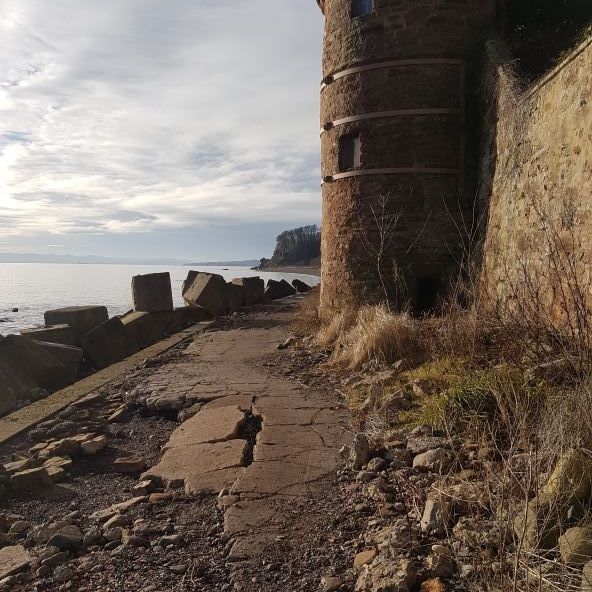
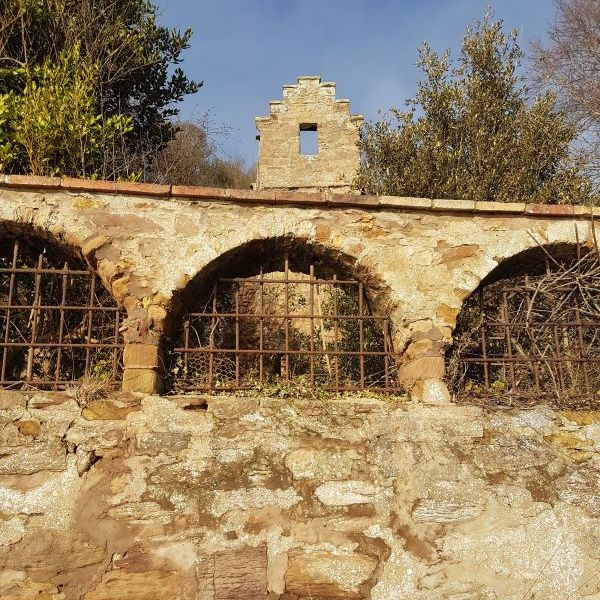
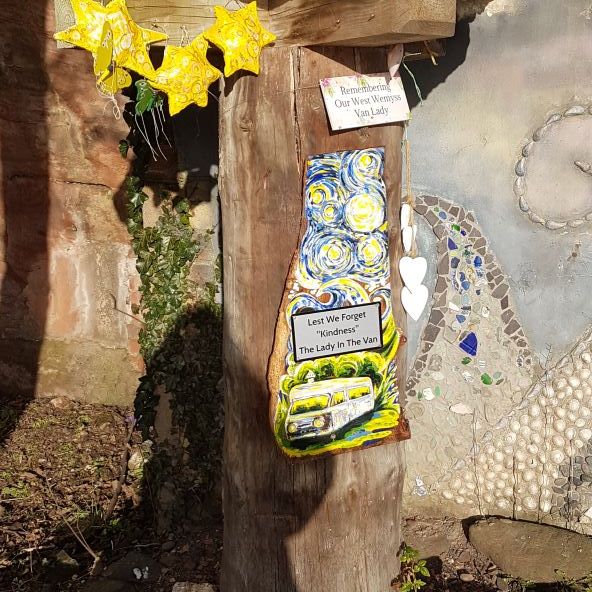
An extraordinarily long and winding set of concrete and stone steps led me back down to sea level and a length of tangled woodland. A solitary raven cronked bad-temperedly overhead at my intrusion into its territory. Before reaching the village of West Wemyss, the path became a rough and potholed concrete track, passing under a turreted wall whose strange arching windows with their keep-out-of-my-land metalwork permitted a peep into the overgrown Wemyss Chapel gardens. Near the harbour was a more homespun and inclusive space. Named as “Alice’s Fairy Garden” on the map, it seemed to be a melding of community projects – artwork and murals, flowers, strange odds and ends aimed at the fairies, and a memorial to “our West Wemyss Van Lady” – whose body was discovered in a campervan in the village car park in 2022. The moulded red sandstone cliffs and overhangs were the backdrop to this little patch, and to me they spoke loudly, with streaks of wind-blown layers and bedding planes, and the contortions wrought by the erosion of this soft, mellow rock.

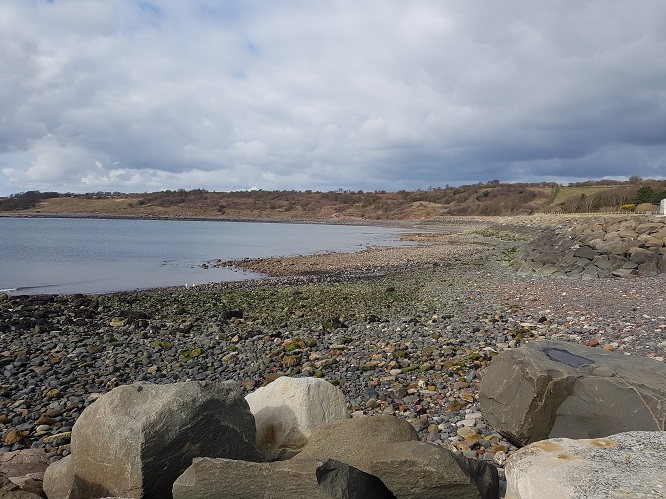
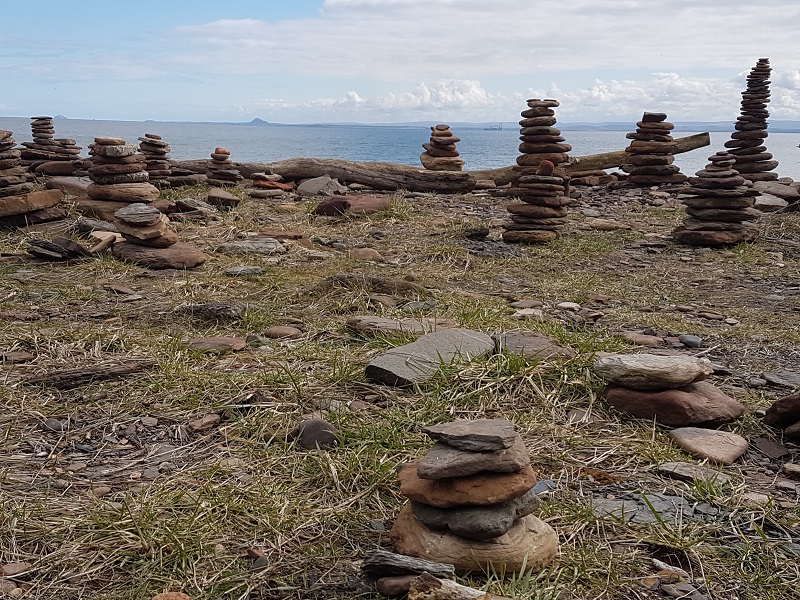
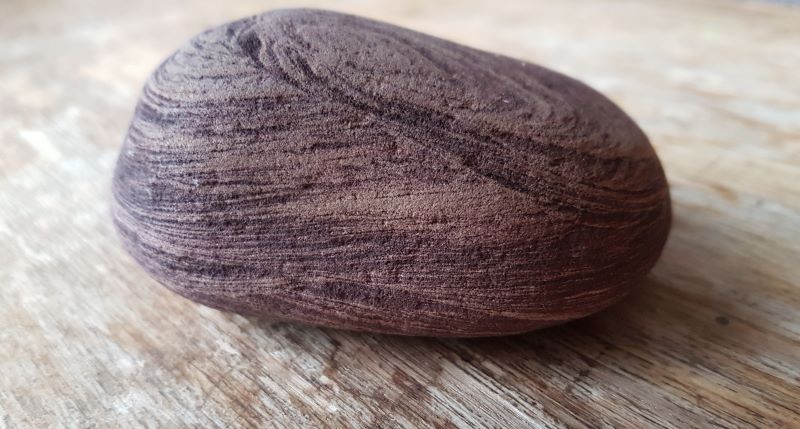
I walked on, hugging the shore to Wemyss Castle, but I was running out of time, and there was a café in West Wemyss that I was glad to return to for delicious soup and a pot of tea, before retracing my steps (yes, even the forbidding stone staircase), past gangs of nosy seals and far more people, now that Fife had fulfilled its promise of sunshine and winter warmth, to Ravenscraig. I stopped on the beach to gather my personal stone from Fife, and found one that encapsulated the properties of the big sandstone outcrops in miniature.

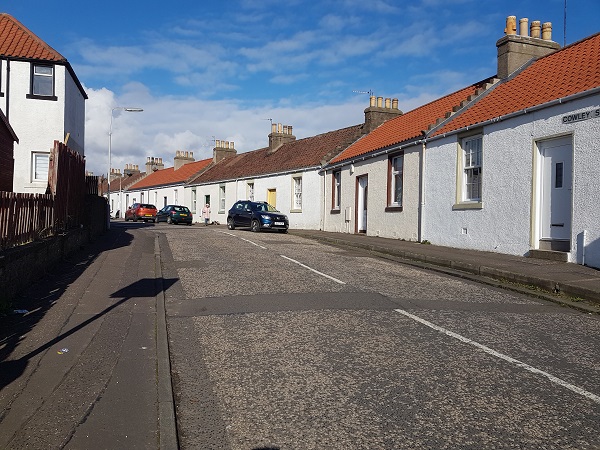
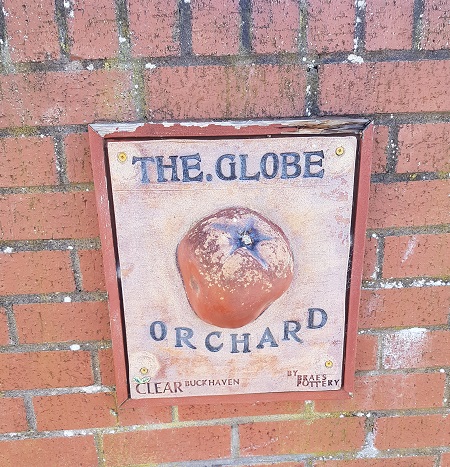
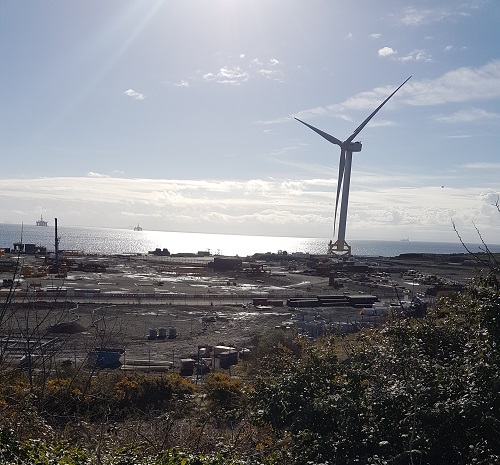
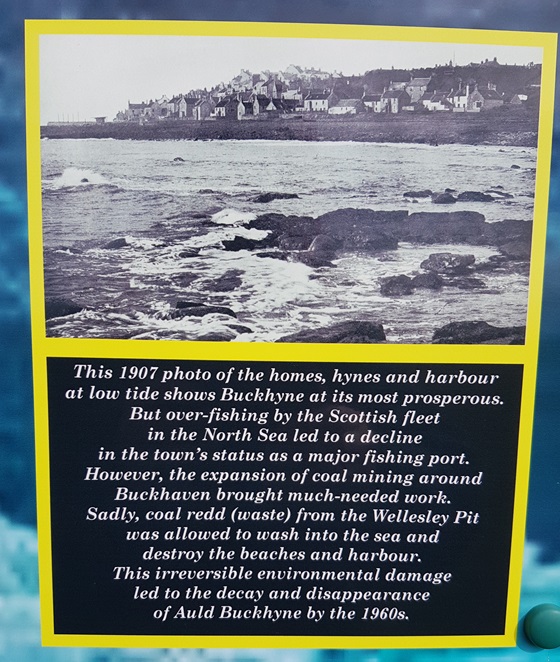
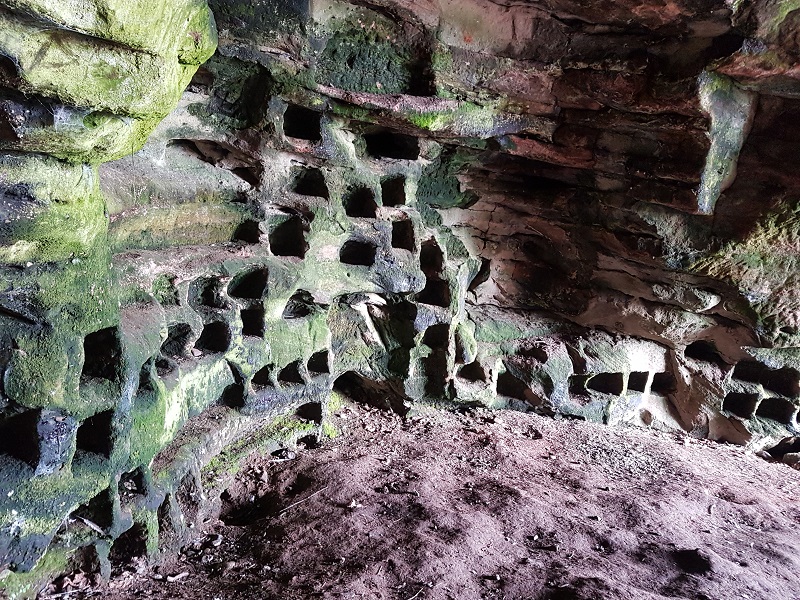
Wemyss Caves, and the stretch from Buckhaven to East Wemyss, will be covered in the next few weeks. It was an eye-opening walk, a thought-provoking one… that centred not only on a landscape but the people who have been, and are, part of it. I don’t know many ex-coal miners, but I do know a few. They are straightforward, confident, cheerful and clever people. They make the very best gardeners and growers.

River Tay, January

Early morning, sunny and dry. Silence, save for the mutterings of a river almost out of its banks and racing to reach the sea. Ground solid, unyielding – the type of hardness where you trip up on embedded clods and frazzles of vegetation hiding in the whiteness of a fourth consecutive deep frost – on ground already frozen solid by over a week of snow-half-thaw-freeze again.

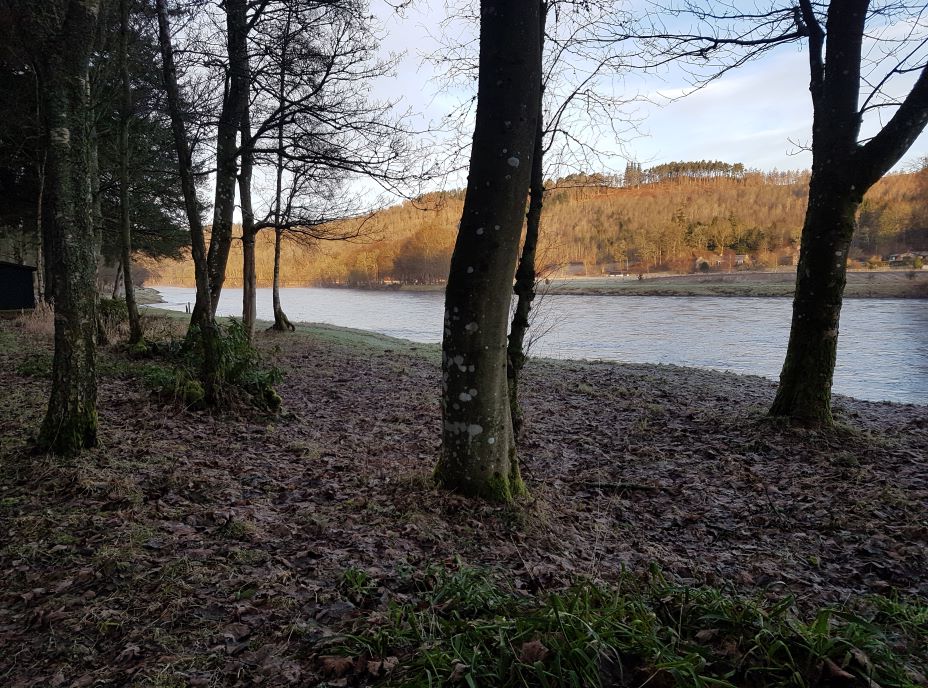
Walking along the south shore of the Tay on a winter’s morning kind of ensures you won’t be in the sun very much, no matter how it dazzles the eye. In any case, the river has merrily engulfed the lower fishermen’s path that hugs its margin, so we walk, me and the dog, on the higher ground beneath the limes of the castle drive. Where are all the birds? I wonder. Not even the ubiquitous wood pigeons are out braving the cold. We pass an eroded river gulley and went down the steepish bank to the lower riverside path, joining at the point where it rises above water level and becomes what must once have been an elegant stroll for visitors to the castle. Fishing on the Tay is big business, and not affordable by ordinary people (unless you live in Perth and have the right to fish the stretch within the city boundary). We pass fishing huts on both banks that would make acceptable homes for small families. All locked up, today. No one but me and the dog.

Now I’m closer to the water, I start to notice a large number of white birds swimming rapidly downriver. What are they escaping from? Then I realise the white birds are actually lumps of ice, breaking away from the frozen banks and joining the ice and snowmelt that, with extended periods of rain, has made the river so massive today. A couple of gritty black-and-white ducks obstinately battle upriver, against the flow. What strong legs they must have! They veer off into a little eddying backwater on the opposite bank, and I see other water birds lurking there, taking a break from morning chores.

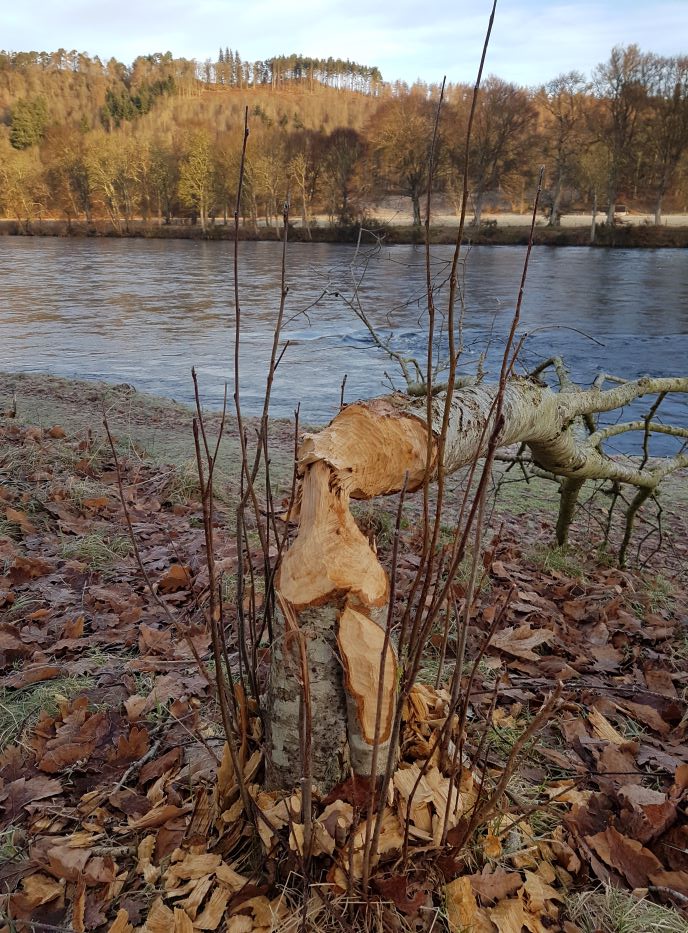
Beaver have been along here recently, but I struggle to fathom their purpose in felling one solitary tree, up the beach from the tumbling water. Maybe just hungry, or doing a bit of coppicing for future regrowth food supplies. I think the water birds could use a few more beavers to create respite backwaters.

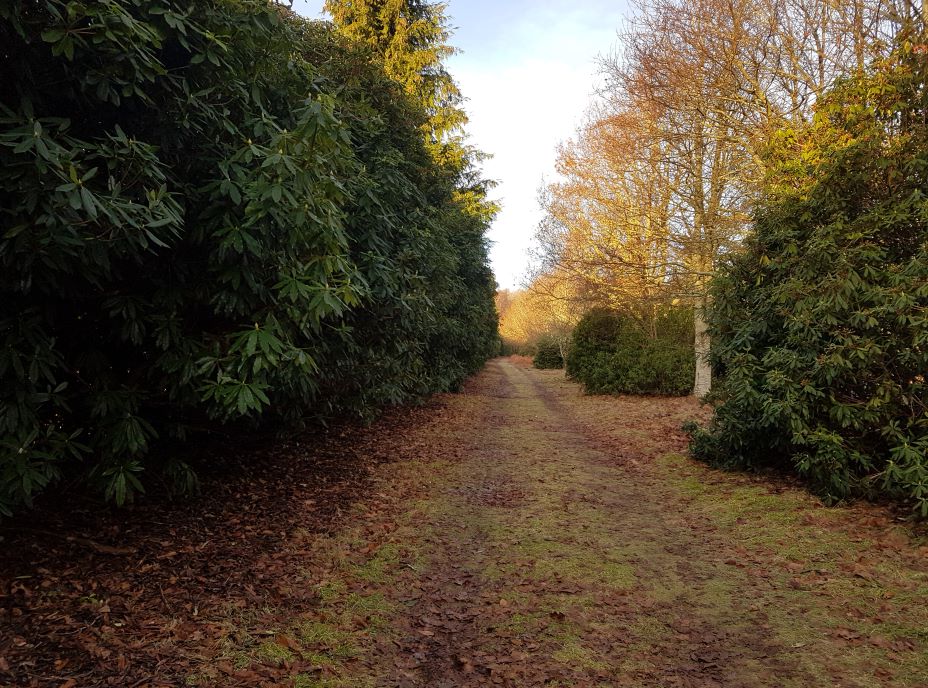
Skirting a long curve round the back of the castle, I pass between forbidding walls of rhododendron bushes. Although they provide some shelter and a small stretch of unfrozen path. they block the view. I spend too much time trying to eliminate them from an ancient oak wood to appreciate their aesthetics. I guess they may provide good roosts for birds, though I still don’t see any.

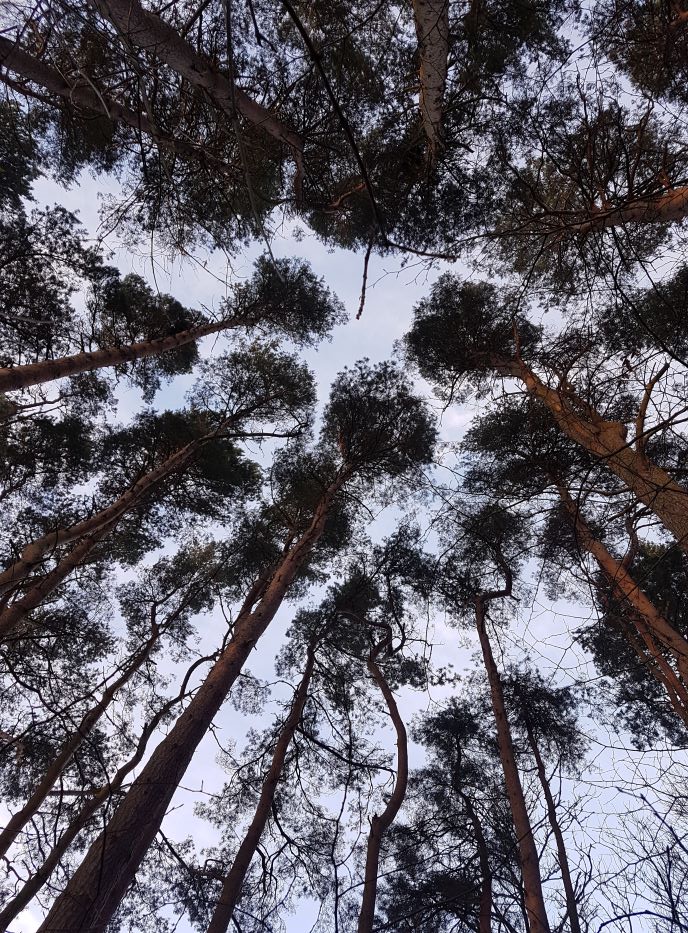
The core path takes a long, curving route by a bend in the Tay, high above the river and nearly to Birnam before it joins the castle main drive which will take me back to the start if I go left. Closer to the castle, the trees are less scrubby and include many spectacular examples of exotic species, such as Noble Firs, Coast Redwoods and towering Pines. It becomes a landscape of avenues – tottering rows of limb-dropping beeches, stately Sequoias in orderly, sentry-like placings, frowning yew trees in sombre ranks, new avenues planted in recent decades to replace older ones that refuse to lie down and die. Best of all, to me, are the ridiculously shaggy and spreading avenues of old lime trees – each hiding in its own twiggy skirt of epicormic growth. In spring, they provide me with juicy, tender leaves for salad, and intoxicatingly sweet-smelling flowers in summer to dry and make into a sleep-inducing tisane.

As I walk between and under these vibrant specimen trees, I suddenly realise birds have started to chatter, and mixed flocks of finches, secretive tree-creepers and purposeful, hopping blackbirds are awake and accompanying me. Gazing up through the close pine trees, I can just see avian silhouettes flitting busily.

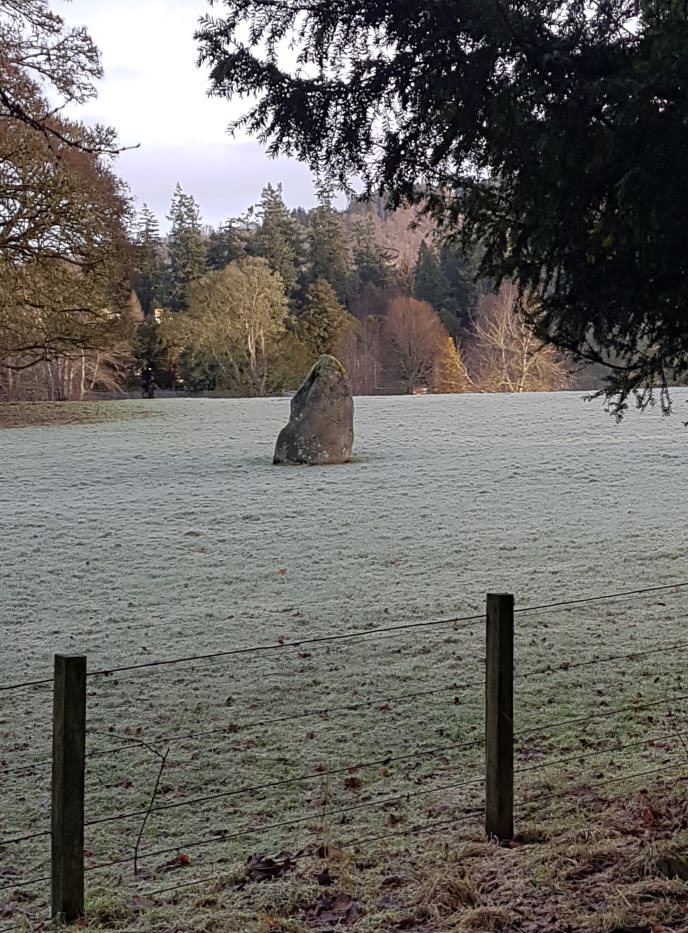
There are paths that could be taken to make a short-cut through the castle garden. Scottish access laws, some would say, give walkers a perfect right to take them, and no doubt some do. I’ve lived in a tied house on an estate where summer visitors frequently asserted this right to take a short cut to a beach through our garden, where we had small children playing and hens free-ranging – and on at least one occasion, hens were killed by loose, uncontrolled dogs. So personally, while I’m proud of our access laws, I think we should respect the privacy of residents and remember those laws also require the walker or cyclist to act responsibly. I’m fine with taking a long way round. The core path eventually passes in front of the castle at a distance (more avenues!), and I note the large, standing stone nearby, like an iceberg itself in an open, frost-enveloped field. It has no name. Does it link with other, less ancient perhaps but curiously-named stones in the area? One day I’ll hunt down the Witches’ Stone (well, this is Macbeth country!) and the Cloven stone….. but not today.

Today, I dawdle back under the limes to the gate, salute the mighty Tay with its miniature ice-packs, and begin to think about breakfast.

New Year, New Blog!

Regular readers will know I often write about my garden, or the wildlife that inhabits and manages it better than I could ever do. I know a lot of people would have the screaming ab-dabs if their gardens got into half the state that mine does… but for me the need to support the widest biodiversity and my personal love for every other species trumps the sensitivities of the bug-killing, grass-shaving, patio-manicuring brigade. And I’d like to make some converts rather than just be rude about them!

So I decided to create a new blog of short sketches and ideas dedicated to the joys of not being in control of your garden and the fascinating more-than-human friends you might meet in it. Here’s a taster of WHOSE GARDEN IS IT ANYWAY? which you can find at theuncontrolledgarden.wordpress.com

“I started gardening with a notion that what grew in it belonged to me, or to my family. I believed that I was the person who got to choose what grew in my garden. Carrots here, poppies there, grass in between. I welcomed wildlife though – birds could come to the bird table. Frogs could come to the pond. Of course!

But pigeons, snails, mice….. er, no. And the multiplicity of insects and invertebrates just worried me. Were they Good, or Bad for “my” garden? I didn’t know. When I decided to study horticulture professionally, my tutors taught me “Plant Protection” which meant the Pests and How to Destroy Them. A nodding glance to predators and nothing about pollinators. The soil science tutor had a more holistic perspective, but was a bit of a lone voice.

I always preferred the wild flowers to most of the garden ones – although I liked both. So “weeds” got away with a lot in my garden, even though it made me feel slightly guilty. In between lectures, though, I read about companion planting, and comfrey, and composting, and met Lawrence Hills of the Henry Doubleday Research Institute (now Garden Organic), which was nearby. Over time, my perspective changed, and so did my garden!

Now I have a rambling wilderness which I love from January to August and then feel defeated and stressed out by, until calm is resumed around the middle of October. No chemicals, no dig as far as I can stretch the compost, which is the powerhouse of the garden. I still struggle at times and backslide into nervous control-freakery.

But I have one certainty: This is not my Garden. And I am not in control.”

(I will continue to write on the nature of the universe here too. And adjust both sites, especially getting rid of the annoying ads once I’m convinced I’ve got it set up right!)

Heroes!

Once again, Jeoffry the ginger cat was determined to help walk Jed the old collie. He has thought for a while that this is his job, and that Jed needs a one year old cat to make sure he is okay. When Jed dawdles and sniffs too much, Jeoffry stops and waits, runs to him to coax more speed, and won’t return home without his dog. Coming out of the little wood on Friday evening as it was getting dark, we met Sam, our neighbour’s bouncy, lolloping pointer, filled with enthusiasm for a snowy evening sledging expedition and wearing a flashing green collar.

Maybe it was the flashing lights that spooked Jeoffry. He leapt back off the track into the little wood – followed by Sammy, who proved he could move with astonishing speed. Sam is trained strictly to point at wild birds and not chase things – his master is a wildlife ecologist and that’s Sam’s job. Quite soon, Sam lolloped back out and continued his evening. Jeoffry didn’t emerge, but he was close to home, with multiple route home options, in familiar territory.

When he didn’t appear for his tea by 9pm, Jed and I went back to the wood with a torch. No sight, no sound, no cat in this wood, I thought. Next morning he still wasn’t home. I should say at this point that Jeoffry is a silly little cat, prone to adventures and worrying people. His twin brother, Lucretius, is a measured stoic, with a kitten face but a wise head, who is more inclined to stay close to home. Nevertheless, I had a strong feeling Jeoffry was in trouble. So Andrew and I spent all morning searching. We both independently searched the little wood again, calling, looking up into the trees the kittens loved to climb and romp in. Then, all the adjacent and nearby fields and the other woods. It was slightly milder than the previous week, but still bitter; all the tracks were frozen solid and stumbling through the snow-buried ruts of old potato fields wasn’t pleasant. When it became clear that old Jed had had enough, and we’d raked the verges of the fast and furious A9 from the bridge through binoculars, I turned to take the dog home. I bumped into Simon and Sarah, friends from the village, who were full of sympathy, having lost two beloved pets this year, and said they’d look out for Jeoffry. Andrew went on to the tangled wood over the dual carriageway.

Passing the little wood, I scanned the trees from the track – for the fourth time. And high up – 15 metres up – a spindly tree not far from where he was last seen, was something ginger.

He was watching me, making silent (thus useless) miaows, lifting one paw at a time to relieve the cold. He had been there all night, and was not able or confident enough to find his way down. I called, he looked at me, didn’t move. What to do? The fire brigade tore through my head…. but not only was I uncertain they would respond anyway, the road and weather conditions were bad, and drivers on the A9 can be even sillier than ginger cats. How could I risk diverting the fire service from potential life-endangering incidents? I phoned Andrew. I phoned the vets, who said try the fire brigade. I googled, not an action that often ends in reassurance. I learned that, contrary to widely-held beliefs, cats cannot come down vertically from great heights. Their claws are designed only to take them up. Which Jeoffry’s had so spectacularly done. They can sometimes survive a fall, but cannot remain up a tree indefinitely without food, water or warmth. They grow weak and fall badly, and don’t survive.

That is why you don’t see cat skeletons in trees. They are on the ground.

Andrew returned. Although an ex-tree surgeon, he suffers mild vertigo and doesn’t climb these days. I googled tree surgeons. None of them were local, nor did they offer cat rescues as a sideline. I raked my brains. All I could think of was a long ladder. Our next door neighbours live in a tall, Victorian villa, and have a long extending ladder for maintenance. I trotted home to see if they were in, and if we could borrow it.

John – who I later recalled is very allergic to cats – immediately said, “Oh right, where is he? Give me a moment, I’ll get the ladder and be up there.” There was no hesitation, no question. Help was needed, it would be given. Soon, both John and Catriona joined us gazing up a tree and calling a distressed but immobile cat. John had brought 2 sections of the ladder, but had to go back for the third. The tree had several narrow trunks, some dead branches, and was slippery. Even with the third section, Jeoffry was out of reach, and (being a silly little cat), did not have much of an opinion of jumping down onto the top rung and using the ladder as a human might. “Who knows a tree surgeon?” I asked the air. “Mmm, Simon might know someone,” mumbled John.

I phoned Simon, still out walking, and asked him. Again, there wasn’t a second’s hesitation when I explained the situation. “We’ll just swing by that way, and see what we can do. No, not a problem, be there in a bit.” And in due course, we became six humans and a cat, for Sarah came as well. But in my fixation that we needed a tree climber I had forgotten something. Catriona, John, Simon and Sarah are expert rock climbers (Simon is particularly accustomed to mind-rottingly scary frozen Himalayan precipices. I’ve been to one of his talks and was scared to open my eyes to look at the pictures). Simon and Sarah came with all their lightweight climbing gear, and John went back to the house for his. Politely, all four rejected Andrew’s ancient and long disused heavy tree climbing rope that he’d fetched in case it was useful!

After much testing of surfaces, discussion and planning, a plan was laid. Andrew cut away some dead wood and branches which were in the way, providing the now fully extended ladder with a more secure base. Simon went up and tied-in the ladder itself so that it could not slip away from the tree. Then he went up again, with John on the ground with the rope, and secured himself to the least spindly junctions of the tree. From the very top of the ladder, he could just reach Jeoffry and talk softly to him. Jeoffry began to purr encouragingly. My sole usefulness was to provide a large IKEA type bag with a soft light blanket in, together with a sprinkling of Jeoffry’s favourite cat treats, and to hold Andrew’s tarpaulin with Catriona to catch him if – when – the cat fell. The bag was carabiner-ed to Simon’s belt.

By now, the light was already fading and Jeoffry had been up the tree for nearly 22 hours. I was disturbed by the thought that this operation was putting Simon at risk, and the longer it went on, the greater the risk would be. If this didn’t work, I couldn’t let this go on. In my mind, I formed the final plan – for Andrew to go for the chainsaw and part-saw through the trunk. hoping it would come down slowly enough for the cat to jump clear. There was a strong risk to Jeoffry, but not to my friends – and I was pretty sure from my googling that with temperatures set to go well below freezing again, the cat would not survive a second night anyway.

However, Simon relishes a challenge, and wasn’t to be beaten, even when his first attempt to persuade Jeoffry (normally the most placid and gentle of cats) into the bag was rewarded by a nasty scratch on the cheek. I was horrified by the blood dripping on the snow, but Simon shrugged it off. “I always bleed a lot!” More coaxing, more careful reaching and nudging. Then:

“The cat is in the bag!”

What came next was a careful descent, me hustling a bag of still, silent cat along the frozen track, trying not to slip at this late stage, offering thanks I scarcely knew how to articulate (though bottles of single malt whisky hopefully helped), and the fall off in adrenalin that preceded a long sleep – for Jeoffry and for me. No damage to him – and his big brother Luca soon took charge of sorting the wee ginger so and so out! Jed may or may not have been pleased to have his kitten back – but is very tolerant…..

For me, I am humbled, and set to wondering. It is the season of goodwill, but that doesn’t account for that fantastic, immediate, humane response, unasked for but so, so appreciated, from my neighbours and friends. It made me think that, actually, humans can be pretty wonderful animals themselves sometimes. That there is great goodness to be found, that gratitude is a feeling we should acknowledge and that love should be the tune that plays throughout our days, not just at Christmas.

May all beings – including humans – be well and filled with loving-kindness this festive season.