Fading, Falling, Living

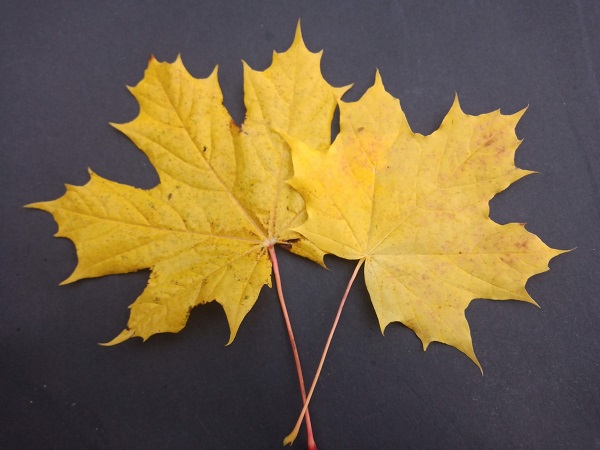
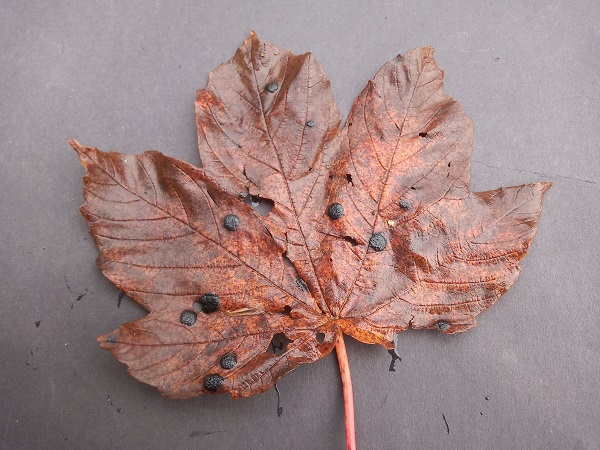
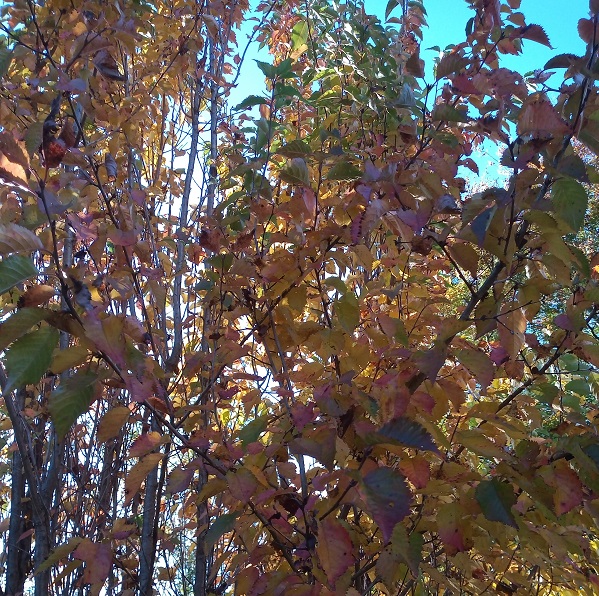
Post-abscission, clear buttercup yellow,
Glowing, brimming, laughing leaves,
Backlit by unseen candles in the soil,

Dancing to proud chestnut speckling,
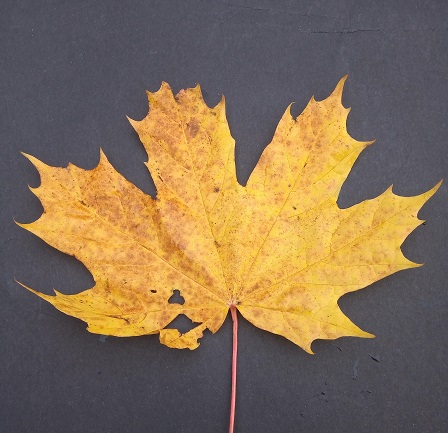
Here a tear, there a ragged edge,
Tawny shadows cluster.

Form altered, yet perfect,
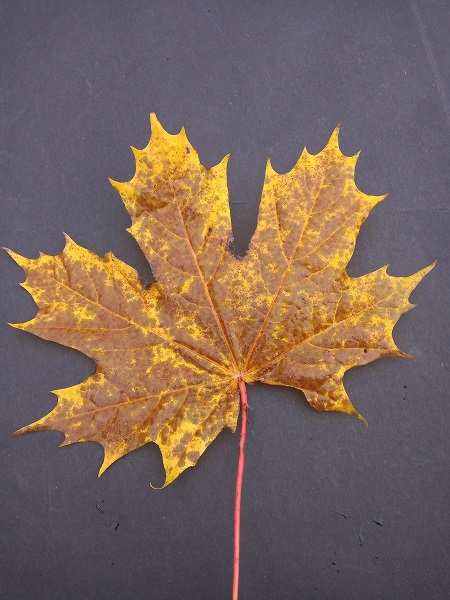
Loveliness of mottling, deep riven veins,
Clarity of soft, yellow margins.

No stage of this fading
Worth more or less than the last,
Or the next.

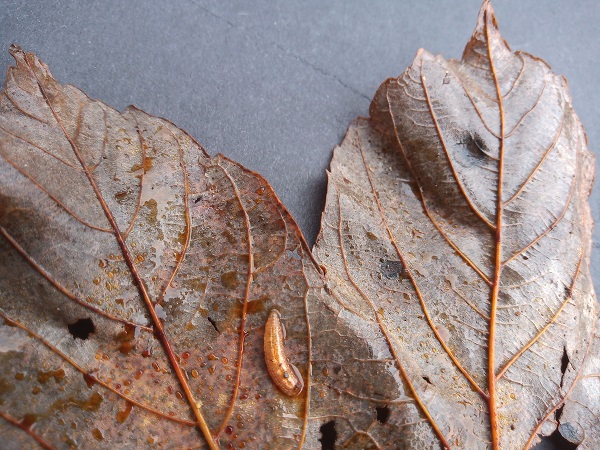
Burnished by rain, age spots darken,
Host to unimagined organisms.
Veins grow thin, but flow golden yet,

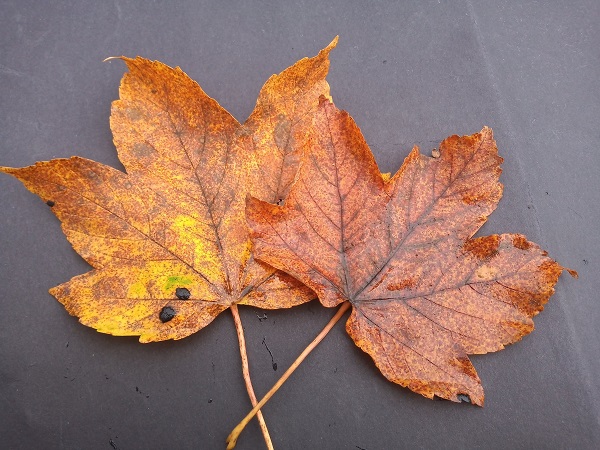
And when this encompassing brown darkens and crumbles,
Becomes indivisible with soil,
When nettles push back through the earth
And the chrysalis breaks apart

This, too, is living,

Zoom Yoga: A Tale of Distraction

Photo by Pixabay on Pexels.com

I roll out the mat and obediently stand, facing the window where the morning rain can be seen drip-drip-dripping from mouldering leaves and a hole in the gutter. I connect my body with the earth. My eyes, however, watch as the blackbird, steadily working his way through all the tiny red apples on the weeping crab, is joined by a song thrush. The thrush hasn’t been seen for months, and is initially more concerned with preening the rain from his wings and tail, until he assesses there to be no challenge from the blackbird, and tucks in heartily.

Lulled into repetitive, soothing xi-gong type exercises, my body goes into autopilot as I watch a long-tailed tit hacking away at a suet block in the bird feeder. Coal tits and bluetits buzz in and out from the communal vantage point of the crab apple, to feed on seed and fat-balls. A dapper wee collared dove paces up and down beneath, hoovering up the fat-ball crumbs the small birds dislodge and drop.

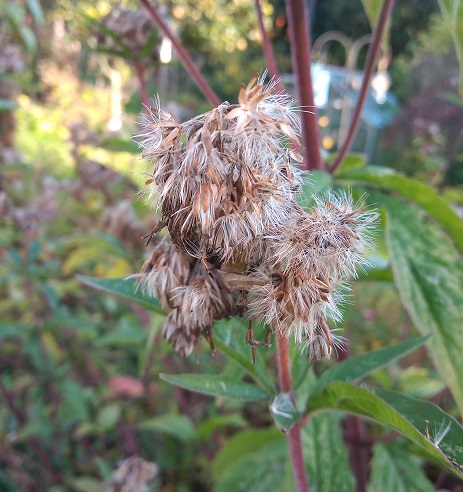
As I breathe, and stretch, and occasionally forget to do either in precisely the right order, I note that the Michaelmas Daisies are soggy, but still going, and there is plenty of seed still on the crystal-spattered heads of Hemp Agrimony. I note also that to human eyes in search of order it’s a mess. Shall I cut it down, or will the goldfinches be back to harvest more seedy meals? Of course, I’ll leave the mess.

I have watched my neighbour across the road leave her house and drive down the brae, but there is something moving around at the bottom of her garden, among the rhododendrons. Who would be gardening in the pouring rain? Ducking temporarily under the watchful eye of my phone, and thus my yoga teacher, I suspend an impossible balance to look more closely. Identifiable by their creamy backsides, two burgling roe deer are gently browsing their way along the hedge-line, looking for a gap in the fence that they know fine well isn’t there. They are bold, flexible, relaxed and insouciant. They have been doing yoga all their lives.

The impossible balance has not become easier in my brief absence.

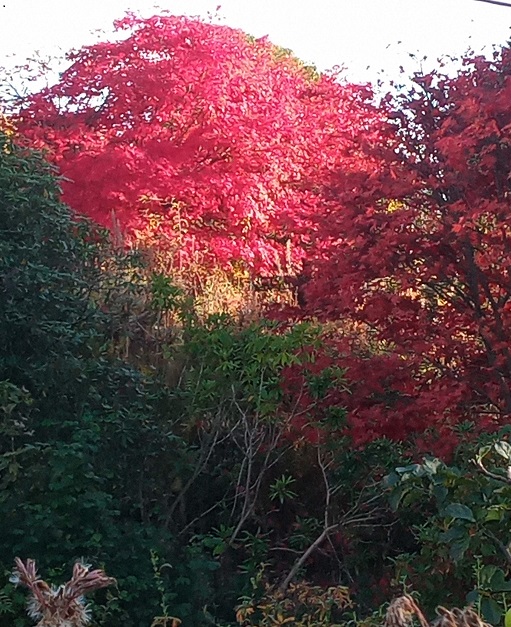
The deer dissolve into the flame-red autumn colour of next door’s maple trees. I hold a lunge a little too long while drinking in the full spectrum of colours of this year’s leaves, the brown of the rowan tree, clear yellow of the golden elder, peaches and oranges and tangerines dripping from a cherry tree. There is no wind, but the weight of water pushes tawny leaves from the russet apple tree, revealing huge, perfect apples still to be harvested.

The class moves happily into a movement called the dipping bird. I enjoy this, and execute a fair number of dipping birds with relish, until I spot an obese woodpigeon eyeing me through the glass with cold contempt. I’d like to see him do it, that’s all.

I wonder where the other birds have gone. Have they spotted intruders? Luckily, we are all muted. I would not have liked everyone to hear the expletive I came out with as the roe deer nonchalantly appeared on MY lawn in front of MY crab apple and began to work their way through MY shrub border. I duck again under the camera, and open the window to shout at them. They don’t even look startled, but condescend to lazily squeeze through the hedge into the no-man’s-land that will take them back to the stubble field. I hope they haven’t eaten my kale.

Relaxation time, and I’m back under the radar, feeling suitably stretched and folded like a good sourdough. Wildlife watching is a secret benefit of online classes. I wonder if, when we met in a hall, my yoga teacher realised how much time I spent watching clouds, the wind in the trees and passing seagulls through the high-up windows?

Exits, Entrances and Crossroads

A post for West Stormont Woodland Group

Is there an artist in the wood?

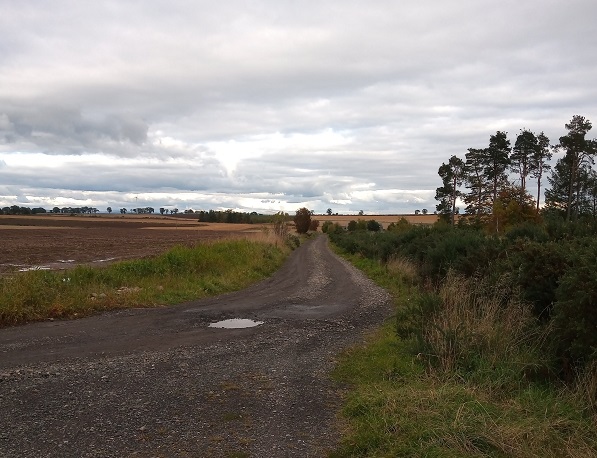
There is, really, only one easy way into and out of Five Mile Wood – at least in October. That’s from the south end on the Stanley to New Mill cottages road – currently a bit of a no man’s land thanks to the dualling of the A9. Here the track is clear, broad, made for forestry vehicles – and you can even park! At the north end, there is also the old straight track I’ve written about before, from South Barns and beyond that, with a diversion to Bankfoot. Follow the line of this track and it will take you to Dunkeld, once a mighty ecclesiastical seat. I learned last week that from Dunkeld to the wood it’s five miles – hence the name.

I wonder what happened to One, Two, Three and Four Mile Woods?

But once through the gate at the end of the straight track, the going is tricky. At this time of year, wellies are essential, thanks to the legacy of ditches, boggy ground and waterlogging that followed the felling of the trees here. When did it become the norm for forestry practice to leave such a mess? However, with care, agility and thanks to the enterprising actions of previous walkers using felled timber to ford the worst ditches, you can get to the main path that circles the wood.

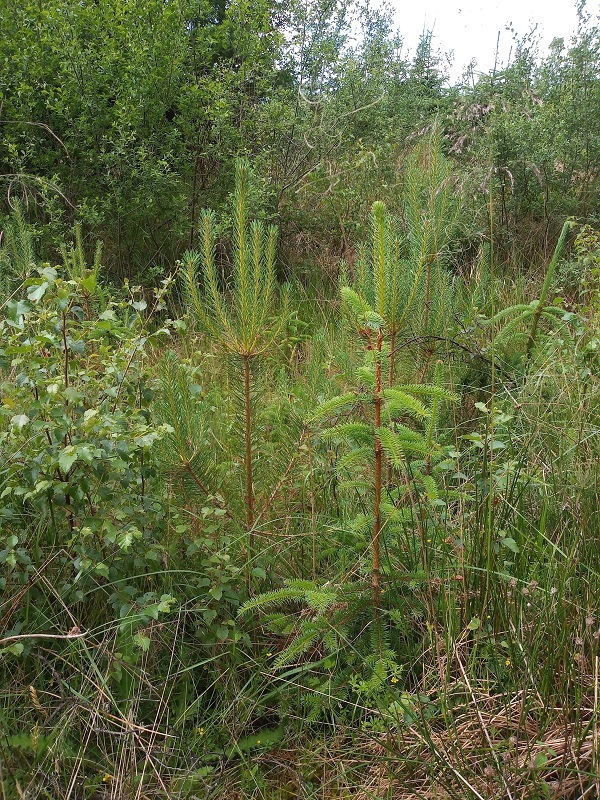
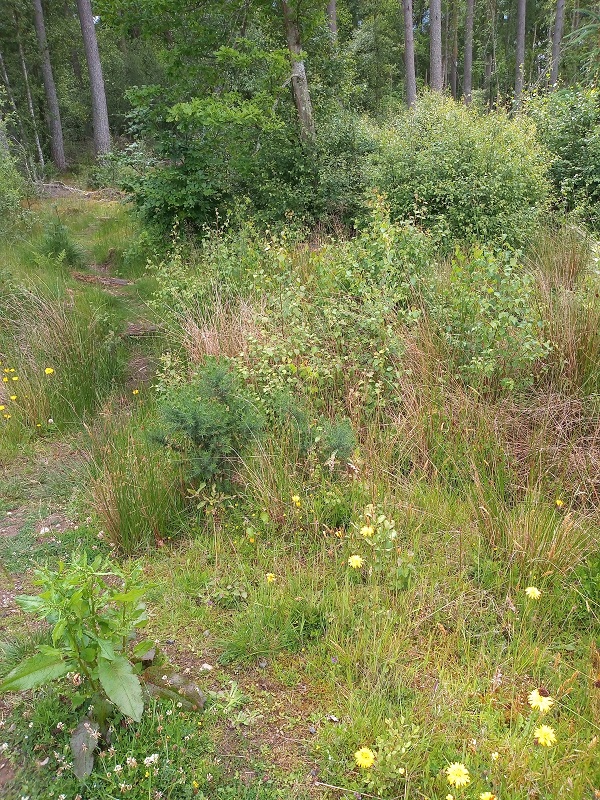
Deer, birds and other animals have their own paths off into the undergrowth, but for humans, the area where trees were felled before the Commission ceased to work are becoming impenetrable, Gorse crowds thickly on either side of the track, requiring constant maintenance to keep it from meeting in the middle. Self-seeded birch, larch, Scots pine and willow are all growing well, but there are no paths between them in this baby wood. Then there are the trackside deep ditches, another legacy of forest drainage operations, not impossible to cross but very off-putting.

So walkers, joggers and cyclists stick to the circular path and leave the wood by the way they came. Someone on Trip Advisor found the wood disappointing, and the circular track through felled forest boring. But I wonder. We undervalue landscapes that aren’t “finished” – such as newly planted gardens and self-seeded woods at the start of succession. The prettiest part of Five Mile Wood may be the winding bike-track under mature trees which shoots off from the main path near the south entrance, but the burgeoning growth of pioneer vegetation in the centre – the “gap site” as some call it – is vibrant with hidden life, resounding with the flickering flight of small birds and bubbling with amphibians and aquatic life in the ponds and ditches created for drainage. Even the nuisance gorse is a rich nectar source for pollinators and home, each bush, to thousands of spiders and other invertebrates. It’s not what we are schooled to believe beautiful, but in terms of ecology and resilience, it is every bit as valid as ancient oak climax woodland. Not all landscapes can be measured in human terms – though the amount of carbon sequestered by rapidly-growing trees and shrubs will be enormous and far greater than that in a carefully-planned, gardenesque setting. And humans need carbon sinks as much as every other life form.

People like to have choices, though. Choices about where to enter the wood – entrance points close to all the settlements that lie within walking distance. New tracks to follow, new routes to explore, the chance to come out into the sunshine at a different point from where you went in. Paths that cross, diversions, sidetracks, viewpoints. I don’t think they should be the main focus of the wood, or dominate the richness of undisturbed wildlife in the centre. There must be places that are no-go areas for humans, where nature can get on with it, and prove, as ever, that she will make a better job of it than we can.

And then, let our tracks meet and link wood to wood, as we learn to walk more, and be more in nature and less apart from it. Then we will lose our expectations of park furniture and entertainment, and realise the woods aren’t, in the end, all about us.

Oh Bees, that will not let us go…

First, let me make it understood: the narrow path at the back between our house and an unruly hedge of ghastly snowberries and virulent ivy is a no-go area we rarely check up on till the ivy taps on the one narrow window in that wall. This is how the bee boxes went un-noticed.

A hive of bees blocked off the entrance to that path for many years. It also made the lovely south-facing corner of the garden a bit of a no-go area for maintenance in summer, until we tired of the feeling that the woods were devouring the house, and moved the bees to the farm where we grow fruit trees, and the ministrations of better beekeepers. However, there have always been feral bees in Bankfoot (to which we may at times have contributed – but surely not), so we kept what’s known as a bait hive there, in case a swarm was looking for somewhere to take up residence. It’s basically an empty hive with some honey scented frames of ready-to-build honeycomb inside. If they did, and if all went well, they too would be moved to the farm.

This worked in 2019, and again in spring this year. A big, exuberant swarm arrived in May (clearly worth their load of hay). We left them to settle and establish, partly because we’re busy/lazy/unprepared, but also because whenever we interfere too much with bees, something seems to go wrong. Bees, in my experience, know what they’re doing far better than we do. I confess, I know all the theory, but am a terrible beekeeper. Sadly, on this occasion, we were all helpless in the face of pesticide poisoning. The bees started coming home in dribs and drabs, crawling around witless on the patio and unable to reach the hive, many dying with their probosces (tongues in the vernacular) protruding. The whole colony was killed; whether from agricultural blitzkrieg or over-enthusiastic wannabe gardeners in lockdown, I’ll never know. We put the boxes and frames on the bonfire in case the other honeybees that came to rob the undefended honey got poisoned by it, and cleared the site.

One day at the beginning of August, John and Linda called for a garden visit while we were out. When we got back, John said, “See your bees are doing well, very active today.”

“No, no, we don’t have bees, they were poisoned. That’ll just be robbers still smelling the old hive.” John looked very sceptical, but the matter was dropped. A few days later, in the warm sunny weather, we both thought, that’s odd, those robbing bees do seem to be very purposeful. That’s when we discovered the haphazard arrangement of two bee boxes, discarded gods know how long ago, in the dark, ivy-infested jungle at the side of the house.

Clearing the undergrowth

We had bees. Again. Get the smoker out.

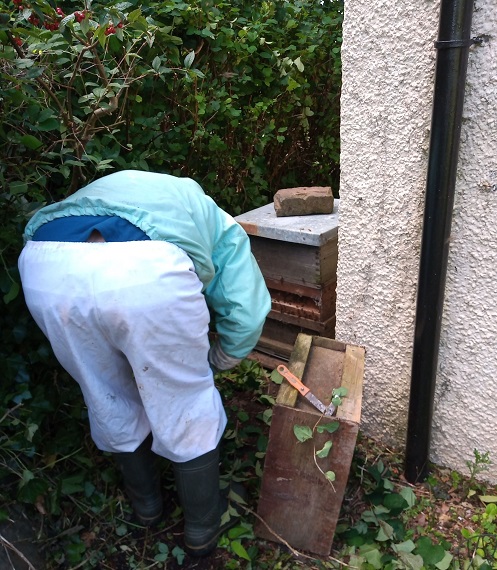
A late swarm like this is usually small, and doomed. But with our usual ineptitude, we hacked back the undergrowth and installed the colony in some sort of bee-order with a floor, varroa mesh (which we initially put on upside down, so had to dismantle and reassemble the whole structure), a opening restrictor to deter robbers (it was when we couldn’t get that in the entrance that we realised the varroa floor was upside down) and a roof. Still unsure how to tempt queen and colony from their wild comb into nice neat rectangular beekeepers’ wooden frames. Maybe we won’t. Gradually, a few inches at a time, we moved the bees forward out of the undergrowth so that they’re almost in the sun. Luckily, there’s been a lot of sun.

The thing about a bee suit is, it’s pointless unless everything’s tucked in

Now, at the start of October, they are still very active, feasting on late nectar flows from our Hemp Agrimony, Globe Thistles, Wild Bergamot, Sunflowers, Knapweeds and Michaelmas Daisies. Grudgingly, I note that the virulent ivy when it flowers will be just what they need before the winter. Who knows if they’ll come through the winter? These times are tough for our pollinators, tough for every species in fact. If they do, they’re going to the farm. Check for boxes in the undergrowth.

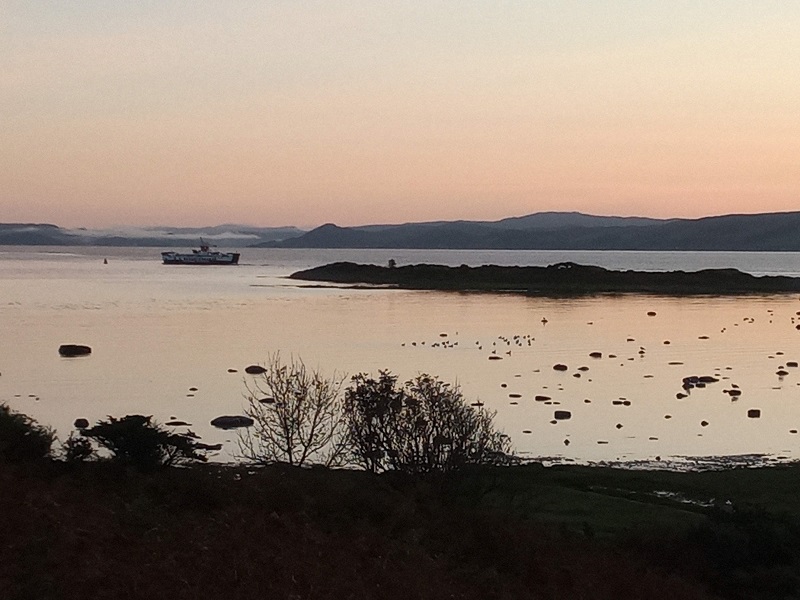
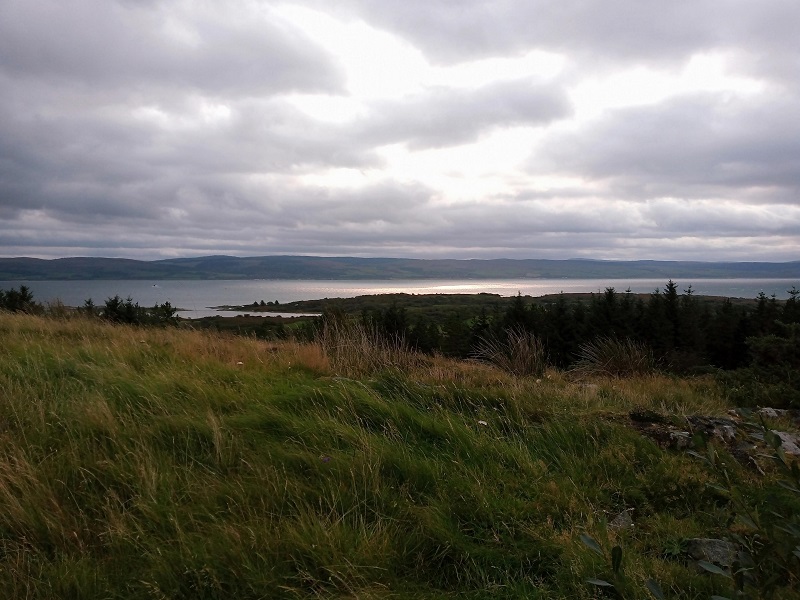
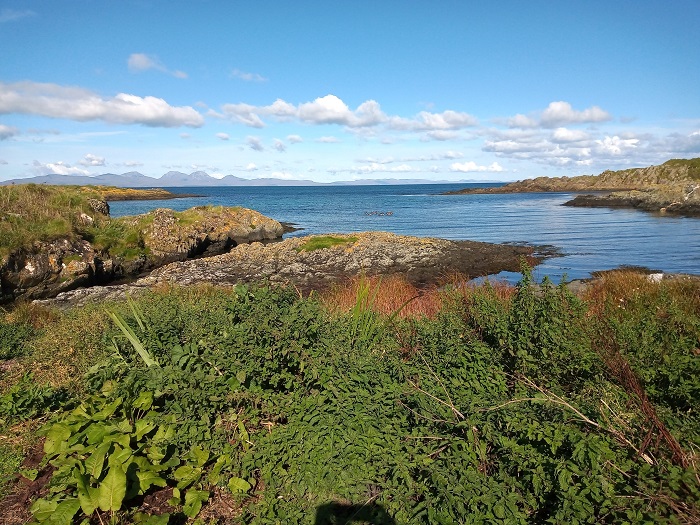
The Island

Small island
of benign cattle,
quartz-veined rock-pools,
exotic trees
and runaway rhododendrons:
A chameleon island,
shape-shifting as the weather pirouettes.

Truly Hebridean
with its small, hand-moulded fields
and slow pale meadows, and
the flashes of white sand as the tide goes out.

But in a chiselled sky, it hardens
to shoulder the wind-borne rains of Shetland.
As sea-rocks darken and clouds come low,
sand blackens. I taste metallic air
of a sea-bound nation, far across
a cold, uncompromising, northern sea.

Then, in a flash, a rainbow erupts:
Sun-dazzled waves and sweet, warm,
blackberry-festooned tracks
through deep, lush valleys, recall Penwith,
and sun-drowned, southern afternoons.

But this island
holds its own keys;
makes its own future;
decides what to be
and to be what it chooses.

It defied all comparisons in Twenty-o-two.

What we Choose to Eat from the Woods

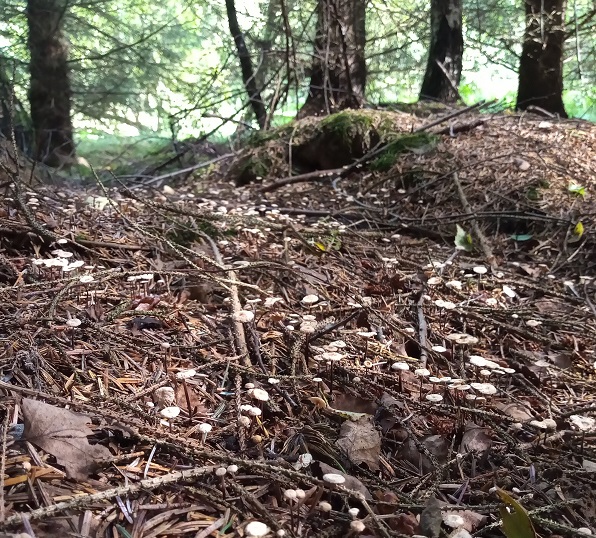
Horsehair Mushroom swarm

As soon as I entered Taymount Wood, I smelt mushrooms. Across in the pattering shade of the woods to my left, a family was ducking and diving and exclaiming across the ditches to each other. I could glimpse baskets, a small dog, a child or two.

Great! I thought, people foraging. Good luck! With chanterelles from a previous forage in my fridge, I just wanted to walk without expectations or intent.

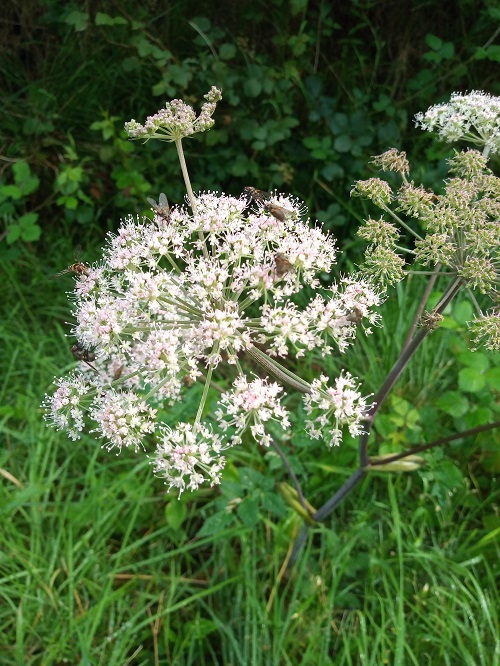
Looking for late summer flowers, I was taken by the large numbers of Wild Angelica growing either side of the path. Each geometrically arranged flowerhead hosted a happy horde of hoverflies and other pollinators. I’m 99.75% certain it is Wild Angelica, an edible plant – but I’ve never foraged it. The quarter of a percent of my brain that says “But wait, it might be Hemlock or one of the other poisonous members of the family out to deceive” prohibits me, despite the smell, season and appearance.

99.75% Wild Angelica

If in doubt, don’t. I no longer take risks with my foraging.

Taymount Wood is the wood that sidetracks me, every time. Up to the right, a sunlit glade. Cross the sleeper bridge to the left – what’s in here? Horse-hair mushrooms (Marasmius androsaceous) swarming up from the pine needles. A collection of puffballs (Lycoperdon perlatum) in mint condition cried out to be selectively foraged. Only firm, young ones are tasty, and leave more behind than you take.

Puffball (Lycoperdon perlatum)

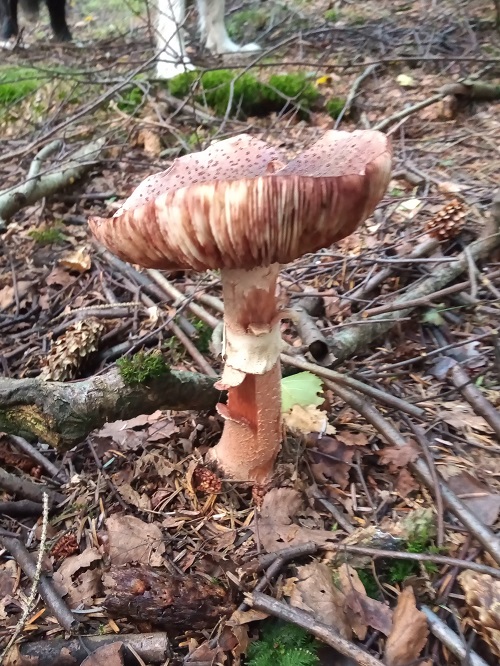
One family of mushrooms of which you have to be wary is Amanita. There are some deadly poisonous members, some only moderately so. Others will send you psychotic. There’s a few edible ones. Taymount Wood today was full of Blushers (Amanita rubescens), one of the edible ones. I have never eaten it, and never will. The flesh bruises pink, which is the indicator of the species – but in other respects it is too like the deadly Panther Cap (A. pantherina). Just suppose a Panther Cap happened to blush one day….. In any case, Blushers are always riddled with worms and maggots before I get near them. Today, both species were growing close to each other and the difference was obvious. I still wouldn’t risk it.

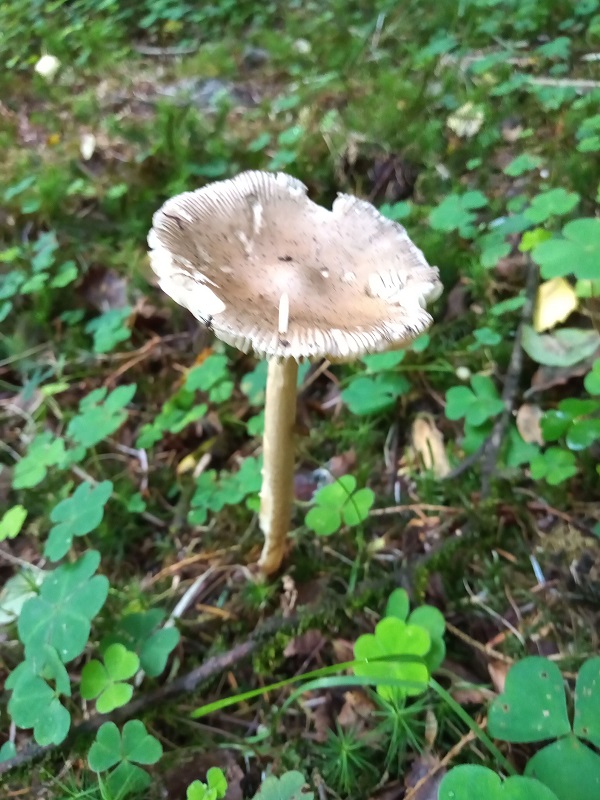
In the photos below, a Blusher on the left, showing the ring; three stages of a Panther Cap; but what do you think is the one on the right? See what I mean?

The Tawny Grisette (A. fulva) I do eat. Unlike most of the family, there is no ring around the stipe, and the edges of the cap are evenly striated as if by a pastry-cook. They were here – but it’s a socially-distanced species that only ever appears singly – and I hate to take the only one.

Tawny Grisette

The stench of death – but not quite death – drew me to the well-named Stinkhorns (Phallus impudica) in the ditch. Most people recoil at eating this mushroom, which exudes a sticky gel smelling like a corpse to attract flies to spread the spores. But I’ve eaten plenty – at a very young stage when they look like eggs protruding from the forest floor. There’s no horrid smell and the jelly surrounding the immature fruiting body is actually delicious. All right, to each her own!

Stinkhorn

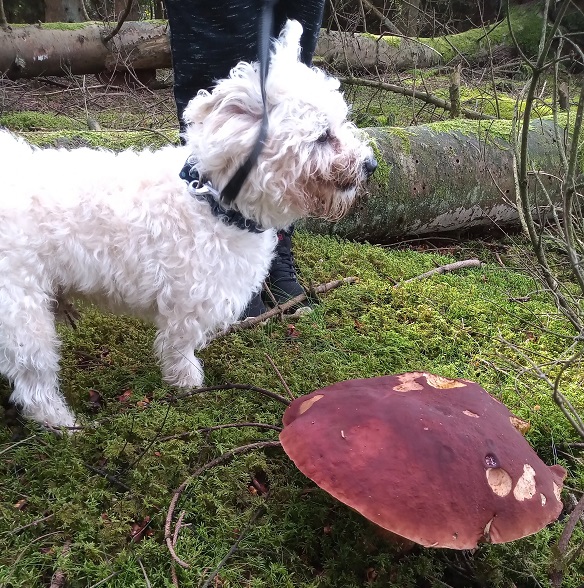
Sidetracked again, I met half the foraging family. Marcin, his young son (and the dog) had just found the biggest Boletus mushroom of the day. We chatted, compared notes, and I admired Marcin’s basket of Ceps, Bay Boletes and others. Marcin learned his mushroom lore from his mother and grandmother in Poland, and their preferences are the Boletus family, chanterelles and Saffron Milk Caps. He loves these woods, and values them for their beauty and food supply.  The giant Bolete he said he will not pick, but leave it to spread spores and be admired.

I showed Marcin my collection of puffballs. He looked aghast. “You eat them??” Apparently not a favourite in Poland!

This post was written for West Stormont Woodland Group https://www.weststormontwoodlandgroup.org.uk/

The Ploughman’s back home, and Waiting to Welcome You

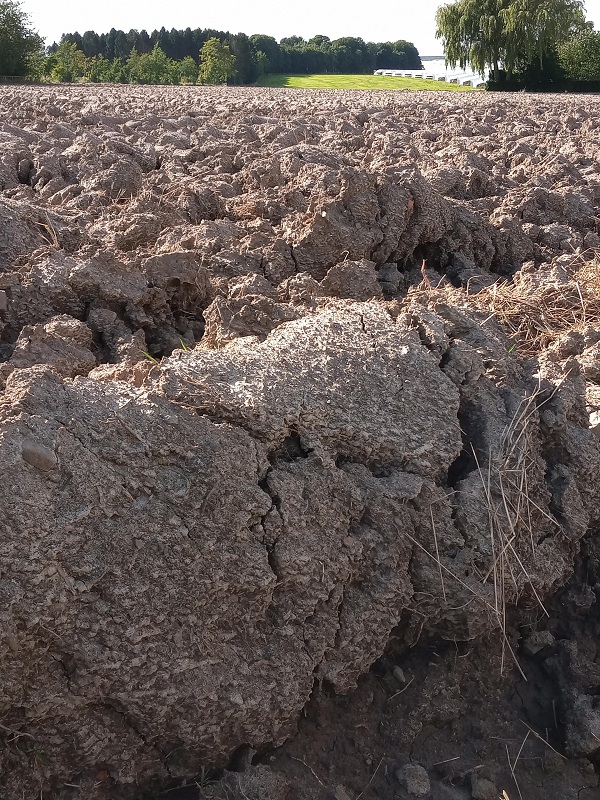
A fretting wind and days of warm sunshine have dried the newly-ploughed clays of the Carse at Port Allen into indomitable cliffs of furrows, solid, backbreaking, massive, yet wonderfully fertile. From the broken bridge across the Pow of Errol, the old port is ghostly, a hint of quayside, a dream of ships, the blue sky and wild clouds mirrored in still water.

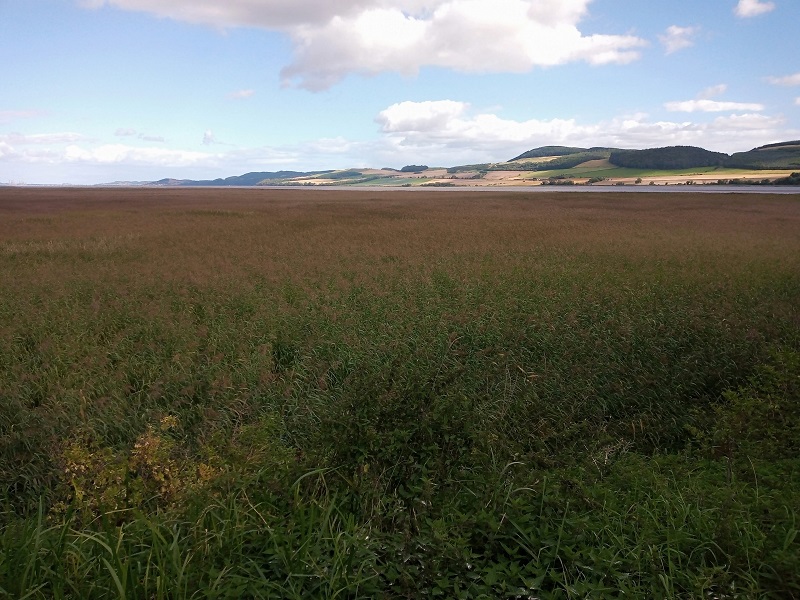
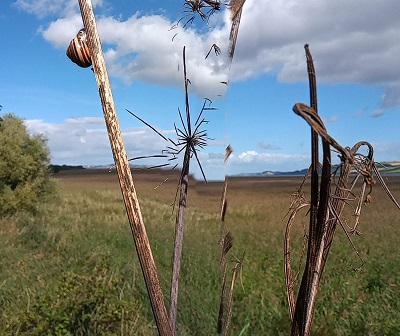
Endless reedbeds stretch to Dundee and over towards Fife, blurring with movement, a watery mirage that deceives the eye. You cannot see to the end of them. Nonchalent snails climb the haggard stalks of hogweed, clustering in the sun. Vision is fragmented, uneasy, focussed on a non-existent horizon.

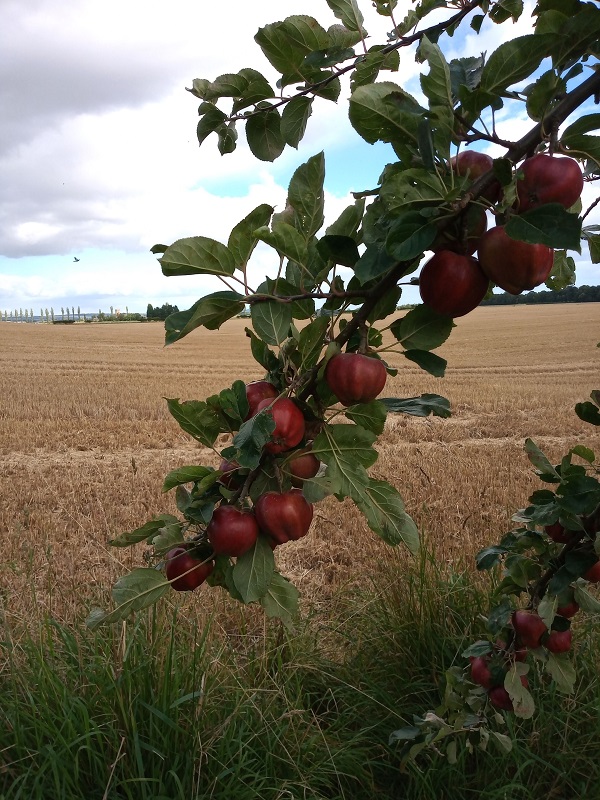
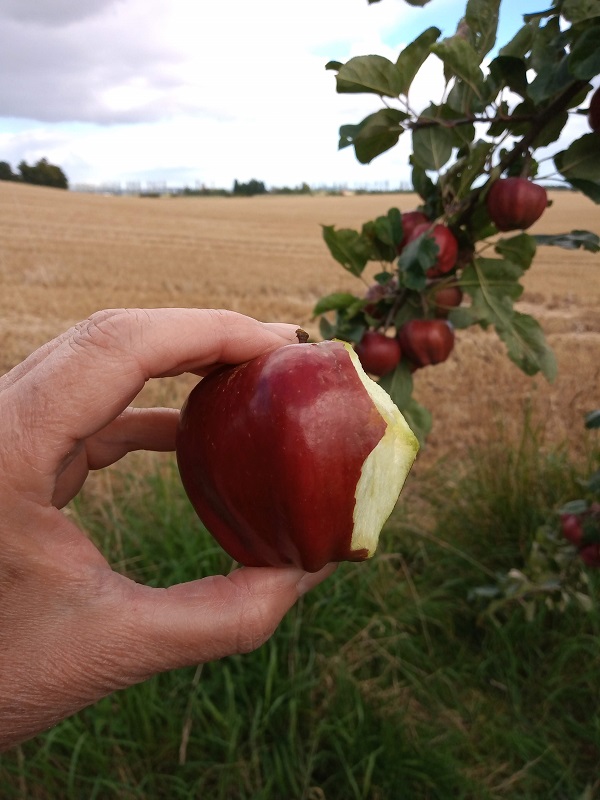
Up Gas Brae to the village, beneath great oaks and into the wind, a flock of pigeons, as ever, tracking your progress, and the start of a strange orchard, lining the road on either side. It’s a good year for apples, and not bad for pears. Two trees, side by side, and another further up, branches encrusted with wine-red, deeply-ribbed fruit.

This is the Bloody Ploughman, whose tale of apple theft and a fatal, or maybe not quite fatal, shooting has been relayed here before. This was his village, these clays were his to plough. It was hard work; just walking behind the horses would have exhausted him. No wonder he stole the apples. Bite into the ripe flesh, and see the streaks of blood. It isn’t always the sweetest apple, but it is crisp and as refreshing as the ploughman would have desired.

This year, the Ploughman is home in Errol and well settled into the community orchard, surrounded by clay furrows. whispering reeds and the calls of waders and marsh harriers. Go now to visit, before the apples fall.

You can help yourself, and no-one will try to shoot you.

Through a Gap in a Wall

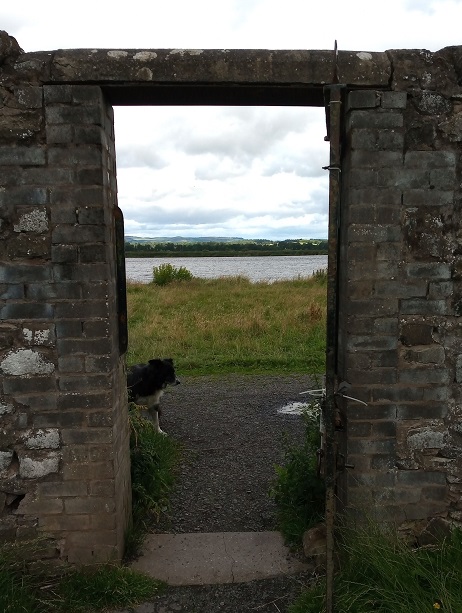
Through a gap in the wall, the horizontal lines of the Firth, flat islands looking half-submerged, and the frown of long lines of reedbeds across the water, are drawn like smears of dirt below a layered sky.

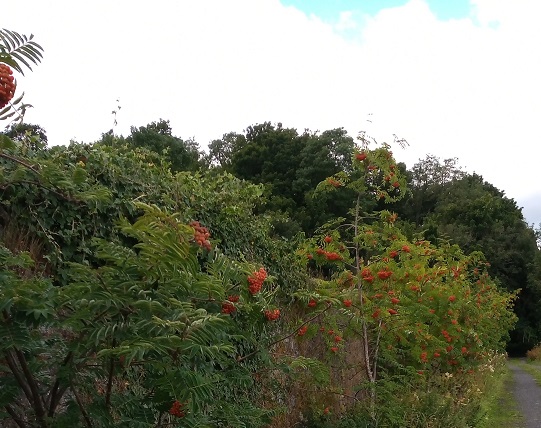
Pass through to the other side and the world has shifted, as though the rift faults that made this landscape just happened. The air is clamorous, the sky immense. In a town that arose among the orchards of an ancient abbey, the wild fruits of native Rowan are planted on the waterside of the wall.

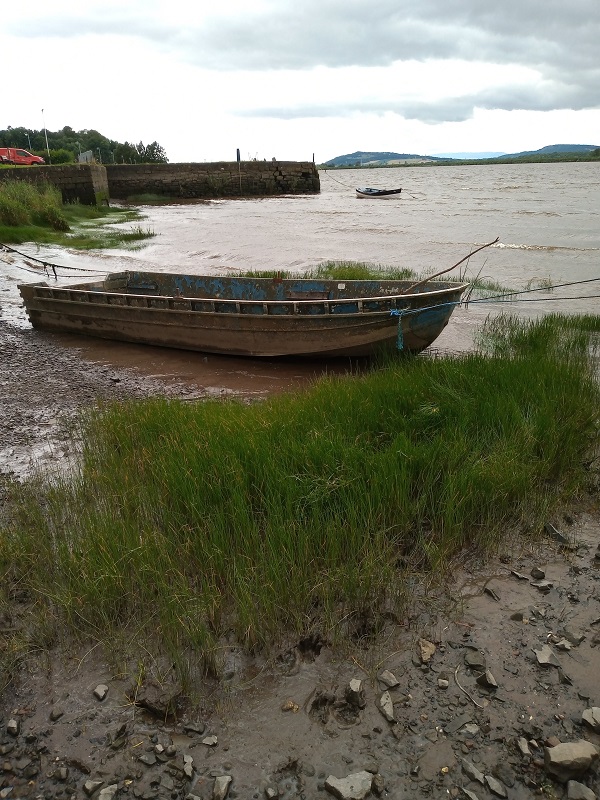
By the slipway, the silver and gold of pungent Mugwort and Tansy give way to outsized rushes the size of small trees. Among them hide bobbing boats, lapped by the high tide. Listen to the clicking and fretting of small wind-waves on the stone wall of the jetty. From here, boats once plied a busy trade up and down river to Perth or Dundee, and across to ancient Port Allen in the Carse of Gowrie. Did they trade grain for Fife coal? Carse apples like the Port Allen Russet for Newburgh plums and Lindores pears? Did the monks from Lindores Abbey and their fellows at Grange in the Carse send each other scions and grafted trees?

Follow the path east, past salmon high and dry and leaping above mown grass, beside inaccessible muddy inlets bordered by reeds and willows and deep cuts where the old mill-stream threads unseen but laughing to the Tay. Vegetation is exuberant, chaotic, oversized and riotous. Great Hairy Willow Herb towers over the umbrella-sized discs of Butterbur leaves; nettle and insidious bindweed tangle through, the bindweed erupting in white trumpets of triumph.

Ponder the great bear with her raggedy staff on the hill above the town. It is not as old as you think, but is rooted in history, via a stone. How does the symbol of the powerful Warwick family (best known as mediaeval kingmakers in that other country, England) fit into this landscape? Was the first Earl of Warwick, Henry de Newburgh, really from this place? Or is it there because William the Lion of Scotland gave the title to his brother David – the founder of Lindores Abbey?

And the stone – the Bear Stone – at the centre of the story – where is it now? What did it mark or measure?

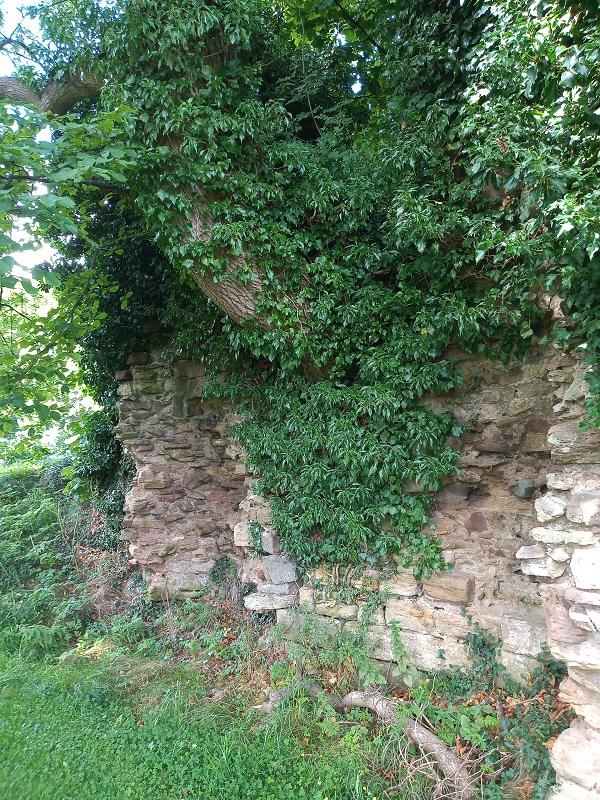
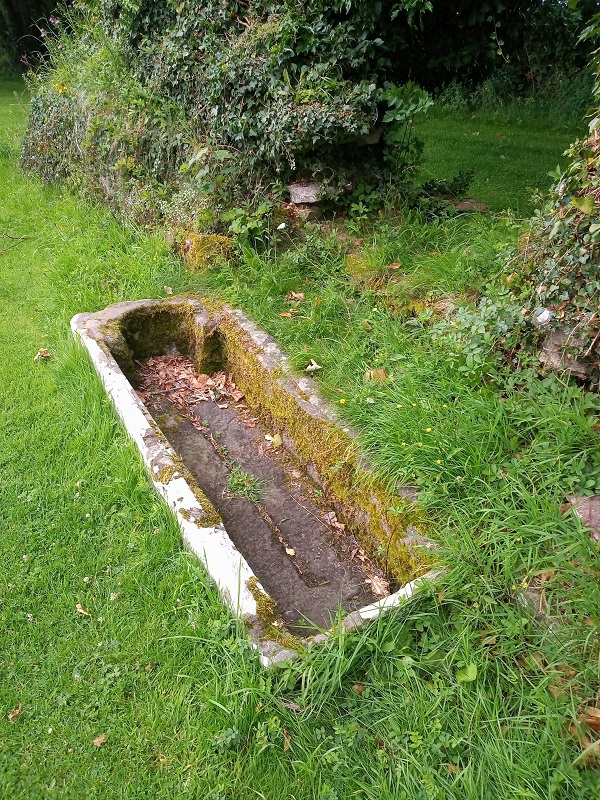
In the cool quiet of the Abbey ruins, trees and ivy hold up the remnants of walls. Old walls support vegetation and keep their secrets. Tread softly, slowly, let your thoughts be measured, as the sun moves the shadows across grass and stone. Be still. Wait. Centuries of contemplation hang heavy, and even the bees and insects of summer are subdued. Move on, quietly.

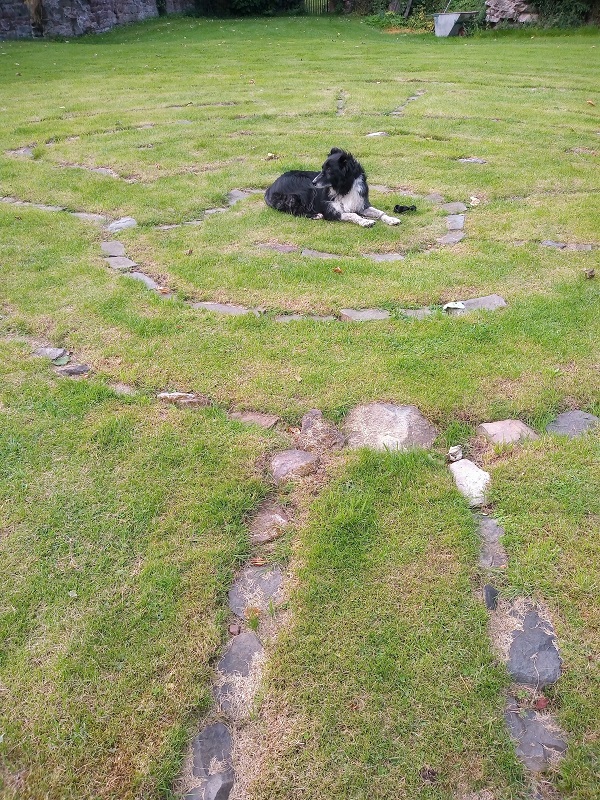
At the centre of the ruins, there is a Cretan labyrinth. Does it seem out of place? Follow its path – there is only one way – and do not cheat by stepping over the boundaries. Yes, you can see the centre, but you can also see there is nothing to gain when you get there. Just as when the monks of old walked their cloister, it is the journey taken, not the destination that matters.

When you leave, and come again into the town built on orchards, the world will shift again.

The Scent of Bracken

I was nine or ten when I first experienced both the smell of bracken and the nation that is Scotland. It was late July, the start of Glasgow Fair Fortnight, and therefore my parents must have taken me out of my London primary school for two weeks to pack me on a plane to Glasgow, for a fortnight’s camping holiday with my big sister Pat and her boyfriend. It was my first camping trip, too. It took me all the way up the west coast to Cape Wrath and literally changed my life.

My first evening in Scotland was memorable for sitting on a wall eating fish suppers. My first full day began with a curious morning at Pat’s work, where little was done beyond desk-tidying and paper aeroplane competitions. Then, the hooter went, tools were downed, and everybody went on holiday. Northwards first, in the Mini, me surrounded by camping gear in the back seat. We stopped by Loch Garry the first night, off a dead-end tiny road, and camped in a clearing in the bracken by the loch.

Loch Garry was my introduction to midgies. Naively, I thought they were all part of the adventure. I chattered away in excitement behind the mosquito coils, breathing in the strange, new scent from the bracken that for me would ever more be the scent of Scotland. Eventually, Pat interrupted me.

“Margaret, what time do you think it is?”

“Umm, maybe half past eight?” I replied hopefully, knowing my bedtime was at nine during holidays. I wanted to stay up a little longer.

Pat showed me her watch. It was twenty past eleven. Summer in Scotland, long days, even in July. I was persuaded into my all-too-exciting sleeping bag, and eventually fell asleep, though I never saw it get dark. And woke, next morning, to the smell of bracken once again.

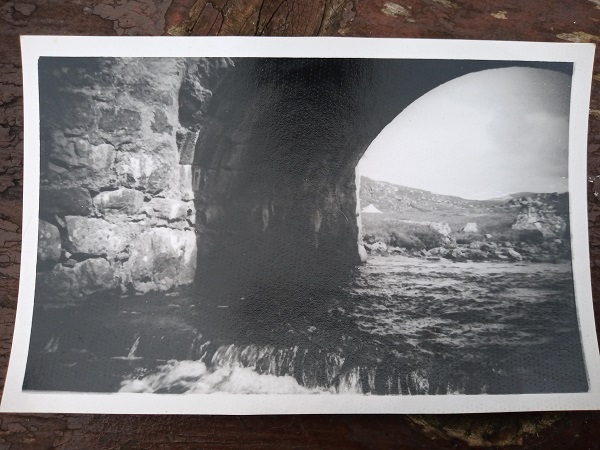
We meandered north and west for nearly two weeks, camping wild up tracks that led from narrow, grass-centred, barely-surfaced roads to the ruins of long depopulated clachans and farmsteads. Sometimes we stayed under bridges, or on beach-paths up which seaweed was once hauled for fields now buried in bracken, their stone walls mere crumbling ridges in the grass. Once, we asked permission from an isolated farm, where the farmer’s wife took the cow for an evening walk each day. We filled our water bottles there, and tried to buy, but were always given, raw milk from the cow.

I trailed after my sister by burns and over cliffs, taking bad photos with my precious box camera, looking for eagles, dizzied by sea-stacks, drinking in a world I couldn’t have imagined from my London suburb. Ullapool, Mellon Udrigle, Achiltibuie, Lochinver, Stoer, Kinlochbervie, Oldshoremore – place names which became indelible in my brain. And the magical mountains of Assynt: Stac Pollaidh the “petrified hedgehog”, Suilven, Canisp, Quinag…. I had not known there was this.

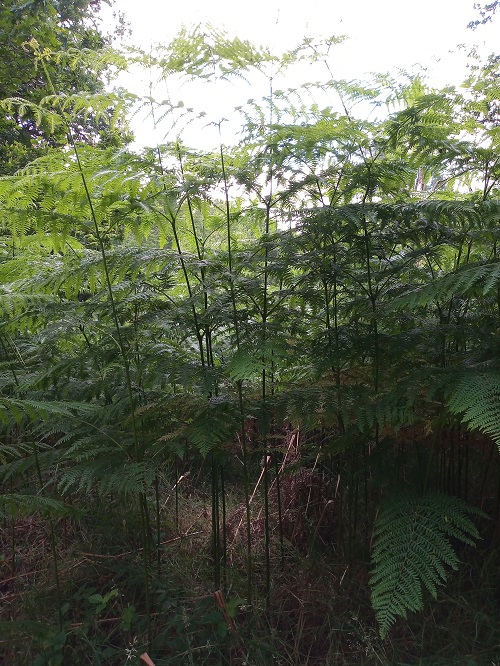
As I inhaled the scents of bracken, I discovered its practical uses. Pitch your tent over it, and it made for a comfortable sleep if your air-bed leaked its air out every night as mine did. Bracken was an indicator plant for dry ground when crossing terrifying bogs (as were heather and, to an extent, rushes. Bog cotton and moss was to be avoided). And being a small child, the bracken generally towered over me, yet I could find paths deep into it’s forest, to child-sized clearings, for private pees or just to hide.

I already knew, from my uniquely progressive and brilliant Scottish primary school teacher, more about Scotland than the average English adult does today. I knew of the Clearances, the Wars of Independence, Burns’ poems and (reluctantly) Scottish Country Dancing. What I learned that fortnight was not facts. It was the country itself, sights, sounds and weather, the star-filled nights and the mists that clung in the whispering air; the colour of the rain; the beauty, the sorrow and the joy. I was never the same again. Although I muttered crossly to myself about long walks with wet feet, and the sheer copiousness of uphill tracks, I was captured. Thereafter, holidays with my parents sitting on crowded beaches in southern England, driving out to bustling “beauty spots” and picnics on the side of the road, were never the same. To their credit, mum and dad realised it, and did their best to incorporate more “adventure” into our trips.

But it wasn’t adventure I craved. I’ve never been very adventurous. It was the scent of bracken.

It was the scent of Scotland.

Thank you.

The Sea, Finally

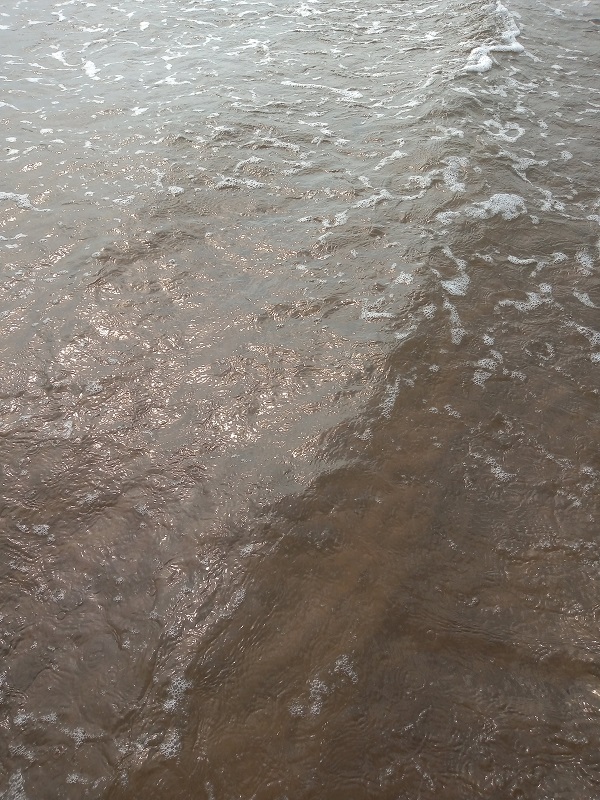
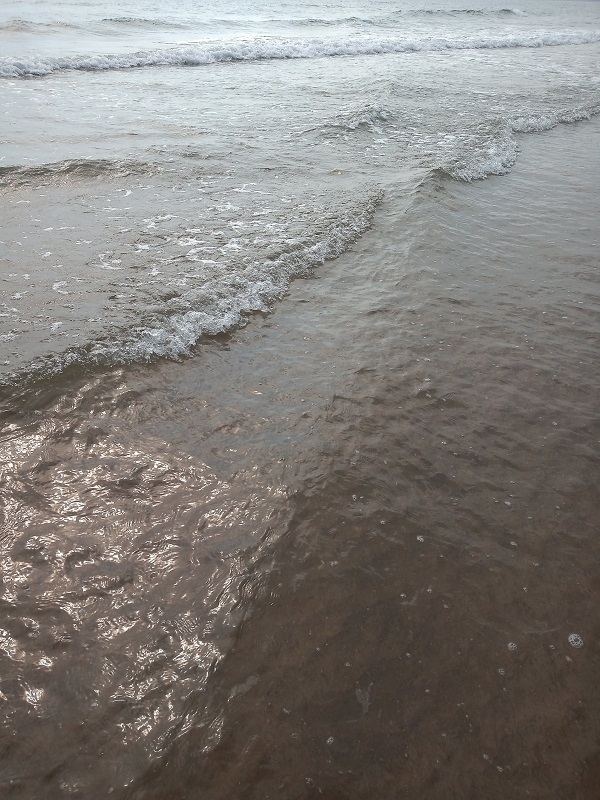
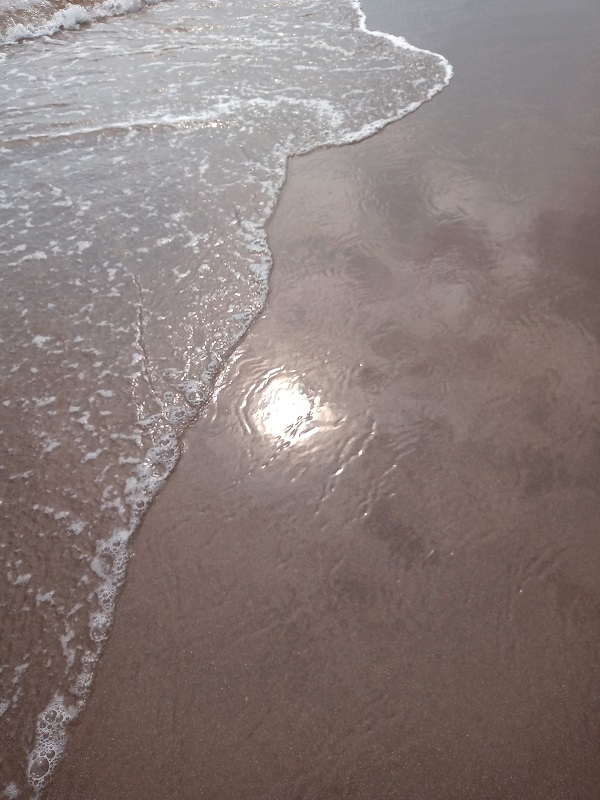
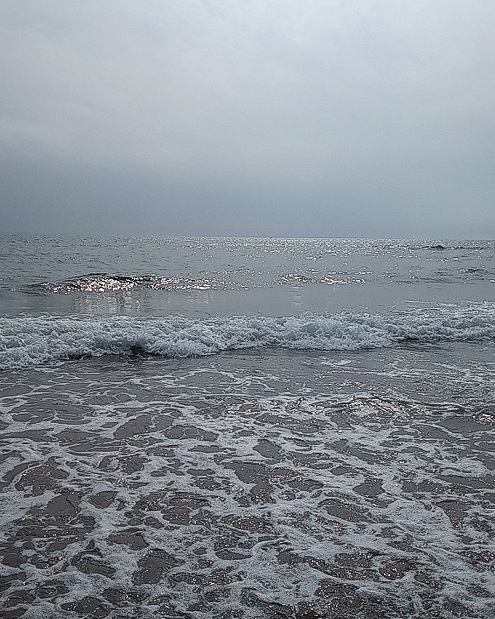
At last, after so long away,
The meandering dunes are crested,
Sky opens like a spangled flower,
High and thrilling, atoms dancing, circling all.
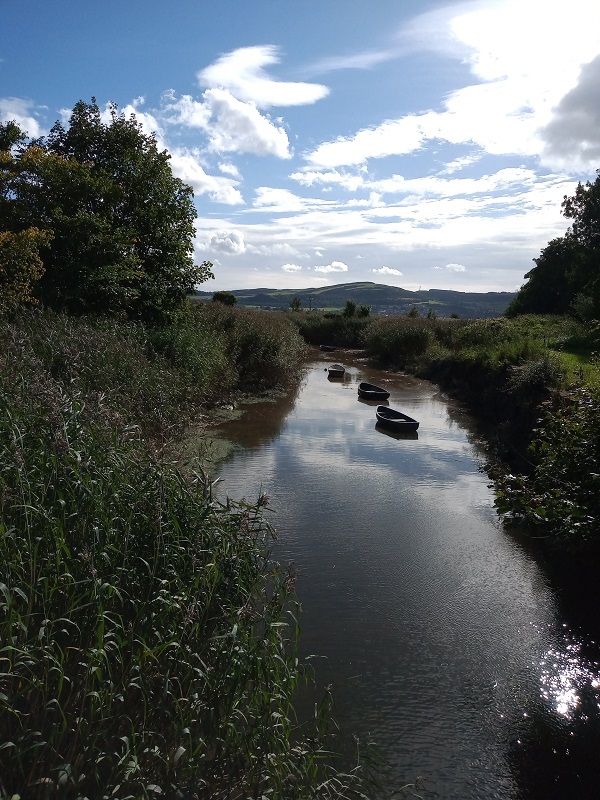
Endless beach compels, beckons,
A siren-call.

Mind empties. Into that void
Comes the sea;
Seeping through sand
In glittering showers of sound,
Echoes of shell and stone;
In waves of cold molten glass;
In sunlit spray.

Nothing is needed.
Only here and only now,
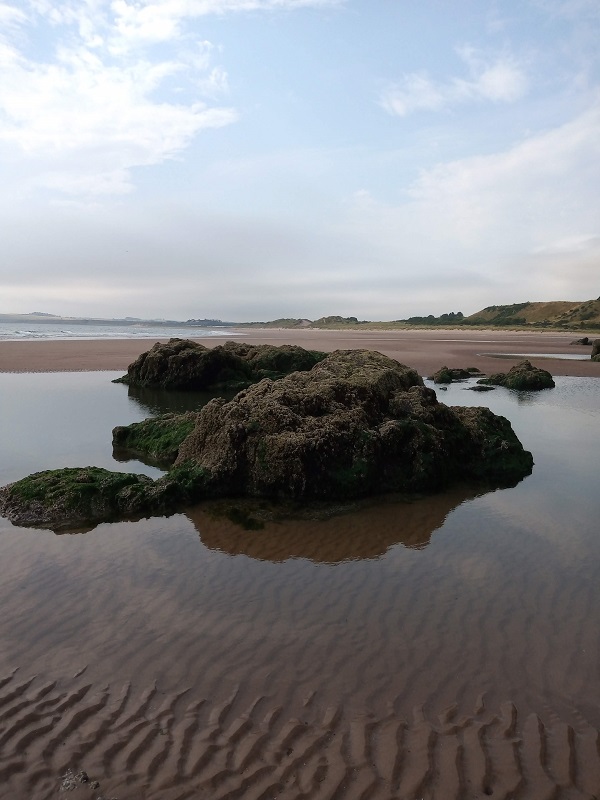
And only this.