Creeping Up On King’s Myre

TWfeet

Hot, sunshine, slight breeze – a day to cycle to a cool and shady place. We’d often thought about walking into Taymount Wood by the core footpath from Airntully, but before lockdown hadn’t considered cycling all the way from Bankfoot. We left the village on the Stewart Dairy road, in normal times screeching with haring rat-runners with no conception of cyclists or passing places, and up the steep Barns Brae. This we accomplished without pause for breath, thanks to the electric bikes! We were caught out at the top by two “proper” cyclists who had stopped to recover, and who tried very hard, in a typical show of pandemic goodwill, not to look supercilious.

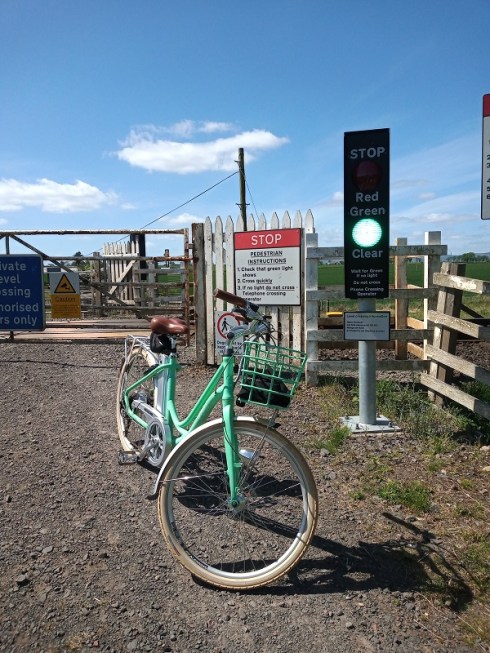
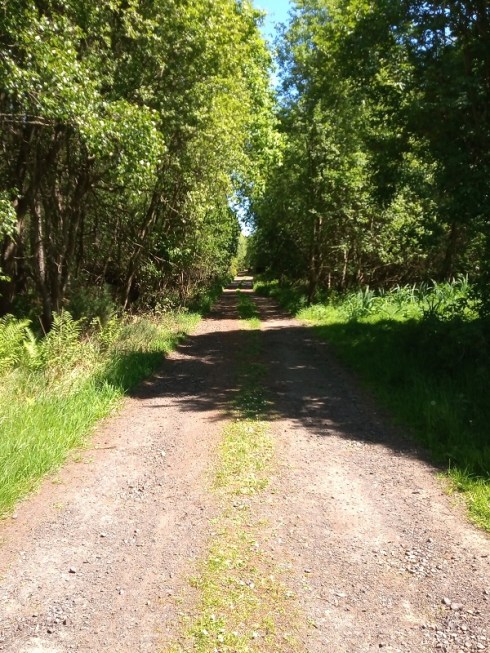
From the hamlet of Airntully, with its handy share-and-donate community phone box, we entered a shady tunnel of hedgerow elms, that enclosed our path. A shivering mosaic of sunlight hovered over the blue of speedwells, the pink of purslane. The path quickly led across a road and over the main line level crossing, straight to the fringes of Taymount wood.

TWlevel xing

In contrast to our last visit in March, most trees were in full leaf. Violets flowered happily in the shade. It was now drowsy midday, and – again in contrast to March – the birds were silent, save for a welcoming chiff-chaff.

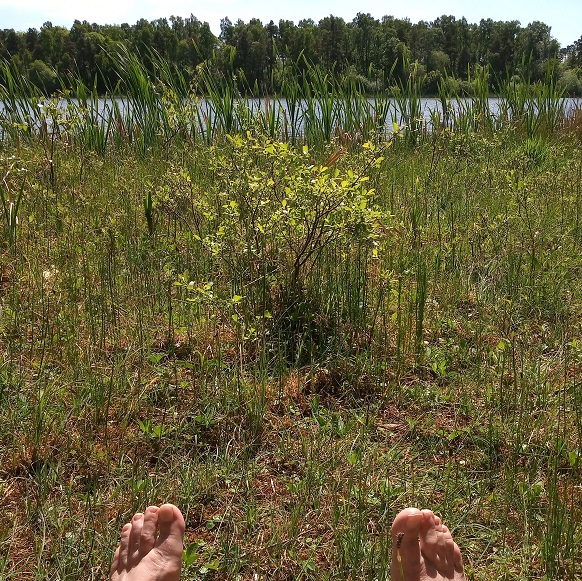
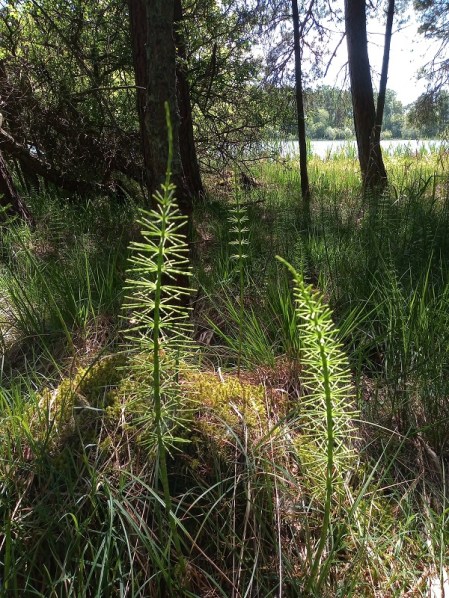
The silver line of King’s Myre appeared through the trees on our right. Parking the bikes, we took a small deer path between the trees towards the water.  You cannot “go to” King’s Myre, nor can you arrive. There is no division in this habitat, between wet and dry, no shoreline, no edge. You have to creep up on it, with the stealth of an amphibian or a mudskipper. The ground underfoot grew softer, violets gave way to arching horsetails, until the trees petered out into scraggy bog willow and the soil became sphagnum moss. If I stood still, water came over my shoes.

TWhorsetails

Under the last tree, whose roots appeared to have made a spot dry enough for tormentil to grow, we sat down to picnic and observe. An osprey, also in search of lunch, circled the lochan. Fluffy seed of the reedmace bowled about the water margin like tumbleweed. Blue damselflies hovered, veering abruptly as if skating on air. Red damselflies were better camouflaged, except the one that alighted briefly on my knee!

TWorchid

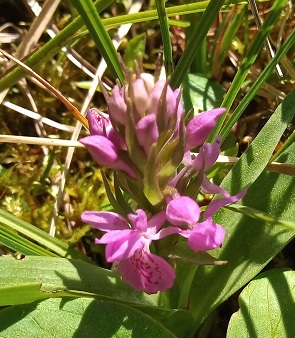
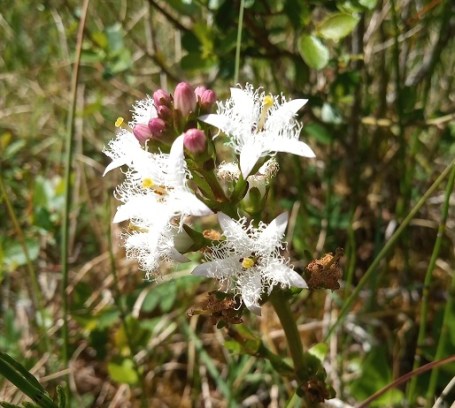
There were many small, dark solitary bees. Where they were foraging? They ignored the yellow tormentil, and I could see no other flowers. But a squelchy walk among the bog willows revealed several orchids, probably marsh but I’m hopeless on orchids, and the staggeringly lovely fringed flowers of the bogbean (Menyanthes trifoliata), just coming out.

TWbogbean

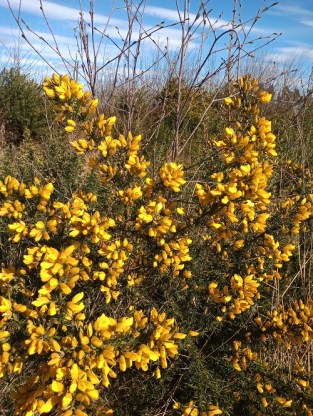
Back to the bikes, and on through the wood to the main entrance on the KInclaven road, streaming away on downhill paths through heady clouds of coconut scented gorse. By the time we reached the birch trees, the birds were singing again. We returned via Airntully phone-box for a book to while away the rest of the afternoon.

TW1

This post was written for West Stormont Woodland Group, in support of the plan for community buy-out and wider community use of local woodland and landscape.


The Ultimate Alchemy

seeds2

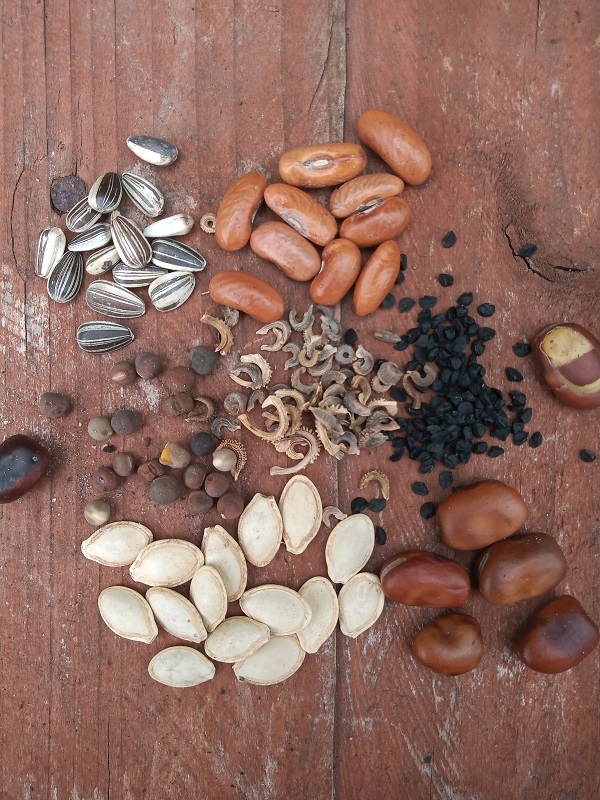
seeds5They are as diverse in shape, size, colour, decoration as any flower. They are self-contained, yet everything is contained in them, however small, to make the tallest tree, the juiciest berry, the wheat we eat, the biggest sunflower, the rarest orchid.

Hold seeds in your hand. Feel the faint pulsation of life, no matter how dry, how hard and rigid they seem. Feel that faint warmth, the tiny voice that says. “I know. I am coming. Plant me”.

In your hand is magic.

Remember biology classes at school, as dry as these seeds, the dreary terminology of meristem and cotyledon and radicle? No-one spoke about miracles. Yet no-one understands the rapture of the “hooked plumule” until they see their first-ever home-grown seedling – maybe tomato, maybe a pumpkin – shoulder its way through the soil into the open air, then to unhook and open those first seed-leaves.

seeds1

You stare, open mouthed. I did that, you think. I put that seed there. And lo, it is growing. It worked. In that moment, you are caught. You will see this happen again and again, pots of seeds, rows of seeds, the longed-for yet always somehow unexpected eruptions of “seed” potatoes breaking through the mounded soil. But always it will dazzle you, floor you, make you giddy with sudden brief joy.

seeds3

It is the ultimate alchemy – the transformation of small hard mote into living organism. So far beyond the base-metal-into-gold aspiration of mediaeval alchemists, for it has succeeded. And it is a collaborative feat. You may have sown the seed, but the seed has made use of you, and you have grown.

From each seed is the potential for flowers. From flowers, the prospect of more seed through pollination. The promise of seed is the promise that we may eat again, that our children will eat. It is no less than the promise of survival.

seeds4

In today’s world, a pandemic virus coupled with spiralling concern for an environmental emergency has got us all sowing seeds. An army of growers and gardeners is multiplying like dandelions. These aren’t the old-guard, nature-controlling gardeners. When the garden centres closed, we realised our children cannot afford to be at the mercy of a few big seed companies, or side-lined into dead-end F1 hybrids that will not produce viable offspring. We need seed we can collect ourselves, share, save, and keep for following years and new generations. Seed banks and seed libraries (a kinder term, that speaks of sharing and co-operation) are springing up across our land. Is there one near you? Can you start one?

We are a people terrified by the present, grasping for a past that was never really going to sustain us, and reluctant to look at the future, in case there isn’t one. Seeds, in their understated humility, their quiet, warm still voices, carry that germ of a dizzy rapture, that incredible potential.

Seeds are the promise of a future.

(The quotation at the start is from Melissa A DeSa. Community Programmes Director, Working Food)

May 2020: The Bluebell Wood in Lockdown

bluebells2020f

There is no lockdown here.

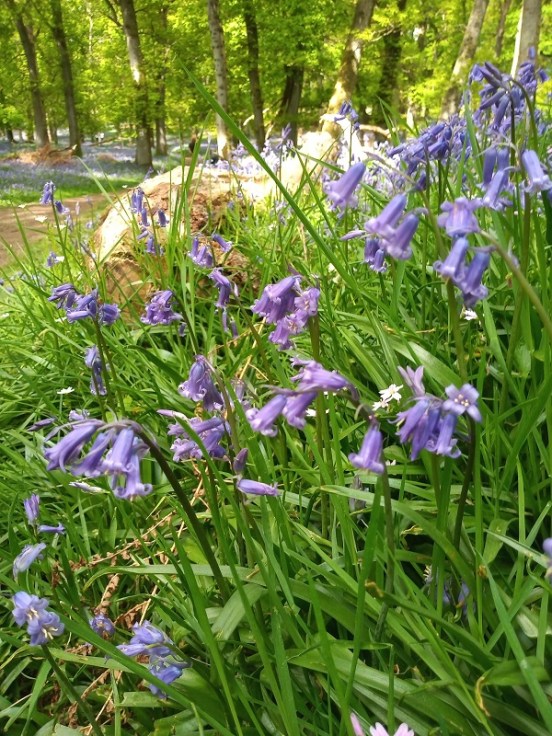
Cascades of bluebells pour unrestrained down slopes and banks in teeming armies. They crowd thick and close and unrepentant, in teeming armies, nodding to kiss and touch the air, the sunlight, their neighbours.bluebells2020b

Black, loping St, Mark’s flies dangle above the bluebells, lost in the still air that’s full and fragrant and intoxicating. Bees softly hum, preoccupied, beyond concern, without anxiety. Birdsong surrounds us, meshing into the stillness and silence till it becomes part of it. Woodpecker nestlings can just be heard, grumbling in nest holes in elderly trees.

bluebells2021a

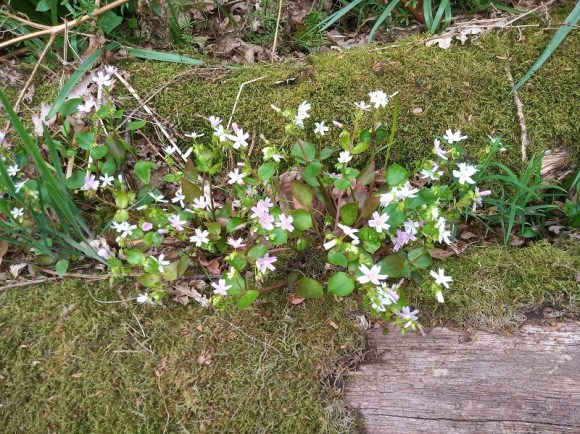
The wood breathes deeply, unmasked, unshielded. Stitchwort and purslane gather together, jostling around stumps and falling branches, pink, white and all the shades between, small exuberant stars in a sky of riotous blue.

bluebells2020d

Humans are few, and we are all quiet. We greet each other in joy and friendliness, as if to apologise for the distance we must put between us. A young woman walks slowly, murmuring quietly to her baby who peers out in wonder from its sling. A small girl is carried in her father’s arms. Both gaze silently, smiling.

bluebells2020c

Another world is possible.

Another world is here.

bluebells2020e

The Back Mill

backmill7

He’d dive in, dump his school bag, raid the fridge and be off.

“Where’re you going?”

“Dunno. Backmill probably.”

“Oh. Okay.”

Backmill was what they called it, these prepubescent and young teenage schoolboys with more energy than sense. The little wood accessed by a rusting stock feeder converted to a bridge over the Garry Burn lies not far from the primary school. For me it was a place to find edible fungi in autumn and clouds of wood anemones in spring. For them, it was an open woodland opportunity for creating ever more ambitious bike jumps and mini skate parks, housing a roughly square, slightly sunken area they called the Curly, whose banks made a race track or skateboarding wall.

backmill1

As summer progressed, he’d pop home to borrow a spade, loppers, a bow saw. I railed, and refused the axe.

“You’re not to saw down any trees!” They did, though to be fair the old curling pond was thick with self-sown sycamores of suitable diameter for log ramps and bridges. The tracks and jumps became quite elaborate. My son and his pals were probably following a long tradition in which they were the current top dogs, and learning about engineering and practical skills in the process. Health and safety, too, I suspect.

Twenty years on, I never see a child in the woods, but the evidence indicates that to some extent the tradition continues. The burn is forded by new stepping stones, the soil is bare over the bumps and jumps, and someone’s parent has welded new metal onto the old stock feeder to keep safe-ish access going. There was a village campaign to build a “proper” skate park a few years ago. I kept quiet, but suspected an improper one would remain more attractive.

backmill2

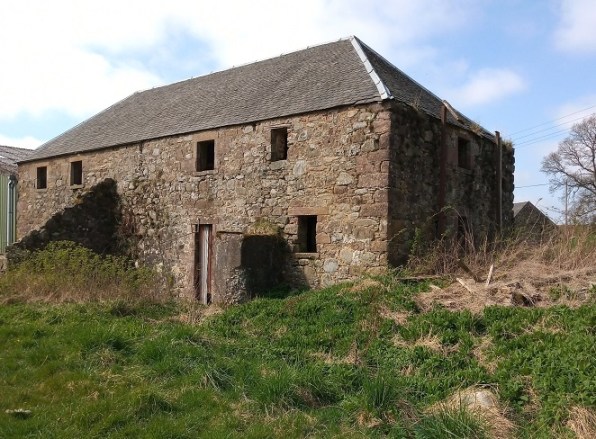
At the end of the wood and across the burn is a cluster of old buildings and a modern barn used to store straw bales. When you look closely, you can see where a water wheel once was attached to the wall of the biggest building, though nettles and rank vegetation choke the pit where it would have turned. This is the real Back Mill, after which the wood is locally miscalled. Once, it must have been a hugely important hub of activity for the village.

backmill6

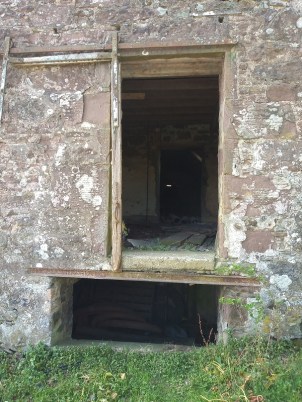
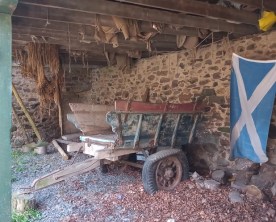
It’s a sizeable building, and across the road a second building of similar age was, I think, the granary. A door on the upper floor was probably where the grain was unloaded into wooden carts, perhaps like the one now parked in another outbuilding.

backmill4

The lower floor is crumbling, but suits the swallows and martins for nesting, and has been used for housing the beasts in winter – the old wooden manger is intact.

backmill5

But where is the water? The Garry Burn is much lower than the mill wheel, and the track into the ford now only leads to a field. Behind the mill, a stretch of level grass looks like it leads round the side to meet the wheel. Go several hundred metres up the road from the ford, looking carefully through the tangled vegetation, and you can discern a straight, broad channel. You soon come to a stone dam, and the remains of the mill-pond. From here the water would have been diverted on milling days via the lade at a slight incline to the wheel, which would start to turn and grind under its power.

backmill3

I’d love to find out more about Bankfoot’s Back Mill, and whether the wheel was an overshot or an undershot. It’ll have to wait now till the library re-opens, and I can delve again into the local history archives. Meanwhile, children of Bankfoot, keep building dens, jumps and bridges in the woods by the Curly!

The First Thing that Must Change

coronavirus
Photo by CDC on Pexels.com

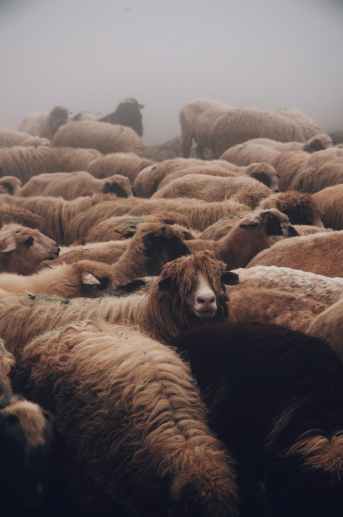
We are in strange times. Things are changing. People don’t like change. Many people will be yearning for everything to “go back to normal”. The media incessantly bleat that expression “back to normal”, interspersed cleverly with “business as usual.” People listening assume that’s what they – and everyone else – want to see. People won’t raise an eyebrow at this assumption, because people like to feel they are in the majority and agree with everyone else. They think there’s safety in numbers, even when the numbers are imaginary or made up.

close up photo of a herd of sheep
Photo by Ekrulila on Pexels.com

Some of us – many of us – don’t. We want things to change. Some politicians even want change – or at least can see that it’s inevitable. But they sugar the pill by calling it a “new normal”. What do we want to change?

  • People to stop over-consuming the planet’s resources
  • The widening gap between rich and poor
  • Greed and Injustice – social and environmental
  • Air pollution, plastic, environmental degradation
  • Wars, bombs, threats, dictatorships
  • Governments that chip away at democracy
  • People thinking biodiversity loss is inevitable “progress”
  • What Tennyson called “the faithless coldness of the times”
  • ….and so much more

We want, well, everything to change. It’s too much to ask. Where do we start?

We are in a pandemic, caused, not by China, Johnson or even Trump, but by a virus. Viruses are funny things. Are they even a life-form? They have no life and no power to reproduce on their own. They can only do that by hijacking the DNA or RNA (the genetic element of a cell) of another species. Plant or animal, whatever the virus finds suits their need. Did you know that stripy tulips only got that way because of viruses? A virus made them worth a fortune in the 17th century.

Viruses are very small, smaller than bacteria. Indeed, they can even infect bacteria. Some of them – including the coronaviruses – are incredibly beautiful structures. We have learned, in recent decades, to applaud our “friendly” bacteria which protect our digestive system or power our sourdough fermentations. Bacteria aren’t being friendly or unfriendly, though, they’re just getting on with their lives, and we happen to benefit sometimes. Other times we don’t and we go all antibacterial and kill off the useful bacteria as well as the harmful ones, leaving ourselves open to more infection.

But no-one ever applauds a virus. Even though within the lining of the animal (including human) gut, live viruses called bacteriophages. Guess what, they eat up “unfriendly” bacteria. Other viruses help develop and support the human immune system. Just like the bacteria, they’re not doing it out of the goodness of their hearts, which of course they don’t have. They’re just being viruses. Viruses, bacteria, slime moulds, fungi, algae, tardigrades, invertebrates, mosses, insects, molluscs, fish, flowers, trees, amphibians, birds, reptiles, mammals (including people), and all the groups I’ve missed out – they’re all just organisms in a complex web, getting on with it as best they can.

slime mould

Sometimes – but not very often – an organism will get above itself. It will be clever, but hellish stupid. It will decide that it’s superior to all the other entangled organisms and it will start acting in a way that’s detrimental to all of life on earth. Destructive, actually, and stupid enough to believe – no, to CHOOSE TO BELIEVE – that destruction won’t include them.

It might take something as small as a virus to bring them down with a bump.

If the sound of arrogance crashing around us is louder than the soothing noises of those with vested interests in “business as usual”, more people will start thinking everything must change. And here’s where to start: drop the conceit that you are apart from the rest of the natural world. You are as entangled and connected to every other living organism – and many which may not be living – as the Covid 19 virus. You are no better and no worse. You are part of nature. You will never, ever, be above it.

Come back down to Earth, and then together we might really hope to change everything.

sphagnum

#Everythingmustchange #common weal
commonweal.scot

Bees, Butterflies and an Old Straight Track

5mile wood1

The things you do in a lockdown. I wouldn’t normally walk from the house to Five Mile Wood, I’d call in on my way to somewhere else, parking the car. It’s not an especially long walk, but since they felled most of the trees on the Bankfoot side, cavernous ditches and hollows have made the entrance to the wood treacherous, wet and debateable, and the track to get there goes on a bit and is not especially interesting.

Or so I thought.

I marched out from Bankfoot on one of those dazzling, sun-struck mornings of which we’ve seen so many this April. We crossed the pleasantly deserted A9 and the field to the edges of Cairnleith Moss and turned right along the track to North Barns. The path stretched ahead in a tediously straight line, the wood in the far distance looking nearer than it actually was. At some point, I turned round to let the dog catch up.

5mile track1

It was a VERY straight track. North, it pointed directly at Birnam Gap, the space between the hills where every Great North Road is forced to pass. Ahead of me, beyond Five Mile Wood, the conical East Lomond Hill in Fife lay in a direct line. Suddenly, it fell into place. With these landscape markers aligned, this was the ancient route north – preceding the drovers’ track above my house, which preceded the winding old A9 through Bankfoot village, which went before the current A9. They all run roughly parallel, and all have to go through Birnam Gap. (Later I consulted the maps: this old straight track seems to have continued beyond the wood to meet the Tay at Waulkmill, then probably followed the straight road through Stormontfield, and on to Perth or beyond).

5mile track2

On either side, vast, treeless fields stretched forever, brown, homogenous, dusty and devoid of hedges. In a hollow beside the track were a dozen beehives. I realised the field I’d just passed did contain a crop – oil seed rape, yet to flower. That’s why the bees were there. A farm vehicle traversed the horizon on the other side, trailing an enormous boom sprayer. Dust and chemicals billowed behind it. The smell in my nostrils was like an airport runway. How on earth, I thought, did the bees keep going, while waiting for the rape to flower? There were no wild flowers in this agricultural desert.

5mile entrance           5mile gorse

Reaching the edge of Five Mile Wood, I crossed the gate into the ravaged landscape of felled trees. The footpath sign directed me, and I could see where I needed to be, straight ahead on the old track, but a new route had to be picked to get there. Others had succeeded; makeshift log bridges across water-filled ditches, meandering paths that skirted the boggy areas. I reached the main path which circles the interior of the wood amid the heady coconut-scent of gorse – and there I found the bees, working the flowers sprung up in the new heathland created by felling. Beautiful birches, freed from forest, leaves just opening against a vivid sky. A border of dandelions edged the path, dancing golden and perfect in the sun of noon. Goat willows, pioneer trees of clearings, still in flower, had attracted a small swarm of peacock butterflies. In the new landscape of a one-time forest the bees and butterflies and all the creatures of the heath found sanctuary.

5mile birch     5mile peacock

Returning home, I thought about how important this chameleon landscape is, set against modern farming. I thought, too, about the old straight track that entered the woods, and how its purpose was muddied by activities that had made it so hard to follow. I thought how approach and access is so important, in any plans we may have for these woods in the future.

5mile dandelion

Everything Must Change

DSCF1433

Radio voices infiltrate
Birdsong, and the low murmur of bees.
They demand our patience,
Promise clever plans, speak wistfully of
Getting back to normal.

Cold winds
Have blown the smog from the skies,
Hushed the traffic, sombrely
Slowed the world down.
With neighbours and friends afar,
We swap and share: seeds, favours, produce,
Recipes, ideas and goodwill.

Oh, but, the radio voices cry,
That won’t be forever. The economy
Will erupt again amid chattering smokescreens,
Rise and fill the air with busy-ness,
Drown out birds and kindness.
Don’t despair. The economy
Will get back on its rotten track.

We’re not to worry. There’s no need
For co-operation, self reliance or hope.
They’ll feed us bread and circuses again. Meanwhile,
Have some crumbs
From the great loaf of capitalism.

No need for questions,
but they’ll give us answers, anyway;
Answers we don’t need to understand,
Data to depress, figures to make us fear
Those cold winds of change.

Let’s not go back to that normal
Of duped dependency, petrified inequality
And the averted gaze.
Swallows have returned. With eyes wide open
We can see the season changing.

DSCF1516

I wrote this in response to the Common Weal #everythingmustchange campaign (https://commonweal.scot/rebuild).

Statutory Exercise into Prehistory

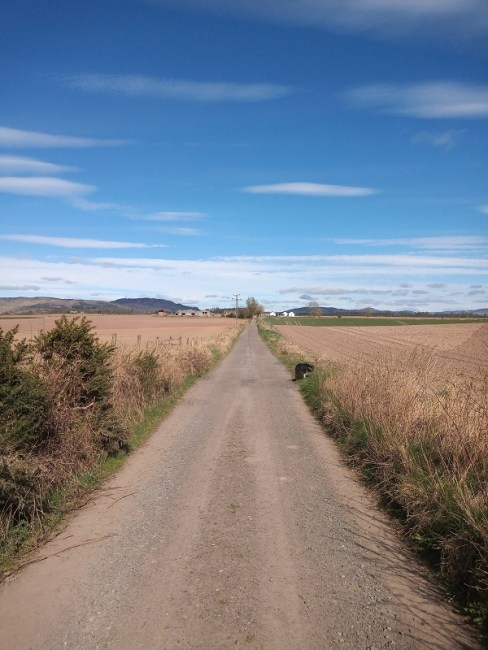
It’s a favourite cycle ride, a circuit of under an hour, with all the hills at the start and you can almost freewheel home, if you go clockwise. A bright, sunny Easter day and a chilly wind; dusty ploughed fields and the great pleasure of almost empty roads, as the pandemic lockdown disrupts the “joys” of motoring.

tullybeltane2

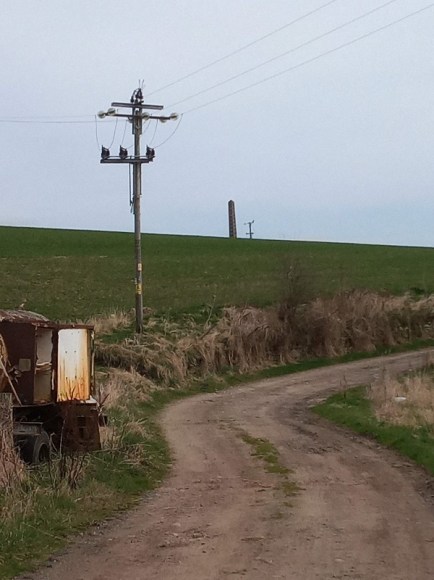
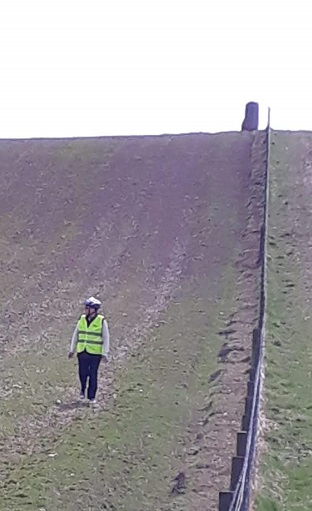
We cycle up through forest research sites and broad swathes of farmland towards Tullybelton, the hamlet whose name may derive from being the field where Beltane (May Day) fires were lit when older and more nebulous gods were remembered. We detour to Little Tullybeltane Farm, where a tall pillar points incongruously at the blue sky, and a buzzard mews and hovers. The track to the farm is neglected and lined with abandoned pieces of rusting metal; there is no plaque, no sign, no clue why it warrants such an imposing monument – and no invitation to explore.

Yet here – allegedly – the ruins of a turnip shed are all that’s left of the birthplace of one Robert Nicoll. From here he walked to school in Bankfoot, stopping to write poetry on the way. He was a peasant lad, a precocious child, the “boy poet” of Auchtergaven who died way too young, the one whose genius may have surpassed that other more famous bard, Robert Burns, with whom he had much in common – had he lived longer. But Nicoll was also a firebrand, a radical advocate for reform, a passionate speaker and fighter in the cause of human rights. Here is his monument, and not enough people know why it’s there.

He was 23 when he died.

tullybeltane3

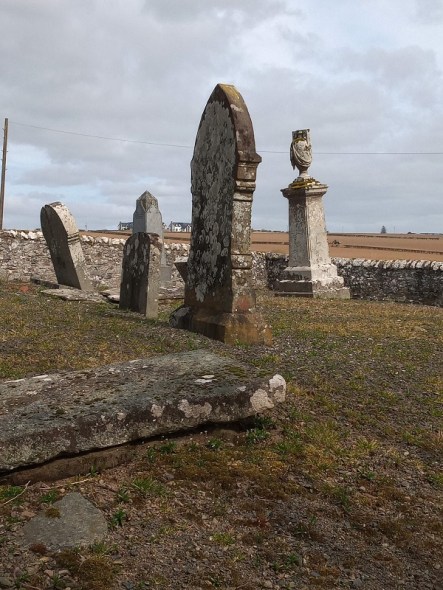
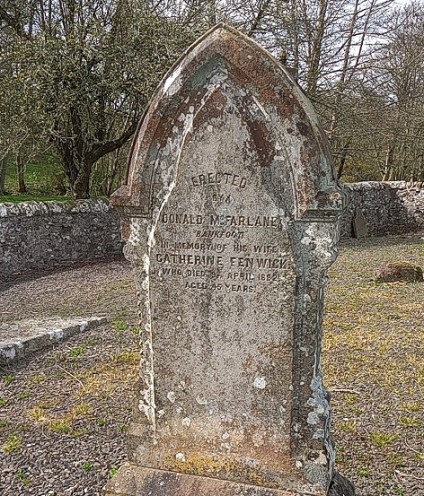
Leaving Tullybeltane behind, we coast along the Ordie Burn, where wood anemones shimmer in the sun and the wind’s behind us. Bumblebees career in and out of gorse flowers and dive between us. A determined walker out on her statutory exercise waves hello from the proscribed distance as we whizz by. We stop at the old graveyard at Kirkbride – though there is no kirk now and the headstones are in a sorry way. The names are all familiar, local ones: Nicolls and Fenwicks, Petries, Dows, Wylies and McFarlanes. I’m caught by the name Catherine Fenwick on a 19th century stone.

tullybeltane4

A Catherine Fenwick once lived in our house. She inherited or was gifted the feu from James Wylie of Airleywight (another reformer in his day – though did he “sell out” when he became a gentleman landowner?). Later, I check the deeds – we hold the parchment originals – and this Catherine Fenwick died seven years later than ours. Our Catherine lived longer…is it her shadow we constantly see flit by the kitchen window? Strange to think that both of them probably knew Robert Nicoll, whose mother was a Fenwick…. How intertwined we all are.

Kirkbride…. The church of St. Bridget, or just Bridget, or Bride, or Brigid…..Celtic Goddess of water. I can almost feel the Beltane fires. Nearby was St. Bride’s Well, said to have healing properties causing people to drink from it on the first Sunday in May (Beltane flames again) and “walk sunwise round it with joined hands, and lay down branches of rowan”.

tullybeltane5

We find no well, but up on a rise is the standing stone of Pitsundry, said to mark the place. There was within living memory a water trough under a hedge there, supposedly fed by the well. No hedge today, just barbed wire; it’s dry as dust and hard to imagine why there’d be a well on top of the hill. But when I check the maps later, I find a spring marked very close by.

tullybeltane 1

While I’m exploring, another lockdown cyclist tells Andrew (from a social distance of course) that the Pitsundry stone lines up with others on the Muir of Thorn, the other side of the A9. That checks out on the map too, more or less. When we freewheel back into the boundaries of our village, it feels like our journey was further, deeper, more entangled with ghosts, than the quick exercise circuit we set out upon.

Caithness: an Unexpected Corner

So, you drive over the bridge and leave Inverness behind. Soon, you will turn roughly left, as usual, heading for the dramatic shores and the magnificent mountains of Scotland’s fabulous north west.

What if you turned right instead, and carried on up the A9, zig-zagging drunkenly the path north? What will you find, towards the end of the road?

caithness4

The wind will get up, and rage in your ears with little to stop it from laughing at you. You will leave behind the stately coastal towns of Easter Ross and Sutherland. The land lies down, prostrates itself, subsides. Over to the west, distant peaks rise black and pointed. But they are far away. Dull green acres race the miles that separate you from the hills, and the sky stretches, yawning enormous and flinty in a weak January sun.

You will pass through flatlands, a ruinous landscape of low-slung byres, falling one-storey houses and cowering caravans, where anything bigger than a molehill becomes precious shelter. A few trees – always spruce – courageously cling to life by the homes where they were planted. Above them tower pylons like alien invaders, and armies of wind generators, powering Scotland relentlessly.

caithness3

In this exposed, stripped-down county of Caithness, there is no hiding the immense batteries and substations that convert the lacerating wind to warmth and light and send it on its way to town and steading alike. Birds balance on wires, feathers licked by gales, gripping fiercely.

caithness 2

It is not monotonous, this unexpected journey. The winter-bleached grasslands break up periodically into even flatter expanses – the peatland flows, sombre and dark and secret, clouds reflected like pewter from glimpsed water. Stones begin to dominate; low circles and horseshoes like the one at Achavanich, where each hewn stone follows the one before, face-on round the curve as if seeking shelter in its neighbour’s shadow. Then great flagstones upended become the very boundaries of land; a pattern of smaller fields is hinted at, somehow warmer, friendlier than those whose demarcation arises from cold wire.

caithness1     caithness7

The town, Thurso, erupts on the northern coast, unapologetic, in a mix of serviceable old stone and cold-looking blocks that seem to have been dropped from the edges of a disintegrating city. But Thurso has its Banksy, or a Banksy disciple at least, and that’s unexpected too, and oddly appreciated.

caithness8

And you will find yourself drawn, at the end of the day, to the great surfing beach at Dunnet, deserted in January but for a galloping horse and its rider in the distance, to a Viking vision of the northern isles and a sky that mesmerises like one of the sagas of old.

caithness5


Ambushed by Birdsong in Taymount Wood

“Much laid plans” and all that. I knew exactly what I was going to write about in my second post for West Stormont Woodland Group. It involved walking quickly and without distraction to King’s Myre in Taymount Wood.

But on this sunny, yet briskly chilly morning in March, the birds had other plans for me. We hadn’t got far when the dog was infuriated by an ear-piercing whistling made, apparently, by a bush. Eventually a tiny bit of the bush detached itself and was revealed as the smallest bird with the loudest voice – the wren, bustling ahead of us from twig to twig. The dog hates wrens. They scold, scoff, and shout at him, warning everyone he’s about.

TW scotspine

We dawdled on. Taymount contains a fair variety of tree species for a plantation. Tall Scots Pines lifted their crowns to the sun. Here and there, where selective felling had left a pine with elbow room, the narrow confines of its growth could be seen morphing into the mighty spread of the Caledonian pines. Larger clearings now host dense, self-seeded birch, through which a flock of greenfinches scurried. Brown bracken, unusual in this wood, lay beneath, thick enough to bed a herd of beasts.

TW bracken

We were on the cusp of spring. Robins proclaimed territories sweetly, compellingly, from field walls. We saw and heard shrill blue-tits, piping long-tails, busy coal-tits, always on the go. Great tits were most strident, high in the trees. “I’m yours! Look at me!” they seemed to cry in their repetitive, compulsive mating calls. Gazing up focused my attention on the trees, too, as silver firs soared into the blue sky. We fantasised about crested tits, one day, coming here.

TW silver fir

We came to some Sitka Spruce which had evaded felling. Sitka is a splendid, statuesque tree when grown as a specimen. If it has no place in the Scottish ecosystem, tell that to the coal-tits. These spruces were laden with dangling ginger cones and coal tits moved systematically from branch to branch, eating the seeds. Then a spotted woodpecker, who’d been ever-present with his drumming, exploded out of hiding and passed right over our heads, a massive spruce cone gripped in his bill.

By the time we got to King’s Myre, we just enjoyed the sunshine by the loch. Another day for that tale!

TW kingsmyre1