Going to the Larder

The little wood that lies an easy walking distance from my house is juvenile. It was planted maybe twenty-five years ago, mostly with hazel trees that have grown with multi-stemmed enthusiasm, peppered with birch and rowan, interspersed with tall sycamores and oak trees, now starting to muscle their way above the copse. Blown-in elder, and suckering blackthorn garland the woodland fringes. There are literally thousands of small ash seedlings covering much of the woodland floor; few-to-no surviving older ash trees. I wonder how these babies will fare in the aftermath of ash die-back disease. A large proportion are annually grazed out by deer; there are hares and hedgehogs hanging out in the top part of the wood, and I’ve seen red squirrels using the wood as an aerial highway. They, and other small mammals, feast on the hazelnuts in winter. This year, I heard and saw flashy jays on the rampage, and I’m seeing hazelnut stashes which may be their doing.

I’ve always referred to the wood, with unintentional and misplaced territorialism, as my larder. It contained the best patch of nettle shoots for soups, teas and pesto for miles, though these have now shifted as the shade has increased. In early summer, an army of Common Hogweed supplies me with chunky flower-buds to make my favorite pakoras or to braise as a vegetable. One day, I may be obliged to harvest the seeds to make flour; it’s as well the species is expanding its range. About the same time, elderflowers are picked for cordial or champagne, or just to eat. As summer winds on, the patch of feral raspberries in the clearing start to ripen. This year, they were pretty poor though, as are the ones in the garden. I’m not sure why. Competition from the broom, perhaps, whose yellow flower buds go into my May salad bowl.

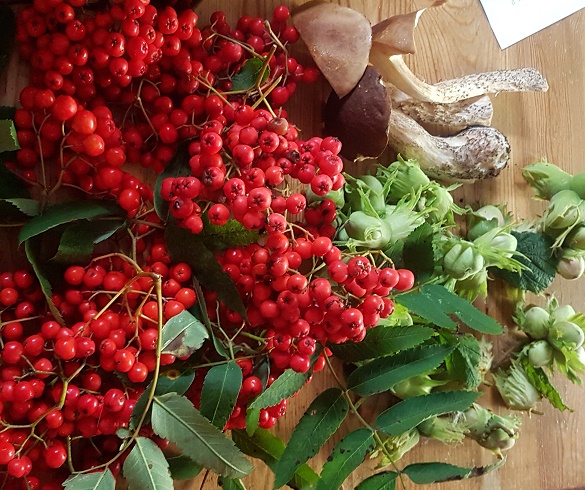
I harvest the hazelnuts haphazardly; the trees I used to pick from now bear their nuts too high for me to reach – I either wait for the profligate mammalian and avian foragers to knock them to the ground or I gather from smaller trees, self-seeded from nuts none of us ate, or from trees on the edge. When I have enough and they are shedding their frilly petticoats, I shell and roast them to get the lovely chocolatey smell. Usually, about half the shells are empty.

The hazel wood is also the store I visit for the likes of washing-line props, bean-poles, and pea-sticks. No need to cut these poles, as regular storms bring more down; the forest floor is littered with useful sticks for every purpose, not least, lighting the stove. Children collect the long ones and build them into dens.
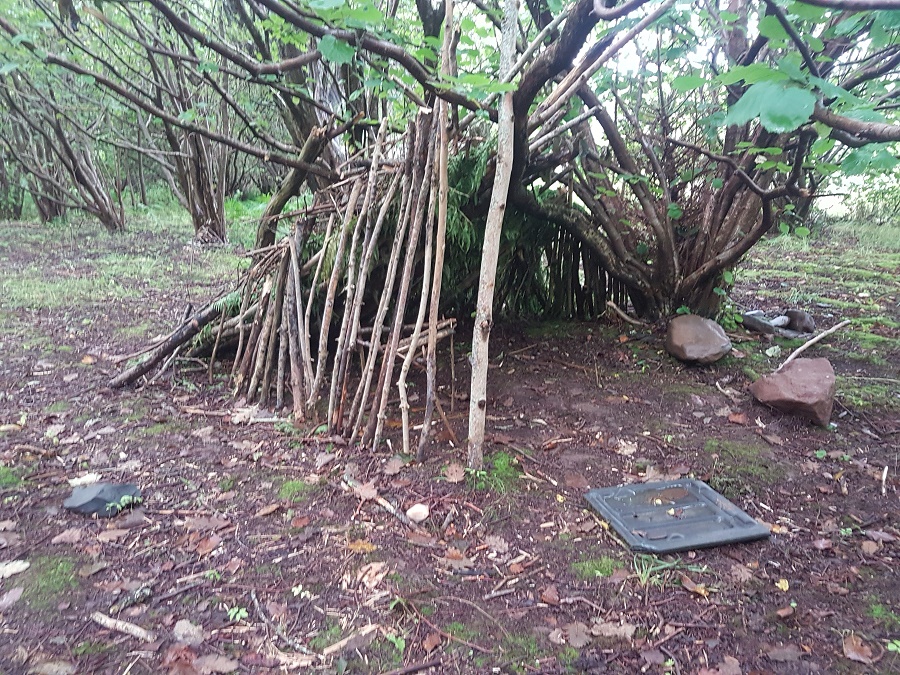
There are many uses for hazel wands…..

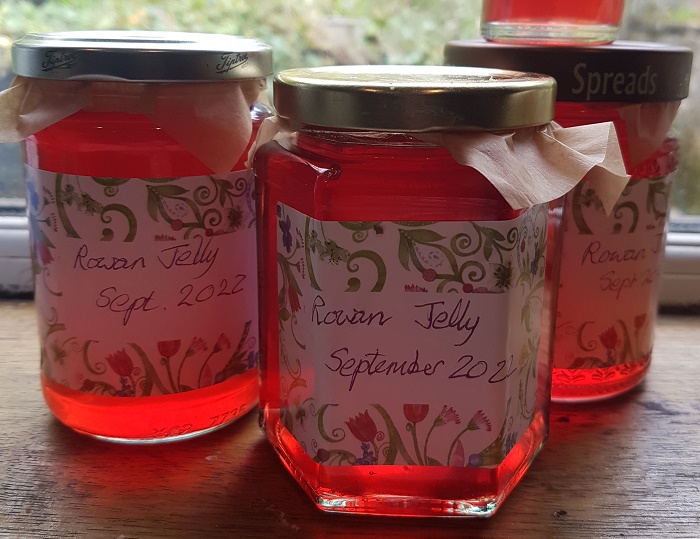
Today, I’m collecting rowan berries for the sharp, rich red jelly we’ve always had as a family to accompany Christmas dinner, and thereafter, everything else. The young rowan trees bear copious fruit, but I have my personal favorite trees, where the berries are larger, a feistier red or more juicy. I note the elderberries are nearly at picking stage, too – a winter essential for medicinal elderberry vinegar, or, mixed with hips from the wild roses along the field edge, a soothing syrup. Likewise, there is a particular hawthorn bush that has fruits large and sweet enough to stop and nibble at while contemplating the sunset or sheltering from a cloudburst. They make good liqueurs.

I gather a couple of Brown Birch Bolete mushrooms as well. It was a fair few years ago now that these edible fungi began to appear around one of the multi-stemmed birch trees. I don’t pick many, and am always watching for new patches of fruiting bodies as the mycelium spreads to other birches. It’s been fascinating watching how the fungal flora in the little wood has gradually established itself as the trees grew, and fungal threads found their roots, to embark on that precious, beneficial relationship that entangles both and is called the mycorrhizae (“fungus-roots”). The species I find have changed over the years, and will continue to do so. I hope more edible species will arrive soon. The Birch Boletes I don’t have for breakfast will be dried for the winter.
Will it be a good year for sloes? There have been crops from the blackthorns on the field edge so fantastic I’ve stopped making sloe gin for a while. Maybe time for another batch. The blossom was there in March, so I’ll check it out. If there are sloes, I’ll wait for the first frosts to make them tingle, and see if the birds have spared me any.

Later, when the leaves fall in tawny profusion, and the rose-bay willow herb from which I selected early shoots in spring for fake asparagus has shed its seeds, when the air starts to nip and my breath makes clouds, I’ll harvest the peace of the woods, the melancholy inertia, the stand-and-stare compulsion of fractal twigs and branches and the patterns on bark.

And perhaps pick curly, frosty old flower-stems of the willow herb to decorate the house for Christmas.

Comfrey is Not Just for Compost

Photo: Kate Jewell / Comfrey (Symphytum officinale)

Comfrey is in the Borage family of plants. There are various species, strains, and cultivars, which all have similar properties. The one which spreads unrelentingly in my garden is the Tuberous Comfrey (Symphytum tuberosum), which is low growing, spreading (via its knobbly, tuberous roots), and has dingy off-white to cream flowers. I am in negotiations currently with Tuberous Comfrey to spread unrelentingly where it can out-compete the ground elder, rather than among the potatoes. This species, along with Common Comfrey (S. officinale) is a native of Britain. A number of imports and acquisitions by Henry Doubleday in the 1870s led to an important cross between Common Comfrey and a Russian species, S. asperum. The hybrid became known here as Russian Comfrey (S. x uplandicum).

Common Comfrey has other common names: Knitbone and Boneset. The generic name Symphytum means “to join together”. The specific name “officinale” indicates medicinal value. (Readers of my last post may see where I’m going here!). Comfrey roots and leaves have been used for many, many centuries in poultices (mainly) to treat sprains, bruises, inflammation, cuts and sores. Comfrey contains allantoin, a chemical which is crucial to cell regeneration and healing. In my garden, the unruly Tuberous Comfrey disappears during winter, but I also have two Russian Comfreys which don’t. One of them used to be variegated, but soon reverted to green and vigorous.

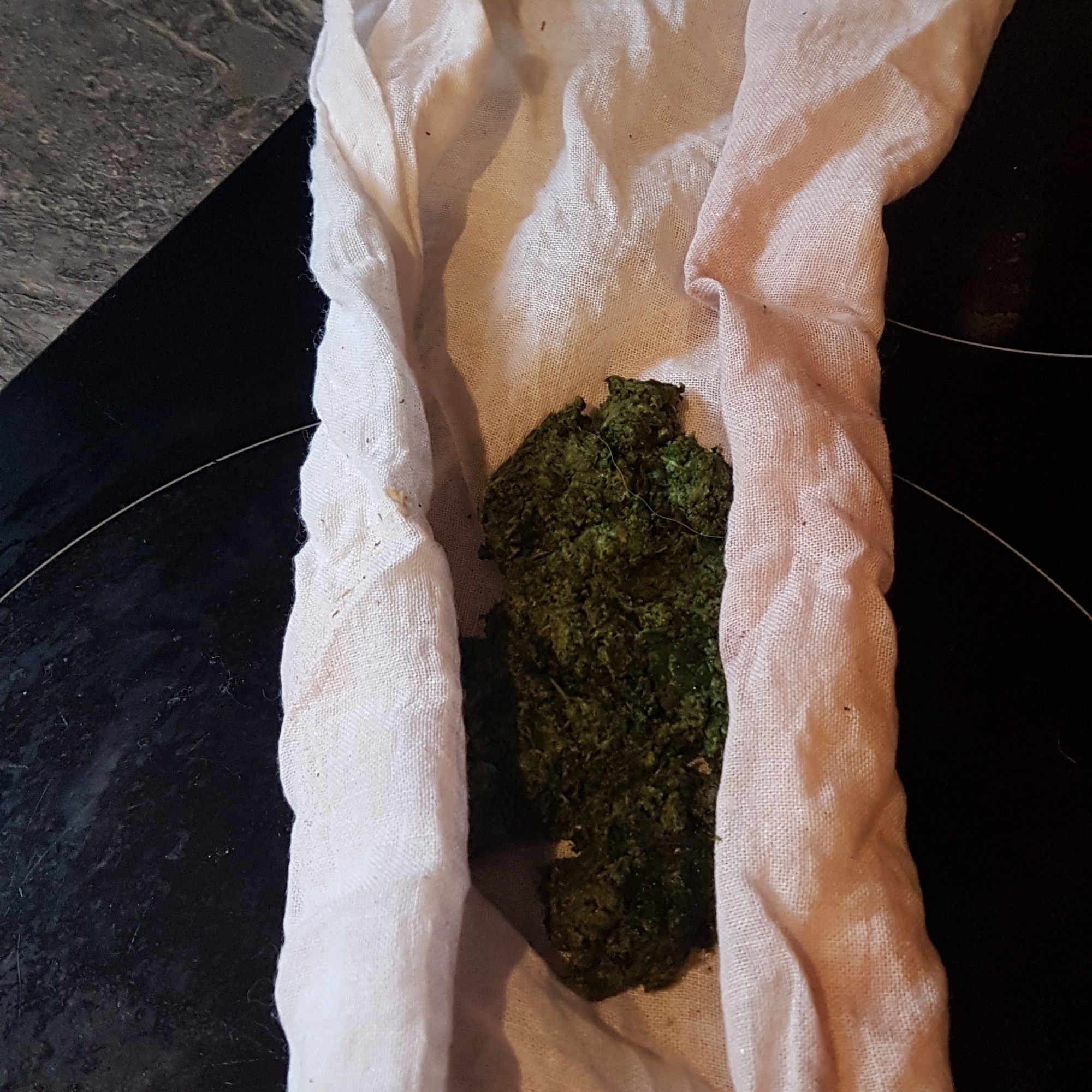
Therefore, in the mild weather between Hogmanay and the end of last week, I manoeuvred myself laboriously up the garden on my crutches, to pick the freshest leaves (yes, there were some!) from the plants. Roots may have been better, but digging isn’t in my current skill-set. A knee with anonymous sprains and tissue damage and a minor fracture of the tibia was going to get the comfrey treatment. I made the poultice very easily, by zapping the fresh leaves to a dark green liquid and mixing it with flour. A square of muslin, folded at the edges to stop the poultice oozing down to my ankles, held the comfrey against the affected bits of knee. An elastic tubular bandage kept it in place, over which went trousers and the leg brace. I did this for 4 days consecutively, but removed it from sight when I went for the fracture clinic appointment. (Self-treat? Who, me??)

On the X-rays, it was very hard to see where the fracture is now, but the doctor pronounced everything was well placed to heal completely, given time. Leg brace for at least another month! Then the weather turned snowy, followed by the customary January freeze, so the Comfrey pharmacy is temporarily closed. I’ll never know for sure how far it is contributing to healing, but that’s no problem, I am happy to be my own experiment in this.

Now to the other uses of Comfrey, including compost. The extravagant growth of the various comfreys which Henry Doubleday imported and which interbred led the organic movement pioneer Lawrence D. Hills to found a field station in Bocking, Essex, dedicated initially to research and breeding of comfrey strains for agricultural and horticultural use, named the Henry Doubleday Research Association. The best-known strain is probably “Bocking 14”. Later, HDRA became the influential Garden Organic charity, with thousands of members. I met Lawrence Hills a couple of times, when I switched from teaching to horticulture and was looking for a year’s work placement as prerequisite to starting a course at Writtle Agricultual College. He was so charming, so enthusiastic, so hard-working – and I was so looking forward to working and learning in an organic garden and taking part in field research. But organic was still considered the domain of hippies and weirdos as far as Writtle was concerned. I was told that HDRA was NOT ACCEPTABLE as a PROPER horticultural placement, and I ended up on a bedding plant nursery. Learned a lot, but you know how I just adore bedding schemes……!

A Much-thumbed Reference for Improper Horticulturists

But I grow Comfrey. I would never be without it in the garden. The lovely purple, red and white flowers attract every kind of bee in the district, it suppresses weeds, and is so vigorous I cut both the Russian and Tuberous back several times during the year. Most of the green material goes into the Comfrey bin (joined by excess nettle tops). The bin has a lid but no bottom, and it stands on a perforated metal square (actually a redundant queen excluder from beekeeping), which is balanced on an old washing-up bowl. Into the bowl collects a dark, viscous, evil-smelling liquid – Comfrey tea! NOT for drinking, but for use, diluted, as a liquid feed for tomatoes, vegetables and any plant looking under par, just as Lawrence Hills told me all those years ago. Many gardeners believe Comfrey tea confers disease resistance to plants as well as a nitrogen boost. I don’t add any water to the bin, and the dry material left goes onto the adjacent compost heap. Sometimes I add fresh Comfrey to the heap if it’s being a bit tardy in decomposing – it acts as an activator. Another great thing to do is liberally cover the ground between developing plants such as courgettes with fresh Comfrey leaves as a mulch. Not only will they decompose happily in situ and directly feed the plants, they help to warm the soil and stop weed seeds germinating.  (TIP: Don’t accidentally mulch with tubers still attached!)

Fresh Comfrey Boost for Peely-Wally Sweet Corn!

I also eat Comfrey leaves. Now, my herbalist friends will tut-tut, because Comfrey also contains alkaloids which can damage the liver, to a point where cancerous tumours may develop. I can understand reluctance to prescribe it for internal use. Most of the alkaloids accumulate in the roots and the older leaves, and laboratory trials on unfortunate rats indicate that you’d really need to eat or be injected with an impossible amount of Comfrey to have such a reaction. Nevertheless, I stick to young leaves, in moderation, as a delicious vegetable in combination with nettles and other spring greens. They fill the so-called hungry gap abundantly well, and are a tasty substitute in any recipe involving spinach. Covered in beer batter and deep fried, individual leaves are a really, really bad-for-you treat!

But whether you eat it or not, Comfrey is for life – in more ways than one.

Not Ugly.

Midsummer, June, and roadside verges, hedgerows and path edges are brimming with life and good things to eat. Well, they should be, if you’re lucky, and some fusser hasn’t gone forth with strimmer or spray gun to transform the riot of green and gold, the effusion of flowers, seedheads and shoots to bare brown, sad-looking blankness or close-mown, stressed-out grass. I can never comprehend the small suburban minds of householders who would rather gaze out on monochrome than the living proof of life on earth. It’s one thing to keep your own verge tidy, and occasional cutting can increase the range of flowers, but it’s galling when people attack verges opposite or near their houses but which they don’t actually own. I confess, I get quite bitter about it.

During the 2020 lockdown, I embarrassed my family by taking to task a poor, misguided woman who was wielding herbicide along the route of a long-distance footpath. Granted, it was a stretch bordering her own property, and right enough, as she protested, she wasn’t killing everything…..

No, she was only killing what she called “the ugly, untidy species” that she had no use for. These were Dockens (have you ever looked at the intricacy of the flower structure in the Dock family?), and Hogweed. That’s where I really saw red.

NO!!!! I don’t mean “Giant Hogweed” (Heracleum mantegazzianum), an invasive non-native plant known to cause serious skin burns and out-compete other plant species. Even I acknowledge that’s a nightmare, albeit a spectacular one. I mean Common Hogweed (Heracleum sphondylium ) a soft-leaved, far smaller native plant, with edible leafstalks and, at this time of year, the most delectable “broccoli” or unopened flower heads. Very few people have a skin reaction to this plant (far fewer than do to tomato plants for example), and I look forward to eating the broccoli every June.

“But it’s too tall, too big, too ugly and the bees and butterflies don’t visit it!” I was told. So then, we eradicate all the living things that we personally don’t like the look of, do we? What is ugly, anyway? Do we have to apply our personal prejudices to plants, other animals… humans? Sadly, many people do…..labelling leading to intolerance leading to hate crime leading to… genocide? And if a flower is constructed to be pollinated, not by the human species’ cosy favourites of bee and butterfly, but by beetles, flies or (perish the thought) wasps, does that make them useless, unworthy or ugly?

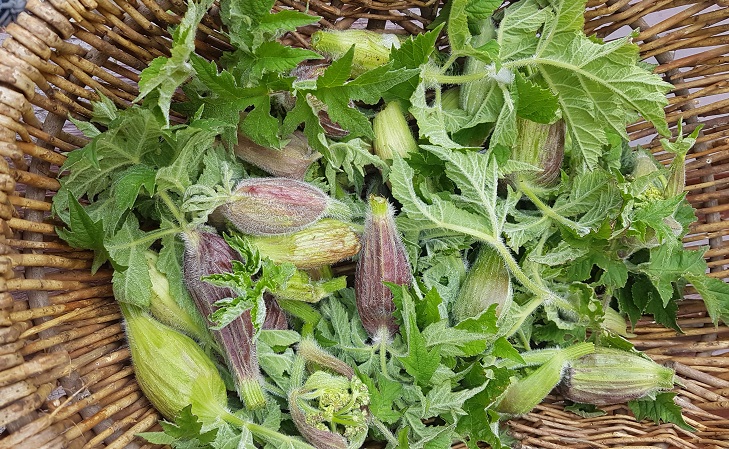
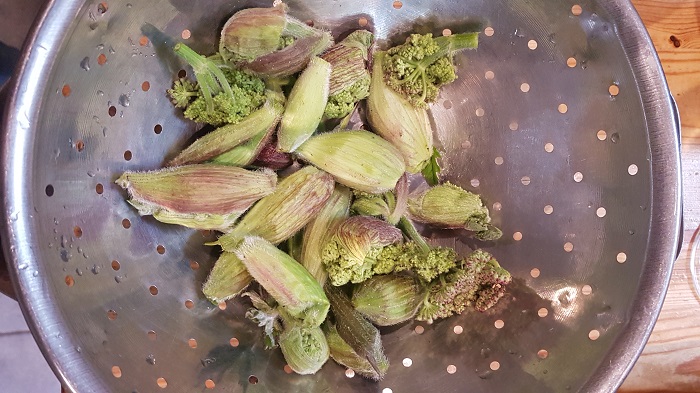
No, it darned well doesn’t. If Hogweed, Dockens or any other species becomes a weed in your carrots or undermines your potatoes, fair enough. It’s not because they’re ugly, they’re just doing what they are supposed to do. But leave them in the waysides that are their habitat. Before anyone gets horticulturally imperialistic ideas locally, I’m gathering hogweed broccoli. Just trim away the leafy shoots to prepare. Sauteed in butter with a little water and sprinkled with lemon juice and salt, they are a summer treat.

All prepared for braising or battering…..

Last night I made hogweed pakoras – coated in spicy chickpea flour batter and deep-fried – to go with the curry. I meant to take a photo for the blog, but suddenly, they were all gone. I need to get some more. Long live hedgerow delicacies!

In Search of….anything but asparagus….

What I aspire to! Grown by J. Neill & Sons

In Catalonia, we stalked shifty looking men in the woods, all clearly trying to avoid being followed, saw them emerging later from the scrub carrying scrawny, dangling wisps of green. The Wild Asparagus. Allegedly, the acme of a forager’s progress. And no-one was about to help us find it.

So, grow your own, I decide. The very first raised bed with which I replaced nursery benches as I journeyed towards retirement three years ago, I planted up with two-year old purple asparagus crowns. They said, you need to be patient to grow asparagus, but it will be worth waiting for. I have waited. I have ladled seaweed, imported from Fife and Angus beaches, over the bed twice a year. I have weeded more meticulously than is my habit, because the asparagus gurus say asparagus cannot tolerate weeds. I have fed the largely invisible plants. Now, it is May again, and still there’s nothing much to see here.

But there are alternatives. In spring the emerging spears of Solomon’s Seal, an enthusiastic wild member of the same family – Liliaceae – provide a luscious alternative; slightly more bitter but I’d argue all the better for that. No chewy tough bases to the spears, either. Their season is but a fortnight, and does not satisfy.

And REAL asparagus, they tell me, is better…. I do not believe them.

I WILL have shoots and spears in spring. I go to the clearing in the hazel copse, where annually the willow herb heaves itself through soil and its own winter debris, in the form of thickish shoots and red-brown, furled leaves. I pick the fattest and youngest and steam them, then sizzle in butter, Now these ARE bitter….and some are like toothpicks. I eat a plateful anyway.

Willow Herb shoots

Back to the garden, where five out of the original twelve asparagus crowns are showing single, unenthusiastic, skinny purple spears. I think, how many new potatoes could I be getting out of that bed? How much chard or broccoli or succulent fennel? A friend donates some asparagus seed, originally collected in Italy but bred in Perthshire over twenty years, to our seed library and puts pictures on Facebook of fists-full of fat, early spears in April. I sow the seed, to back up my shy and retiring crowns, who are now five years old. I discover that my friend’s grows itself, without fuss, in a polytunnel. So shall mine do.

Hop shoots call to me. Vigorous, ornamental, golden hops and the fatter, darker, beery ones, seething with alcoholic promise. All are edible and they taste great. They’re in the nettle family, and, like nettles, the more you pick the shoots, the more shoots come. I find that hops and nettles combined appeases me greatly.

Hop shoots – Golden, Challenger & Fuggles, all good

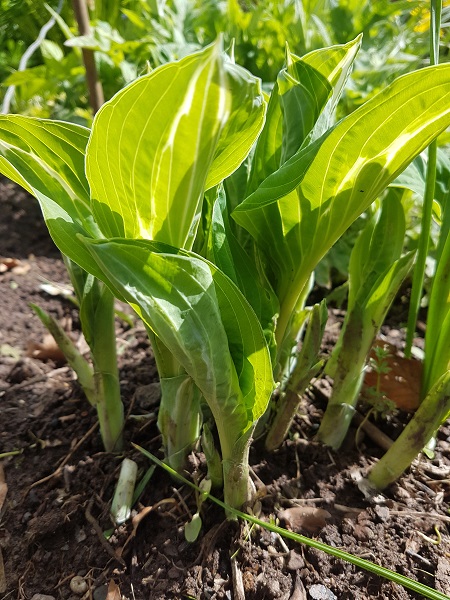
Then up come the hostas. Fleshy, delicious, plumper than any asparagus but shorter too. I cut them before the leaves unfurl, but it’s not crucial: the leaves of this delectable Japanese vegetable are also very tasty and should never be consigned to a flower border. Although the flowers, when they come, are bonnie to look at as well. I remember that hostas are also in the lily family. They aren’t asparagus, but they’re close; and they’re easy to grow, reliable and pretty too.

Hosta spears

After a moment’s thought, I cut two of the pathetic asparagus spears and add them to a dish of hosta. We get one spear each, but plenty of hosta shoots.

(Today I found someone is growing asparagus locally, commercially. It’s abundant, large and not too expensive. I’ve decided, if this year doesn’t reward my patience, that bed is going to be hostas next summer. And maybe the new seedlings in the polytunnel will one day give me payback!)

A Surfeit of Spinach

I do suffer anxiety about running out of some things. Not toilet rolls, pasta or stuff like that, but spinach, for sure. Before I discovered Giant Winter Spinach, which grows all winter in my polytunnel and then supplies fabulous crops from a January sowing planted out in March, I used to stockpile tinned spinach for the hungry gap. I know that supermarkets have been selling bags of “baby” spinach all winter ever since it became fashionable, but I don’t like the plastic.

img_20200611_142433699
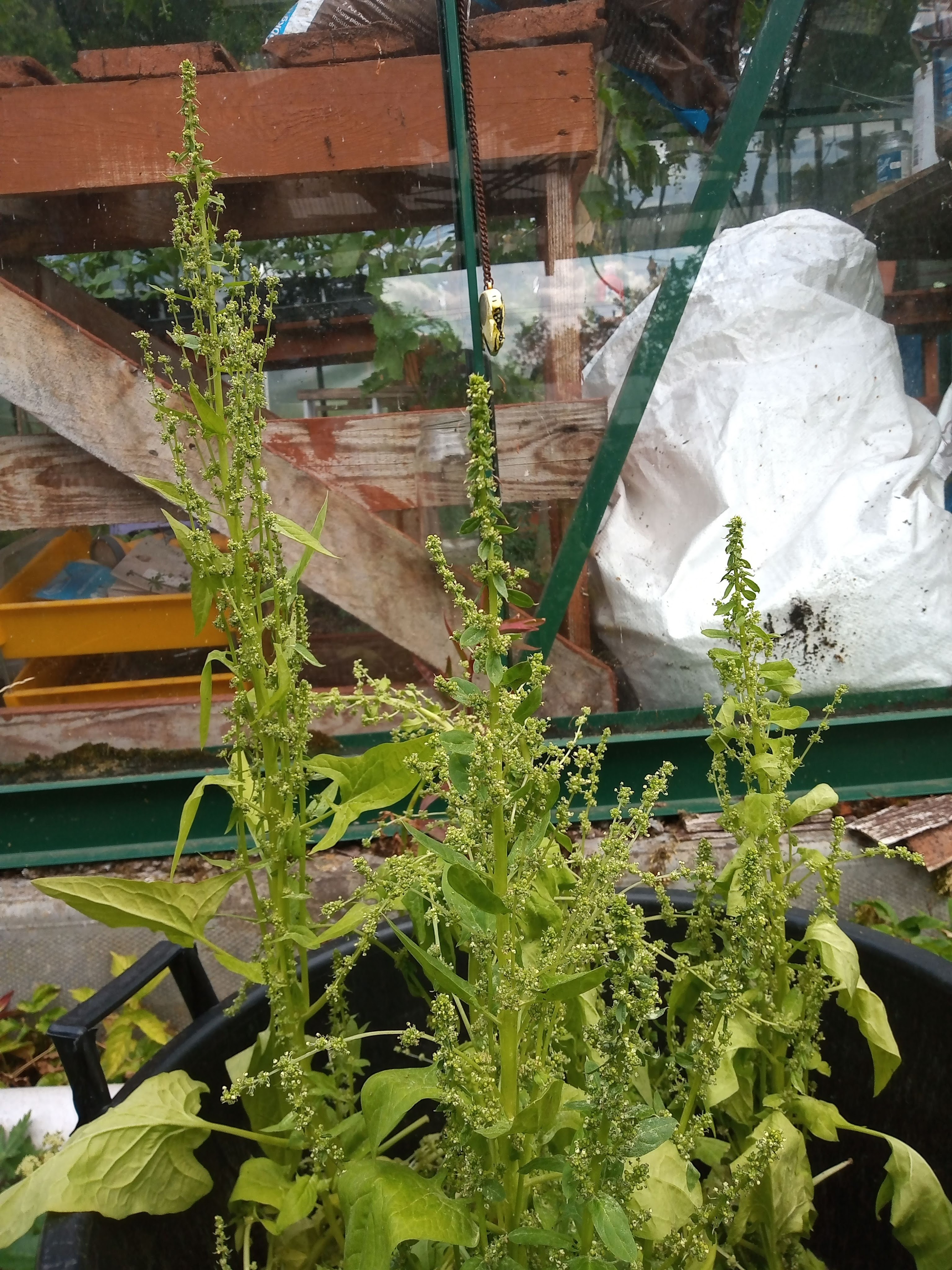
Giant Winter Spinach transplanted to social isolation to harvest next year’s seed.

Now I think I have it sussed: home-grown spinach 12 months of the year. The Giant Winter came out a couple of weeks ago when it became obstinately determined to run to seed (seed which will be collected from a choice group of plants transferred to a socially distanced tub where it won’t cross-pollinate with other spinaches). By that time, I’d started using the Leaf Beet, a.k.a. Perpetual Spinach (which isn’t, but it does go on cropping for a long while before it too starts to flower), from another bed.

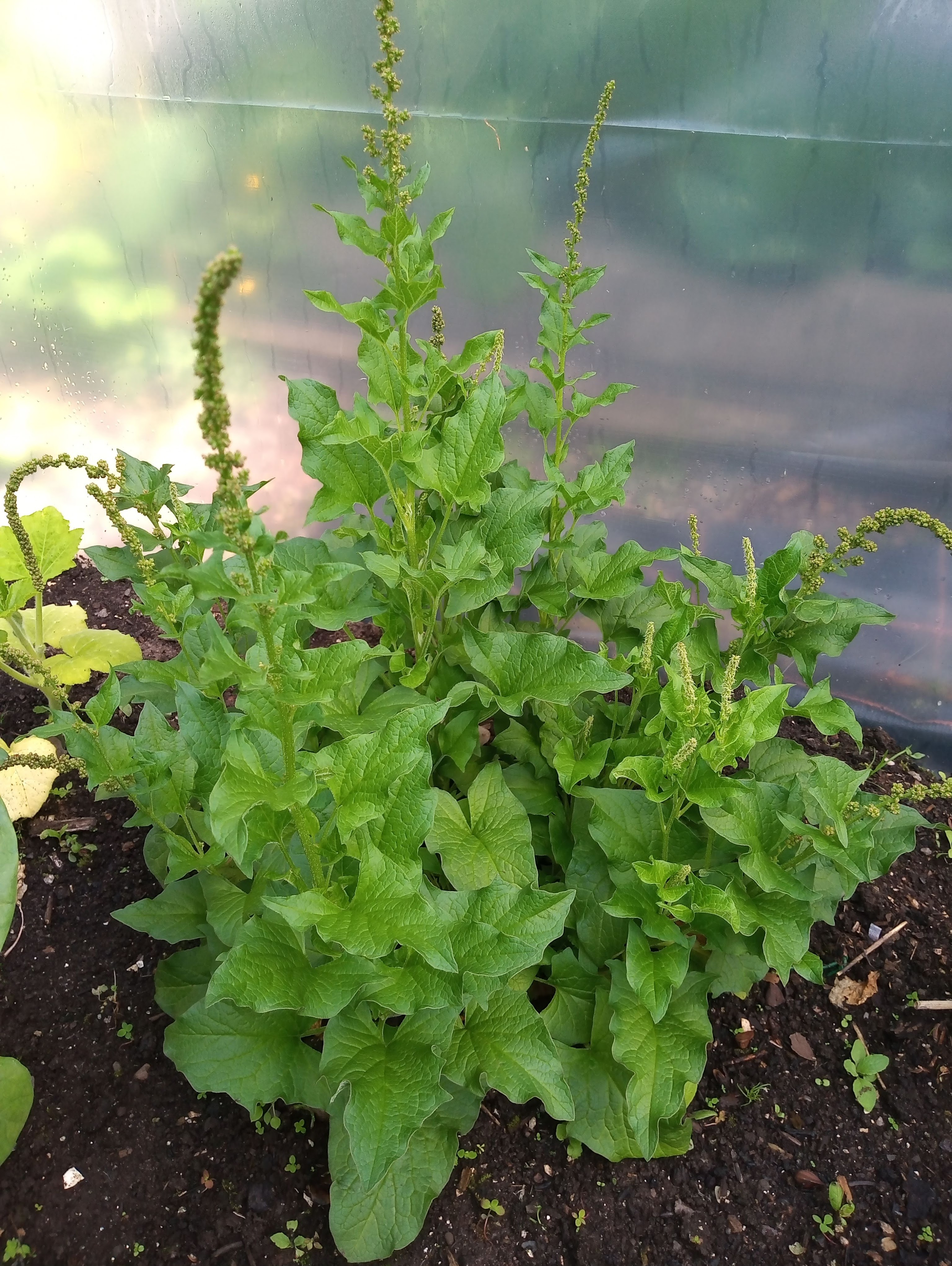
Meanwhile, there have been pickings ever since February from one of the best perennial spinaches, the wild plant Good King Henry. I keep a couple in the polytunnel for early leaves, but it grows most happily outside and makes a handsome border plant. It can flower as much as it likes, because the leaves just keep on being produced. In mainland Europe, it’s just called Good Henry. This is to distinguish it from Bad Henry (which we call Dog’s Mercury) – a poisonous plant. I suspect most Europeans, republicans or not, would consider it a bad idea to call an innocent and desirable food plant after one of the most rancid monarchs in history.

img_20200608_113818049
Good Henry (forget the king bit)

Swiss Chard is also in the spinach family. There are Ruby, Yellow, Pink Lipstick and Rainbow Chards, but I am growing an old, white-stemmed variety called Fordhook Giant. Last year, my daughter got one off me that became a monstrous triffid, and kept supplying her with stems and greens even after being accidentally felled by the Glasgow gales. She got the last harvest on June 10th! I am determined mine is going to beat that this year….it has a way to go yet!

img_20200608_113753676

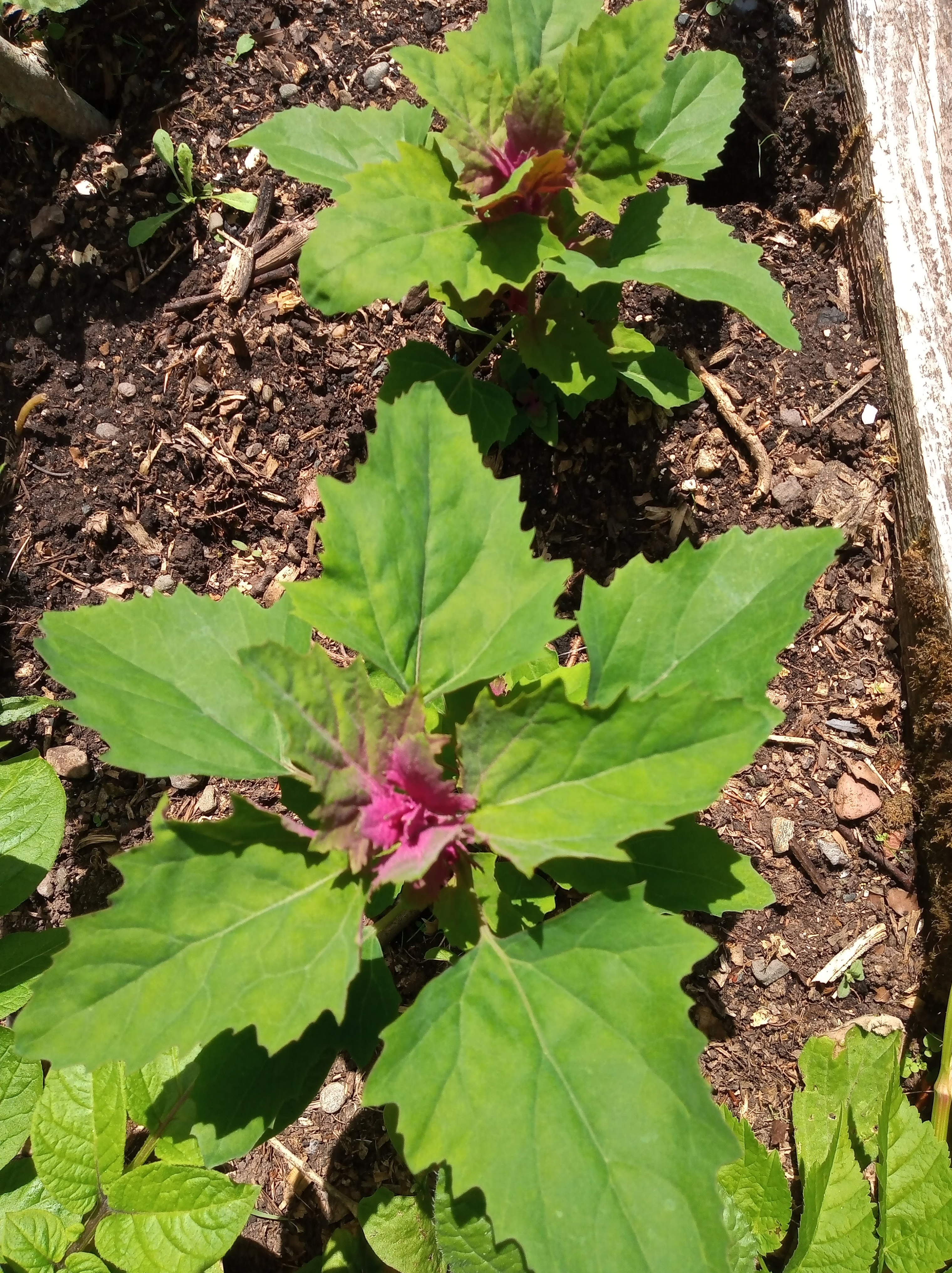
Talking of giants, Tree Spinach, with spectacular pink shoots, is coming along nicely too…. I once let one grow to 12 feet tall for a laugh, but it’s best to stop them at 6 or 7 feet and let them bush out. Shoots, leaves and young flowers are delicious, cooked or raw in salad. Another good one to try is Huazontle, the Aztec Spinach – not quite so tall but very prolific. They’re both related to the weed of cultivation called Fat Hen or Lamb’s Quarters, which turns up in the stomachs of preserved Iron Age bog bodies. See, spinach has always been an essential!

img_20200608_113943276
Tree Spinach doesn’t stay this size!

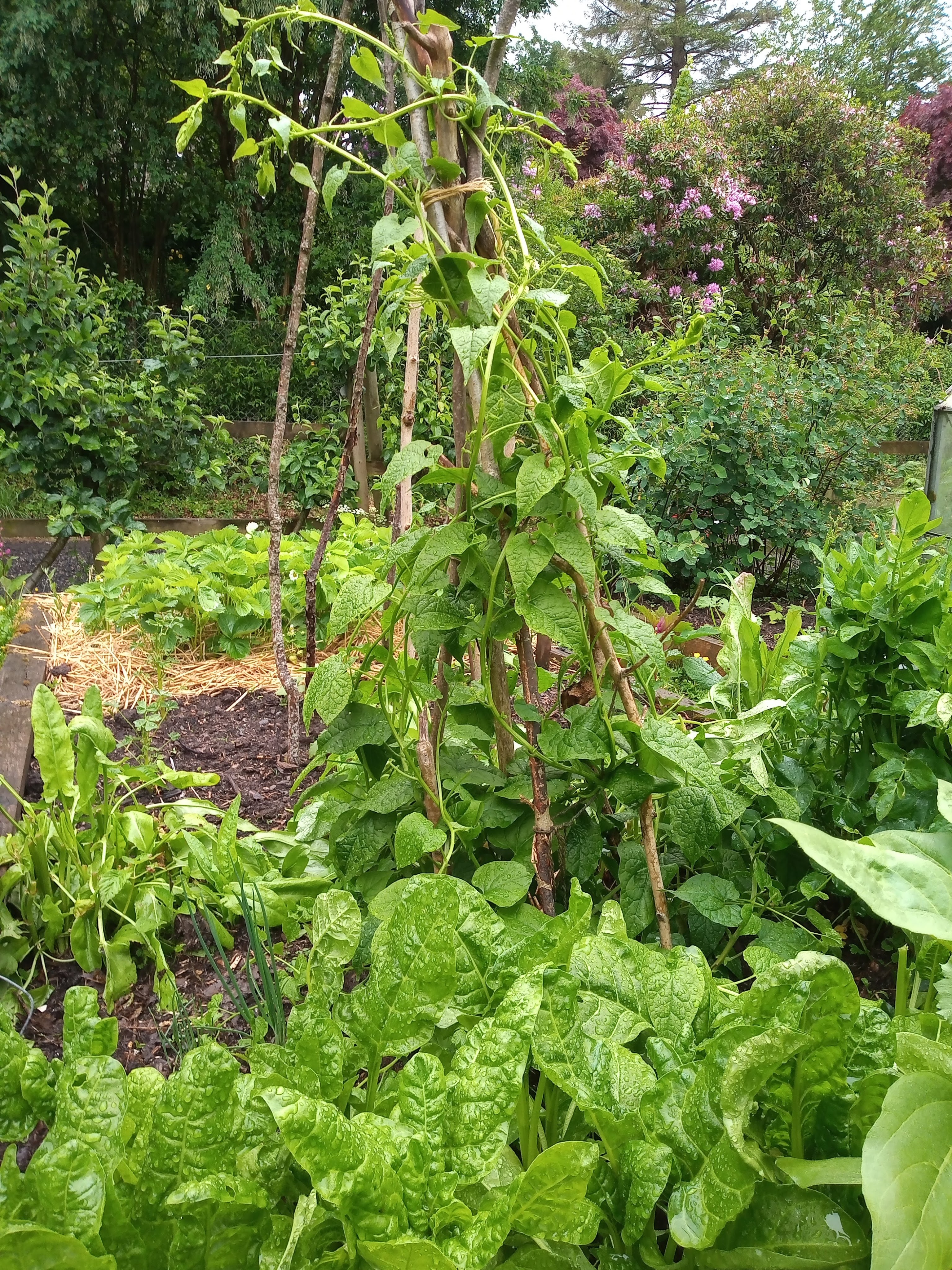
I’ve had Caucasian Climbing Spinach (Hablitzia tamnoides) in the garden for over 3 years and up till this spring I thought it was a bit of a hype to be honest. But now it’s repaying my patience! Delicious shoots, followed by exuberant twining stems and tasty, bountiful, heart-shaped leaves. It’s another perennial, so it can flower as much as it likes.

img_20200610_152256283
Caucasian Climbing Spinach, arising from a sea of Perpetual Spinach Beet.

Last week I actually got worried I might have more spinach ready than I could cope with. Thanks to a host of digital friends and acquaintances, I now have no concern, with recipes for spinach pies, pestos, sag aloo, soups, pasta, and smoothies all coming my way.

Now, which spinach shall we eat tonight?

The Blood of the Ploughman

bloodyploughman1

Have you ever been seduced by those advertisements in colour supplements for NEW! UNIQUE! varieties of fruit or vegetables accompanied by dazzling photos of their technicolor extra-ordinariness? The exciting modernity of red-fleshed apples is one example of excitable marketing – and many fall for it.

But rosy-fleshed apples are not new. Discovery, an early-ripening apple bred in 1950, is one example, and deservedly popular. But this is a story of a much older apple, first recorded in 1883 – but who knows when it first appeared….

Once upon a time, when the Carse of Gowrie – that rolling, flat and fertile plain of drained marshland on the north side of the River Tay that stretches from Perth to Dundee – was famous for its orchards, a weary ploughman was plodding home after a long day in the field. It was September, and an Indian summer, the sun had been blazing all day and the ploughman had finished his drink early and was very thirsty. To get home more quickly, he decided to take a short cut through the orchard of Megginch Castle – one of the finest orchards in the Carse.

As ever, the productive trees of Megginch were laden with fruit; apples of every type and colour, small, golden Scottish pears, plums and damsons. Many were ripe and even falling into the long grass. The tired ploughman thought how handsomely a ripe apple would quench his thirst and assuage his growing hunger – it was past suppertime.

Well,there was nobody about, and surely no-one would begrudge a hard-working labourer a windfall, so the ploughman helped himself. So delicious was the apple that the ploughman was struck by the idea that to leave these windfalls would be an awful waste, when his wife could make good use of them in the kitchen. The gardeners had all gone home for the evening, so who would notice? The ploughman began to fill his smock with ripe fruit, as the light began to fade from the day.

A warning shot rang out, and a furious cry: “STOP THERE, THIEF!” The ploughman swung round, and recognised the loping gait of the estate gamekeeper coming toward him. He began to run, apples held tightly in his smock. “I’m warning you man!” called the gamekeeper, but the ploughman blundered on. There was the sound of another shot……

At this point the story grows different arms and legs and embellishments depending on the audience and who’s telling the story. I confess to my part in encouraging flights of imagination. For genteel adults and those of a sensitive disposition, the story goes that the ploughman was wounded but escaped, managing to get home with at least some of his “stolen” apples. For children, the gorier version suits, and if you can throw in a ghost, so much the better.

So, either the ploughman fell, shot dead, in the orchard, his apples scattered, or his disgusted wife patched him up, but threw the apples on the midden to teach him a lesson. Either way, one of those blood-streaked fruits set seed to become a  tree the following spring. And when that tree was grown, it bore dark red, deeply ribbed apples that ripened on the anniversary of that day in September when the ploughman was shot. And when the crisp, thirst-quenching flesh was sliced, the flesh of the apple was streaked and stained with the ploughman’s blood.

bloodyploughman2

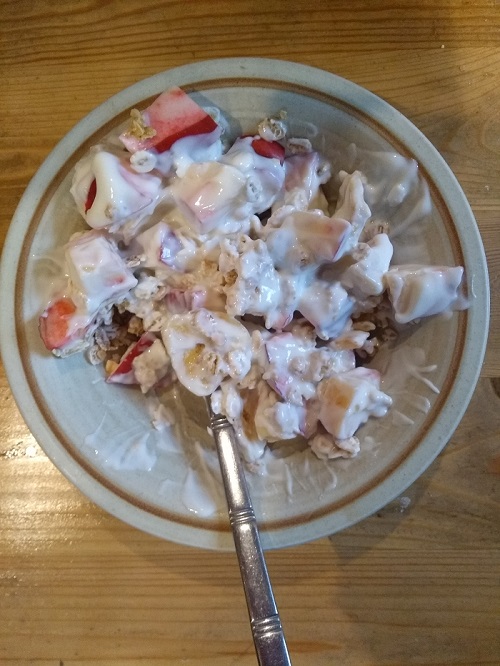
Thus was born the famous Scottish dessert apple, the Bloody Ploughman. From the dwarf tree in my garden came this exquisitely juicy, neither sickly sweet nor yet sour, apple for my breakfast, with cereal and yoghurt.

As for Megginch orchard, it’s still there, not just surviving but thriving. After all, it’s practically next door to the Cairn O’Mhor cider makers. Many of the old trees from the age of Victoria remain, and still bear excellent crops, but also there is a new orchard of modern, productive varieties, and a new heritage orchard, containing all the Scottish apple varieties that can be found.

You can be sure the bloody ploughman found his way home safely.

Magic Moments, New Toys and the Bread of Heaven


breadofheaven

I continue my obsession with the micro-organisms that make bread. The sourdough starter got filed in the fridge for a while when I became enthused with spelt. Spelt flour is made from a grain that is like wheat, but not a variety of wheat. It’s engagingly described by marketing types as an “ancient grain”. It makes, really, really nice chewy, flavoursome bread with yeast and honey and olive oil, and it’s very quick to rise and do its thing (unlike sourdough, for which, I now know, you need patience, planning and much mindfulness.) One supplier calls spelt bread made this way Roman Army Bread. No wonder the Roman army was a conquering one (except in Scotland, of course!). I noticed that even with this easy bread, my technique has improved through slaving over the sourdough. I am no longer tempted to flour the worktop.

Anyway, this week I go back to the sourdough, and duly refresh (or feed, though apparently that’s the wrong word) my dead-looking starter. I pour away most of the black oily liquid on top of the jar, stir the rest in, and add roughly equal amounts of warm water and wholemeal Rouge d’Ecosse flour from Fife. Same again next morning, except for the black liquid, which has vanished. Being besotted enough to sit and watch, I can scarcely tear myself away when small whirlpools, bubbles and movement began.

That magic moment when your sourdough starter says thank you for breakfast!

Now I’m looking forward to using all the new toys I got for my birthday – a baking stone you heat in the oven that I’m told will make all the difference to my spreading, cow-pat like bloomers, the scraper that will preserve the kitchen sink from becoming a nursery for yeasts and lactobacteria to proliferate because I can’t get all the sloppy dough off surfaces, bowls and hands; a magic kneading implement to which the dough mysteriously doesn’t stick, a slashing knife, and a Very Deep Tin.

Thanks to the confining nature of the Very Deep Tin, dough has no choice but to go Up. Thus I produce the above Bread of Heaven, with a chewy salt and pepper crust under which lies a cavernous hole – because I forgot the slashing bit to let out gas while it was baking.

(Three days later, I completely wreck a freestanding loaf by cavalierly forgetting to weigh the right amount of production starter I put in, and using nearly double the appropriate quantity…. The dough refuses to leave the proving basket and I create a 2cm high pancake, baking stone or no baking stone. It made a good savoury bread and butter pudding mind.) 

I’m still learning… !