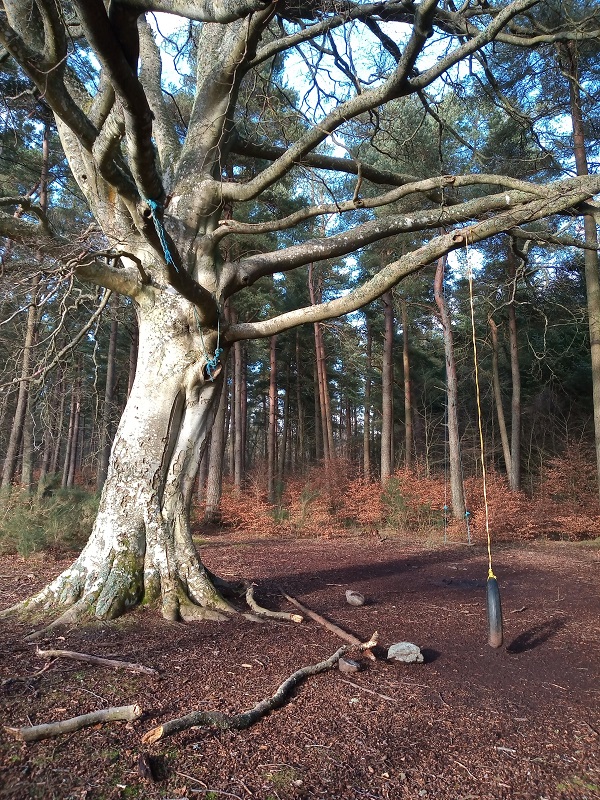
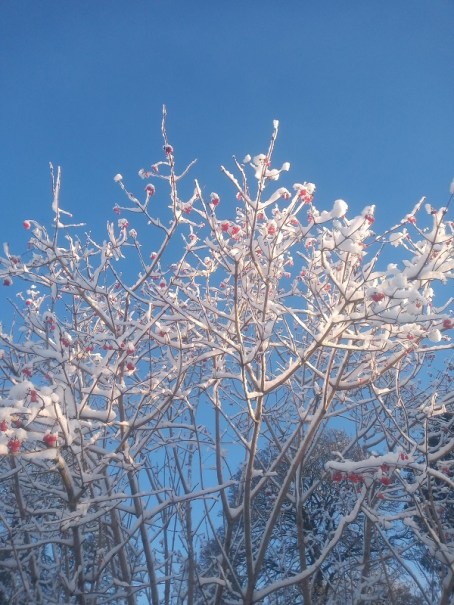
I’m infatuated with the much-maligned Corvidae, or crow family. There’s a stag-headed oak at the top of the Brae where they hang around as winter drags on, reminding me always of the poem “February” by Edward Thomas:
Over the land freckled with snow half-thawed
The speculating rooks at their nests cawed
And saw from elm-tops, delicate as flower of grass
What we below could not see, Winter pass.
A couple of years back, a pair of crows made a nest in the big sycamore tree that dominates the top end of my garden. In 2019, they returned with their pals. There were five nests under construction before my bird expert neighbour confirmed that I was wrong, Andrew was right, and these were not crows, but rooks. I had a rookery! Seven pairs nested last year, and the cacophony of feeding and fledging times was a raucous delight.
Last month, the rooks came on a visit. It was shortly following one of those weirdly named storms that have been the scourge of late winter here, and there was very little evidence left of last year’s colony. The rooks, about ten or a dozen of them, sidled about all day from branch to branch, engaged in some heated debate. Bits of twig were moved about, for no apparent reason. Several birds were seen bearing off the last remnants of a nest to some other location. Then they all flew off.
The collective noun for a group of rooks is a parliament. I can see why. That day, the debate went round and round in circles, no consensus was reached, and the parliament was either adjourned or illegally prorogued while certain individuals went off, presumably to feather their own nests. Although the odd rook came back to cark dismally during the next week or two, I thought that was the end of my rookery. A decision had been clearly made that the cost of rebuilding and renovation was too high and too risky, and they’d be better together with the big rookery at the other end of the village, established as long as humans here can remember, and probably longer still.
(I’m really, really trying not to be allegorical here, but it just keeps happening.)

However, last week they returned, and resumed the debate with alacrity and much carking and cawing, retiring into the division lobbies in the neighbouring fir tree whenever the wind blew. Samples of twigs were brought in for inspection, passed around and tested for strength and engineering capacity. Rook nests are built near the top of a tree, and construction is meticulous, more complex than it looks, and uses only the right materials. Fortunately, rooks are among the most intelligent birds on the planet. In hopeful enthusiasm, I pruned the remaining pear and apple trees and left the twigs lying under the sycamore for the parliament to debate. They ignored them.
I could see the parliament was beginning to divide on party lines – lots of parties, each consisting of only two birds. Rooks are monogamous and mate for life. If this parliament consisted largely of last year’s babies, they were choosing their partners. Older birds were teaming up with theirs, and after a year of (presumed) abstinence, were making up for lost time. The branches rocked and see-sawed. Loud carking was sometimes interrupted by a melodious burble like a badly-tuned harp. The debate sounded more purposeful, and a nest began to appear.
I’ve been trying to fathom whether a parliament of rooks works collectively on one nest at a time. I can find no reference to such behaviour, so probably it’s just my fond imagination that sees the construction of a rookery as a kind of avian barn-raising. But there seemed to be twigs coming in from all directions, borne tenderly in those heavy grey bills and placed on or near the nest.
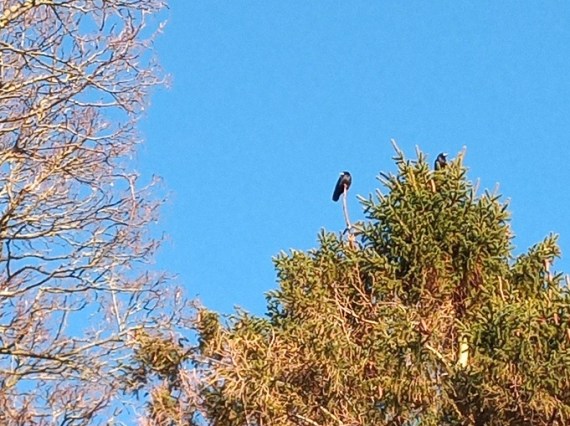
Yesterday, a second nest was well under way. This morning, there were the beginnings of a third. I met four of the construction team in the stubble field as I was walking the dog. They were gathering bills full of short pieces of straw and flying directly to the building site. So much for the basket of dog hair I put out for them to line nests with! Maybe the blue tits will make use of it. I went out to check on progress just now, and counted ten birds in the tree, at least another ten supervising from the air, plus two fat wood pigeons fornicating aimlessly as they do. I’m pretty certain there’s at least one nest in the fir tree too, as two rooks dived in there, trailing long bits of stick behind them.
The other collective noun for these birds is a Building. I think my small (but fiercely independent) parliament has assessed the weather damage and consequences of climate change, has debated in full its response, has gone out to build or retrofit its housing stock using the best materials for energy conservation and the best techniques for sustainability. It’s stopped jabbering about targets and is now a Building of Rooks.
Other parliaments may wish to take note.
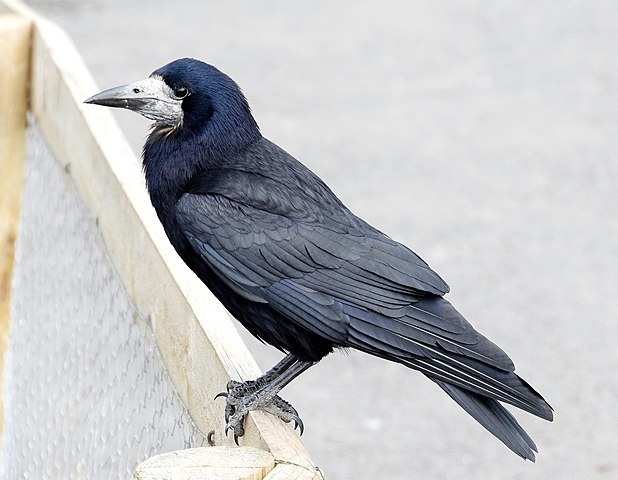
(Rook at Slimbridge, by Adrian Pingstone)