
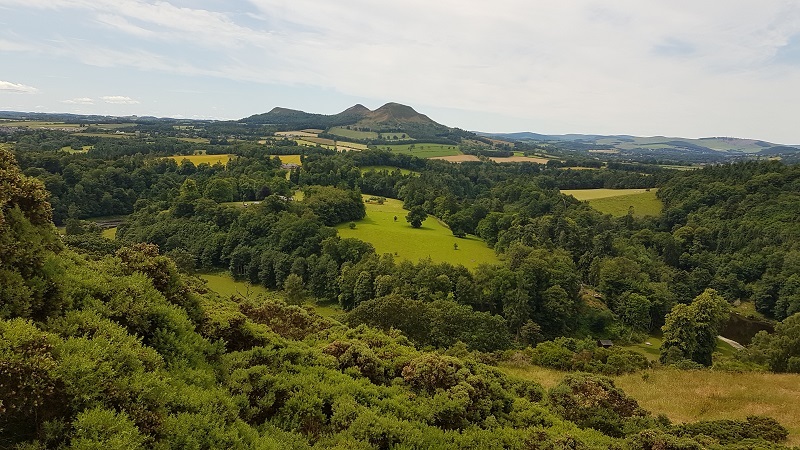
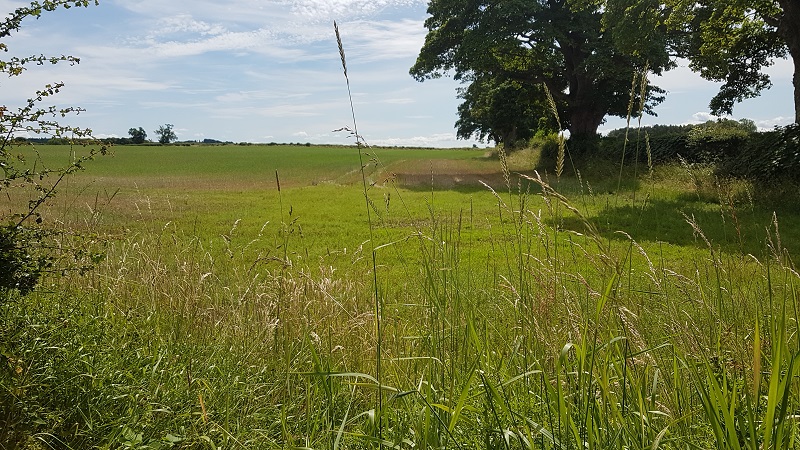
I will pursue enthusiastically all traces of the Roman and her/his associated allies, foot soldiers and settlers across a British landscape, quite regardless of whether there is actually anything to see when I get there. It used to annoy my partner, trudging miles up hills and across dubious bogs and anonymous fields, only to have me announce, triumphantly “It was here!”, gesturing at a field of wheat. He is more intrigued these days, and even suggests Roman tracking expeditions of his own volition.
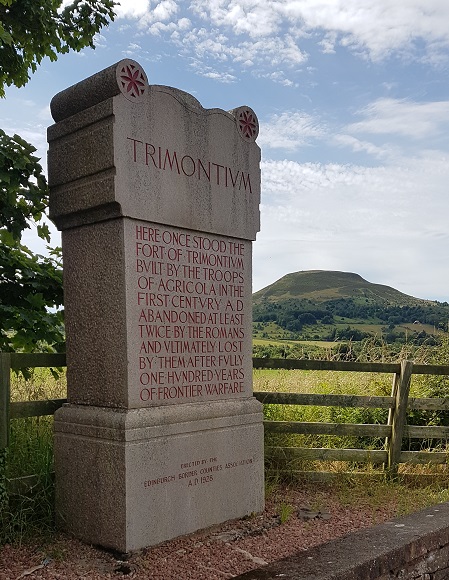
So it was that, once again, we wound up at Trimontium (known more generally as the district around Melrose). The three hills of the name are the Eildons; the Romans didn’t put forts on the tops – someone had already done that – but in this low rolling landscape, the hills must have shouted “home!” to returning soldiers at first sight, and assisted in sighting the meticulous straightness of their military roads. No, the Romans built their camps nearby in the valley of the Tweed, settled, traded, and called it Trimontium.
We cycled the length of the old road that cuts through the fringes of the camps, admired the crops in the fields where they allegedly lie buried, passed the site of a Roman circus where nothing could be seen, read the interpretative signs, and felt the whispering ghosts of legions march by. When we reached the site of the Roman bridge over the Tweed, we crossed on the newer one and cycled on to Dryburgh.
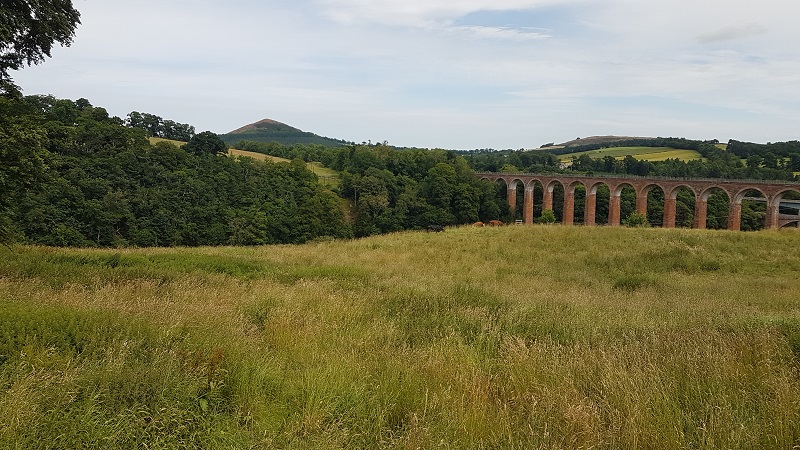
On the way we detoured to see the magnificent statue of William Wallace, a later and better known hero than Gnaeus Julius Agricola. He looks at home, gazing out forever across the valley to Trimontium, the three hills of Roman Scotland, every inch the warrior, rising from a sea of thistles. You could imagine perturbed, defiant, indomitable Caledonian thoughts – the thoughts that once challenged Agricola, and still challenge today. Or don’t imagine; you could think them yourself.
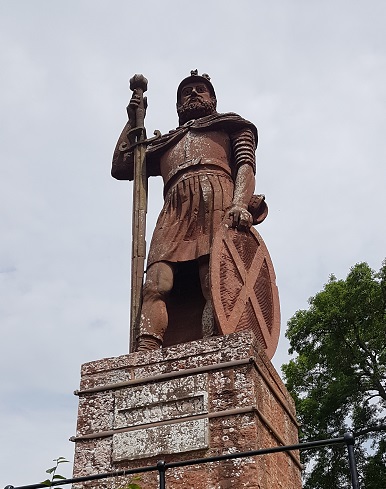
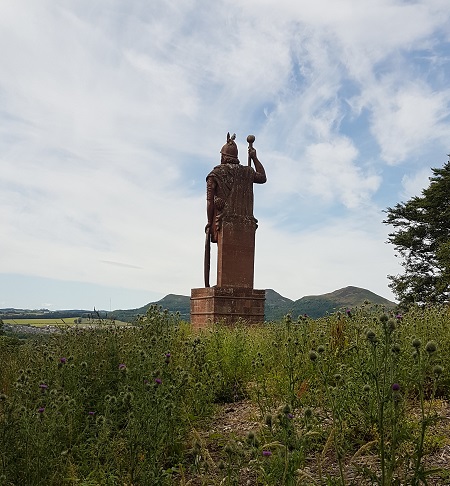
“There, like the wind through woods in riot,
Through him the gale of life blew high;
The tree of man was never quiet:
Then ’twas the Roman, now ’tis I” *
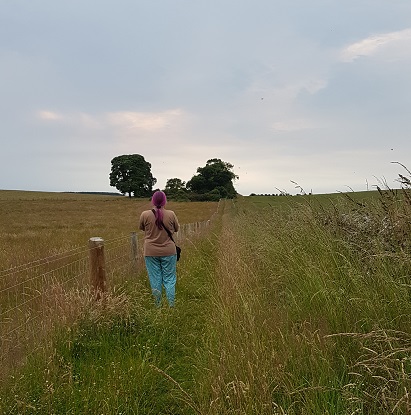
We went on to search for what remained of Dere Street, the road the Romans made from York to end at Trimontium, but which kept on growing to the Antonine Wall in Scotland’s central belt. Tell-tale straight lines jump out of maps; footpaths and tracks link bits of road seperated by farmland or forest. Here and there, we drove along it; the A68 out of St. Boswells was built on top of it. Near Jedburgh, we found a road that crossed it; a long straight footpath bore its way north-west; littered by large stones and rocks – way-markers? – and changes in level we dreamed into being the remains of the vallum, the rampart and ditch that lined important roads, as we marched up it into the dusk and crows took off from dark clumps of trees. In the foothills of the Cheviots, only a few kilometres from the border with England, Dere Street emerged once again, passing close by a set of Roman camps whose earthworks were, in places, still just visible.
Back home, we reminisce over our last visit to Ardoch, the Roman fort near Braco, in spring, and compare how wonderfully well preserved it is, in comparison with Trimontium and these Border camps. Clear are its neat square corners, it’s easy to count and follow the ramparts and ditches, and you can walk into the fort by the original entrances. Luck or design have conspired for Ardoch not be put under the plough too much; no roads have been constructed over it. Trees have grown, that’s all, and even they seem to follow Roman straight lines and military discipline. They tower, wide-spaced, vigorous, energetic.
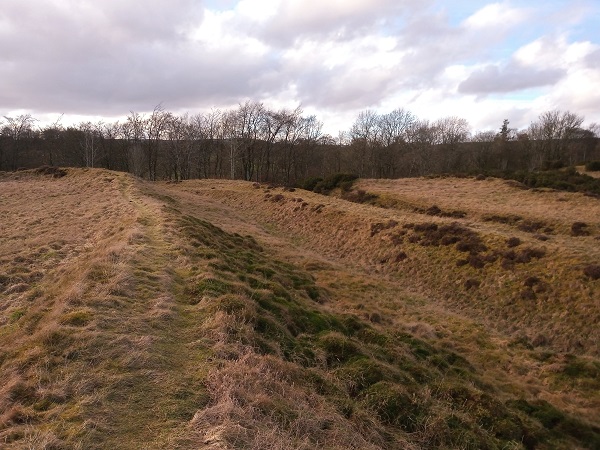
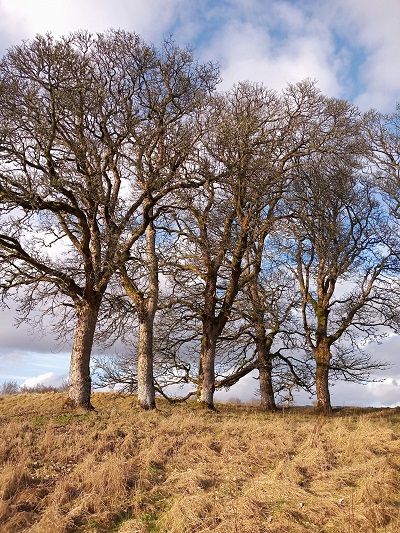
Then twas the Roman, now ’tis trees.
*from “A Shropshire Lad” by A.E. Housman



 Comments on The Nature of the Universe