Here be Dragons

If you take the road from Perth to Dundee, you skirt the edges of an explosion of geological delight known as Kinnoull Hill. Sheer cliffs soar up from sea level on your left. In autumn they are swaddled in the glorious golds and browns of beech woodland at the base; in spring and summer studded with the gold of gorse and broom. Dilapidated towers seem to teeter on the edge of the cliffs looking like something Germanic from a Grimm fairy tale (they were put there fore that very purpose).

These dramatic cliffs are the result of volcanic activity some 400 million years ago when a monstrous intrusion of magma elbowed its way through the older rocks in an enormous seam and solidified. Much later, the Kinnoull Hill geological intrusion was part of other monster-scale earth movements – the folding which left us with the Sidlaws on the north side of the Tay and the Ochil hills on the other (it’s called an anticline; think of a rainbow….). Subsequent faultlines and erosion removed the top of a rainbow and created the deep valley through which the Tay now marches triumphantly to the sea.

If, however, you approach these cliffs from the other side, the ascent is appreciable, but mild and steady, the slow, back-door rise of the escarpment. I went that way in April, and parked in the Corsie quarry, where volcanic dolerite and basalt is exposed, and from which it was taken for building for centuries. Up a steep bank, and a variety of paths are on offer, taking me first to the trig. point on Corsie Hill and fine views north over the small city of Perth and the vast breadbasket of Strathmore, to the mountains of the Angus glens to the east and the Obneys, marker-hills of the Highland Boundary Fault, slightly west. Up through roads and sheltered by woodland I went on winding tracks. Oak and birch dominate in places, in others, beech and non-native conifers stake a much-contested claim. Areas of heath and rough grassland house woodland sculpture in this popular spot.

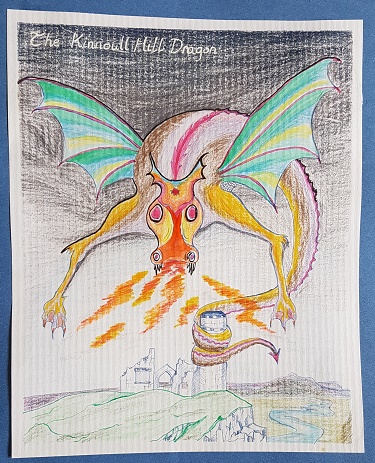
Sometime between all that geology and now, we are told, a dragon arrived on Kinnoull Hill. It glided along the unassailable cliff edges until it found a crevice, leading into a large enough cave for a small dragon to set up shop. This cave, called the Dragon Hole, is high on the cliff and allegedly could hold a dozen adult persons, so it wasn’t luxury accommodation for a dragon. What the dragon got up to, to upset the people of St. Johnstoun (as Perth was then known), I have no idea, but as is the way with relationships between human animals and animals either good to eat or a tad scary, someone was said to have “slain” it. It could have been St. Serf (what IS it with saints and dragons??), commemorated as a dragon slayer in the old church at nearby Dunning.

But my bet is Serf made it up, and the dragon’s still about, somewhere. There is a record that in the late 13th century (first) wars of independence, none other than William Wallace “pressed by the foe, occasionally betook himself to the retreat of the Dragon’s Hole.” In the 16th century, it was the local custom for a procession of youngsters from the town to clamber up to the Dragon Hole on May 1st (the pagan feast-day of Beltane), with garlands of flowers, musical instruments, and what may have been a Green Man. Or was it a dragon, representing the sun god, Bel? Whichever, it certainly cheesed off the local minister. In 1580, the congregation of the Kirk were forbidden to “resort or repair” to the Dragon Hole, on pain of a £20 fine (quite a fortune in those days) and repentance in the presence of the people.

You might think that was the end of it, and the Dragon Hole, together with its occupant, faded and disappeared from local knowledge. I used to teach about landscape character and interpretation, among other things, to Countryside Management students at the local college, and used Kinnoull Hill as a case study. One year, a couple of the lads got quite excited about dragons (can’t think where they got that from), and vowed to find the Dragon Hole. But here’s the thing: their colleague Arlene, a local girl, told us she used to go there as a child and had been let into the secret of its location by an older relative. She also had the good advice that they should not attempt to climb up to it, but abseil down. They went off in cahoots. Term ended before I ever heard if Ryan and Hamish were successful. Knowing them, I wouldn’t be surprised.
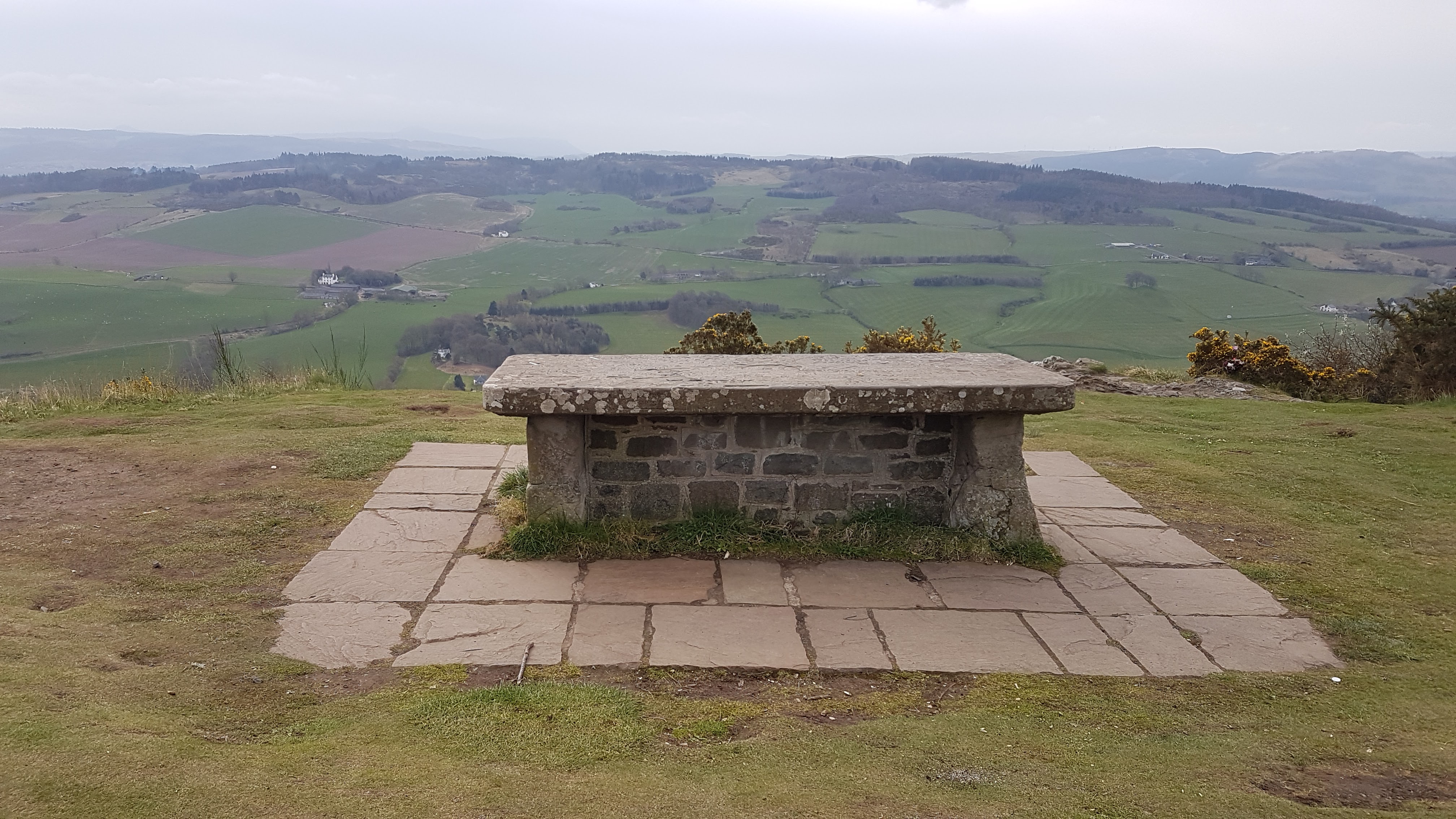
That’s Dundee in the distance…

Back to my walk. I came out to the viewpoint on the edge of Kinnoull Hill cliffs, where the ground suddenly ends, and bunches of flowers tell sad stories and remind us of human misery. The views downriver, with Dundee sparkling in the distance, and across to the greens and golds of Fife, with it’s own matching quarries and volcanoes, were more than worth the uphill slog. Everything, especially life, seemed precious to me then. I remembered the tales of the dragon’s hoard of treasure, the enchanted “dragon-stone” which James Keddie found in the Dragon Hole in 1600, the “Kinnoull Diamonds” that are said to sparkle by night. And I came right back to geology. Around volcanic intrusions, mineral-rich deposits hold many semi-precious and maybe precious stones – on Kinnoull Hill, it’s garnets and agates that are best known.

Back down to Earth, in every sense!
A Slow Pilgrimage to Siccar Point

Photo by Dominika Roseclay on Pexels.com

I always liked stones. I collected pebbles on the beach from childhood, and in my teens followed my sister around Ayrshire beaches where the pebbles had magical names – jaspar, carnelian, agate, onyx. I went to the Leadhills in search of galena. I polished stones with carborundum, to little effect.

And, secretly, I developed the habit of having a special stone, of no particular value save that it caught my eye and fitted in my palm, in the pocket of every jacket.

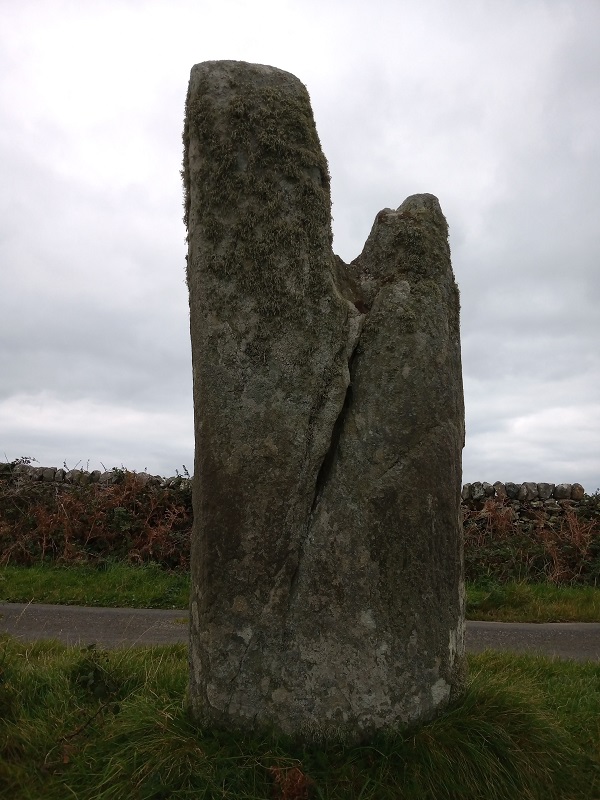
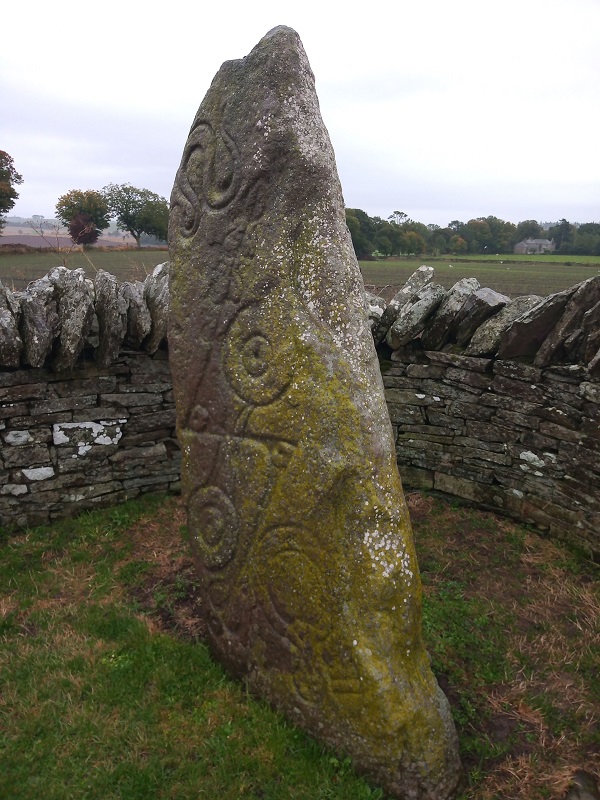
I liked big stones, too, stones with human names and imprints – the menhirs of West Cornwall, the cairns and ring-marked rocks of Mid-Argyll, the carved stones of Pictland. I had no better idea than any expert why they were placed where they were, or what the painstaking sculptures were for. But I knew the people who made stone circles kept pebbles in their pockets, too.

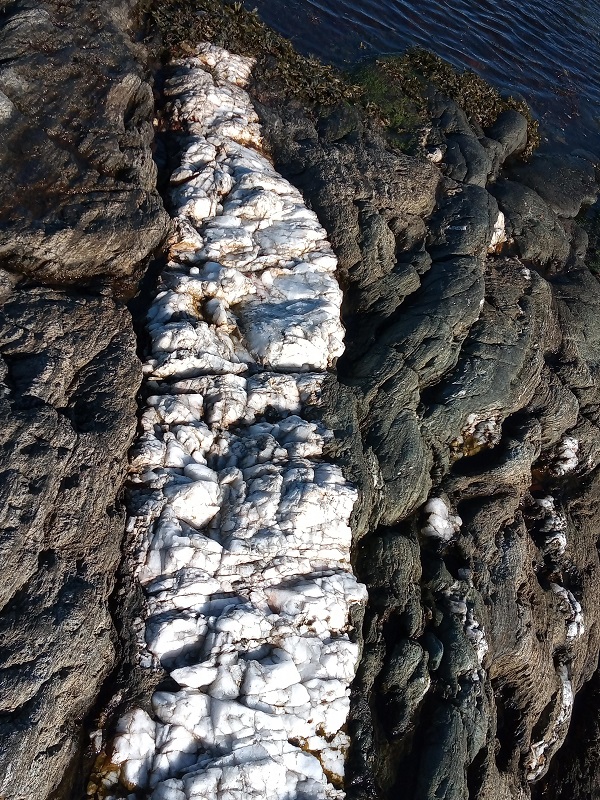
In some kinds of stone, I invested more thought than in others. Granite: shards of feldspar, glittering quartz and the now-you-see-me-now-you-don’t shine of mica. The stone that made up Dartmoor tors, Scottish mountains and an unlikely acid-soiled, heather-clad, craggy-topped park near Leicester. Gritstone: hard-working rock of wind and watermills, a sharp, scraped, glowering edge in the Dark Peak. Quartzite: white, altered stones casting spells on Schiehallion, the fairy hill.

What were these rocks? Where did they begin? How did they get here? Where will they end? Why are they different? Why do they paint different pictures on a landscape? Why did that Leicester park make me feel I was in Scotland?

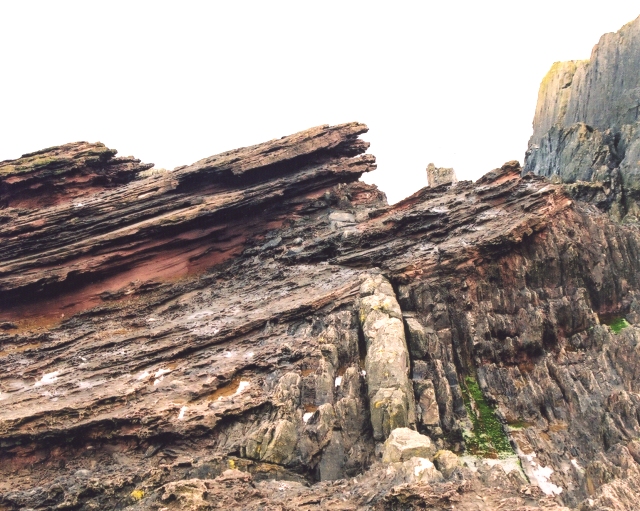
I found out most of the answers by studying Geology and Environment through the Open University, alongside biological sciences. One day on a field trip as I stood with others sketching outcrops, bedding planes and all the various features before me, I suddenly saw it. The landscape which had left crooked teeth of rock strata from one extreme to the other of my field of vision was once a monstrous anticline – one of scarcely imaginable proportions, like an outrageous rainbow. At some point it had collapsed on ancient fault lines. Before these rock strata had formed the bow, pushed up by plutonic forces, they had quietly lain flat and growing, at the bottom of a deep and ancient, long gone sea. I had found a new dimension to reading a landscape – one that underlay all the others.

 As I moved towards completing my degree, two options loomed. Rocks? Or plants? Geologist or gardener? I chose plants, but continued to collect stones, embrace menhirs and mentally compute the past from the present view wherever I could.

And so, one wet, unwelcoming day, we walked the coast path in Berwickshire to Siccar Point, in the footsteps of James Hutton, Hugh Miller and all the great Scottish fathers of geology who had embraced with reluctance or excitement truths about the age of the Earth and the forces behind its formation, all revealed in the inconvenient truth of rocks not being where they were supposed to be.

Hutton’s Unconformity.

The wind was fierce and uncompromising. I trembled on the famous cliff, and understood why Hutton had gone by boat. Deposition, uplift, volcanic forces and metamorphic sleight-of-hand. Readable by some, wondered at by many, denied by others. I collected no pebble, no souvenir. Just the imprint of the wind, cold as stone, mutable as stone.

The Scent of Bracken

I was nine or ten when I first experienced both the smell of bracken and the nation that is Scotland. It was late July, the start of Glasgow Fair Fortnight, and therefore my parents must have taken me out of my London primary school for two weeks to pack me on a plane to Glasgow, for a fortnight’s camping holiday with my big sister Pat and her boyfriend. It was my first camping trip, too. It took me all the way up the west coast to Cape Wrath and literally changed my life.

My first evening in Scotland was memorable for sitting on a wall eating fish suppers. My first full day began with a curious morning at Pat’s work, where little was done beyond desk-tidying and paper aeroplane competitions. Then, the hooter went, tools were downed, and everybody went on holiday. Northwards first, in the Mini, me surrounded by camping gear in the back seat. We stopped by Loch Garry the first night, off a dead-end tiny road, and camped in a clearing in the bracken by the loch.

Loch Garry was my introduction to midgies. Naively, I thought they were all part of the adventure. I chattered away in excitement behind the mosquito coils, breathing in the strange, new scent from the bracken that for me would ever more be the scent of Scotland. Eventually, Pat interrupted me.

“Margaret, what time do you think it is?”

“Umm, maybe half past eight?” I replied hopefully, knowing my bedtime was at nine during holidays. I wanted to stay up a little longer.

Pat showed me her watch. It was twenty past eleven. Summer in Scotland, long days, even in July. I was persuaded into my all-too-exciting sleeping bag, and eventually fell asleep, though I never saw it get dark. And woke, next morning, to the smell of bracken once again.

We meandered north and west for nearly two weeks, camping wild up tracks that led from narrow, grass-centred, barely-surfaced roads to the ruins of long depopulated clachans and farmsteads. Sometimes we stayed under bridges, or on beach-paths up which seaweed was once hauled for fields now buried in bracken, their stone walls mere crumbling ridges in the grass. Once, we asked permission from an isolated farm, where the farmer’s wife took the cow for an evening walk each day. We filled our water bottles there, and tried to buy, but were always given, raw milk from the cow.

I trailed after my sister by burns and over cliffs, taking bad photos with my precious box camera, looking for eagles, dizzied by sea-stacks, drinking in a world I couldn’t have imagined from my London suburb. Ullapool, Mellon Udrigle, Achiltibuie, Lochinver, Stoer, Kinlochbervie, Oldshoremore – place names which became indelible in my brain. And the magical mountains of Assynt: Stac Pollaidh the “petrified hedgehog”, Suilven, Canisp, Quinag…. I had not known there was this.

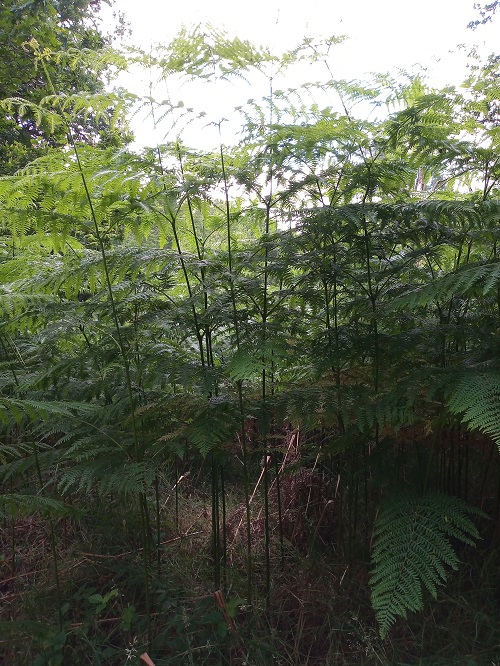
As I inhaled the scents of bracken, I discovered its practical uses. Pitch your tent over it, and it made for a comfortable sleep if your air-bed leaked its air out every night as mine did. Bracken was an indicator plant for dry ground when crossing terrifying bogs (as were heather and, to an extent, rushes. Bog cotton and moss was to be avoided). And being a small child, the bracken generally towered over me, yet I could find paths deep into it’s forest, to child-sized clearings, for private pees or just to hide.

I already knew, from my uniquely progressive and brilliant Scottish primary school teacher, more about Scotland than the average English adult does today. I knew of the Clearances, the Wars of Independence, Burns’ poems and (reluctantly) Scottish Country Dancing. What I learned that fortnight was not facts. It was the country itself, sights, sounds and weather, the star-filled nights and the mists that clung in the whispering air; the colour of the rain; the beauty, the sorrow and the joy. I was never the same again. Although I muttered crossly to myself about long walks with wet feet, and the sheer copiousness of uphill tracks, I was captured. Thereafter, holidays with my parents sitting on crowded beaches in southern England, driving out to bustling “beauty spots” and picnics on the side of the road, were never the same. To their credit, mum and dad realised it, and did their best to incorporate more “adventure” into our trips.

But it wasn’t adventure I craved. I’ve never been very adventurous. It was the scent of bracken.

It was the scent of Scotland.

Thank you.

On Doodling

pumpkin

My secondary school was very traditional, with a “good reputation”. Uniforms were strictly proscribed, right down to underwear and swimming costume, for use in the unheated, outdoor pool. Order was maintained by authoritarian teachers who had been there for decades, and prefects, who monitored behavior and whether we were still wearing our boaters and berets all the way home on the school bus. Our first homework was to take home our jotters and cover them, using brown paper – nothing else – to a strict pattern. On the front, using a ruler at all times, we wrote our names, class and the subject. Nothing else.

I became best friends with the second-in-command art teacher’s daughter. The art department was bright and modern, with lots of materials and media for us to use, and  foot-operated potter’s wheels. I joined the lunchtime art club and loved making lopsided, fall-apart pots, which never came up to the scratch of being selected for glazing and firing.

Some time around the Summer of Love, our rarely seen, distant headmaster retired, and was replaced by a younger model that you kept bumping into in the corridors. The senior art master also left and a climate of staff changes, hitherto unknown, began. My friend’s dad became head of art, and the potter’s wheels were taken away overnight. Apparently, they cramped our creative style. Uniform code was relaxed – and ultimately “banned” by the headteacher. Most of the petty rules we loved to get angry about were dumped. Prefects were pensioned off. Some giddy-eyed young teachers encouraged us to address them by their first names.woollies1

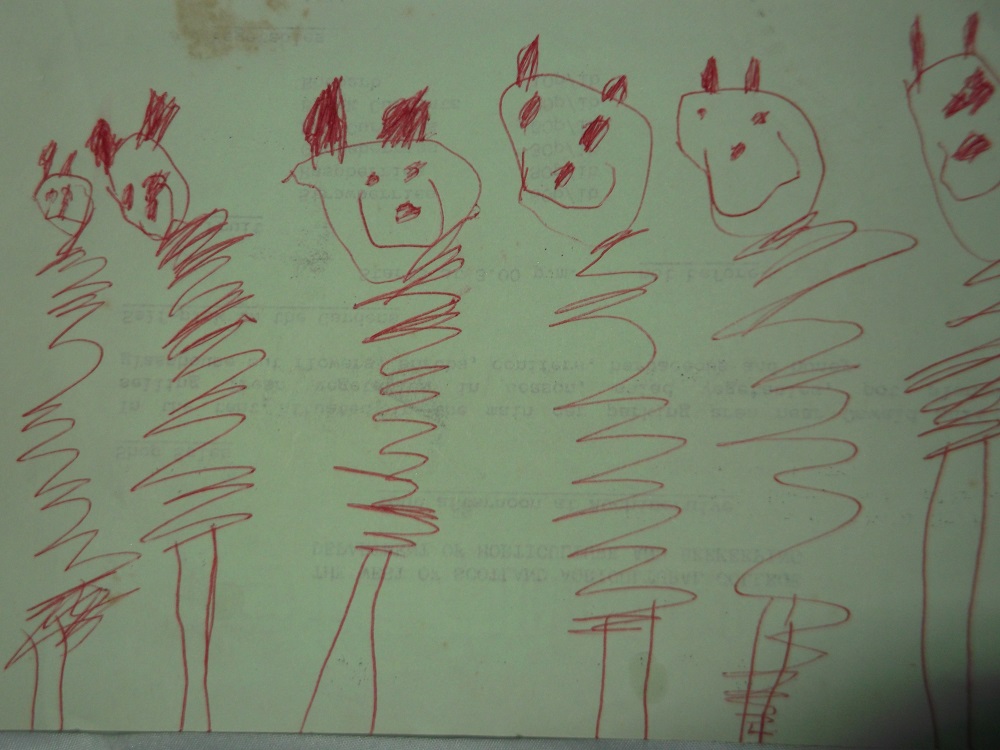
Our new head of art, wings unclipped, sought recognition for his progressive, avant-garde department. It was he that first suggested we doodled on the covers and in the margins of our jotters. There had always been teachers who turned a blind eye to a smattering of doodle on the inside cover – like the thoroughly modern teacher of Russian, and the lazy history teacher who was only entrusted with the first years. Others, of the old school, would reward even a full stop after the subject name with detention. But there came an edict: doodling on and in jotters was no longer a punishable offence. It was to be encouraged in order to bring out our inner artists. Awkwardly, sanctioned doodling began. Pupils became competitive about their flower-power designs. Some gained a talent for cartoons. There was no punishment when my French jotter carried an unflattering but cruelly recognisable caricature of Mademoiselle C, the teacher.

Doodling, whatever the excuse, became a habit.

Doodling expanded onto the pristine walls of corridors and classrooms. Not spontaneous graffiti, however. On the Russian teacher’s classroom wall, we painted St. Basil’s Cathedral in Moscow, with all its onion domes. The windows of the art department became opaque with rainbows of paint. Discarding the conventional, embracing “new” art in its broadest sense, rewarded our teacher with a visit from the Secretary of State for Education. His arrival was carefully contrived to coincide with a doodling-type dance display by two of us girls – of course – to a projected slide containing ink and fairy liquid, swirling and boiling in the projector lamp’s heat, accompanied by drumbeats from a couple of the boys – of course. The Minister glanced in, got the picture, and left rapidly.

The shelving of rules, the constant changes, the abandonment of distance and discipline left those pupils who had started under a very different ethos confused and sometimes angry. So were many of the staff. What do you do with a teenager, programmed to rebel, when you take away all the small stuff that’s been joyfully resisted by generations of adolescents? Some turned to bigger and more dangerous stuff to prove they were different. Sometimes, we took direct action against the new liberal order – such as holding an “illegal” Christmas carol concert when the traditional one was axed.

I left school early. The progressive trend lurched on, at least until the headmaster ran off with one of his sixth-year pupils. The art teacher left to be creative in Devon. About six years later, I found myself teaching in the same local authority, and had cause to visit the school for some event or other. I noted the blank, crisply-painted walls in the corridors. Clear glass sparkled in the windows of the art block. Uniforms, I observed, had returned. The backlash was in progress. It would have been a relief for my generation of rebels in need of tiny causes. I’m not sure if that still holds true – today’s young students have so many big causes to fight and need all the help they can get.

I never lost the doodling habit, though. It helps me concentrate, focus, relax – and learn.

Walking in Vectors

bristol2

A large, traditional primary school on the east side of London. Thirty-four eleven year olds, in their last year before going to the big school. Smart wee souls, most of them, and entranced with learning. Teacher, relaxed, confident, experienced but already thinking of a new career. We’d been talking about grid references, and maps, in preparation for a week-long field trip to the Isle of Wight. Our inspired and quirky maths specialist had entered this preoccupation by introducing them to vectors, what they were, how to define them. To facilitate understanding, I’d abandoned the classroom layout of loose groups and large desk-space and put the single desks, relics from the 1960s, back into rows, forming a grid, with my desk formally in the front by the blackboard. Technically off-grid. Of course. The class thought it was a great laugh.

Simon, in the back row, had some point in his creative writing he wanted my opinion on, so I called him over. We all stopped what we were doing and watched with interest as he took off his shoes, climbed onto his chair, then his desk, and proceeded to step precariously from desk-top to desk-top, preceding each move with a warning for the occupants to lift up their work. It took a while for him to reach my desk, and step off-grid too. Another time, another place, this behaviour might have alarmed both teacher and children. But this wasn’t that sort of class and I wasn’t that sort of teacher. Simon, brainy, cheeky, totally engaged and preposterous, certainly wasn’t that kind of pupil.

“What was that about, Simon?”

“I was walking in vectors. I had to use two different ones to get here because Keeley wouldn’t move her stuff.”

“I didn’t want his smelly feet on my desk!” protested Keeley.

We got Simon to tell us what vectors he’d used to define the straight lines via which he’d reached the front. It seemed a pretty good way to get your head around the subject, so we played about with it. Kids took turns to walk the vectors either I or their classmates suggested, starting from wherever they were.

“Your go, Miss!”

I turned a withering gaze on Simon, and joined in, “walking” to the vector destination he specified. Then they carried on with creative writing until lunchtime. Our maths specialist was very gratified to find the class’s understanding of vectors was now 100%.

**********************

bristol1Decades later, I still “walk in vectors” – and remember Simon – in many situations. Getting across tracts of city is one such. Townscapes forbid, direct, coerce the pedestrian.

Who wants to be coerced?

Traffic willing, I take the shortest distance and move in a straight line as far as possible to where I want to be. Car parks are my favourite, the bigger the better, with cars more or less forming the grid that our classroom desks did back then. (I draw the line at climbing the bonnets and walking on the vehicles, though. Even I concede it’s not appropriate behaviour for old women.) The urban environment (with some exceptions) is not, for me, one that I wish to meander in. Walking in vectors is efficient, and gives me something to think about while I’m at it.

In open countryside, or hillwalking, I am reassured by well-defined paths, and fingerposts. I figure they reduce the risk of large bovines, bottomless bogs, and getting lost. I don’t mind if they meander. This is not the place for cutting across fields and fences and the corners of peoples’ gardens, nor those coastal rocks and beaches where deviation from a proscribed route might end with me being cut off by the tide.

But woods are different. They are one of my comfort zones. Paths go round trees and skirt the edges. I make paths. I go through the wood, from tree to tree, or glade to glade, with no final destination but what I may find on the way. About the same time that my primary school class were physically exploring vectors, I was having a relationship with an SAS-type survivalist. Going for a walk with him meant going straight through the bramble thicket, river bed or steep rocky incline that separated us from his destination (usually a choice edible plant, a secret beach or a prehistoric relic). David walked in vectors without noticing; I followed, protesting, and emerged covered in bruises, arms torn by brambles, feet wet and shins muddy and scratched, twenty minutes later.

I slowly got used to it, and began to enjoy the sense of power that came from the determination to arrive at a destination of which most people would remain forever unaware. My senses were heightened by the necessary awareness of the landscape through which my straight lines were taking me. I saw more, listened harder, breathed in scents. Today, when I push through clearings of grasses taller than me, I feel the soft brush of their flowerheads, catch my breath on clouds of pollen. I mind small frogs and mushrooms underfoot, and insects living in the bark of the trees. I hear where water trickles invisibly; I sense and hear the warning aura of the wasp byke. I emerge into sunlight or thunderstorm, on the other side of the wood.

Meandering paths or the allure of straight tracks, ley-lines, history and mystery? It doesn’t really matter, but it’s good to be willing to do both. It’s no coincidence that I am writing this on the Cross Country train between Edinburgh and Exeter. Going via London would not make sense to someone fixated on travelling by vectors.