In Search of….anything but asparagus….

What I aspire to! Grown by J. Neill & Sons

In Catalonia, we stalked shifty looking men in the woods, all clearly trying to avoid being followed, saw them emerging later from the scrub carrying scrawny, dangling wisps of green. The Wild Asparagus. Allegedly, the acme of a forager’s progress. And no-one was about to help us find it.

So, grow your own, I decide. The very first raised bed with which I replaced nursery benches as I journeyed towards retirement three years ago, I planted up with two-year old purple asparagus crowns. They said, you need to be patient to grow asparagus, but it will be worth waiting for. I have waited. I have ladled seaweed, imported from Fife and Angus beaches, over the bed twice a year. I have weeded more meticulously than is my habit, because the asparagus gurus say asparagus cannot tolerate weeds. I have fed the largely invisible plants. Now, it is May again, and still there’s nothing much to see here.

But there are alternatives. In spring the emerging spears of Solomon’s Seal, an enthusiastic wild member of the same family – Liliaceae – provide a luscious alternative; slightly more bitter but I’d argue all the better for that. No chewy tough bases to the spears, either. Their season is but a fortnight, and does not satisfy.

And REAL asparagus, they tell me, is better…. I do not believe them.

I WILL have shoots and spears in spring. I go to the clearing in the hazel copse, where annually the willow herb heaves itself through soil and its own winter debris, in the form of thickish shoots and red-brown, furled leaves. I pick the fattest and youngest and steam them, then sizzle in butter, Now these ARE bitter….and some are like toothpicks. I eat a plateful anyway.

Willow Herb shoots

Back to the garden, where five out of the original twelve asparagus crowns are showing single, unenthusiastic, skinny purple spears. I think, how many new potatoes could I be getting out of that bed? How much chard or broccoli or succulent fennel? A friend donates some asparagus seed, originally collected in Italy but bred in Perthshire over twenty years, to our seed library and puts pictures on Facebook of fists-full of fat, early spears in April. I sow the seed, to back up my shy and retiring crowns, who are now five years old. I discover that my friend’s grows itself, without fuss, in a polytunnel. So shall mine do.

Hop shoots call to me. Vigorous, ornamental, golden hops and the fatter, darker, beery ones, seething with alcoholic promise. All are edible and they taste great. They’re in the nettle family, and, like nettles, the more you pick the shoots, the more shoots come. I find that hops and nettles combined appeases me greatly.

Hop shoots – Golden, Challenger & Fuggles, all good

Then up come the hostas. Fleshy, delicious, plumper than any asparagus but shorter too. I cut them before the leaves unfurl, but it’s not crucial: the leaves of this delectable Japanese vegetable are also very tasty and should never be consigned to a flower border. Although the flowers, when they come, are bonnie to look at as well. I remember that hostas are also in the lily family. They aren’t asparagus, but they’re close; and they’re easy to grow, reliable and pretty too.
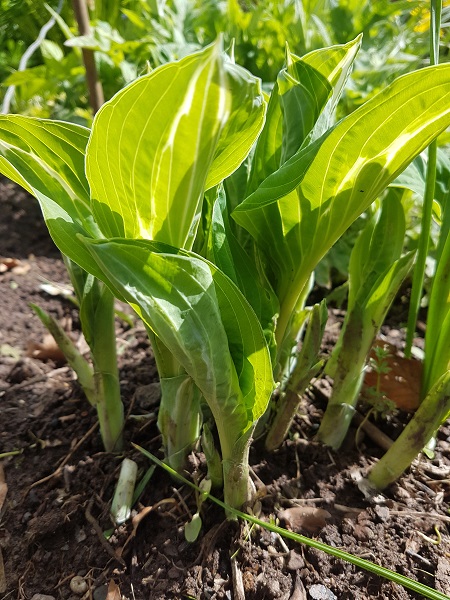
Hosta spears

After a moment’s thought, I cut two of the pathetic asparagus spears and add them to a dish of hosta. We get one spear each, but plenty of hosta shoots.

(Today I found someone is growing asparagus locally, commercially. It’s abundant, large and not too expensive. I’ve decided, if this year doesn’t reward my patience, that bed is going to be hostas next summer. And maybe the new seedlings in the polytunnel will one day give me payback!)

Whose Woods are These? I think I know….*

(This is the first in a new series of posts for West Stormont Woodland Group. From fear or repeating myself, I thought I’d write about the fact that each month, the woods have a Gift for us. And every month, there is at least one challenge that faces us – whether physical, philosophical or organisational – in contemplation of owning woodland as a community.)

FEBRUARY’S GIFT: GORSE FLOWER TEA

Of course, there are gorse bushes in flower in February in Five Mile Wood. There are gorse bushes in flower in the woods every month of the year, providing pollen and nectar for insects out too early or too late in the season. Some ancient lecher noticed this and spawned the saying “When gorse is not in flower, then kissing’s out of season.”

Gorse in flower in a cold and clenching winter such as this of 2021 is a real gift. It’s too cold to detect the rich coconut smell from them which can be almost overpowering in high summer, but the gold dazzles against the grey landscape of February or keeks through the smothering snow. Gorse has been used for many purposes, from feeding tough-mouthed horses in winter to sweeping chimneys. It’s a nitrogen fixing plant, like all the pea family, and imparts fertility to the soil. Burn it, and the alkaline ash is good for cleaning soiled linen.

The flowers themselves are used to make a yellow dye, and whether it worked or not, some dairies insisted that feeding gorse to milking cows made for a rich yellow butter. I don’t use gorse for any of these, but I do make gorse flower tea. It looks wonderful swirling around a glass teapot and you might catch a breath of that coconut smell. Don’t expect to taste it; it’s a very subtle (or absent!) taste. If you look hard you may find early shoots of nettle in the woods to give the tea some substance.

But don’t pass the gorse on to anyone else – allegedly, making a gift of gorse guarantees you’ll end up fighting. It’s the woods’ gift to me in February, and I will have no quarrel with the woods.

A CHALLENGE FOR FEBRUARY: WHOSE WOODS ARE THESE?

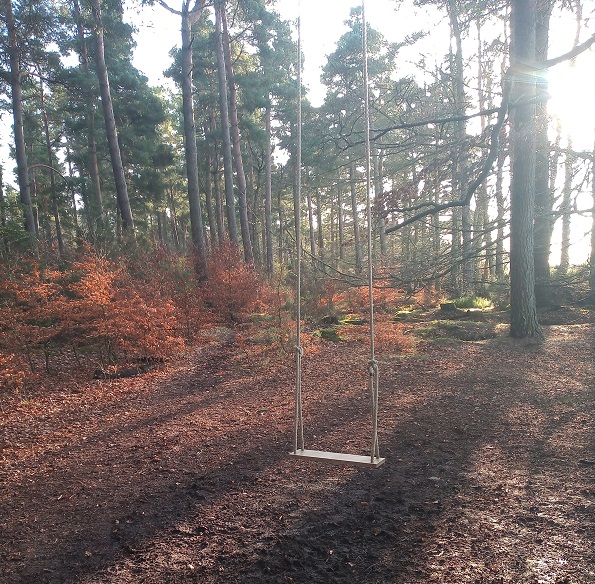
I think the woods are used more now than I remember in over twenty years, Evidence for that lies not just in who you meet, but in new tracks veering off, in small acts of clearance, in scattered pieces of art, in well-maintained articles of recreation like the new swing in the picture. Using the woods implies a sense of ownership, a vested interest, a certainty of relationship. A future.

But are we all buying into this? And will that feeling of belonging translate into an actual belonging? If Five Mile and Taymount Woods are to be taken into community ownership, it’s essential that community identifies itself, makes itself heard and provides the evidence of its existence that will count.

This month, West Stormont Woodland Group will begin a Community Consultation on the proposals the group has been working on for the two woods (or, as it’s widely seen, the one wood with a gap in the middle). Of course, Covid restrictions have forced the consultation to be mostly online, but this shouldn’t be seen as a problem – taking an event online in my recent experience amplifies and multiplies its reach and scope. There is a new website dedicated to the consultation, which launches on 22nd February; details can be found at http://www.weststormontwoodlandgroup.scot ,on Facebook, or by emailing contact@weststormontwoodlandgroup.scot

The challenge is to get you, me, all members, all non-members local to the communities around the woods, all of us starting to think these woods might be ours, to contribute to the consultation. Spread the word!

*Quoted from the opening lines of “Stopping by Woods on a Snowy Evening” by Robert Frost.

What we Choose to Eat from the Woods

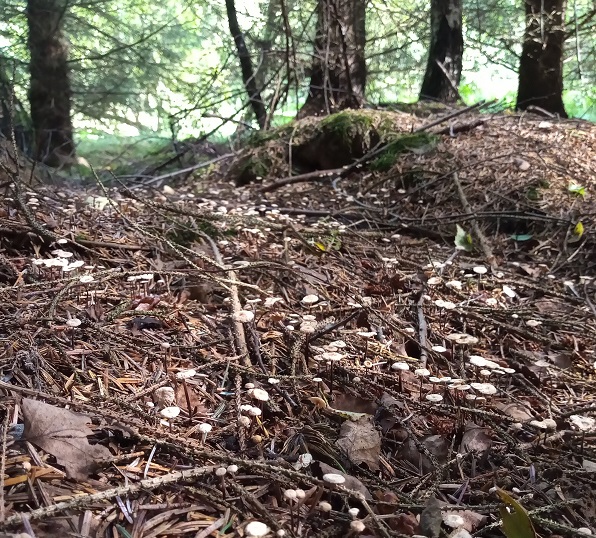
Horsehair Mushroom swarm

As soon as I entered Taymount Wood, I smelt mushrooms. Across in the pattering shade of the woods to my left, a family was ducking and diving and exclaiming across the ditches to each other. I could glimpse baskets, a small dog, a child or two.

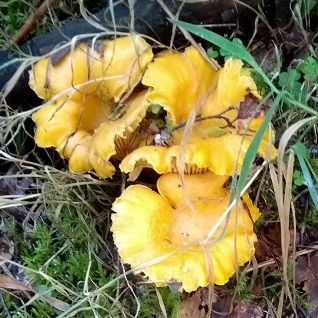
Great! I thought, people foraging. Good luck! With chanterelles from a previous forage in my fridge, I just wanted to walk without expectations or intent.

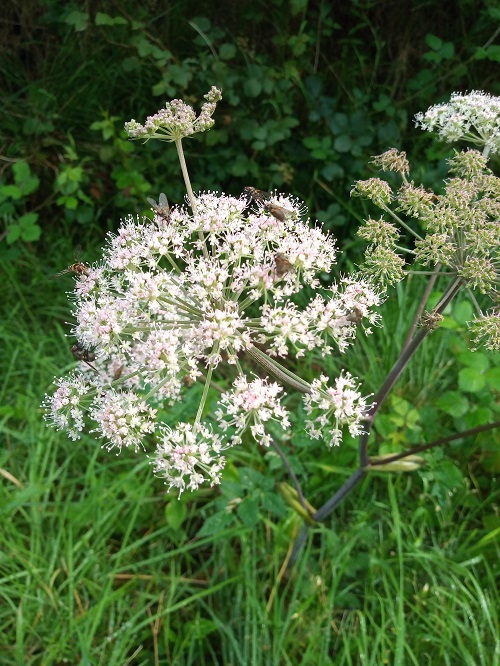
Looking for late summer flowers, I was taken by the large numbers of Wild Angelica growing either side of the path. Each geometrically arranged flowerhead hosted a happy horde of hoverflies and other pollinators. I’m 99.75% certain it is Wild Angelica, an edible plant – but I’ve never foraged it. The quarter of a percent of my brain that says “But wait, it might be Hemlock or one of the other poisonous members of the family out to deceive” prohibits me, despite the smell, season and appearance.

99.75% Wild Angelica

If in doubt, don’t. I no longer take risks with my foraging.

Taymount Wood is the wood that sidetracks me, every time. Up to the right, a sunlit glade. Cross the sleeper bridge to the left – what’s in here? Horse-hair mushrooms (Marasmius androsaceous) swarming up from the pine needles. A collection of puffballs (Lycoperdon perlatum) in mint condition cried out to be selectively foraged. Only firm, young ones are tasty, and leave more behind than you take.

Puffball (Lycoperdon perlatum)

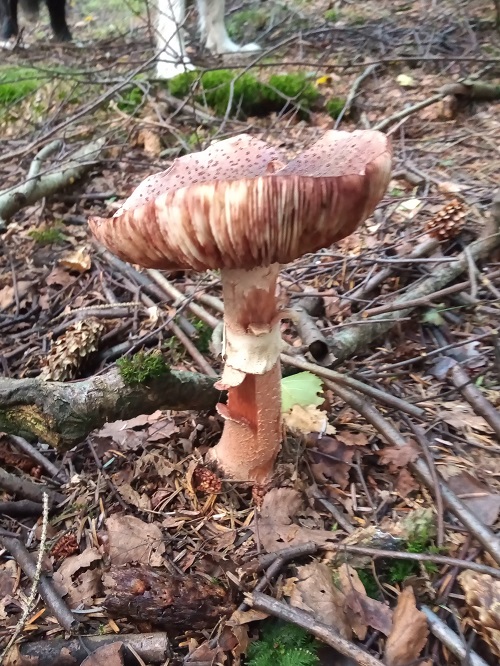
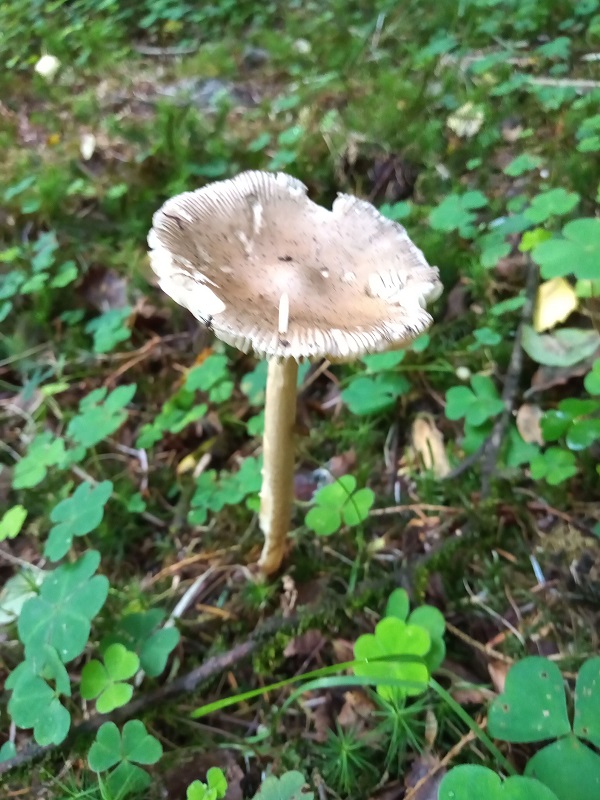
One family of mushrooms of which you have to be wary is Amanita. There are some deadly poisonous members, some only moderately so. Others will send you psychotic. There’s a few edible ones. Taymount Wood today was full of Blushers (Amanita rubescens), one of the edible ones. I have never eaten it, and never will. The flesh bruises pink, which is the indicator of the species – but in other respects it is too like the deadly Panther Cap (A. pantherina). Just suppose a Panther Cap happened to blush one day….. In any case, Blushers are always riddled with worms and maggots before I get near them. Today, both species were growing close to each other and the difference was obvious. I still wouldn’t risk it.

In the photos below, a Blusher on the left, showing the ring; three stages of a Panther Cap; but what do you think is the one on the right? See what I mean?

The Tawny Grisette (A. fulva) I do eat. Unlike most of the family, there is no ring around the stipe, and the edges of the cap are evenly striated as if by a pastry-cook. They were here – but it’s a socially-distanced species that only ever appears singly – and I hate to take the only one.

Tawny Grisette

The stench of death – but not quite death – drew me to the well-named Stinkhorns (Phallus impudica) in the ditch. Most people recoil at eating this mushroom, which exudes a sticky gel smelling like a corpse to attract flies to spread the spores. But I’ve eaten plenty – at a very young stage when they look like eggs protruding from the forest floor. There’s no horrid smell and the jelly surrounding the immature fruiting body is actually delicious. All right, to each her own!

Stinkhorn

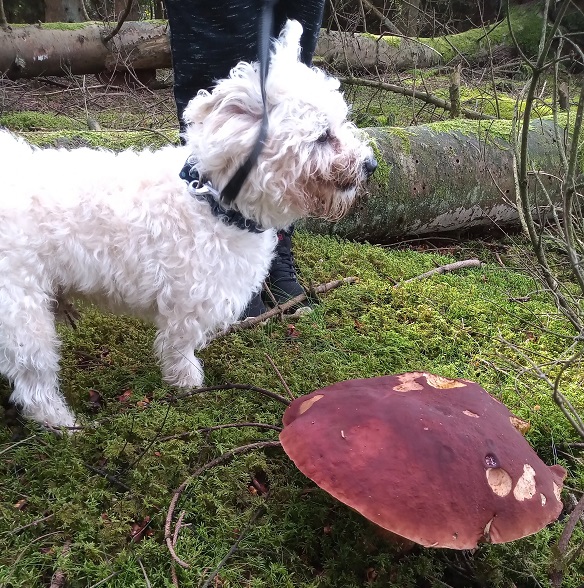
Sidetracked again, I met half the foraging family. Marcin, his young son (and the dog) had just found the biggest Boletus mushroom of the day. We chatted, compared notes, and I admired Marcin’s basket of Ceps, Bay Boletes and others. Marcin learned his mushroom lore from his mother and grandmother in Poland, and their preferences are the Boletus family, chanterelles and Saffron Milk Caps. He loves these woods, and values them for their beauty and food supply.  The giant Bolete he said he will not pick, but leave it to spread spores and be admired.

I showed Marcin my collection of puffballs. He looked aghast. “You eat them??” Apparently not a favourite in Poland!

This post was written for West Stormont Woodland Group https://www.weststormontwoodlandgroup.org.uk/

The Ploughman’s back home, and Waiting to Welcome You

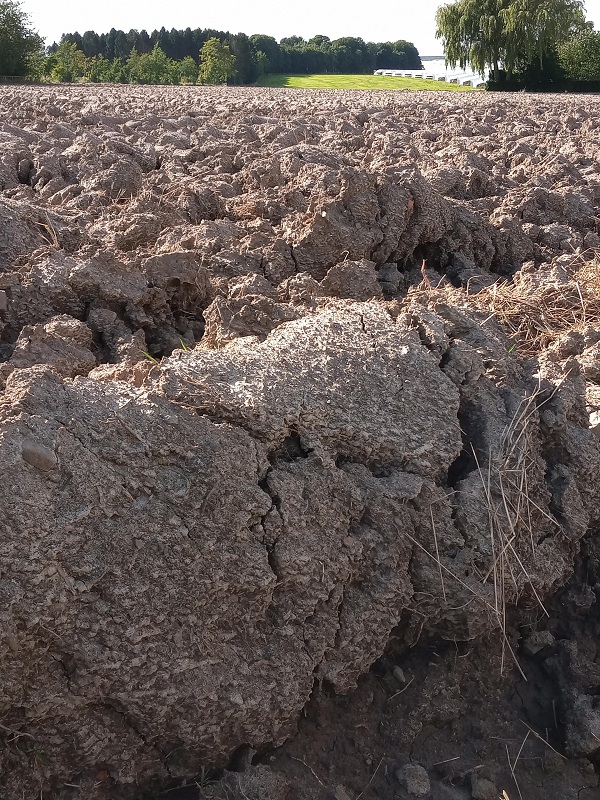
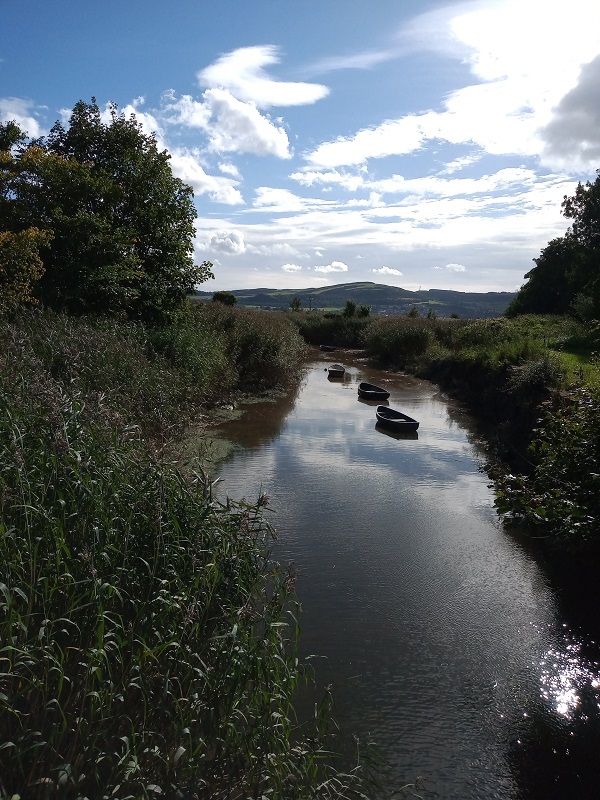
A fretting wind and days of warm sunshine have dried the newly-ploughed clays of the Carse at Port Allen into indomitable cliffs of furrows, solid, backbreaking, massive, yet wonderfully fertile. From the broken bridge across the Pow of Errol, the old port is ghostly, a hint of quayside, a dream of ships, the blue sky and wild clouds mirrored in still water.

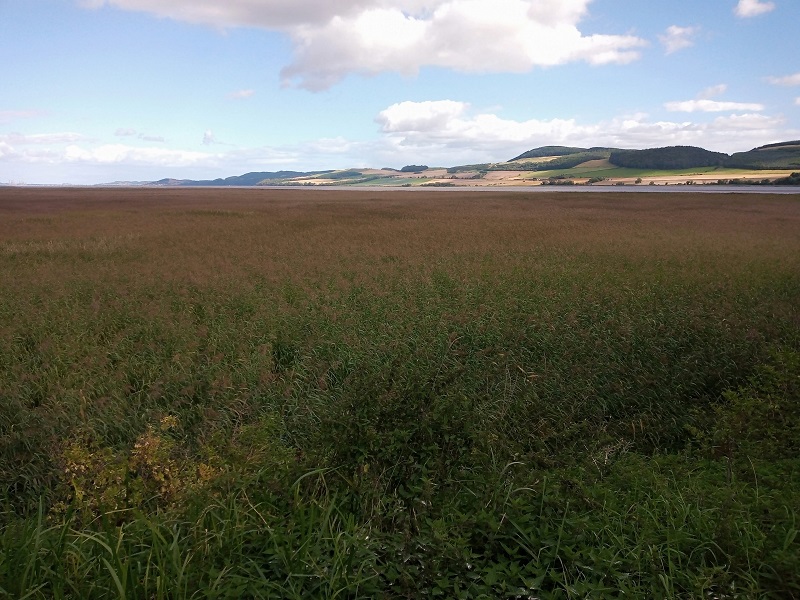
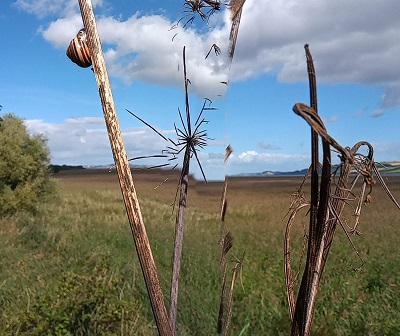
Endless reedbeds stretch to Dundee and over towards Fife, blurring with movement, a watery mirage that deceives the eye. You cannot see to the end of them. Nonchalent snails climb the haggard stalks of hogweed, clustering in the sun. Vision is fragmented, uneasy, focussed on a non-existent horizon.

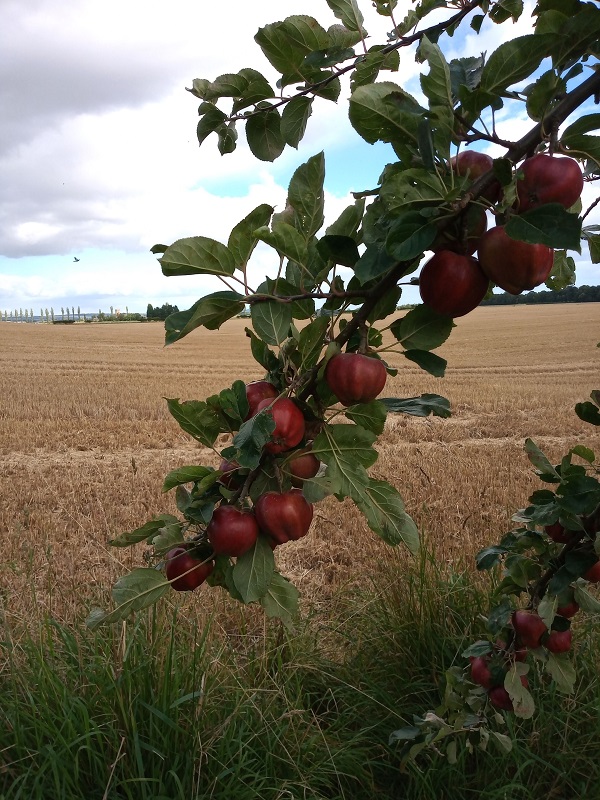
Up Gas Brae to the village, beneath great oaks and into the wind, a flock of pigeons, as ever, tracking your progress, and the start of a strange orchard, lining the road on either side. It’s a good year for apples, and not bad for pears. Two trees, side by side, and another further up, branches encrusted with wine-red, deeply-ribbed fruit.

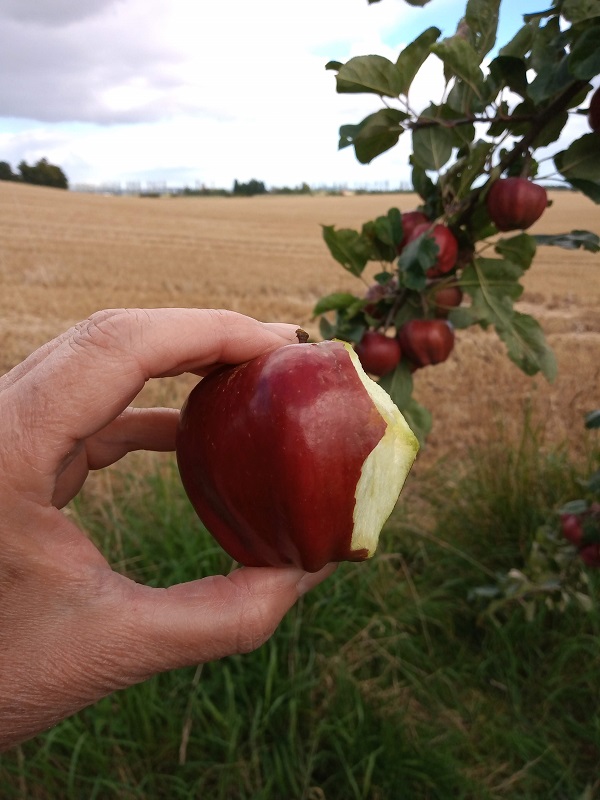
This is the Bloody Ploughman, whose tale of apple theft and a fatal, or maybe not quite fatal, shooting has been relayed here before. This was his village, these clays were his to plough. It was hard work; just walking behind the horses would have exhausted him. No wonder he stole the apples. Bite into the ripe flesh, and see the streaks of blood. It isn’t always the sweetest apple, but it is crisp and as refreshing as the ploughman would have desired.

This year, the Ploughman is home in Errol and well settled into the community orchard, surrounded by clay furrows. whispering reeds and the calls of waders and marsh harriers. Go now to visit, before the apples fall.

You can help yourself, and no-one will try to shoot you.

The Mushroom at the End of the Wood

A Post for West Stormont Woodland Group

Larch Boletes in Five Mile Wood

In Anna Tsing’s book The Mushroom at the End of the World*, she tells the story of landscapes ruined – or seemingly ruined – by the greed of human activity. In particular, forests. In one unpromising forest in Oregon USA, where commercial forestry had stripped out all the trees of value and left an empty terrain of broken ground and scrubby volunteer pines, she met some mushroom hunters, refugees from Laos. They were gathering Matsutake, one of the most prized and valuable edible mushrooms in Japan and – allegedly – the first living organisms to appear from the wreckage of Hiroshima after the Bomb.

Matsutake mushrooms, like many fungi, only appear when they can be entangled with the roots of a suitable host tree in a mycorrhizal relationship. They got on very well with those scrubby pines. Tsing tells how the accidental introduction of the Pine Wilt Nematode on a shipment of American Pine into Japan had devastated the Matsutake’s natural host there, hence its rarity. It is not a serious pest of American Pine.

Incidentally, Scots Pine is a good host for Matsutake, too….

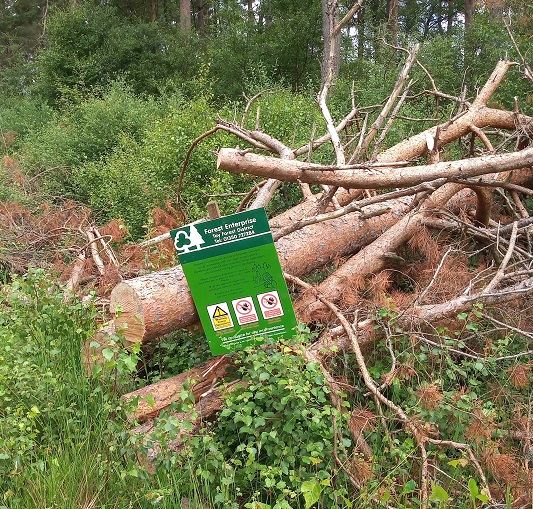
Abandoned remnants of the commercial forest

Mushrooms disappearing when a forest changes is familiar to me. All forests and woods are in the process of change, but our two ex-commercial forests, Five Mile and Taymount Woods, are forests in abrupt transition. Before the Commission took out the last valuable trees and wind-throw did for many more, Five Mile Wood was my happy mushroom-hunting ground, the place I’d take people to for foraging walks. I knew exactly where to find the biggest chanterelles, the white Angels’ Wings, the logs where real oyster mushrooms could often break out. The ditches beside the path were home to many fascinating species, including several edible Boletus including the Cep and the maggot-free Bay Bolete – and, of course plenty of highly poisonous examples too. Some years, the tantalisingly similar but inedible False Chanterelle outnumbered the real one – which is exactly what you need when teaching people not to harm themselves by misidentification. One damp corner was an emporium for the delicious Slippery Jack, which turned up in troops like clockwork, every year in late summer and autumn. I used to dry the ones we didn’t fry up right away, and store them in jars.

The biggest chanterelles

The fragile associations which had built up over the decades were shattered by felling. The self-sown birches that are colonising parts of both the woods now will eventually reel in their own, interconnected fungal friends, and the chanterelles will surely re-emerge one day, because birch is their main host tree. But from my experience, it takes at least a decade before mushrooms start to appear in a new wood, and the first arrivals are never the ones you want to eat! The precarity of a habitat for specific mushrooms is alarming – involving water tables, shade, parasitic plants, weather patterns, nematodes, beetles, animals – including mushroom pickers. Tsing’s book includes chapters on the equally precarious lives of the pickers – refugees, indigenous peoples, itinerants. Humans aren’t in control of what the mushrooms will do, because there are so many variables in play. Humans are just part of the landscape, and the landscape is changing because of and despite them.

Another remnant….

So, I can only observe and enjoy the new but mushroom-free habitats in parts of our woods, note the changes, watch new worlds forming out of devastation and realise we are not in charge, not that clever, and maybe, not that important either. I scoured the ditches in Five Mile Wood for boletes recently, and right at the end, I did find a couple of lingering and determined specimens. I left them there.

But who knows what will be the mushroom at the end of the wood? And where is the end of the wood?

*Tsing, Anna Lowenhaupt: The Mushroom at the End of the World – On the Possibility of Life in Capitalist Ruins (Princetown University Press 2015)

Desertification and Horticultural Imperialism

Spring 2020 has seen an awful lot of fields round here go unploughed and unplanted. Whether this is connected to the global pandemic, I’m not sure. Twenty years ago, a good number of fields were left to grass as government-subsidised “set aside” land, but I don’t think there’s a payment scheme at present encouraging non-cultivation.

deserts3

At least, I hope not, as some of these fields have been so heavily and repeatedly sprayed with herbicide they are now ecological deserts. The spray (probably including glyphosate judging from the distorted and curled up stems and foliage of broad-leaved plants that got in the way) has drifted across verges and footpaths, decimating wild food plants such as raspberry, nettle, hogweed and roses that local people forage. It was probably sprayed on one of the many windy days, and/or the tank residues emptied onto the verges. I won’t presume to tell farmers what to do in their fields here, but that is a no-no.

deserts2

It’s interesting to see that the spear thistles, presumably a prime target of the desertifiers, are remarkably resistant – except where the dose looks to have been doubled.

deserts1

Garden owners with too much time on their hands during lockdown have been at it too. Every garden hedge not yet ripped out in favour of a fence has a bare strip of brown, dead vegetation at its base. Weedkiller run off from precious driveways, in which nothing must be permitted to root, oozes onto formerly quite pretty road verges and banks. I do understand the temptation, really I do. The patch of 6×2 concrete slabs mis-called a patio here can come to resemble an untended flowerbed in no time, and yes, I do half-heartedly remove the “weeds” when I can be bothered.

It gets to me, however, when garden owners start speculating beyond their own boundaries. Just as agricultural spray drift and chemical dumping on publicly-used land is bad practice and breaches all pesticide regulations, so spraying, strimming, mowing, “prettifying” or planting with rhododendrons the verges, banks and roadsides near, but not part of, a property is offensive to me.

Very offensive. What people do with their own verges is up to them, whether I think it desirable or deplorable. It’s none of my business. When they inflict their personal idea of what’s attractive – and their personal conceit of themselves as above nature – on land that has absolutely nothing to do with them, that stinks. It is so weird that so many people with money jingling in their pockets buy up property in the countryside and then occupy and worry themselves non-stop trying to make it look like a posh city suburb.

A friend of mine coined a good term for this – Horticultural Imperialism. Yet another form of imperialism we need to grow out of, reject and set aside as a species.


The Gorse Tenement Spiders of Perthshire

“When gorse is out of flowers, kissing’s out of season,” so the saying goes.

That’s one use for this for this furiously jaggy native shrub, also known as whin, or furze. Since flowers can be found on a gorse bush in every month of the year, it’s a license for affection. A light tea from the deliciously coconut-scented flowers is another purpose; the same flowers are an ingredient in natural dyes. Sounds highly unlikely, given that horses have sensitive mouths, but allegedly the dry branches of gorse, thorns and all, are a nutritious feed for these beasts. The plant’s tendency to seed, spread and steam all over any unsuspecting tract of slightly open ground might be off-putting to the gardener, but there’s little doubt it makes a good deterrent for invaders and intruders.

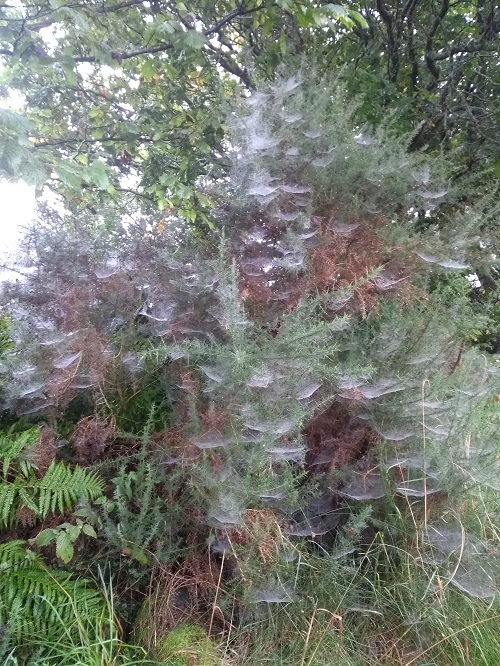
Do we reckon the value of a plant only in terms of its uses to humans? Too often! A hillside bright with gorse will not only gladden the human eye, but it will provide pollen and nectar for a range of bees and other insects. A gorse bush is an ecosystem owing nothing to our interference.gorsespiders2

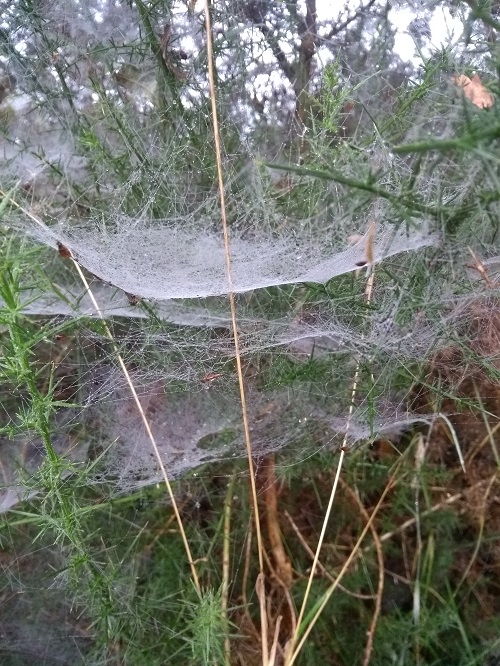
One autumn morning – the kind where damp mists hang low and the sun is watery and out of sight, I came upon the Spider Tenements. I did not see a single arachnid – nor yet a gorse flower! – but the fog condensing on the gossamer revealed each web on these gorse bushes in elaborate detail. It also revealed the happiness of spiders to rub shoulders (knees?) with one another in close proximity. If one web equals one spider, there must be hundreds on every bush. They don’t mind the jagginess; obviously it gives them lots of points for attachment of their superficially haphazard cobwebs!

gorsespiders1


I wonder how many small insects were caught on this bush today. How many webs do you think there are?

And does anyone know what kind of spider my gorse-loving, tenement-dwelling pals might be?


The Morning After

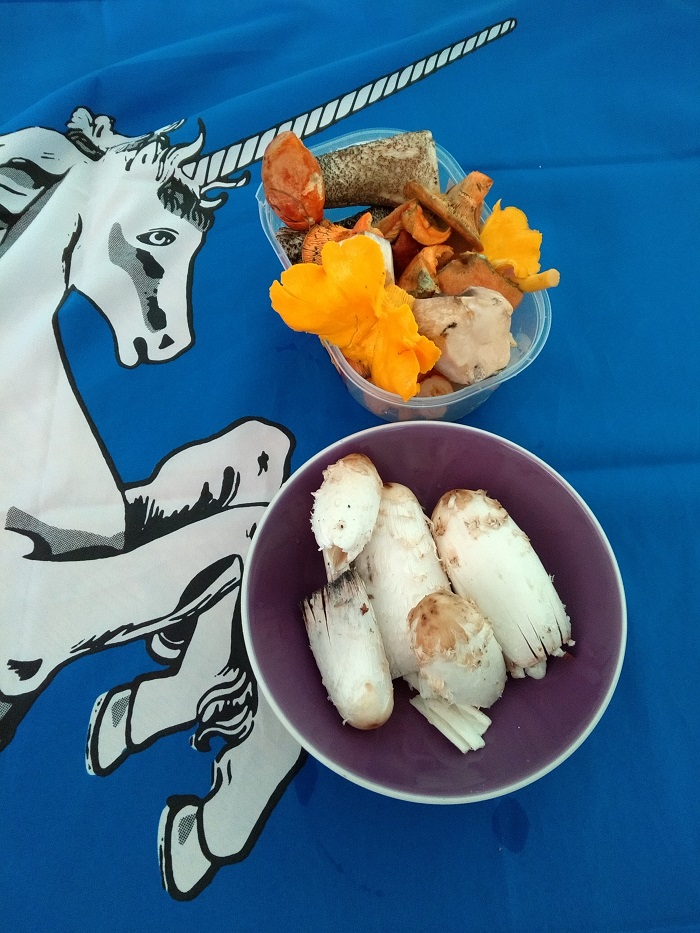
unicorn mushrooms

The morning after the march I went mushrooming again. There were no mushrooms of any kind left in the fridge. I nearly didn’t bother, because I was dog tired, and, after all, I would pass at least three supermarkets in the afternoon.

But something about the air that morning was irresistible. Cool, zinging with the promise of sunshine; light, ethereal and just a little autumnal; dust motes and electrons dancing a jig. The dam and the woods and clearings energised and soothed simultaneously – an antidote to the adrenaline that had kept me up and awake till gone 2am, head birling with ideas and reflections and hope no anxiety could dampen.

Every secret hollow, bank and bog in my regular itinerary yielded something edible. Shaggy Inkcaps standing like soldiers, Hedgehog Mushrooms like tiny undercooked loaves, spiny as urchins beneath, chunky Orange Birch Boletes that go alarmingly black when you cut the flesh but taste divine. And a few late Saffron Milk Caps, only slightly infested.

jed Rohallion

The sunny gold of Chanterelles glistened like the yolk of a happy hen’s egg. Deer came skipping coquettishly out from the wood and crossed in front of me, one of them practically pirouetting in her glee – anticipating perhaps, the rutting season nearly upon us.

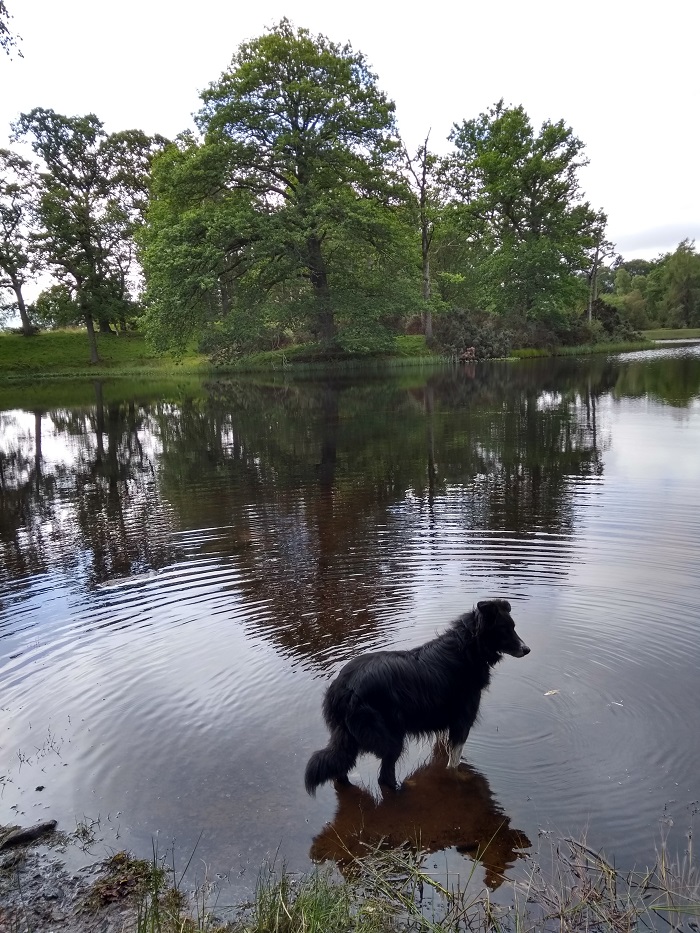
From my dog gazing lovingly at his stick floating away on the loch to the shafts of sudden sun on the ripples he makes, from the happy brown collie and his owner to the mute swans and their big grey babies – the morning after, all of Scotland seems to be smiling at me.