Not Ugly.

Midsummer, June, and roadside verges, hedgerows and path edges are brimming with life and good things to eat. Well, they should be, if you’re lucky, and some fusser hasn’t gone forth with strimmer or spray gun to transform the riot of green and gold, the effusion of flowers, seedheads and shoots to bare brown, sad-looking blankness or close-mown, stressed-out grass. I can never comprehend the small suburban minds of householders who would rather gaze out on monochrome than the living proof of life on earth. It’s one thing to keep your own verge tidy, and occasional cutting can increase the range of flowers, but it’s galling when people attack verges opposite or near their houses but which they don’t actually own. I confess, I get quite bitter about it.

During the 2020 lockdown, I embarrassed my family by taking to task a poor, misguided woman who was wielding herbicide along the route of a long-distance footpath. Granted, it was a stretch bordering her own property, and right enough, as she protested, she wasn’t killing everything…..

No, she was only killing what she called “the ugly, untidy species” that she had no use for. These were Dockens (have you ever looked at the intricacy of the flower structure in the Dock family?), and Hogweed. That’s where I really saw red.

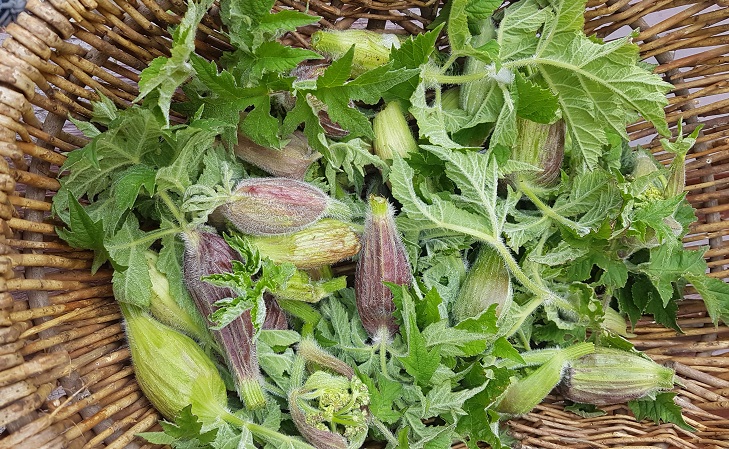
NO!!!! I don’t mean “Giant Hogweed” (Heracleum mantegazzianum), an invasive non-native plant known to cause serious skin burns and out-compete other plant species. Even I acknowledge that’s a nightmare, albeit a spectacular one. I mean Common Hogweed (Heracleum sphondylium ) a soft-leaved, far smaller native plant, with edible leafstalks and, at this time of year, the most delectable “broccoli” or unopened flower heads. Very few people have a skin reaction to this plant (far fewer than do to tomato plants for example), and I look forward to eating the broccoli every June.

“But it’s too tall, too big, too ugly and the bees and butterflies don’t visit it!” I was told. So then, we eradicate all the living things that we personally don’t like the look of, do we? What is ugly, anyway? Do we have to apply our personal prejudices to plants, other animals… humans? Sadly, many people do…..labelling leading to intolerance leading to hate crime leading to… genocide? And if a flower is constructed to be pollinated, not by the human species’ cosy favourites of bee and butterfly, but by beetles, flies or (perish the thought) wasps, does that make them useless, unworthy or ugly?

No, it darned well doesn’t. If Hogweed, Dockens or any other species becomes a weed in your carrots or undermines your potatoes, fair enough. It’s not because they’re ugly, they’re just doing what they are supposed to do. But leave them in the waysides that are their habitat. Before anyone gets horticulturally imperialistic ideas locally, I’m gathering hogweed broccoli. Just trim away the leafy shoots to prepare. Sauteed in butter with a little water and sprinkled with lemon juice and salt, they are a summer treat.
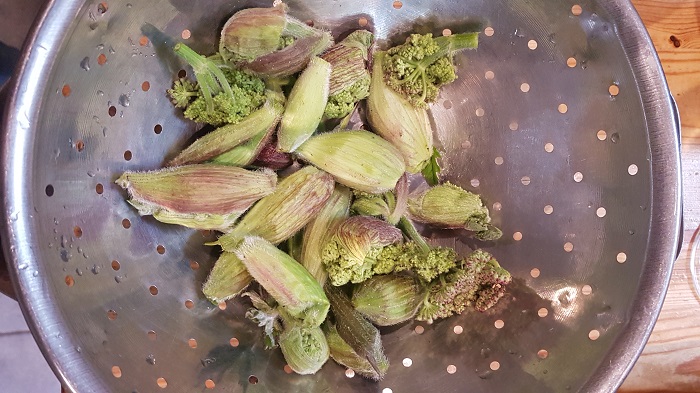
All prepared for braising or battering…..

Last night I made hogweed pakoras – coated in spicy chickpea flour batter and deep-fried – to go with the curry. I meant to take a photo for the blog, but suddenly, they were all gone. I need to get some more. Long live hedgerow delicacies!

In Search of….anything but asparagus….

What I aspire to! Grown by J. Neill & Sons

In Catalonia, we stalked shifty looking men in the woods, all clearly trying to avoid being followed, saw them emerging later from the scrub carrying scrawny, dangling wisps of green. The Wild Asparagus. Allegedly, the acme of a forager’s progress. And no-one was about to help us find it.

So, grow your own, I decide. The very first raised bed with which I replaced nursery benches as I journeyed towards retirement three years ago, I planted up with two-year old purple asparagus crowns. They said, you need to be patient to grow asparagus, but it will be worth waiting for. I have waited. I have ladled seaweed, imported from Fife and Angus beaches, over the bed twice a year. I have weeded more meticulously than is my habit, because the asparagus gurus say asparagus cannot tolerate weeds. I have fed the largely invisible plants. Now, it is May again, and still there’s nothing much to see here.

But there are alternatives. In spring the emerging spears of Solomon’s Seal, an enthusiastic wild member of the same family – Liliaceae – provide a luscious alternative; slightly more bitter but I’d argue all the better for that. No chewy tough bases to the spears, either. Their season is but a fortnight, and does not satisfy.

And REAL asparagus, they tell me, is better…. I do not believe them.

I WILL have shoots and spears in spring. I go to the clearing in the hazel copse, where annually the willow herb heaves itself through soil and its own winter debris, in the form of thickish shoots and red-brown, furled leaves. I pick the fattest and youngest and steam them, then sizzle in butter, Now these ARE bitter….and some are like toothpicks. I eat a plateful anyway.

Willow Herb shoots

Back to the garden, where five out of the original twelve asparagus crowns are showing single, unenthusiastic, skinny purple spears. I think, how many new potatoes could I be getting out of that bed? How much chard or broccoli or succulent fennel? A friend donates some asparagus seed, originally collected in Italy but bred in Perthshire over twenty years, to our seed library and puts pictures on Facebook of fists-full of fat, early spears in April. I sow the seed, to back up my shy and retiring crowns, who are now five years old. I discover that my friend’s grows itself, without fuss, in a polytunnel. So shall mine do.

Hop shoots call to me. Vigorous, ornamental, golden hops and the fatter, darker, beery ones, seething with alcoholic promise. All are edible and they taste great. They’re in the nettle family, and, like nettles, the more you pick the shoots, the more shoots come. I find that hops and nettles combined appeases me greatly.

Hop shoots – Golden, Challenger & Fuggles, all good

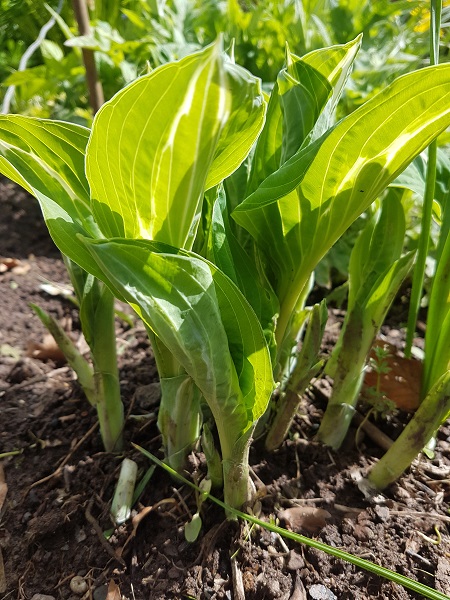
Then up come the hostas. Fleshy, delicious, plumper than any asparagus but shorter too. I cut them before the leaves unfurl, but it’s not crucial: the leaves of this delectable Japanese vegetable are also very tasty and should never be consigned to a flower border. Although the flowers, when they come, are bonnie to look at as well. I remember that hostas are also in the lily family. They aren’t asparagus, but they’re close; and they’re easy to grow, reliable and pretty too.

Hosta spears

After a moment’s thought, I cut two of the pathetic asparagus spears and add them to a dish of hosta. We get one spear each, but plenty of hosta shoots.

(Today I found someone is growing asparagus locally, commercially. It’s abundant, large and not too expensive. I’ve decided, if this year doesn’t reward my patience, that bed is going to be hostas next summer. And maybe the new seedlings in the polytunnel will one day give me payback!)

Muffled in Monochrome

I don’t hate snow, really. It’s just different. It invites us to be indoors, to exclude the cold air, the blinding whiteness, the threats of slip and slide and sink and fall. If it’s around too long, it starts to bug me. Last Friday while reading, I got frustrated by the pinprick of light that seemed to obliterate whatever word I was looking at. Then the pinprick became a ball-bearing, then an expanding ring. A migraine aura. Perhaps going outside earlier when sun on snow had dazzled me caused it. An hour of lying, eyes closed, listening to a dark and frighteningly funny play about the erstwhile president of the USA saw it off but left me uneasy. The sun was gone, and greyness encroached, but I needed exercise, daylight and an antidote to foreboding.

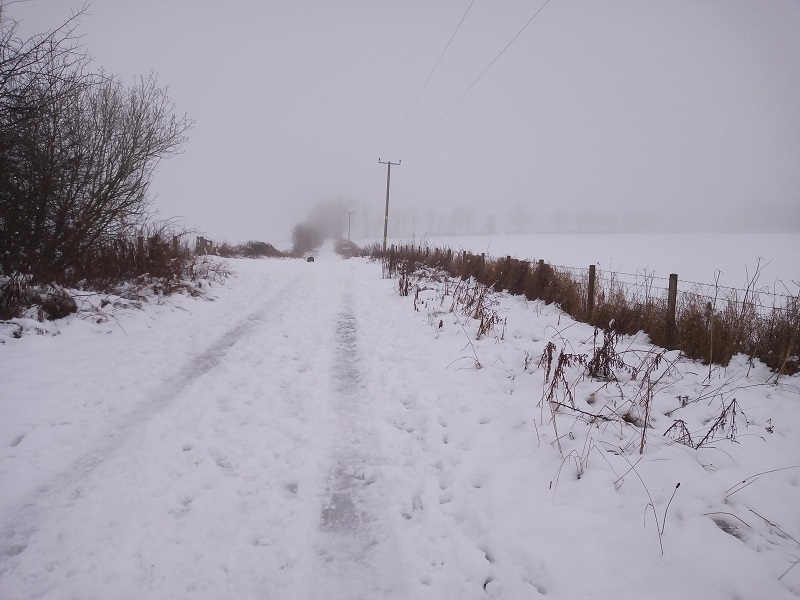
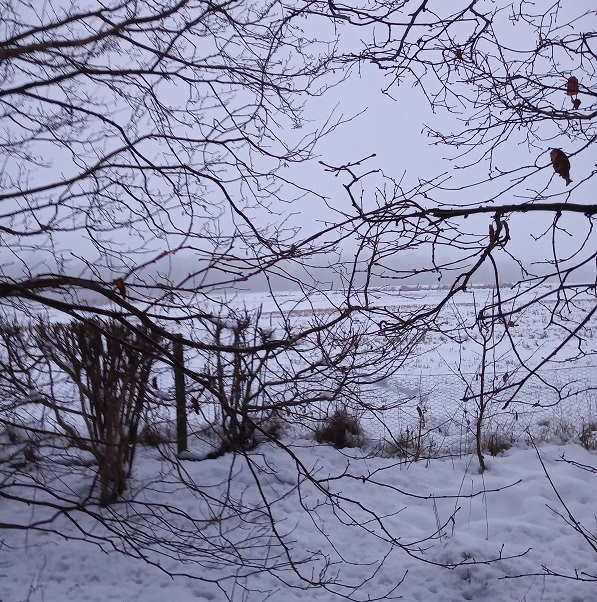
Snow lay thickly on the ground, with an intensity and doggedness that bludgeoned the senses. Dense, white cloud merged into white fields, but it was not easy to know if I was looking at land or air, except where snatches of stubble or deer-scuffed soil peered through a thin, white fog. There were no distant views; everything seemed close, oppressive, heavy and inert.

Vision impaired, a mild headache bleakly persisting, and the opacity of the veil of snow deadening all sound. Small flocks of monochrome birds passed over, silent and anonymous. Solitary grey figures slipped soundlessly across the edges of fields or emerged from woods; we did not acknowledge that we’d seen each other. The sounds I could hear were only in my head; ringing of tinnitus, a faint roaring; result of a year of being virtually locked down and unwilling to self-treat blocked ears after causing an infection with my last attempt.

Seeking light, I went into an open field. The snow immediately came over the tops of my boots and slid down to my heels. I looked for patches of exposed stubble, and followed deer, humans and dog prints to avoid drifts, but they confounded me. The effort of trudging uphill took concentration. I could only see the spot where I would place my next mark on crusty, half-frozen snow.

When I got home in the dim, shrouding dusk, I was surprised to see the hens still out. I stepped into the polytunnel to knock snow off the top from inside. The sight of green, growing plants, brown soil, terracotta pots and little piles of compost waiting to be spread filled me with strange relief. I sat for a few minutes in a garden chair, relishing the last remnants of colour before nightfall. Then I punched the thick layer of snow from the top and sides. It slid off with a rushing sigh. And I saw then that it was not yet dark – the hens were right. Night had not yet fallen, and into this small green space came a brief shudder of light, clarity and hope.

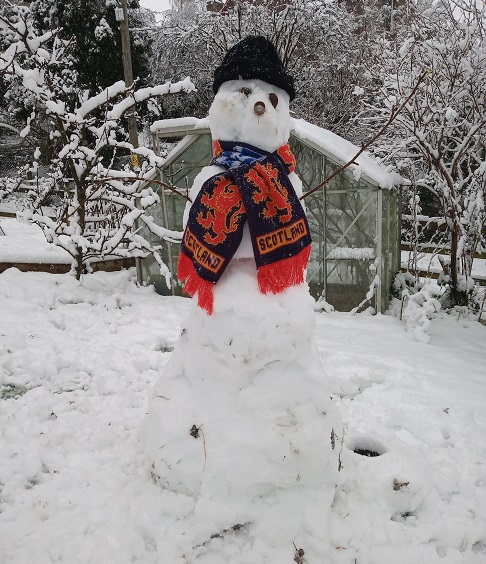
(When I open the curtains onto the first serious snow of January, I am just like any other child.)

Zoom Yoga: A Tale of Distraction

Photo by Pixabay on Pexels.com

I roll out the mat and obediently stand, facing the window where the morning rain can be seen drip-drip-dripping from mouldering leaves and a hole in the gutter. I connect my body with the earth. My eyes, however, watch as the blackbird, steadily working his way through all the tiny red apples on the weeping crab, is joined by a song thrush. The thrush hasn’t been seen for months, and is initially more concerned with preening the rain from his wings and tail, until he assesses there to be no challenge from the blackbird, and tucks in heartily.

Lulled into repetitive, soothing xi-gong type exercises, my body goes into autopilot as I watch a long-tailed tit hacking away at a suet block in the bird feeder. Coal tits and bluetits buzz in and out from the communal vantage point of the crab apple, to feed on seed and fat-balls. A dapper wee collared dove paces up and down beneath, hoovering up the fat-ball crumbs the small birds dislodge and drop.

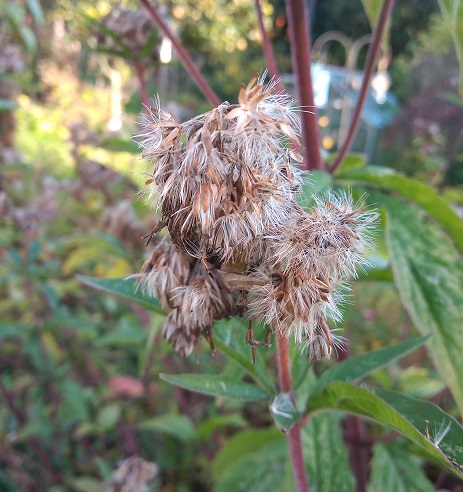
As I breathe, and stretch, and occasionally forget to do either in precisely the right order, I note that the Michaelmas Daisies are soggy, but still going, and there is plenty of seed still on the crystal-spattered heads of Hemp Agrimony. I note also that to human eyes in search of order it’s a mess. Shall I cut it down, or will the goldfinches be back to harvest more seedy meals? Of course, I’ll leave the mess.

I have watched my neighbour across the road leave her house and drive down the brae, but there is something moving around at the bottom of her garden, among the rhododendrons. Who would be gardening in the pouring rain? Ducking temporarily under the watchful eye of my phone, and thus my yoga teacher, I suspend an impossible balance to look more closely. Identifiable by their creamy backsides, two burgling roe deer are gently browsing their way along the hedge-line, looking for a gap in the fence that they know fine well isn’t there. They are bold, flexible, relaxed and insouciant. They have been doing yoga all their lives.

The impossible balance has not become easier in my brief absence.

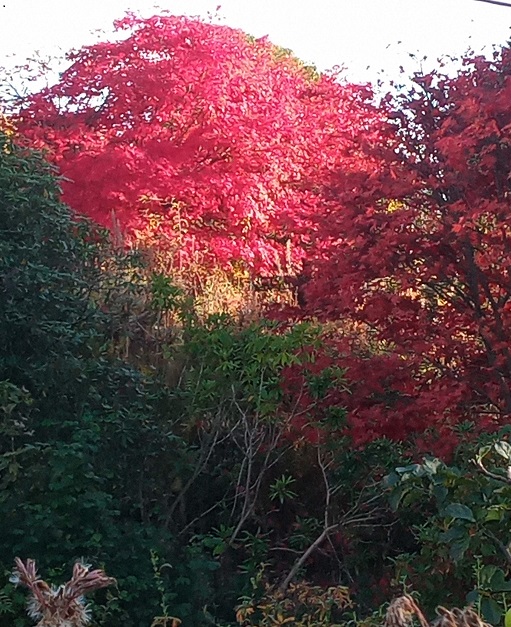
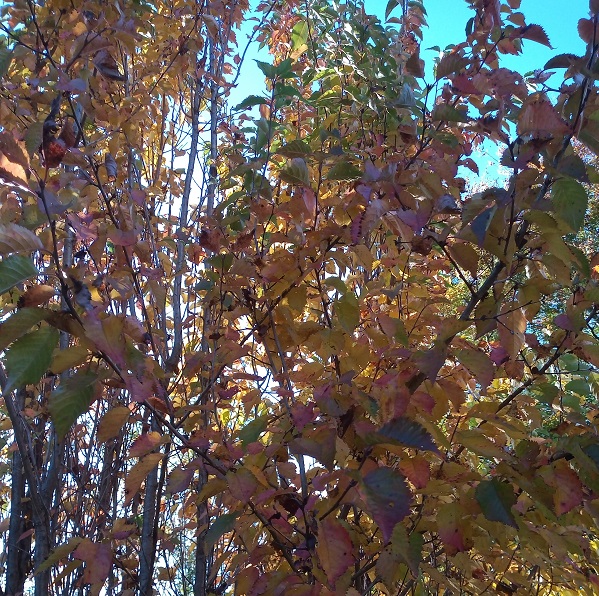
The deer dissolve into the flame-red autumn colour of next door’s maple trees. I hold a lunge a little too long while drinking in the full spectrum of colours of this year’s leaves, the brown of the rowan tree, clear yellow of the golden elder, peaches and oranges and tangerines dripping from a cherry tree. There is no wind, but the weight of water pushes tawny leaves from the russet apple tree, revealing huge, perfect apples still to be harvested.

The class moves happily into a movement called the dipping bird. I enjoy this, and execute a fair number of dipping birds with relish, until I spot an obese woodpigeon eyeing me through the glass with cold contempt. I’d like to see him do it, that’s all.

I wonder where the other birds have gone. Have they spotted intruders? Luckily, we are all muted. I would not have liked everyone to hear the expletive I came out with as the roe deer nonchalantly appeared on MY lawn in front of MY crab apple and began to work their way through MY shrub border. I duck again under the camera, and open the window to shout at them. They don’t even look startled, but condescend to lazily squeeze through the hedge into the no-man’s-land that will take them back to the stubble field. I hope they haven’t eaten my kale.

Relaxation time, and I’m back under the radar, feeling suitably stretched and folded like a good sourdough. Wildlife watching is a secret benefit of online classes. I wonder if, when we met in a hall, my yoga teacher realised how much time I spent watching clouds, the wind in the trees and passing seagulls through the high-up windows?

Oh Bees, that will not let us go…

First, let me make it understood: the narrow path at the back between our house and an unruly hedge of ghastly snowberries and virulent ivy is a no-go area we rarely check up on till the ivy taps on the one narrow window in that wall. This is how the bee boxes went un-noticed.

A hive of bees blocked off the entrance to that path for many years. It also made the lovely south-facing corner of the garden a bit of a no-go area for maintenance in summer, until we tired of the feeling that the woods were devouring the house, and moved the bees to the farm where we grow fruit trees, and the ministrations of better beekeepers. However, there have always been feral bees in Bankfoot (to which we may at times have contributed – but surely not), so we kept what’s known as a bait hive there, in case a swarm was looking for somewhere to take up residence. It’s basically an empty hive with some honey scented frames of ready-to-build honeycomb inside. If they did, and if all went well, they too would be moved to the farm.

This worked in 2019, and again in spring this year. A big, exuberant swarm arrived in May (clearly worth their load of hay). We left them to settle and establish, partly because we’re busy/lazy/unprepared, but also because whenever we interfere too much with bees, something seems to go wrong. Bees, in my experience, know what they’re doing far better than we do. I confess, I know all the theory, but am a terrible beekeeper. Sadly, on this occasion, we were all helpless in the face of pesticide poisoning. The bees started coming home in dribs and drabs, crawling around witless on the patio and unable to reach the hive, many dying with their probosces (tongues in the vernacular) protruding. The whole colony was killed; whether from agricultural blitzkrieg or over-enthusiastic wannabe gardeners in lockdown, I’ll never know. We put the boxes and frames on the bonfire in case the other honeybees that came to rob the undefended honey got poisoned by it, and cleared the site.

One day at the beginning of August, John and Linda called for a garden visit while we were out. When we got back, John said, “See your bees are doing well, very active today.”

“No, no, we don’t have bees, they were poisoned. That’ll just be robbers still smelling the old hive.” John looked very sceptical, but the matter was dropped. A few days later, in the warm sunny weather, we both thought, that’s odd, those robbing bees do seem to be very purposeful. That’s when we discovered the haphazard arrangement of two bee boxes, discarded gods know how long ago, in the dark, ivy-infested jungle at the side of the house.

Clearing the undergrowth

We had bees. Again. Get the smoker out.

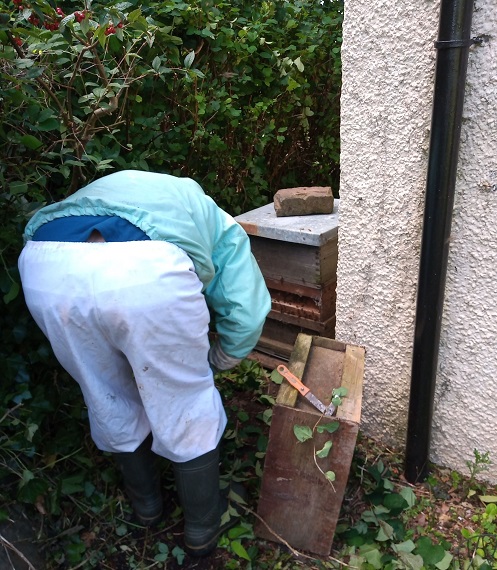
A late swarm like this is usually small, and doomed. But with our usual ineptitude, we hacked back the undergrowth and installed the colony in some sort of bee-order with a floor, varroa mesh (which we initially put on upside down, so had to dismantle and reassemble the whole structure), a opening restrictor to deter robbers (it was when we couldn’t get that in the entrance that we realised the varroa floor was upside down) and a roof. Still unsure how to tempt queen and colony from their wild comb into nice neat rectangular beekeepers’ wooden frames. Maybe we won’t. Gradually, a few inches at a time, we moved the bees forward out of the undergrowth so that they’re almost in the sun. Luckily, there’s been a lot of sun.

The thing about a bee suit is, it’s pointless unless everything’s tucked in

Now, at the start of October, they are still very active, feasting on late nectar flows from our Hemp Agrimony, Globe Thistles, Wild Bergamot, Sunflowers, Knapweeds and Michaelmas Daisies. Grudgingly, I note that the virulent ivy when it flowers will be just what they need before the winter. Who knows if they’ll come through the winter? These times are tough for our pollinators, tough for every species in fact. If they do, they’re going to the farm. Check for boxes in the undergrowth.

The Ploughman’s back home, and Waiting to Welcome You

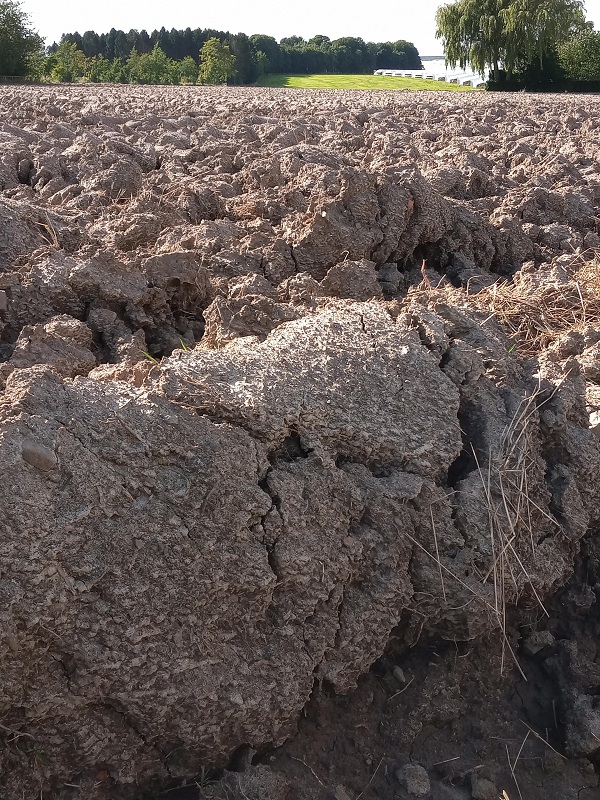
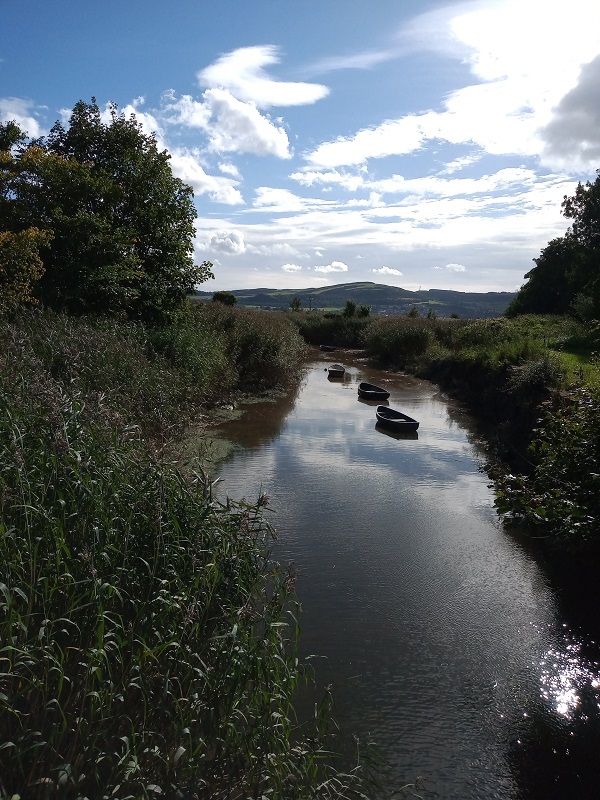
A fretting wind and days of warm sunshine have dried the newly-ploughed clays of the Carse at Port Allen into indomitable cliffs of furrows, solid, backbreaking, massive, yet wonderfully fertile. From the broken bridge across the Pow of Errol, the old port is ghostly, a hint of quayside, a dream of ships, the blue sky and wild clouds mirrored in still water.

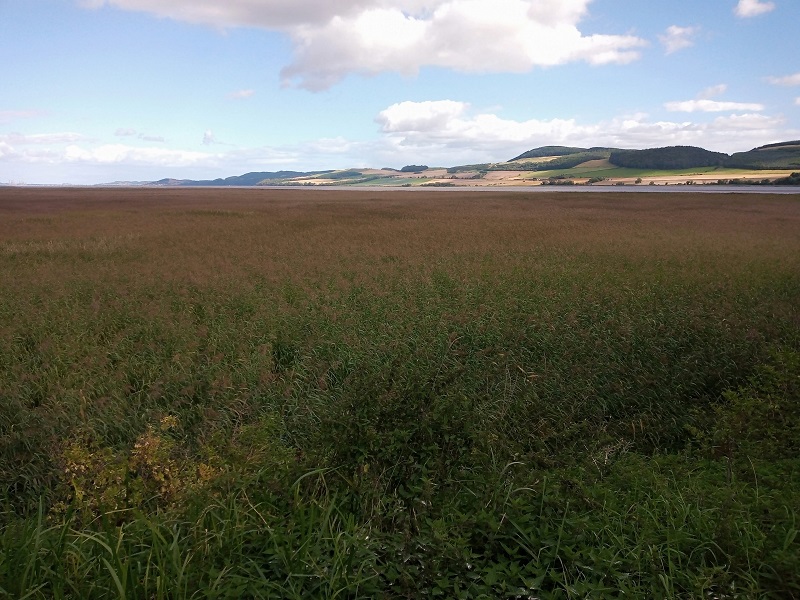
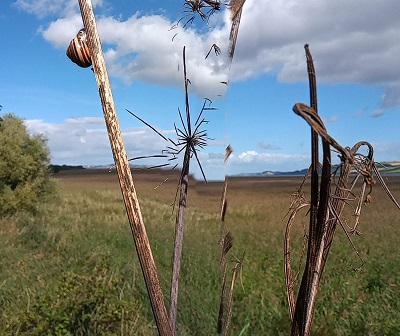
Endless reedbeds stretch to Dundee and over towards Fife, blurring with movement, a watery mirage that deceives the eye. You cannot see to the end of them. Nonchalent snails climb the haggard stalks of hogweed, clustering in the sun. Vision is fragmented, uneasy, focussed on a non-existent horizon.

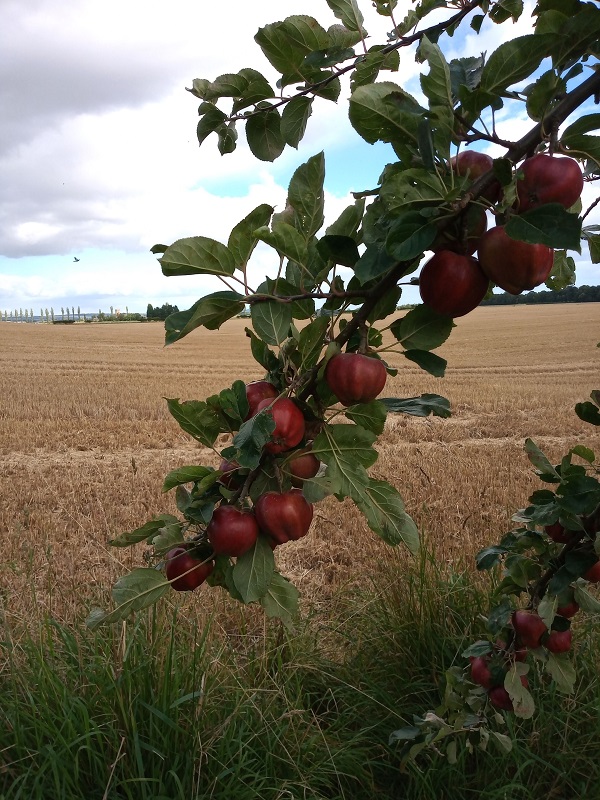
Up Gas Brae to the village, beneath great oaks and into the wind, a flock of pigeons, as ever, tracking your progress, and the start of a strange orchard, lining the road on either side. It’s a good year for apples, and not bad for pears. Two trees, side by side, and another further up, branches encrusted with wine-red, deeply-ribbed fruit.

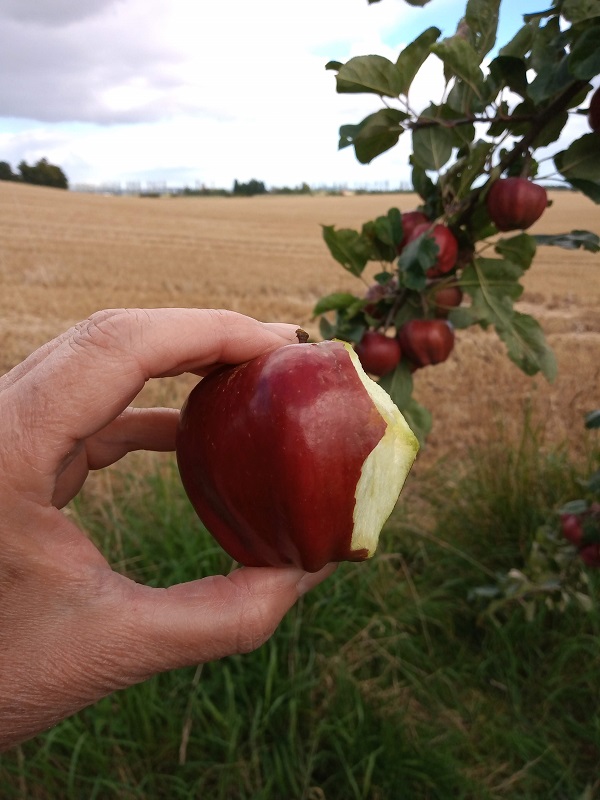
This is the Bloody Ploughman, whose tale of apple theft and a fatal, or maybe not quite fatal, shooting has been relayed here before. This was his village, these clays were his to plough. It was hard work; just walking behind the horses would have exhausted him. No wonder he stole the apples. Bite into the ripe flesh, and see the streaks of blood. It isn’t always the sweetest apple, but it is crisp and as refreshing as the ploughman would have desired.

This year, the Ploughman is home in Errol and well settled into the community orchard, surrounded by clay furrows. whispering reeds and the calls of waders and marsh harriers. Go now to visit, before the apples fall.

You can help yourself, and no-one will try to shoot you.

Postscript: Return to the Desert

If you haven’t read my previous post on Desertification and Horticultural Imperialism, you might want to go back two posts and see what I’m on about!

img_20200616_102737004

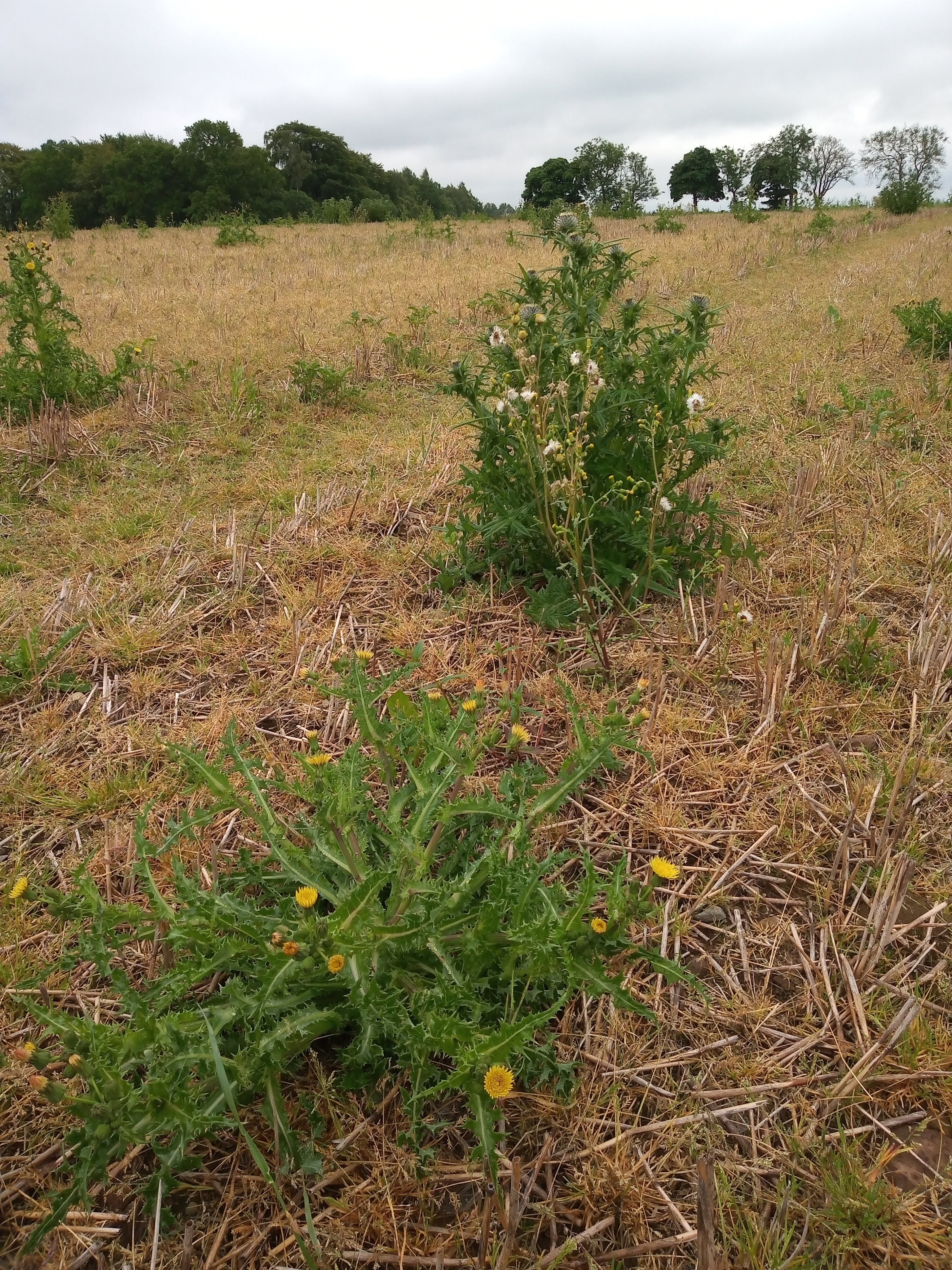
Was crossing the desertified field yesterday as a short cut from a bit of foraging and was struck by the exuberance of certain species not phased by the application of herbicide, at least in the centre which hadn’t been subjected to repeated doses: – groundsel running swiftly to seed, common sow-thistles in full bloom, and monster spear thistles still to come out. At a glance, you’d swear it was a field of Christmas trees!

img_20200616_102431011

There were gaggles of seedlings, and a remarkable number of potato shores from a previous crop that had emerged since the spray-fest. I’m not saying it makes all the irresponsible spraying in windy weather and the pollution of adjoining land OK… but it is perhaps a study in inevitable failure in “controlling nature”.

img_20200616_102444932

Three roe deer in the middle of the field were finding something to graze on, and resented my intrusion. And three pairs of angry peewits squeaked and mewed and circled above my head, until I was safely away from their territory.

A Surfeit of Spinach

I do suffer anxiety about running out of some things. Not toilet rolls, pasta or stuff like that, but spinach, for sure. Before I discovered Giant Winter Spinach, which grows all winter in my polytunnel and then supplies fabulous crops from a January sowing planted out in March, I used to stockpile tinned spinach for the hungry gap. I know that supermarkets have been selling bags of “baby” spinach all winter ever since it became fashionable, but I don’t like the plastic.

img_20200611_142433699
Giant Winter Spinach transplanted to social isolation to harvest next year’s seed.

Now I think I have it sussed: home-grown spinach 12 months of the year. The Giant Winter came out a couple of weeks ago when it became obstinately determined to run to seed (seed which will be collected from a choice group of plants transferred to a socially distanced tub where it won’t cross-pollinate with other spinaches). By that time, I’d started using the Leaf Beet, a.k.a. Perpetual Spinach (which isn’t, but it does go on cropping for a long while before it too starts to flower), from another bed.

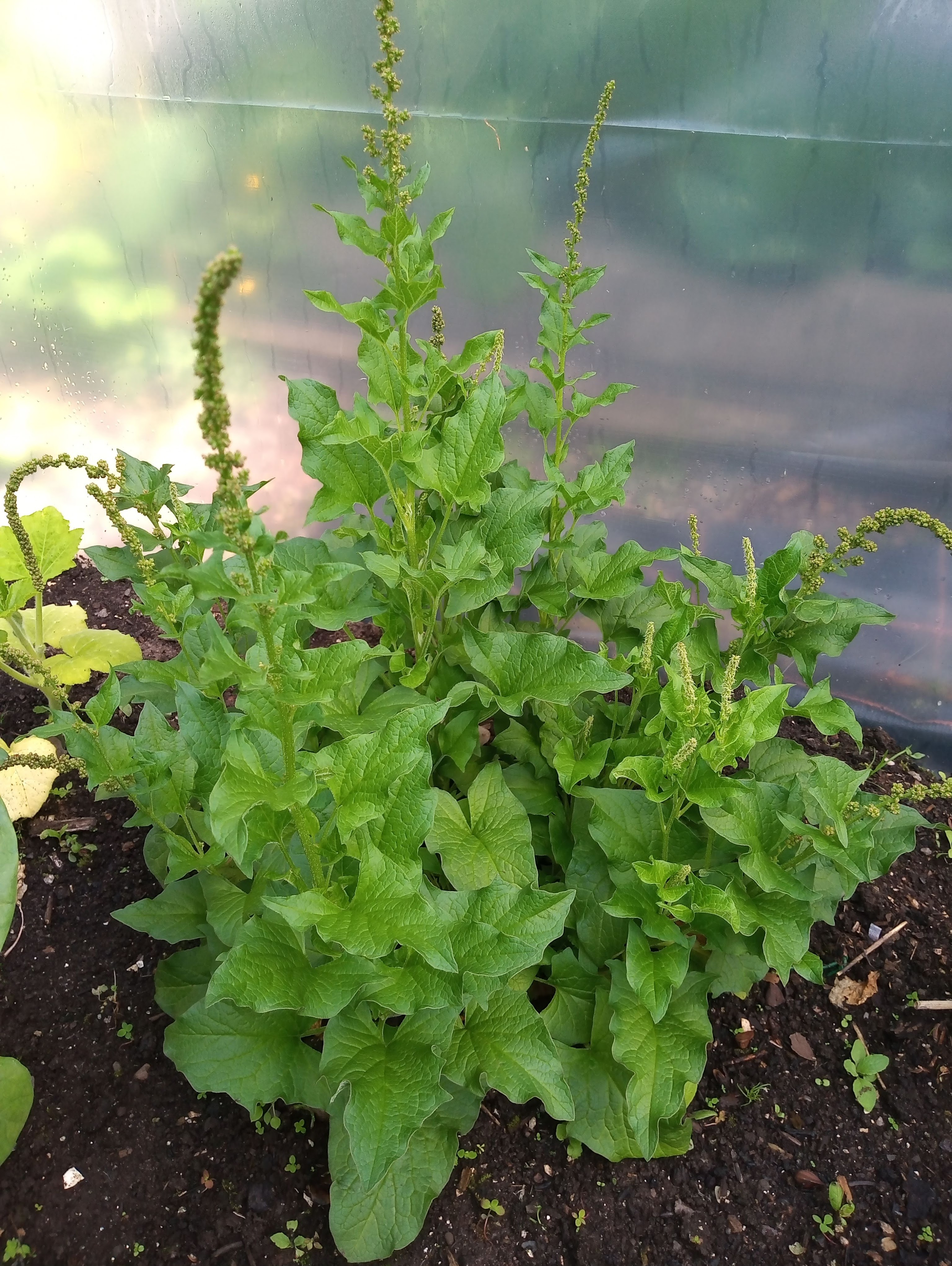
Meanwhile, there have been pickings ever since February from one of the best perennial spinaches, the wild plant Good King Henry. I keep a couple in the polytunnel for early leaves, but it grows most happily outside and makes a handsome border plant. It can flower as much as it likes, because the leaves just keep on being produced. In mainland Europe, it’s just called Good Henry. This is to distinguish it from Bad Henry (which we call Dog’s Mercury) – a poisonous plant. I suspect most Europeans, republicans or not, would consider it a bad idea to call an innocent and desirable food plant after one of the most rancid monarchs in history.

img_20200608_113818049
Good Henry (forget the king bit)

Swiss Chard is also in the spinach family. There are Ruby, Yellow, Pink Lipstick and Rainbow Chards, but I am growing an old, white-stemmed variety called Fordhook Giant. Last year, my daughter got one off me that became a monstrous triffid, and kept supplying her with stems and greens even after being accidentally felled by the Glasgow gales. She got the last harvest on June 10th! I am determined mine is going to beat that this year….it has a way to go yet!

img_20200608_113753676

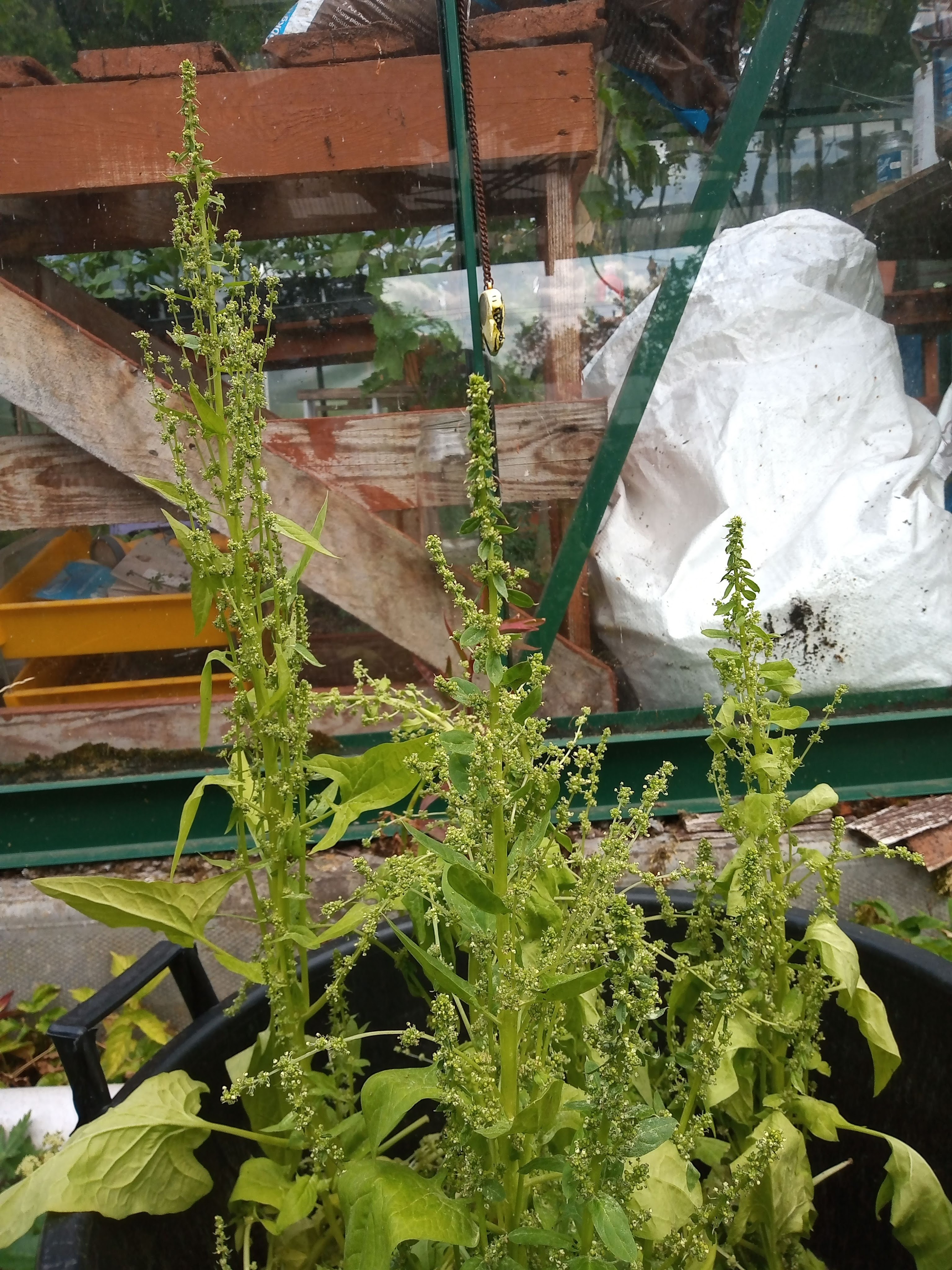
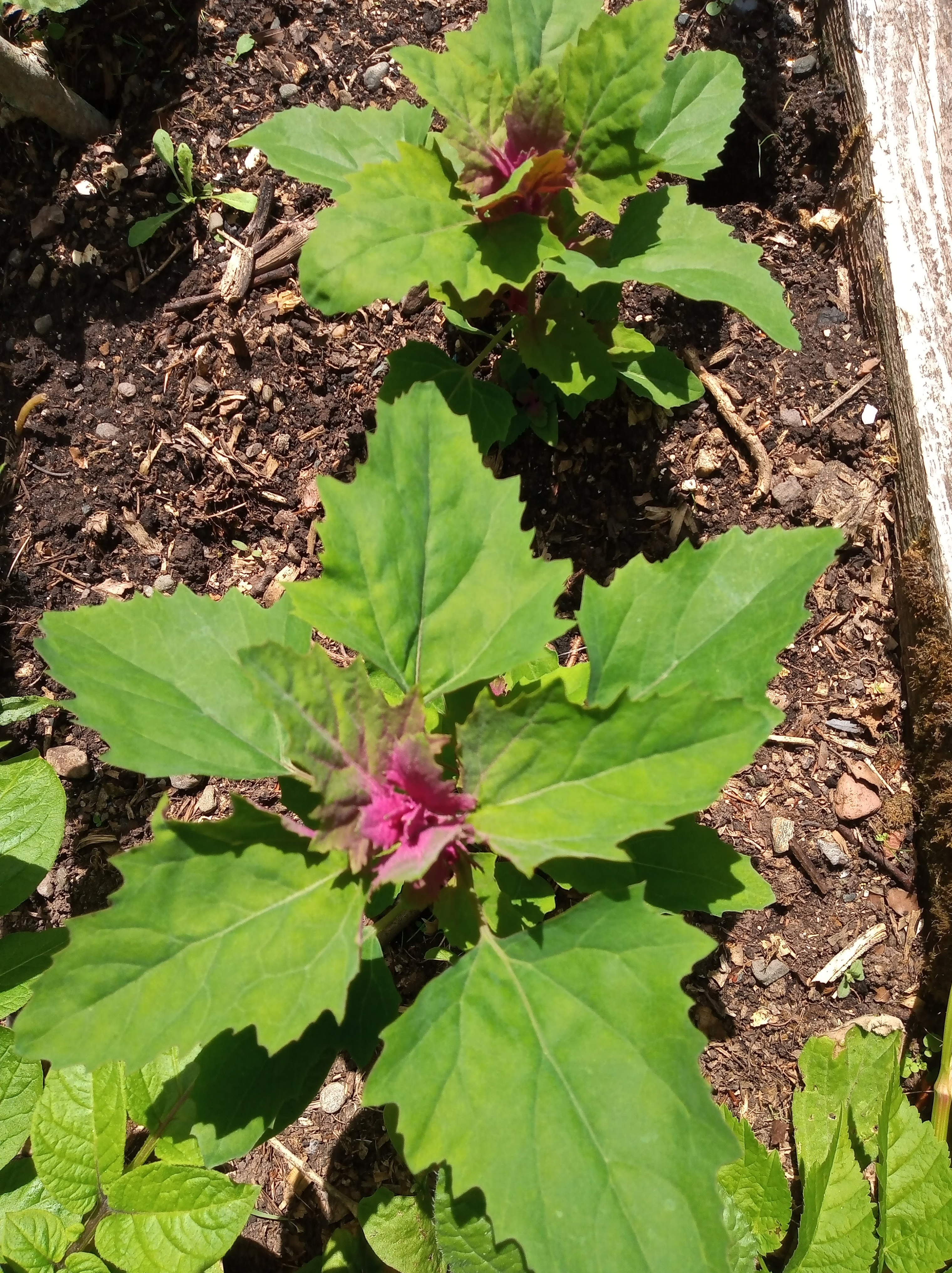
Talking of giants, Tree Spinach, with spectacular pink shoots, is coming along nicely too…. I once let one grow to 12 feet tall for a laugh, but it’s best to stop them at 6 or 7 feet and let them bush out. Shoots, leaves and young flowers are delicious, cooked or raw in salad. Another good one to try is Huazontle, the Aztec Spinach – not quite so tall but very prolific. They’re both related to the weed of cultivation called Fat Hen or Lamb’s Quarters, which turns up in the stomachs of preserved Iron Age bog bodies. See, spinach has always been an essential!

img_20200608_113943276
Tree Spinach doesn’t stay this size!

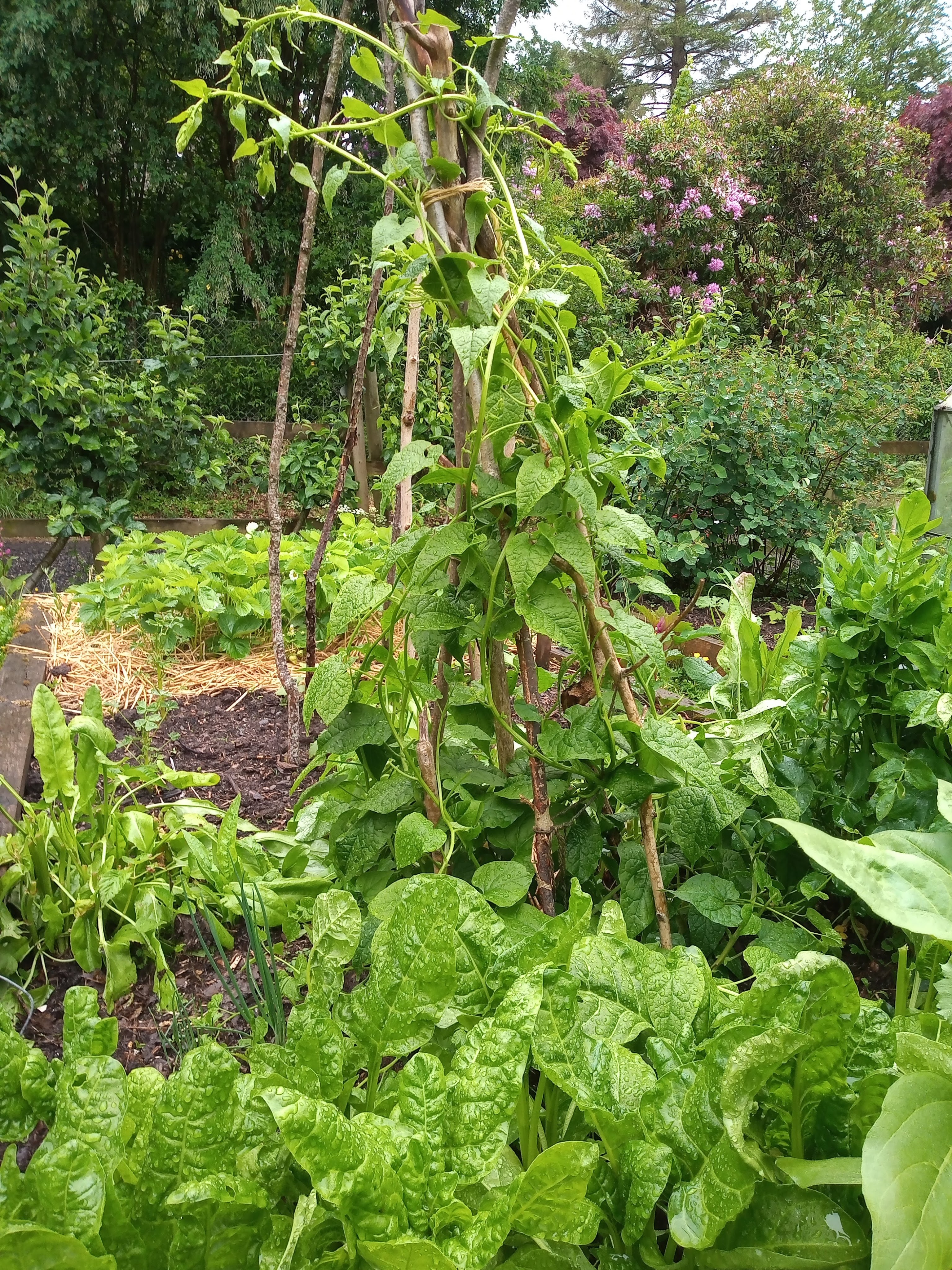
I’ve had Caucasian Climbing Spinach (Hablitzia tamnoides) in the garden for over 3 years and up till this spring I thought it was a bit of a hype to be honest. But now it’s repaying my patience! Delicious shoots, followed by exuberant twining stems and tasty, bountiful, heart-shaped leaves. It’s another perennial, so it can flower as much as it likes.

img_20200610_152256283
Caucasian Climbing Spinach, arising from a sea of Perpetual Spinach Beet.

Last week I actually got worried I might have more spinach ready than I could cope with. Thanks to a host of digital friends and acquaintances, I now have no concern, with recipes for spinach pies, pestos, sag aloo, soups, pasta, and smoothies all coming my way.

Now, which spinach shall we eat tonight?

Desertification and Horticultural Imperialism

Spring 2020 has seen an awful lot of fields round here go unploughed and unplanted. Whether this is connected to the global pandemic, I’m not sure. Twenty years ago, a good number of fields were left to grass as government-subsidised “set aside” land, but I don’t think there’s a payment scheme at present encouraging non-cultivation.

deserts3

At least, I hope not, as some of these fields have been so heavily and repeatedly sprayed with herbicide they are now ecological deserts. The spray (probably including glyphosate judging from the distorted and curled up stems and foliage of broad-leaved plants that got in the way) has drifted across verges and footpaths, decimating wild food plants such as raspberry, nettle, hogweed and roses that local people forage. It was probably sprayed on one of the many windy days, and/or the tank residues emptied onto the verges. I won’t presume to tell farmers what to do in their fields here, but that is a no-no.

deserts2

It’s interesting to see that the spear thistles, presumably a prime target of the desertifiers, are remarkably resistant – except where the dose looks to have been doubled.

deserts1

Garden owners with too much time on their hands during lockdown have been at it too. Every garden hedge not yet ripped out in favour of a fence has a bare strip of brown, dead vegetation at its base. Weedkiller run off from precious driveways, in which nothing must be permitted to root, oozes onto formerly quite pretty road verges and banks. I do understand the temptation, really I do. The patch of 6×2 concrete slabs mis-called a patio here can come to resemble an untended flowerbed in no time, and yes, I do half-heartedly remove the “weeds” when I can be bothered.

It gets to me, however, when garden owners start speculating beyond their own boundaries. Just as agricultural spray drift and chemical dumping on publicly-used land is bad practice and breaches all pesticide regulations, so spraying, strimming, mowing, “prettifying” or planting with rhododendrons the verges, banks and roadsides near, but not part of, a property is offensive to me.

Very offensive. What people do with their own verges is up to them, whether I think it desirable or deplorable. It’s none of my business. When they inflict their personal idea of what’s attractive – and their personal conceit of themselves as above nature – on land that has absolutely nothing to do with them, that stinks. It is so weird that so many people with money jingling in their pockets buy up property in the countryside and then occupy and worry themselves non-stop trying to make it look like a posh city suburb.

A friend of mine coined a good term for this – Horticultural Imperialism. Yet another form of imperialism we need to grow out of, reject and set aside as a species.


The Ultimate Alchemy

seeds2

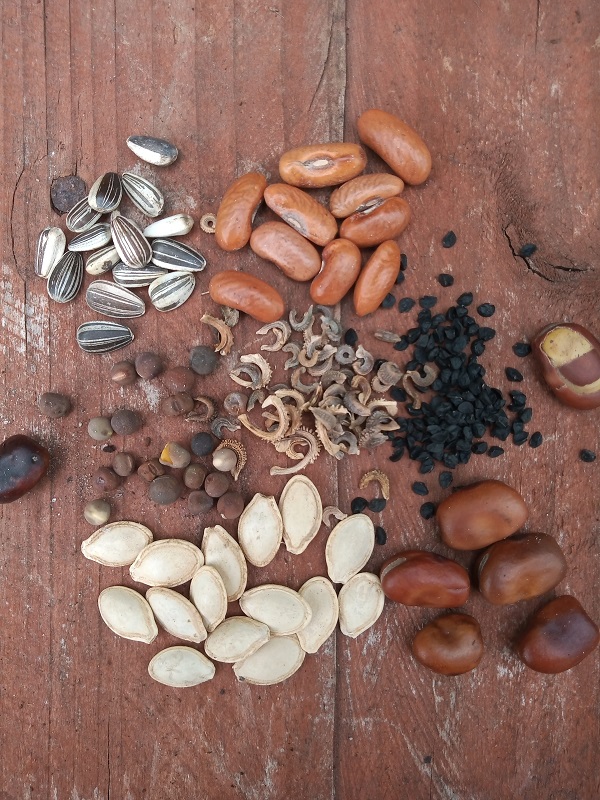
seeds5They are as diverse in shape, size, colour, decoration as any flower. They are self-contained, yet everything is contained in them, however small, to make the tallest tree, the juiciest berry, the wheat we eat, the biggest sunflower, the rarest orchid.

Hold seeds in your hand. Feel the faint pulsation of life, no matter how dry, how hard and rigid they seem. Feel that faint warmth, the tiny voice that says. “I know. I am coming. Plant me”.

In your hand is magic.

Remember biology classes at school, as dry as these seeds, the dreary terminology of meristem and cotyledon and radicle? No-one spoke about miracles. Yet no-one understands the rapture of the “hooked plumule” until they see their first-ever home-grown seedling – maybe tomato, maybe a pumpkin – shoulder its way through the soil into the open air, then to unhook and open those first seed-leaves.

seeds1

You stare, open mouthed. I did that, you think. I put that seed there. And lo, it is growing. It worked. In that moment, you are caught. You will see this happen again and again, pots of seeds, rows of seeds, the longed-for yet always somehow unexpected eruptions of “seed” potatoes breaking through the mounded soil. But always it will dazzle you, floor you, make you giddy with sudden brief joy.

seeds3

It is the ultimate alchemy – the transformation of small hard mote into living organism. So far beyond the base-metal-into-gold aspiration of mediaeval alchemists, for it has succeeded. And it is a collaborative feat. You may have sown the seed, but the seed has made use of you, and you have grown.

From each seed is the potential for flowers. From flowers, the prospect of more seed through pollination. The promise of seed is the promise that we may eat again, that our children will eat. It is no less than the promise of survival.

seeds4

In today’s world, a pandemic virus coupled with spiralling concern for an environmental emergency has got us all sowing seeds. An army of growers and gardeners is multiplying like dandelions. These aren’t the old-guard, nature-controlling gardeners. When the garden centres closed, we realised our children cannot afford to be at the mercy of a few big seed companies, or side-lined into dead-end F1 hybrids that will not produce viable offspring. We need seed we can collect ourselves, share, save, and keep for following years and new generations. Seed banks and seed libraries (a kinder term, that speaks of sharing and co-operation) are springing up across our land. Is there one near you? Can you start one?

We are a people terrified by the present, grasping for a past that was never really going to sustain us, and reluctant to look at the future, in case there isn’t one. Seeds, in their understated humility, their quiet, warm still voices, carry that germ of a dizzy rapture, that incredible potential.

Seeds are the promise of a future.

(The quotation at the start is from Melissa A DeSa. Community Programmes Director, Working Food)