

The Dukes of Atholl were awfully fond of trees, especially Larch trees, mainly for their timber value but possibly also just because they liked them. They also had an awful lot of land to play with. Still do. Duke Number 2 was responsible for introducing the European Larch (Larix decidua) to Scotland in 1740. His nephew, the Planting Duke (Number 4), turned his attention to the steep slopes of Craig o’ Barns above Dunkeld, and wondered how he could cover it with larch trees. Clearly, trees could grow on the rocky outcrops and once established, gripped the hillside with roots that were capable of splitting and crumbling stone. The issue was how to get men, tree seedlings and planting gear onto the inaccessible hillside the Planting Duke wanted to cover.
His solution, it is told, was to fire seed at the crags from a cannon positioned across the river. Not usually part of the tree-planter’s kit, but hey, this was the Duke of Atholl. Duke Number 7 brought in the Japanese Larch (L. kaempferi) in the 19th century, and the combination gave rise to the Dunkeld Hybrid Larch (L. decidua x kaempferi) in 1904.

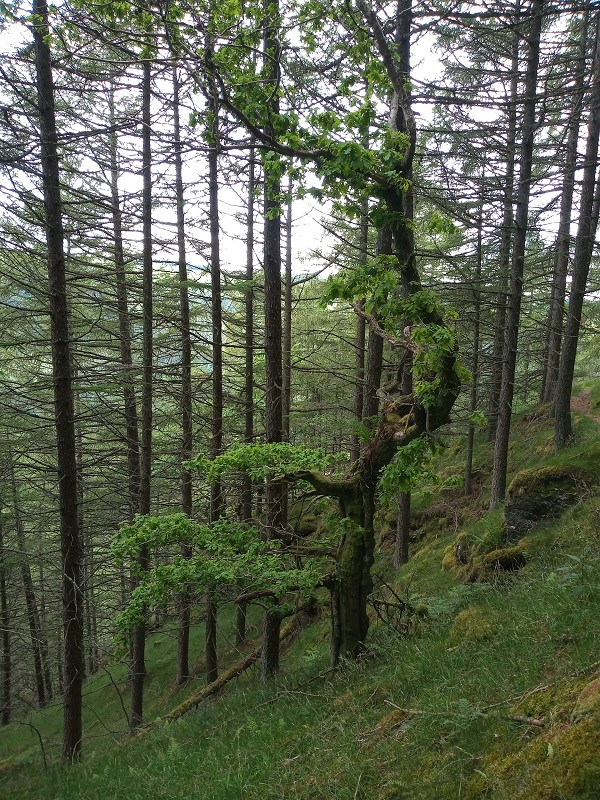
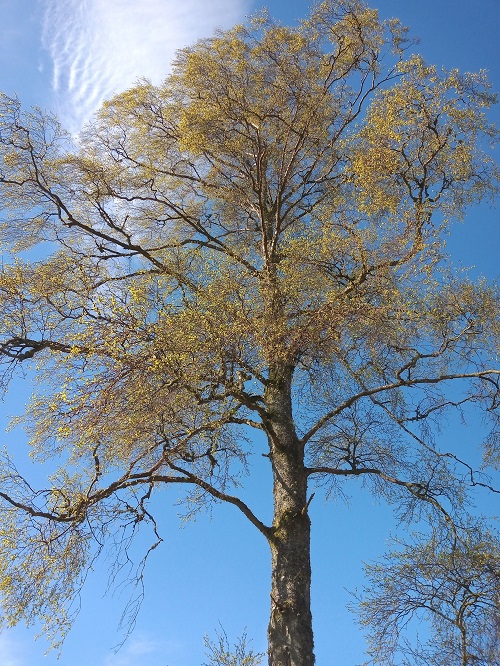
Walking the woods above Craig o’ Barns now, and the land that makes up the popular Atholl Woods walks, I am spellbound by the determination and tenacity of trees to hold fast to rock and scanty soil. Although disease has resulted in many larch giving way to spruce, fir and pine, all these forest conifers rise like spindly towers from the steep shady slopes, clamouring for sky.
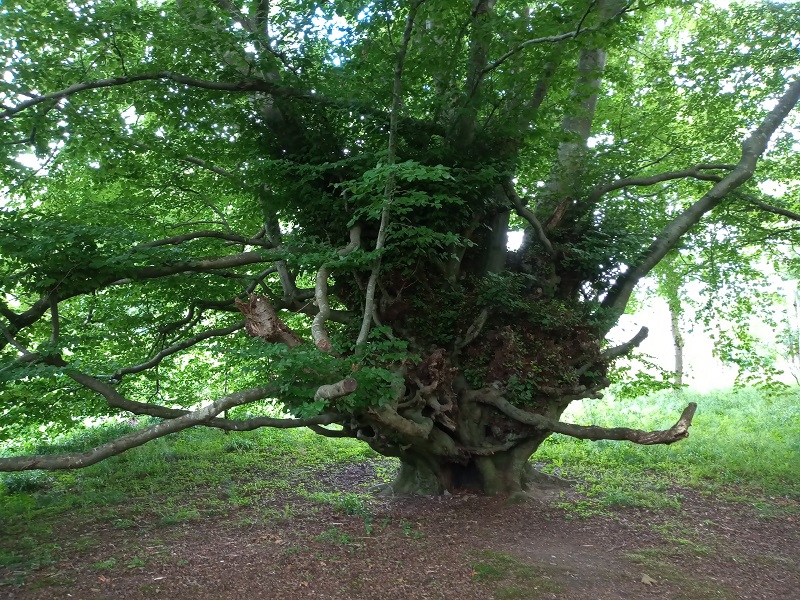
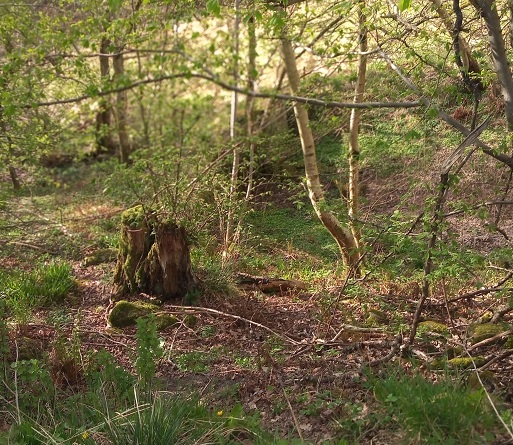
Not all grow straight, however, and where a deciduous tree has infiltrated the ducal forests by setting its own seed grimly onto rock, it seems to thumb the nose at forest order by growing into as contorted a shape as it can, leaves placed to catch the light.
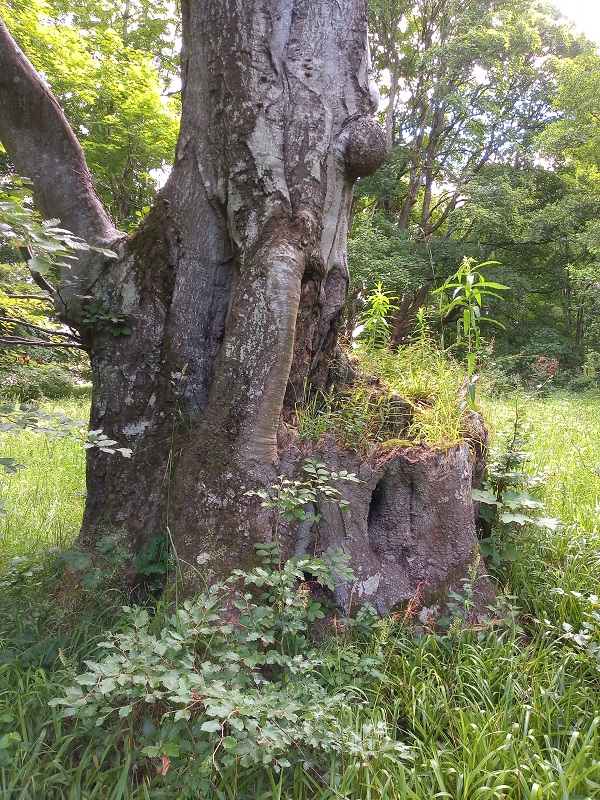
Sheer cliffs and overhangs challenge the pines, but the darker, older and unplanted yew trees seep into the rock like oozing blood – and hold fast. Holly trees, with hard, unyielding wood and strong roots, are scattered among the rocks, and huge, unlikely beeches wrap themselves around massive boulders with roots like giants’ fingers, and trunks that should have crashed to the ground a century ago.
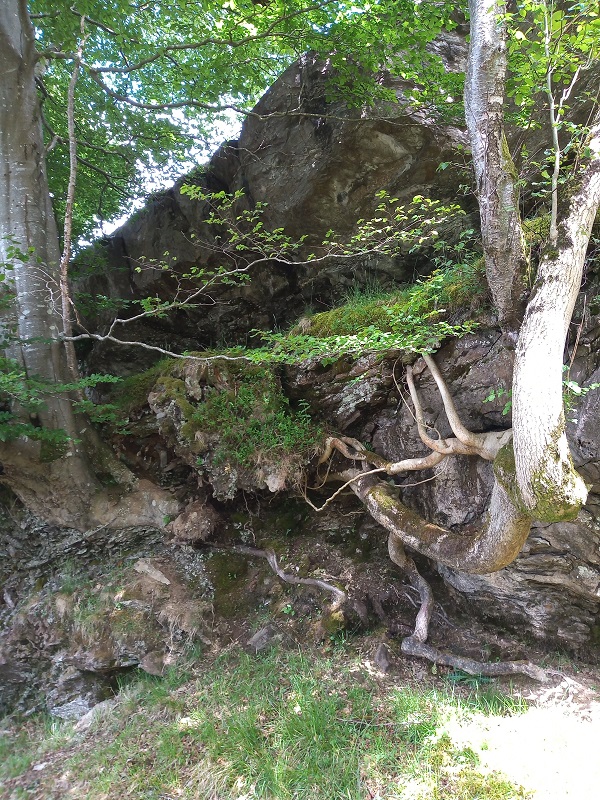

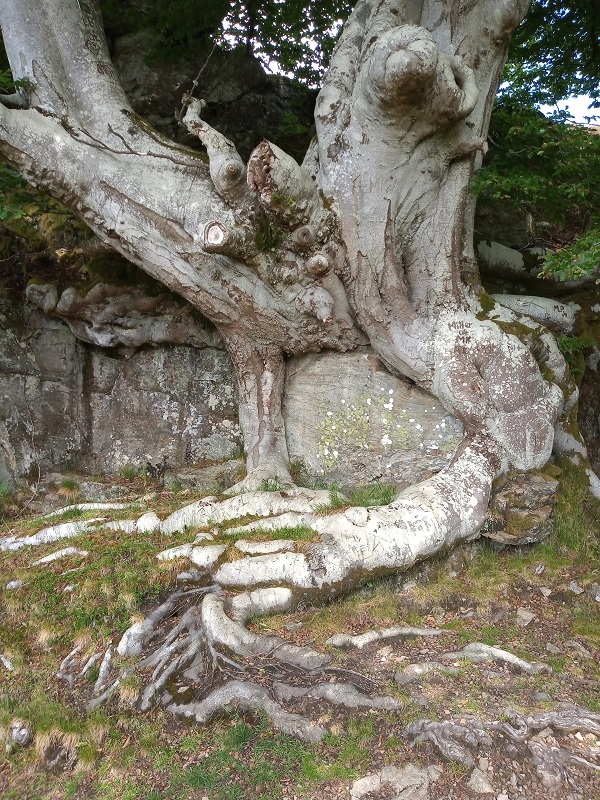
Emerging from forest onto the look-out points along the way, I realise how the path has been climbing, just as subtly and imperceptibly as tree roots worm their way into rock-faces. The valley of the Tay sparkles with silver, south to Murthly Castle and north to Ben Vrackie, high above Pitlochry. I bask like a snake in the sunshine.
At Mill Dam, another kind of forestry is in progress. Neat and systematic felling of young trees into water to provide fresh shoots; branches and brash gathered to construct dams and quiet pools.
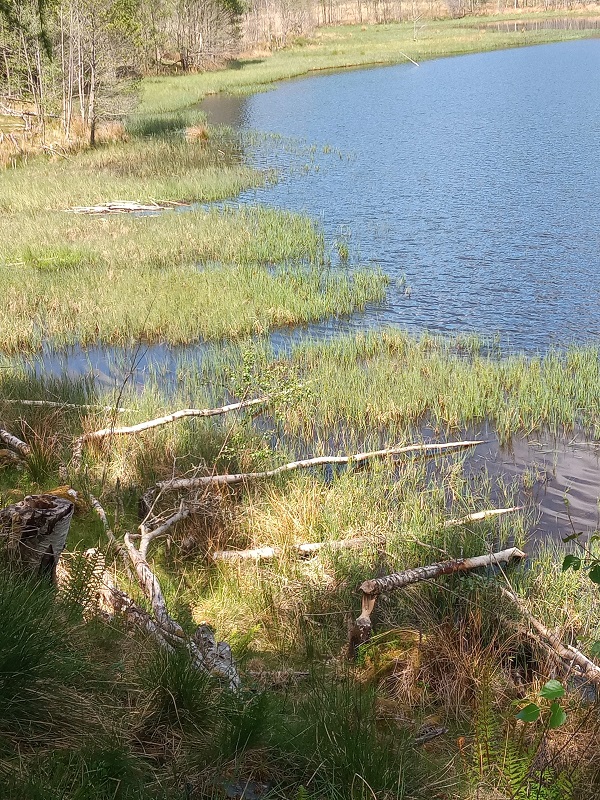
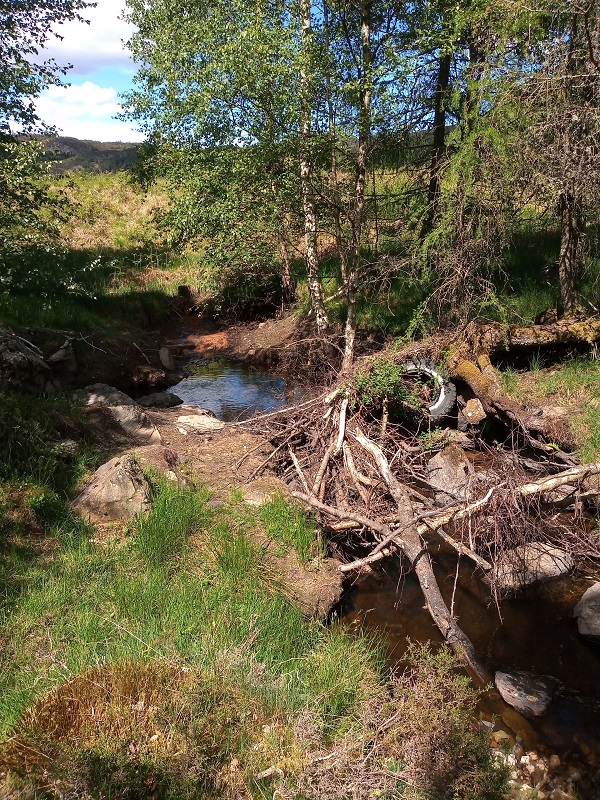
Such teeth these foresters must have! A match for the Planting Duke’s cannon, perhaps.






















 Comments on The Nature of the Universe