

These are free-range pine trees, the Scots Pine, Pinus sylvatica. Not the heavy, lowering plantation evergreens erroneously referred to as pine forest, but which are more likely to be spruce, fir or sometimes the non-native black pine, Pinus nigra nigra. Recognise the Scots Pine by the gingery red of the bark on the upper trunk. Black pines stay grey.
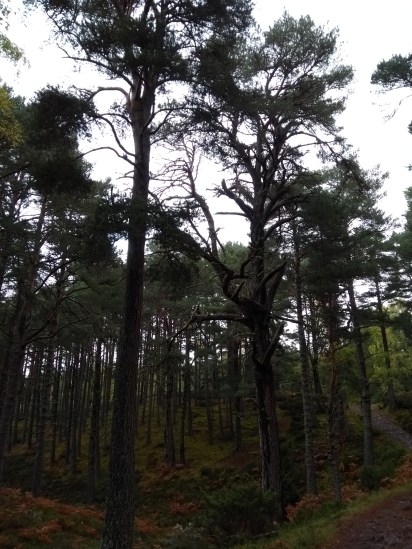
These pines do not grow in battery-cage rows. They give themselves space to expand, to stretch out to unseen horizons; they live with dignity and grandeur; they are splendid and heroic in their dying. The Caledonian Pine Forest is multi-aged, thanks to decades of careful management to reduce deer predation and facilitate natural regeneration – seed from local trees giving rise to progeny that fits the landscape that made it like a glove. Because of age diversity in the trees, there’s also diversity in height, spread, form and density. That means greater biodiversity. And beauty.

The forests made by the spreading Caledonian pine are light and airy. The ground is soft with layers of needles, kind to the dog’s arthritic paws, so he bounces puppy like full-tilt along meandering paths and up and down banks and ridges, grinning like a mad thing to encourage his slow, plodding humans.
Look up.
The overground network of branches, which look too heavy for the boles to support, whispers with the quicksilver flow of red squirrels. Titmice flicker from bough to bough – coaltits in pairs, long-tailed ones in squeaky flocks. There may be crested tits in pursuit of pine nuts, for the Caledonian pinewoods are home to species rarely seen elsewhere. Shy and secretive, many of them, like the Pine Marten; or striking like the Scottish Crossbill -possibly the closest we have to a native parrot. Or the Horse of the Woods, the iconic, pied Capercaillie, whose shyness vanishes embarrassingly during the mating season, when you really, really don’t want to bump into a male bird.

Look down.
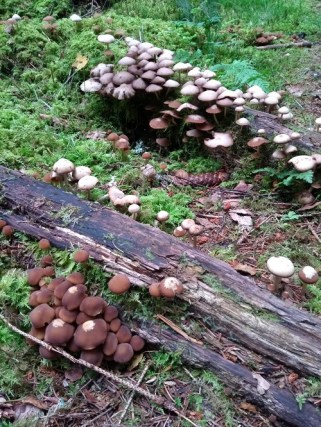
Roots lie just below the surface; barely visible but easy to trip over. Mosses cover them; the translucent yellows, greens and pinks of sphagnum are almost luminous in the wetter areas. The smell of peaty soil mingles with the soft fragrance of resin and bark. Fringing the shallow bogs are ling and heaths, the former still in flower, blaeberries and ferns. Throughout, fallen twigs and branches, last year’s needles and crackling debris of fern make a thousand homes for maybe a thousand life forms; plant, animal, invertebrate, bird, fungus and bacterium.
Onto these worlds within worlds, light rain emerges; rain so light, so like to air the raindrops are quantum particles which move and spin, randomly, beyond the realms of gravity. This is light-rain, on a world shrunk to infinitesimally small or seen from afar, from where the Scots pine woods become mere fractal patterns on the margins of time.
Once the Caledonian Pine Forest was the dominant vegetation type of much of Highland Scotland. It lightly brushed the sides of tall mountains; it thrived on islands in linear lochs, it swept through the glens. Farmers and crofters cleared some of it, but also made homes among the trees, for shelter and because it was a lovely land. Then came the changes, borne of greed, fear and hatred, that nearly pushed the Caledonian Forest and all it nurtured to extinction. Both sheep and the deer on the “sporting” estates which displaced poor or powerless people ate the succulent young trees, preventing regeneration – the story’s well known. Then there was the snatching of the big trees for the war effort. They were cut down to make boxes to store ammunition. Doubtless someone made a lot of money from that.
Now, thanks to hard work, vision and the dedication of many unsung heroes and heroines, the all-embracing arms of old Caledonian Pines are spread wide, young trees erupt vertically, baby trees get underfoot and choose odd places to grow. The trees are back on the mountainsides. Long may they flourish and grow.
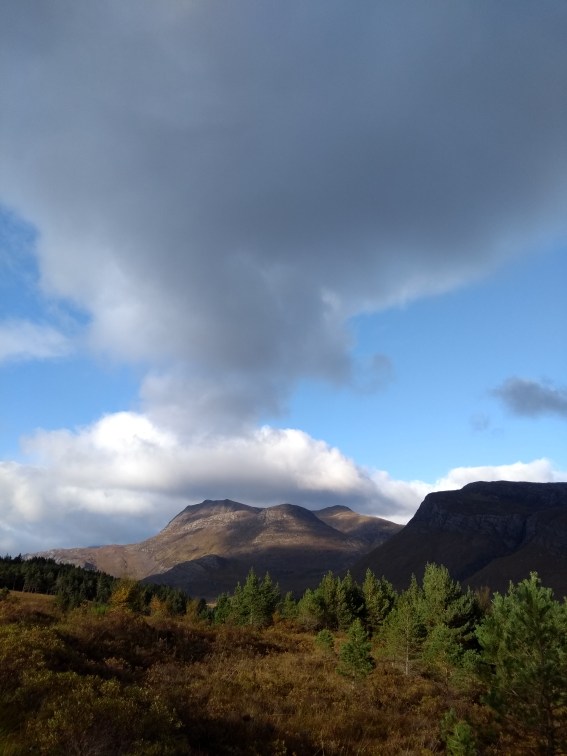
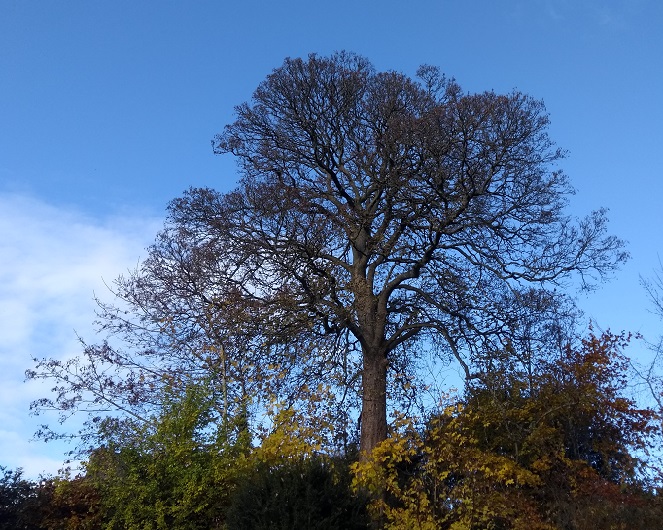


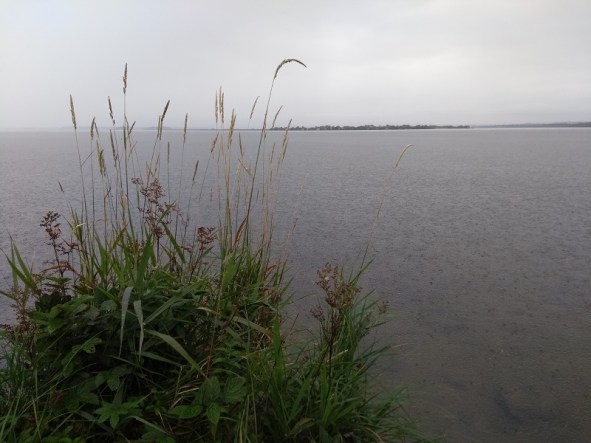

 Pockets of peaty marshland, studded in autumn by vivid blue sheeps’ scabious and emphatically solitary flowers of the Grass of Parnassus, spiral around flat pools of oily water, reflecting snatches of sky. Larger raised bogs, pillaged in previous centuries for their peat, lie flat and sullen. When the peat was no longer wanted, they grew conifers on the “useless” land.
 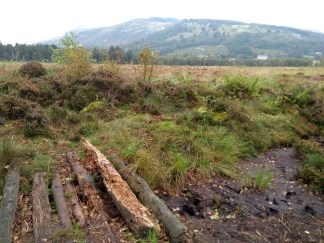 Now the conifers are retreating after the long-forgotten glaciers; the water returns; dragonflies, amphibians and sphagnum once more fill the horizontal expanse between the forest. Heaths and ling guide the trespasser to the dryer paths, and felled branches bridge the bog where water maintains its horizontal sovereignty.
 In fields by the loch, the damp rises in horizontal layers, coating logs and stumps and gate-posts with moist, green mosses and algae. In one field a whole tree fell, years ago. In this damp environment it has not died, but adapted to its horizontal status and continued to grow; a miniature forest of shoots, epiphytes and primitive plants along its horizontal trunk.





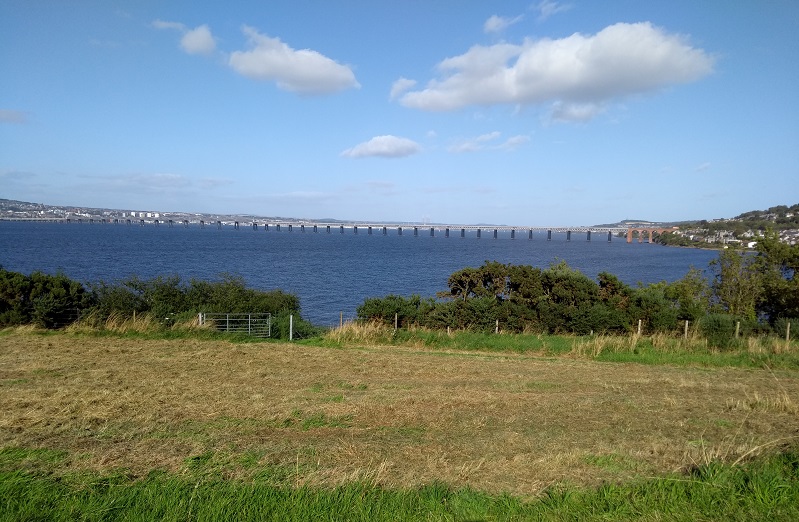 In a fright of frustration and indecision you stream from the house. Too much time alone, too many choices, too many restrictions, too much procrastination – poring over maps in search of something new, too much squinting at Google Satellite to find new paths, no decisions made, no enthusiasm kindled.

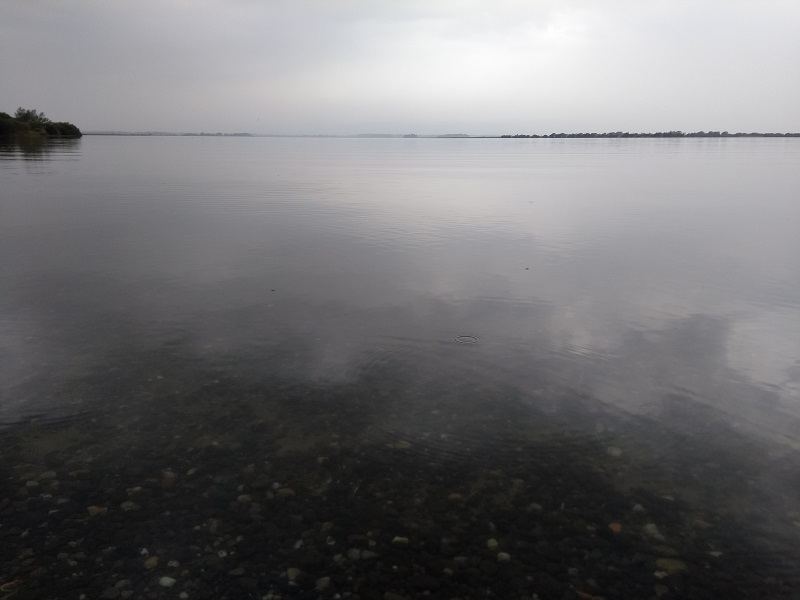
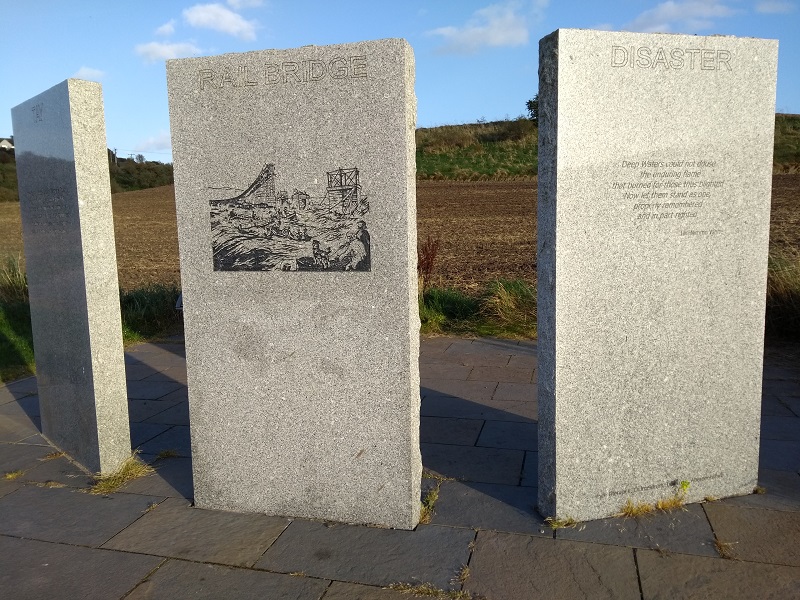 Back at the estuarine beach, nearly under the bridge, you notice the memorial to those killed in the Rail Bridge Disaster. You were in too much of a hurry to see it before. And you stop, and rock to and fro on the tiny jetty, as the dog paddles and sniffs at stones and seaweed.
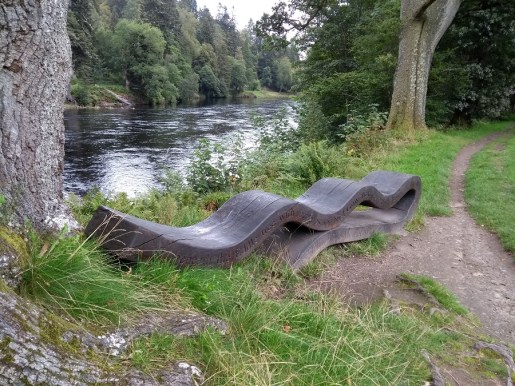 By this great river I sit
 Comments on The Nature of the Universe