Just round the next corner….

How often in the past year have you heard someone say, “You never know what’s around the corner”? Or felt anxiety because you really, really don’t know what is happening or going to happen to you, and the future is obscure? We got caught in the Christmas Covid Car Crash, and are just mentally reeling from a close encounter with coronavirus. We emerge, cautiously and with reluctance from tests and self isolation, while our close family recover from the virus. We emerge into another lockdown, and feel relieved. Self-isolation, let me tell you, can be addictive when you’ve been scared, and realised how ill-prepared you are for dying.

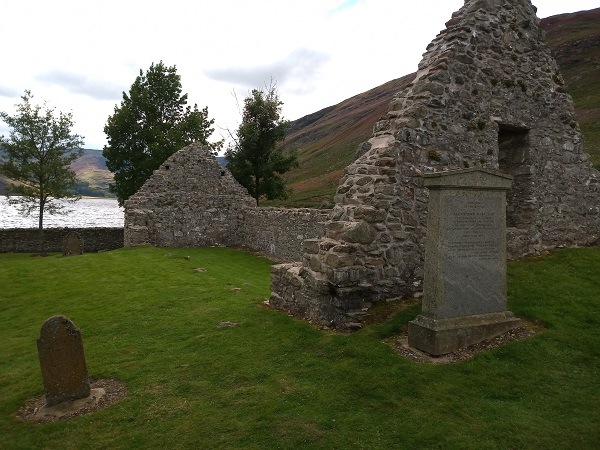
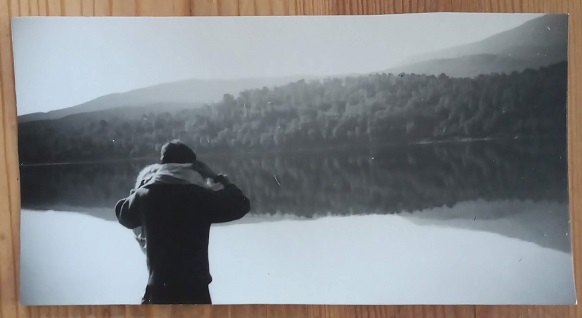
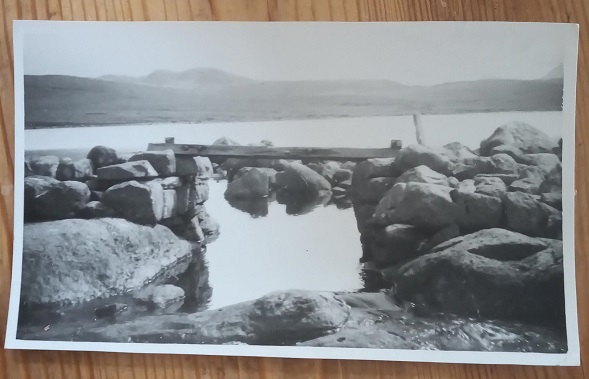
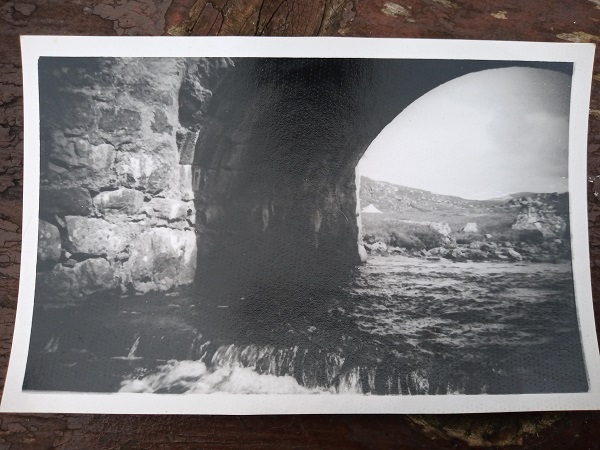
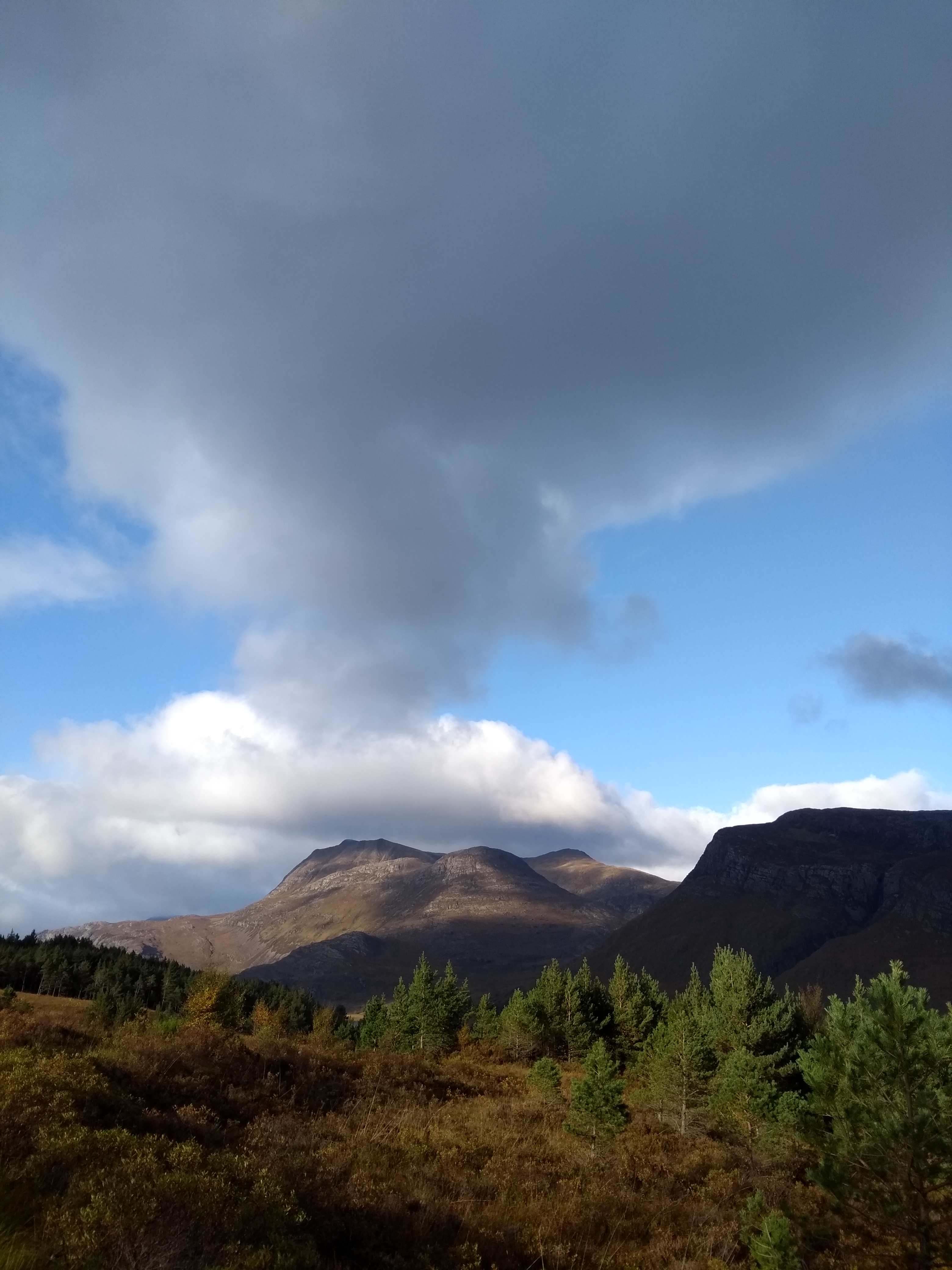
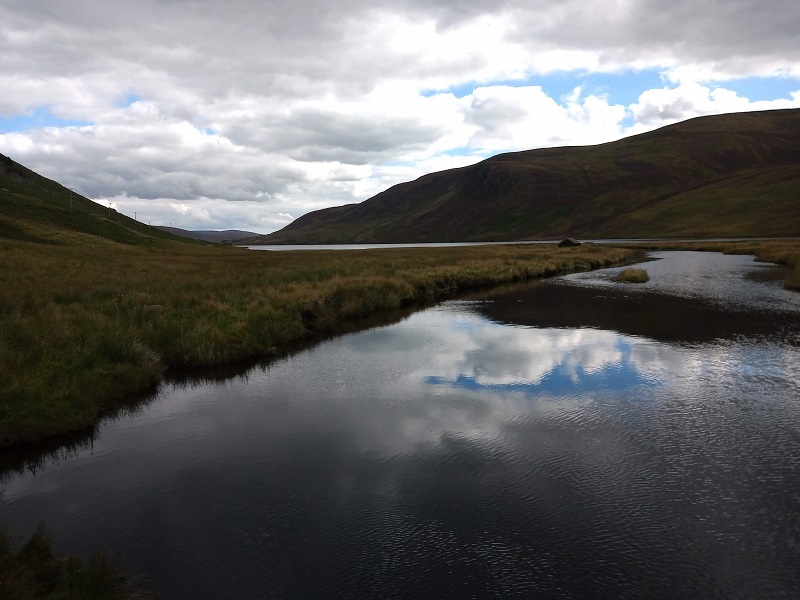
Back in late summer, when such things were still possible, we had a two day camping trip to Glen Esk. On the second day, we decided to take a short and easy walk up Glen Lee. Short, to give us plenty of time to enjoy a cycle down Glen Esk as well. At first, we decided, we’d just go to the start of Loch Lee and turn around. But just beyond the point where the Water of Lee calmly enters the loch, we could see the ruins of a church or chapel by the waterside. “We’ll just go to that and explore.”

The tiny old parish church of Glenesk had not been used in a good while, but the ancient gravestones, carved with faces and bones and what look like crossed spades, suggested a long history. In fact, a church of some kind is believed to have stood here since at least the 8th century. The sun on the well-tended grass invited a long dawdle and a picnic, and then we ambled along the track by the loch. The other end of the loch wasn’t quite visible, so we thought we’d “just go round the next corner” to see it.

And so we began the inevitable daunder-of-curiosity which besets all walkers in new territory – the drive to see what’s round the corner, or over the next hill. Round and past the far end of the loch, skirting the flat plain where we looked for the signs of ancient habitation, past deserted farmsteads and into the steep-sided valley, up into the purple heather. Every crag we rounded gave us sight of another; we had to know what came next.
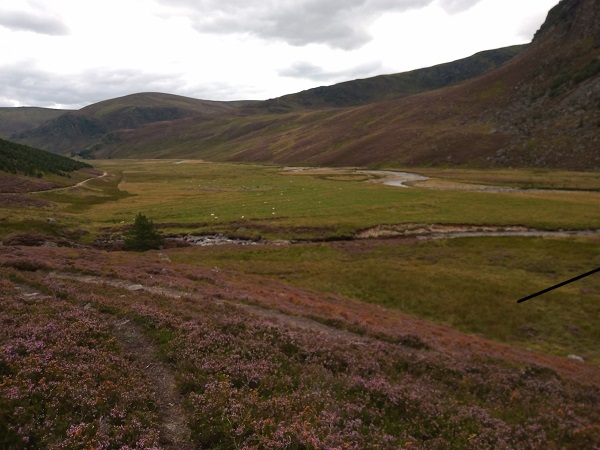
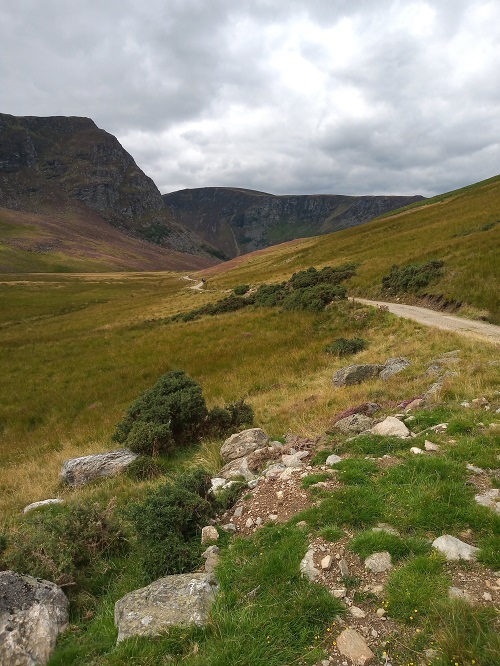
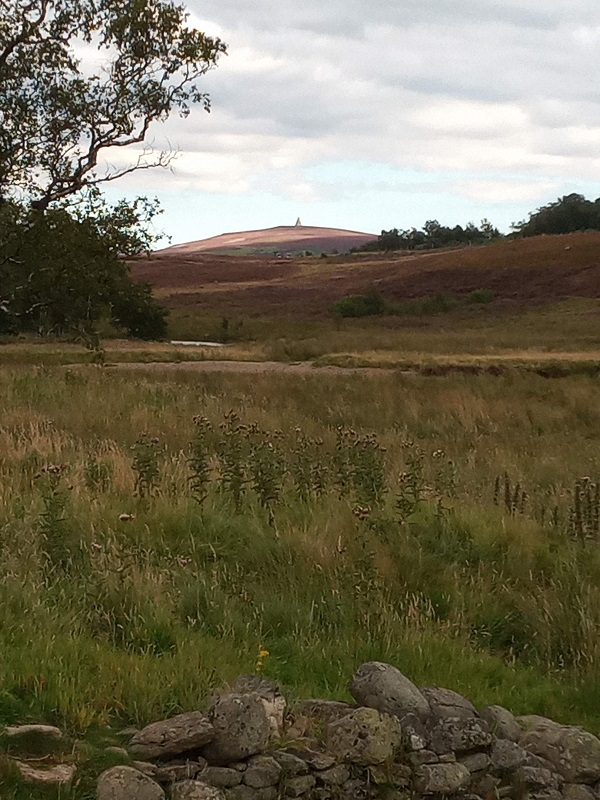
Eventually, we saw the Falls of Unich, where tracks to right and left might have given us a circular walk. But we didn’t have a good enough map, and still wanted a cycle. So we returned the way we came, marvelling lazily at the carnivorous sundews and butterworts in the ditch by the track, stopping to watch a hen harrier swooping low over the crags and rising again, while we, in turn, were closely observed by ravens, shouting harshly at our passing. Before we got the bikes out, we had time to admire the forbidding Invermark Castle and the tempting Hill of Rowan, surmounted by the imposing Fox Maule-Ramsay monument.
On this short walk, we left many corners not turned. Maybe we’ll go back. Maybe we won’t. Truth is, none of us knows, or ever has known, what’s around the corner, even when we succeed in deluding ourselves that we can plan ahead and things will always turn out as we planned. The future’s the un-turned corner, and we can only know for sure about the corner we’re standing at.
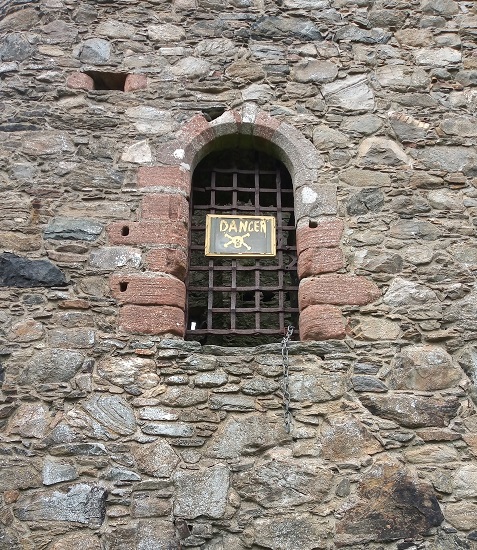
A warning from Invermark Castle

By Riverside to Denmarkfield

Photo by Pixabay on Pexels.com

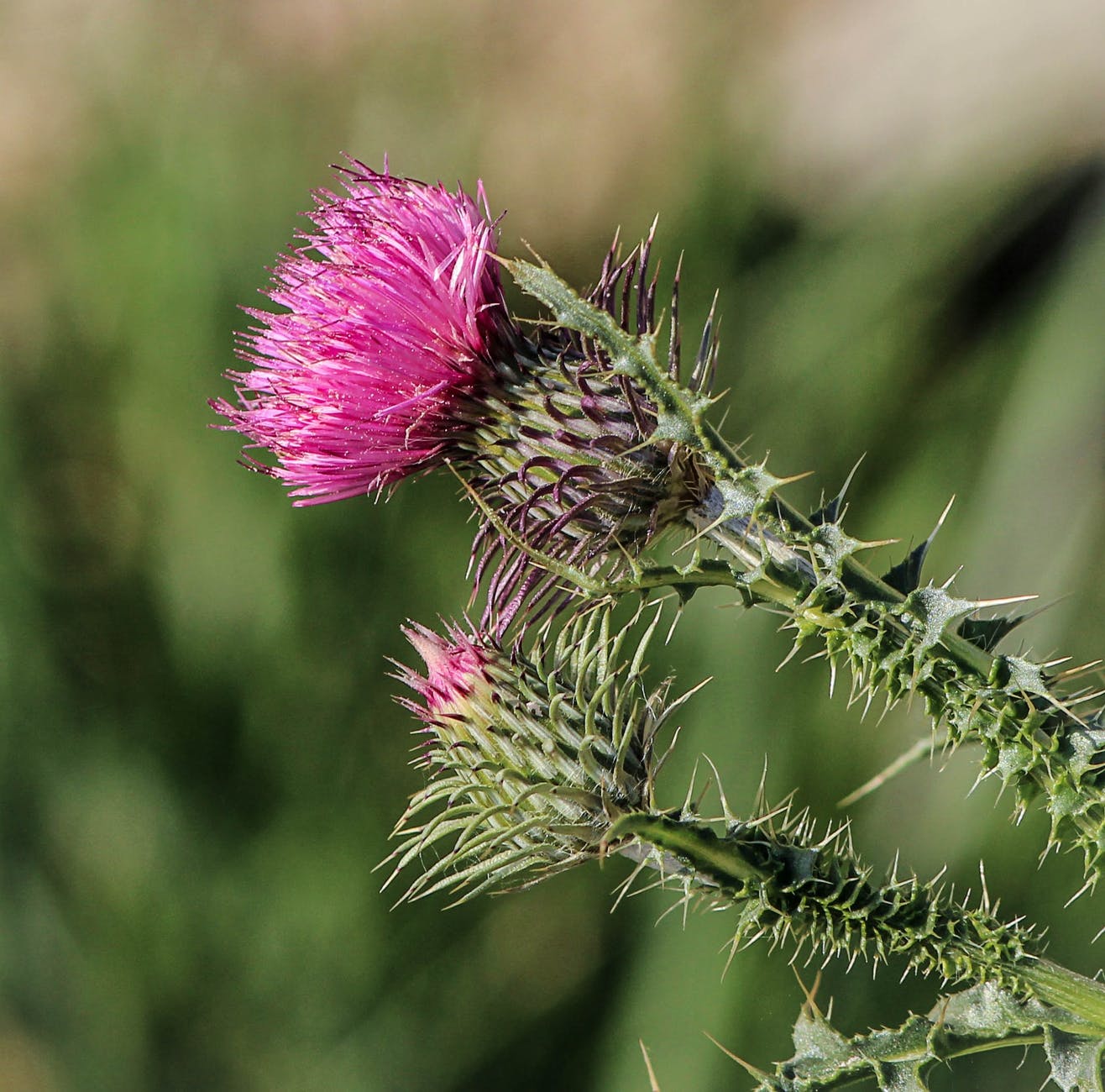
There’s this story in Scottish folklore: A king (Scottish or Pictish) and his army were engaged in a long campaign to repel the Danish invaders who were terrorising the east coast. The Vikings knew that the only way to gain free access to the rich breadbasket lands and the treasures of the religious houses was to defeat the king’s army, which was camped, exhausted, by a river, thinking itself safe for at least a night’s sleep. The Viking spies located the army. and to gain advantage by stealth and secrecy, the warriors began to creep up on foot, swords drawn, and surround them. Thinking their boots made too much noise, the leader ordered his men to go barefoot. Their goal was in sight, until a skull-splitting screech and an unrepeatable Scandinavian oath filled the air. One of the Vikings had trodden on a well-armed Spear Thistle. The kings army were thus warned, and sprang to action to repel the invaders. Since when, the thistle has always been the emblem of Scotland.

*****************************

Last Sunday was the first of the seriously cold days of this winter. It will get colder, but we will have adjusted to it. Nevertheless,it was still warmer outside than in our currently challenged-in-the-heating-department house, so we decided to go for a walk to warm up.

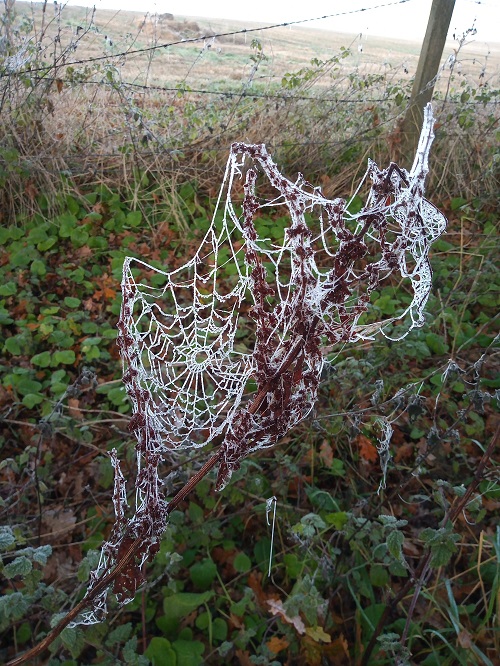
As we sauntered along the footpath from Luncarty to the River Tay, almost a hollow lane, beads of frost and frozen droplets of moisture clung to any material they encountered. Ephemeral, discarded threads pf spider gossamer waved like chilly bunting. Touch one, and it evaporated. Frizzy, curled husks of ice-tipped willow herb seedheads towered as if frozen.

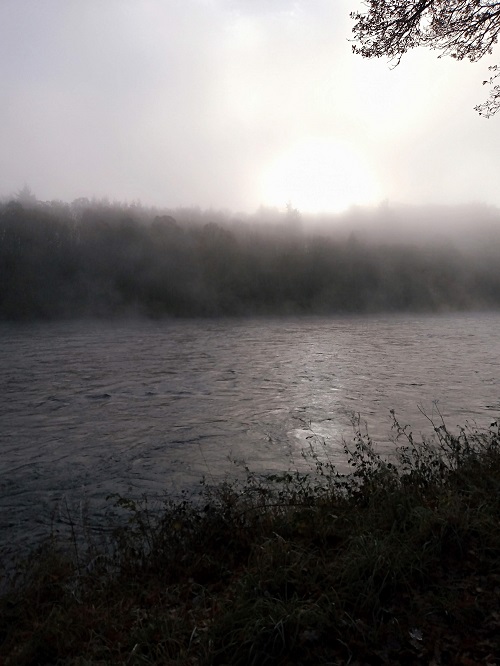
A haar descended. Generally the haar creeps upriver from Perth; today it seemed to come from all directions. Its gloom, exacerbated by the knowledge that somewhere behind it the sun is weakly shining, has the coldest feel imaginable. With wreaths of steam-like fog and mist flowing above the surface, the Tay resembled an Icelandic hot spring.

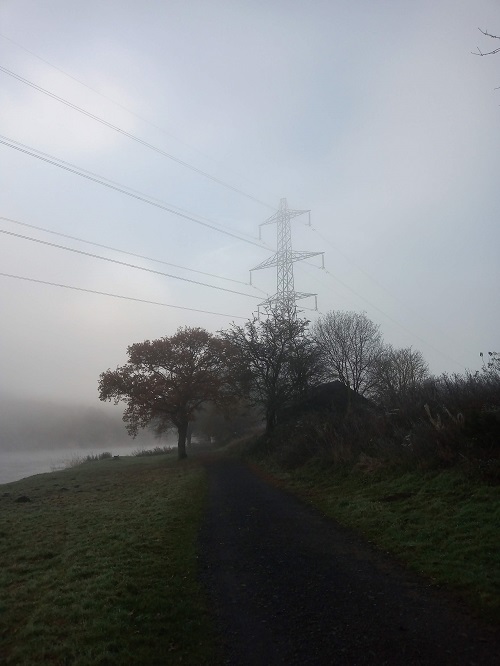
The river path proper starts at the site of the old Waulkmill Chain Ferry – once the only convenient way to cross from one side to the other. It closed as late as 1964, but I think this must have been a crossing point for many centuries before the chain ferry and pontoons were in operation. We headed in the direction of Perth City, watching gigantic pylons loom up from the cold dense air, bringing to mind the Martians from H.G.Wells’ War of the Worlds.

And then we came to the derelict bulk of old buildings beside Denmarkfield Farm, and the unmarked stone that stands in the weedy, thistle-infested ground just above the river. Here, locals say, is the site of that momentous battle that propelled the Scots thistle to prominence, and the stone – called the King’s Stone – marks the spot. That’s why the place, and later the farm, have been called Denmarkfield ever since.

There are plans to build yet another road, the Cross Tay Link Road, from here to Scone on the east bank. The land around the King’s Stone (actually far older than the 10th century) is under a compulsory purchase order. As people speed over the new bridge that will cross the river, congratulating themselves on the ease and convenience, will anyone remember the Waulkmill ferryman, the king who slept by the river, or the Viking with a sore foot?

The King’s Stone

The Island

Small island
of benign cattle,
quartz-veined rock-pools,
exotic trees
and runaway rhododendrons:
A chameleon island,
shape-shifting as the weather pirouettes.

Truly Hebridean
with its small, hand-moulded fields
and slow pale meadows, and
the flashes of white sand as the tide goes out.

But in a chiselled sky, it hardens
to shoulder the wind-borne rains of Shetland.
As sea-rocks darken and clouds come low,
sand blackens. I taste metallic air
of a sea-bound nation, far across
a cold, uncompromising, northern sea.

Then, in a flash, a rainbow erupts:
Sun-dazzled waves and sweet, warm,
blackberry-festooned tracks
through deep, lush valleys, recall Penwith,
and sun-drowned, southern afternoons.

But this island
holds its own keys;
makes its own future;
decides what to be
and to be what it chooses.

It defied all comparisons in Twenty-o-two.

The Ploughman’s back home, and Waiting to Welcome You

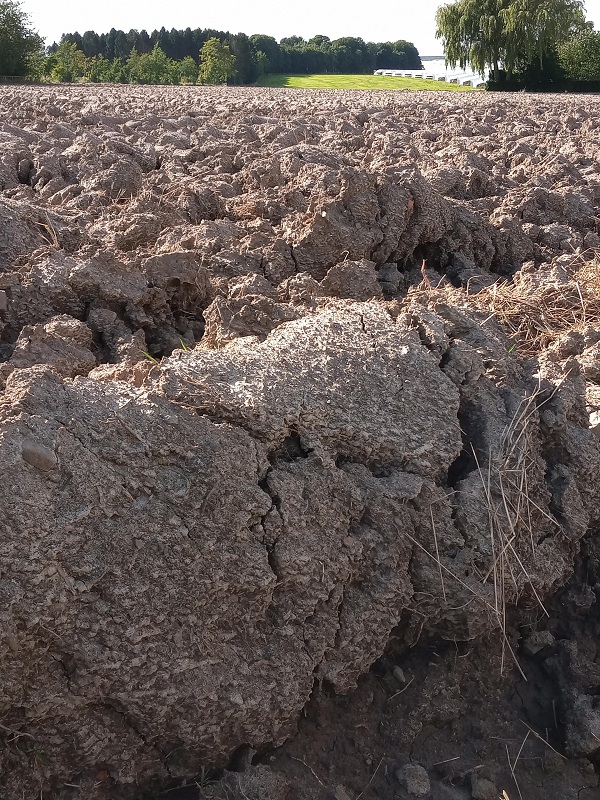
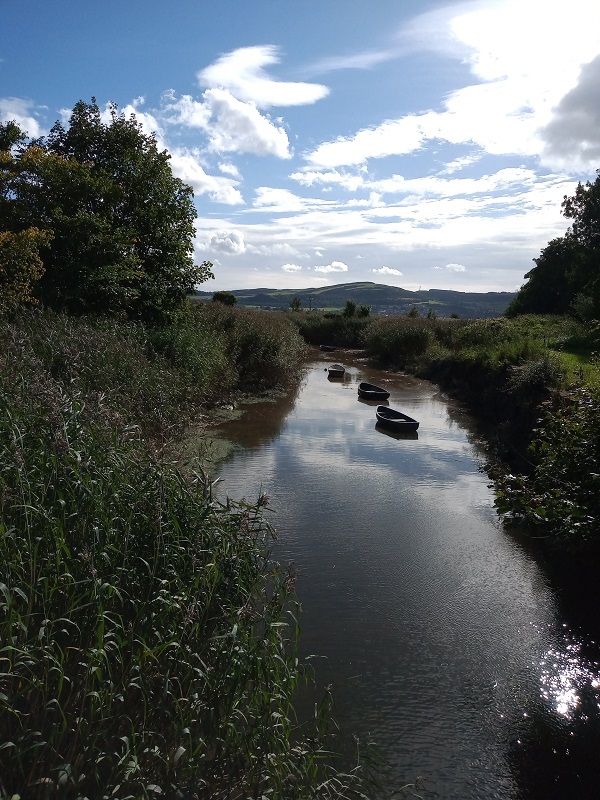
A fretting wind and days of warm sunshine have dried the newly-ploughed clays of the Carse at Port Allen into indomitable cliffs of furrows, solid, backbreaking, massive, yet wonderfully fertile. From the broken bridge across the Pow of Errol, the old port is ghostly, a hint of quayside, a dream of ships, the blue sky and wild clouds mirrored in still water.

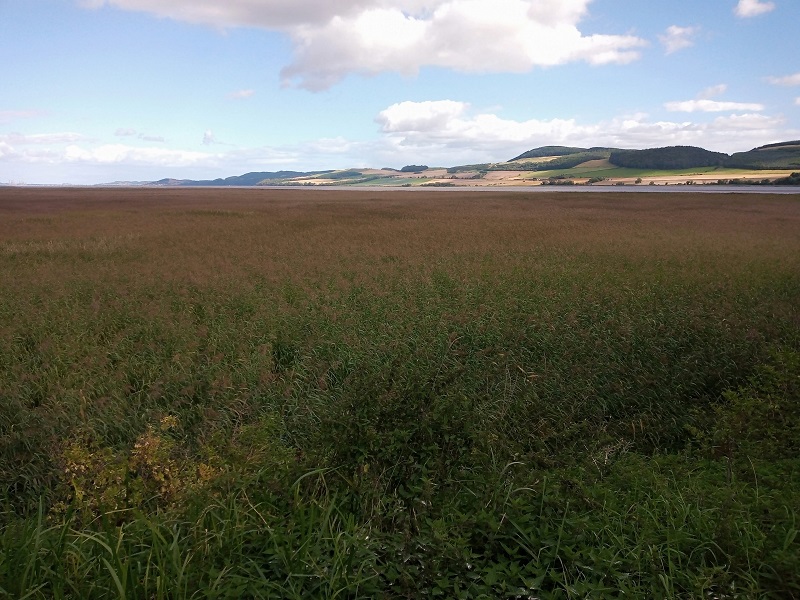
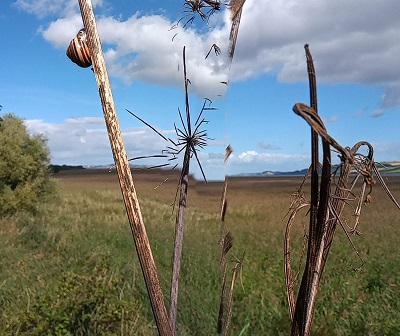
Endless reedbeds stretch to Dundee and over towards Fife, blurring with movement, a watery mirage that deceives the eye. You cannot see to the end of them. Nonchalent snails climb the haggard stalks of hogweed, clustering in the sun. Vision is fragmented, uneasy, focussed on a non-existent horizon.

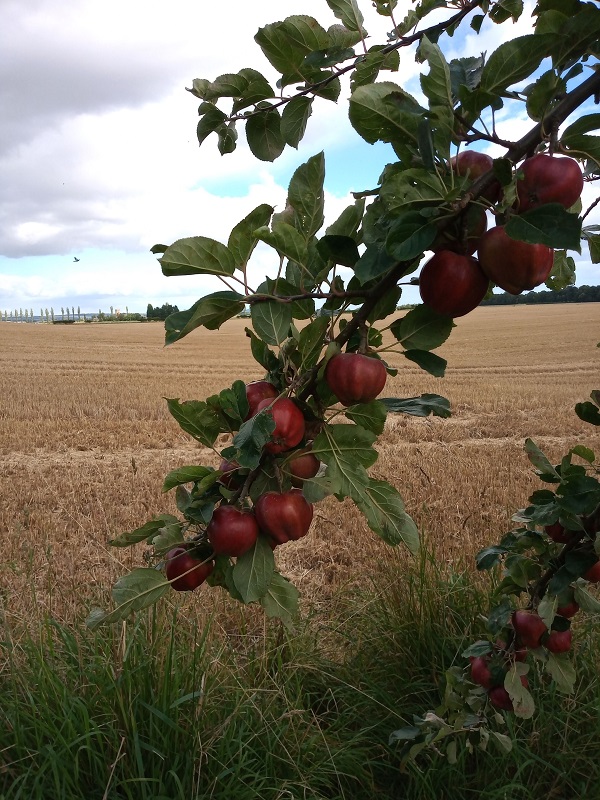
Up Gas Brae to the village, beneath great oaks and into the wind, a flock of pigeons, as ever, tracking your progress, and the start of a strange orchard, lining the road on either side. It’s a good year for apples, and not bad for pears. Two trees, side by side, and another further up, branches encrusted with wine-red, deeply-ribbed fruit.

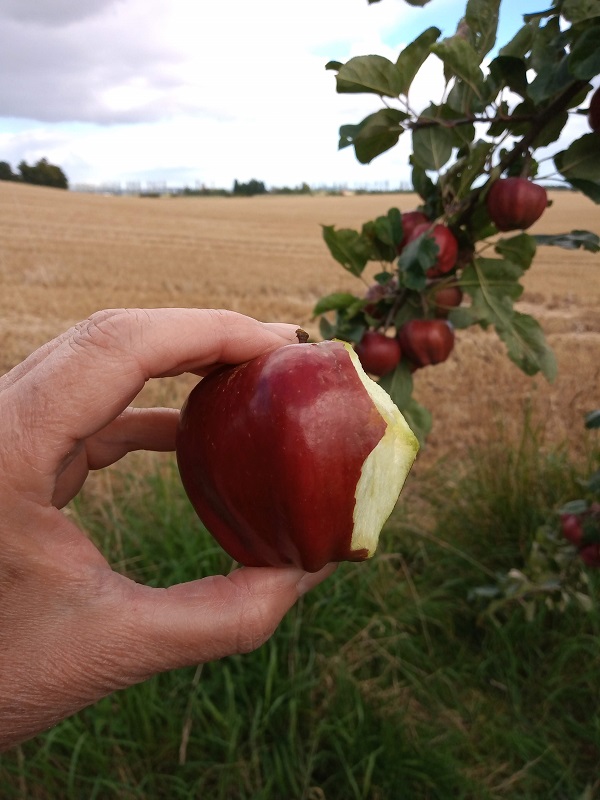
This is the Bloody Ploughman, whose tale of apple theft and a fatal, or maybe not quite fatal, shooting has been relayed here before. This was his village, these clays were his to plough. It was hard work; just walking behind the horses would have exhausted him. No wonder he stole the apples. Bite into the ripe flesh, and see the streaks of blood. It isn’t always the sweetest apple, but it is crisp and as refreshing as the ploughman would have desired.

This year, the Ploughman is home in Errol and well settled into the community orchard, surrounded by clay furrows. whispering reeds and the calls of waders and marsh harriers. Go now to visit, before the apples fall.

You can help yourself, and no-one will try to shoot you.

The Scent of Bracken

I was nine or ten when I first experienced both the smell of bracken and the nation that is Scotland. It was late July, the start of Glasgow Fair Fortnight, and therefore my parents must have taken me out of my London primary school for two weeks to pack me on a plane to Glasgow, for a fortnight’s camping holiday with my big sister Pat and her boyfriend. It was my first camping trip, too. It took me all the way up the west coast to Cape Wrath and literally changed my life.

My first evening in Scotland was memorable for sitting on a wall eating fish suppers. My first full day began with a curious morning at Pat’s work, where little was done beyond desk-tidying and paper aeroplane competitions. Then, the hooter went, tools were downed, and everybody went on holiday. Northwards first, in the Mini, me surrounded by camping gear in the back seat. We stopped by Loch Garry the first night, off a dead-end tiny road, and camped in a clearing in the bracken by the loch.
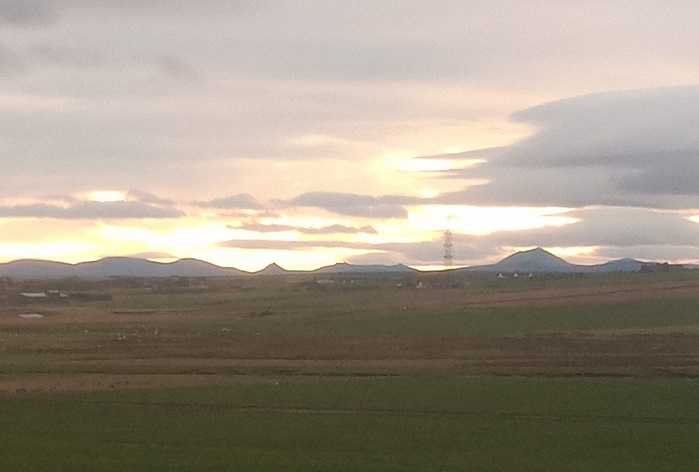
Loch Garry was my introduction to midgies. Naively, I thought they were all part of the adventure. I chattered away in excitement behind the mosquito coils, breathing in the strange, new scent from the bracken that for me would ever more be the scent of Scotland. Eventually, Pat interrupted me.

“Margaret, what time do you think it is?”

“Umm, maybe half past eight?” I replied hopefully, knowing my bedtime was at nine during holidays. I wanted to stay up a little longer.

Pat showed me her watch. It was twenty past eleven. Summer in Scotland, long days, even in July. I was persuaded into my all-too-exciting sleeping bag, and eventually fell asleep, though I never saw it get dark. And woke, next morning, to the smell of bracken once again.

We meandered north and west for nearly two weeks, camping wild up tracks that led from narrow, grass-centred, barely-surfaced roads to the ruins of long depopulated clachans and farmsteads. Sometimes we stayed under bridges, or on beach-paths up which seaweed was once hauled for fields now buried in bracken, their stone walls mere crumbling ridges in the grass. Once, we asked permission from an isolated farm, where the farmer’s wife took the cow for an evening walk each day. We filled our water bottles there, and tried to buy, but were always given, raw milk from the cow.

I trailed after my sister by burns and over cliffs, taking bad photos with my precious box camera, looking for eagles, dizzied by sea-stacks, drinking in a world I couldn’t have imagined from my London suburb. Ullapool, Mellon Udrigle, Achiltibuie, Lochinver, Stoer, Kinlochbervie, Oldshoremore – place names which became indelible in my brain. And the magical mountains of Assynt: Stac Pollaidh the “petrified hedgehog”, Suilven, Canisp, Quinag…. I had not known there was this.

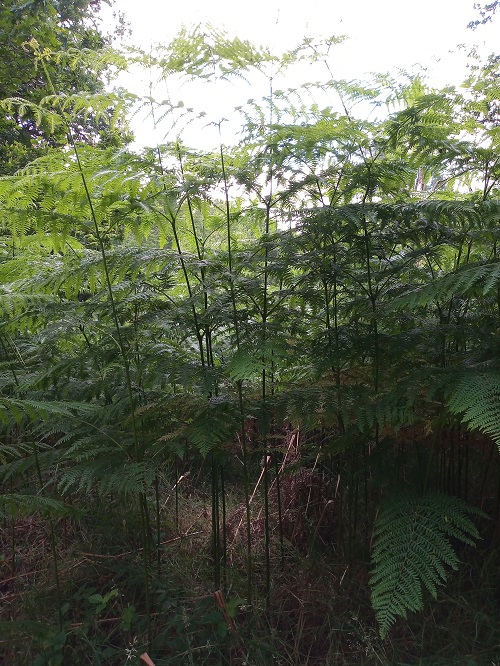
As I inhaled the scents of bracken, I discovered its practical uses. Pitch your tent over it, and it made for a comfortable sleep if your air-bed leaked its air out every night as mine did. Bracken was an indicator plant for dry ground when crossing terrifying bogs (as were heather and, to an extent, rushes. Bog cotton and moss was to be avoided). And being a small child, the bracken generally towered over me, yet I could find paths deep into it’s forest, to child-sized clearings, for private pees or just to hide.

I already knew, from my uniquely progressive and brilliant Scottish primary school teacher, more about Scotland than the average English adult does today. I knew of the Clearances, the Wars of Independence, Burns’ poems and (reluctantly) Scottish Country Dancing. What I learned that fortnight was not facts. It was the country itself, sights, sounds and weather, the star-filled nights and the mists that clung in the whispering air; the colour of the rain; the beauty, the sorrow and the joy. I was never the same again. Although I muttered crossly to myself about long walks with wet feet, and the sheer copiousness of uphill tracks, I was captured. Thereafter, holidays with my parents sitting on crowded beaches in southern England, driving out to bustling “beauty spots” and picnics on the side of the road, were never the same. To their credit, mum and dad realised it, and did their best to incorporate more “adventure” into our trips.

But it wasn’t adventure I craved. I’ve never been very adventurous. It was the scent of bracken.

It was the scent of Scotland.

Thank you.

In the Woods of Atholl

The Dukes of Atholl were awfully fond of trees, especially Larch trees, mainly for their timber value but possibly also just because they liked them. They also had an awful lot of land to play with. Still do. Duke Number 2 was responsible for introducing the European Larch (Larix decidua) to Scotland in 1740. His nephew, the Planting Duke (Number 4), turned his attention to the steep slopes of Craig o’ Barns above Dunkeld, and wondered how he could cover it with larch trees. Clearly, trees could grow on the rocky outcrops and once established, gripped the hillside with roots that were capable of splitting and crumbling stone. The issue was how to get men, tree seedlings and planting gear onto the inaccessible hillside the Planting Duke wanted to cover.

His solution, it is told, was to fire seed at the crags from a cannon positioned across the river. Not usually part of the tree-planter’s kit, but hey, this was the Duke of Atholl. Duke Number 7 brought in the Japanese Larch (L. kaempferi) in the 19th century, and the combination gave rise to the Dunkeld Hybrid Larch (L. decidua x kaempferi) in 1904.

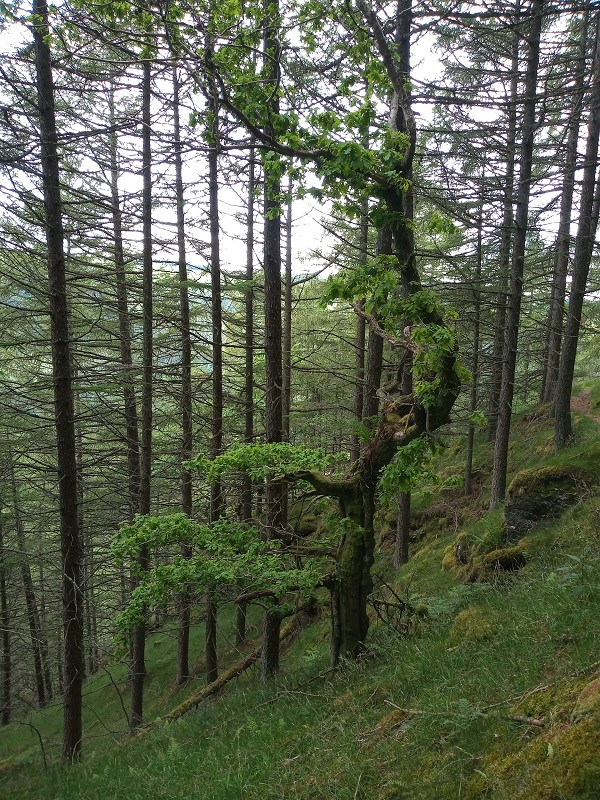
Walking the woods above Craig o’ Barns now, and the land that makes up the popular Atholl Woods walks, I am spellbound by the determination and tenacity of trees to hold fast to rock and scanty soil. Although disease has resulted in many larch giving way to spruce, fir and pine, all these forest conifers rise like spindly towers from the steep shady slopes, clamouring for sky.

Not all grow straight, however, and where a deciduous tree has infiltrated the ducal forests by setting its own seed grimly onto rock, it seems to thumb the nose at forest order by growing into as contorted a shape as it can, leaves placed to catch the light.

Rebel Tree

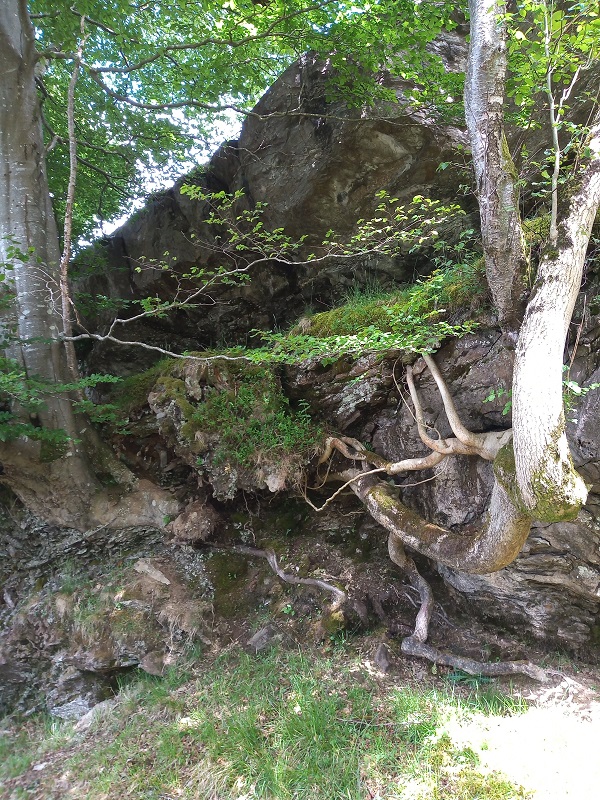
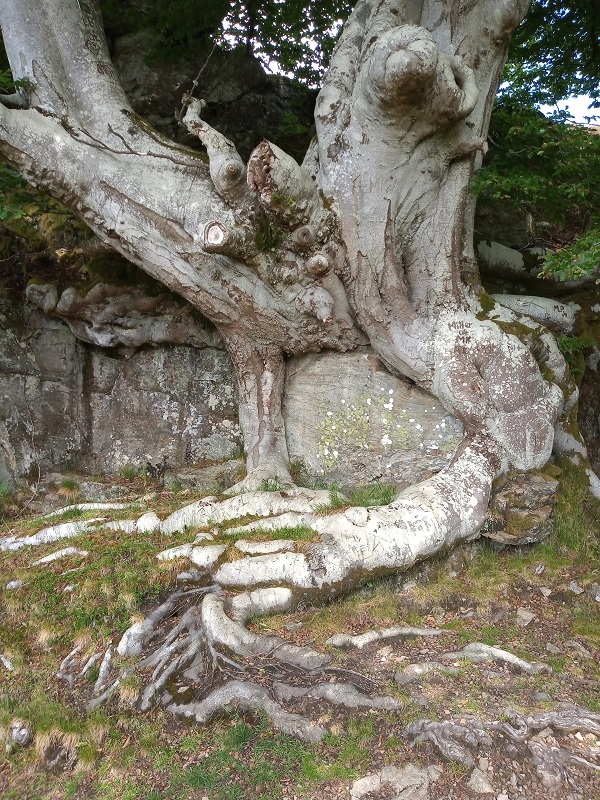
Sheer cliffs and overhangs challenge the pines, but the darker, older and unplanted yew trees seep into the rock like oozing blood – and hold fast. Holly trees, with hard, unyielding wood and strong roots, are scattered among the rocks, and huge, unlikely beeches wrap themselves around massive boulders with roots like giants’ fingers, and trunks that should have crashed to the ground a century ago.
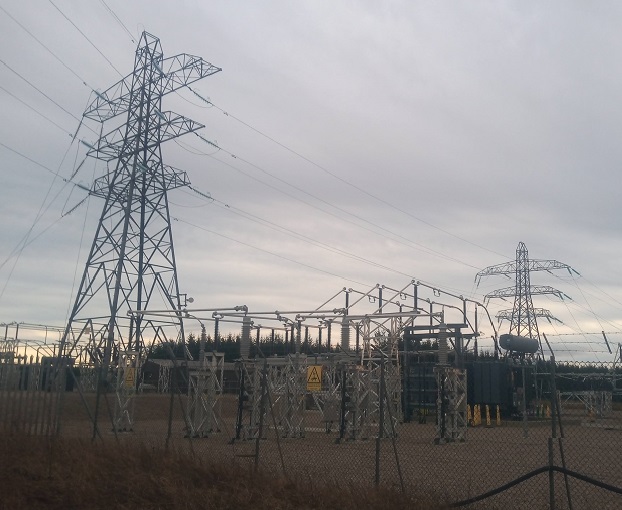
Emerging from forest onto the look-out points along the way, I realise how the path has been climbing, just as subtly and imperceptibly as tree roots worm their way into rock-faces. The valley of the Tay sparkles with silver, south to Murthly Castle and north to Ben Vrackie, high above Pitlochry. I bask like a snake in the sunshine.

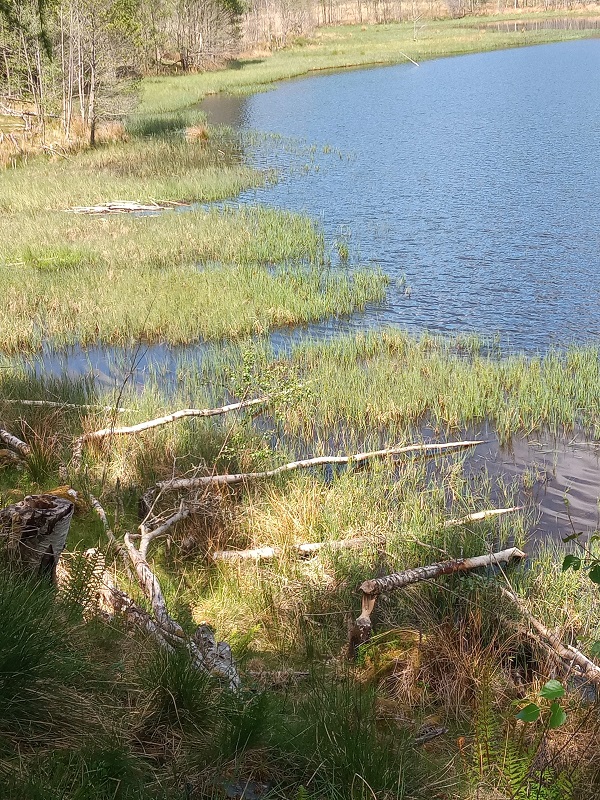
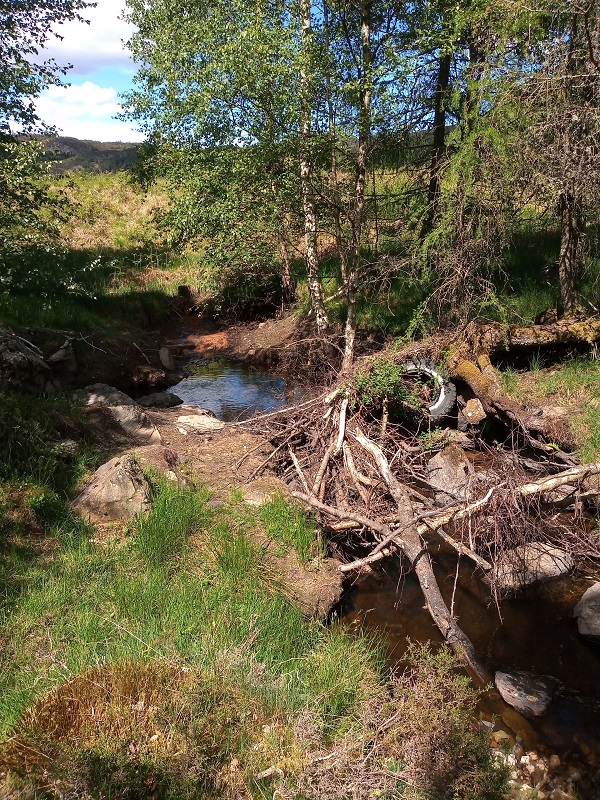
At Mill Dam, another kind of forestry is in progress. Neat and systematic felling of young trees into water to provide fresh shoots; branches and brash gathered to construct dams and quiet pools.

Such teeth these foresters must have! A match for the Planting Duke’s cannon, perhaps.

The First Thing that Must Change

coronavirus
Photo by CDC on Pexels.com

We are in strange times. Things are changing. People don’t like change. Many people will be yearning for everything to “go back to normal”. The media incessantly bleat that expression “back to normal”, interspersed cleverly with “business as usual.” People listening assume that’s what they – and everyone else – want to see. People won’t raise an eyebrow at this assumption, because people like to feel they are in the majority and agree with everyone else. They think there’s safety in numbers, even when the numbers are imaginary or made up.

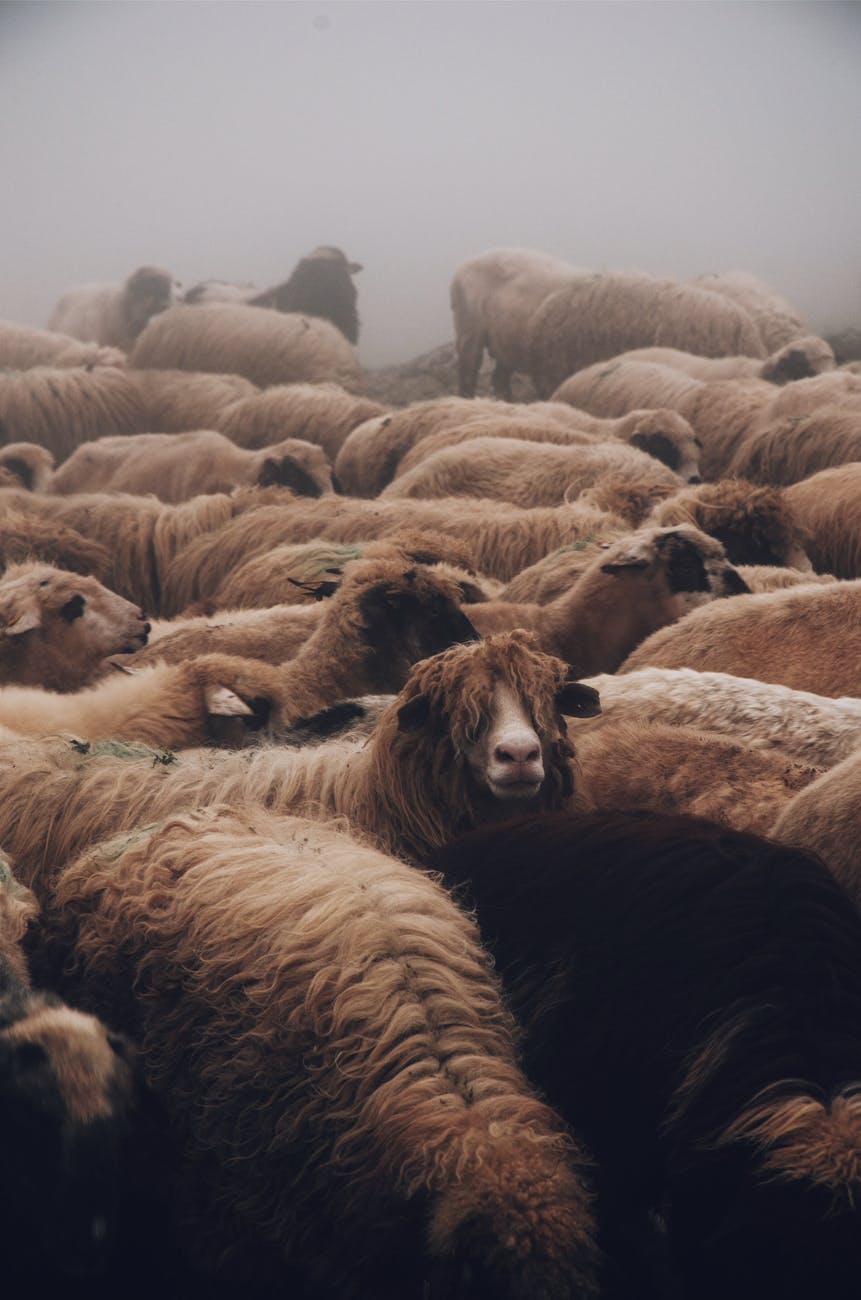
close up photo of a herd of sheep
Photo by Ekrulila on Pexels.com

Some of us – many of us – don’t. We want things to change. Some politicians even want change – or at least can see that it’s inevitable. But they sugar the pill by calling it a “new normal”. What do we want to change?

  • People to stop over-consuming the planet’s resources
  • The widening gap between rich and poor
  • Greed and Injustice – social and environmental
  • Air pollution, plastic, environmental degradation
  • Wars, bombs, threats, dictatorships
  • Governments that chip away at democracy
  • People thinking biodiversity loss is inevitable “progress”
  • What Tennyson called “the faithless coldness of the times”
  • ….and so much more

We want, well, everything to change. It’s too much to ask. Where do we start?

We are in a pandemic, caused, not by China, Johnson or even Trump, but by a virus. Viruses are funny things. Are they even a life-form? They have no life and no power to reproduce on their own. They can only do that by hijacking the DNA or RNA (the genetic element of a cell) of another species. Plant or animal, whatever the virus finds suits their need. Did you know that stripy tulips only got that way because of viruses? A virus made them worth a fortune in the 17th century.

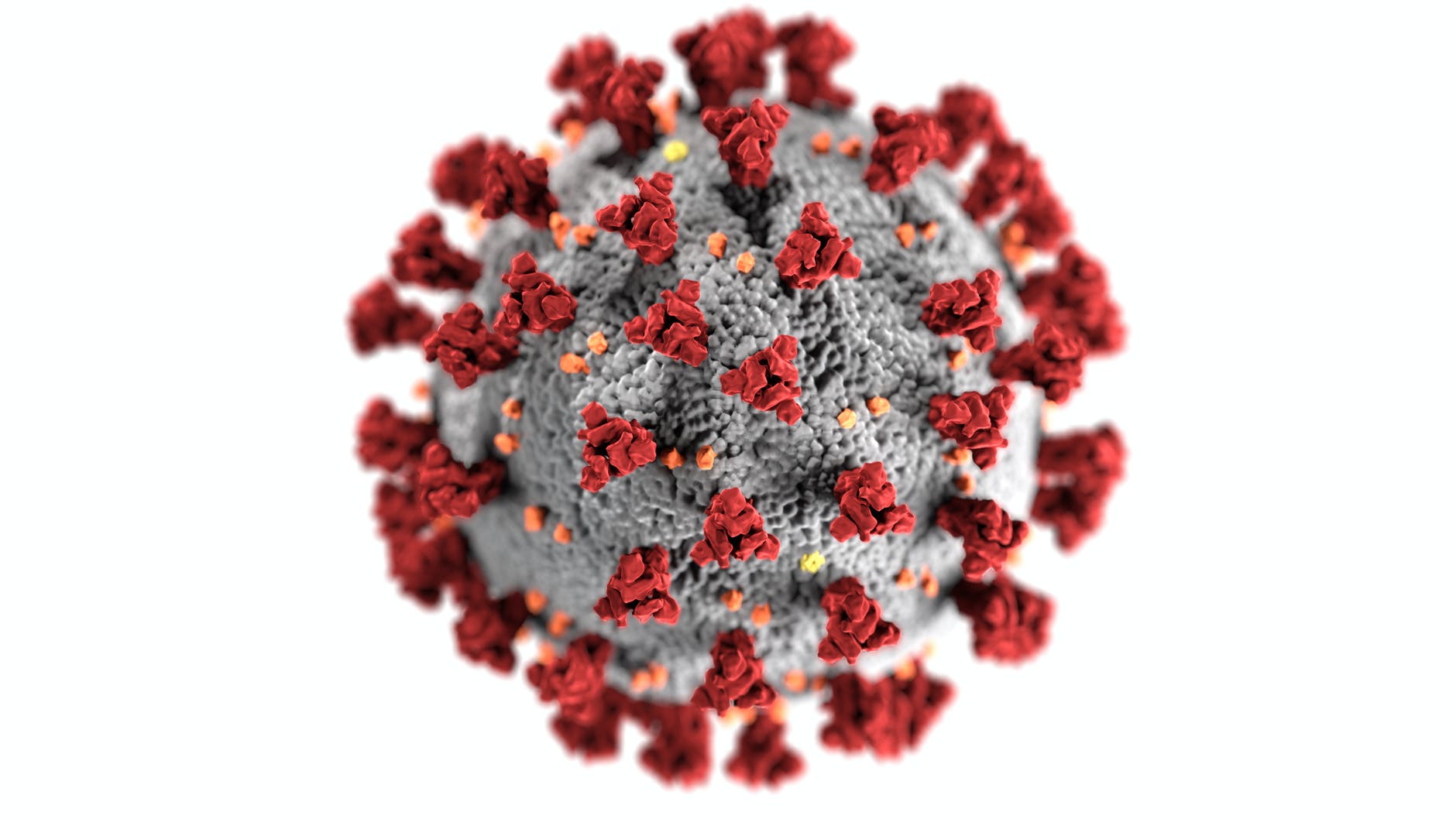
Viruses are very small, smaller than bacteria. Indeed, they can even infect bacteria. Some of them – including the coronaviruses – are incredibly beautiful structures. We have learned, in recent decades, to applaud our “friendly” bacteria which protect our digestive system or power our sourdough fermentations. Bacteria aren’t being friendly or unfriendly, though, they’re just getting on with their lives, and we happen to benefit sometimes. Other times we don’t and we go all antibacterial and kill off the useful bacteria as well as the harmful ones, leaving ourselves open to more infection.

But no-one ever applauds a virus. Even though within the lining of the animal (including human) gut, live viruses called bacteriophages. Guess what, they eat up “unfriendly” bacteria. Other viruses help develop and support the human immune system. Just like the bacteria, they’re not doing it out of the goodness of their hearts, which of course they don’t have. They’re just being viruses. Viruses, bacteria, slime moulds, fungi, algae, tardigrades, invertebrates, mosses, insects, molluscs, fish, flowers, trees, amphibians, birds, reptiles, mammals (including people), and all the groups I’ve missed out – they’re all just organisms in a complex web, getting on with it as best they can.

slime mould

Sometimes – but not very often – an organism will get above itself. It will be clever, but hellish stupid. It will decide that it’s superior to all the other entangled organisms and it will start acting in a way that’s detrimental to all of life on earth. Destructive, actually, and stupid enough to believe – no, to CHOOSE TO BELIEVE – that destruction won’t include them.

It might take something as small as a virus to bring them down with a bump.

If the sound of arrogance crashing around us is louder than the soothing noises of those with vested interests in “business as usual”, more people will start thinking everything must change. And here’s where to start: drop the conceit that you are apart from the rest of the natural world. You are as entangled and connected to every other living organism – and many which may not be living – as the Covid 19 virus. You are no better and no worse. You are part of nature. You will never, ever, be above it.

Come back down to Earth, and then together we might really hope to change everything.

sphagnum

#Everythingmustchange #common weal
commonweal.scot

Caithness: an Unexpected Corner

So, you drive over the bridge and leave Inverness behind. Soon, you will turn roughly left, as usual, heading for the dramatic shores and the magnificent mountains of Scotland’s fabulous north west.

What if you turned right instead, and carried on up the A9, zig-zagging drunkenly the path north? What will you find, towards the end of the road?

caithness4

The wind will get up, and rage in your ears with little to stop it from laughing at you. You will leave behind the stately coastal towns of Easter Ross and Sutherland. The land lies down, prostrates itself, subsides. Over to the west, distant peaks rise black and pointed. But they are far away. Dull green acres race the miles that separate you from the hills, and the sky stretches, yawning enormous and flinty in a weak January sun.

You will pass through flatlands, a ruinous landscape of low-slung byres, falling one-storey houses and cowering caravans, where anything bigger than a molehill becomes precious shelter. A few trees – always spruce – courageously cling to life by the homes where they were planted. Above them tower pylons like alien invaders, and armies of wind generators, powering Scotland relentlessly.

caithness3

In this exposed, stripped-down county of Caithness, there is no hiding the immense batteries and substations that convert the lacerating wind to warmth and light and send it on its way to town and steading alike. Birds balance on wires, feathers licked by gales, gripping fiercely.

caithness 2

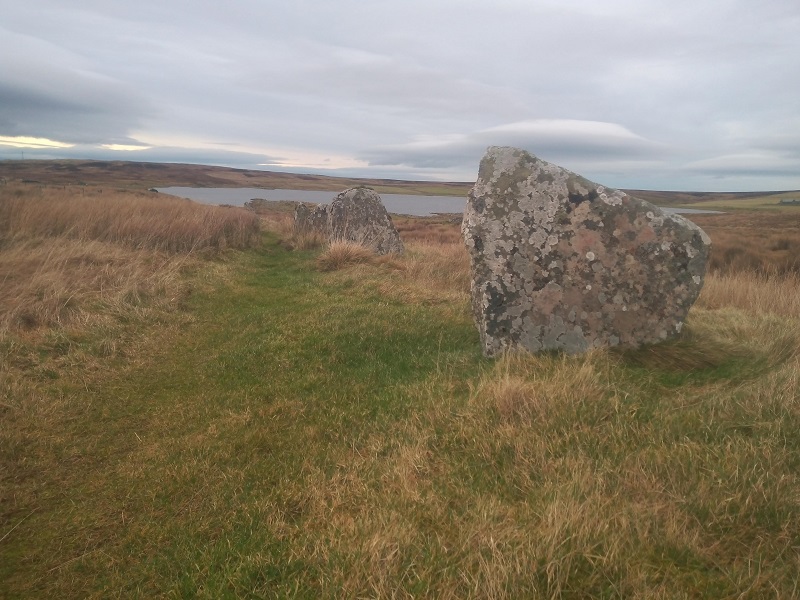
It is not monotonous, this unexpected journey. The winter-bleached grasslands break up periodically into even flatter expanses – the peatland flows, sombre and dark and secret, clouds reflected like pewter from glimpsed water. Stones begin to dominate; low circles and horseshoes like the one at Achavanich, where each hewn stone follows the one before, face-on round the curve as if seeking shelter in its neighbour’s shadow. Then great flagstones upended become the very boundaries of land; a pattern of smaller fields is hinted at, somehow warmer, friendlier than those whose demarcation arises from cold wire.

caithness1     caithness7

The town, Thurso, erupts on the northern coast, unapologetic, in a mix of serviceable old stone and cold-looking blocks that seem to have been dropped from the edges of a disintegrating city. But Thurso has its Banksy, or a Banksy disciple at least, and that’s unexpected too, and oddly appreciated.

caithness8

And you will find yourself drawn, at the end of the day, to the great surfing beach at Dunnet, deserted in January but for a galloping horse and its rider in the distance, to a Viking vision of the northern isles and a sky that mesmerises like one of the sagas of old.

caithness5


A Dear, Green Place

qpcampsies1

I wake up under the ridiculously high ceiling of my daughter’s flat in Govanhill (honestly, you could fit a whole other floor between me and that ceiling), and it’s that not unheard-of, but always slightly surprising thing: a Fine Day. In January. In Glasgow.

So I go down to Queen’s Park under the low sun, and join all the people, taking shortcuts to Shawlands or Battlefield, grimly jogging, exercising a cacophony of canines, or gathering to hold deep discussions on the slithery paths where the morning’s frost has turned to melting ice.

I look for wildlife. There’s plenty, but until you tune in, you’d think it was all rainbow-hued, pouting pigeons intent on fornication and the many opportunist members of the crow family. Magpies bustle under municipal shrubs and into rampant ivy (arguably the park’s most significant contribution to wildlife habitat), and busy themselves with piles of beech leaves, pretending to have a purpose.

qpivytrees    qpcrows1

Crows loiter in trees with intent, fingering – or beaking – sticks and twigs, considering their suitability for Lovenest 2020.

I skirt the wildlife pond, where coots, moorhens, mallard and the remaining cygnets of the Mute Swans entertain small children. Up a green slope, and a sunken track, so deep in mud and the soggy consequences of the previous weekend’s torrential rain that had some of us dancing in puddles, it could double as a Devonshire hollow road. Fallen trees accrue fungi and insects; Queen’s Park here has shed its Paxton municipality.

qpgreenlane      qpgreenlane2

In the wilder, scarcely managed woodland, I hear birdsong – the noisy robin, the piping and sawing of blue and great tits. I know there are long-tailed tits – they visit my son’s bird feeders – but they taunt me shrilly, staying out of sight. A treecreeper works her way up a lime tree trunk. Dunnocks and wrens flit, silent and absorbed. Huddled among the trees on the Camp Hill slopes, the Queen’s Park Allotments make a city within a city, a shanty town of sheds and frames and variously glazed or translucent edifices where lush crops are started early by proper gardeners, and foxes – I can smell them -.find food and sanctuary.

qpfort camp

Higher, and I reach the Iron Age fort that crowns the hill, where grey squirrels scamper among the beech-mast, and humans have lived for centuries. The big stones in the middle of the ramparts may be what’s left of the Camp that named the Hill – during the Battle of Langside in 1568, famously lost by Mary Queen of Scots’ army and which sent her to to seek, and not find, refuge in England. But Glasgow named the park for her.

qpwassailed3

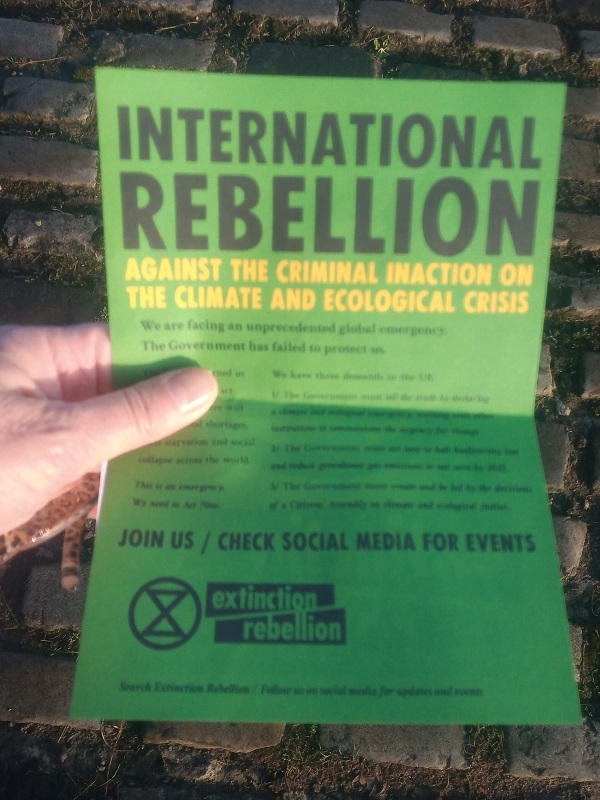
A grove of young fruit trees just below the viewpoint with its flagpole are decorated with dark tartan ribbons, the remnants of last year’s wassailing. I wonder if they will get wassailed this year. The Philosophists of the Flagpole converse earnestly, perched on the backs of the frost-wet seats. Someone hands me a leaflet. It is from Extinction Rebellion.

qpXR

The day before, Glasgow City Council had announced its intention to be carbon-neutral by 2030, despite the challenges of its transport system and heating those high-ceilinged, big-windowed tenements. That’s 15 years before the target set by the Scottish Government. Will they do it? They will give it their best shot, and count the benefits before the costs. XR will say there’s no choice.

qpchimney

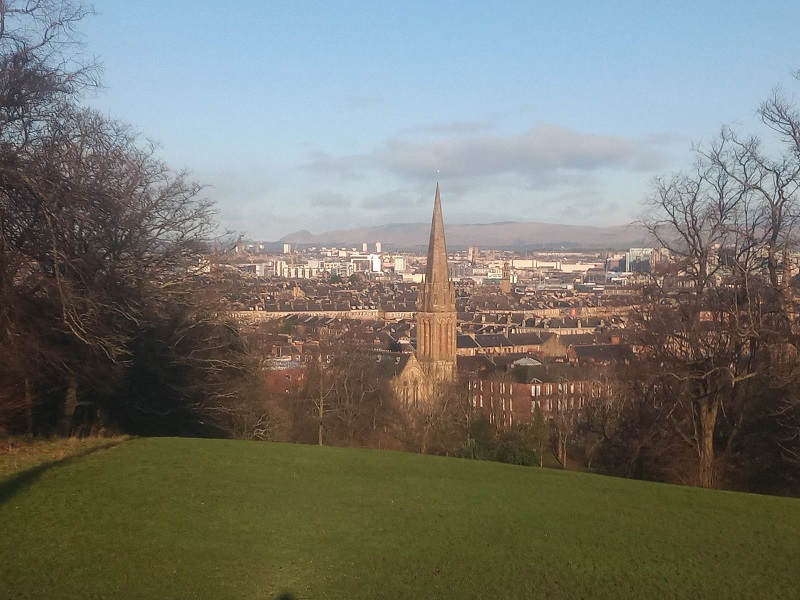
We look out over this beautiful city, this dear, green place, bounded and made human-scale by its surrounding hills, dotted with parks and humming with energy that comes from its people. Smoke gushes from a single factory – I think its the brewery opposite Glasgow Green – and a motorway crashes through. They’ll need to sort that. I think, that if anywhere can do it, Glasgow will.

qp1


Among the Caledonian Pines

IMG_20191020_153320607

These are free-range pine trees, the Scots Pine, Pinus sylvatica. Not the heavy, lowering plantation evergreens erroneously referred to as pine forest, but which are more likely to be spruce, fir or sometimes the non-native black pine, Pinus nigra nigra. Recognise the Scots Pine by the gingery red of the bark on the upper trunk. Black pines stay grey.

IMG_20191020_102144753.jpg

These pines do not grow in battery-cage rows. They give themselves space to expand, to stretch out to unseen horizons; they live with dignity and grandeur; they are splendid and heroic in their dying. The Caledonian Pine Forest is multi-aged, thanks to decades of careful management to reduce deer predation and facilitate natural regeneration – seed from local trees giving rise to progeny that fits the landscape that made it like a glove. Because of age diversity in the trees, there’s also diversity in height, spread, form and density. That means greater biodiversity. And beauty.

IMG_20191020_102836016.jpg


The forests made by the spreading Caledonian pine are light and airy. The ground is soft with layers of needles, kind to the dog’s arthritic paws, so he bounces puppy like full-tilt along meandering paths and up and down banks and ridges, grinning like a mad thing to encourage his slow, plodding humans.

Look up.

The overground network of branches, which look too heavy for the boles to support, whispers with  the quicksilver flow of red squirrels. Titmice flicker from bough to bough – coaltits in pairs, long-tailed ones in squeaky flocks. There may be crested tits in pursuit of pine nuts, for the Caledonian pinewoods are home to species rarely seen elsewhere. Shy and secretive, many of them, like the Pine Marten; or striking like the Scottish Crossbill -possibly the closest we have to a native parrot. Or the Horse of the Woods,  the iconic, pied Capercaillie, whose shyness vanishes embarrassingly during the mating season, when you really, really don’t want to bump into a male bird.

IMG_20191020_103754987.jpg

Look down.

Roots lie just below the surface; barely visible but easy to trip over. Mosses cover them; the translucent yellows, greens and pinks of sphagnum are almost luminous in the wetter areas. The smell of peaty soil mingles with the soft fragrance of resin and bark. Fringing the shallow bogs are ling and heaths, the former still in flower, blaeberries and ferns. Throughout, fallen twigs and branches, last year’s needles and crackling debris of fern make a thousand homes for maybe a thousand life forms; plant, animal,  invertebrate, bird, fungus and bacterium.

Onto these worlds within worlds, light rain emerges; rain so light, so like to air the raindrops are quantum particles which move and spin, randomly, beyond the realms of gravity. This is light-rain, on a world shrunk to infinitesimally small or seen from afar, from where the Scots pine woods become mere fractal patterns on the margins of time.

Once the Caledonian Pine Forest was the dominant vegetation type of much of Highland Scotland. It lightly brushed the sides of tall mountains; it thrived on islands in linear lochs, it swept through the glens. Farmers and crofters cleared some of it, but also made homes among the trees, for shelter and because it was a lovely land. Then came the changes, borne of greed, fear and hatred, that nearly pushed the Caledonian Forest and all it nurtured to extinction. Both sheep and the deer on the “sporting” estates which displaced poor or powerless people ate the succulent young trees, preventing regeneration – the story’s well known. Then there was the snatching of the big trees for the war effort. They were cut down to make boxes to store ammunition. Doubtless someone made a lot of money from that.

Now, thanks to hard work, vision and the dedication of many unsung heroes and heroines, the all-embracing arms of old Caledonian Pines are spread wide, young trees erupt vertically, baby trees get underfoot and choose odd places to grow. The trees are back on the  mountainsides. Long may they flourish and grow.

IMG_20191020_151639342