Glacial Loch: a Tale of Horizons

Loch Leven in Kinross-shire, along with Clunie Loch and Loch of the Lowes (and the ospreys) in Perthshire, and Scotland’s only Lake, the Lake of Menteith in Stirlingshire, was scraped out by glaciers in the Ice Age, then filled with sand and gravel as the glacier retreated – and hence is shallow, broad, wreathed in strange mists, and horizontal in tone. Wide enough to be a honeypot for thousands of wildfowl in winter, secret enough for a Queen to be imprisoned on one of its islands, shape-shifting and elusive enough for ghosts and rare species.
lochleven1

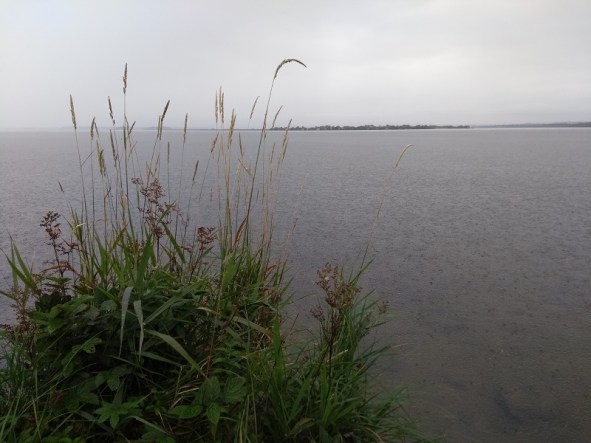
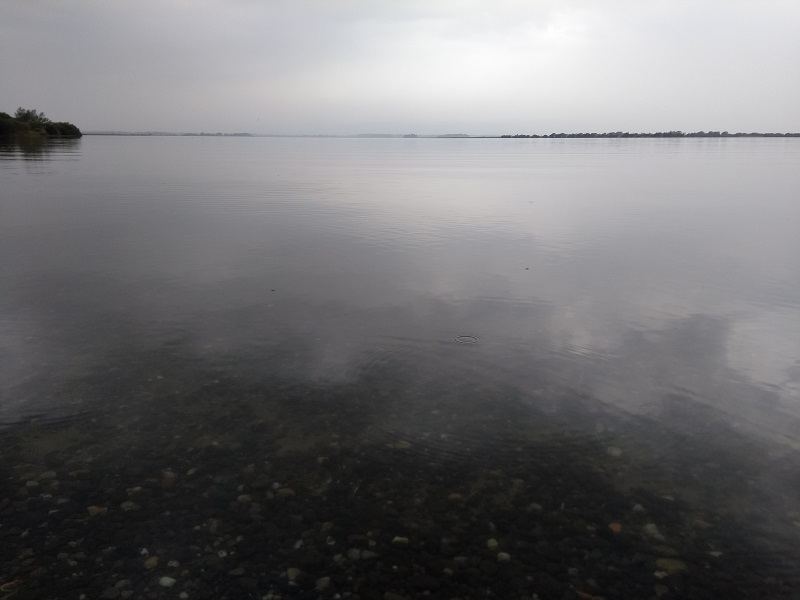
Walk around its margins; there will be places from which the opposite shore can barely be discerned. Go on a grey autumn day when the rain in the air seems suspended in horizontal bands, and upsurging clumps of grass and reeds appear discordant, almost angry in their violation of the horizontal.

lochleven4

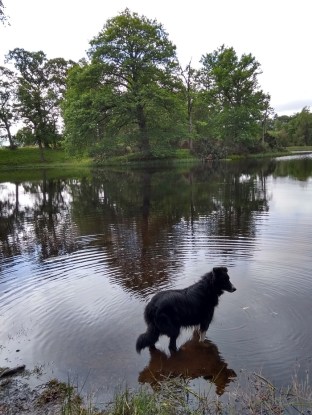
Here and there you’ll find beaches, sandy from the glacier’s retreat; the wind makes small glacial waves that smell of no sea but fool the dog – and then it becomes still. Bands of horizontal clouds are reflected in the mirror surface of the water; subtle stripes of cream and grey and black and white, settling on the horizontal tops of the surrounding hills.

grassofparnassusPockets of peaty marshland, studded in autumn by vivid blue sheeps’ scabious and emphatically solitary flowers of the Grass of Parnassus, spiral around flat pools of oily water, reflecting snatches of sky. Larger raised bogs, pillaged in previous centuries for their peat, lie flat and sullen. When the peat was no longer wanted, they grew conifers on the “useless” land. lochleven5Now the conifers are retreating after the long-forgotten glaciers; the water returns; dragonflies, amphibians and sphagnum once more fill the horizontal expanse between the forest.  Heaths and ling guide the trespasser to the dryer paths, and felled branches bridge the bog where water maintains its horizontal sovereignty.
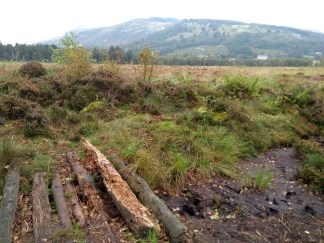
lochleven6In fields by the loch, the damp rises in horizontal layers, coating logs and stumps and gate-posts with moist, green mosses and algae. In one field a whole tree fell, years ago. In this damp environment it has not died, but adapted to its horizontal status and continued to grow; a miniature forest of shoots, epiphytes and primitive plants along its horizontal trunk.
lochleven2

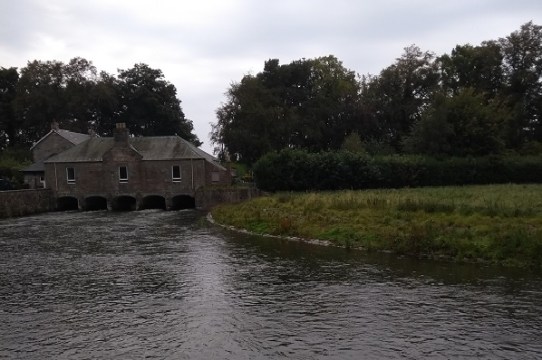
The old river, the Leven, first to score a path through the glaciated landscape, tears out of the loch at the Sluice House, which straddles it, flat and low, and flows out to feed Fife, rural and industrial. Its lines are also straight and keenly defined; kingfishers dart horizontally beneath overhanging branches. Ripples march in military formation downriver.

Quiet, grey, the glacial loch behind you retreats into its bands of mist, its unseen wild occupants, its secrets and loveliness.
lochleven3


Not a Tay Bridge Disaster


taybridge1In a fright of frustration and indecision you stream from the house. Too much time alone, too many choices, too many restrictions, too much procrastination – poring over maps in search of something new, too much squinting at Google Satellite to find new paths, no decisions made, no enthusiasm kindled.

Just the need to get out, though the day is grey with bubbling clouds and the threat of rain.

Aimlessly through Perth, getting a few messages on the way. Drifting, still without destination, towards Dundee. Missing the road to the towering volcanic hill where the dragon (probably) still resides in his Hole, squatting on his bed of garnets and Perth May maidens. That would have been a good walk. Too late.

Abruptly turning off the dual carriageway to Errol and the Carse – but let’s not repeat the same old paths twisting in and out of the reed beds. Look out for a new sign, somewhere different, something – anything – new. Oh, missed one, wonder where that went, too late, never mind. Suddenly, you’re skirting the edges of Dundee – how about Riverside Park? What all this way for a semi-urban park? Maybe… oh, too late, you missed the turn-off. Guess what, the sun is out – that’s Dundee for you, Sun City, Yes City, smiling streets and sparkling water, and the V&A looking glassy and coolly remote as it strains toward the ocean.

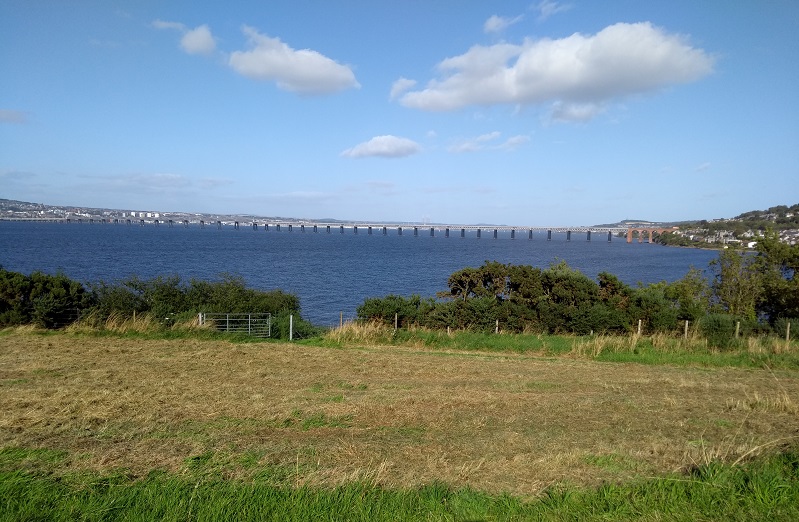
Woops – and you’re on the Tay Road Bridge, heading for Fife. Desperate to walk and you’ve been driving for an hour, so you stop trying to choose and roll up in Wormit, under the shadow of the rail bridge, that eternal prompt for disaster. It’s mid-afternoon, and you skirt the narrow estuarine beach and climb onto the breezy, sunny cliffs of a hitherto unexplored stretch of the Fife coastal path towards Balmerino.

taybridgetrees
And the rushing, crossness, dissatisfaction and sense of time wasted starts to recede. You slow down. You breathe more deeply. The dog potters. Through twisted, moss-covered trees, tangled with ivy, ruined boathouses and animal tracks are glimpsed. The city twinkles at you from across the Firth, as wide and blue as the clamoring, exulting East-coast sky.


taybridgeseal

A mysteriously stranded and petrified seal basks on the grass, making a seat for warm and heady contemplation of how beautiful the world is, how long the day, even in September, and how fortunate the indecision that led you here.  Steep coast-path steps, down and up; a hedgerow heady with honeysuckle; crackling of dry grass and the twang of boot on stone. Trickling burns through the undergrowth, ferns and moss and fungi in the gloom, then out, out again into the laughing sunshine, up through meadows, down to the lucky houses clutching at the shore.

Later, a forest, a young woodland of oak, rowan and sorry-looking ash, nudging the older trees, and the pines and firs of previous plantings. Shadows flicker between them; dogs explore, accompanied by knowing locals on paths uncharted by Google maps; Kirkton and Balmerino are near.

You circle the village, fine and high above the Firth, and now as you return the sun is cooler, the air relaxed, the forest empty, chilly and very slightly intimidating. You pick up pace. After all, you started late and the nights are drawing in, and the sun is being sucked back west of Dundee.

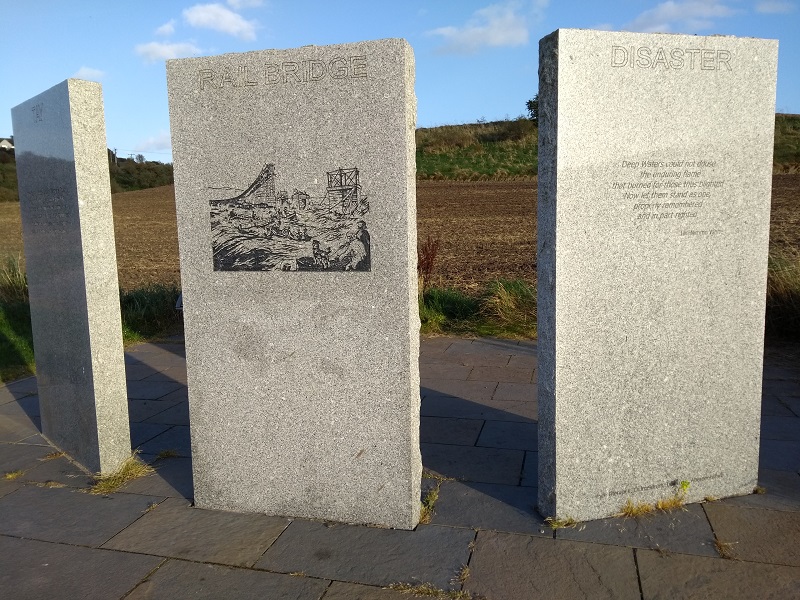
taybridgememorialBack at the estuarine beach, nearly under the bridge, you notice the memorial to those killed in the  Rail Bridge Disaster. You were in too much of a hurry to see it before. And you stop, and rock to and fro on the tiny jetty, as the dog paddles and sniffs at stones and seaweed.
There was no disaster here today.

The Blood of the Ploughman

bloodyploughman1

Have you ever been seduced by those advertisements in colour supplements for NEW! UNIQUE! varieties of fruit or vegetables accompanied by dazzling photos of their technicolor extra-ordinariness? The exciting modernity of red-fleshed apples is one example of excitable marketing – and many fall for it.

But rosy-fleshed apples are not new. Discovery, an early-ripening apple bred in 1950, is one example, and deservedly popular. But this is a story of a much older apple, first recorded in 1883 – but who knows when it first appeared….

Once upon a time, when the Carse of Gowrie – that rolling, flat and fertile plain of drained marshland on the north side of the River Tay that stretches from Perth to Dundee – was famous for its orchards, a weary ploughman was plodding home after a long day in the field. It was September, and an Indian summer, the sun had been blazing all day and the ploughman had finished his drink early and was very thirsty. To get home more quickly, he decided to take a short cut through the orchard of Megginch Castle – one of the finest orchards in the Carse.

As ever, the productive trees of Megginch were laden with fruit; apples of every type and colour, small, golden Scottish pears, plums and damsons. Many were ripe and even falling into the long grass. The tired ploughman thought how handsomely a ripe apple would quench his thirst and assuage his growing hunger – it was past suppertime.

Well,there was nobody about, and surely no-one would begrudge a hard-working labourer a windfall, so the ploughman helped himself. So delicious was the apple that the ploughman was struck by the idea that to leave these windfalls would be an awful waste, when his wife could make good use of them in the kitchen. The gardeners had all gone home for the evening, so who would notice? The ploughman began to fill his smock with ripe fruit, as the light began to fade from the day.

A warning shot rang out, and a furious cry: “STOP THERE, THIEF!” The ploughman swung round, and recognised the loping gait of the estate gamekeeper coming toward him. He began to run, apples held tightly in his smock. “I’m warning you man!” called the gamekeeper, but the ploughman blundered on. There was the sound of another shot……

At this point the story grows different arms and legs and embellishments depending on the audience and who’s telling the story. I confess to my part in encouraging flights of imagination. For genteel adults and those of a sensitive disposition, the story goes that the ploughman was wounded but escaped, managing to get home with at least some of his “stolen” apples. For children, the gorier version suits, and if you can throw in a ghost, so much the better.

So, either the ploughman fell, shot dead, in the orchard, his apples scattered, or his disgusted wife patched him up, but threw the apples on the midden to teach him a lesson. Either way, one of those blood-streaked fruits set seed to become a  tree the following spring. And when that tree was grown, it bore dark red, deeply ribbed apples that ripened on the anniversary of that day in September when the ploughman was shot. And when the crisp, thirst-quenching flesh was sliced, the flesh of the apple was streaked and stained with the ploughman’s blood.

bloodyploughman2

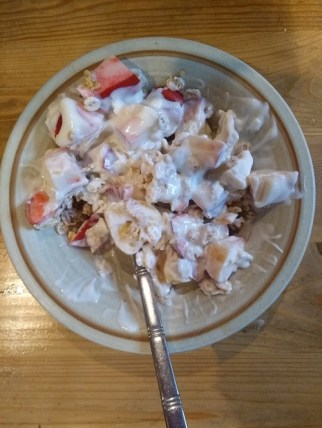
Thus was born the famous Scottish dessert apple, the Bloody Ploughman. From the dwarf tree in my garden came this exquisitely juicy, neither sickly sweet nor yet sour, apple for my breakfast, with cereal and yoghurt.

As for Megginch orchard, it’s still there, not just surviving but thriving. After all, it’s practically next door to the Cairn O’Mhor cider makers. Many of the old trees from the age of Victoria remain, and still bear excellent crops, but also there is a new orchard of modern, productive varieties, and a new heritage orchard, containing all the Scottish apple varieties that can be found.

You can be sure the bloody ploughman found his way home safely.

The Morning After

unicorn mushrooms

The morning after the march I went mushrooming again. There were no mushrooms of any kind left in the fridge. I nearly didn’t bother, because I was dog tired, and, after all, I would pass at least three supermarkets in the afternoon.

But something about the air that morning was irresistible. Cool, zinging with the promise of sunshine; light, ethereal and just a little autumnal; dust motes and electrons dancing a jig. The dam and the woods and clearings energised and soothed simultaneously – an antidote to the adrenaline that had kept me up and awake till gone 2am, head birling with ideas and reflections and hope no anxiety could dampen.

Every secret hollow, bank and bog in my regular itinerary yielded something edible. Shaggy Inkcaps standing like soldiers, Hedgehog Mushrooms like tiny undercooked loaves, spiny as urchins beneath, chunky Orange Birch Boletes that go alarmingly black when you cut the flesh but taste divine. And a few late Saffron Milk Caps, only slightly infested.

jed Rohallion

The sunny gold of Chanterelles glistened like the yolk of a happy hen’s egg. Deer came skipping coquettishly out from the wood and crossed in front of me, one of them practically pirouetting in her glee – anticipating perhaps, the rutting season nearly upon us.

From my dog gazing lovingly at his stick floating away on the loch to the shafts of sudden sun on the ripples he makes, from the happy brown collie and his owner to the mute swans and their big grey babies – the morning after, all of Scotland seems to be smiling at me.

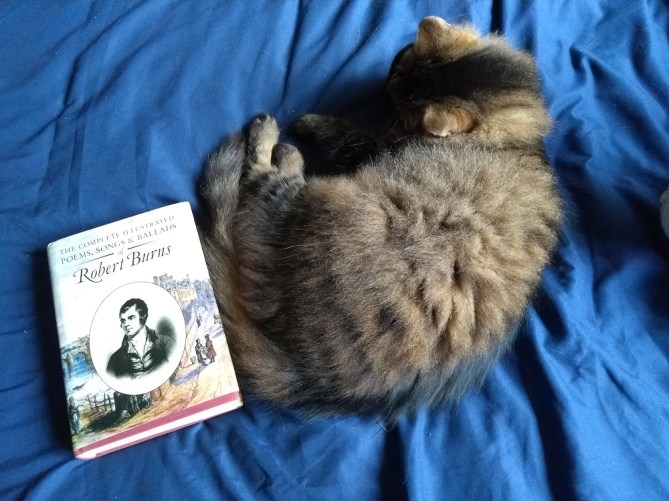
Hope, Fear, Pride and Rabbie Burns

burns and zebs
When you wake up literally singing line one of a Burns poem
“Is there for honest poverty….”
and you can’t remember what you were dreaming
and you open the curtains on another dreich day
but look, the rain has paused
and the news is as horrible as yesterday, maybe more so,
but Out of Doors is on Radio Scotland
and all your pets seem to be arthritic or spewing megalithic fur-balls on the bed
but it’s your partner’s side of the bed
and the weeds have grown a foot overnight
but the wren’s firking about in the compost heap
and swallows are lining up on the wires, considering Africa
but they’re still here and chattering
and there’s bread to be made and flour sacrificed to the god of sourdough
and after all, Rabbie Burns was young and might be cut some slack for his faults,
and Ian McKellen is coming to Perth for a Pride rally
and might he not just cast a spell or two?
and a mediaeval fayre will be filling the town
but you’ve got a bus pass
and things might get worse but

this is Scotland and

“for a’ that, and a’ that, it’s coming yet, for a’ that,
that man to man, the world o’er shall brithers be, for a’ that”

statue

HOW DID YOU WAKE UP THIS MORNING?