Diamonds and Opals and Precious Sparkly Things

When I was at primary school, the all-consuming craze among the girls was collecting beads. Everyone had a collection, and everyone brought their bead stash to school for swapping and gloating over in the playground. Beads were sometimes acquired from the broken necklaces of aunts, older sisters’ discarded best dresses (sequins were in vogue), theft from mothers and through swapping. Crystals and glass beads were everyone’s favourite, which we called diamonds (or rubies, emeralds or amber, depending on the colour of the glass). I had (oh my god, I still have) a “diamond” dropped by the Queen. Well, I found it in the Mall, when my sister Barbara took me to see Buckingham Palace. She assured me the queen must have dropped it from her coach when waving from an open window. To avoid being hustled for it by the Bead Bullies, I left it at home on schooldays. Most usually, beads were collected by going round the streets and playgrounds picking up those dropped by others. There seemed to be no shortage, but some girls made certain of it. My best friend Pamela (who had a nasty, vicious streak) would run about, “accidentally” barging into gaggles of girls peering into their open bags or boxes of beads. She’d even help to pick them up – but pocketed the choicest, and there were always plenty no-one spotted rolling away. Keep your eyes to the ground long enough, you’d soon build a collection.
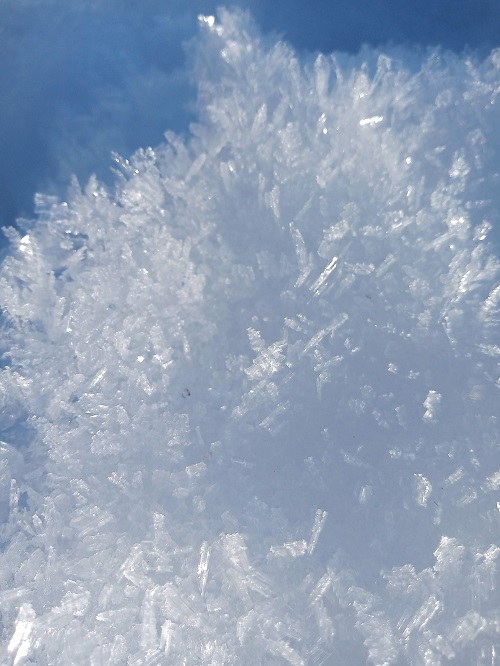
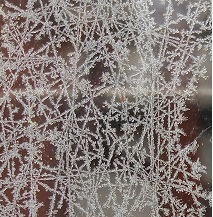
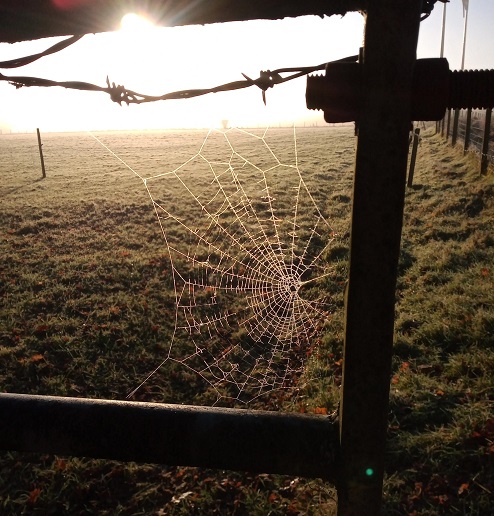
I don’t know at what point I decided to look up at the stars rather than down at my feet, but when I did, I realised the most precious jewels were the intangible ones that faded or shape-shifted before your eyes. Recent falls of snow, melting, re-freezing and glittering in cold, rare sunlight have reminded me of the times as a child when I ran across dew-covered lawns, chasing the rainbows in the water drops. If I stopped running, and swayed gently from side to side, the colours of these so-precious gems changed. But if I touched them or moved toward them, they vanished. Then there were the frosty mornings when my mother got me up early to go round the garden with her, finding exquisite frost patterns on leaf and glass and stone, shimmering in the early sun. Or the first foggy morning of autumn, when every spider’s web was be-jewelled and bewildering in its complexity and simplicity.

Diamonds are famously said to be “forever”. What a nonsense. They’re fairly nice to look at, and they collect rainbows in the same way glass or water does, but I wouldn’t pay money for them.

Collecting snowflakes and making mental snapshots of them before they melted. The fractal patterns of ice creeping over a cold surface. The world viewed through a dripping icicle. The vanishing, slippery uncertainty of the Merrie Dancers, green and rose, across northern skies. Sun on a breaking wave. These precious sparkly things, along with the now-you-see-me-now-you-don’t twinkling of stars as they emerge at dusk or retreat into cloud, these are the jewels of value, the real pearls-beyond price. Ephemeral, transient, temporary. I can’t buy them, own them, hoard them, swap them or sell them, and I never want to try.

Photo by Visit Greenland on Pexels.com

I still have most of my schoolgirl hoard! I am sure one day I’ll find a use for them. I’ve strung some onto the Christmas tree or hung them round the garden before now, and forgotten about them. Maybe they’ll be archaeology for someone, some day. Me, I’ll stick to rainbows in the dew. If you see me swaying about in a meadow on a spring morning, you’ll know what I’m doing!
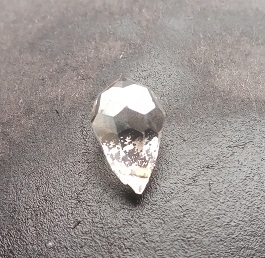
“Diamond” cast my way by QE1 (of Scotland) aka QE2 (of England etc), circa 1964

Death Of A Star

The other day, a friend told me that my second-favourite star might be dying. Betelgeuse is already a pensioner as stars go; possibly over nine million years old. Age is a bit meaningless when you’re talking about stars though. The Sun, our nearest star, we think of as present, alive, omnipresent. But light from Betelgeuse takes about 600 years to reach us on Earth, as we prance around our own star, and that means that, if the signs are being read aright, Betelgeuse is already gone. We are just observing its decline 600 years later.

silhouette of trees during night time
Photo by Free Nature Stock on Pexels.com

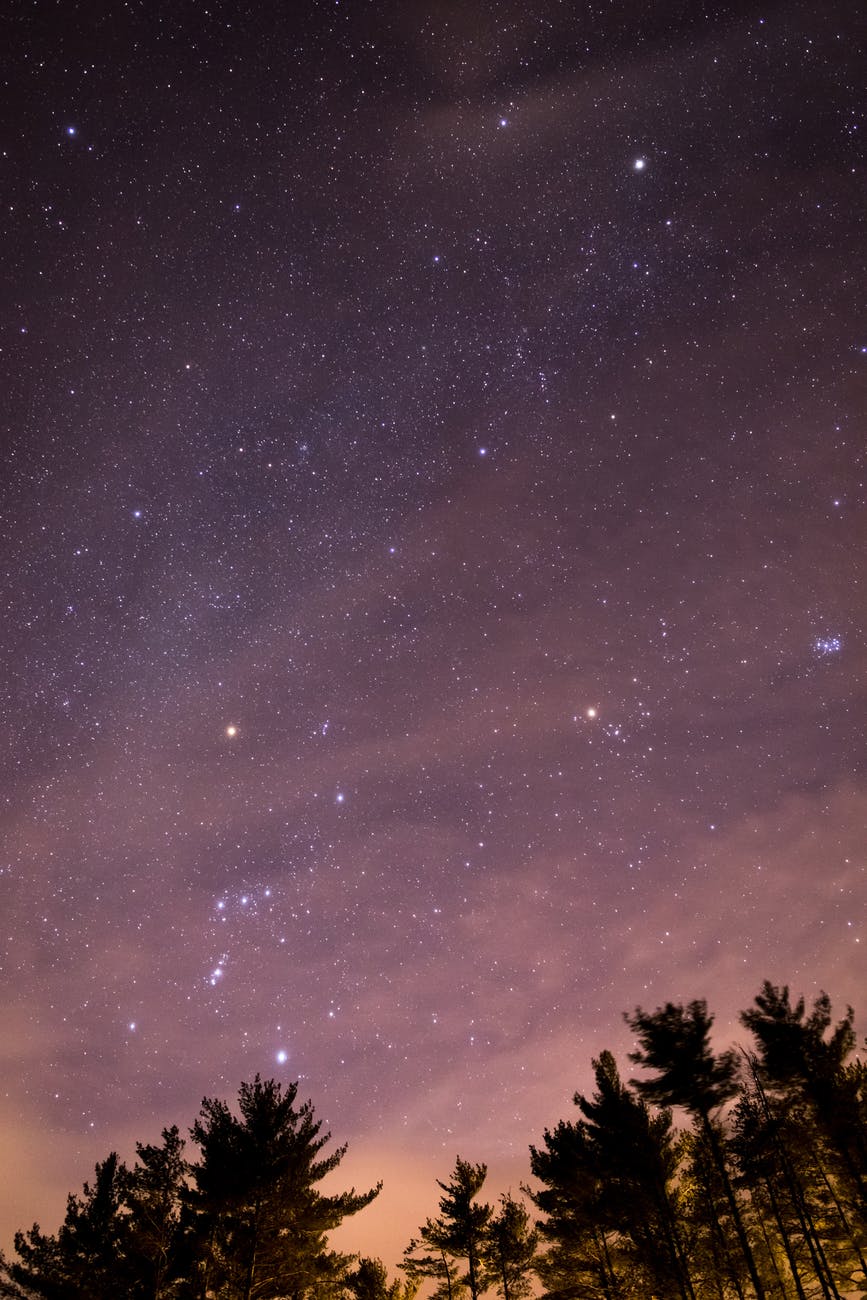
It was Christmas night, on the way back from the midnight service in Dunkeld, that I last saw Betelgeuse. The night was clear and frosty. We pulled off the back-road, switched off the car lights and walked into the icy air. A fox barked in the distance; we were silent, awestruck. The Milky Way strode across the sky, Sirius, the Dog Star, was blue indeed. I began pointing out the names of constellations I knew, and making up the ones I wasn’t sure of, because I can never do enough stargazing for all the names to stick. Betelgeuse is easy, because of its reddish hue and its position as the right shoulder of Orion the Great Hunter. I was a bit nonplussed, because it wasn’t as obvious as usual, but thought no more of it till my friend told me the news.

It’s red because it is something called a Red Supergiant (a sign of ageing in stars). And it’s getting dimmer and dimmer, a state which is said to indicate a loss of mass. With twenty times the mass of the Sun, Betelgeuse has a way to go, but the eventual pattern is an expulsion of dust leading to the star’s explosion as a supernova. If that happens (and it might not, yet, at any rate, because Betelgeuse is a “variable” star, whose brightness goes up and down in cycles), it will create a show of light brighter than the moon, capable of casting shadows on Earth. It might even be visible by day. And then it will be gone.

sky space dark galaxy
Photo by Pixabay on Pexels.com

On many levels, I’d miss Betelgeuse. The physics of supernovae is going on constantly all over the universe, and one day it will happen to our Sun as well. Stars die. But Betelgeuse is a vividly recognisable part of a much-loved constellation I associate with the depths of winter (as well as being the star around which the home planet of Ford Prefect orbits*). Constellations may be unscientific and artificial, but they paint pictures through which we navigate our ignorant way through a universe too fabulous to designate merely with letters, numbers and formulae. Michel Serres, in  The Five Senses, says that if we abandon the naming of stars and constellations “night has lost its giants and animals.”**

What will Orion, the Great Hunter, do without a right shoulder?

“The thing once called a star is classified, distinguished and divided into new families…..designated by a corpus of codes and categories, by a collection of calculations and theories……things simply called stars hardly exist any more.”**

person beside bare tree at night
Photo by Johannes Plenio on Pexels.com

I love the science of the universe, but I also love its art, its language and its inspiration. Much as I’d like to see a supernova, personally I hope Betelgeuse is just being variable and brightens up again the starry nights of winter.

*Adams, Douglas: The Hitchhiker’s Guide to the Galaxy (Heinemann, 1986)
** Serres, Michel: The Five Senses: A Philosophy of Mingled Bodies (in English: Bloomsbury Academic, 1985)

Unforgiving Minutes and the Tyranny of Time


think2

My mother liked to recite aloud the poems she learned at elementary school in the 1920s. These poems were generally heroic, patriotic, moralistic, meant to be uplifting in a time of post-war depression. Rupert Brooke, then, not Wilfred Owen. And lots of Rudyard Kipling. His famous poem “If” was one of her favourites. The last lines begin:

“If you can fill the unforgiving minute
With sixty seconds’ worth of distance run…..”

The Unforgiving Minute has dogged me like the grim reaper ever since. What if I don’t fill it? What if I waste a minute – an hour – days – years? What if Things Don’t Get Done? Over the years, I have felt guilty when I’ve been unwell. I’ve developed elaborate “multi-tasking” strategies like typing up party minutes while chatting on the phone AND watching an improving TV documentary; reading books on cosmology while watching less challenging stuff like Midsomer Murders; affecting to meditate while gardening AND working out what’s for dinner. Trying to bake bread while cleaning out the shed and answering emails is why my sourdough is such rubbish. I’ve had “holidays” where each day is planned and packed with minutes full enough to be righteously forgiven. I’ve created endless, bewilderingly enormous to-do lists, for a day, a week, a year. When I’ve finished everything on the list, I tell myself, I’ll have a rest and choose for myself. That never happens. I just start on the next list.

The fashion for having “bucket lists” doesn’t help. Ticking boxes, like bagging Munros, can be fun, but distracts from living and relishing an actual experience. Sure, there are things I’d like to do before I die (Ben Lawers, talking of Munros, to see the alpine flora, if I can find someone prepared to go at my glacial pace and not make me feel like a decrepit numpty for wanting to take all day about it). But I’ve had it with compulsive list-making.

Another much-loved poem at home was A.E.Housman’s “Loveliest of Trees”.

“Now of my four-score years and ten
Twenty will not come again
And take from seventy springs a score
It only leaves me fifty more

And since to look at things in bloom
Fifty springs is little room
About the woodlands I will go
To see the cherry hung with snow.”

However, as I’ve watched the balance of my years passed to years conceivably still to come tip, and now that I’m well on the light side of time, I observe that each of my remaining springs affords more each year than a tick-box opportunity to enjoy the blossoming of the gean, and all the other flowers in the woods. Savouring the intensity of each moment more than compensates for lack of time.

And what is time anyway? Not what you think it is. At the speed of light, time freezes altogether. I’ve read enough Stephen Hawking to dimly grasp that if I could fire myself way up into space, my unforgiving minutes would get longer, become hours even, to someone watching me through a giant telescope from Earth. But not to me; up there they’d still be minutes, because time only operates from the point of view of the observer. (Or something like that.)

So, as time is not fixed, but wavers around according to the laws of relativity and probably does something completely different on the quantum level anyway, let’s not be tyrannised by it. Let’s have more minutes with no guilt attached when we don’t fill them. More watching the clouds, less time trying to re-create them on canvas. Less grubbing around in borders and beds that will never be weed-free, more lying in the hammock watching the dandelion clocks expand and blow. More love and laughter, less – or no – time spent trying to prove it exists in our lives by frenetically posting the evidence on facebook.

More randomness – more random writing, perhaps, without fretting to meet self imposed blogging deadlines?

Loch Maree

Kipling finishes:

“…yours is the Earth, and everything that’s in it,
And, which is more, you’ll be a man my son.”

Really?? The Earth is not mine, or yours, or Kipling’s. It does not belong to the human species at all. I don’t want to own or master it and nor should any of us – we’re already proving we’re not much cop at that.

And let’s not even get started on Edwardian gender balance!