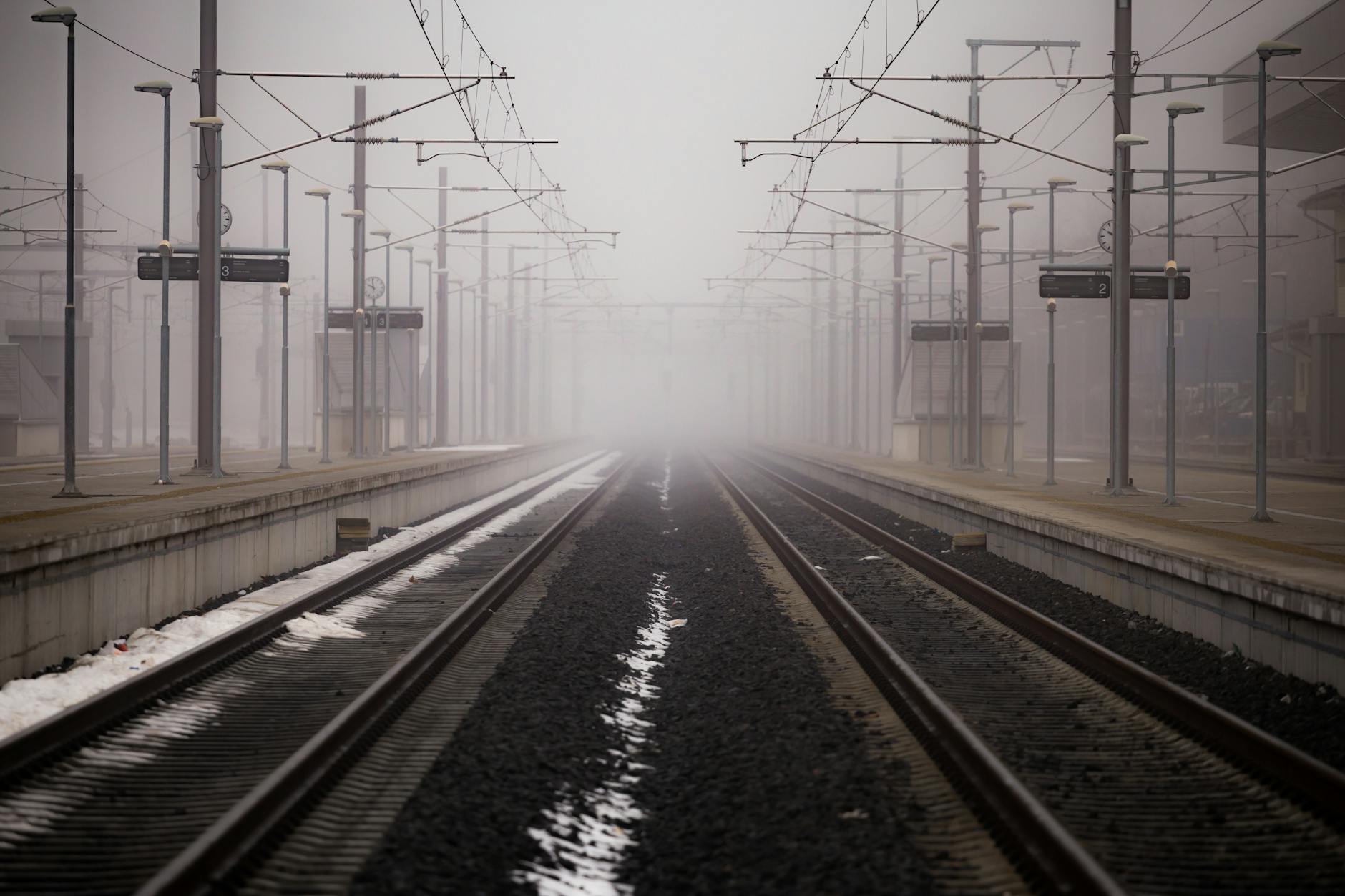
Train Going Nowhere

Photo by Anton Atanasov on Pexels.com

I haven’t written this blog for ages, and what follows is a comment neither on nature nor the universe. It’s an account of a vivid dream from which I’ve just awoken, and it might be a comment on the human part of this small dot in the universe today. Or it might not. See what you think.

Somewhere in the industrial north of England, I was running to catch an underground train. I couldn’t quite keep up with my partner and when I arrived on the platform, he was just pressing a button to get on a single huge, black, open carriage – which was all the train consisted of. The doors slid open, he got on, I went to follow and the doors closed in front of me. So I waited a while and got on the next, identical, “train”. It resembled an old-fashioned coach without a horse – with a roof, but no glass in the windows. There were quite a few passengers sprawled around inside, on seats, the floor, or couches.

I didn’t know where we were, and wasn’t sure what my partner would do – go on to our destination and wait for me there, or get off at the next station and come back to find me? I also couldn’t remember, or had never bothered to find out, our destination. No matter, I thought, I’ll look at Google maps….. Only, I seemed to have lost my phone. We had bought a cheap sort of “toy” version for emergencies, which we hadn’t got out of its box yet. Of course, there were no Google apps, or else I couldn’t find them. In fact, I couldn’t find anything useful. Well, never mind, I could just ring him and he could tell me where we were, why we were there and where we were going.

But I couldn’t fathom how to make a simple phone call on the device. There seemed to be lots of games, but no means of communication. Station after station went by as I struggled with it, and endless vistas of industrial wasteland and dark satanic mills – and networks of grimy canals – were the only clues I could see as to where we were. One passenger, a middle-aged man, offered some help and advice, but none of his tips and instructions seemed to make any sense, or they didn’t work, and soon he fell asleep. The train hit the barrier which marked the end of the line, but without a pause reversed and set off back on the same track. This happened repeatedly; it got dark – and I had another problem.

For some reason, I was carrying the smaller of my ginger cats, Jeoffry, in my arms. A very biddable and lazy animal, Jeoffry was finally showing signs of annoyance and wanting to get off the train. Fearful he would jump out of the open window, and desperate not to lose him as well, I clung on to cat with one arm while trying to get some sense out of the phone with the other hand. It dawned on me that all I had to do was read the instructions, which, after a struggle I prised out of the base of the box. This thick wad of paper, as I supposed, must have the answer to how to use a phone to phone someone.

But as I opened each layer, out jumped some cheap plastic toy or game or cartoon show, which expanded with the air to make a growing heap of unwanted junk on my lap (with the cat), and nowhere in all these gimmicks could I find any decipherable instructions. I noted that a disproportionate number of my fellow passengers were children, all busy playing with games and toys already. I tried to offload a set of plastic animals the phone had disgorged onto one of them. He wasn’t interested – he had loads of plastic toys already, surrounding him on the floor. If they weren’t so distracted, mightn’t one of these (presumably) tech-savvy infants be able to get my “phone” to work?

Getting desperate, I appealed loudly for help. The man who’d first advised me woke up. “Are you still looking for people to help you?” he sneered. “What is it it now?”

“For a start,” I replied, “where are we? What is this place?”

He tutted. “Great Yorrington”, he said, and proceeded to lecture me on then history of the murky waste we were passing through. By the time he finished we were somewhere else entirely, but equally murky.

So there I was. Left behind, not understanding where I was and ignorant of where I was going, unable to communicate with anyone who could tell me. Confounded by crappy technology which delivered only junk and gimmicks and no truthful information, while surrounded by people so completely engrossed in their own junk and toys they were totally unaware of anyone else’s difficulties, and had no apparent interest in where they were going. And all the time, desperately trying to hold on to the living, breathing, warm thing that was all I had of value on that train.

I’m glad to say I woke up.

One other thing. Of course, the train was driverless, and completely unsupervised.
Of Reed-Mace, Reeds and Winter Storms

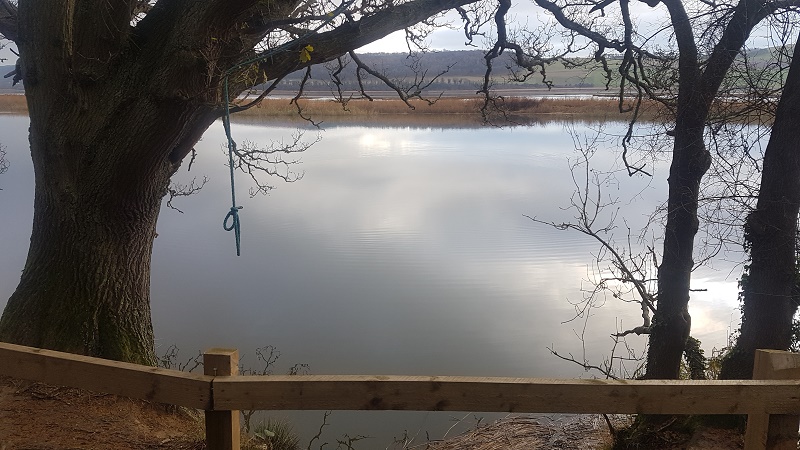
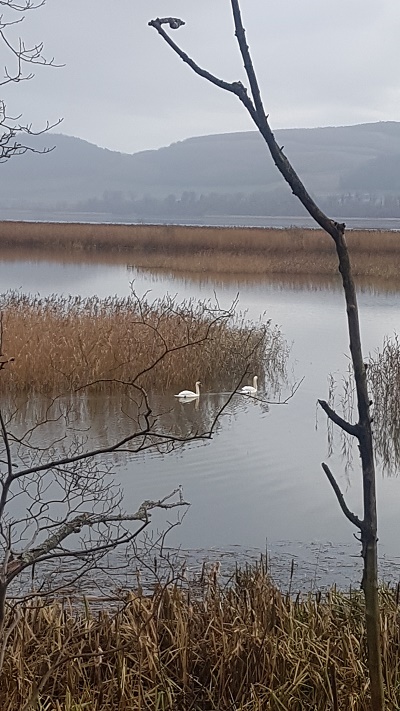
Between the arc of reedbed near to Port Allen in the Carse of Gowrie and the artificial embankment thrown up long ago to prevent the Tay from breaching the land, is a lagoon. Once it was a field subject to a bit of flooding after wet weather. The lagoon, a wide, flat infill of water fed recently by copious rain and sleet and tide and river, has grown immensely in recent years. The field we walked over on a dry, low-tide day of spring fifteen years ago is no longer visible.

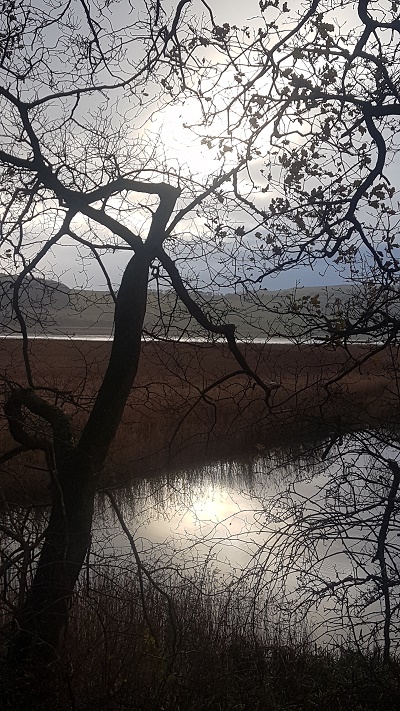
Drifting tones of yellow and grey shiver across the winter sky, reflected in the still water, protected by the spur of reeds and unruffled by wind or wave. A hint of watery sun shimmers out, a double, hesitant glow that recedes and approaches. A pair of Mute swans nonchalantly float away between clumps of stark vegetation.

When we walked that field fifteen years ago, we came upon a small but healthy patch of Reed Mace, a plant which is neither a reed nor, despite its other name of Bulrush, a rush. Reed Mace is a spreading, vigorous, semi-aquatic plant, with many uses historically. The starchy roots are roasted, boiled or baked like potatoes. The cigar-like floral inflorescences – called cattails – are edible when green and young, and later full of pollen which can be used as a flour substitute – as can the dried and powdered roots. Being aware of this, and also of the law prohibiting uprooting wild plants, it was the spring shoots, or young buds, that I wanted to try. We cut off a few, cleaned them up and lightly braised them. They were delicious.

Today I am happy to see that the original clump now almost lines the margin of the lagoon nearest the embankment. Reed Mace, Bulrush, Cattails, Typha latifolia – it’s a bit of a thug but beautiful in its way, and so useful no resourceful forager would shun it.

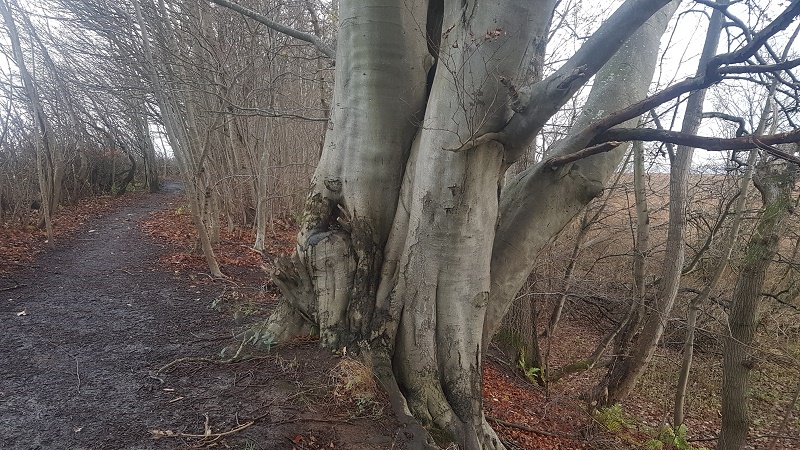
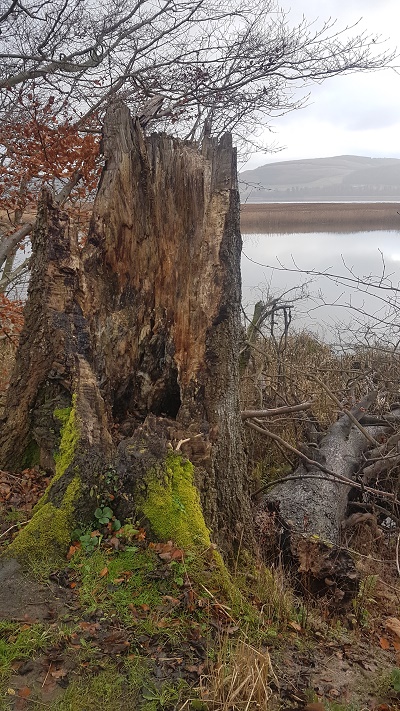
The embankment meanders on, dividing the wide waters of the estuary from the chundering, muddy grey outfall of the Pow of Errol – a man-made channel too. The landowner who stabilised the bank long ago planted trees – incongruous beeches, limes, hornbeams – to hold the metres-deep cliffs of unstable clay and keep them from eroding. Some of the old trees still stand, clinging to the edge of the wetlands, throwing out massive limbs at right angles to counter-balance the sucking pull of water and gravity.

Not all have survived.

Storm Arwen, the first of winter, tore most of the leaves from this woodland, apart from some of the tenacious oaks and the frivolous young descendants of the old beeches. The seductive webs of branch and twig and shoot weave spells against the fluid skies. Long vistas open – reedmace, water, reeds, river, sky – and are closed again by the tracery of trees. Fallen leaves moulder, curl, betray their origins, are curiously warm and comforting underfoot.

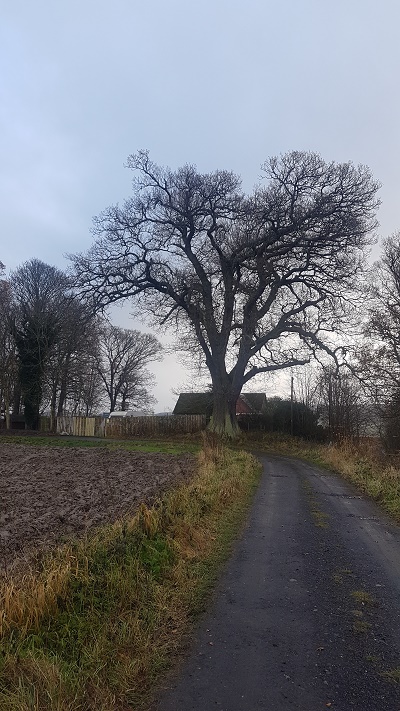
The finest and mightiest of the reed-side oaks spreads proud limbs and proclaims, towering over the cottage that lay empty for so long, and where, in a fantasy that didn’t include sea-level rise, I dreamed of living, pointing skeletal fingers down the watery path into the hushing reeds.

The Ploughman’s back home, and Waiting to Welcome You

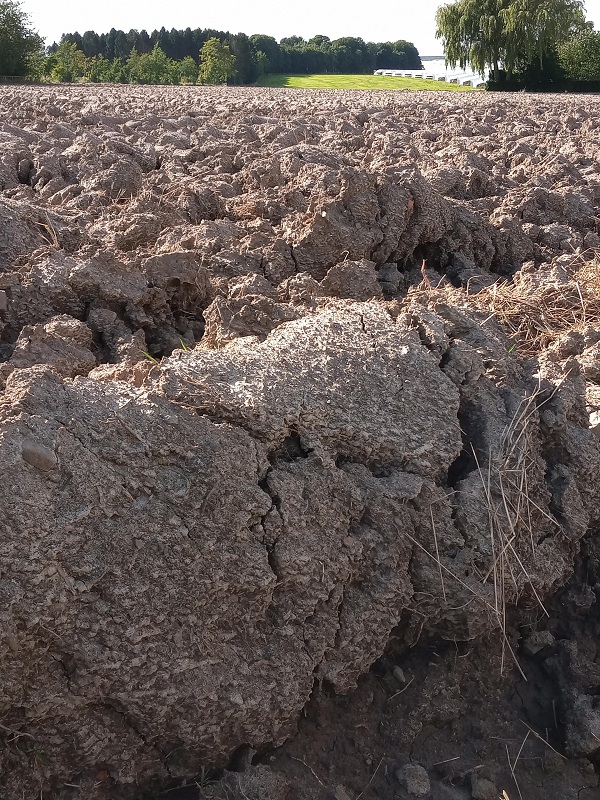
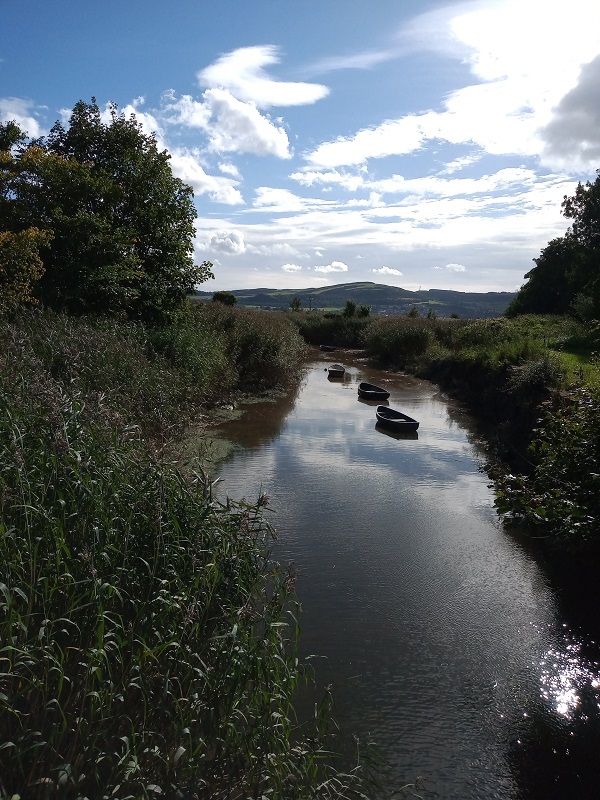
A fretting wind and days of warm sunshine have dried the newly-ploughed clays of the Carse at Port Allen into indomitable cliffs of furrows, solid, backbreaking, massive, yet wonderfully fertile. From the broken bridge across the Pow of Errol, the old port is ghostly, a hint of quayside, a dream of ships, the blue sky and wild clouds mirrored in still water.

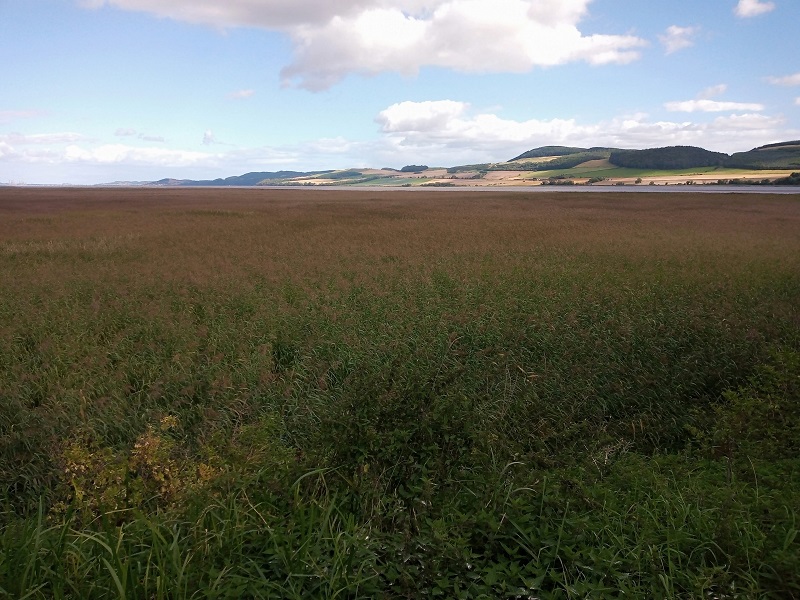
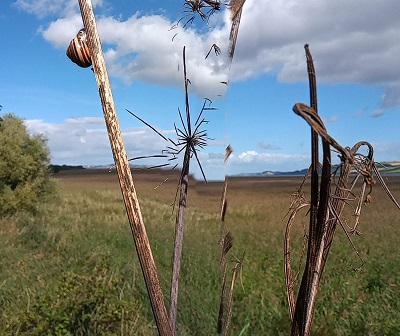
Endless reedbeds stretch to Dundee and over towards Fife, blurring with movement, a watery mirage that deceives the eye. You cannot see to the end of them. Nonchalent snails climb the haggard stalks of hogweed, clustering in the sun. Vision is fragmented, uneasy, focussed on a non-existent horizon.

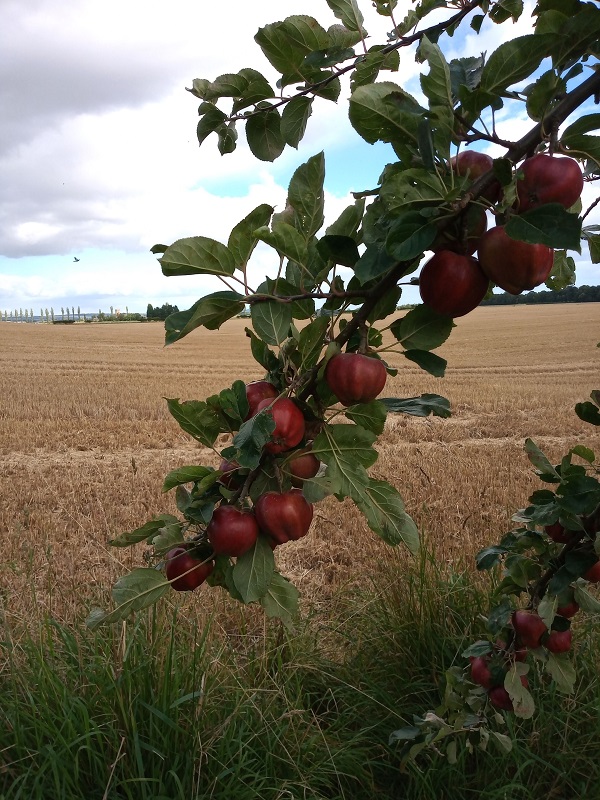
Up Gas Brae to the village, beneath great oaks and into the wind, a flock of pigeons, as ever, tracking your progress, and the start of a strange orchard, lining the road on either side. It’s a good year for apples, and not bad for pears. Two trees, side by side, and another further up, branches encrusted with wine-red, deeply-ribbed fruit.

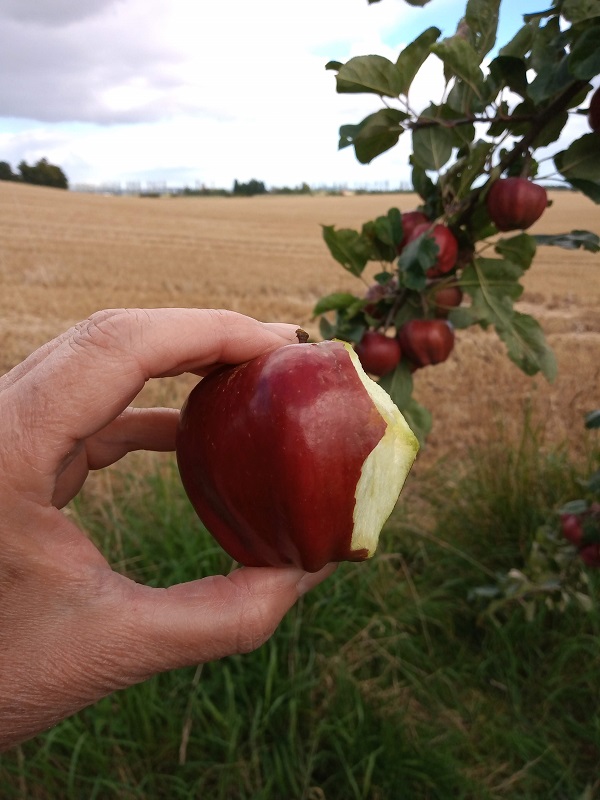
This is the Bloody Ploughman, whose tale of apple theft and a fatal, or maybe not quite fatal, shooting has been relayed here before. This was his village, these clays were his to plough. It was hard work; just walking behind the horses would have exhausted him. No wonder he stole the apples. Bite into the ripe flesh, and see the streaks of blood. It isn’t always the sweetest apple, but it is crisp and as refreshing as the ploughman would have desired.

This year, the Ploughman is home in Errol and well settled into the community orchard, surrounded by clay furrows. whispering reeds and the calls of waders and marsh harriers. Go now to visit, before the apples fall.

You can help yourself, and no-one will try to shoot you.

The Mushroom at the End of the Wood

A Post for West Stormont Woodland Group

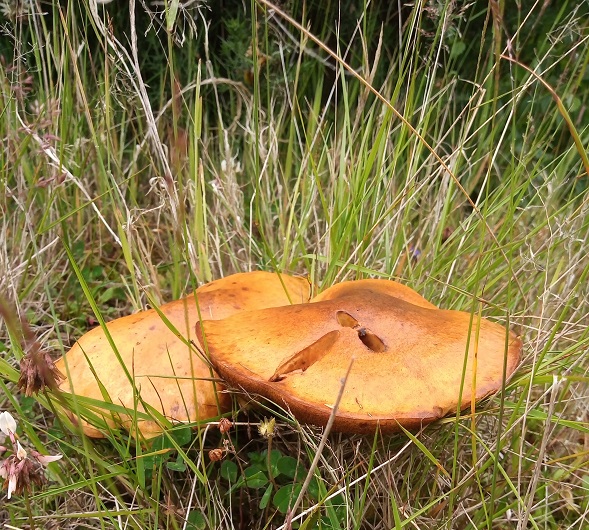
Larch Boletes in Five Mile Wood

In Anna Tsing’s book The Mushroom at the End of the World*, she tells the story of landscapes ruined – or seemingly ruined – by the greed of human activity. In particular, forests. In one unpromising forest in Oregon USA, where commercial forestry had stripped out all the trees of value and left an empty terrain of broken ground and scrubby volunteer pines, she met some mushroom hunters, refugees from Laos. They were gathering Matsutake, one of the most prized and valuable edible mushrooms in Japan and – allegedly – the first living organisms to appear from the wreckage of Hiroshima after the Bomb.

Matsutake mushrooms, like many fungi, only appear when they can be entangled with the roots of a suitable host tree in a mycorrhizal relationship. They got on very well with those scrubby pines. Tsing tells how the accidental introduction of the Pine Wilt Nematode on a shipment of American Pine into Japan had devastated the Matsutake’s natural host there, hence its rarity. It is not a serious pest of American Pine.

Incidentally, Scots Pine is a good host for Matsutake, too….

Abandoned remnants of the commercial forest

Mushrooms disappearing when a forest changes is familiar to me. All forests and woods are in the process of change, but our two ex-commercial forests, Five Mile and Taymount Woods, are forests in abrupt transition. Before the Commission took out the last valuable trees and wind-throw did for many more, Five Mile Wood was my happy mushroom-hunting ground, the place I’d take people to for foraging walks. I knew exactly where to find the biggest chanterelles, the white Angels’ Wings, the logs where real oyster mushrooms could often break out. The ditches beside the path were home to many fascinating species, including several edible Boletus including the Cep and the maggot-free Bay Bolete – and, of course plenty of highly poisonous examples too. Some years, the tantalisingly similar but inedible False Chanterelle outnumbered the real one – which is exactly what you need when teaching people not to harm themselves by misidentification. One damp corner was an emporium for the delicious Slippery Jack, which turned up in troops like clockwork, every year in late summer and autumn. I used to dry the ones we didn’t fry up right away, and store them in jars.

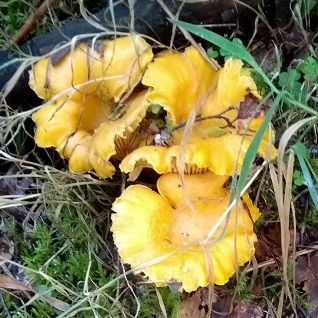
The biggest chanterelles

The fragile associations which had built up over the decades were shattered by felling. The self-sown birches that are colonising parts of both the woods now will eventually reel in their own, interconnected fungal friends, and the chanterelles will surely re-emerge one day, because birch is their main host tree. But from my experience, it takes at least a decade before mushrooms start to appear in a new wood, and the first arrivals are never the ones you want to eat! The precarity of a habitat for specific mushrooms is alarming – involving water tables, shade, parasitic plants, weather patterns, nematodes, beetles, animals – including mushroom pickers. Tsing’s book includes chapters on the equally precarious lives of the pickers – refugees, indigenous peoples, itinerants. Humans aren’t in control of what the mushrooms will do, because there are so many variables in play. Humans are just part of the landscape, and the landscape is changing because of and despite them.

Another remnant….

So, I can only observe and enjoy the new but mushroom-free habitats in parts of our woods, note the changes, watch new worlds forming out of devastation and realise we are not in charge, not that clever, and maybe, not that important either. I scoured the ditches in Five Mile Wood for boletes recently, and right at the end, I did find a couple of lingering and determined specimens. I left them there.

But who knows what will be the mushroom at the end of the wood? And where is the end of the wood?

*Tsing, Anna Lowenhaupt: The Mushroom at the End of the World – On the Possibility of Life in Capitalist Ruins (Princetown University Press 2015)

The Difference a Drop of Rain Makes

A Post for West Stormont Woodland Group

https://www.weststormontwoodlandgroup.org.uk/

Five Mile Wood today is a wood part-forest, part scrub and heath. When the Forestry Commission took out the last tree crop, they left a fragile fringe, largely of Scots Pine, around the north-east side of the circular path that now forms almost the only access to the bulk of the wood. The Benchil burn trickles through and under the path here, on its way to the Tay, and water from the high water table of the central area percolates into a series of pathside ditches and curious water-holes made by a forestry digger. This is the wet side of the wood. While the trees must take up a lot of water, their canopy also prevents evaporation, and after recent heavy rain, the glades and ditches are alive with summer flowers and butterflies.

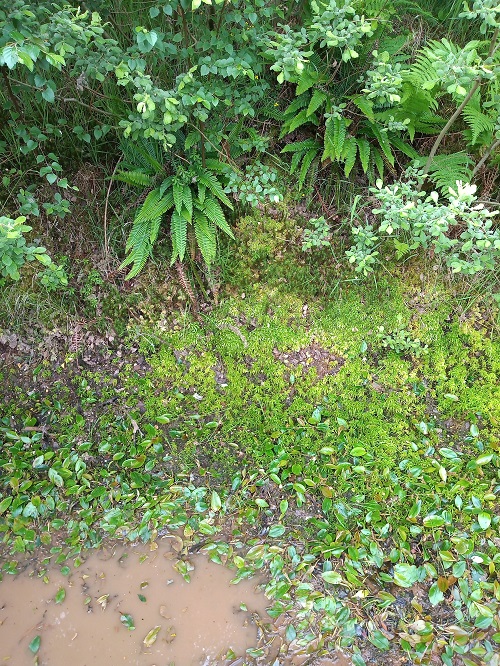
Sphagnum, Lesser Spearwort, ladder ferns and willows congregarte in wet ditches.

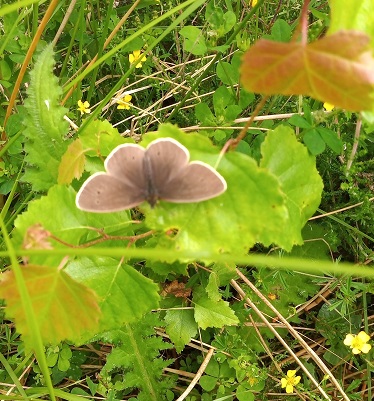
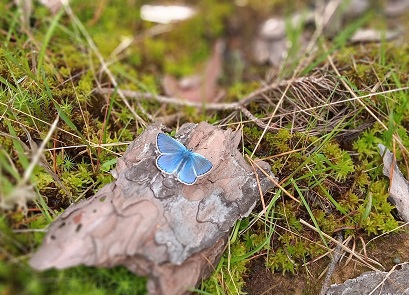
Heath Bedstraw and Tormentil are strewn along the path edges like yellow and white confetti, and red clover flourishes heroically on the banks. Meadow Vetchling and Bird’s Foot Trefoil are visited by brown ringlet, wood white, common blue, and pearl-bordered fritillary butterflies, who pause and spread themselves out infrequently on warm stones and bark shreds on the path.

Ringlet Butterfly

Common Blue Butterfly

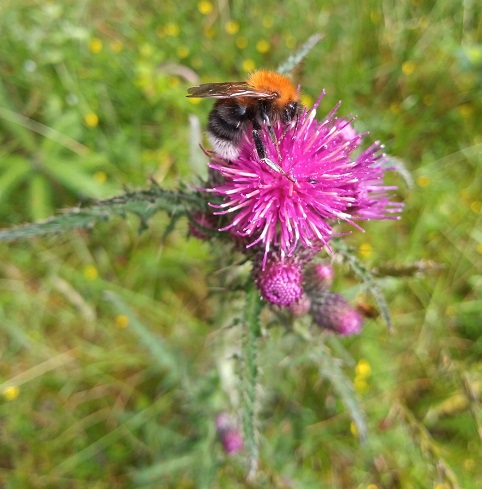
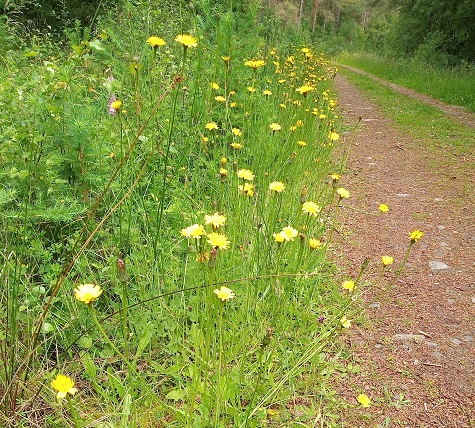
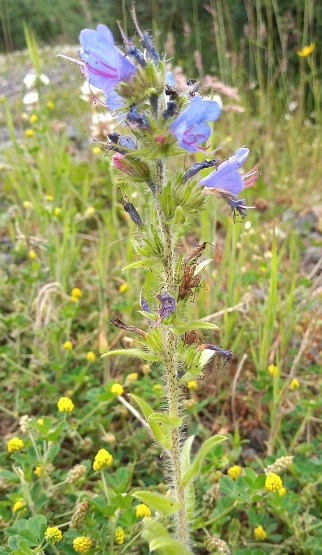
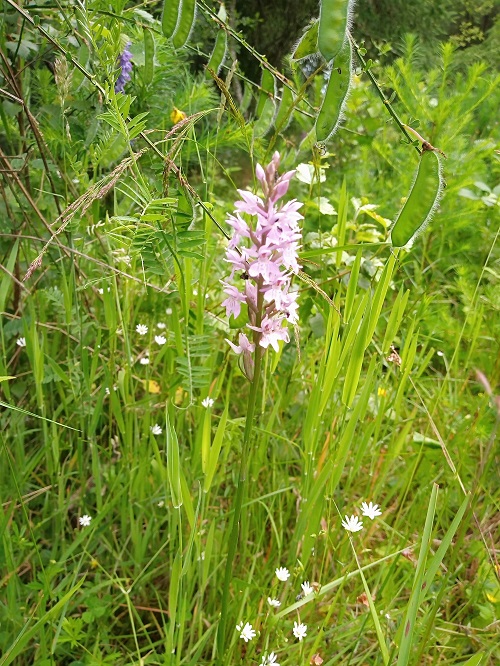
Bright Hawkweeds grow tall and enthusiastic, stretching for the dappled sun that today is scorching whenever the clouds part. In the cooler shade, sweet-scented Valerian grows. It prefers a damp habitat, and its white to pinkish flowers are nectar-rich, a magnet for more butterflies. This plant is widely used in herbal medicine, its roots being a soporific. Common Orchids and Viper’s Bugloss unusually share a habitat. Here and there are thistles, always a good bee-flower, and today a relevant newcomer to central Scotland, the Tree Bumble Bee (Bombus hypnorum) is engrossed with nectar collection.

Tree Bumblebee (Bombus hypnorum)

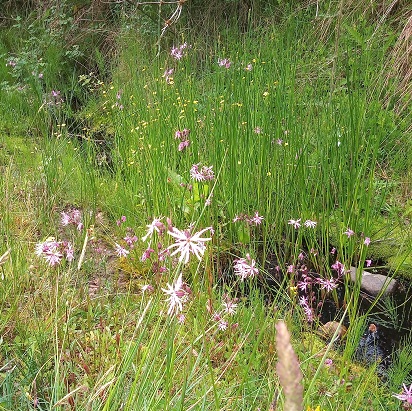
The true nature of this tract of land gives itself away in the damp bases of ditches and where vague deer tracks can be followed a short way into the springy sphagnum. It is part of a network of raised bog, myre or moss that probably once were joined. King’s Myre in Taymount Wood is another remnant. Damselflies hover over the multicoloured water forget-me-nots in conjoined pairs. The Lesser Spearwort dazzles from many a watery ditch and aptly-named Ragged Robin, dances its frilly pink skirts by the burn. Acid-loving and ubiquitous tormentil abounds, and bell heather is in flower already – another treat for insects.

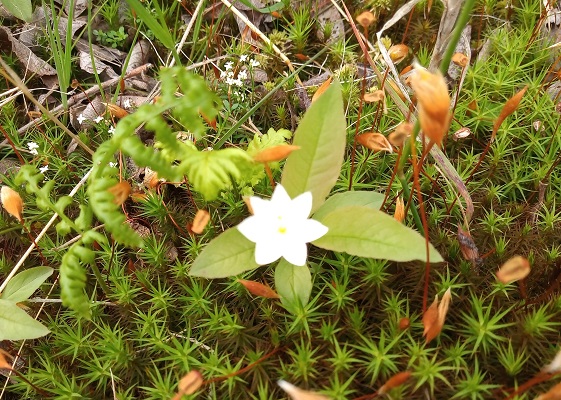
Chickweed Wintergreen peeks out from ferns and sphagnum mosses

We humans are such visual creatures, and it’s the flowers that draw us and grab our attention. But flowers are the tip of the ecological iceberg of the wet side of the wood. Ferns, grasses,  unidentified rushes and reeds are the matrix of this habitat, while unnoticed and unobtrusive, the sphagnum mosses proiliferate, and go on with their work of creating peat, holding onto water – and capturing carbon.

How the woods work to heal us.

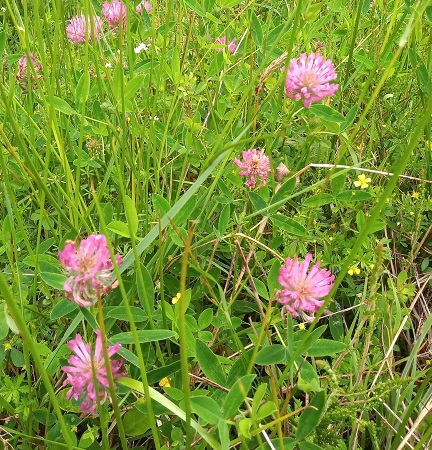
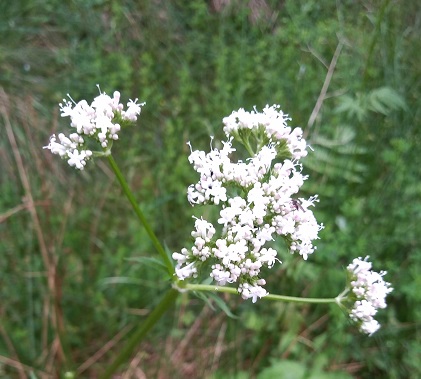
Clockwise from top left: Red Clover, Valerian, Viper’s Bugloss, Ragged Robin, Common Spotted Orchid

Mushroom-hunting, between Lowlands and Highlands

mushrooms1A full evening, two nights and two days of rain. Humidity hangs in the air, the soil beneath my feet pulses damply, the mosses are full and green. Raindrops still coat every flower of grass and frond of bracken, but the sun is shining. The timing is right.
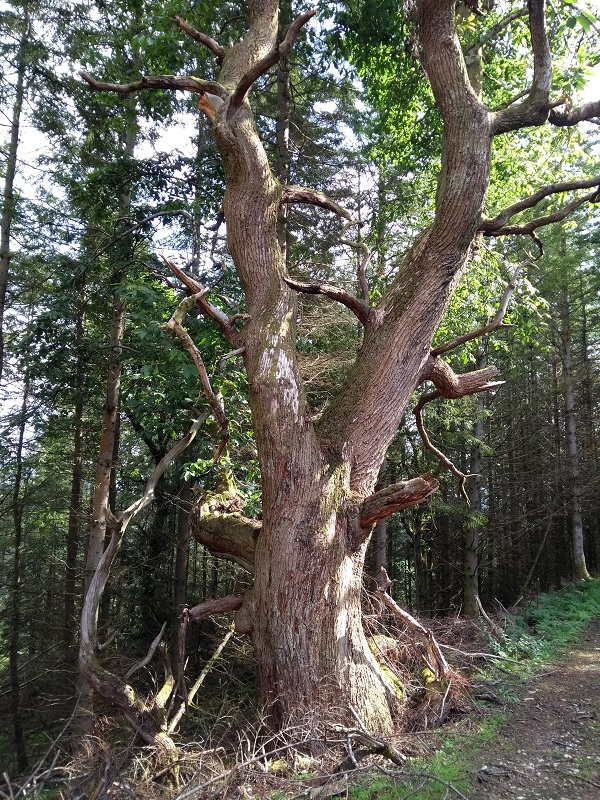
I go for mushrooms in the place where the Highlands meet the Lowlands, where the land is rent by fault-lines and rainbow-coloured slate out-crops and erupts. I pass the court hill where outlaws were tried and hung from the oak trees of Birnam Wood, three hundred years after Macbeth was king of this nation. I stalk through the devastation where the larches were, before they got phytophthera and were felled. There is nothing there now. But in the crowded wood beside the path, one big larch has been missed, and the sun shines in tawny patches upon last year’s fallen needles. It catches on a small group of Larch Boletes, glistening and tawny themselves in their cosy cohabitation with the tree. I take one. A deadly Panther Cap smirks nearby and I ignore it.

Broken and battered, an old sweet chestnut tree ismushrooms3 surviving the metallic blundering of the foresters’ vehicles, harvesters and forwarders, along the track. How did it get here? Not a native tree, so planted a long time ago, when this haphazard forest was occupied in a different way. Who planted it? Did they hope for chestnuts to roast on autumn fires?
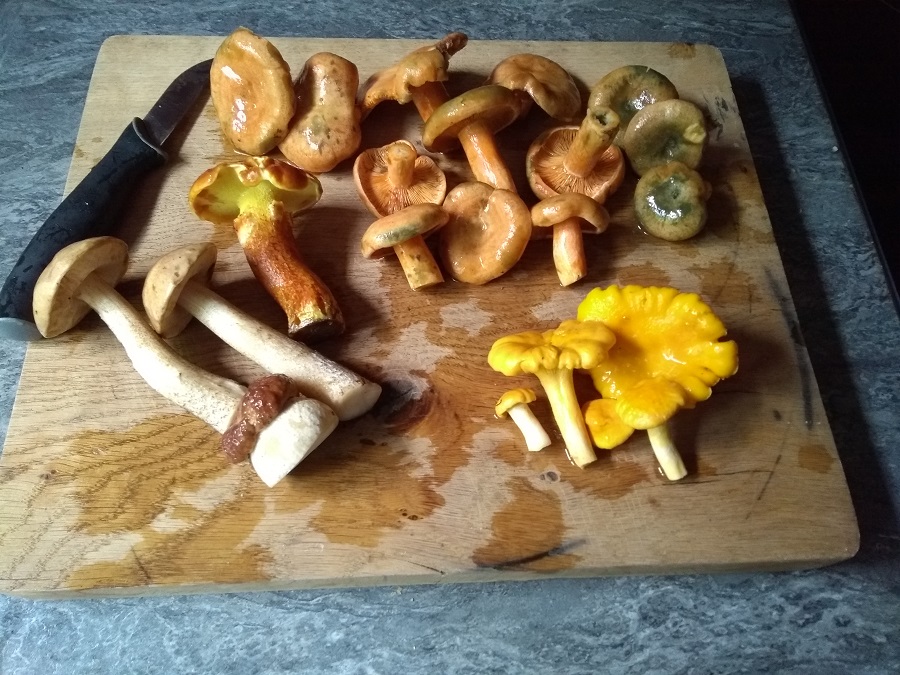
I follow the hint of a track down a slope towards the thicket where rhododendron is making its usual bid for world domination. No more than a wisp of trodden grass and bent fern, my path diverges and peters out at a crop of the biggest chanterelles I’ve mushrooms2ever seen, tucked into the side of a rugged bank that oozes water. Was this path made by a human who knew where to look, or by another animal? Someone told me yesterday that the best chanterelles are on banks and slopes because the deer can’t graze them there.

I’m always competing with other animals for my dinner. But I’ve had lots of chanterelles this summer and there is still a dish at home in the fridge. I take a couple. I have rules when I’m foraging. Never take more than I need, only take a percentage of whatever I find, leave old mushrooms to sporulate, leave young ones for tomorrow, for the next predator or none, for others just to see and love.

Under birch, I acquire some young Brown Birch Boletes and a single Cep. Ploughing through forest, I note the tiny horsehair mushrooms are up and about, trooping on twigs and the needles of conifers. I ignore, too, the many “wee brown jobs” of mushrooms that once I diligently took home as single specimens to try to identify with hand lens and spore print. Some I succeeded in pinning down, too, only to forget them altogether until I came across them again in another wood, another year. Life’s too short now, I am focused on my prey.mushrooms4

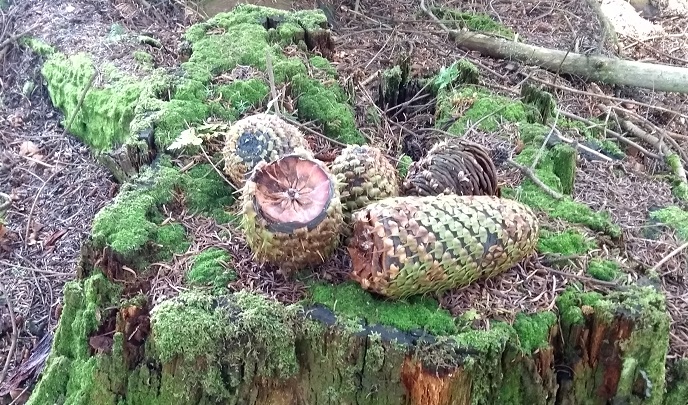
Huge shaggy mushrooms shout out to me as I pass another grove of conifers and I am lured in. But they are the uneaten halves of massive fir cones – red squirrels have eaten the succulent tops from every one, and laugh at me from the tree tops.

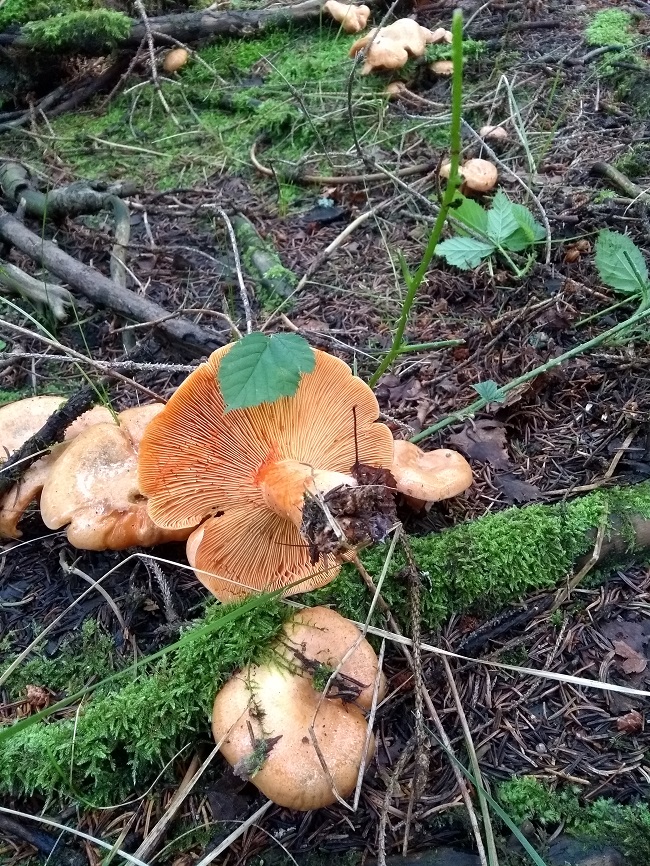
They cluster in the fallen forest by the dam, the new flush of Saffron Milk Caps, just where I thought they’d be, and just at the right stage before the fungus gnats lay their eggs. They are sound, and plentiful and could make a wonderful painting, with their improbable colours of orange, cream and khaki-green. But they won’t, for I take my portion and weave them into a spell of dinner.

mushrooms 5

Ferments

Six months after making a resolution that 2019 would be the year I’d get to grips with sourdough baking, I boarded a train in Exeter clutching a heavy duty carrier bag. Inside the bag was another bag, wrapped around itself, loose ends tucked tightly. Inside that bag were a number of jars and cartons.

Fermenting.

11 hours on hot trains lay ahead. Intensely aware, despite assumed nonchalance, of the seething activity taking place out of sight, in the overhead luggage rack. Occasional checks, surreptitious lifting of lids, burping of bottles. It’s a wonder no one called for the transport police.

How had it come to this?

Cavalier assumptions over several months that I knew enough about cooking and had baked enough yeasted bread to never need instructions or a recipe had resulted in the failure of several sourdough starters to even bubble, the refusal of all loaves to rise, the creation of some worthy bricks and, finally, to acknowledgement that I needed to consult. Guru number 1, Andrew Whitley of Bread Matters and Scotland the Bread (www.breadmatters.com and http://scotlandthebread.org/) told me to go back and read the book properly, especially the bit about balancing acid lactobacteria (which make the sour taste) and acid-intolerant wild yeasts (which make the bubbles), and sent me away with some amazing heritage Scottish wheat flour.

To mastermind the magic of a fermented dough, I needed to get the basic chemistry into my skull. Suddenly, I wasn’t making bread, but collaborating with a population of unknown, busy micro-organisms, intent on feeding and reproducing in the flour and water I was supplying. Once the penny dropped about refreshing the starter to reduce acidity and give the yeasts a chance to breed, my starter began to work.

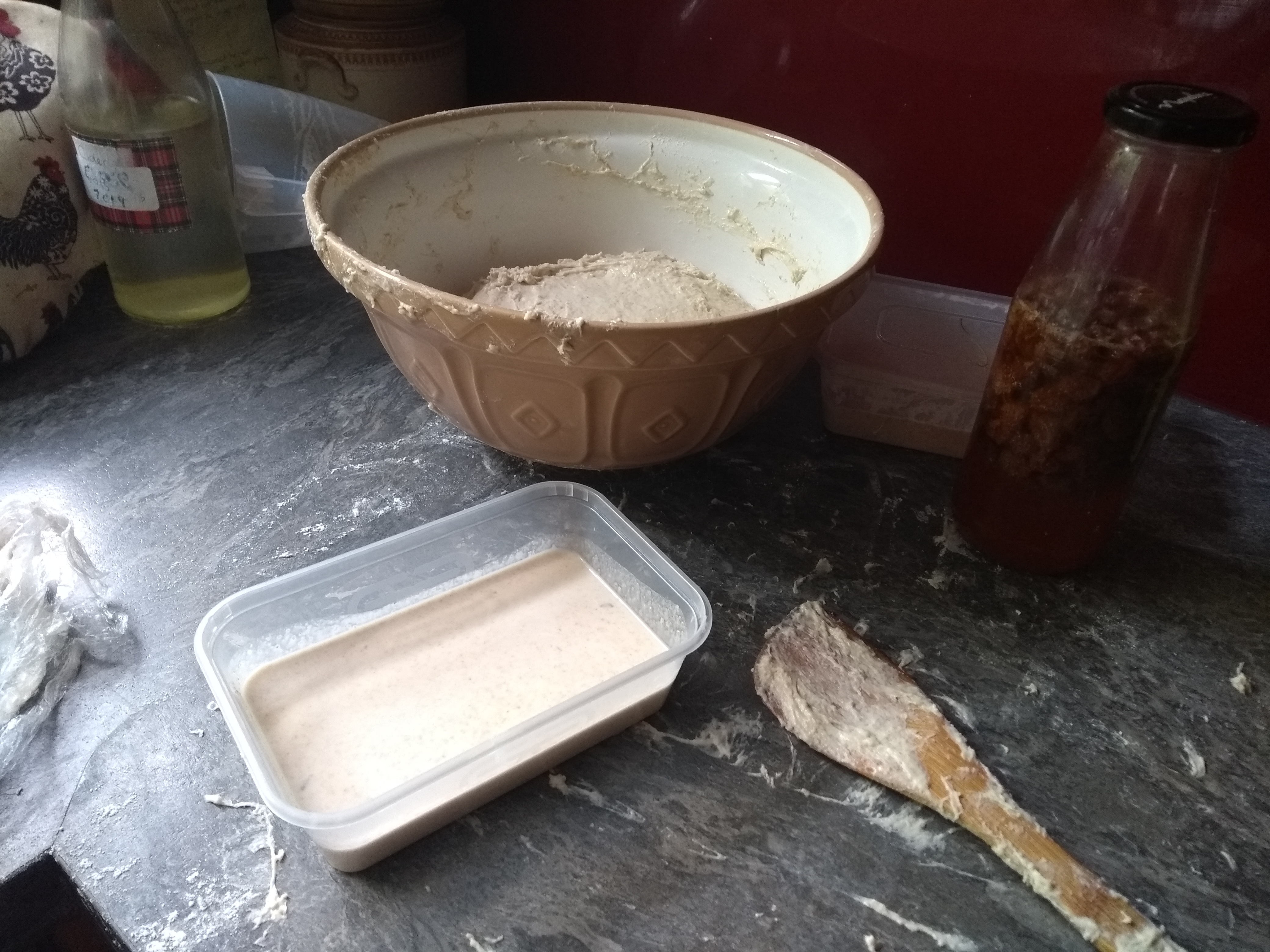
IMG_20190711_105237420But was it really meant to look like this? Was dough meant to get all over the walls and floor? Why was I reduced to scraping and pouring the wet, sticky mess into bread tins? And when the book said “knead”, was it some kind of a joke, when “stir” or “whisk” might have been more appropriate verbs?
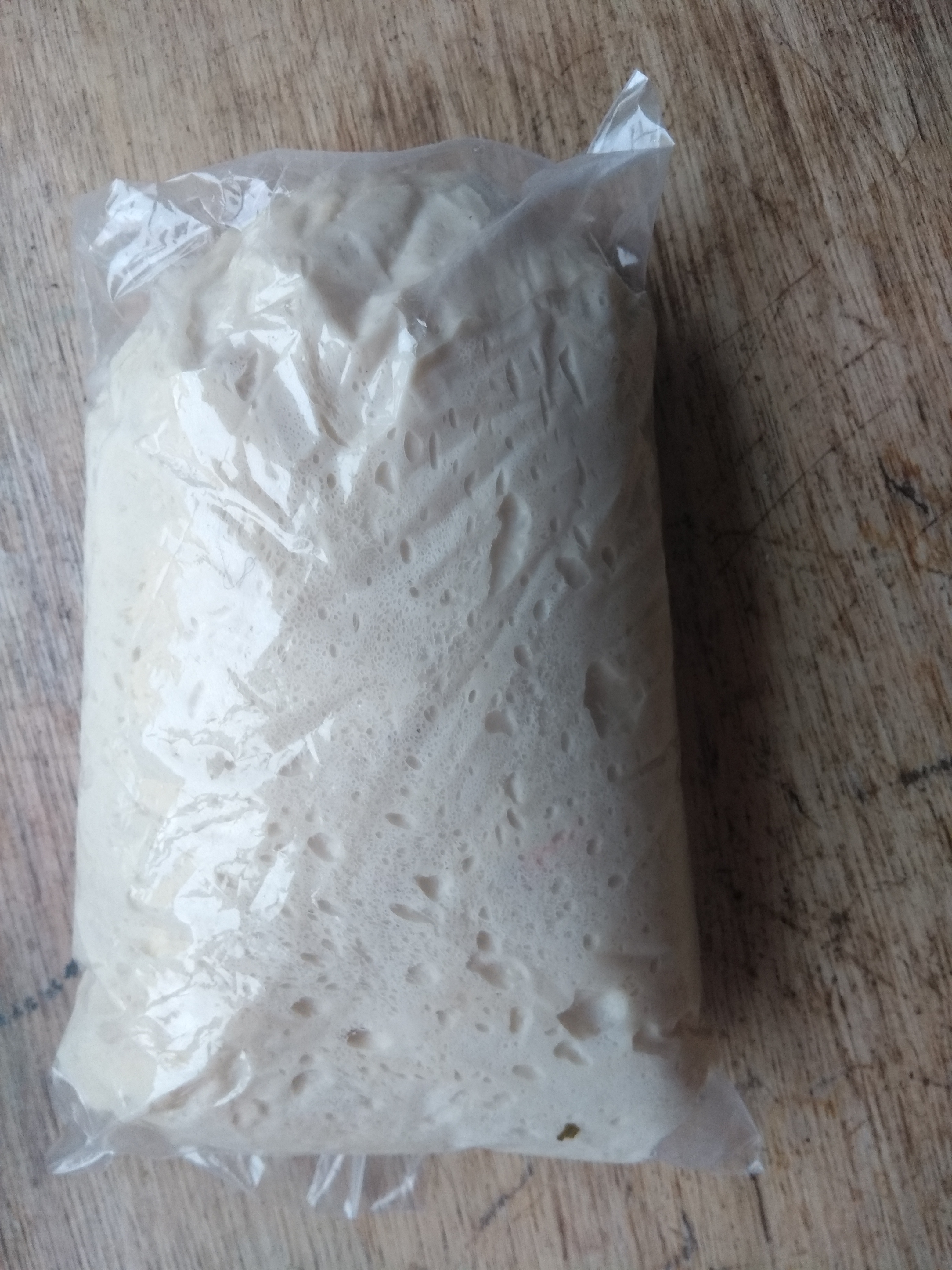
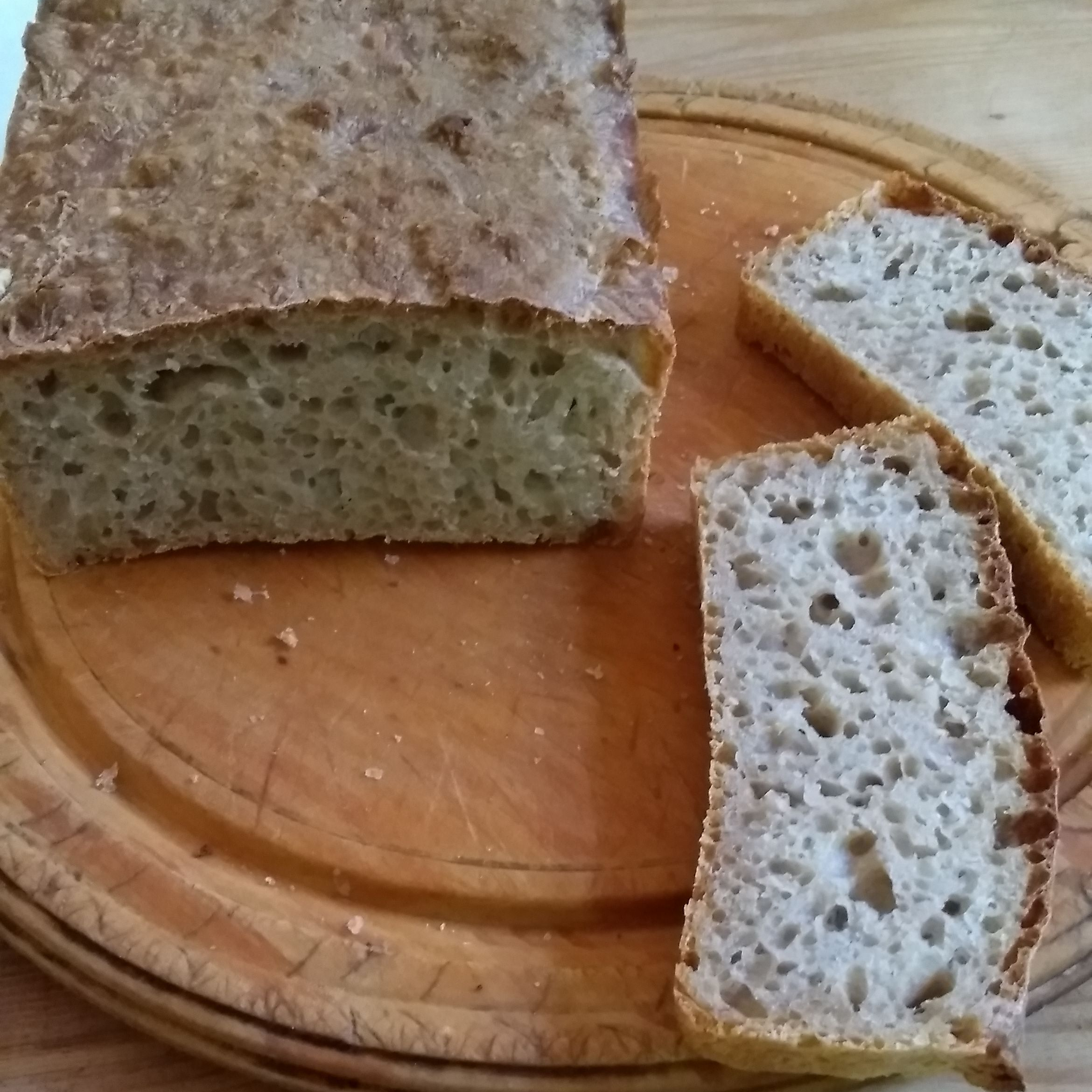
 

Now I had to find out if the disaster area of my kitchen on a baking day was common to real sourdough bakers. I suspected it wasn’t, and that I had more to learn. Enter Guru number 2, Jon Denley of BAKED Cookery school (www.bakedcookeryschool.co.uk) in Plymouth, and a chance to attend a course on Sourdough, Hydration and other Ferments, while on a family visit south.

Amid vast buckets of bubbling starters, in the heat and humidity of a training kitchen with several ovens going, I watched unbelieving as Jon transformed an unruly slop into a polished, gleaming and perfectly manageable loaf. I began to understand how to detect the changes in the feel and behavior of wheat and rye dough mixes as they are worked, that mean you stand a chance of shaping them into loaves. I became aware of the gluten forming – and of it breaking down when, literally, pushed too far. We made – and ate – delectably light and crusty pizzas for dinner, 100% rye loaves, white sourdough bloomers, nutty loaves with wheat and rye and seeds. We played with pre-ferments – pate fermentee or “old dough” uIMG_20190719_192426204sed to kick-start a sourdough flavour and texture in a yeasted loaf, and the excitable “poolish”, a pre-ferment I was advised to leave in Devon for fear it would get out and derail the Cross Country train before I got it home. We mixed honey, sugar and water and fed it to raisins…. No, get it right: we fed it to the yeasts that live on the surface of the dried fruit.

I got all my loaves, starters, pre-ferments and raisin brew home safely, and they’re all doing fine. Well, the bread’s been digested. The raisin brew has gone to create a spelt flour starter. I still can’t shape or adequately fold a white sourdough bloomer and I’m scared of using a proving basket. I’ve a long way to go, and I’m enjoying the journey.

Working with ferments overturns the received wisdom of 21st century food hygiene. Antibacterial cleansers are banished. Windows are open. Refined ingredients are shunned. Sterilised containers are bad news, and for goodness’ sake leave the lids off so stuff can get in. You can wash your hands, but if you must use soap make sure you rinse it off. The micro-organisms that we so desire don’t come put of a bottle or can. They are living in the organic flour, on your hands, in the air, on the surface of raisins and apples.

And although we can place them into rough groups, we never know exactly what the microbial make-up of a batch of dough is. My mother would have called them germs, and been deeply distrustful of processes that encouraged them, not to mention the product of those processes. Even in the fermentation of cider, beer and wine, which I’ve done a lot, you’re advised to use sterile containers and prevent “contamination” by “the wrong” fungi or bacteria. Just like the fastidious gardener trying to control nature, we like to think we’re in control of our alcohol production.IMG-20190714-WA0003


Baking with mysterious, unidentified, unknown quantities makes for unpredictability, surprise, delight, disappointment. We are not in control. Our ferments frequently are.

It’s wonderful.