
The things you do in a lockdown. I wouldn’t normally walk from the house to Five Mile Wood, I’d call in on my way to somewhere else, parking the car. It’s not an especially long walk, but since they felled most of the trees on the Bankfoot side, cavernous ditches and hollows have made the entrance to the wood treacherous, wet and debateable, and the track to get there goes on a bit and is not especially interesting.
Or so I thought.
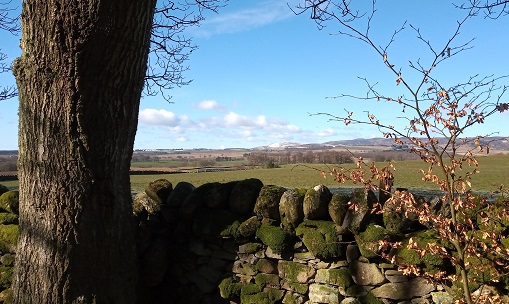
I marched out from Bankfoot on one of those dazzling, sun-struck mornings of which we’ve seen so many this April. We crossed the pleasantly deserted A9 and the field to the edges of Cairnleith Moss and turned right along the track to North Barns. The path stretched ahead in a tediously straight line, the wood in the far distance looking nearer than it actually was. At some point, I turned round to let the dog catch up.

It was a VERY straight track. North, it pointed directly at Birnam Gap, the space between the hills where every Great North Road is forced to pass. Ahead of me, beyond Five Mile Wood, the conical East Lomond Hill in Fife lay in a direct line. Suddenly, it fell into place. With these landscape markers aligned, this was the ancient route north – preceding the drovers’ track above my house, which preceded the winding old A9 through Bankfoot village, which went before the current A9. They all run roughly parallel, and all have to go through Birnam Gap. (Later I consulted the maps: this old straight track seems to have continued beyond the wood to meet the Tay at Waulkmill, then probably followed the straight road through Stormontfield, and on to Perth or beyond).

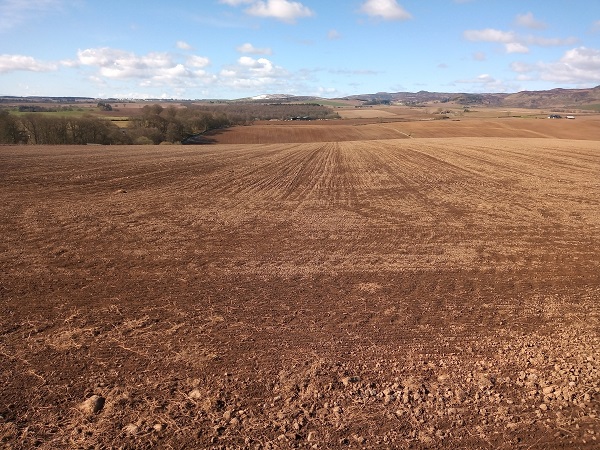
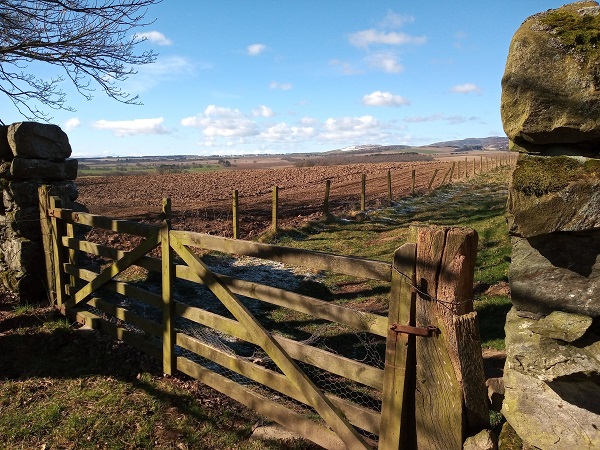
On either side, vast, treeless fields stretched forever, brown, homogenous, dusty and devoid of hedges. In a hollow beside the track were a dozen beehives. I realised the field I’d just passed did contain a crop – oil seed rape, yet to flower. That’s why the bees were there. A farm vehicle traversed the horizon on the other side, trailing an enormous boom sprayer. Dust and chemicals billowed behind it. The smell in my nostrils was like an airport runway. How on earth, I thought, did the bees keep going, while waiting for the rape to flower? There were no wild flowers in this agricultural desert.

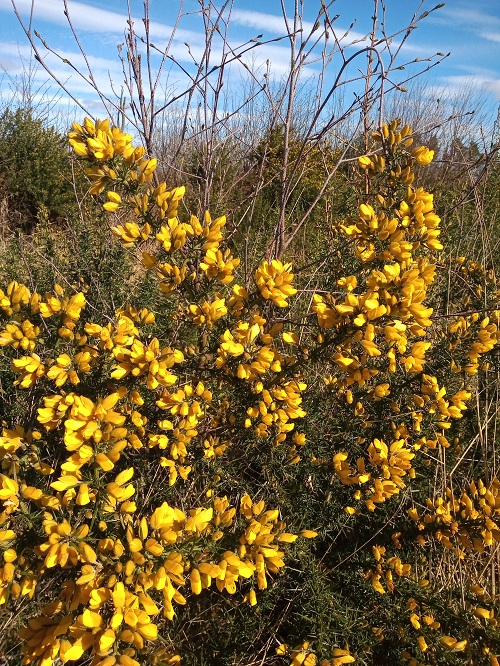
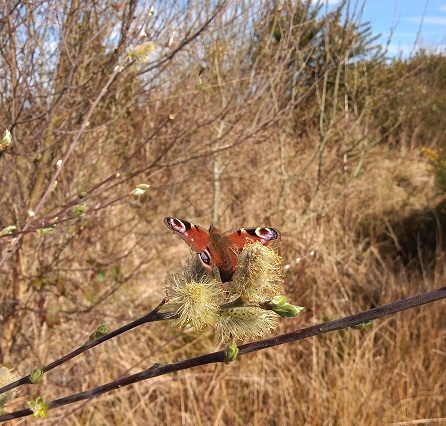
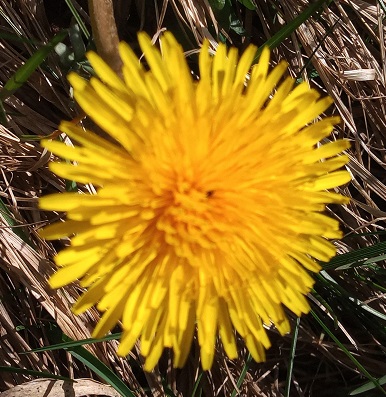
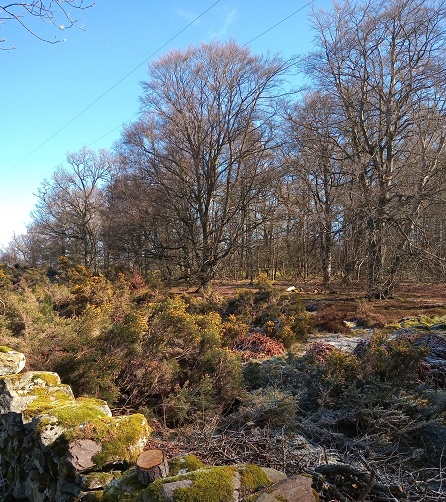
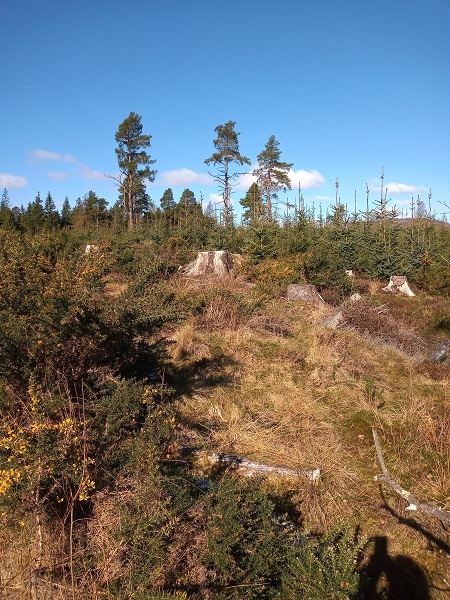
Reaching the edge of Five Mile Wood, I crossed the gate into the ravaged landscape of felled trees. The footpath sign directed me, and I could see where I needed to be, straight ahead on the old track, but a new route had to be picked to get there. Others had succeeded; makeshift log bridges across water-filled ditches, meandering paths that skirted the boggy areas. I reached the main path which circles the interior of the wood amid the heady coconut-scent of gorse – and there I found the bees, working the flowers sprung up in the new heathland created by felling. Beautiful birches, freed from forest, leaves just opening against a vivid sky. A border of dandelions edged the path, dancing golden and perfect in the sun of noon. Goat willows, pioneer trees of clearings, still in flower, had attracted a small swarm of peacock butterflies. In the new landscape of a one-time forest the bees and butterflies and all the creatures of the heath found sanctuary.
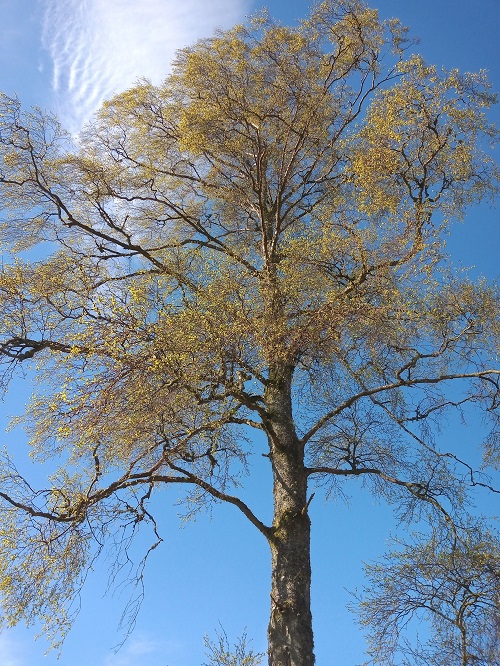
Returning home, I thought about how important this chameleon landscape is, set against modern farming. I thought, too, about the old straight track that entered the woods, and how its purpose was muddied by activities that had made it so hard to follow. I thought how approach and access is so important, in any plans we may have for these woods in the future.

 Comments on The Nature of the Universe