

In February 2004, workmen were burning rubbish on a demolition site. It was a day of gusty winds, when safety procedures should have never allowed a bonfire to be considered. At some point, sparks whirled viciously into a neighbouring building, caught hold, and within minutes a blaze ensued that could not be extinguished before the building was lost.
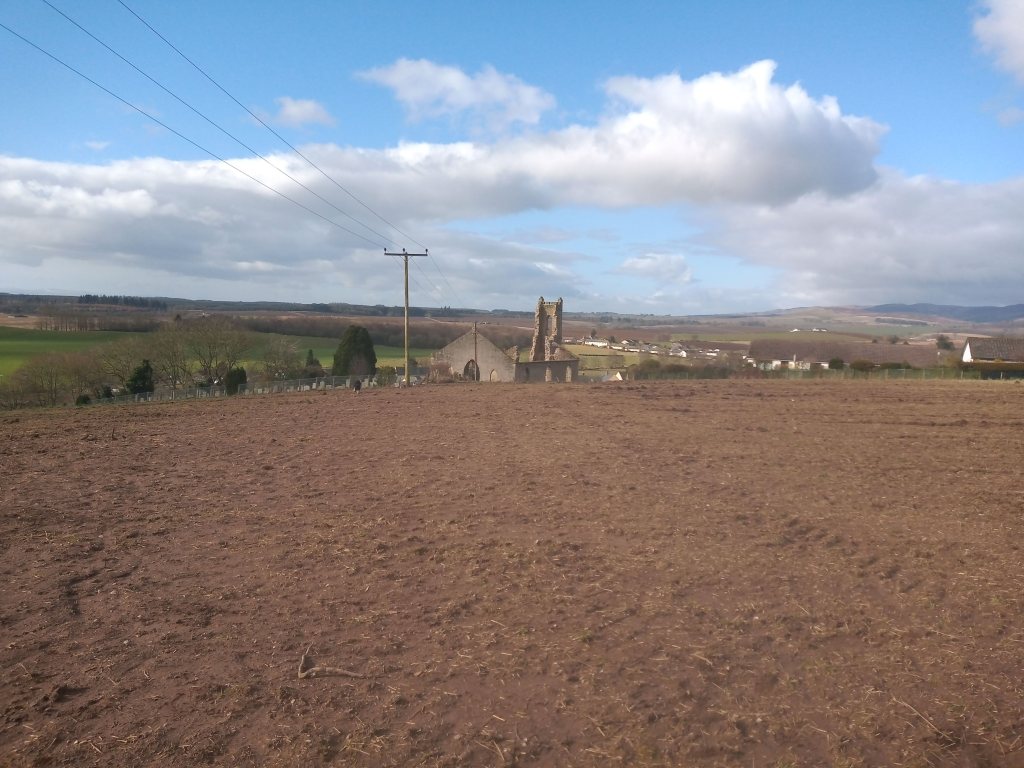
The building was Auchtergaven & Moneydie Parish Church, sited on almost the highest point in the Perthshire village of Bankfoot. It had stood, glowering over the village, for 207 years, its timbers dry, warm and perfect for burning. Not a regular churchgoer, I’d nontheless been there a few times in the seven years I’d lived in Bankfoot, panting my way up the steep path to the entrance, and I’d enjoyed the simple, uncluttered warmth of the wood-lined interior and the sincerity of the congregation. It was a bonnie church, and a landmark for miles around. That day, horrified drivers on the nearby A9 slowed to a crawl, as flames shot to the sky.
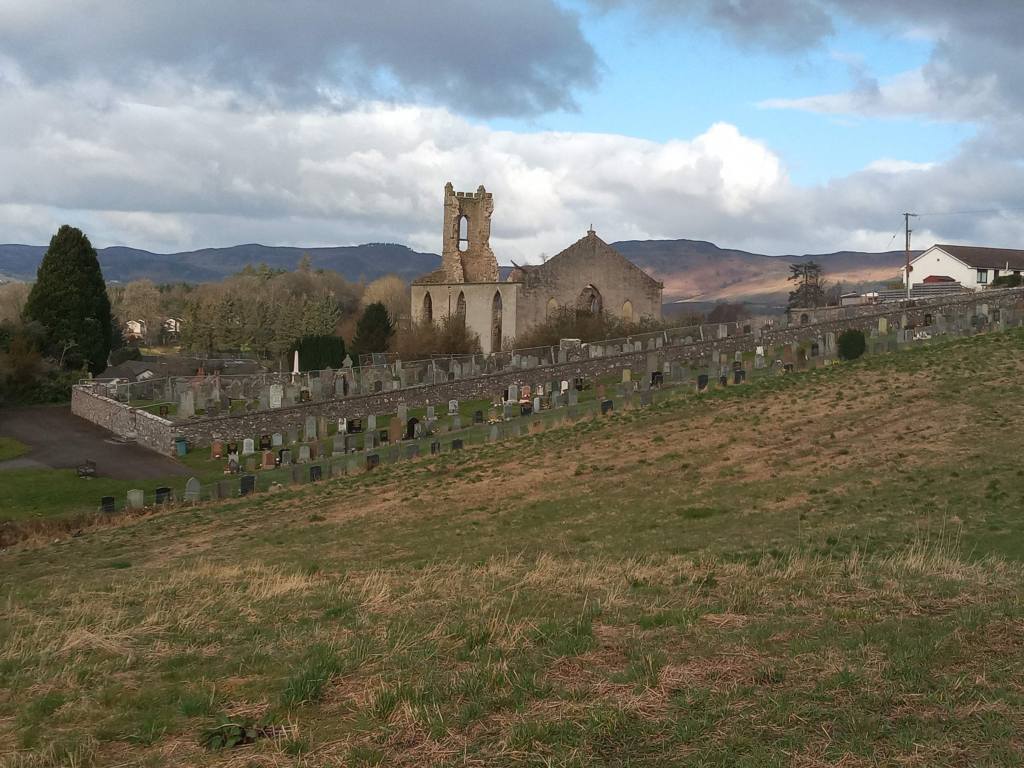
In the aftermath, the old church was not “burnt to the ground” – but it was certainly gutted. From a distance, there were many years when at first glance, you’d never know it was a ruin. The tower still stood, majestic – maybe more so than before – defiant, presiding over a landscape of haphazard hamlets congealed into one village, farmland, people and beasts. After considerable deliberation and assessment of the building’s condition and fitness for purpose, the Church of Scotland, advised by the will of the congregation, opted to build a new church on flat land it owned in the centre of Bankfoot, complete with community facilities and a low carbon footprint. It was a brave and right decision, I think, which offered accessibility and possibilities the old church never could. The original bell, cracked by fire to tonelessness, was rescued and installed as the new font.
But it left little in the coffers to do anything with the remaining structure. Disputes and debates went to and fro for years, between the culprit building firm, insurers, the Kirk, local residents, fundraisers, historians and those with an interest in the surrounding graveyard. Meanwhile, safety fencing went up around the site, the grass grew, and saplings appeared in the smoke-blackened walls. Stone crumbled unnoticed. Blocks occasionally fell; still the tower stood, indomitable. Saplings grew into trees; buddleia, that great exploiter of devastation and demolition, proliferated in the nave and drew in butterflies. Wild flowers and ferns took hold of crevices in outer and inner walls, solitary bees visited and maybe nested in crumbling mortar. Jackdaws and pigeons were regular inhabitants in spring. A garden began to grow in the sanctuary. Who knows what wild creatures found refuge among the piles of fallen rubble? No-one could get in to disturb or identify them.
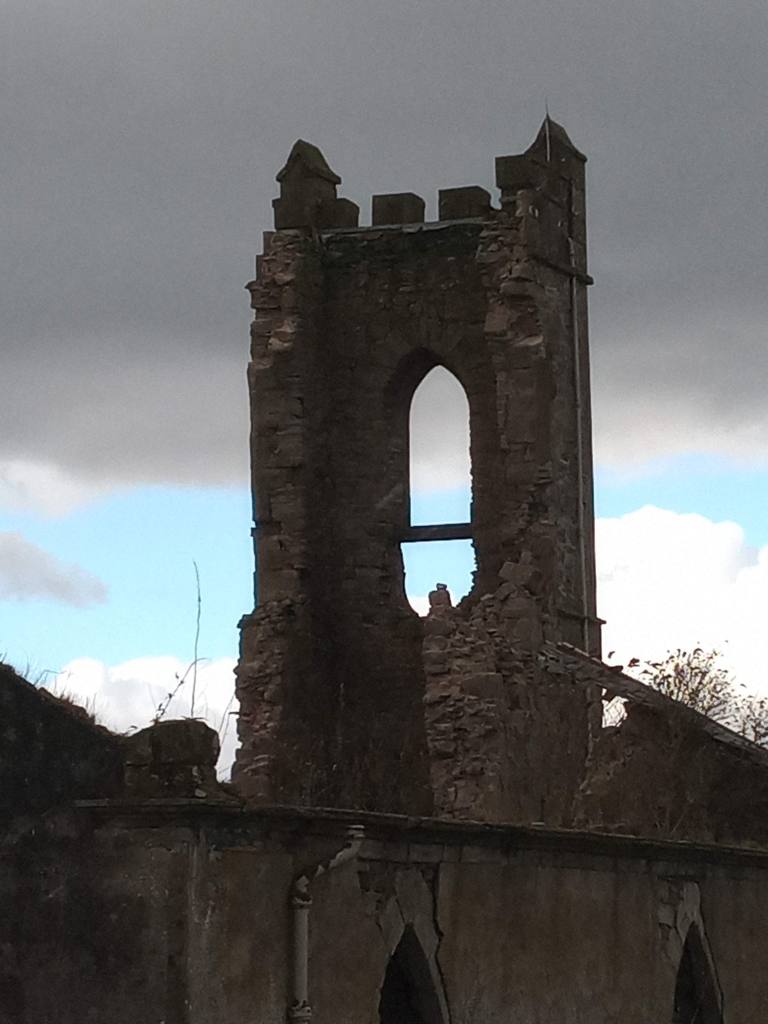
I know many people found it heart-wrenchingly sad. For me, with an ambivalent attitude to organised religion at best, it was more a change in emphasis. I felt the human-centred heart of the building died with the fall of the final clock-face, never to chime again and remind us of the days and hours. One day, out walking in early spring 2020, I noticed that the tower looked a bit odd. I went closer to see if I was imagining things, and discovered that although the front facade still held fairly intact, most of the sides of the tower had fallen in. What was left looked more precarious than ever, but it hadn’t stopped the jackdaws from building warring nests on each remaining pinnacle, or the collared doves gossiping lovingly in hollowed alcoves. Chaffinches and sparrows bustled about purposefully, hopping between the seed heads, roosting on bits of masonry.
I wondered what God – by any name or none – would make of it all. Inevitably St. Francis came to mind, who would surely be quite at ease to see wildlife frequenting a religious building. I thought of the early saints who taught that Celtic version of Christianity which reveres all life, not just the human kind. Jesus himself (despite an unfortunate show of spite to a certain fig tree) counselled his followers on the great value of seeds and sparrows, and the lilies of the field.
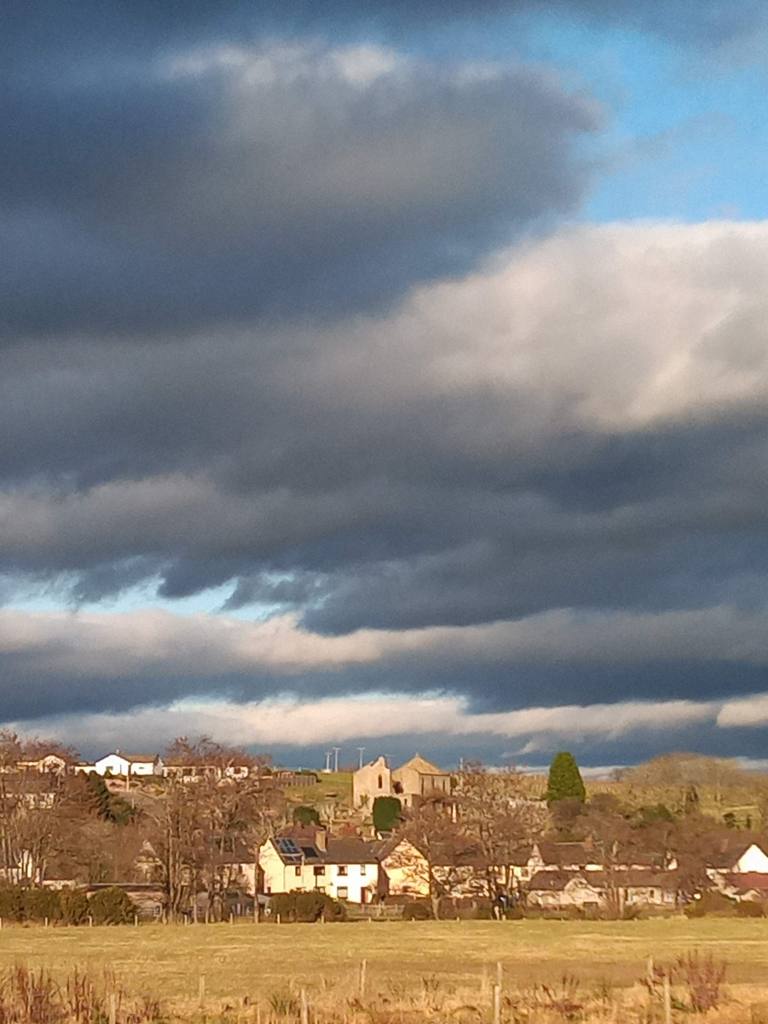
Well, I’m no theologian. Who knows? But now the rest of the tower has finally gone, with a crash in the night that woke up the residents of Cairneyhill. The skyline will never be quite the same. I hope the jackdaws and all the other members of Auchtergaven’s wild congregation hadn’t started to build their nests.
 Comments on The Nature of the Universe