Turning the year, turning the compost

Job done!

This week my Google Tasks told me I had to turn the compost heap. I assume I told it to tell me that at some point. I have two largish compost bays (minute in comparison to some, such as the magnificent compost-heaps-from-heaven at the community garden at Hospitalfield in Arbroath – you could bury a small house in each of their bays). I also have several bays and bins for leaves, imports of dung, and bulk biodegradeable materials in waiting, but it is the management of these two main piles that coincides with that moment when summer and autumn are subtly but surely dissolving into winter. For many reasons, I see winter as the start of a new year, and turning the compost always signals new beginnings, new plantings.

The first stage, actually, is barrowing and spreading all the finished compost in bay 2 onto beds and borders around the garden. This has been going on in stages for a couple of months, with sticks and undigested material being thrown back into bay 1. Bay 1 is starting to groan under the weight of future compost, as annual vegetable plants, bean and pea debris and a mountain of weeds from tidying up raise the height to almost unreachable. Once bay 2 is empty, everything in bay 1 can be moved over, introducing oxygen and stimulating breakdown. The topmost material is pitchfork stuff – or even just grabbing arms-full of dry debris and chucking it into bay 2. I try to put the most fibrous material in the middle, where the heat will be highest, making it in theory the best place to break everything down. If I can clean out the chickens just after all this top layer has gone on the bottom, the aromatic stew of chicken poo and wood shavings works as an activator.

The middle layer next, and it becomes more interesting. Here the brandling worms that thrive in the warm centre are busy at work, oodles of them, squirming voraciously in the decomposing mire. They are the visible agents of change, but unseen workers include many kinds of fungus and bacterium, at least as important. The middle layer is a seething mass of activity, and I make sure that on transfer to bay 2, the “working layer” maintains most of its integrity. Composter organisms are forgiving, though, and will migrate to the part with the right temperature if they find themselves compromised. Meanwhile, the garden robin and blackbird perch nearby, popping down for a feast of something whenever I pause to straighten and stretch.

Now the two piles are roughly the same height and I get into a rhythm with the pitchfork. The work is easier. I reflect once more how well yoga practice fits me for gardening – turning compost means twisting without injuring your back, and balancing on wobbly compost to reach the stuff at the back and sides of the bay. I work away getting the compost from the cooler edges into the middle and am left standing on a small pinnacle in the middle of bay 1.

Delving down the pinnacle, the number of compost worms decreases, and the ability to combine a twist with a forward bend comes into play…..work is getting harder again and I don’t want to suffer later! I start to turn out large numbers of wonderful centipedes. Centipedes are carnivores, not detrivores – they are not adding to the composting process, but hunting smaller creatures who live on bits of decomposing plant and humus. In the garden they are generally really good news, as they also eat the invertebrates who want to steal our crops. I try to catch one or two for a photo, but they are camera shy, and very, very fast on all those legs – as true hunters should be.

Photo by u0413u043bu0435u0431 u041au043eu0440u043eu0432u043au043e on Pexels.com

So, near the bottom of bay 1, the compost is as complete as it will be, and ready to use without being turned. I start to fill barrows of the good stuff, rejecting some unprocessed bits and pieces but not worrying too much – any unfinished business should happen in situ, over the course of winter. I dump and spread the compost on beds and borders. I don’t dig it in – no need. I have earthworms for that. It isn’t perfect, my compost. Eggshells hang about for ages, for example, and every autumn I dredge up a few well-rooted avocado plants which have grown from stones that never seem to decompose. (Neither do the skins). The heat given off by decomposition enables them to germinate. This year is no exception, and as usual I take pity on one, pot it up and take it into the warm greenhouse, where it will grow into an untidy, straggly, leaf-spotted pot plant with no hope of bearing fruit, and I will start trying to give it away to unsuspecting friends with more optimism than I have about its value.

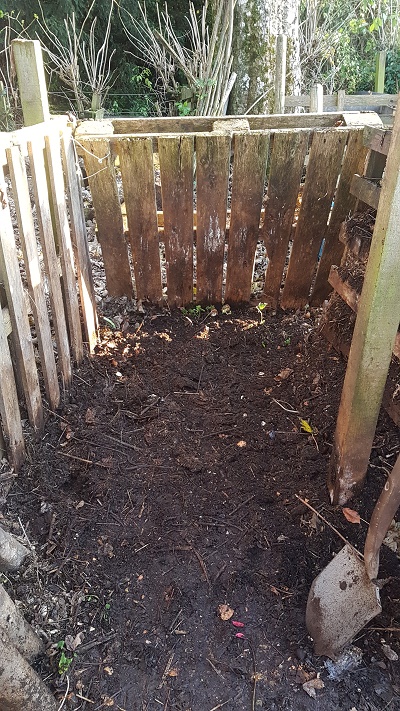
The last few shovelfuls, the final pitchfork-loads, and lo! I discover that the sticks I placed at the base of bay 1 last autumn because in a whole year they had failed to become compost are still there, barely altered….. I spread them across the base, along with the 3 year old thick cardboard tubes from inside the new polytunnel cover… they ARE biodegradeable, and I WILL win this battle….one day! On the plus side, after years of running a nursery here when thanks to lack of time and the vagaries of some of our volunteers, my compost heaps produced more plastic than a supermarket, this year my accidental plastic input and retrieval is minimal – and I can re-use the two ties and labels. And only one unreconstructed plastic-reinforced tea bag, right at the bottom, since we have found plastic-free brands.

Plastic pollution in decline!

I level the top of bay 2, and cover it with carpet. I know that within weeks, heat will build up and by spring it will be less than half the height it is now.All is done, and so am I, yoga or no yoga. And yet I’m incredibly happy with today’s work. Compost-making is the heart of my gardening life, the most satisfying, the most compulsive work, returning to the earth the things of the earth. I hope I have a good few years of compost-turning left!
The First Thing that Must Change

coronavirus
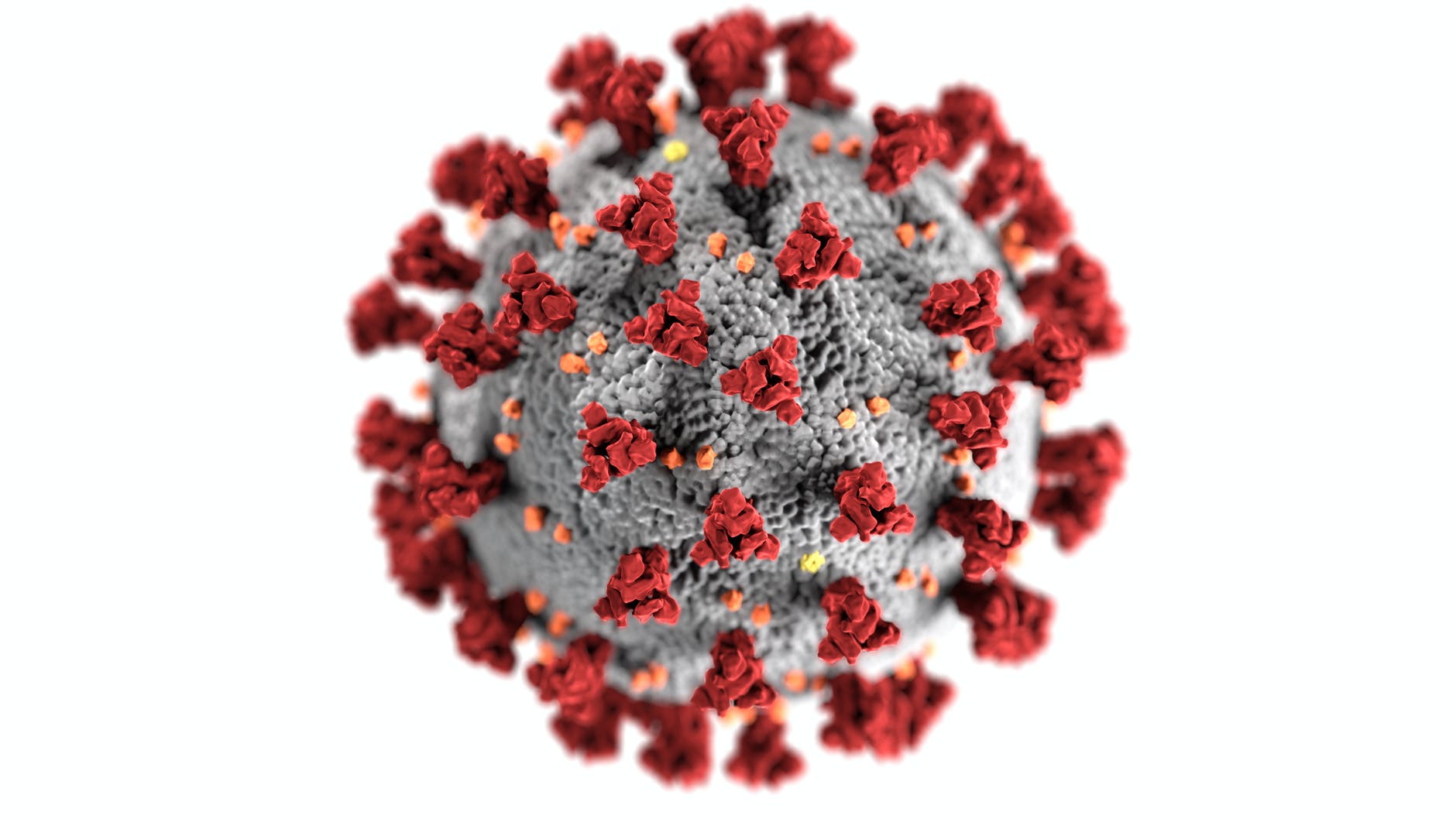
Photo by CDC on Pexels.com

We are in strange times. Things are changing. People don’t like change. Many people will be yearning for everything to “go back to normal”. The media incessantly bleat that expression “back to normal”, interspersed cleverly with “business as usual.” People listening assume that’s what they – and everyone else – want to see. People won’t raise an eyebrow at this assumption, because people like to feel they are in the majority and agree with everyone else. They think there’s safety in numbers, even when the numbers are imaginary or made up.

close up photo of a herd of sheep
Photo by Ekrulila on Pexels.com

Some of us – many of us – don’t. We want things to change. Some politicians even want change – or at least can see that it’s inevitable. But they sugar the pill by calling it a “new normal”. What do we want to change?

  • People to stop over-consuming the planet’s resources
  • The widening gap between rich and poor
  • Greed and Injustice – social and environmental
  • Air pollution, plastic, environmental degradation
  • Wars, bombs, threats, dictatorships
  • Governments that chip away at democracy
  • People thinking biodiversity loss is inevitable “progress”
  • What Tennyson called “the faithless coldness of the times”
  • ….and so much more

We want, well, everything to change. It’s too much to ask. Where do we start?

We are in a pandemic, caused, not by China, Johnson or even Trump, but by a virus. Viruses are funny things. Are they even a life-form? They have no life and no power to reproduce on their own. They can only do that by hijacking the DNA or RNA (the genetic element of a cell) of another species. Plant or animal, whatever the virus finds suits their need. Did you know that stripy tulips only got that way because of viruses? A virus made them worth a fortune in the 17th century.

Viruses are very small, smaller than bacteria. Indeed, they can even infect bacteria. Some of them – including the coronaviruses – are incredibly beautiful structures. We have learned, in recent decades, to applaud our “friendly” bacteria which protect our digestive system or power our sourdough fermentations. Bacteria aren’t being friendly or unfriendly, though, they’re just getting on with their lives, and we happen to benefit sometimes. Other times we don’t and we go all antibacterial and kill off the useful bacteria as well as the harmful ones, leaving ourselves open to more infection.

But no-one ever applauds a virus. Even though within the lining of the animal (including human) gut, live viruses called bacteriophages. Guess what, they eat up “unfriendly” bacteria. Other viruses help develop and support the human immune system. Just like the bacteria, they’re not doing it out of the goodness of their hearts, which of course they don’t have. They’re just being viruses. Viruses, bacteria, slime moulds, fungi, algae, tardigrades, invertebrates, mosses, insects, molluscs, fish, flowers, trees, amphibians, birds, reptiles, mammals (including people), and all the groups I’ve missed out – they’re all just organisms in a complex web, getting on with it as best they can.

slime mould

Sometimes – but not very often – an organism will get above itself. It will be clever, but hellish stupid. It will decide that it’s superior to all the other entangled organisms and it will start acting in a way that’s detrimental to all of life on earth. Destructive, actually, and stupid enough to believe – no, to CHOOSE TO BELIEVE – that destruction won’t include them.

It might take something as small as a virus to bring them down with a bump.

If the sound of arrogance crashing around us is louder than the soothing noises of those with vested interests in “business as usual”, more people will start thinking everything must change. And here’s where to start: drop the conceit that you are apart from the rest of the natural world. You are as entangled and connected to every other living organism – and many which may not be living – as the Covid 19 virus. You are no better and no worse. You are part of nature. You will never, ever, be above it.

Come back down to Earth, and then together we might really hope to change everything.

sphagnum

#Everythingmustchange #common weal
commonweal.scot

Ferments

Six months after making a resolution that 2019 would be the year I’d get to grips with sourdough baking, I boarded a train in Exeter clutching a heavy duty carrier bag. Inside the bag was another bag, wrapped around itself, loose ends tucked tightly. Inside that bag were a number of jars and cartons.

Fermenting.

11 hours on hot trains lay ahead. Intensely aware, despite assumed nonchalance, of the seething activity taking place out of sight, in the overhead luggage rack. Occasional checks, surreptitious lifting of lids, burping of bottles. It’s a wonder no one called for the transport police.

How had it come to this?

Cavalier assumptions over several months that I knew enough about cooking and had baked enough yeasted bread to never need instructions or a recipe had resulted in the failure of several sourdough starters to even bubble, the refusal of all loaves to rise, the creation of some worthy bricks and, finally, to acknowledgement that I needed to consult. Guru number 1, Andrew Whitley of Bread Matters and Scotland the Bread (www.breadmatters.com and http://scotlandthebread.org/) told me to go back and read the book properly, especially the bit about balancing acid lactobacteria (which make the sour taste) and acid-intolerant wild yeasts (which make the bubbles), and sent me away with some amazing heritage Scottish wheat flour.

To mastermind the magic of a fermented dough, I needed to get the basic chemistry into my skull. Suddenly, I wasn’t making bread, but collaborating with a population of unknown, busy micro-organisms, intent on feeding and reproducing in the flour and water I was supplying. Once the penny dropped about refreshing the starter to reduce acidity and give the yeasts a chance to breed, my starter began to work.

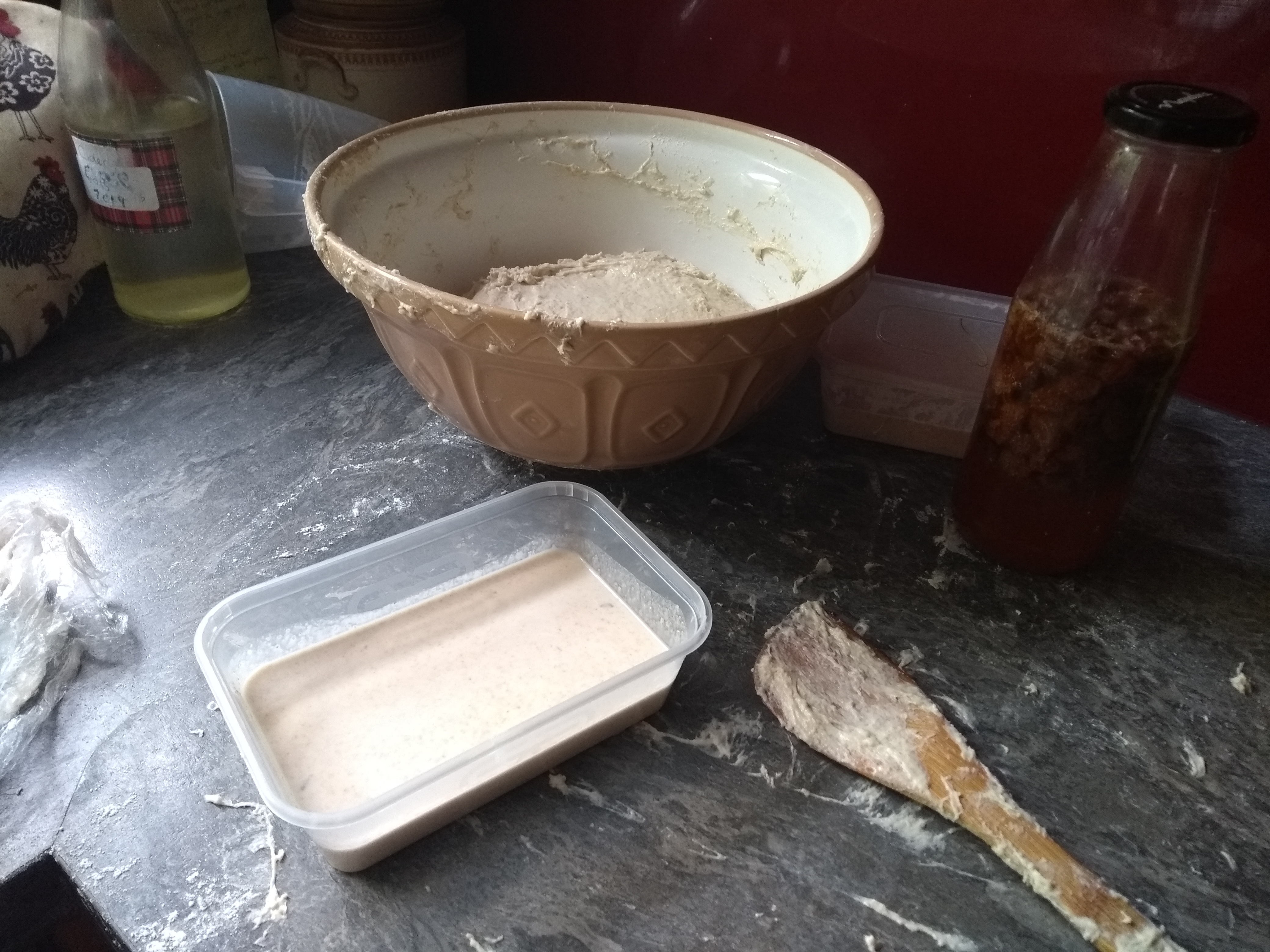
IMG_20190711_105237420But was it really meant to look like this? Was dough meant to get all over the walls and floor? Why was I reduced to scraping and pouring the wet, sticky mess into bread tins? And when the book said “knead”, was it some kind of a joke, when “stir” or “whisk” might have been more appropriate verbs?
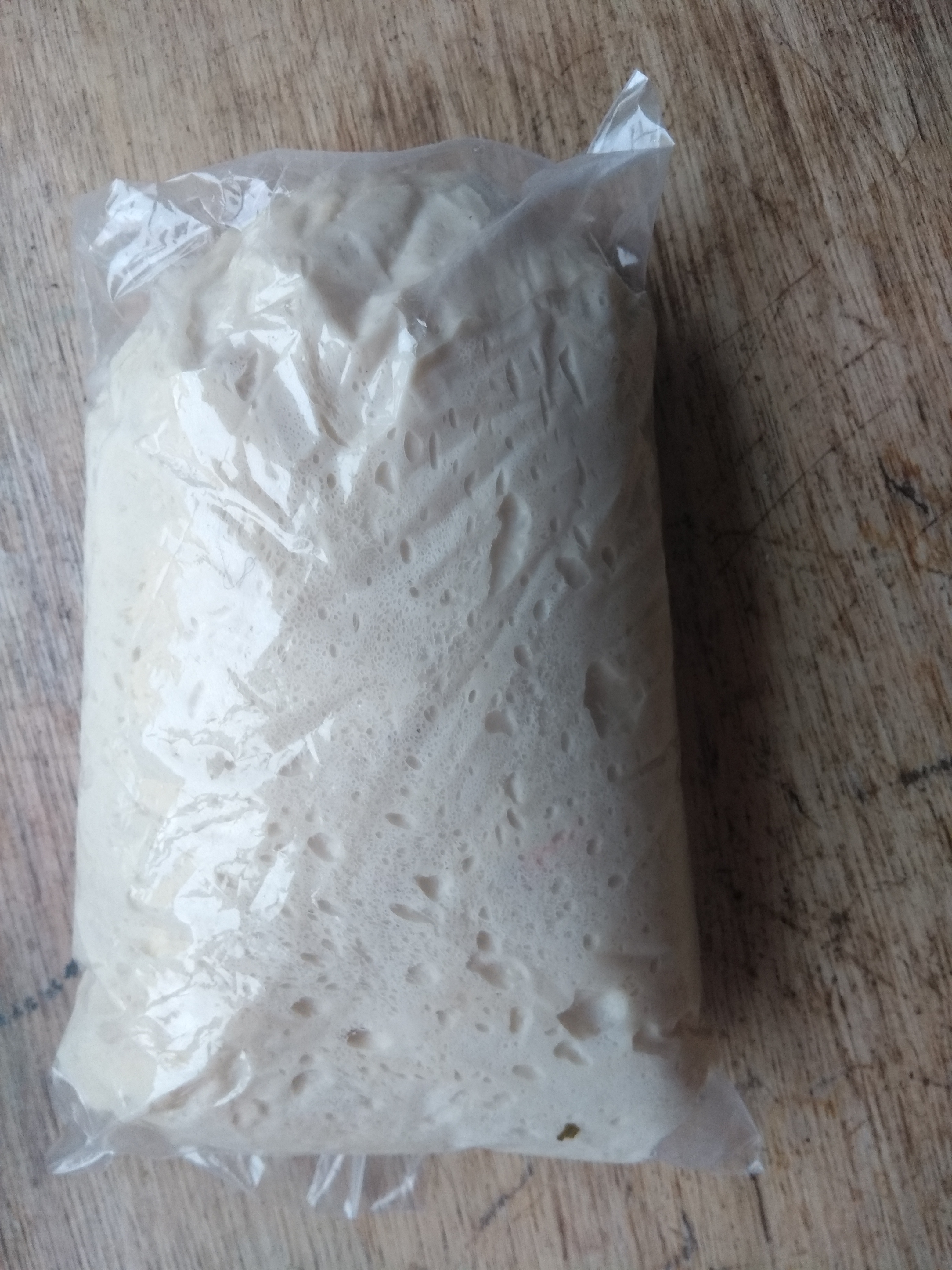
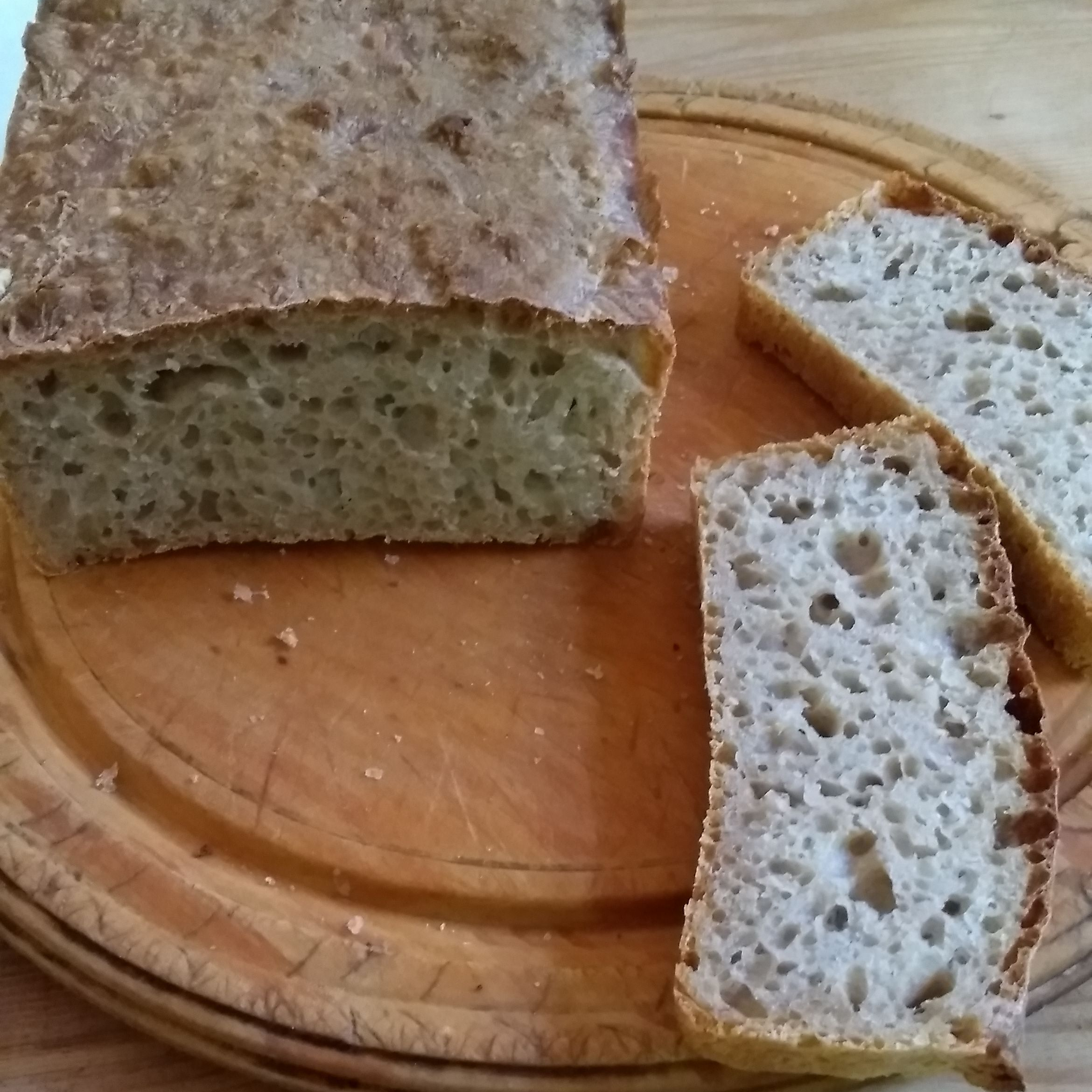
 

Now I had to find out if the disaster area of my kitchen on a baking day was common to real sourdough bakers. I suspected it wasn’t, and that I had more to learn. Enter Guru number 2, Jon Denley of BAKED Cookery school (www.bakedcookeryschool.co.uk) in Plymouth, and a chance to attend a course on Sourdough, Hydration and other Ferments, while on a family visit south.

Amid vast buckets of bubbling starters, in the heat and humidity of a training kitchen with several ovens going, I watched unbelieving as Jon transformed an unruly slop into a polished, gleaming and perfectly manageable loaf. I began to understand how to detect the changes in the feel and behavior of wheat and rye dough mixes as they are worked, that mean you stand a chance of shaping them into loaves. I became aware of the gluten forming – and of it breaking down when, literally, pushed too far. We made – and ate – delectably light and crusty pizzas for dinner, 100% rye loaves, white sourdough bloomers, nutty loaves with wheat and rye and seeds. We played with pre-ferments – pate fermentee or “old dough” uIMG_20190719_192426204sed to kick-start a sourdough flavour and texture in a yeasted loaf, and the excitable “poolish”, a pre-ferment I was advised to leave in Devon for fear it would get out and derail the Cross Country train before I got it home. We mixed honey, sugar and water and fed it to raisins…. No, get it right: we fed it to the yeasts that live on the surface of the dried fruit.

I got all my loaves, starters, pre-ferments and raisin brew home safely, and they’re all doing fine. Well, the bread’s been digested. The raisin brew has gone to create a spelt flour starter. I still can’t shape or adequately fold a white sourdough bloomer and I’m scared of using a proving basket. I’ve a long way to go, and I’m enjoying the journey.

Working with ferments overturns the received wisdom of 21st century food hygiene. Antibacterial cleansers are banished. Windows are open. Refined ingredients are shunned. Sterilised containers are bad news, and for goodness’ sake leave the lids off so stuff can get in. You can wash your hands, but if you must use soap make sure you rinse it off. The micro-organisms that we so desire don’t come put of a bottle or can. They are living in the organic flour, on your hands, in the air, on the surface of raisins and apples.

And although we can place them into rough groups, we never know exactly what the microbial make-up of a batch of dough is. My mother would have called them germs, and been deeply distrustful of processes that encouraged them, not to mention the product of those processes. Even in the fermentation of cider, beer and wine, which I’ve done a lot, you’re advised to use sterile containers and prevent “contamination” by “the wrong” fungi or bacteria. Just like the fastidious gardener trying to control nature, we like to think we’re in control of our alcohol production.IMG-20190714-WA0003


Baking with mysterious, unidentified, unknown quantities makes for unpredictability, surprise, delight, disappointment. We are not in control. Our ferments frequently are.

It’s wonderful.