The Undefeated Willow

Willows are the most curious trees. For a start, there are well over 300 species worldwide, with eyebrow-raising common names such as Eared, Goat, Cricket Bat and Crack, or casually colour-hinting names (black, white, grey, violet, red and purple). The colours usually refer to the young stems, and that’s why willows have long been valued everywhere to make beautiful baskets, hurdles and sculpture – along with their wonderful flexibility which makes them capable of being woven without snapping. A well-made willow basket is strong and lasts a lifetime.

Those hundreds of species readily hybridise promiscuously, making identification a chore, to say the least – even in Britain where only nineteen species are considered native. I think it’s unlikely humans really know just how many species and hybrids there are. Willow – or sallow, or osier (even the names are slippery) just won’t be pinned down.

Willow won’t be kept down either, even when it falls. Put a bunch of willow stems in the rain-butt to soak for basketry, and the next thing you know, they’ve all grown roots. They grow quickly, ferociously fast. Two metres a year is not uncommon for new growth. Coppice them, and they’re back up the next year. Their Lazarus impersonations are all the more improbable given the mind-boggling number of diseases the genus is prone to – black canker, blight, powdery mildew, scab, watermark disease, root rot, heart rot and willow anthracnose, to name but a few. They are pioneer trees, kicking off the cycle of colonisation in open ground that is damp or downright boggy, and no one fairly expects them to last for centuries.

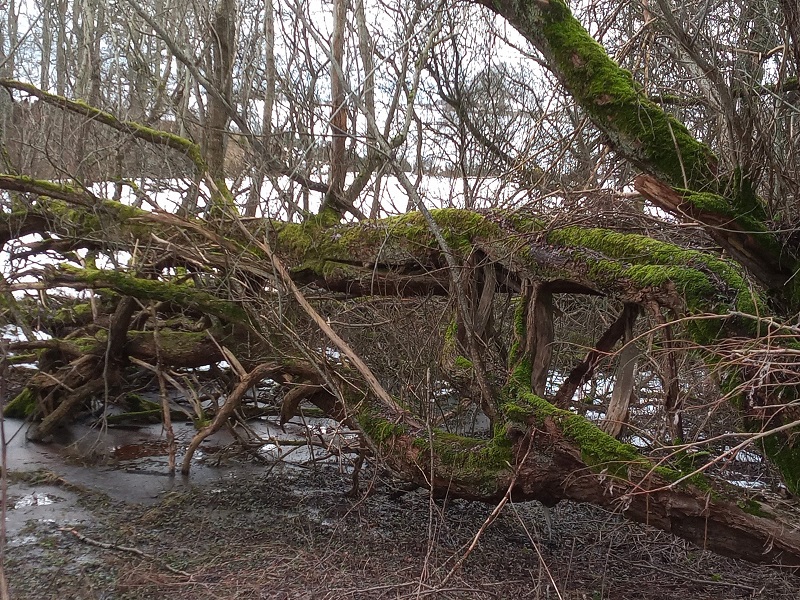
By what remains of the old Back Mill millpond in Bankfoot, there are some death-defying willows. I don’t know the species. One monster of a tree, often pollarded in the past, still stands erect – outrageously enormous, ancient, decrepit. As the millpond has steadily drained of its water and silted up, the roots of these massive willows have been exposed. A flood of heavy rain then washes away the soil, until eventually the whole tree comes crashing down.
Old Man Willow

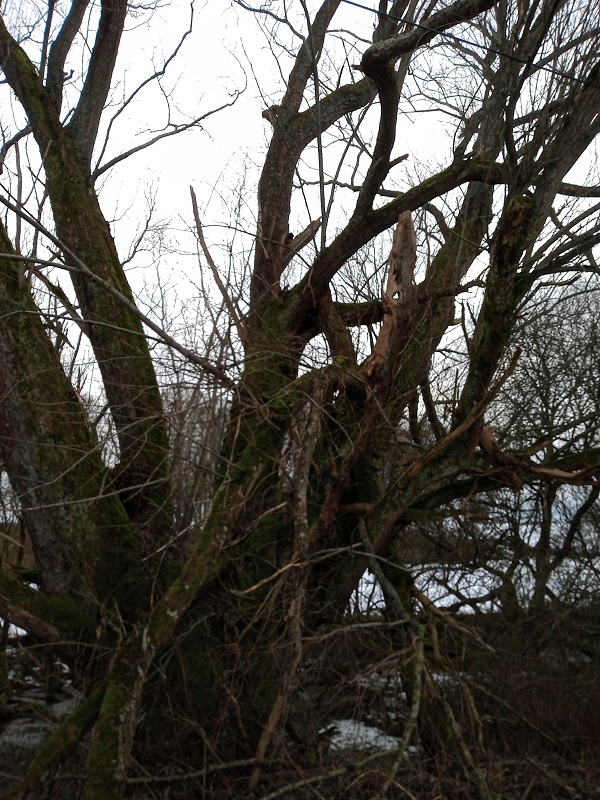
End of story? No way. In falling, the wood, being watery willow, ripped asunder, cracking and splitting in a hundred fibrous places. Some trunks, now horizontal, appear shredded and mashed. Branches poke up out of the devastation akimbo, some dry and decayed, some clinging to life.

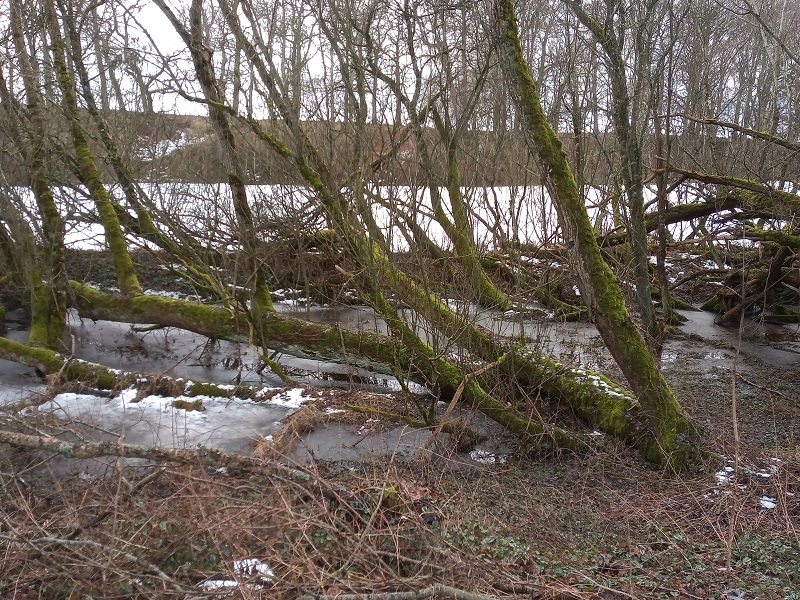
Make no mistake, these willows fell a long time ago, Birds have nested in the crevices where they toppled onto each other. Mosses, algae, lichens, ferns have been succeeded in places by other woody plants, growing out of, and contributing to, the accumulation of soil and organic matter. The trees are alive, but they are a substrate for life also.

From the felled boles and wrecked structures, arrow-straight, insolent shoots clamber skywards. They are making new trunks from the old,even where the original tree has scarcely more than a twisted root in soil or water. A veritable willow plantation arises from the un-dead.
Exits, Entrances and Crossroads

A post for West Stormont Woodland Group

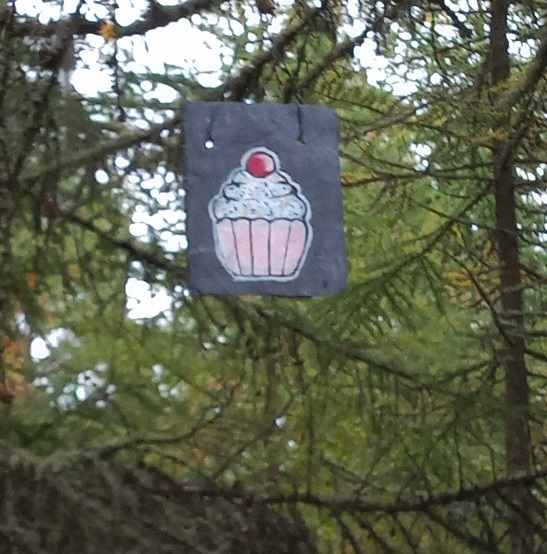
Is there an artist in the wood?

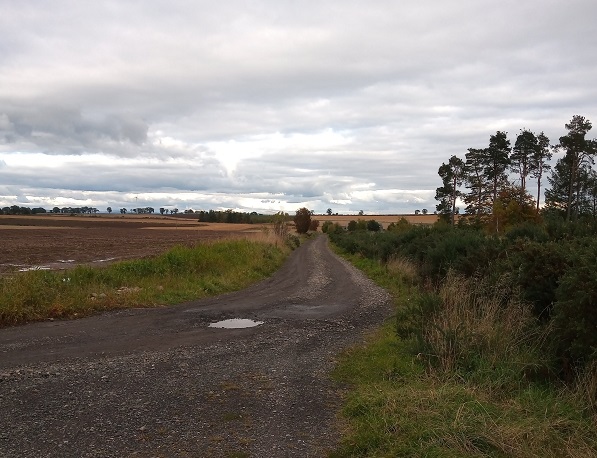
There is, really, only one easy way into and out of Five Mile Wood – at least in October. That’s from the south end on the Stanley to New Mill cottages road – currently a bit of a no man’s land thanks to the dualling of the A9. Here the track is clear, broad, made for forestry vehicles – and you can even park! At the north end, there is also the old straight track I’ve written about before, from South Barns and beyond that, with a diversion to Bankfoot. Follow the line of this track and it will take you to Dunkeld, once a mighty ecclesiastical seat. I learned last week that from Dunkeld to the wood it’s five miles – hence the name.

I wonder what happened to One, Two, Three and Four Mile Woods?

But once through the gate at the end of the straight track, the going is tricky. At this time of year, wellies are essential, thanks to the legacy of ditches, boggy ground and waterlogging that followed the felling of the trees here. When did it become the norm for forestry practice to leave such a mess? However, with care, agility and thanks to the enterprising actions of previous walkers using felled timber to ford the worst ditches, you can get to the main path that circles the wood.

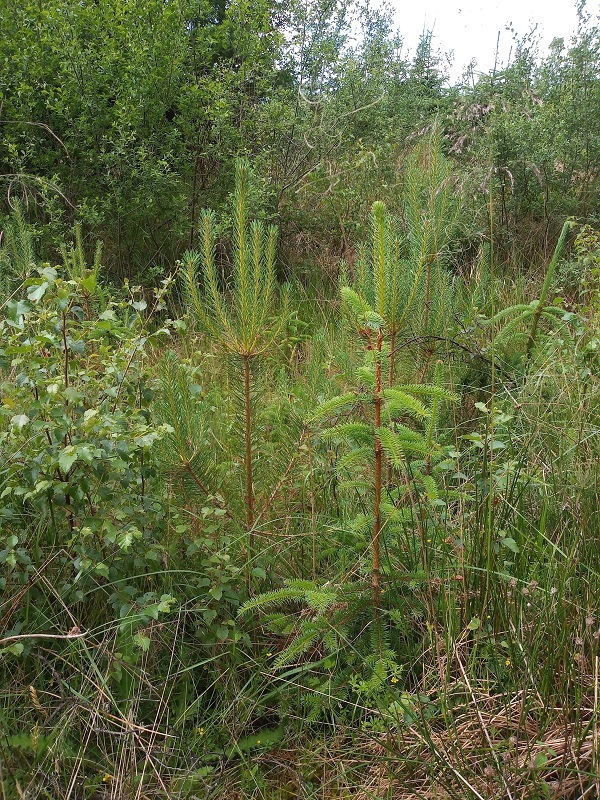
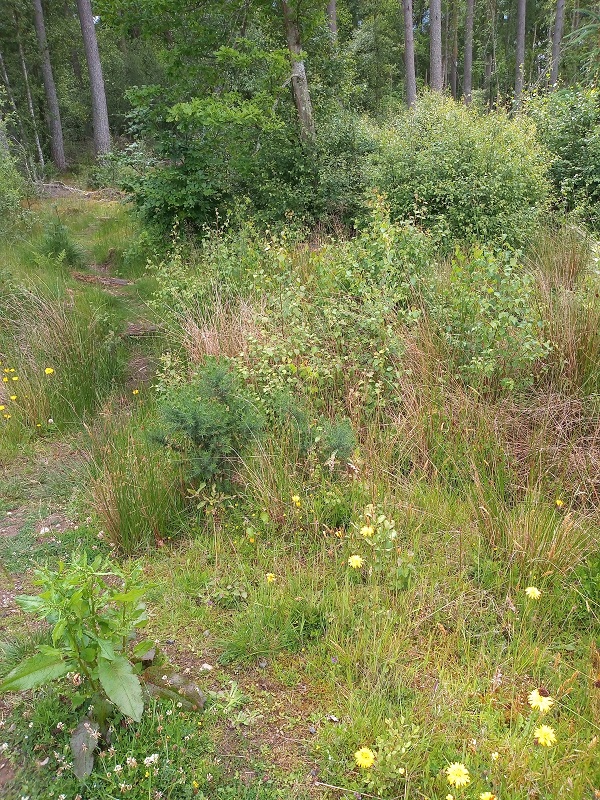
Deer, birds and other animals have their own paths off into the undergrowth, but for humans, the area where trees were felled before the Commission ceased to work are becoming impenetrable, Gorse crowds thickly on either side of the track, requiring constant maintenance to keep it from meeting in the middle. Self-seeded birch, larch, Scots pine and willow are all growing well, but there are no paths between them in this baby wood. Then there are the trackside deep ditches, another legacy of forest drainage operations, not impossible to cross but very off-putting.

So walkers, joggers and cyclists stick to the circular path and leave the wood by the way they came. Someone on Trip Advisor found the wood disappointing, and the circular track through felled forest boring. But I wonder. We undervalue landscapes that aren’t “finished” – such as newly planted gardens and self-seeded woods at the start of succession. The prettiest part of Five Mile Wood may be the winding bike-track under mature trees which shoots off from the main path near the south entrance, but the burgeoning growth of pioneer vegetation in the centre – the “gap site” as some call it – is vibrant with hidden life, resounding with the flickering flight of small birds and bubbling with amphibians and aquatic life in the ponds and ditches created for drainage. Even the nuisance gorse is a rich nectar source for pollinators and home, each bush, to thousands of spiders and other invertebrates. It’s not what we are schooled to believe beautiful, but in terms of ecology and resilience, it is every bit as valid as ancient oak climax woodland. Not all landscapes can be measured in human terms – though the amount of carbon sequestered by rapidly-growing trees and shrubs will be enormous and far greater than that in a carefully-planned, gardenesque setting. And humans need carbon sinks as much as every other life form.

People like to have choices, though. Choices about where to enter the wood – entrance points close to all the settlements that lie within walking distance. New tracks to follow, new routes to explore, the chance to come out into the sunshine at a different point from where you went in. Paths that cross, diversions, sidetracks, viewpoints. I don’t think they should be the main focus of the wood, or dominate the richness of undisturbed wildlife in the centre. There must be places that are no-go areas for humans, where nature can get on with it, and prove, as ever, that she will make a better job of it than we can.

And then, let our tracks meet and link wood to wood, as we learn to walk more, and be more in nature and less apart from it. Then we will lose our expectations of park furniture and entertainment, and realise the woods aren’t, in the end, all about us.