Scene of Construction

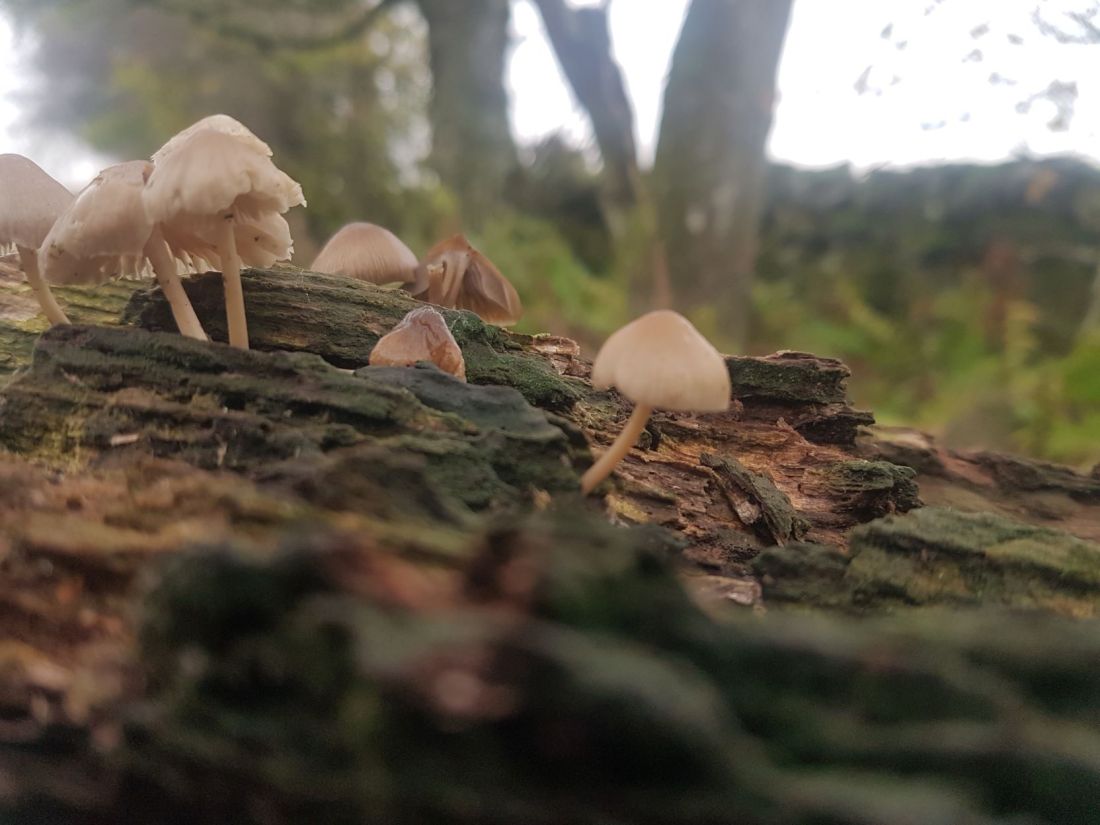
It began by shedding branches in every storm, this multi-stemmed beech tree. Being a beech, whose toxic leaf-litter successfully manages to put off any tree or shrub (even its own offspring) from growing under its canopy, there is plenty of space for the branches to lie. For a few years, it was my go-to place to harvest the beech-specific, edible, incredibly slippery Porcelain Mushroom in late autumn. This year, the fungus appears to have exploited all the suitable fallen branches and moved elsewhere.
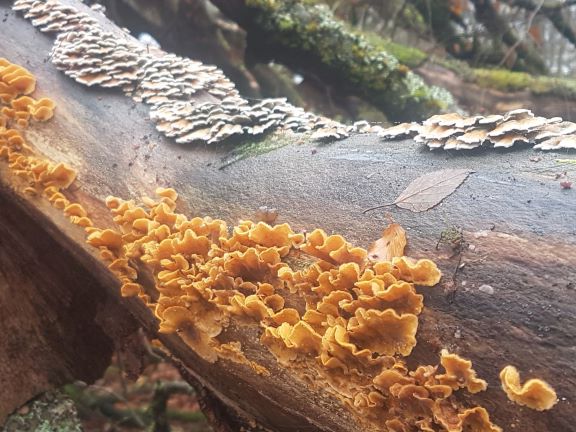
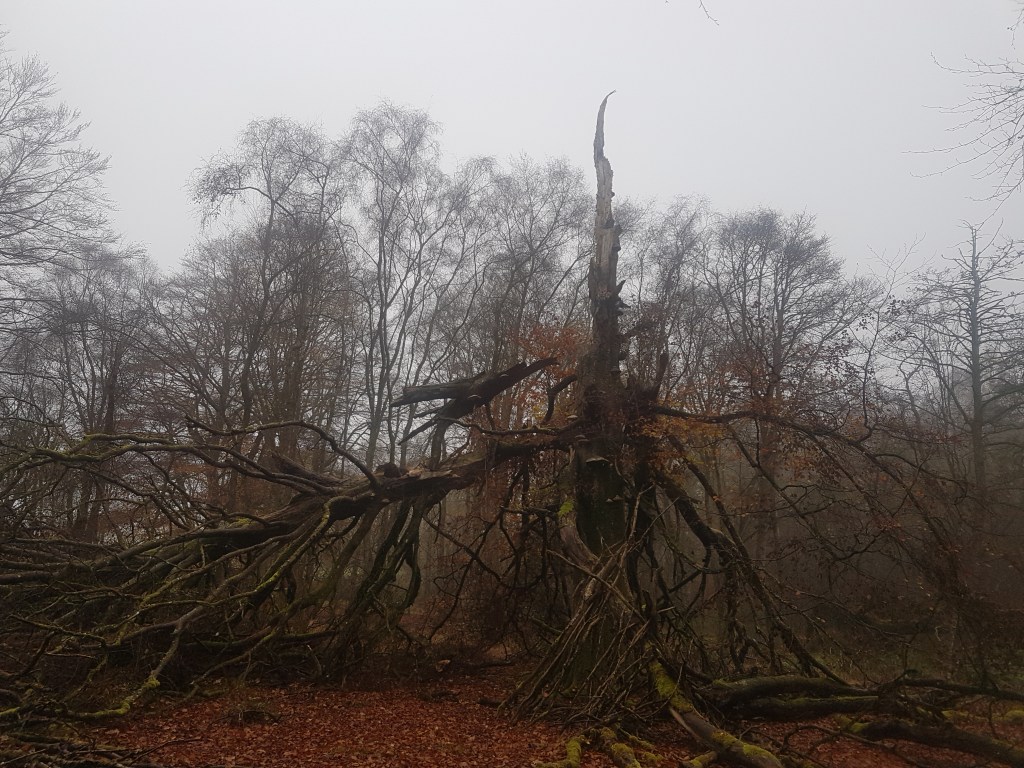
No shortage, though, or other fungi. They peer from behind the remnants of bark, congregate on dead wood, splash colour over the domain of the doomed beech tree. Now, whole trunks are falling, large brackets appear near the snaggy top of the one remaining trunk, piles of branches and fallen debris cover the ground. Meanwhile, leafy twigs still emerge from parts of the tree – it’s not dead yet!
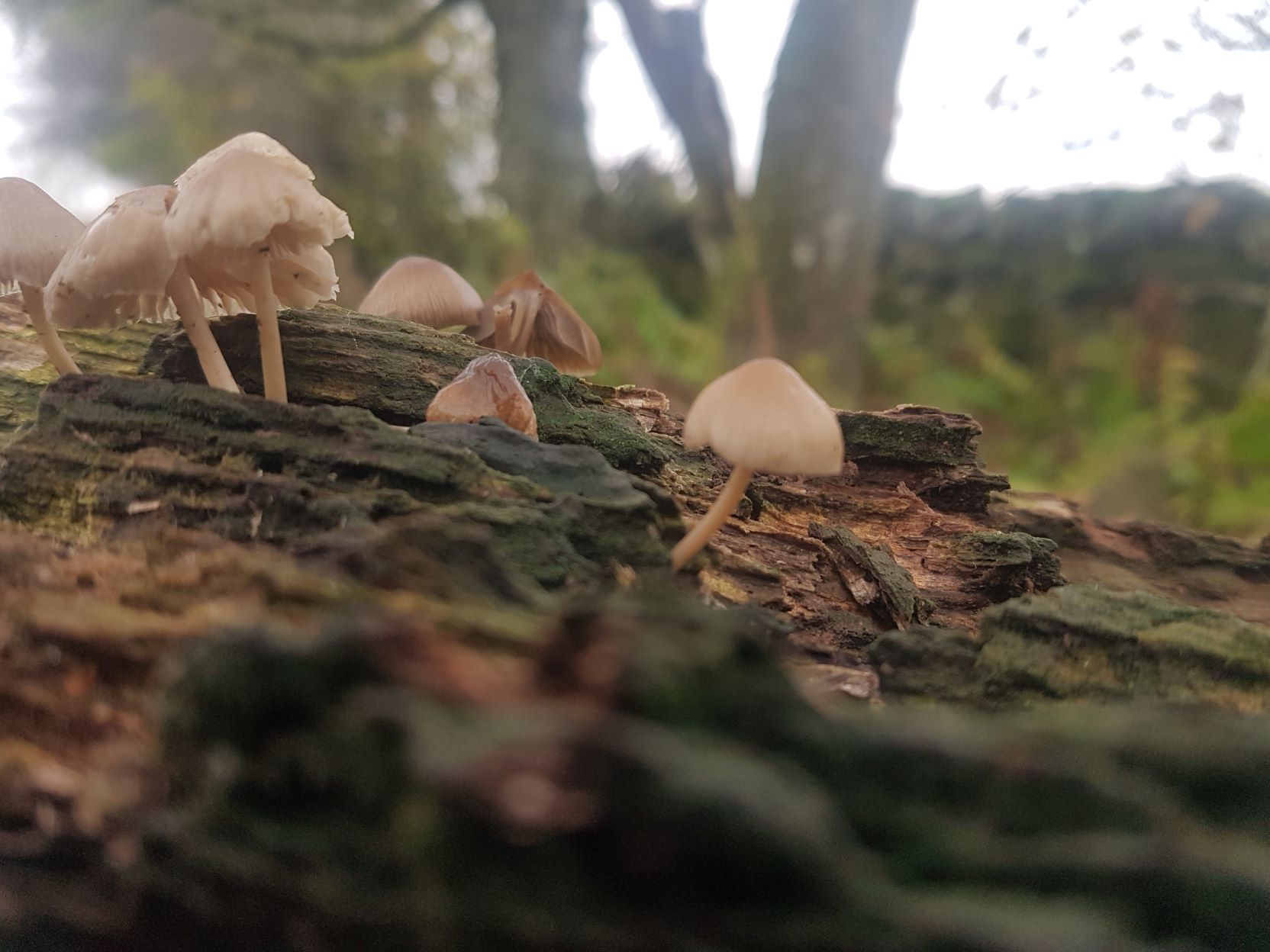
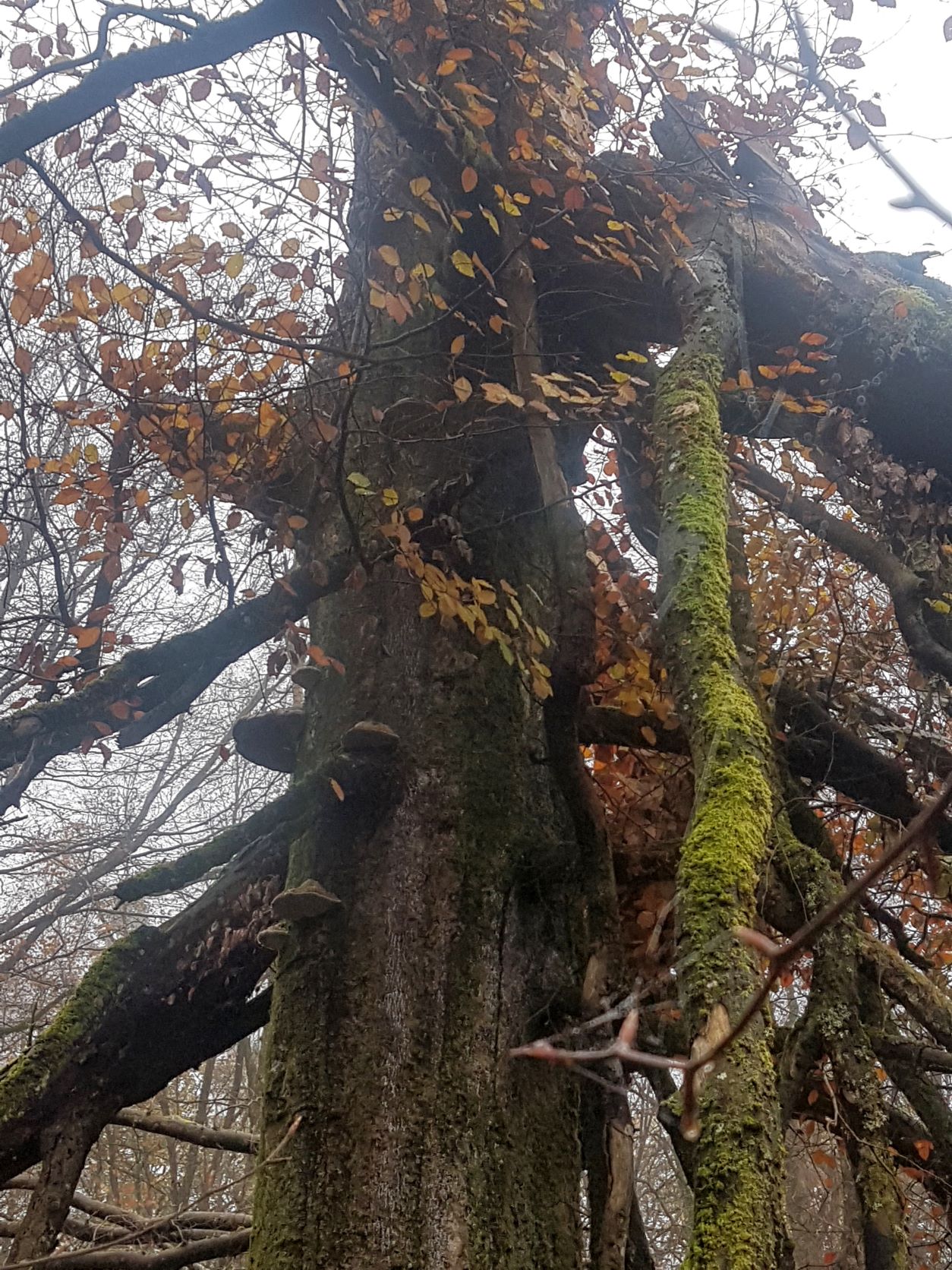
Is a tree ever dead? Though branches crash down, timber decomposes, bark is shed, these are all the signs of a massive construction programme. The mushrooms and bacteria are building soil. The mosses, lichens, ferns and flowering plants are taking hold and creating gardens. Invertebrates in their thousands are moving in, chip-chipping away, getting in, getting under, uprooting, making a tree metropolis. Birds and small mammals home in on the seething busy-ness as if to an urban food-market, finding homes in the piled deadwood and tree-openings. Human foragers like me, and other large animals such as roe deer, visit for breakfast mushrooms. In spring, chickweed wintergreen and wood sorrel will cautiously return to woodland lighter and less toxic.

As the tree slowly, and apparently, dies, it shouts louder and louder with life,
Tree as Furniture

There’s a little wood nestling by the River Tay that I love to walk in, partly for its vibrant and eclectic flora – an amalgam of native plants and garden escapes which get washed in when the river gets out and established over centuries, that curiously resembles my garden at times.

Set back from the river, and maybe in a sort of line, are some colossal and ancient beech trees. Why they are there is a mystery. Clearly, as non-natives, they were planted, possibly something to do with the nearby castle, though they look older than that. I’d like to link them to the mediaeval abbey at Dunkeld, whose land I believe this once was, though there is the small matter of a river in the way.

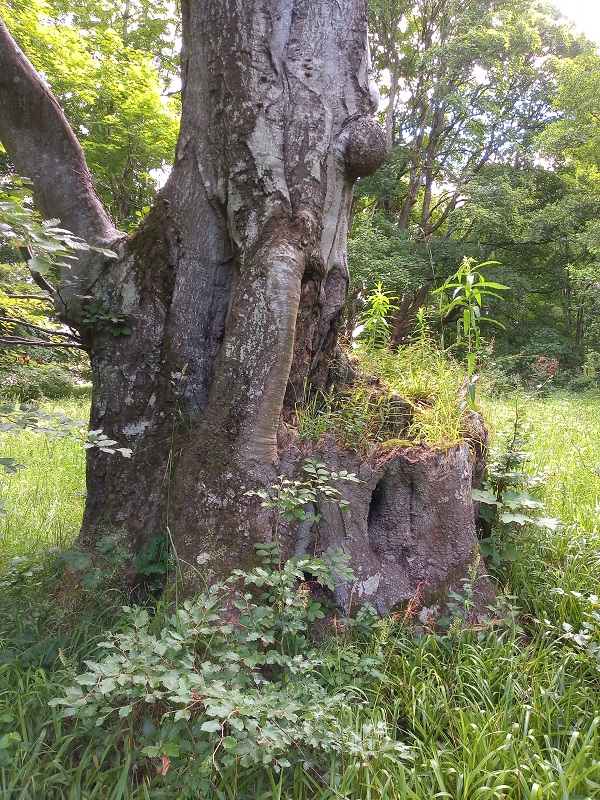
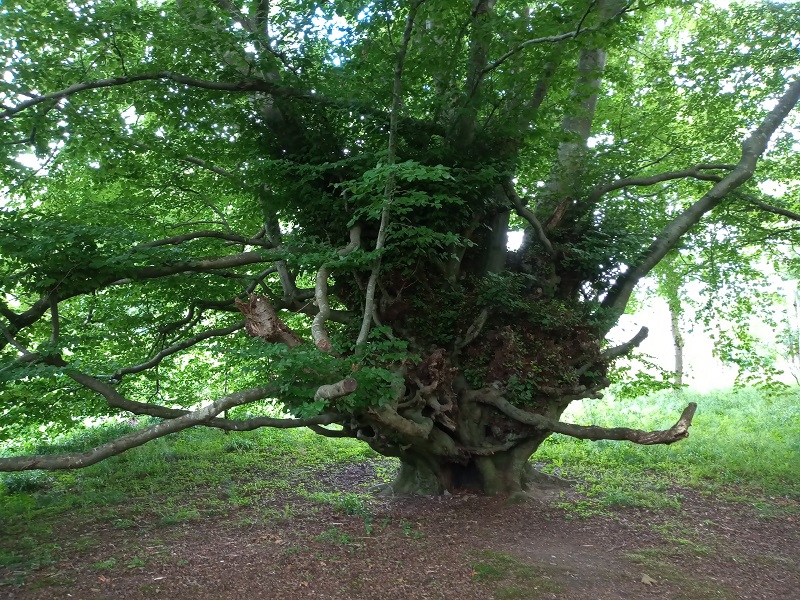
The trees were clearly pollarded or even coppiced, the resulting shoots from the trunk growing into valuable, renewable firewood. Now each “shoot” forms a huge trunk in itself, because they’ve not been cut back for centuries. This leaves the structure unstable, and every so often a tree loses one or more of its trunks, leaving hollows and torn timber crags. The exuberant flowers and grasses of the wood quickly colonise and make them into miniature gardens.

As little will grow directly under beeches, they provide a flat, open and sheltered site for wild campers, and there is very often a tent or two under one of them. Recently having witnessed the idiotic post-lockdown behaviour of people who like to think they are campers trashing and littering lovely places, I am admiring of the most recent wild campers in this little wood, with their orderly, careful fire pits and unobtrusive behaviour.

Beechwood chest, closet or bureau?

Some years, it’s looked as though the campers (who I never see) are using their chosen tree as a kind of holiday caravan, setting up for a season. It makes sense not to have to cart everything to and fro. One of the beeches in particular is like a gigantic cupboard or merchant’s chest, with cubby holes in which to hide folding seats and tables, and lofty shelves where firewood and kindling can be stacked to dry. Washed up boards from the river can be balanced across knobbly projections, useful for everything from preparing food to changing nappies.

It’s a comfortable, homely tree, nearing the end of its long life and home to so many plants and animals. I hope it always has special memories for its seasonal human residents.

February: Five Mile Wood


beech saplings

Dreich doesn’t begin to cover it. Weeks of rain, sleet or snow, and the wood is wet, dank, chilly. One storm has passed, another is forecast, and a group of multi-stemmed birches, green with lichen and algae, droop and wait despondently.

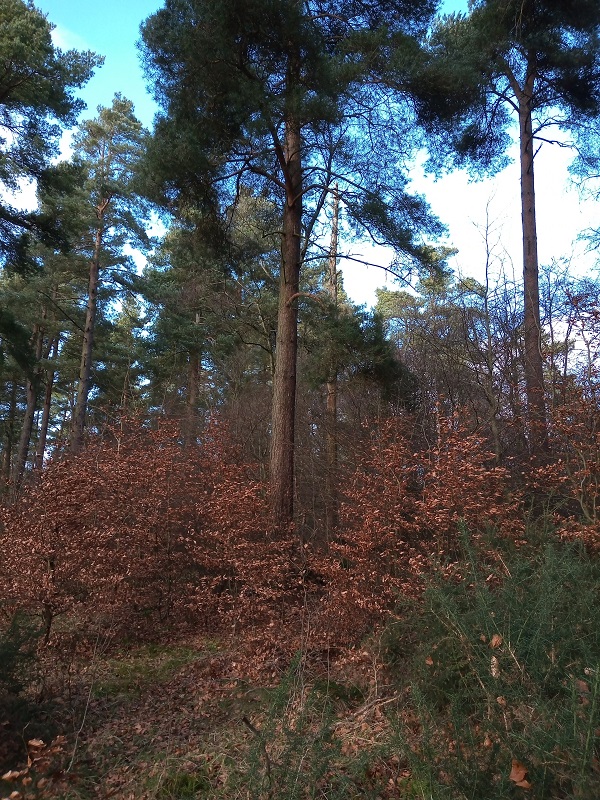
I take the rutted cycling path that skirts the woodland edge. Under the tall, fiendishly straight Scots Pines, many scattered beech saplings nestle in their winter boleros of retained leaves. Beech mast is everywhere, but I do not see the older tree from which it has fallen. Beech seedlings tend not to come up near a parent tree, but somewhere there must be a Mother.

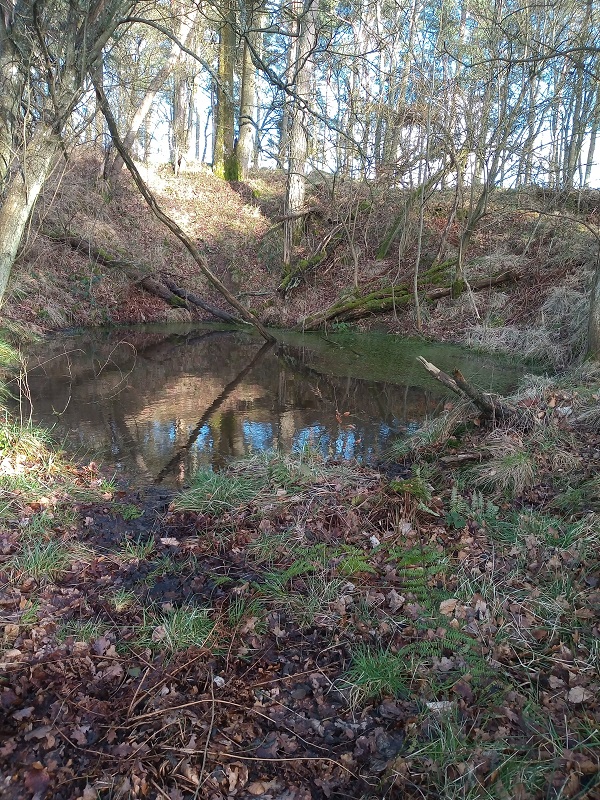
Snow lingers crystalline along the clay-bottomed ditches where black, cold water lurks and trickles. There’s a pond under the pines which so looks like it was formed by an explosion I call it the bomb crater. No signs of frog spawn yet. Several tracks and paths meander where animals come down to drink. Duckweed covers a third of the surface; in the increasing rain thousands of ripples intersect and make diffraction patterns over the other two thirds.

bomb crater

Birds – except for a robin – are silent and glum. A flock of pigeons clatters off towards the field; freshly ploughed, it offers them nothing but the stones that lie heaped in the field corner. How many decades or centuries of cultivation have contributed to this pile? This side of the fence, someone a long time ago arranged stones round a favourite tree, where they remain, moss-covered and half-buried. Larger rocks with wavy patterns etched onto their surface erupt in groups from the forest floor, scarcely distinguishable from the stumps of felled trees. Moss, lichens, algae democratically envelop all.

blackening russula

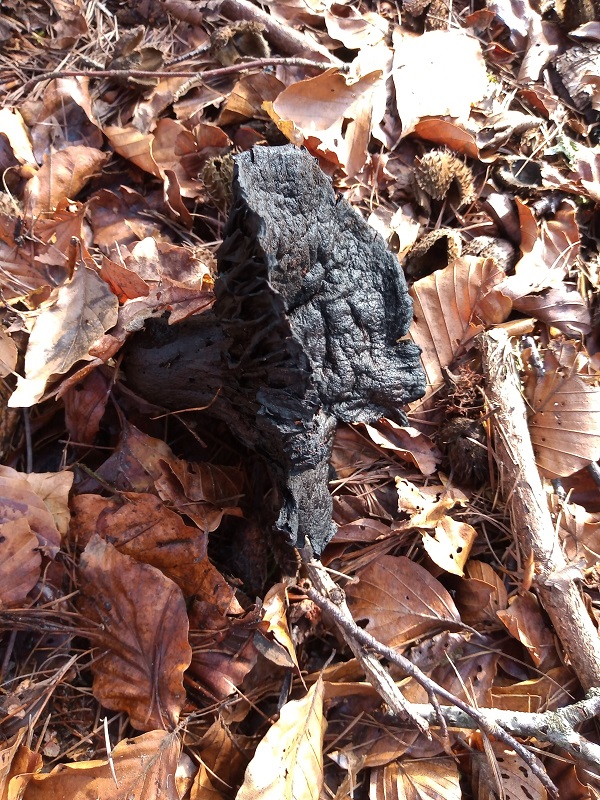
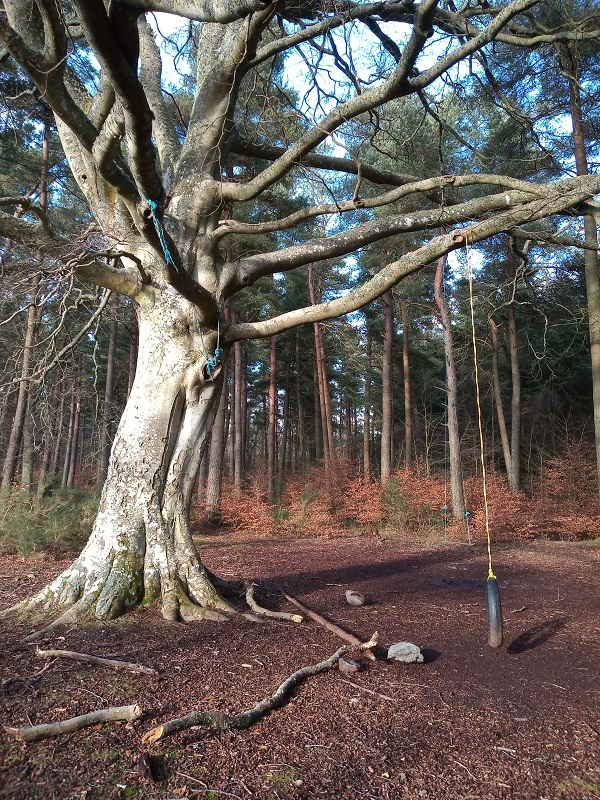
There are charred-looking remains of mushrooms by the path. I think they were Blackening Russulas, an abundance of them. I follow their orbital trail and suddenly find myself under a towering old beech tree, with many spreading branches and a hollowing trunk that makes a chimney of dead wood and fungal rots. Swings hang from two branches; insects and other invertebrates burrow into the soft core of the tree and make their homes. The woodpecker will soon come calling for her dinner, other birds will nest and shout from the canopy. I have found the Mother of Beeches, and of much else besides.

mother of beeches

Five Mile Wood and Taymount Wood are former Forestry Commission plantations just north of Perth. They have for a while been transitioning from industrial timber production to a subtle integration with the wild, and people are part of that wild change. The Commission have put them up for sale, and local people have formed West Stormont Woodlands Group. We are hoping to implement a community buy-out. You can find out more about the plans and group activities at http://www.weststormontwoodlandgroup.org.uk Over the coming year, I intend to write a monthly blog post “Words for Our Woods”about the wildness of the woods, in support of WSWG. This is the first.