The Road to Grulin

The track we follow is purposeful. It has the directness and air not just of going somewhere, but of having been going there for a long, long, time. We get to it from another determined little track, that rises up from the calm waters of Galmisdale Bay, through woodland to the uplands of a hill farm. Side-stepping the sheep and their copious leavings, ignoring the bull who is also ignoring us as he lounges among his harem, we skirt the farmhouse and its hollyhocks, and turn onto the Grulin track.

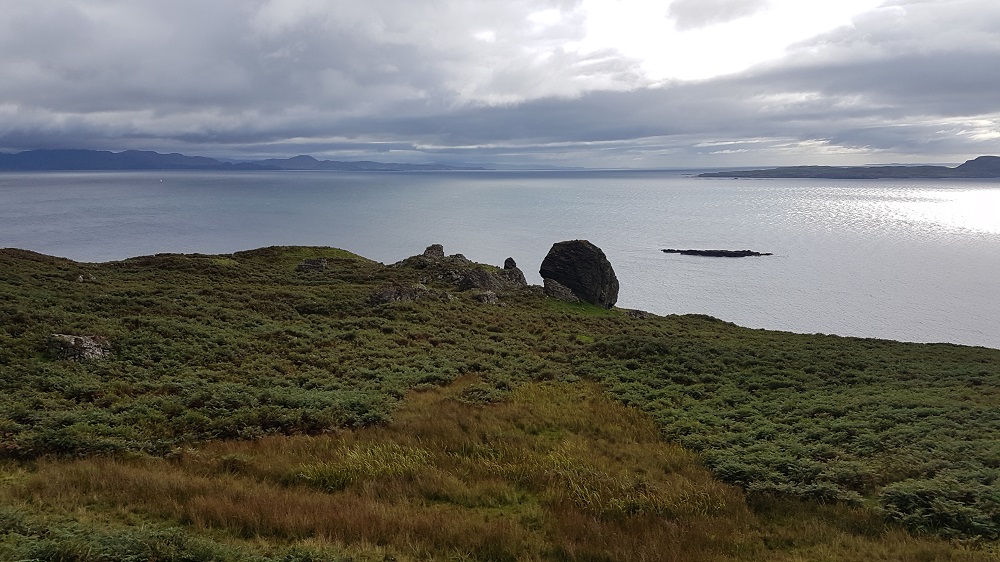
Straight, easy, well-founded with centuries of stone and tamped by more recent ATVs seeking sheep, the track passes the remains of a fort on the left; hut circles lurk in the grass and bracken between track and cliff edge – we know they’re there but cannot discern them. To our right looms the monstrous tower of An Sgurr, the dramatic reminder of an outpouring of volcanic pitchstone that dominates the Island of Eigg.
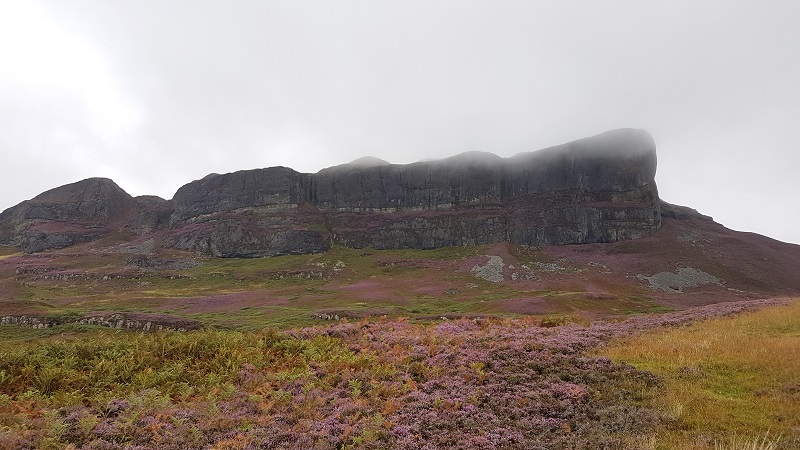
The track becomes a path; there are a few boggy bits, and lots of ups and downs, but it is still clear, still purposeful. So many feet have imbued it with purpose. The first thing we notice that hints we are approaching Grulin Uachdrach or Upper Grulin are some angled, straight lines of raised turf. They are buried dry stone walls, created long ago from the stony, rubble-laden landscape we traverse. They mark irregular fields and enclosures that would outlie and tangle with the settlement itself. Bracken and heather, with snatches of rush and bog cotton form the matrix of vegetation, but suddenly I am arrested by an open, grassy mound to my right.
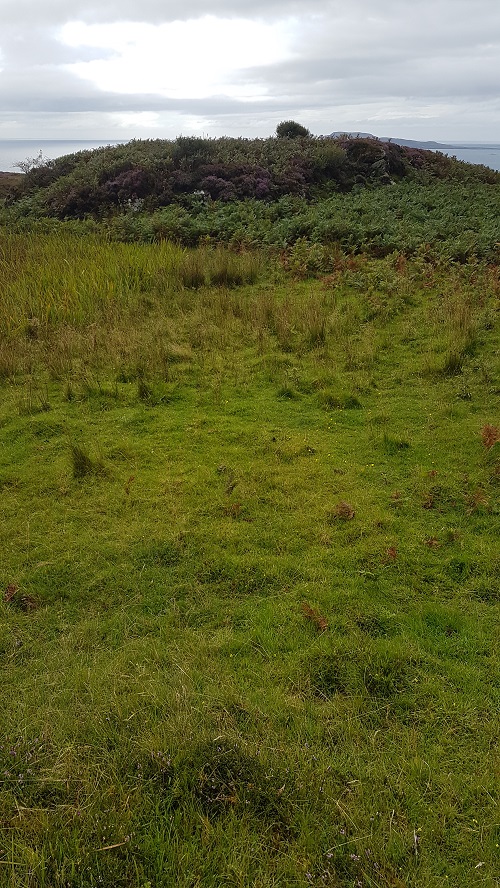
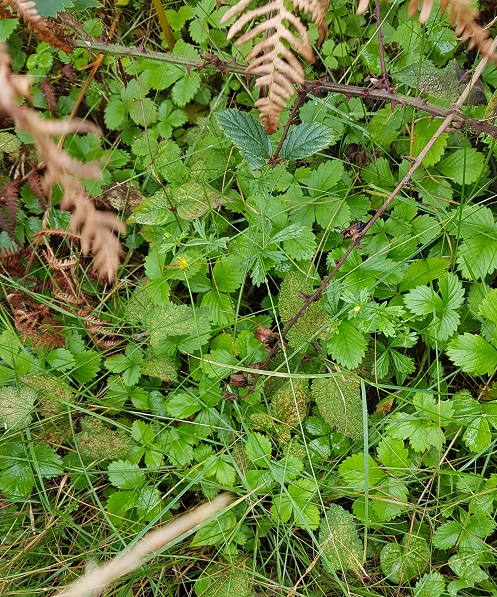
I know from the map we are not quite at Upper Grulin. But I head off for that mound, and feel a prickle in my spine, a sudden silence in my head. On the edge of that sunny clearing, I stop. The wind is stilled. Are there walls beneath me or not? I walk through – or is it over? – the softly waving pale green grass, and step – is it outside? – into the tufts of fern and heath. I think, am I walking someone else’s path, or one created by my imagination? And then there it is – a small patch of stinging nettle, the signature of the midden. Someone lived here once. So I follow their path, and it leads around the cnoc to a south-facing rocky bank covered in wild strawberries. I get it. I, too, would have passed the midden to get fruit for my porridge every summer morning.
Most of the ruins are more visible, and soon they come into view. Indeed, the first is roofed and is in good repair, with new windows and fresh white paint. It was the one house left for the shepherd when the whole village (which had held 103 people) was forced to leave – “cleared” is the unsavoury term they used for it – by the landowner in 1853 to make way for Cheviot sheep to graze the rich pastures.
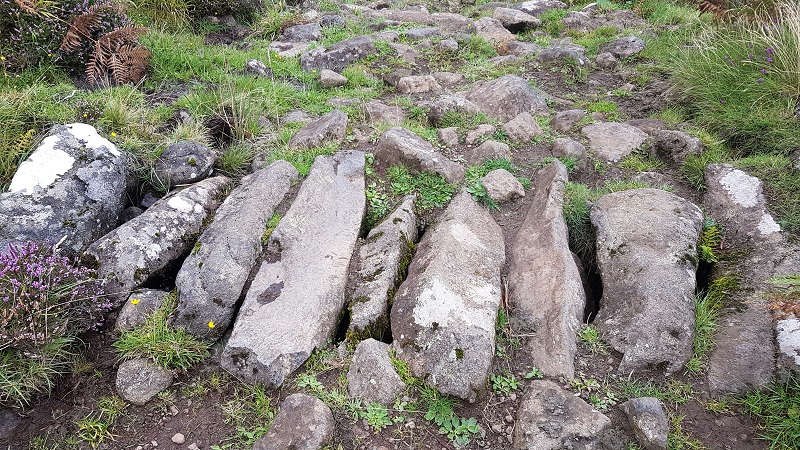
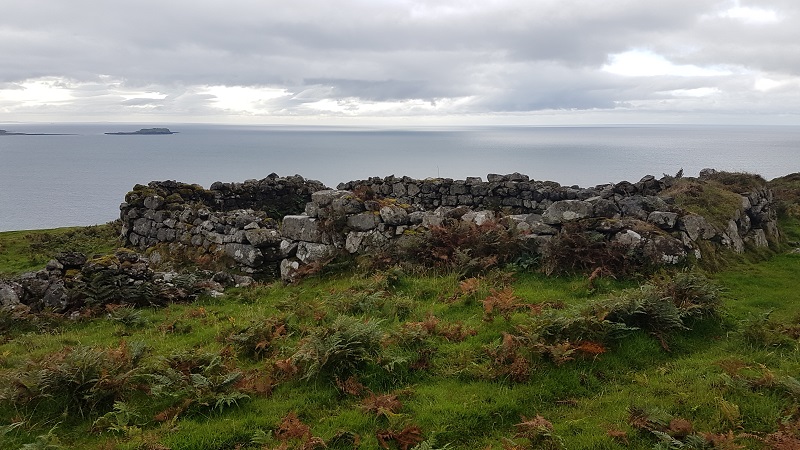
The rest of the buildings are dunts in the bracken, crumbling walls, the hint of a doorway, nothing above lintel height. We continue on the track, now more rocky and difficult, to Grulin Iachdrach (Lower Grulin). Springs gush from the rocks near the path; we cross one by a rough bridge of massive unhewn rocks lain long ago. Later, we founder in a bog – the sort you hop quickly without stopping and your fingers crossed. A kestrel hovers above the ruins, claiming it as territory. Some houses of Lower Grulin are easy to access. All retain their tell-tale nettle patch after 160 years. I stop at a doorway and wonder, can I enter? Eventually I quietly ask permission, and apologise, and go through. Again, the silence, within and without. The questions, the unknown answers; long sea journeys to Nova Scotia; what is left? What is lost? What remains?
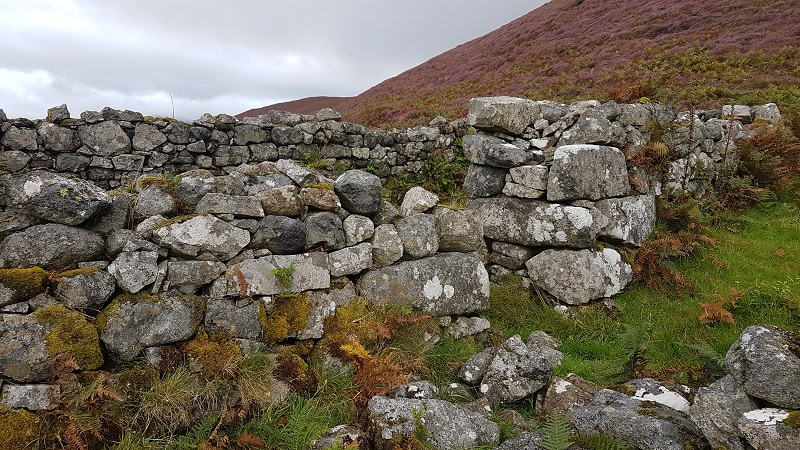
The “18 unroofed buildings, 6 enclosures and a field system” drily described in the notes on the 1880 Ordnance Survey map of Eigg to sum up Grulin are not all that’s there. A fort, probably Iron Age, sits perched on a rocky outcrop. Shielings, shelters, kilns and other buildings have been identified.  And what remains is that silence – a telling scream of silence. Whatever the end story for the 14 families who were given no choice, that screaming stillness can almost be tasted, bitter and lingering.

But, on this island which has taken control of its fate, this crime can never be committed again.
Ambushed by Birdsong in Taymount Wood

“Much laid plans” and all that. I knew exactly what I was going to write about in my second post for West Stormont Woodland Group. It involved walking quickly and without distraction to King’s Myre in Taymount Wood.

But on this sunny, yet briskly chilly morning in March, the birds had other plans for me. We hadn’t got far when the dog was infuriated by an ear-piercing whistling made, apparently, by a bush. Eventually a tiny bit of the bush detached itself and was revealed as the smallest bird with the loudest voice – the wren, bustling ahead of us from twig to twig. The dog hates wrens. They scold, scoff, and shout at him, warning everyone he’s about.

TW scotspine

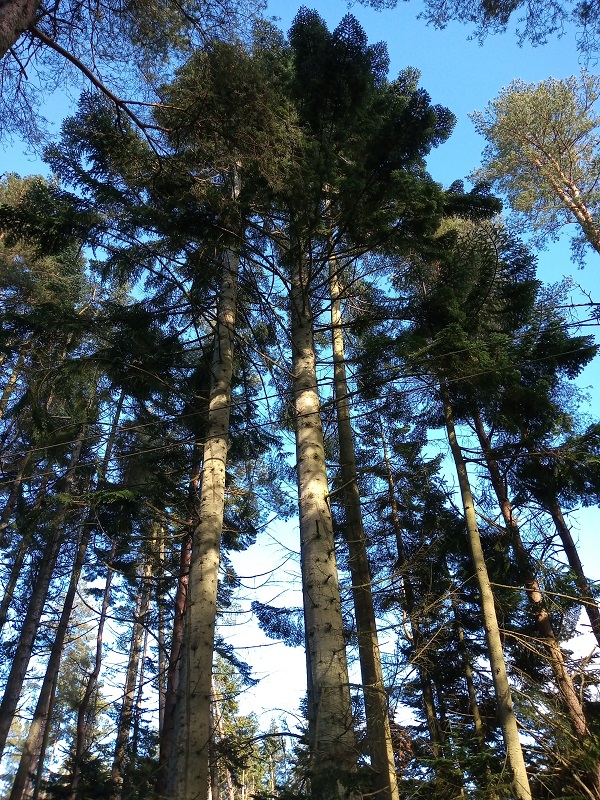
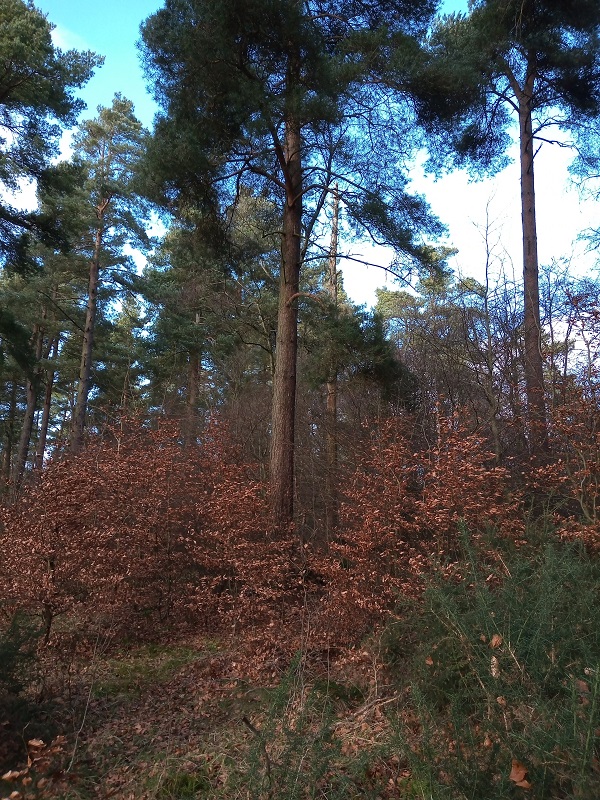
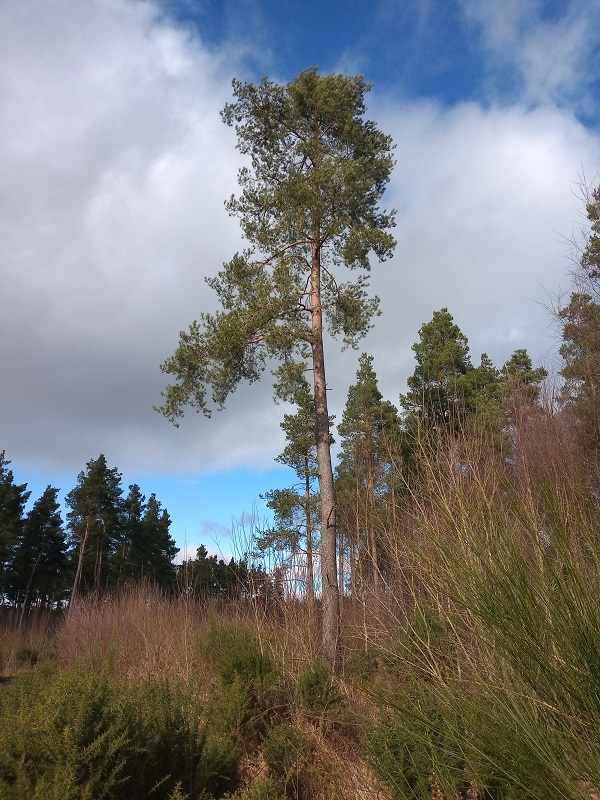
We dawdled on. Taymount contains a fair variety of tree species for a plantation. Tall Scots Pines lifted their crowns to the sun. Here and there, where selective felling had left a pine with elbow room, the narrow confines of its growth could be seen morphing into the mighty spread of the Caledonian pines. Larger clearings now host dense, self-seeded birch, through which a flock of greenfinches scurried. Brown bracken, unusual in this wood, lay beneath, thick enough to bed a herd of beasts.

TW bracken

We were on the cusp of spring. Robins proclaimed territories sweetly, compellingly, from field walls. We saw and heard shrill blue-tits, piping long-tails, busy coal-tits, always on the go. Great tits were most strident, high in the trees. “I’m yours! Look at me!” they seemed to cry in their repetitive, compulsive mating calls. Gazing up focused my attention on the trees, too, as silver firs soared into the blue sky. We fantasised about crested tits, one day, coming here.

TW silver fir

We came to some Sitka Spruce which had evaded felling. Sitka is a splendid, statuesque tree when grown as a specimen. If it has no place in the Scottish ecosystem, tell that to the coal-tits. These spruces were laden with dangling ginger cones and coal tits moved systematically from branch to branch, eating the seeds. Then a spotted woodpecker, who’d been ever-present with his drumming, exploded out of hiding and passed right over our heads, a massive spruce cone gripped in his bill.

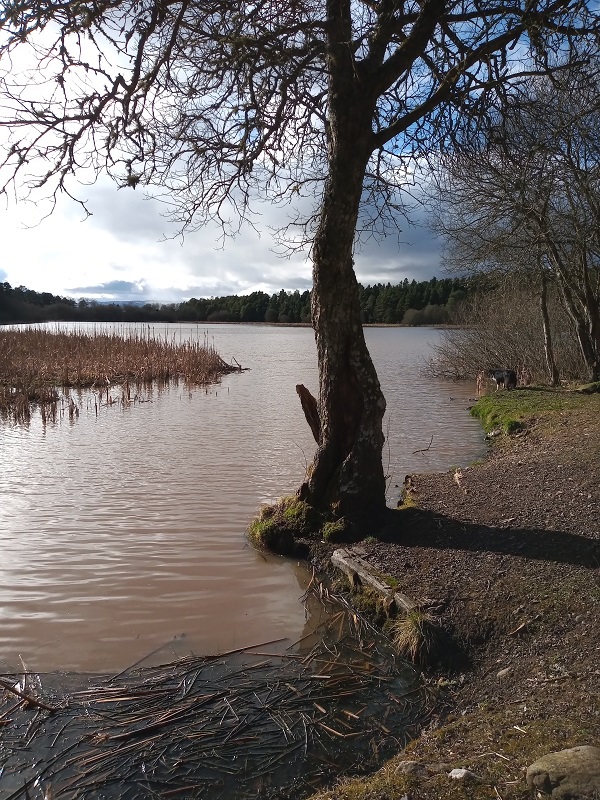
By the time we got to King’s Myre, we just enjoyed the sunshine by the loch. Another day for that tale!

TW kingsmyre1

February: Five Mile Wood


beech saplings

Dreich doesn’t begin to cover it. Weeks of rain, sleet or snow, and the wood is wet, dank, chilly. One storm has passed, another is forecast, and a group of multi-stemmed birches, green with lichen and algae, droop and wait despondently.

I take the rutted cycling path that skirts the woodland edge. Under the tall, fiendishly straight Scots Pines, many scattered beech saplings nestle in their winter boleros of retained leaves. Beech mast is everywhere, but I do not see the older tree from which it has fallen. Beech seedlings tend not to come up near a parent tree, but somewhere there must be a Mother.

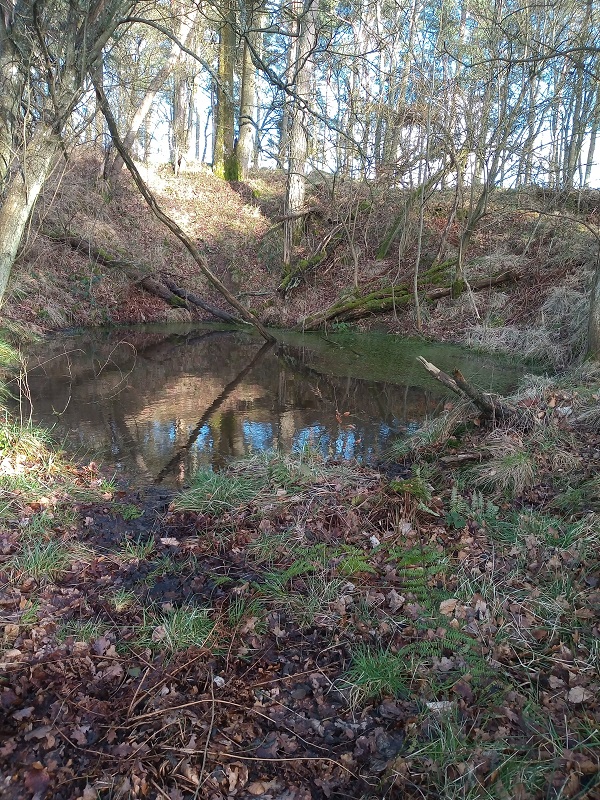
Snow lingers crystalline along the clay-bottomed ditches where black, cold water lurks and trickles. There’s a pond under the pines which so looks like it was formed by an explosion I call it the bomb crater. No signs of frog spawn yet. Several tracks and paths meander where animals come down to drink. Duckweed covers a third of the surface; in the increasing rain thousands of ripples intersect and make diffraction patterns over the other two thirds.

bomb crater

Birds – except for a robin – are silent and glum. A flock of pigeons clatters off towards the field; freshly ploughed, it offers them nothing but the stones that lie heaped in the field corner. How many decades or centuries of cultivation have contributed to this pile? This side of the fence, someone a long time ago arranged stones round a favourite tree, where they remain, moss-covered and half-buried. Larger rocks with wavy patterns etched onto their surface erupt in groups from the forest floor, scarcely distinguishable from the stumps of felled trees. Moss, lichens, algae democratically envelop all.

blackening russula

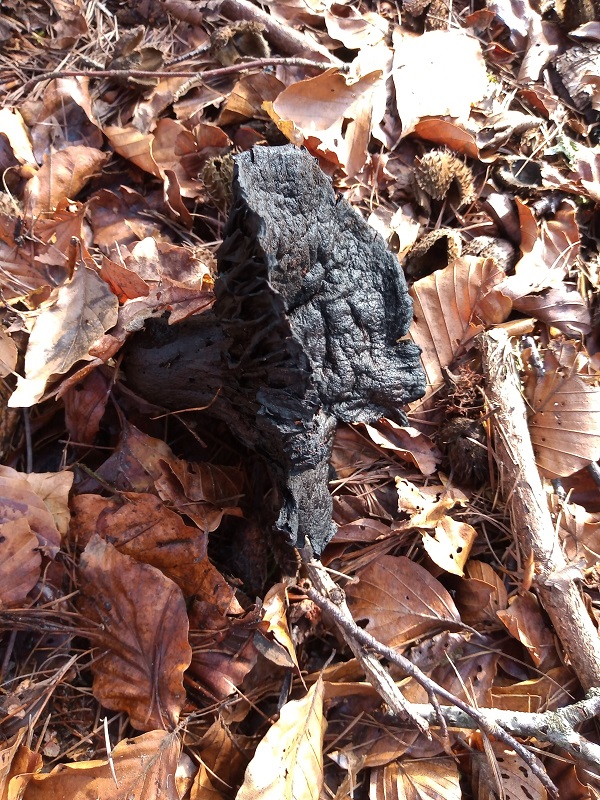
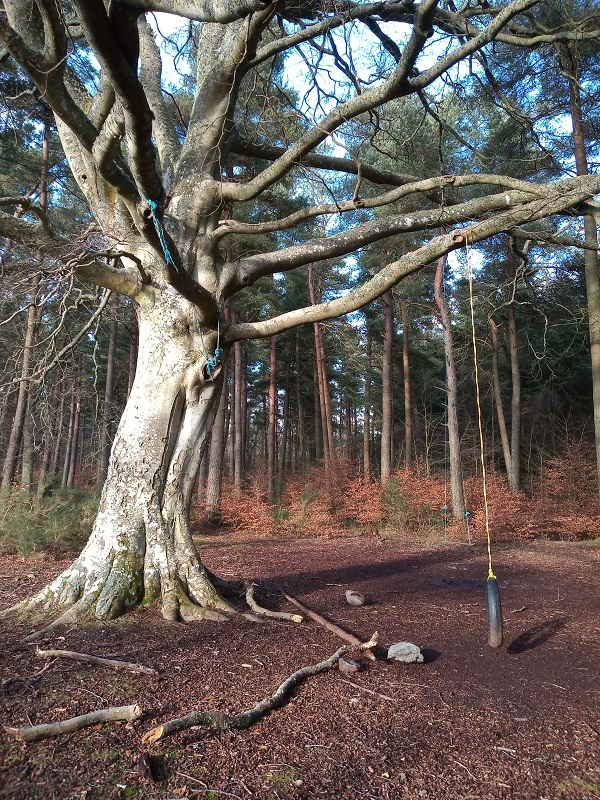
There are charred-looking remains of mushrooms by the path. I think they were Blackening Russulas, an abundance of them. I follow their orbital trail and suddenly find myself under a towering old beech tree, with many spreading branches and a hollowing trunk that makes a chimney of dead wood and fungal rots. Swings hang from two branches; insects and other invertebrates burrow into the soft core of the tree and make their homes. The woodpecker will soon come calling for her dinner, other birds will nest and shout from the canopy. I have found the Mother of Beeches, and of much else besides.

mother of beeches

Five Mile Wood and Taymount Wood are former Forestry Commission plantations just north of Perth. They have for a while been transitioning from industrial timber production to a subtle integration with the wild, and people are part of that wild change. The Commission have put them up for sale, and local people have formed West Stormont Woodlands Group. We are hoping to implement a community buy-out. You can find out more about the plans and group activities at http://www.weststormontwoodlandgroup.org.uk Over the coming year, I intend to write a monthly blog post “Words for Our Woods”about the wildness of the woods, in support of WSWG. This is the first.

There are Trees in Sutherland

The last time I was in Assynt I was nine or ten, on my first visit to Scotland. My big sister and her boyfriend took me camping on a road trip that began in Glasgow and ended at Cape Wrath. For a child from the suburbs of East London, it was nothing short of life-changing. As we returned to their flat in Glasgow, my sister asked me which places I liked best.

“Wester Ross,” I said.

“Not Sutherland?”

I thought for a bit. “I liked it. But I liked Wester Ross more.”

“Was Sutherland too harsh and wild for you?”

I sensed a trick question. My sister always wanted to toughen me up. She reveled in wild and empty open spaces, the complete absence of people. I wanted her approval. But something in her question  rang true. It wasn’t that Wester Ross was softer, meeker, but somehow – I couldn’t explain – somehow there were more….

“Trees,” I announced. “I like trees. There were no trees in Sutherland.”

I’ve had decades since to reflect on my response. At that time, the North-west Highlands were remote, empty of people. Settlements were sparse, inhabitants few, and tourists virtually non-existent. But I could see where people had been. The ruins of dry-stonewalled houses and whole villages stood everywhere, a testimony to clearance, plague, poverty and emigration. Crumbled walls, sometimes just foundations, a gable or a chimney pointing here and there to the sky. You couldn’t miss them. Our wild campsites were up the remains of old tracks that led to derelict hamlets. I remember one that I would walk around every morning. A little way from the ruined houses I saw a weird cairn-like structure of four or five strategically placed, flattish stones. I lifted them. Below a deep, dark hole blinked at me. There was a melancholy, metallic splash when I dropped in a stone. I’d discovered the well, and it stared back at me, naked and accusing. The cover stones might have been placed just yesterday. Feeling a sickness and strange fear in my stomach, I tried to replace them exactly as I’d found them – in case someone came back.

I don’t think I’m just speaking with informed hindsight when I say that I sensed there was something wrong about the bleak emptiness and the ruins. The further north we got, the more pronounced it became, perhaps because of the lack of tree cover. Maybe there were trees in Sutherland back then, but I didn’t see them. My guardians preferred walks on bare hills, peat-bogs and wind-blasted coasts.

trees in sutherlandBut last week I was in Assynt again, and if there were many changes, it was the trees I noticed first. It’s nearly 26 years since the first ever community buy-out of land in the area by the Assynt Crofters Trust, and there have been others in the area since. The first trees I found myself looking at were less than 25 years old. I walked in vibrant young woodland at Little Assynt, above the shores of the great loch. Deer fencing surrounded large tracts of land. Birch, rowan, hazel, Scots pine…… willows, elders, hollies and even aspen…… planted by Culag Community Woodland Trust or regenerated naturally within the fences. Outwith the fences, though, trees were also regenerating, especially birch and willow. Sheep, ironically, seem to have been cleared to the coasts. Deer pose for tourists around townships, but their numbers are controlled. Bluebells and primroses are appearing under the bracken.

So, there were woods here before, then.

The Assynt downy birches are wonderful stunted specimens, all arms and legs as they branch and branch again and gesticulate over a landscape of ferns and mosses and blueberries. I saw very old birches in woods up a river valley – huge, shaggy trunks breaking into wiry, angular limbs about three feet from the base, and still sending up new wood. It seemed pretty clear they’d been pollarded for their timber a long, long time ago.

There were woods here before, and they were valued and sustainably harvested.

There’s a native tree nursery at Little Assynt, whose owners work tirelessly among the little assyntmidgies to produce more trees, all from seed they’ve gathered locally. They’re pretty excited that after last summer, the aspens have flowered – a rare event in a species that prefers to clone itself vegetatively – bringing welcome genetic diversity into the local tree stock. At the Falls of Kirkaig, we bumped into a naturalist friend from near home in Perthshire (Scotland being such a gloriously small country), who had observed the same phenomenon. So, there we were, all getting excited about the future of a tree species in a place I’d remembered as treeless.

Of course, there are other changes. You have to look hard to find any old townships from pre-clearance times. The earth has swallowed them up. The roads are more solid, with no grass through the middle, so there are more motor vehicles and far more people. Mostly (but not all) tourists. A few whizz about, thinking it some kind of achievement to “do” the North Coast 500 in a day, or delude themselves that they can capture the essence of Sutherland from the inside of some huge, self-contained box-on-wheels that couldn’t fit into a passing place even if the driver recognised one. Sutherland could perhaps use fewer of these. But many linger, fall in love with the mountains and the deep valleys, accept the weather, and engage with the landscape – and come back. Sutherland has become accessible to tourists. It has learned to cater for them, and yes, it is busier, less remote, less empty.

But there are trees in Sutherland.