

We’ve always felt a sense of ownership of our local bluebell wood. It’s the place we take visitors, a secret to share with loved friends and relations. Over the years, it’s become quite renowned, at least in May, when the ancient oak woodland is carpeted with bluebells. People have always flocked to it then, to capture images on camera, to bring children and grandchildren, or just to stare in amazement, breathing in the scent of bluebells that stretch far and wide.
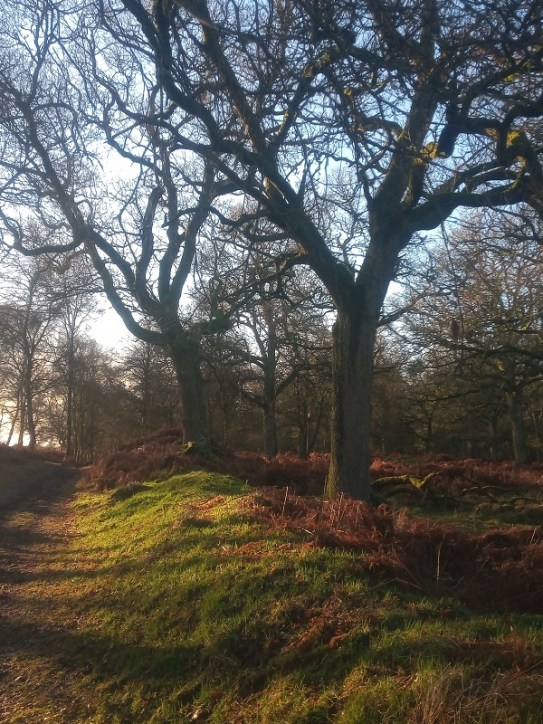
Maybe not so picturesque, but it’s equally magical in other seasons: when the bracken grows up fresh and green, or in its autumn gold, and in winter, when the silence is tangible, the bracken is tawny-brown and the shoots of bluebells lie just below the soil.

The sun is low and carries no warmth; it pierces the sweet sculpture of bare branches and paints the carpet of mosses under the fir trees with iridescent green and gold. It lights up the crumpled and disordered fern fronds as if with fire.

Every oak tree is adamantine and statuesque, posing in naked dignity. The scattered ancient, crumbling beeches also look invulnerable – but that’s an illusion. Every so often, one of them keels over or dumps half a split trunk. Dark, ponderous yew trees here and there are enigmatic about life and death.

At the top of the rise, my favourite tree is a multi-stemmed silver birch, which stands against the sky as if it were painted there. For me, this is Stephen Hawking’s tree. I was on my way up that hill in March 2018 when I heard that he’d died. I sat by the tree and digested the news, sad, but making a mental salute to a brilliant mind. I don’t have many heroes, but Professor Hawking was probably one.

A few years ago, the landowners put the bluebell wood up for sale. That’s when all the folk who’d felt ownership and connection came out of the woodwork. Suppose it was bought by someone who respected neither its status as ancient woodland, nor the long-established right of access? In the end, although a community buy-out would have seemed fitting, it was bought by the Woodland Trust, thanks to a fortuitous legacy. Sighs of relief were followed by the formation of an enthusiastic volunteer group.
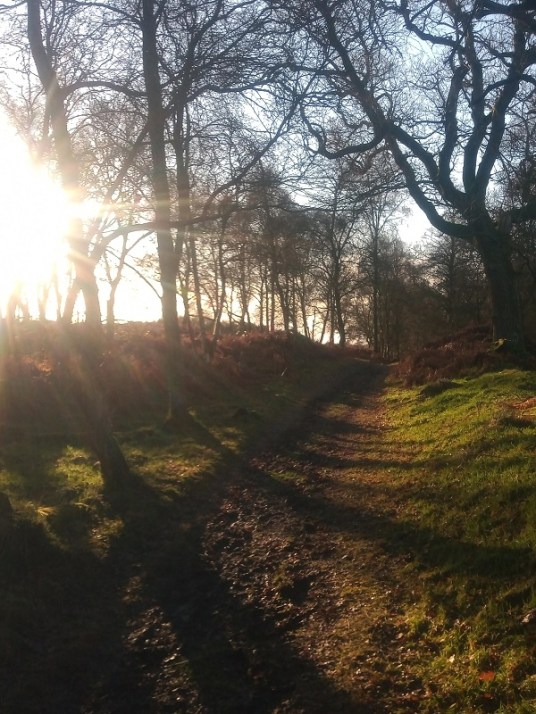
There have been changes, of course. Re-routing of paths to avoid visitors being knocked out by a falling beech branch, a hard line on invasive non-native species that threatened to engulf the bluebells themselves, the eviction of the deer from inside the deer fences to permit oak tree regeneration are just some examples. A car park – inevitable, perhaps, but no ornament… but at least it’s been surrounded by fruit trees.
And a massive planting project of new trees in the adjacent fields that formed part of the sale – thousand of trees, safely behind new deer fencing but accessible via solid gates. Work in spades for the volunteers, for years to come.

It’s rhododendron-bashing day tomorrow.



 Comments on The Nature of the Universe