Regular readers will know I often write about my garden, or the wildlife that inhabits and manages it better than I could ever do. I know a lot of people would have the screaming ab-dabs if their gardens got into half the state that mine does… but for me the need to support the widest biodiversity and my personal love for every other species trumps the sensitivities of the bug-killing, grass-shaving, patio-manicuring brigade. And I’d like to make some converts rather than just be rude about them!
So I decided to create a new blog of short sketches and ideas dedicated to the joys of not being in control of your garden and the fascinating more-than-human friends you might meet in it. Here’s a taster of WHOSE GARDEN IS IT ANYWAY? which you can find at theuncontrolledgarden.wordpress.com
“I started gardening with a notion that what grew in it belonged to me, or to my family. I believed that I was the person who got to choose what grew in my garden. Carrots here, poppies there, grass in between. I welcomed wildlife though – birds could come to the bird table. Frogs could come to the pond. Of course!
But pigeons, snails, mice….. er, no. And the multiplicity of insects and invertebrates just worried me. Were they Good, or Bad for “my” garden? I didn’t know. When I decided to study horticulture professionally, my tutors taught me “Plant Protection” which meant the Pests and How to Destroy Them. A nodding glance to predators and nothing about pollinators. The soil science tutor had a more holistic perspective, but was a bit of a lone voice.
I always preferred the wild flowers to most of the garden ones – although I liked both. So “weeds” got away with a lot in my garden, even though it made me feel slightly guilty. In between lectures, though, I read about companion planting, and comfrey, and composting, and met Lawrence Hills of the Henry Doubleday Research Institute (now Garden Organic), which was nearby. Over time, my perspective changed, and so did my garden!
Now I have a rambling wilderness which I love from January to August and then feel defeated and stressed out by, until calm is resumed around the middle of October. No chemicals, no dig as far as I can stretch the compost, which is the powerhouse of the garden. I still struggle at times and backslide into nervous control-freakery.
But I have one certainty: This is not my Garden. And I am not in control.”
(I will continue to write on the nature of the universe here too. And adjust both sites, especially getting rid of the annoying ads once I’m convinced I’ve got it set up right!)
This week my Google Tasks told me I had to turn the compost heap. I assume I told it to tell me that at some point. I have two largish compost bays (minute in comparison to some, such as the magnificent compost-heaps-from-heaven at the community garden at Hospitalfield in Arbroath – you could bury a small house in each of their bays). I also have several bays and bins for leaves, imports of dung, and bulk biodegradeable materials in waiting, but it is the management of these two main piles that coincides with that moment when summer and autumn are subtly but surely dissolving into winter. For many reasons, I see winter as the start of a new year, and turning the compost always signals new beginnings, new plantings.
The first stage, actually, is barrowing and spreading all the finished compost in bay 2 onto beds and borders around the garden. This has been going on in stages for a couple of months, with sticks and undigested material being thrown back into bay 1. Bay 1 is starting to groan under the weight of future compost, as annual vegetable plants, bean and pea debris and a mountain of weeds from tidying up raise the height to almost unreachable. Once bay 2 is empty, everything in bay 1 can be moved over, introducing oxygen and stimulating breakdown. The topmost material is pitchfork stuff – or even just grabbing arms-full of dry debris and chucking it into bay 2. I try to put the most fibrous material in the middle, where the heat will be highest, making it in theory the best place to break everything down. If I can clean out the chickens just after all this top layer has gone on the bottom, the aromatic stew of chicken poo and wood shavings works as an activator.
The middle layer next, and it becomes more interesting. Here the brandling worms that thrive in the warm centre are busy at work, oodles of them, squirming voraciously in the decomposing mire. They are the visible agents of change, but unseen workers include many kinds of fungus and bacterium, at least as important. The middle layer is a seething mass of activity, and I make sure that on transfer to bay 2, the “working layer” maintains most of its integrity. Composter organisms are forgiving, though, and will migrate to the part with the right temperature if they find themselves compromised. Meanwhile, the garden robin and blackbird perch nearby, popping down for a feast of something whenever I pause to straighten and stretch.
Now the two piles are roughly the same height and I get into a rhythm with the pitchfork. The work is easier. I reflect once more how well yoga practice fits me for gardening – turning compost means twisting without injuring your back, and balancing on wobbly compost to reach the stuff at the back and sides of the bay. I work away getting the compost from the cooler edges into the middle and am left standing on a small pinnacle in the middle of bay 1.
Delving down the pinnacle, the number of compost worms decreases, and the ability to combine a twist with a forward bend comes into play…..work is getting harder again and I don’t want to suffer later! I start to turn out large numbers of wonderful centipedes. Centipedes are carnivores, not detrivores – they are not adding to the composting process, but hunting smaller creatures who live on bits of decomposing plant and humus. In the garden they are generally really good news, as they also eat the invertebrates who want to steal our crops. I try to catch one or two for a photo, but they are camera shy, and very, very fast on all those legs – as true hunters should be.
Photo by u0413u043bu0435u0431 u041au043eu0440u043eu0432u043au043e on Pexels.com
So, near the bottom of bay 1, the compost is as complete as it will be, and ready to use without being turned. I start to fill barrows of the good stuff, rejecting some unprocessed bits and pieces but not worrying too much – any unfinished business should happen in situ, over the course of winter. I dump and spread the compost on beds and borders. I don’t dig it in – no need. I have earthworms for that. It isn’t perfect, my compost. Eggshells hang about for ages, for example, and every autumn I dredge up a few well-rooted avocado plants which have grown from stones that never seem to decompose. (Neither do the skins). The heat given off by decomposition enables them to germinate. This year is no exception, and as usual I take pity on one, pot it up and take it into the warm greenhouse, where it will grow into an untidy, straggly, leaf-spotted pot plant with no hope of bearing fruit, and I will start trying to give it away to unsuspecting friends with more optimism than I have about its value.
The last few shovelfuls, the final pitchfork-loads, and lo! I discover that the sticks I placed at the base of bay 1 last autumn because in a whole year they had failed to become compost are still there, barely altered….. I spread them across the base, along with the 3 year old thick cardboard tubes from inside the new polytunnel cover… they ARE biodegradeable, and I WILL win this battle….one day! On the plus side, after years of running a nursery here when thanks to lack of time and the vagaries of some of our volunteers, my compost heaps produced more plastic than a supermarket, this year my accidental plastic input and retrieval is minimal – and I can re-use the two ties and labels. And only one unreconstructed plastic-reinforced tea bag, right at the bottom, since we have found plastic-free brands.
Plastic pollution in decline!
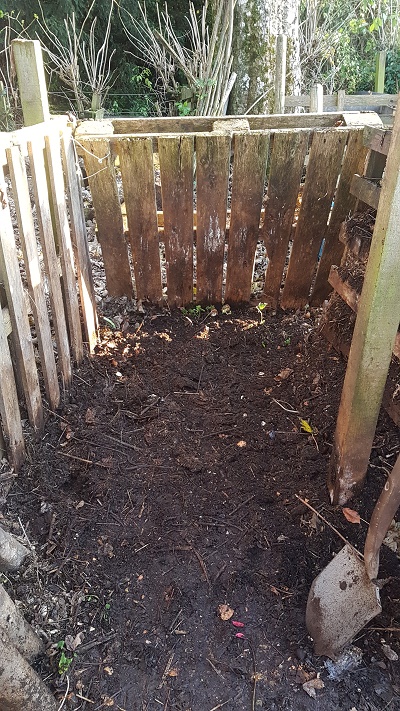
I level the top of bay 2, and cover it with carpet. I know that within weeks, heat will build up and by spring it will be less than half the height it is now.All is done, and so am I, yoga or no yoga. And yet I’m incredibly happy with today’s work. Compost-making is the heart of my gardening life, the most satisfying, the most compulsive work, returning to the earth the things of the earth. I hope I have a good few years of compost-turning left!
It has always puzzled me how anyone spends devoted hours to their gardens unless they also practice yoga. I got into yoga well before I actually owned a garden, and when I did get going with the growing, I quickly realised the advantages of being bendable, stretchable, twistable and, most of the time, reasonably balanced. My first proper job in horticulture was in a large Essex nursery producing pot plants and bedding; automation wasn’t a thing then, and heavy, laden barrows of trays of pots had to be pulled to tunnels and glasshouses and the pots set down in neat rows on the floor, precisely spaced for optimum growth. Here the WIDE-LEGGED FORWARD BEND was invaluable. Wide as possible, straight back, good reach – I could set down all the plants in a tray easily without having to get up, move and bend down again. And, unlike some, I didn’t have an aching back by coffee time.
The wide-legged forward bend is the posture I adopt in the garden for jobs like seed sowing in rows, planting potatoes and harvesting strawberries. If I need further reach, it can be extended, via a WARRIOR into a LUNGE – very handy also for annihilating that far-flung weed climbing the beanpoles. When you then find there are more weeds needing removed, or hidden fruits to pick, the lunge can morph into the GECKO. From any position, being able to go into a suitable TWIST again give you more reach. I confess, I usually accidentally forget I’m in these positions and stay too long, so I hear the voice of my yoga teacher in my head warning me to come out carefully! (By which time, it’s too late…)
For the garden, the great advantage of carrying out tasks in one position is that you minimise treading on the soil and compacting it. You also need to be flexible in where you tread, and occasionally move backwards one leg in the air, to avoid squishing your spinach. Various yoga balances, which I’m fairly hopeless at, nevertheless enhance my ability to cope with a jam-packed bed or border without creating too much destruction. It’s also helpful for pruning trees and shrubs, or picking fruit. (No, however appropriate it sounds, I don’t stand in the garden doing TREE pose. My neighbours would get worried. I do it in the kitchen while cooking to keep in practice.)
In confined spaces (of which my garden has many), or for the impulsive weed-blitz as you pass by another small jungle that arose overnight with the moon, it’s very handy to be able to SQUAT and much better for your spine. Very handy for wholesale removal of sawfly larvae from a goosberry bush. too. Coming up from the squat (with an armful of weeds) is a much bigger challenge for me, or for my knees at least, so it’s good that gardening gives me the chance to practice. Even if I don’t appreciate it at the time.
“Old Adam was a Gardener, and the Lord who made him sees That half a proper gardener’s work is done upon his knees”
Thus spake Rudyard Kipling in his poem The Glory of the Garden.. Well, not half your time, perhaps, if you employ wide-legged forward bends and lunges. But some, of course, and sometimes, quite a lot. I’ve been lucky to largely avoid the “gardener’s knee” up till now and although I do get twinges these days, I still spend a lot of weeding or planting time on a kneeling mat – often one knee, the other breaking out into a GATE pose. While kneeling, I deliberately or inadvertently find myself doing the odd CAT and when I’m done, I’ll come to stand by doing DOG, if there’s space (By summer, there generally isn’t).
If you separated out the time I spend “doing” yoga and the time I spend gardening, gardening would win big time, even in winter. I’m not the most disciplined at making myself practice regularly outwith the class, and there’s far too much weeding, picking and planting to be done to attend too many classes. So my answer is to keep gardening, and stay mindful of every horticultural opportunity to utilise a yoga posture and the flexibility, stamina and good lungs yoga gives me. I’d advise any yogis like me lacking self discipline to take up gardening!
Of course, you need to finish your practice with SAVASANA, or CORPSE, the pose of relaxation. No, that’s not a dead body sprawled over the lawn clutching a trowel in one hand and a bouquet of ground elder in the other. But do take it a cup of tea in ten minutes time!
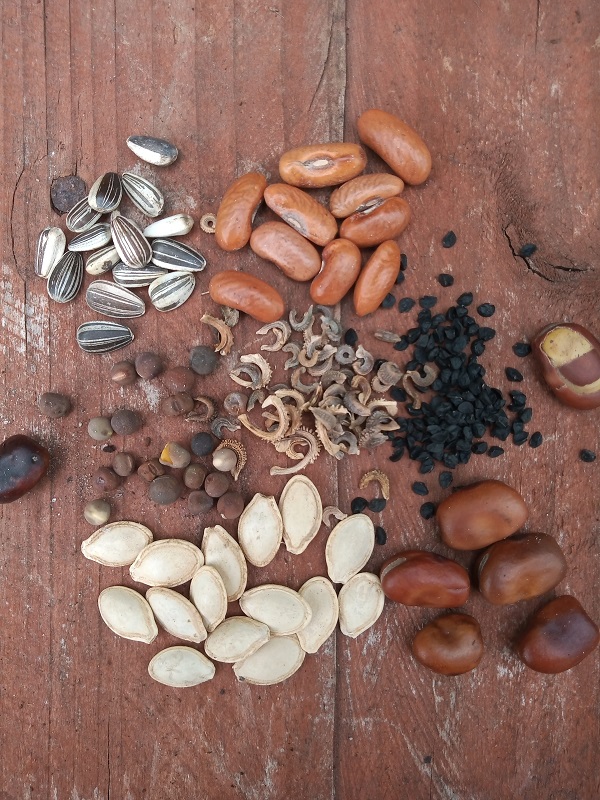
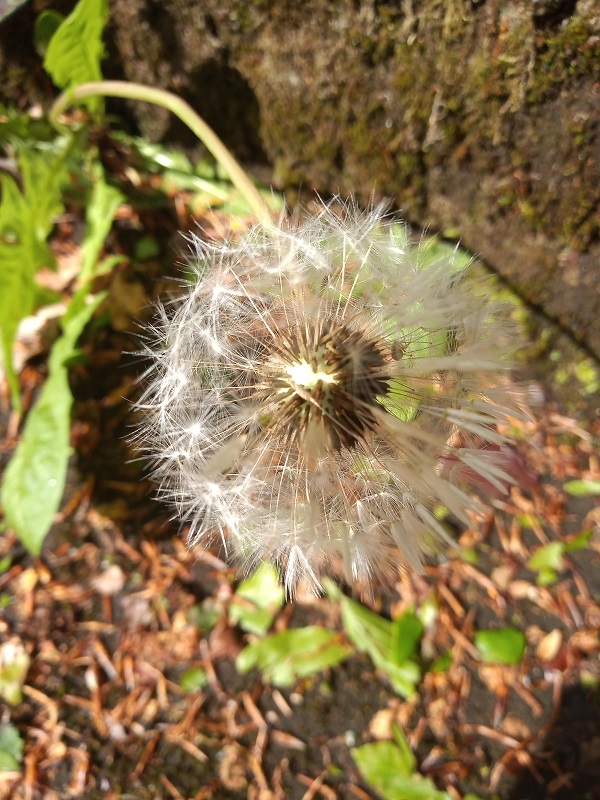
They are as diverse in shape, size, colour, decoration as any flower. They are self-contained, yet everything is contained in them, however small, to make the tallest tree, the juiciest berry, the wheat we eat, the biggest sunflower, the rarest orchid.
Hold seeds in your hand. Feel the faint pulsation of life, no matter how dry, how hard and rigid they seem. Feel that faint warmth, the tiny voice that says. “I know. I am coming. Plant me”.
In your hand is magic.
Remember biology classes at school, as dry as these seeds, the dreary terminology of meristem and cotyledon and radicle? No-one spoke about miracles. Yet no-one understands the rapture of the “hooked plumule” until they see their first-ever home-grown seedling – maybe tomato, maybe a pumpkin – shoulder its way through the soil into the open air, then to unhook and open those first seed-leaves.
You stare, open mouthed. I did that, you think. I put that seed there. And lo, it is growing. It worked. In that moment, you are caught. You will see this happen again and again, pots of seeds, rows of seeds, the longed-for yet always somehow unexpected eruptions of “seed” potatoes breaking through the mounded soil. But always it will dazzle you, floor you, make you giddy with sudden brief joy.
It is the ultimate alchemy – the transformation of small hard mote into living organism. So far beyond the base-metal-into-gold aspiration of mediaeval alchemists, for it has succeeded. And it is a collaborative feat. You may have sown the seed, but the seed has made use of you, and you have grown.
From each seed is the potential for flowers. From flowers, the prospect of more seed through pollination. The promise of seed is the promise that we may eat again, that our children will eat. It is no less than the promise of survival.
In today’s world, a pandemic virus coupled with spiralling concern for an environmental emergency has got us all sowing seeds. An army of growers and gardeners is multiplying like dandelions. These aren’t the old-guard, nature-controlling gardeners. When the garden centres closed, we realised our children cannot afford to be at the mercy of a few big seed companies, or side-lined into dead-end F1 hybrids that will not produce viable offspring. We need seed we can collect ourselves, share, save, and keep for following years and new generations. Seed banks and seed libraries (a kinder term, that speaks of sharing and co-operation) are springing up across our land. Is there one near you? Can you start one?
We are a people terrified by the present, grasping for a past that was never really going to sustain us, and reluctant to look at the future, in case there isn’t one. Seeds, in their understated humility, their quiet, warm still voices, carry that germ of a dizzy rapture, that incredible potential.
Seeds are the promise of a future.
(The quotation at the start is from Melissa A DeSa. Community Programmes Director, Working Food)
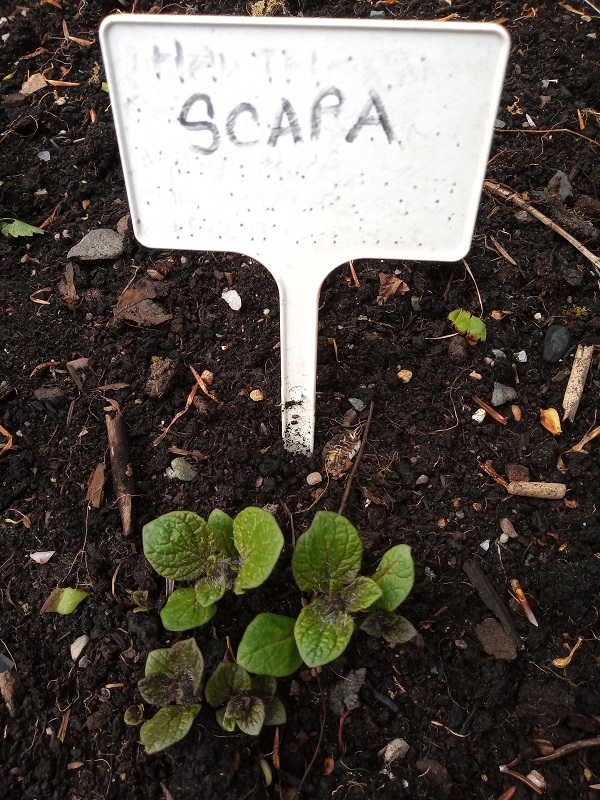
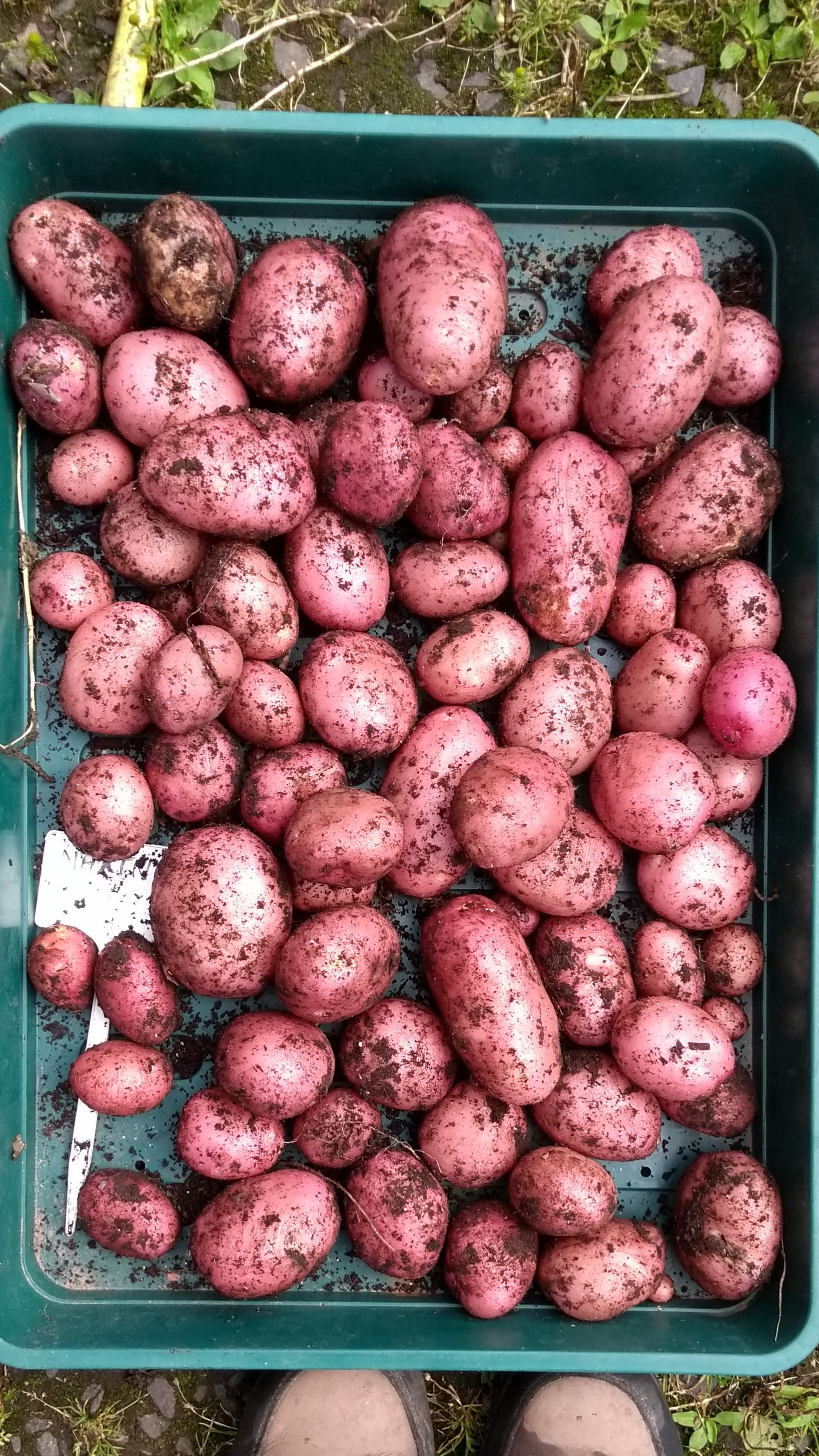
So up they come, the Second Earlies,
Along with a cable tie, three plant labels,
The remains of a scouring pad that’s been through the compost heap
And limpet, oyster and mussel shells
That went in with the seaweed
(of which there’s little trace now),
And a wealth of sand, in spring.
Apples of the Earth, buried treasure!
Lift them all, if you can find them all,
Even the tiny ones destined for the hens, but know
Volunteers will still mysteriously spring up next year.
And there they are, washed and waxy.
The few speared by the graip’s narrow tines
(So infuriating!) will be dinner tonight.
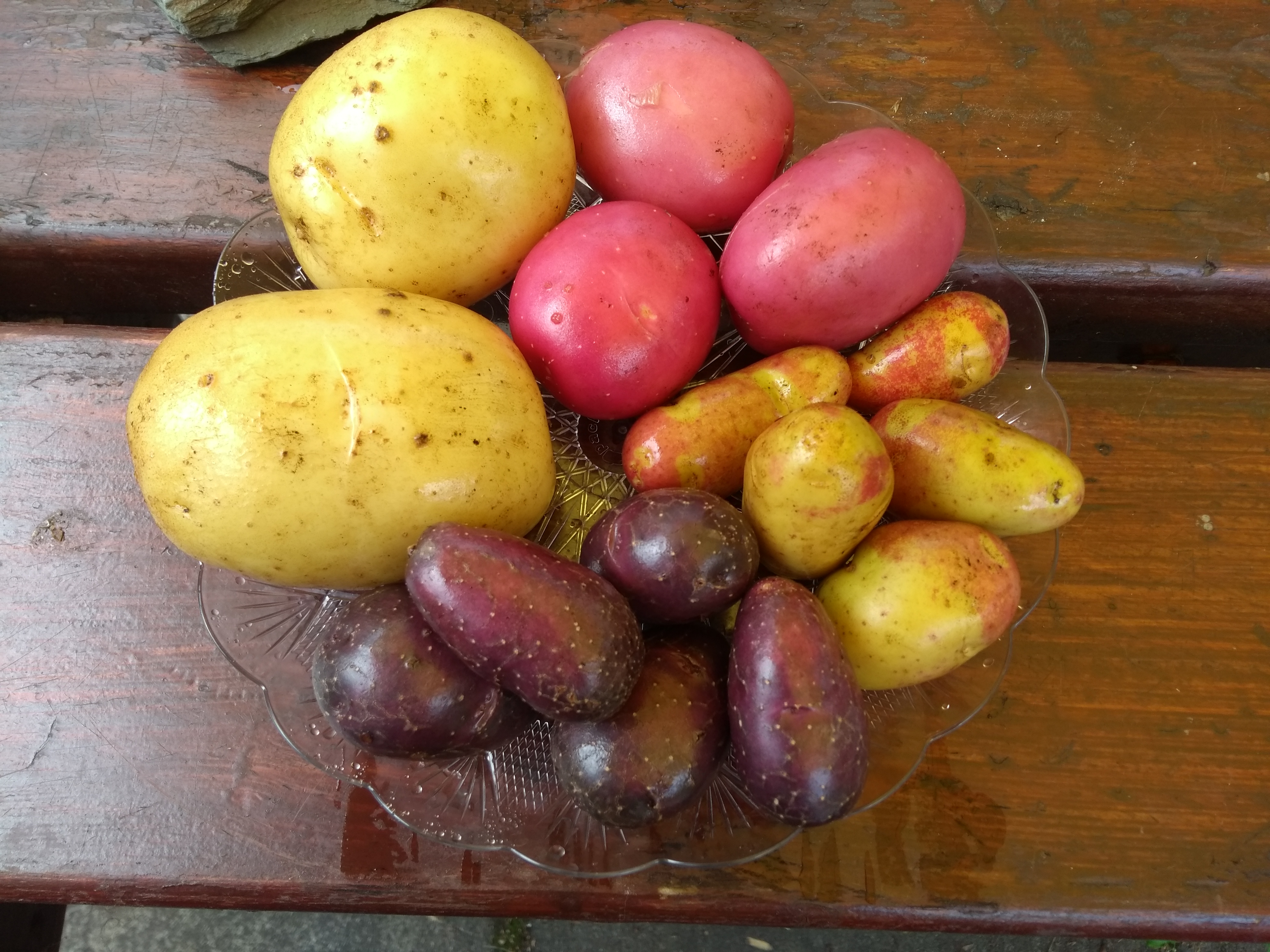
Creamy Marfona; yellow and red-mottled Inca Belle;
Shocking pink Maxine; improbable Shetland (not-quite) Blacks,
Who’ll burst apart at a mere puff of steam.
Still to come: red Desiree and the Redoubtable Pink Fir Apple,
September’s treasure trove.






 Comments on The Nature of the Universe