
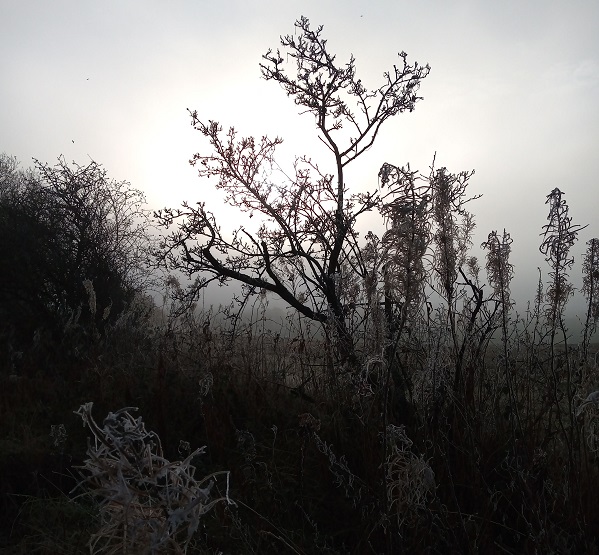
I had thought my days of being torpid and uncomfortable in a cold house were a thing of the past. But an unfortunate tangle with a renewable energy company apparently having major hiccups and losing the plot – at least of our contracts – have found us without heating or hot water for a month and contemplating, in early December, whether this was as bad as other cold houses I have known and loved (in summer)?
First there was the single-brick construction of a bungalow called Berberis, in rural Essex. It boasted single glazed windows in rotting, leaking frames, a total absence of insulation and a rickety “hot” water cylinder perched above a bath, where humans, clothes, linen and everything else had to get washed. There was, of course, no heating – but there was a tiny fireplace in each of the four rooms. The first winter I spent there (1985-6, one of the coldest of the century), I didn’t have the slightest idea how to light a fire in a grate, having been raised as a gas-fitter’s daughter. I was also completely skint, a student, and alone.
I decided I could afford a calor gas heater, which did wonders for increasing the condensation and mould on the walls. As the winter progressed, good friends and relations rallied round, taught me how to light fires, brought me logs (which I cut up with my father’s carpentry saw), and helped rig up clingfilm double glazing over all the whistling windows and their holey frames, draught-proofing for the doors, and thick material for curtains. I slept in the warmest of the bedrooms (the one which didn’t have rattling French doors), in a woolly hat, under a mountain of inherited blankets, with an axe by my side and a tiny fire in the grate.
The second winter, after a summer of falling in love with the house and with my own self-sufficiency, I wasn’t alone, and we spent a good deal of it roasting chestnuts and making babies in front of a roaring fire of logs scavenged from local woods.
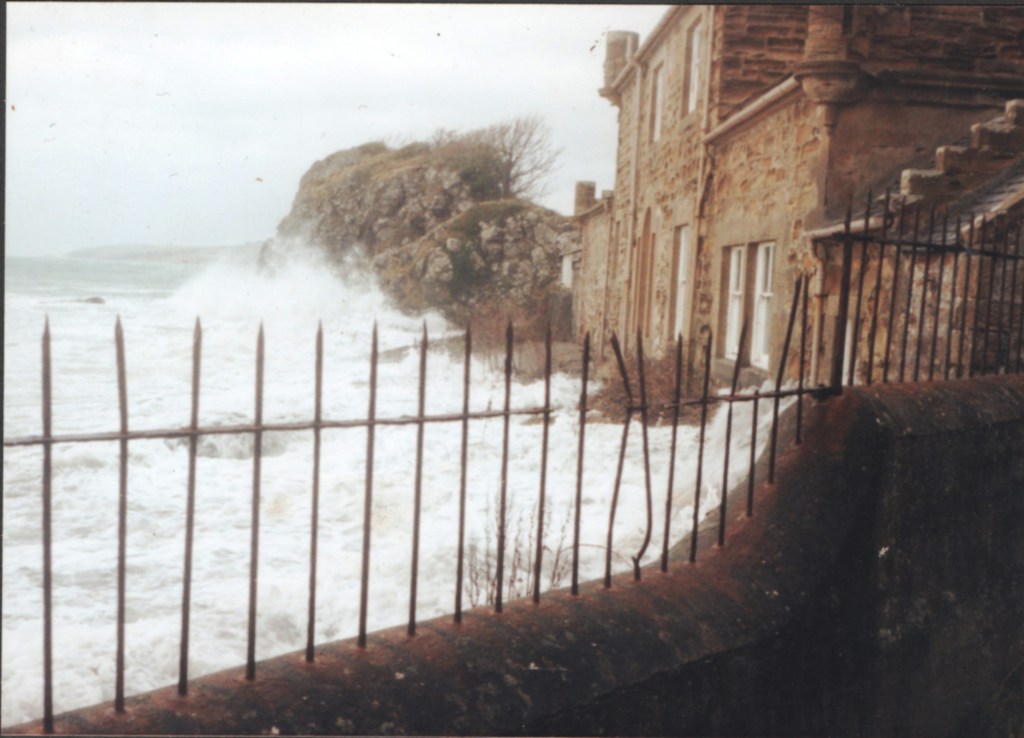
Berberis was certainly challenging, but perhaps the challenges were easier to combat than those of the huge, high-ceilinged “tied house” that was our first home in Scotland a few years later. Did I mention that it literally sat on the beach? And that at spring tides, the waves actually broke onto the walls and windows? It was an impressive building, designed by Robert Adam, and an incredible joy to move to in April from the claustrophobic and embittered south east of England, and to live in with our two babies all through the summer. But Adam never intended it to be a home. It was a rather ornamental, converted laundry. Most of the massive, single glazed windows looked onto the sea (amazing views of sea otters and Arran). There was one wood burning stove in the cavernous living room, and a couple of gravity fed radiators up stairs by the lukewarm-and-no-more water tank.
As winter approached, the shortcomings of the stove became apparent. The biggest problem was fuel. Part of the tied-house deal was that the estate foresters supplied all the tenants with wood for burning. They weren’t our biggest fans on several counts. One, we had English accents, full stop, and were seen to be in cahoots with the higheidyins (also English). This wasn’t justified, but hey. Two, said higheidyins had asked my partner to put forward his ideas on the ornamental trees on the estate. He took them at their word and (never the best diplomat) incensed the head forester who saw all trees as under his sole jurisdiction. Three, and worst of all, to accommodate the arrival of a family of four, one of the forestry team had been moved out under protest from this house where he’d lived alone for several years. Thus, it was that, when we asked for logs, they took a long time to arrive and were the wettest, greenest, least calorific bits of spruce that could be found. Whereas everyone else got them ready split and chopped, we had to process them ourselves (reasonable enough, given we had the equipment – but they were also impossibly knotty).
Appealing to the Trust for help with heating led to the delivery to the kitchen of a second-hand solid fuel range. It turned out to be cobbled out of an oil fed system, and wouldn’t work. The kitchen floor was concrete, with no floor coverings, and we couldn’t afford to buy any. With only one of us earning a gardener’s wage, and the occupancy of a tied house being reckoned to make our income double what it was, thus making us ineligible for any benefits, we were snookered. I began to get chilblains, and had to stand on a pad of old newspapers when washing up or cooking. For a while I tried cutting the dead meadowsweet stems from by the burn for floor coverings, but though they smelt nice, they didn’t really help. Our small daughter wet the bed. Our son, eighteen months old, developed sleep problems and would wake us all every night. For some reason, we didn’t connect it with the fall in temperatures, but did notice he was kicking off his cot blanket. So, we got him used to a proper bed where the blankets could be tucked in, and moved him into a downstairs bedroom which had smaller windows not facing the Atlantic gales. It also got the morning sun. He still woke most nights to start with, and I’ll never know if the eventual improvement was down to location or the weather just improving.
Meanwhile, I raged at the impossible range and the recalcitrant stove, wore gloves indoors, and spent as much of each day as I could tramping the estate with the babies to keep warm. My partner in a fit of temper one day threw a shovelful of coal into the stove. I assumed the stove would blow up, being a wood-burner, but instead it actually grew quite hot for once. Right enough 90% of said heat disappeared immediately five metres up to the ceiling. For another day, we fed it bits of coal, like feeding an addict tiny amounts of a drug to control its habit.
And guess what? The chimney breast began to roar, loudly, and became too hot to touch. Then flames issued from the 18th century chimney. The days were icy, even at sea level, and the track down the cliff to the house was too dangerous for the fire engine to use, because the estate team had overlooked our track when gritting. The fire-persons (the leader was a woman) descended on a sledge with the firehose and some equipment, and put the fire out in three hours. To do so, they broke a huge hole into the flue, rendering it unusable. It hadn’t occurred to us that the chimneys might not have been swept for years. Who knows, the ineffectiveness of the stove may not have been solely down to the logs.
After that, grudgingly, a better range (still recycled from another property) and a rudimentary heating system were put in by the Trust. By then it was spring, of course. The joys of tied houses. But we left there the following winter, for a remote, off-grid smallholding with a working solid fuel range and a pot-bellied stove where we put up a wind generator and often got snowed in a week at a time. It was positively toasty!
I really hope our energy company’s problems get sorted, that at some point we move up on their list of priorities, and we can achieve, again, carbon neutral hot water and a warm house. I know there are worse positions to be in. In that Adam laundry, ten degrees celsius was a good temperature – not that my study is even achieving that on cold mornings at present. Now, at least, we have a brilliant woodburning stove that never goes out, even when you need it to, to empty the ash. We can afford to put on temporary convector heaters, although it still goes against the grain. Never, ever, undervalue the bliss and luxury of hot water in the tap.

 Comments on The Nature of the Universe