
Spring 2020 has seen an awful lot of fields round here go unploughed and unplanted. Whether this is connected to the global pandemic, I’m not sure. Twenty years ago, a good number of fields were left to grass as government-subsidised “set aside” land, but I don’t think there’s a payment scheme at present encouraging non-cultivation.
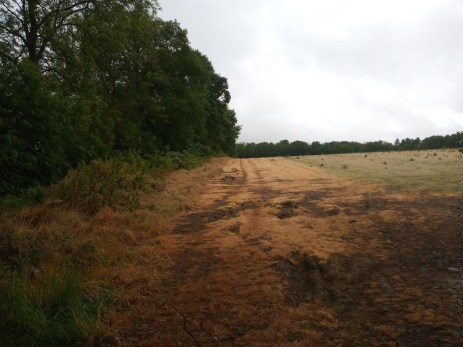
At least, I hope not, as some of these fields have been so heavily and repeatedly sprayed with herbicide they are now ecological deserts. The spray (probably including glyphosate judging from the distorted and curled up stems and foliage of broad-leaved plants that got in the way) has drifted across verges and footpaths, decimating wild food plants such as raspberry, nettle, hogweed and roses that local people forage. It was probably sprayed on one of the many windy days, and/or the tank residues emptied onto the verges. I won’t presume to tell farmers what to do in their fields here, but that is a no-no.

It’s interesting to see that the spear thistles, presumably a prime target of the desertifiers, are remarkably resistant – except where the dose looks to have been doubled.

Garden owners with too much time on their hands during lockdown have been at it too. Every garden hedge not yet ripped out in favour of a fence has a bare strip of brown, dead vegetation at its base. Weedkiller run off from precious driveways, in which nothing must be permitted to root, oozes onto formerly quite pretty road verges and banks. I do understand the temptation, really I do. The patch of 6×2 concrete slabs mis-called a patio here can come to resemble an untended flowerbed in no time, and yes, I do half-heartedly remove the “weeds” when I can be bothered.
It gets to me, however, when garden owners start speculating beyond their own boundaries. Just as agricultural spray drift and chemical dumping on publicly-used land is bad practice and breaches all pesticide regulations, so spraying, strimming, mowing, “prettifying” or planting with rhododendrons the verges, banks and roadsides near, but not part of, a property is offensive to me.
Very offensive. What people do with their own verges is up to them, whether I think it desirable or deplorable. It’s none of my business. When they inflict their personal idea of what’s attractive – and their personal conceit of themselves as above nature – on land that has absolutely nothing to do with them, that stinks. It is so weird that so many people with money jingling in their pockets buy up property in the countryside and then occupy and worry themselves non-stop trying to make it look like a posh city suburb.
A friend of mine coined a good term for this – Horticultural Imperialism. Yet another form of imperialism we need to grow out of, reject and set aside as a species.
 Comments on The Nature of the Universe