
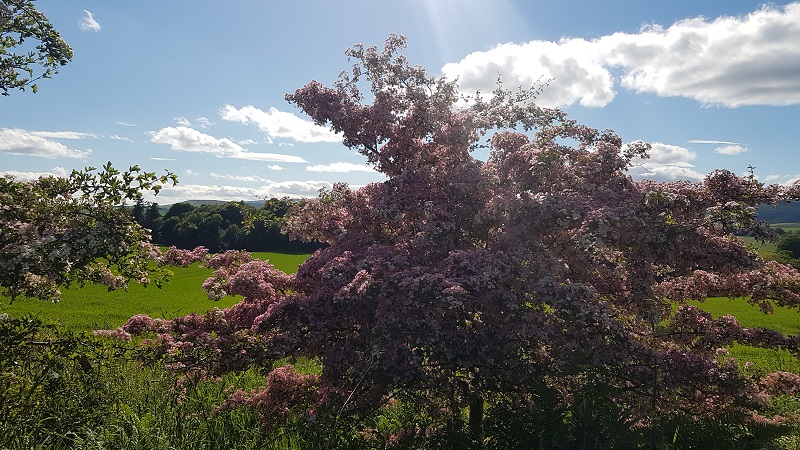
There have always been a few pink ones, tantalisingly rosy in the distance, exquisite in proximity. Hawthorn (Crataegus monogyna), also known as May, the mainstay of the rural hedgerow and the exuberant, wild lace that dominated the countryside in late spring, until money-obsessed agribusinesses ripped out the vast majority of the hedgerows and hammered the rest into stunted wedges that never got a chance to flower – it’s genetically variable when it comes to flower colour. Traditionally pure white – Housman’s “high snowdrifts in the hedge”* – but look closely and the suspicion of pink usually lurks around the outside of the petals.
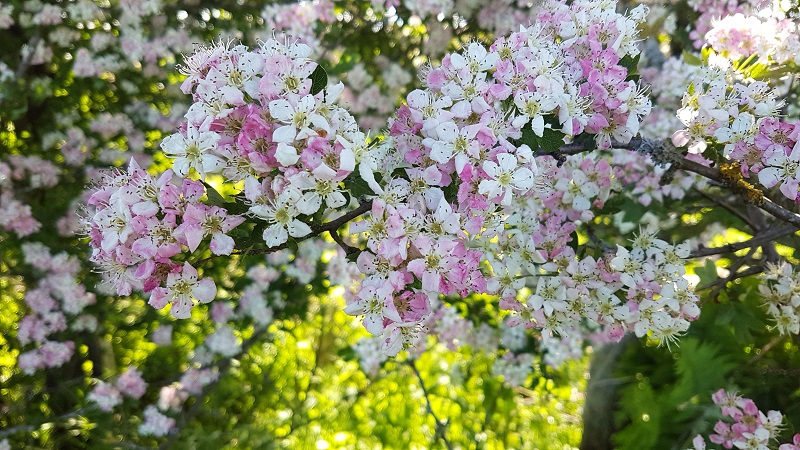
This year, our local hawthorns stayed tightly in bud all during the cold, frosty and then wet weather of April and most of May. I was despairing of them opening in traditional time and thinking of renaming the shrub “June”. I found a single flower open on 21st May, but it was the end of the month before they felt safe enough to come out of hiding, and already their companion shrub, the broom, was going over. But now….. they astound, they soar, they are alive with insects….and, for whatever reason, they have emerged in all shades of pink. It’s like wading through raspberry ripple ice cream, sneezing with the outrageous amount of pollen and drowning in that pungent, not-quite-nice but not entirely nasty, scent.
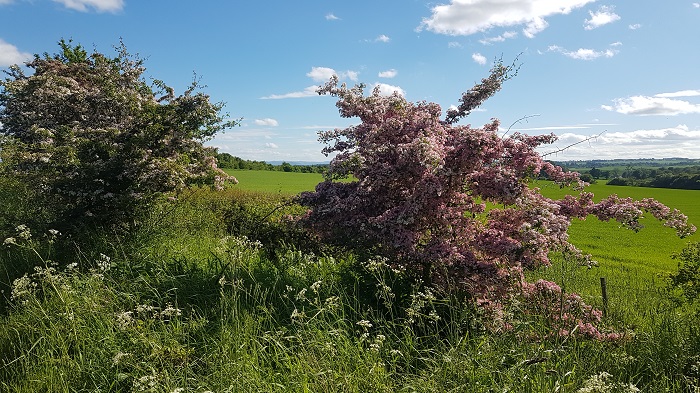
What a sight to hold drunkenly in your mind’s eye, until May – or June – comes again!
*’Tis time, I think, by Wenlock Town,
The golden broom should blow;
The hawthorn, sprinkled up and down
Should charge the land with snow.
Spring will not wait the loiterer’s time
Who keeps so long away;
So others wear the broom and climb
The hedgerows heaped with may.
Oh tarnish late on Wenlock Edge,
Gold that I never see;
Lie long, high snowdrifts in the hedge
That will not shower on me.
from “A Shropshire Lad” by A.E. Housman
 Comments on The Nature of the Universe