The Undefeated Willow

Willows are the most curious trees. For a start, there are well over 300 species worldwide, with eyebrow-raising common names such as Eared, Goat, Cricket Bat and Crack, or casually colour-hinting names (black, white, grey, violet, red and purple). The colours usually refer to the young stems, and that’s why willows have long been valued everywhere to make beautiful baskets, hurdles and sculpture – along with their wonderful flexibility which makes them capable of being woven without snapping. A well-made willow basket is strong and lasts a lifetime.

Those hundreds of species readily hybridise promiscuously, making identification a chore, to say the least – even in Britain where only nineteen species are considered native. I think it’s unlikely humans really know just how many species and hybrids there are. Willow – or sallow, or osier (even the names are slippery) just won’t be pinned down.

Willow won’t be kept down either, even when it falls. Put a bunch of willow stems in the rain-butt to soak for basketry, and the next thing you know, they’ve all grown roots. They grow quickly, ferociously fast. Two metres a year is not uncommon for new growth. Coppice them, and they’re back up the next year. Their Lazarus impersonations are all the more improbable given the mind-boggling number of diseases the genus is prone to – black canker, blight, powdery mildew, scab, watermark disease, root rot, heart rot and willow anthracnose, to name but a few. They are pioneer trees, kicking off the cycle of colonisation in open ground that is damp or downright boggy, and no one fairly expects them to last for centuries.

By what remains of the old Back Mill millpond in Bankfoot, there are some death-defying willows. I don’t know the species. One monster of a tree, often pollarded in the past, still stands erect – outrageously enormous, ancient, decrepit. As the millpond has steadily drained of its water and silted up, the roots of these massive willows have been exposed. A flood of heavy rain then washes away the soil, until eventually the whole tree comes crashing down.
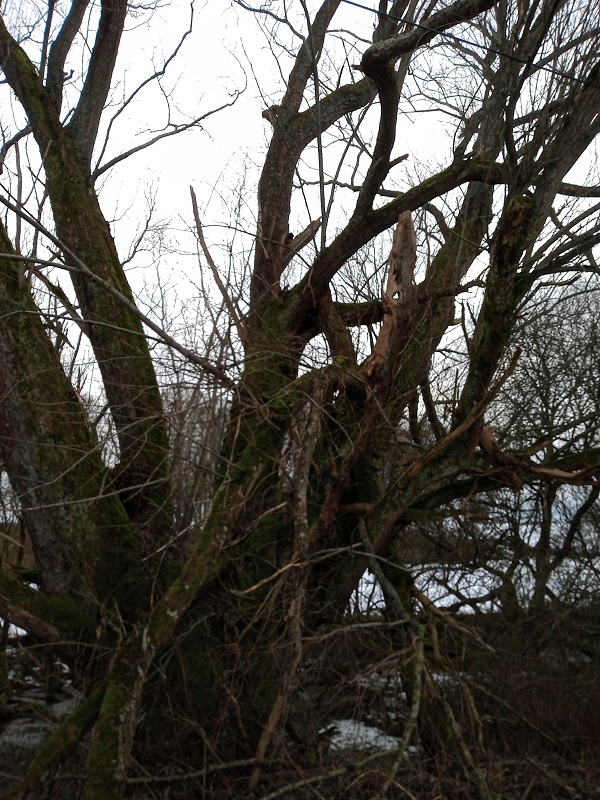
Old Man Willow

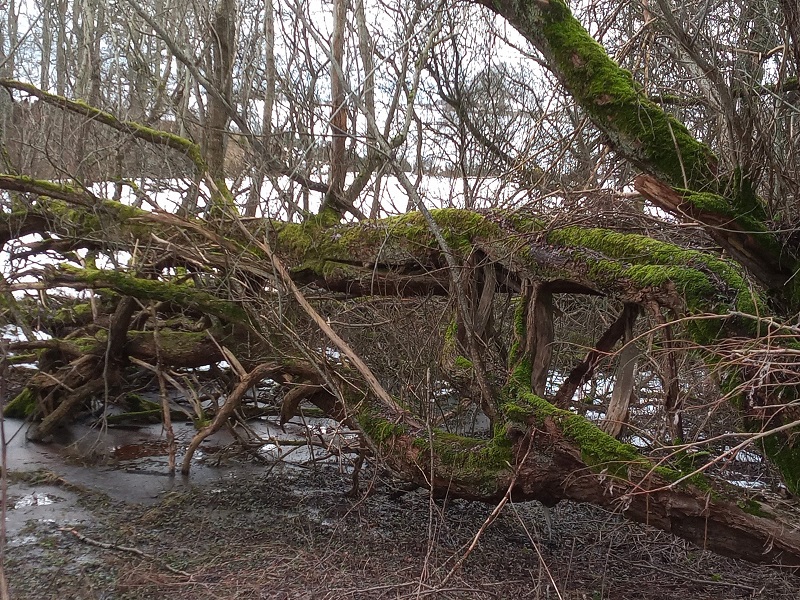
End of story? No way. In falling, the wood, being watery willow, ripped asunder, cracking and splitting in a hundred fibrous places. Some trunks, now horizontal, appear shredded and mashed. Branches poke up out of the devastation akimbo, some dry and decayed, some clinging to life.

Make no mistake, these willows fell a long time ago, Birds have nested in the crevices where they toppled onto each other. Mosses, algae, lichens, ferns have been succeeded in places by other woody plants, growing out of, and contributing to, the accumulation of soil and organic matter. The trees are alive, but they are a substrate for life also.

From the felled boles and wrecked structures, arrow-straight, insolent shoots clamber skywards. They are making new trunks from the old,even where the original tree has scarcely more than a twisted root in soil or water. A veritable willow plantation arises from the un-dead.
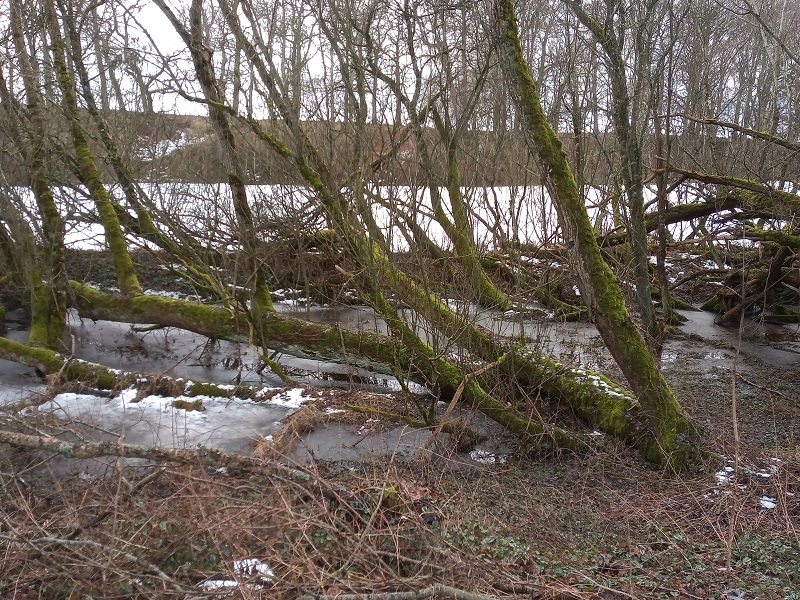
The Back Mill

backmill7

He’d dive in, dump his school bag, raid the fridge and be off.

“Where’re you going?”

“Dunno. Backmill probably.”

“Oh. Okay.”

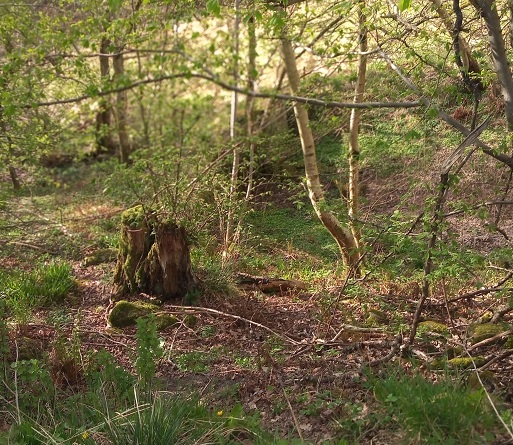
Backmill was what they called it, these prepubescent and young teenage schoolboys with more energy than sense. The little wood accessed by a rusting stock feeder converted to a bridge over the Garry Burn lies not far from the primary school. For me it was a place to find edible fungi in autumn and clouds of wood anemones in spring. For them, it was an open woodland opportunity for creating ever more ambitious bike jumps and mini skate parks, housing a roughly square, slightly sunken area they called the Curly, whose banks made a race track or skateboarding wall.

backmill1

As summer progressed, he’d pop home to borrow a spade, loppers, a bow saw. I railed, and refused the axe.

“You’re not to saw down any trees!” They did, though to be fair the old curling pond was thick with self-sown sycamores of suitable diameter for log ramps and bridges. The tracks and jumps became quite elaborate. My son and his pals were probably following a long tradition in which they were the current top dogs, and learning about engineering and practical skills in the process. Health and safety, too, I suspect.

Twenty years on, I never see a child in the woods, but the evidence indicates that to some extent the tradition continues. The burn is forded by new stepping stones, the soil is bare over the bumps and jumps, and someone’s parent has welded new metal onto the old stock feeder to keep safe-ish access going. There was a village campaign to build a “proper” skate park a few years ago. I kept quiet, but suspected an improper one would remain more attractive.

backmill2

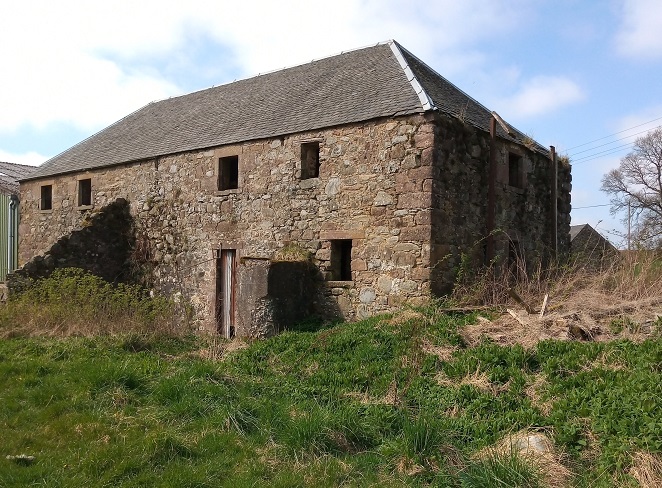
At the end of the wood and across the burn is a cluster of old buildings and a modern barn used to store straw bales. When you look closely, you can see where a water wheel once was attached to the wall of the biggest building, though nettles and rank vegetation choke the pit where it would have turned. This is the real Back Mill, after which the wood is locally miscalled. Once, it must have been a hugely important hub of activity for the village.

backmill6

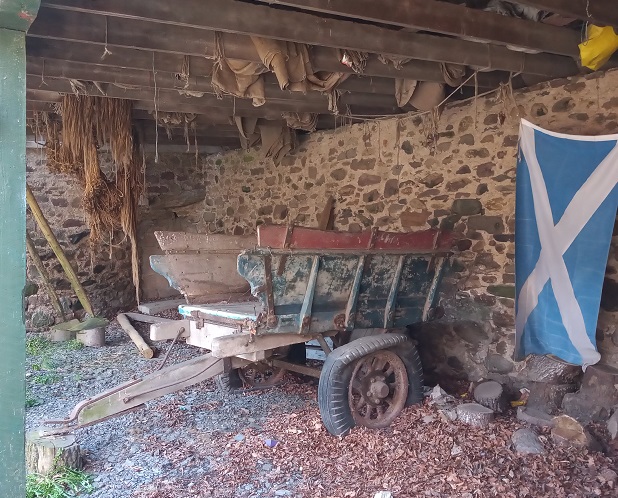
It’s a sizeable building, and across the road a second building of similar age was, I think, the granary. A door on the upper floor was probably where the grain was unloaded into wooden carts, perhaps like the one now parked in another outbuilding.

backmill4

The lower floor is crumbling, but suits the swallows and martins for nesting, and has been used for housing the beasts in winter – the old wooden manger is intact.

backmill5

But where is the water? The Garry Burn is much lower than the mill wheel, and the track into the ford now only leads to a field. Behind the mill, a stretch of level grass looks like it leads round the side to meet the wheel. Go several hundred metres up the road from the ford, looking carefully through the tangled vegetation, and you can discern a straight, broad channel. You soon come to a stone dam, and the remains of the mill-pond. From here the water would have been diverted on milling days via the lade at a slight incline to the wheel, which would start to turn and grind under its power.

backmill3

I’d love to find out more about Bankfoot’s Back Mill, and whether the wheel was an overshot or an undershot. It’ll have to wait now till the library re-opens, and I can delve again into the local history archives. Meanwhile, children of Bankfoot, keep building dens, jumps and bridges in the woods by the Curly!