Through a Gap in a Wall

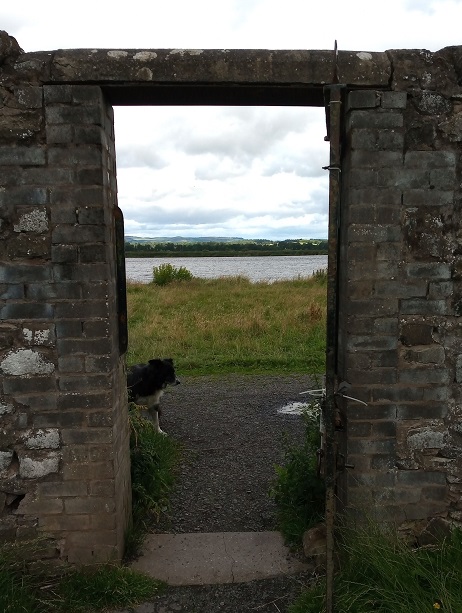
Through a gap in the wall, the horizontal lines of the Firth, flat islands looking half-submerged, and the frown of long lines of reedbeds across the water, are drawn like smears of dirt below a layered sky.

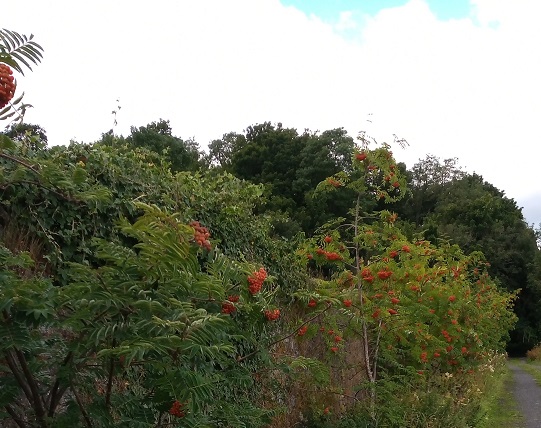
Pass through to the other side and the world has shifted, as though the rift faults that made this landscape just happened. The air is clamorous, the sky immense. In a town that arose among the orchards of an ancient abbey, the wild fruits of native Rowan are planted on the waterside of the wall.

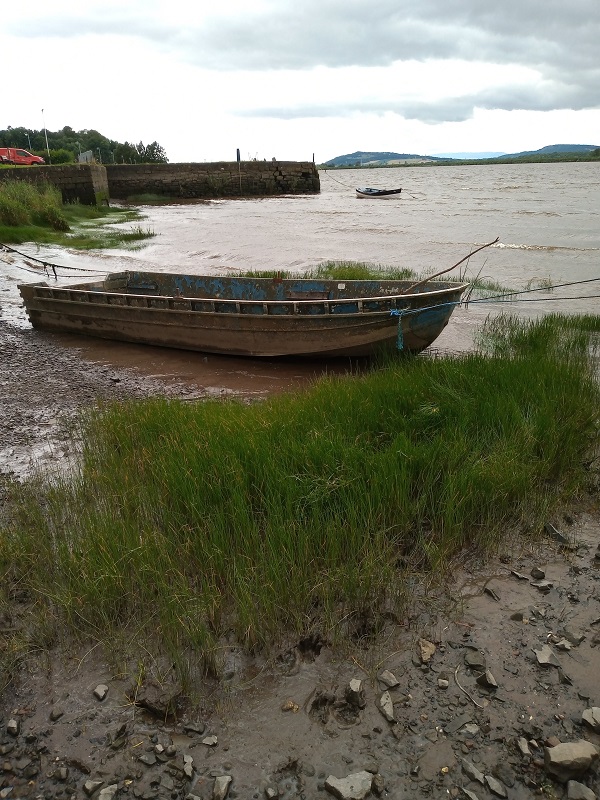
By the slipway, the silver and gold of pungent Mugwort and Tansy give way to outsized rushes the size of small trees. Among them hide bobbing boats, lapped by the high tide. Listen to the clicking and fretting of small wind-waves on the stone wall of the jetty. From here, boats once plied a busy trade up and down river to Perth or Dundee, and across to ancient Port Allen in the Carse of Gowrie. Did they trade grain for Fife coal? Carse apples like the Port Allen Russet for Newburgh plums and Lindores pears? Did the monks from Lindores Abbey and their fellows at Grange in the Carse send each other scions and grafted trees?
Follow the path east, past salmon high and dry and leaping above mown grass, beside inaccessible muddy inlets bordered by reeds and willows and deep cuts where the old mill-stream threads unseen but laughing to the Tay. Vegetation is exuberant, chaotic, oversized and riotous. Great Hairy Willow Herb towers over the umbrella-sized discs of Butterbur leaves; nettle and insidious bindweed tangle through, the bindweed erupting in white trumpets of triumph.

Ponder the great bear with her raggedy staff on the hill above the town. It is not as old as you think, but is rooted in history, via a stone. How does the symbol of the powerful Warwick family (best known as mediaeval kingmakers in that other country, England) fit into this landscape? Was the first Earl of Warwick, Henry de Newburgh, really from this place? Or is it there because William the Lion of Scotland gave the title to his brother David – the founder of Lindores Abbey?

And the stone – the Bear Stone – at the centre of the story – where is it now? What did it mark or measure?

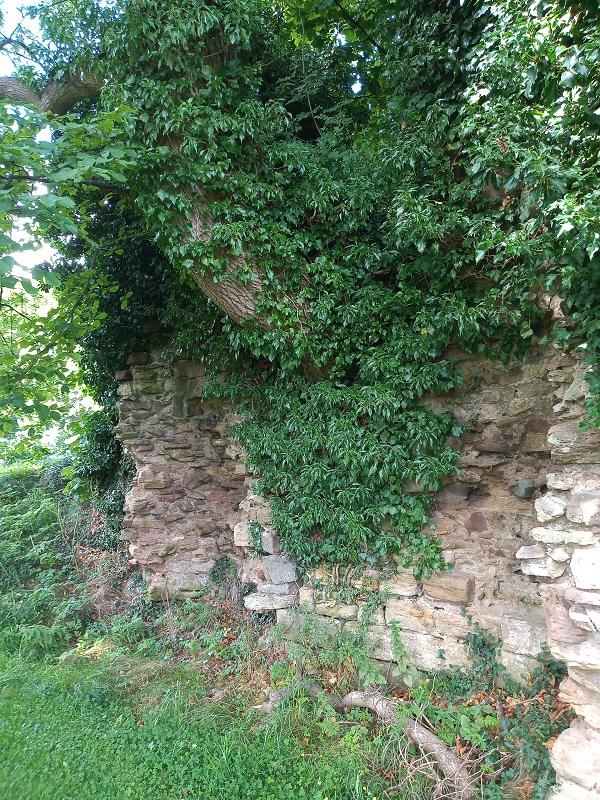
In the cool quiet of the Abbey ruins, trees and ivy hold up the remnants of walls. Old walls support vegetation and keep their secrets. Tread softly, slowly, let your thoughts be measured, as the sun moves the shadows across grass and stone. Be still. Wait. Centuries of contemplation hang heavy, and even the bees and insects of summer are subdued. Move on, quietly.

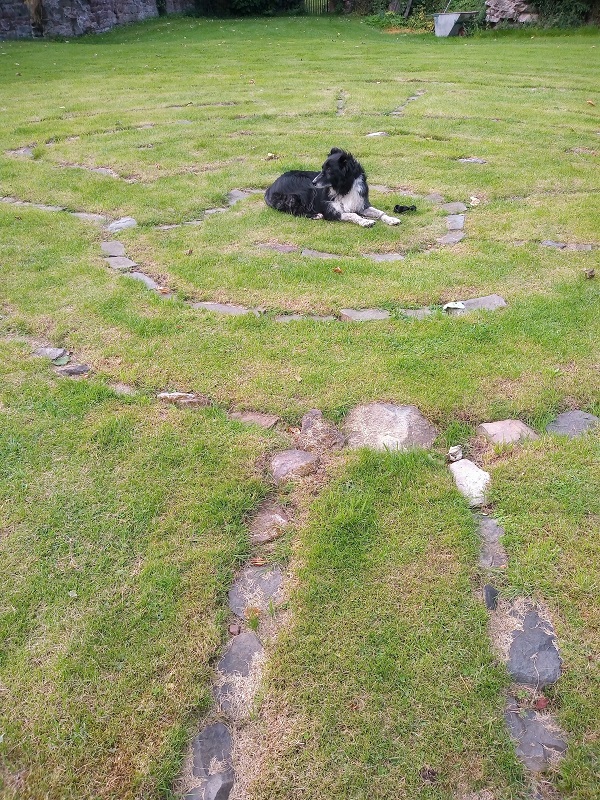
At the centre of the ruins, there is a Cretan labyrinth. Does it seem out of place? Follow its path – there is only one way – and do not cheat by stepping over the boundaries. Yes, you can see the centre, but you can also see there is nothing to gain when you get there. Just as when the monks of old walked their cloister, it is the journey taken, not the destination that matters.
When you leave, and come again into the town built on orchards, the world will shift again.

The Blood of the Ploughman

bloodyploughman1

Have you ever been seduced by those advertisements in colour supplements for NEW! UNIQUE! varieties of fruit or vegetables accompanied by dazzling photos of their technicolor extra-ordinariness? The exciting modernity of red-fleshed apples is one example of excitable marketing – and many fall for it.

But rosy-fleshed apples are not new. Discovery, an early-ripening apple bred in 1950, is one example, and deservedly popular. But this is a story of a much older apple, first recorded in 1883 – but who knows when it first appeared….

Once upon a time, when the Carse of Gowrie – that rolling, flat and fertile plain of drained marshland on the north side of the River Tay that stretches from Perth to Dundee – was famous for its orchards, a weary ploughman was plodding home after a long day in the field. It was September, and an Indian summer, the sun had been blazing all day and the ploughman had finished his drink early and was very thirsty. To get home more quickly, he decided to take a short cut through the orchard of Megginch Castle – one of the finest orchards in the Carse.

As ever, the productive trees of Megginch were laden with fruit; apples of every type and colour, small, golden Scottish pears, plums and damsons. Many were ripe and even falling into the long grass. The tired ploughman thought how handsomely a ripe apple would quench his thirst and assuage his growing hunger – it was past suppertime.

Well,there was nobody about, and surely no-one would begrudge a hard-working labourer a windfall, so the ploughman helped himself. So delicious was the apple that the ploughman was struck by the idea that to leave these windfalls would be an awful waste, when his wife could make good use of them in the kitchen. The gardeners had all gone home for the evening, so who would notice? The ploughman began to fill his smock with ripe fruit, as the light began to fade from the day.

A warning shot rang out, and a furious cry: “STOP THERE, THIEF!” The ploughman swung round, and recognised the loping gait of the estate gamekeeper coming toward him. He began to run, apples held tightly in his smock. “I’m warning you man!” called the gamekeeper, but the ploughman blundered on. There was the sound of another shot……

At this point the story grows different arms and legs and embellishments depending on the audience and who’s telling the story. I confess to my part in encouraging flights of imagination. For genteel adults and those of a sensitive disposition, the story goes that the ploughman was wounded but escaped, managing to get home with at least some of his “stolen” apples. For children, the gorier version suits, and if you can throw in a ghost, so much the better.

So, either the ploughman fell, shot dead, in the orchard, his apples scattered, or his disgusted wife patched him up, but threw the apples on the midden to teach him a lesson. Either way, one of those blood-streaked fruits set seed to become a  tree the following spring. And when that tree was grown, it bore dark red, deeply ribbed apples that ripened on the anniversary of that day in September when the ploughman was shot. And when the crisp, thirst-quenching flesh was sliced, the flesh of the apple was streaked and stained with the ploughman’s blood.

bloodyploughman2

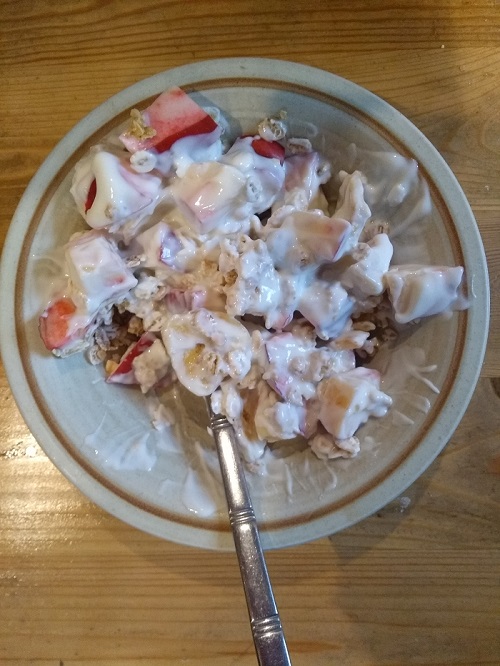
Thus was born the famous Scottish dessert apple, the Bloody Ploughman. From the dwarf tree in my garden came this exquisitely juicy, neither sickly sweet nor yet sour, apple for my breakfast, with cereal and yoghurt.

As for Megginch orchard, it’s still there, not just surviving but thriving. After all, it’s practically next door to the Cairn O’Mhor cider makers. Many of the old trees from the age of Victoria remain, and still bear excellent crops, but also there is a new orchard of modern, productive varieties, and a new heritage orchard, containing all the Scottish apple varieties that can be found.

You can be sure the bloody ploughman found his way home safely.