An Unexpected Daunder

The Wishing Willow Tree on Perth Lade

With implacably good timing, I finished my coffee to arrive at the Holiday Inn on the edge of Perth, seven minutes before the hourly bus home. Bang on time, I saw a bus crawling up Dunkeld Road. I slid to the edge of the pavement. But wait – was it a bus? No Stagecoach livery, a plain white coach, beetling along rather fast. I screwed up my eyes: nothing on the front to say what number – or any number – or destination. The tinted windows didn’t allow me to see if it carried passengers. A private coach, then? I sighed and stepped back.

As it hurtled past, driver not even glancing at the bus stop, I saw, on the side, “23 – Bankfoot”. The air turned blue outside the Holiday Inn, as I gawped in disbelief and watched it sail off without me. What to do? No, I wasn’t going to go for another coffee. I certainly wasn’t going to sit staring at a petrol garage while inhaling the noxious air of Perth’s god-awful motor mile for an hour. One does not get a “pleasant stroll” down Dunkeld Road, but eventually I began to walk towards town, undecidedly, seeking equanimity.

A couple of minutes later, just before the rail bridge, I noticed a tucked-away footpath sign: Lade Walk to Perth/Tulloch. Perth Lade is an historic man-made waterway which fed into the town’s mills. I knew the Tulloch bit, and the bit from the retail park to the City Mills, but this stretch – I never knew it existed. The Lade is grotesquely polluted for much of its length these days, but I know people who have spotted kingfishers hunting there, and the incredibly tolerant mallards of Perth make the best of it, and eat discarded chips. I ducked along a narrow path between the railway and the fenced car park of some tedious car dealer, with little optimism. Surely all I had in store were industrial lots and housing estates? The narrow path broadened as it reached the Lade, curving round from the west, and I heard flowing water and the busy furking-about of moorhens in the thick undergrowth on either side. The irritating groan of the Dunkeld Road traffic had completely disappeared, yet surely I must be not far from, and parallel to, it? To my left, a thick bank of mature trees, mostly self-sown and densely overgrown, had shed small branches and twigs in profusion during the winter storms. Accumulations of litter, initially like glue in the conglomerate of nature’s own debris, were slightly fewer than at the start, though one spot behind the ugly chainlink fence was a veritable carpet of empty beer bottles – either decades’ worth of boozing or the emptying of an accumulation someone didn’t want on their own doorstep.
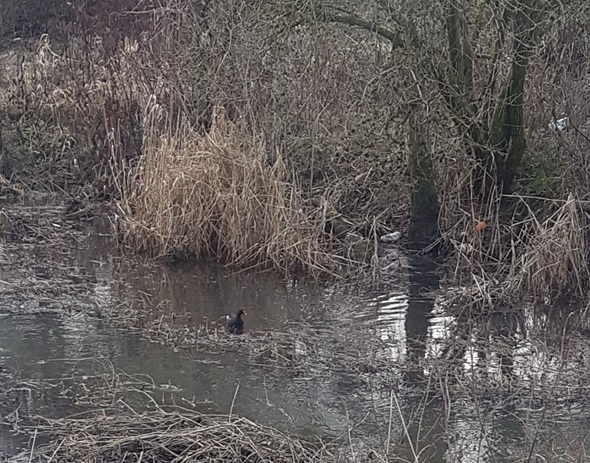
Five sleeping mallards sat camouflaged on the far bank, not moving, until I got my phone out to take their photo, when they all silently uncurled sleepy heads and glided off downstream. Moorhens, in vibrant plumage ready for spring, hung about, quite tame, crossing the path and ferreting in the reeds on their spindly legs. The larger trees thinned to a narrow belt and behind the fence was a huge expanse of derelict industrial land, half-concreted or tarmac in places, but being rapidly colonised by pioneer birch. elder and other young trees. In January, all looked grey, but from the lying vegetation of last summer I could guess at the wealth of wildness that would spring up, laughing at human arrogance, when the season turned again. Bare young trees may look like a delicate screen, but never doubt their power and ability to exploit a vacuum. Nor that of the dandelions, dockens and bombsite weed, all bringing seeds and nectar to wildlife. On cue, a terrible high-pitched squeaking started up in one of the older sycamores – a flock of long-tailed tits on the rampage. I stopped and birdwatched for a while – coal tits and blue tits were weaving between the branches and a cheeping of chaffinches held forth from some bushes by the lade. On the path, first a male bullfinch, then his duller mate, landed and had a good look around before returning to the other side of the lade. Blackbirds and a thrush hopped out and eyed me beadily.
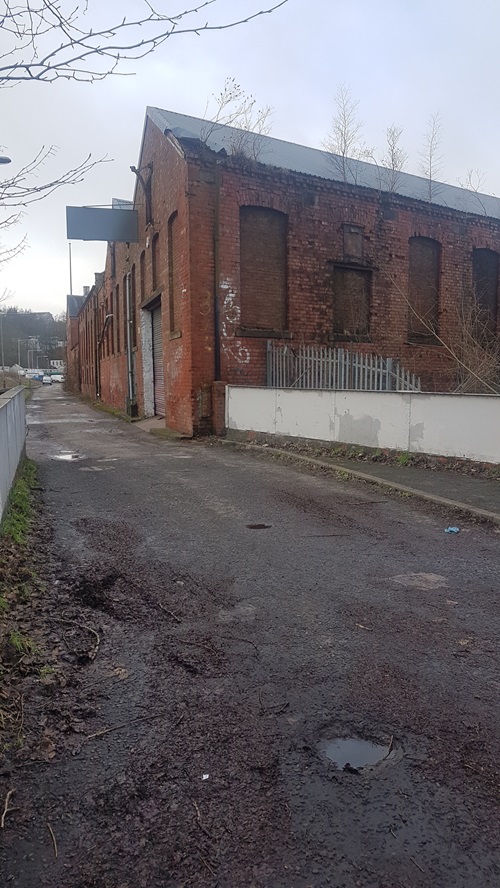
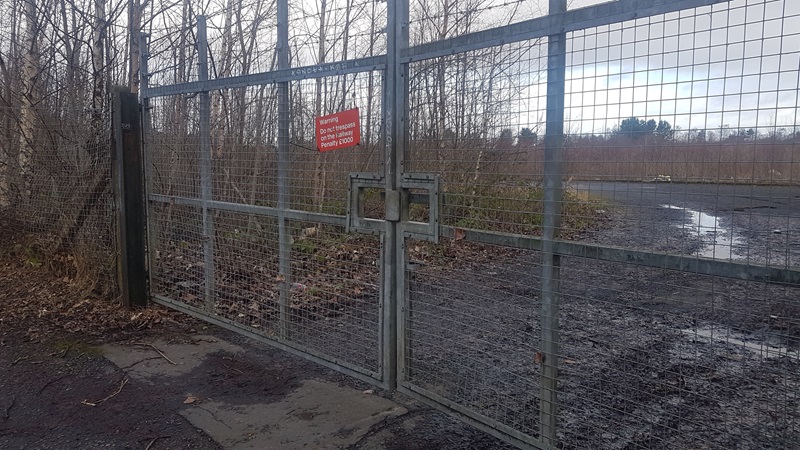
I came to a junction – a path crossed the Lade by bridge, past an old brick building – possibly a former mill but now another garage. It was attractive though, and full of potential nesting sites. Here, there was a sign on the fence – all this derelict land, stretching into infinite distance with no trace of the motor mile, belonged to the railway, which was nowhere to be seen but must be in there somewhere. I hoped it would stay their property, and they would never try to tidy it up or sell it to developers.
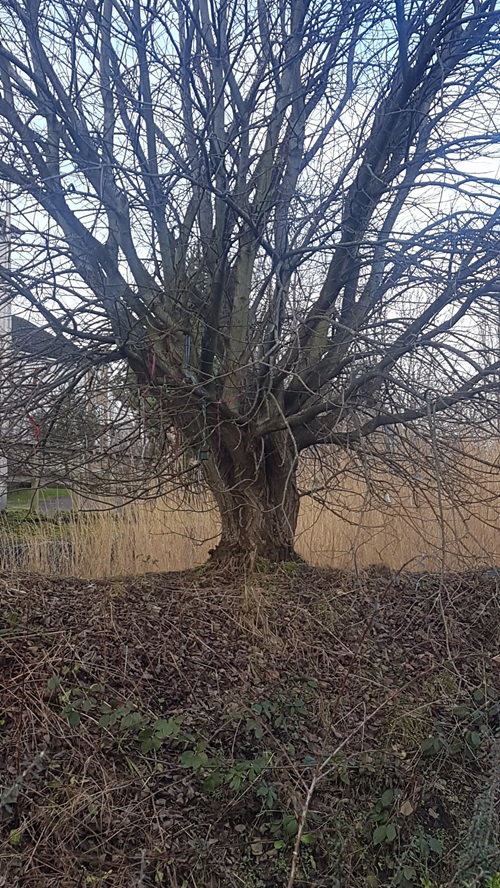
There were houses and flats now on the other side of the Lade, so near, yet curiously far and separated from this unexpectedly lovely and interesting walk. A large willow on the far bank was decorated with ribbons, toys and ornaments, like a wishing tree of old. I wondered who came out of their homes to celebrate or remember there. The ground on my left opened out, seeming endlessly wide. Lade and path swung eastwards and I saw an iron bridge, unmistakably a railway footbridge, just like the one I used to play under as a child in east London.

And over the bridge, where teenaged girls stood discussing the wicked-looking, monstrous-headed dog they thankfully had on a tight lead, Dunkeld Road reappeared. I swerved away from it, passed through some houses and across Crieff Road, where I joined the Lade stretch I knew well, skirting old tenements and road ends, bits of gardens and the ubiquitous smell of cannabis. Passing Stagecoach Headquarters, I surreptitiously made a rude sign. No time to march in and complain, if I wasn’t to miss the next bus as well! But thanks to their rubbish driver, I had discovered a stretch of unofficial countryside that I’ll revisit in summer, I’d enjoyed an unexpected daunder, found equanimity – and, moreover, escaped Dunkeld Road.
Here be Dragons

If you take the road from Perth to Dundee, you skirt the edges of an explosion of geological delight known as Kinnoull Hill. Sheer cliffs soar up from sea level on your left. In autumn they are swaddled in the glorious golds and browns of beech woodland at the base; in spring and summer studded with the gold of gorse and broom. Dilapidated towers seem to teeter on the edge of the cliffs looking like something Germanic from a Grimm fairy tale (they were put there fore that very purpose).

These dramatic cliffs are the result of volcanic activity some 400 million years ago when a monstrous intrusion of magma elbowed its way through the older rocks in an enormous seam and solidified. Much later, the Kinnoull Hill geological intrusion was part of other monster-scale earth movements – the folding which left us with the Sidlaws on the north side of the Tay and the Ochil hills on the other (it’s called an anticline; think of a rainbow….). Subsequent faultlines and erosion removed the top of a rainbow and created the deep valley through which the Tay now marches triumphantly to the sea.

If, however, you approach these cliffs from the other side, the ascent is appreciable, but mild and steady, the slow, back-door rise of the escarpment. I went that way in April, and parked in the Corsie quarry, where volcanic dolerite and basalt is exposed, and from which it was taken for building for centuries. Up a steep bank, and a variety of paths are on offer, taking me first to the trig. point on Corsie Hill and fine views north over the small city of Perth and the vast breadbasket of Strathmore, to the mountains of the Angus glens to the east and the Obneys, marker-hills of the Highland Boundary Fault, slightly west. Up through roads and sheltered by woodland I went on winding tracks. Oak and birch dominate in places, in others, beech and non-native conifers stake a much-contested claim. Areas of heath and rough grassland house woodland sculpture in this popular spot.

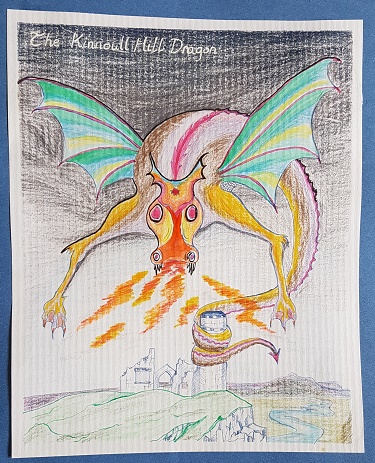
Sometime between all that geology and now, we are told, a dragon arrived on Kinnoull Hill. It glided along the unassailable cliff edges until it found a crevice, leading into a large enough cave for a small dragon to set up shop. This cave, called the Dragon Hole, is high on the cliff and allegedly could hold a dozen adult persons, so it wasn’t luxury accommodation for a dragon. What the dragon got up to, to upset the people of St. Johnstoun (as Perth was then known), I have no idea, but as is the way with relationships between human animals and animals either good to eat or a tad scary, someone was said to have “slain” it. It could have been St. Serf (what IS it with saints and dragons??), commemorated as a dragon slayer in the old church at nearby Dunning.

But my bet is Serf made it up, and the dragon’s still about, somewhere. There is a record that in the late 13th century (first) wars of independence, none other than William Wallace “pressed by the foe, occasionally betook himself to the retreat of the Dragon’s Hole.” In the 16th century, it was the local custom for a procession of youngsters from the town to clamber up to the Dragon Hole on May 1st (the pagan feast-day of Beltane), with garlands of flowers, musical instruments, and what may have been a Green Man. Or was it a dragon, representing the sun god, Bel? Whichever, it certainly cheesed off the local minister. In 1580, the congregation of the Kirk were forbidden to “resort or repair” to the Dragon Hole, on pain of a £20 fine (quite a fortune in those days) and repentance in the presence of the people.

You might think that was the end of it, and the Dragon Hole, together with its occupant, faded and disappeared from local knowledge. I used to teach about landscape character and interpretation, among other things, to Countryside Management students at the local college, and used Kinnoull Hill as a case study. One year, a couple of the lads got quite excited about dragons (can’t think where they got that from), and vowed to find the Dragon Hole. But here’s the thing: their colleague Arlene, a local girl, told us she used to go there as a child and had been let into the secret of its location by an older relative. She also had the good advice that they should not attempt to climb up to it, but abseil down. They went off in cahoots. Term ended before I ever heard if Ryan and Hamish were successful. Knowing them, I wouldn’t be surprised.

That’s Dundee in the distance…

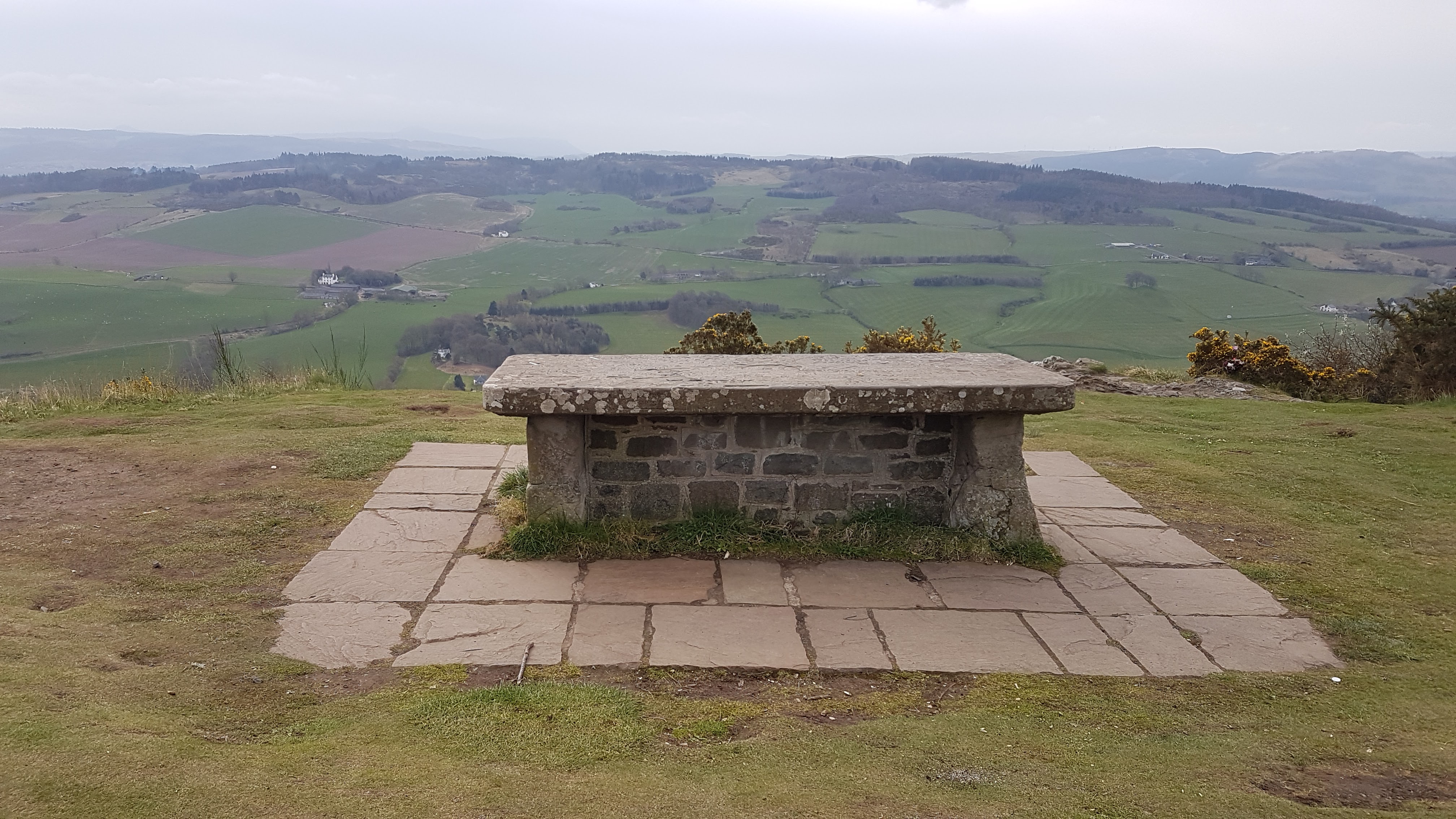
Back to my walk. I came out to the viewpoint on the edge of Kinnoull Hill cliffs, where the ground suddenly ends, and bunches of flowers tell sad stories and remind us of human misery. The views downriver, with Dundee sparkling in the distance, and across to the greens and golds of Fife, with it’s own matching quarries and volcanoes, were more than worth the uphill slog. Everything, especially life, seemed precious to me then. I remembered the tales of the dragon’s hoard of treasure, the enchanted “dragon-stone” which James Keddie found in the Dragon Hole in 1600, the “Kinnoull Diamonds” that are said to sparkle by night. And I came right back to geology. Around volcanic intrusions, mineral-rich deposits hold many semi-precious and maybe precious stones – on Kinnoull Hill, it’s garnets and agates that are best known.

Back down to Earth, in every sense!

Hope, Fear, Pride and Rabbie Burns

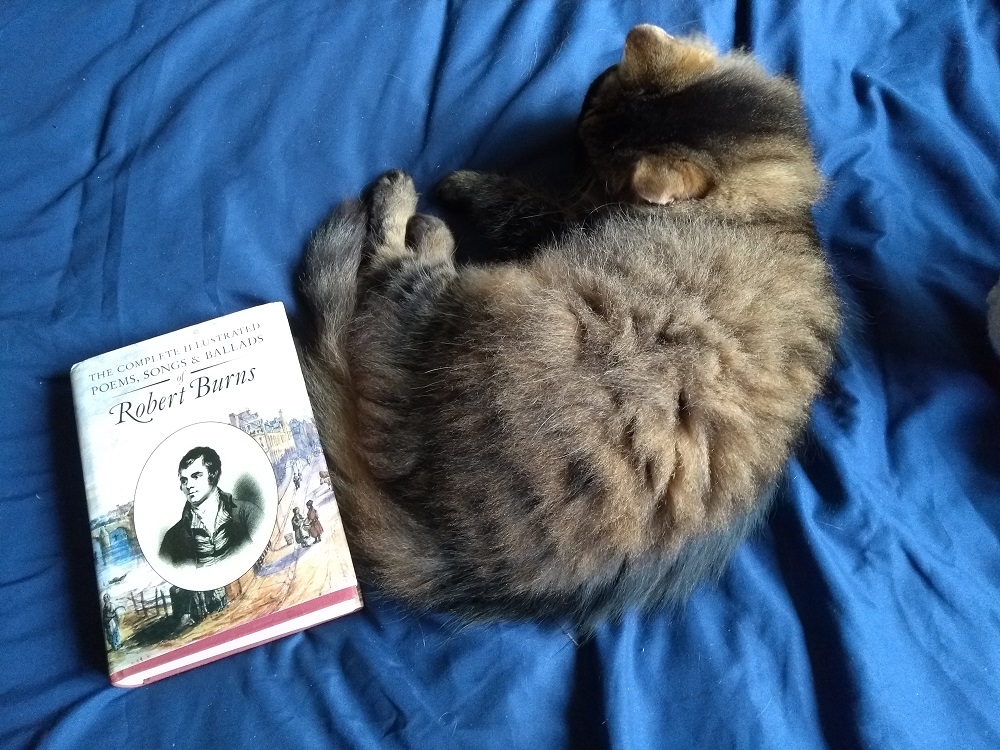
burns and zebs
When you wake up literally singing line one of a Burns poem
“Is there for honest poverty….”
and you can’t remember what you were dreaming
and you open the curtains on another dreich day
but look, the rain has paused
and the news is as horrible as yesterday, maybe more so,
but Out of Doors is on Radio Scotland
and all your pets seem to be arthritic or spewing megalithic fur-balls on the bed
but it’s your partner’s side of the bed
and the weeds have grown a foot overnight
but the wren’s firking about in the compost heap
and swallows are lining up on the wires, considering Africa
but they’re still here and chattering
and there’s bread to be made and flour sacrificed to the god of sourdough
and after all, Rabbie Burns was young and might be cut some slack for his faults,
and Ian McKellen is coming to Perth for a Pride rally
and might he not just cast a spell or two?
and a mediaeval fayre will be filling the town
but you’ve got a bus pass
and things might get worse but

this is Scotland and

“for a’ that, and a’ that, it’s coming yet, for a’ that,
that man to man, the world o’er shall brithers be, for a’ that”

statue

HOW DID YOU WAKE UP THIS MORNING?