The Countryside Code Fungal Appendix

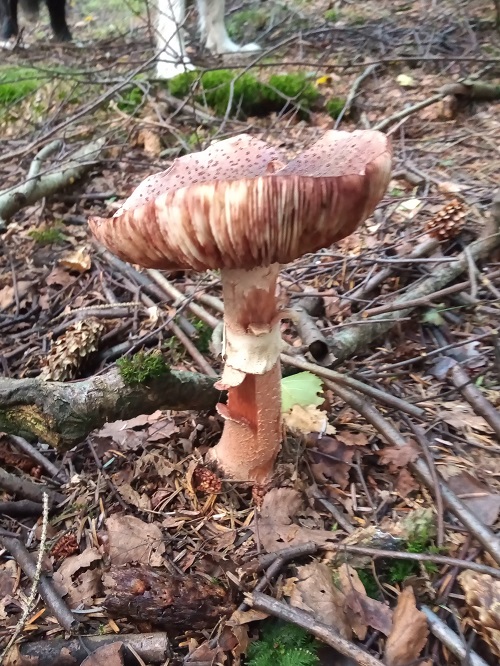
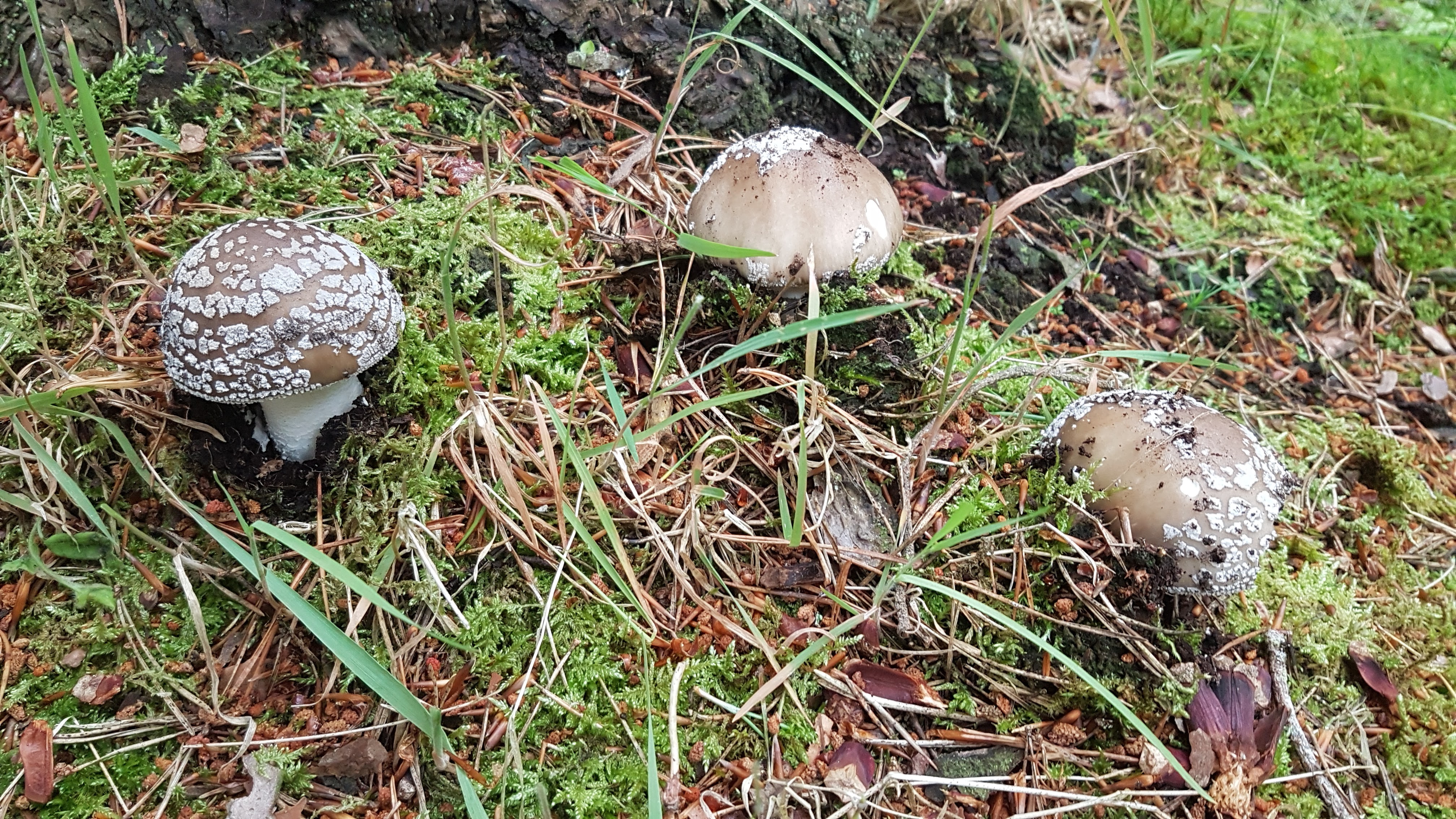
  1. If you are out in the countryside and find a mushroom you think is poisonous, do not panic and trample or kick it to ****. It cannot kill you unless you eat it. It doesn’t even want to kill you and it cannot chase after you either. It is a beautiful organism trying to reproduce itself. Leave it alone. (Oh – and do not eat it) (Photo above is an example – isn’t it lovely!)
  2. If you find a mushroom and you don’t know what it is or if you can eat it or not, see 1. The same applies. If you want to identify it, take a photo and maybe one specimen.
  3. If you find a mushroom, that you 100% know you can eat and you want to, pick – but adhere to these sub-directives:
    * Don’t pick the whole blooming lot – never more than your personal needs
    That includes large mushrooms like Chicken of the Woods growing on trees – never take it all
    * Always leave plenty of young and old (reproducing) specimens behind
    * If there’s only one or very few, leave them for others to enjoy, including other fungus-eating species such as deer
    * Keep your big feet from trampling the site and all the ecosystem it holds to bits. Tread lightly and avoid damaging vegetation
    * If you carry an open-weave basket, your dinner will arrive home in better shape and may even shed some spores along the way
  4. With particular reference to Giant Puffballs: these are not footballs – they are not spherical. Nor are they rugby balls, golf balls, cricket balls or any other species of ball. Therefore, do not treat them as one. If you would like to eat one, pick it carefully, take it home, and share it with like-minded friends before cooking it. This is because if you try to eat a full-sized Giant Puffball on your own, you will be feeling nauseous by day three. They are way too big for one forager.
  5. If you have children, take them foraging and teach them why fungi are so important to life on earth. Let them learn what’s safe to pick and what to leave alone as you do. Introduce them to this appendix to the Countryside Code.
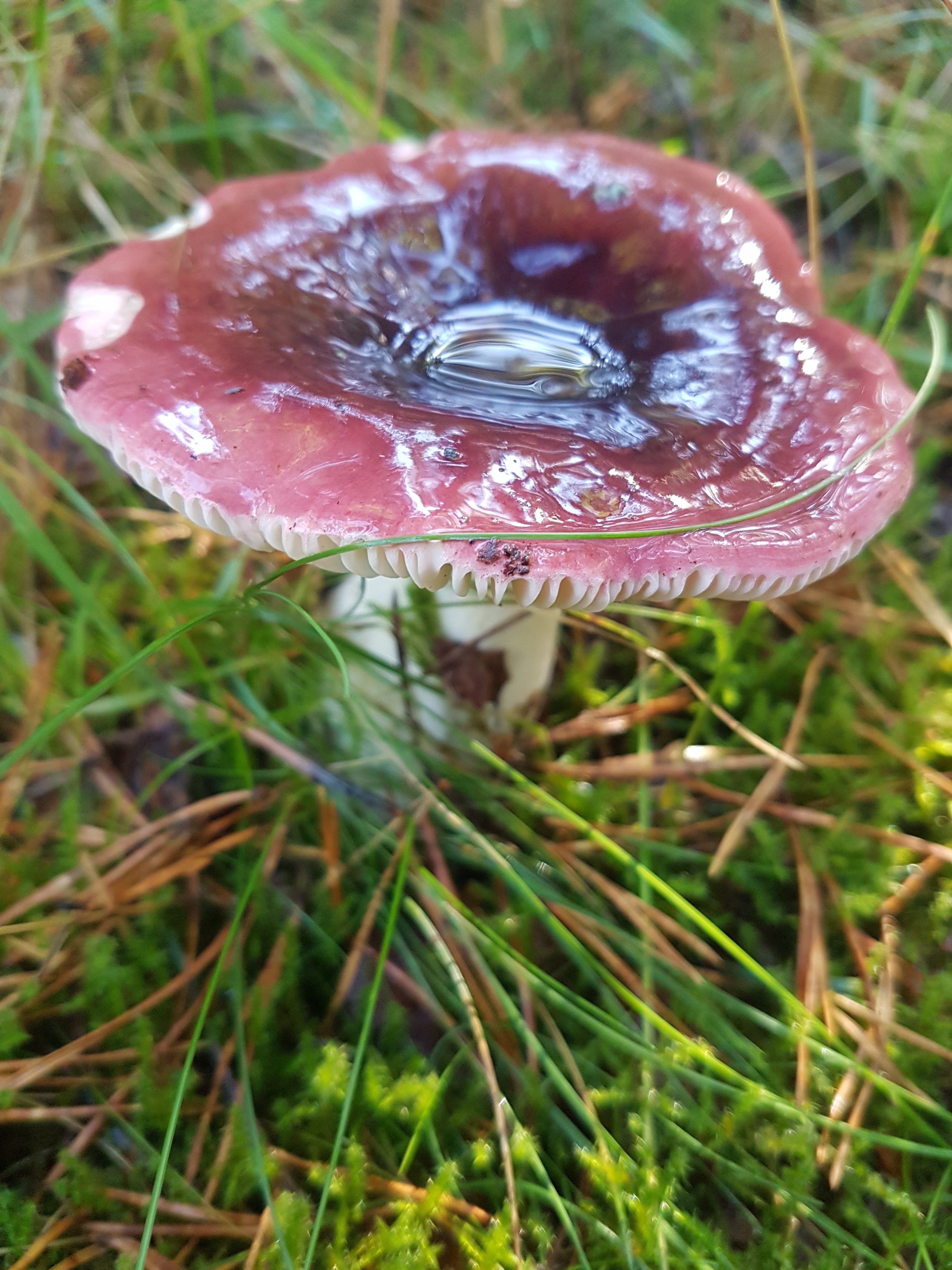
(If you don’t know yet why fungi are so important, Entangled Life by Merlyn Sheldrake is a good read.)
What we Choose to Eat from the Woods

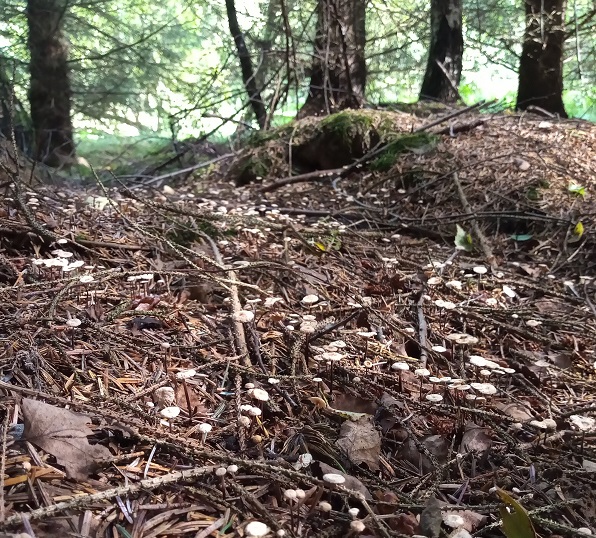
Horsehair Mushroom swarm

As soon as I entered Taymount Wood, I smelt mushrooms. Across in the pattering shade of the woods to my left, a family was ducking and diving and exclaiming across the ditches to each other. I could glimpse baskets, a small dog, a child or two.

Great! I thought, people foraging. Good luck! With chanterelles from a previous forage in my fridge, I just wanted to walk without expectations or intent.

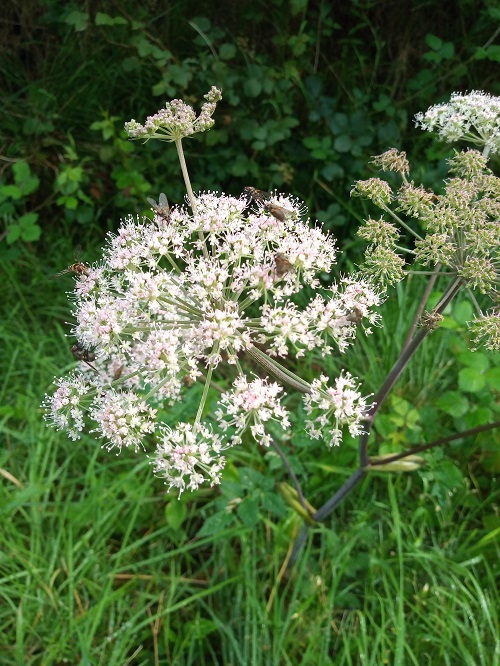
Looking for late summer flowers, I was taken by the large numbers of Wild Angelica growing either side of the path. Each geometrically arranged flowerhead hosted a happy horde of hoverflies and other pollinators. I’m 99.75% certain it is Wild Angelica, an edible plant – but I’ve never foraged it. The quarter of a percent of my brain that says “But wait, it might be Hemlock or one of the other poisonous members of the family out to deceive” prohibits me, despite the smell, season and appearance.

99.75% Wild Angelica

If in doubt, don’t. I no longer take risks with my foraging.

Taymount Wood is the wood that sidetracks me, every time. Up to the right, a sunlit glade. Cross the sleeper bridge to the left – what’s in here? Horse-hair mushrooms (Marasmius androsaceous) swarming up from the pine needles. A collection of puffballs (Lycoperdon perlatum) in mint condition cried out to be selectively foraged. Only firm, young ones are tasty, and leave more behind than you take.

Puffball (Lycoperdon perlatum)

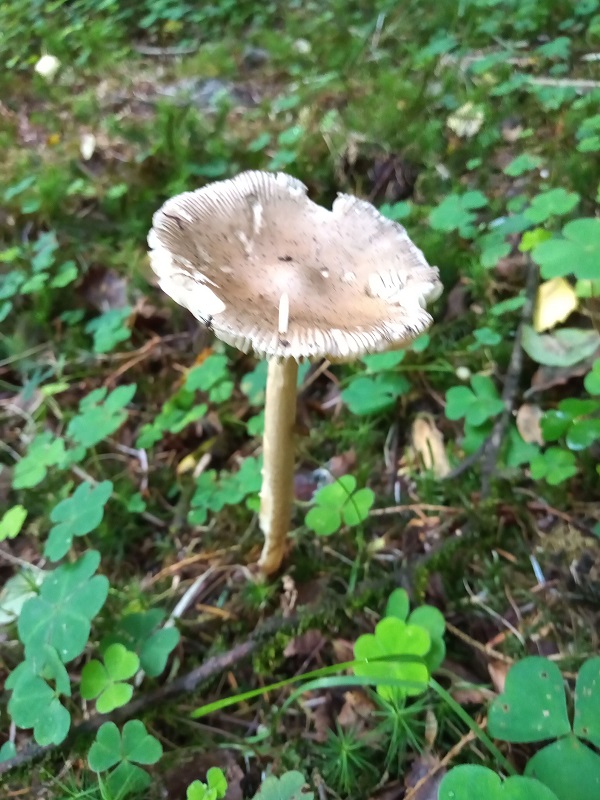
One family of mushrooms of which you have to be wary is Amanita. There are some deadly poisonous members, some only moderately so. Others will send you psychotic. There’s a few edible ones. Taymount Wood today was full of Blushers (Amanita rubescens), one of the edible ones. I have never eaten it, and never will. The flesh bruises pink, which is the indicator of the species – but in other respects it is too like the deadly Panther Cap (A. pantherina). Just suppose a Panther Cap happened to blush one day….. In any case, Blushers are always riddled with worms and maggots before I get near them. Today, both species were growing close to each other and the difference was obvious. I still wouldn’t risk it.

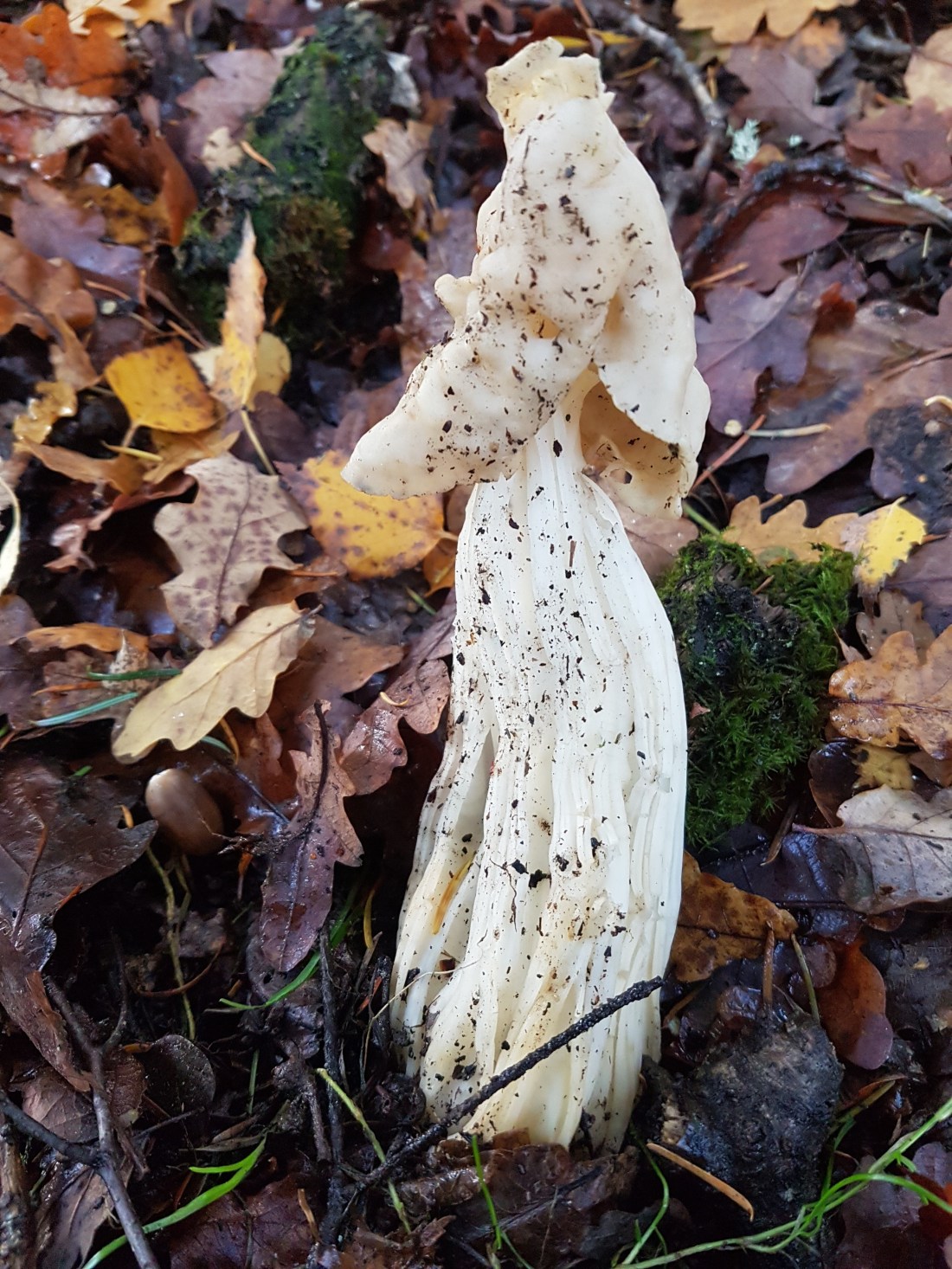
In the photos below, a Blusher on the left, showing the ring; three stages of a Panther Cap; but what do you think is the one on the right? See what I mean?

The Tawny Grisette (A. fulva) I do eat. Unlike most of the family, there is no ring around the stipe, and the edges of the cap are evenly striated as if by a pastry-cook. They were here – but it’s a socially-distanced species that only ever appears singly – and I hate to take the only one.

Tawny Grisette

The stench of death – but not quite death – drew me to the well-named Stinkhorns (Phallus impudica) in the ditch. Most people recoil at eating this mushroom, which exudes a sticky gel smelling like a corpse to attract flies to spread the spores. But I’ve eaten plenty – at a very young stage when they look like eggs protruding from the forest floor. There’s no horrid smell and the jelly surrounding the immature fruiting body is actually delicious. All right, to each her own!

Stinkhorn

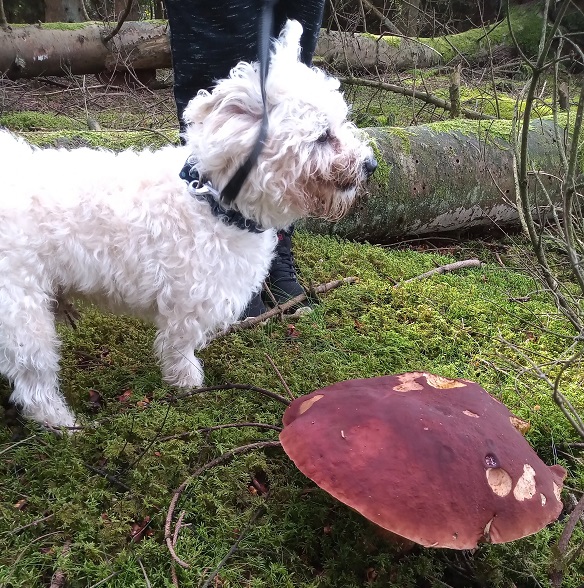
Sidetracked again, I met half the foraging family. Marcin, his young son (and the dog) had just found the biggest Boletus mushroom of the day. We chatted, compared notes, and I admired Marcin’s basket of Ceps, Bay Boletes and others. Marcin learned his mushroom lore from his mother and grandmother in Poland, and their preferences are the Boletus family, chanterelles and Saffron Milk Caps. He loves these woods, and values them for their beauty and food supply.  The giant Bolete he said he will not pick, but leave it to spread spores and be admired.

I showed Marcin my collection of puffballs. He looked aghast. “You eat them??” Apparently not a favourite in Poland!

This post was written for West Stormont Woodland Group https://www.weststormontwoodlandgroup.org.uk/