
A Post for West Stormont Woodland Group
https://www.weststormontwoodlandgroup.org.uk/
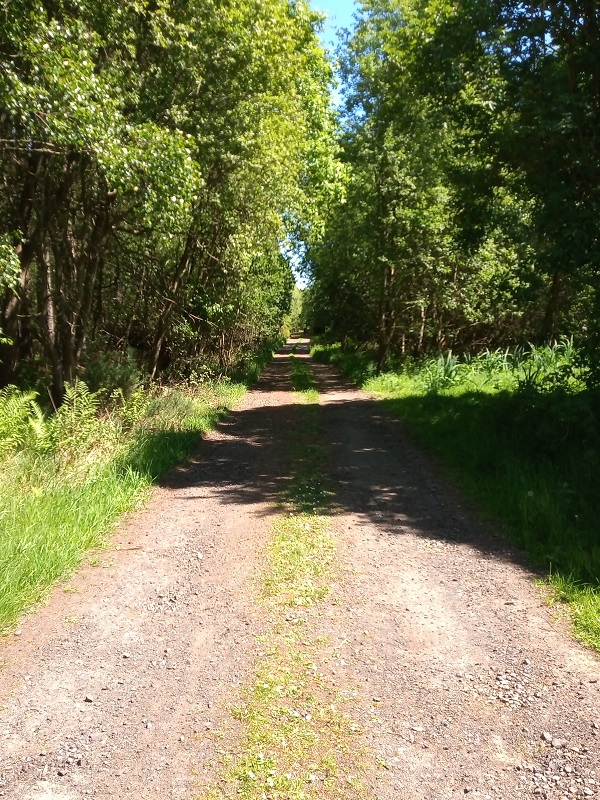
Five Mile Wood today is a wood part-forest, part scrub and heath. When the Forestry Commission took out the last tree crop, they left a fragile fringe, largely of Scots Pine, around the north-east side of the circular path that now forms almost the only access to the bulk of the wood. The Benchil burn trickles through and under the path here, on its way to the Tay, and water from the high water table of the central area percolates into a series of pathside ditches and curious water-holes made by a forestry digger. This is the wet side of the wood. While the trees must take up a lot of water, their canopy also prevents evaporation, and after recent heavy rain, the glades and ditches are alive with summer flowers and butterflies.
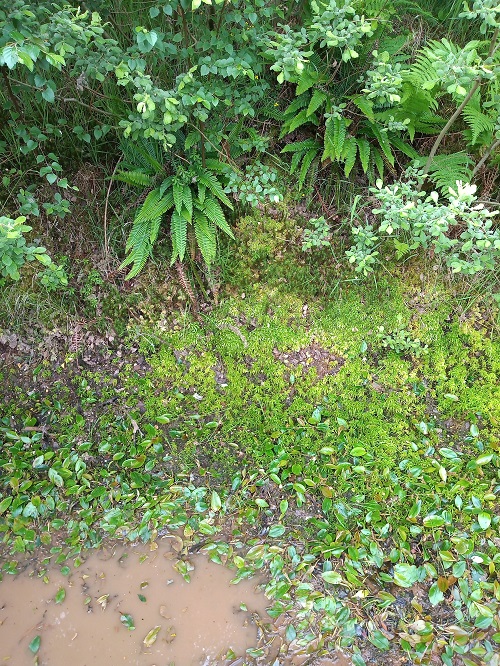
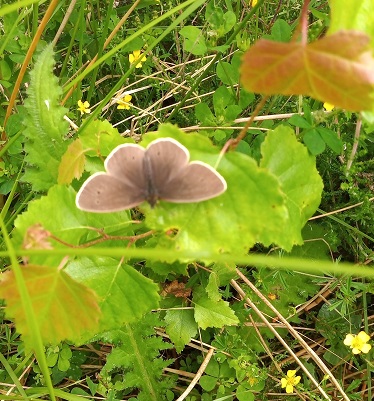
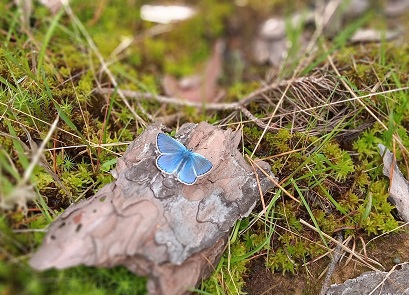
Heath Bedstraw and Tormentil are strewn along the path edges like yellow and white confetti, and red clover flourishes heroically on the banks. Meadow Vetchling and Bird’s Foot Trefoil are visited by brown ringlet, wood white, common blue, and pearl-bordered fritillary butterflies, who pause and spread themselves out infrequently on warm stones and bark shreds on the path.
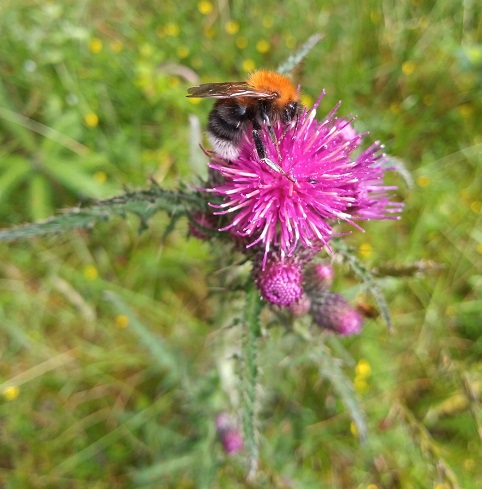
Bright Hawkweeds grow tall and enthusiastic, stretching for the dappled sun that today is scorching whenever the clouds part. In the cooler shade, sweet-scented Valerian grows. It prefers a damp habitat, and its white to pinkish flowers are nectar-rich, a magnet for more butterflies. This plant is widely used in herbal medicine, its roots being a soporific. Common Orchids and Viper’s Bugloss unusually share a habitat. Here and there are thistles, always a good bee-flower, and today a relevant newcomer to central Scotland, the Tree Bumble Bee (Bombus hypnorum) is engrossed with nectar collection.
The true nature of this tract of land gives itself away in the damp bases of ditches and where vague deer tracks can be followed a short way into the springy sphagnum. It is part of a network of raised bog, myre or moss that probably once were joined. King’s Myre in Taymount Wood is another remnant. Damselflies hover over the multicoloured water forget-me-nots in conjoined pairs. The Lesser Spearwort dazzles from many a watery ditch and aptly-named Ragged Robin, dances its frilly pink skirts by the burn. Acid-loving and ubiquitous tormentil abounds, and bell heather is in flower already – another treat for insects.
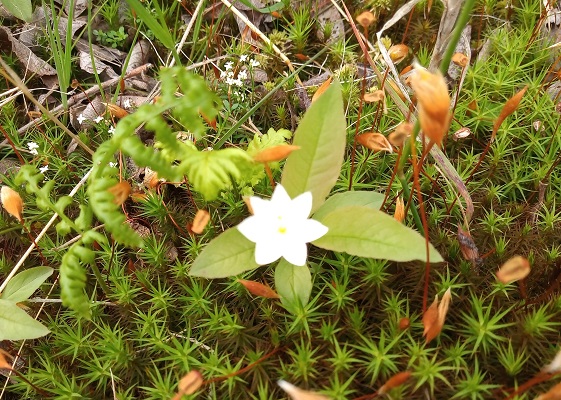
We humans are such visual creatures, and it’s the flowers that draw us and grab our attention. But flowers are the tip of the ecological iceberg of the wet side of the wood. Ferns, grasses, unidentified rushes and reeds are the matrix of this habitat, while unnoticed and unobtrusive, the sphagnum mosses proiliferate, and go on with their work of creating peat, holding onto water – and capturing carbon.
How the woods work to heal us.
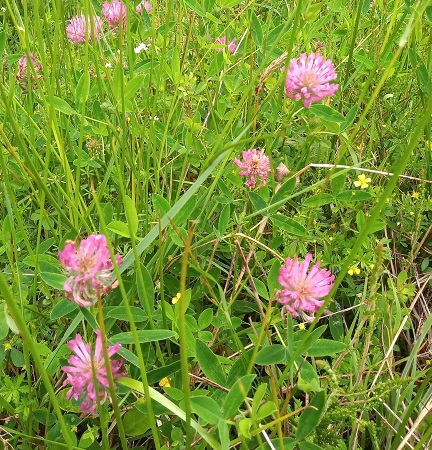
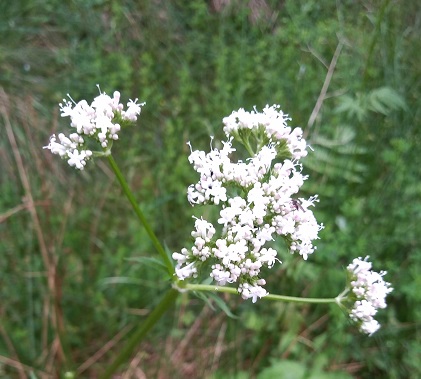
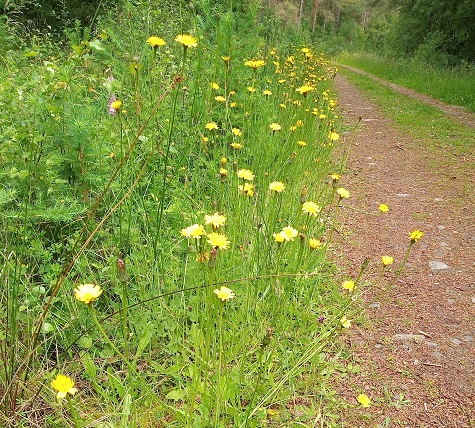
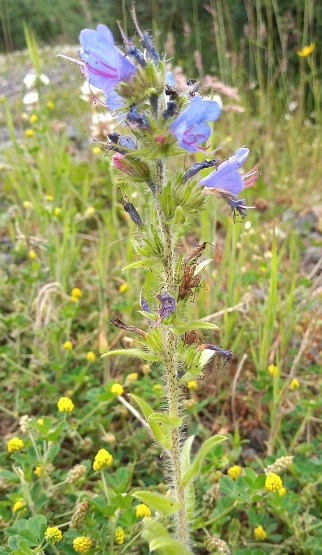
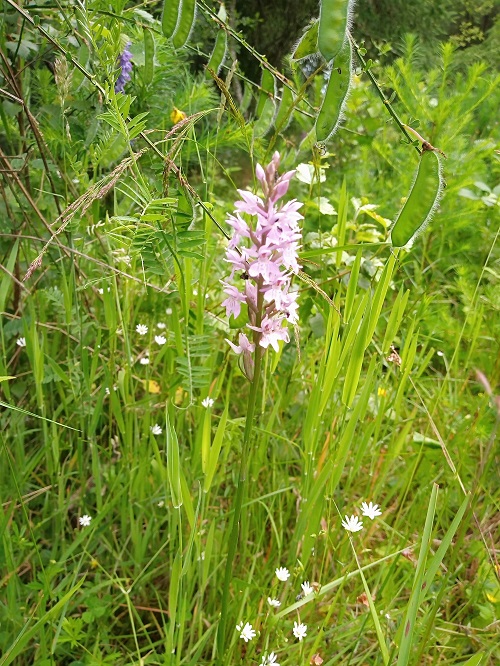
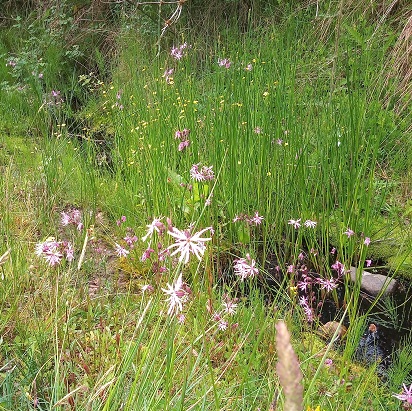
Clockwise from top left: Red Clover, Valerian, Viper’s Bugloss, Ragged Robin, Common Spotted Orchid


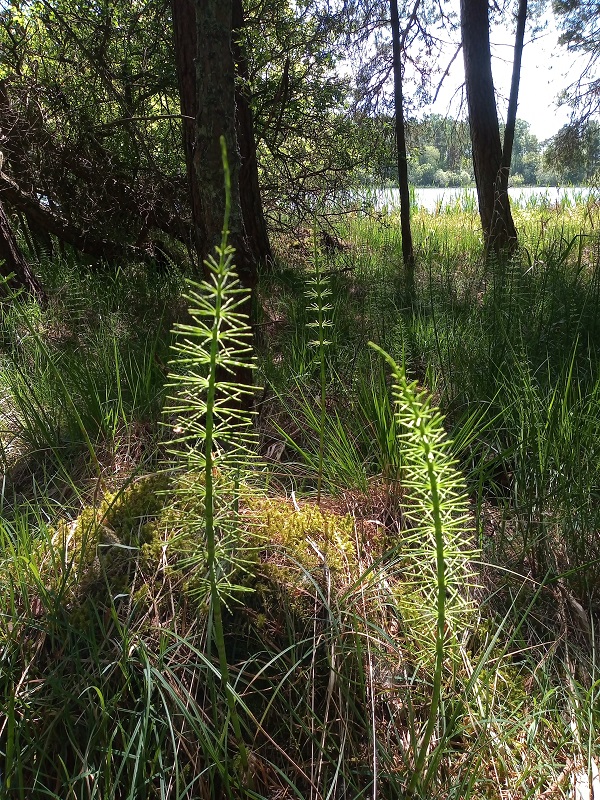

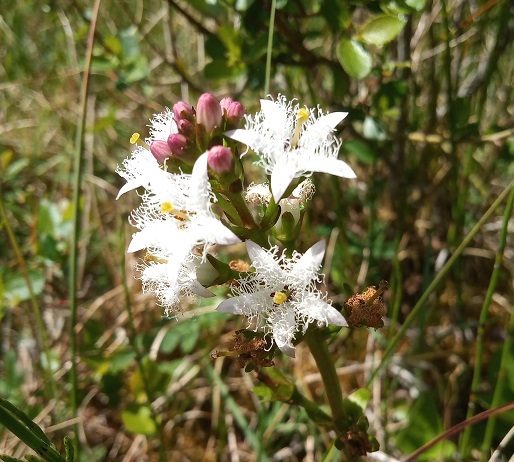

 Pockets of peaty marshland, studded in autumn by vivid blue sheeps’ scabious and emphatically solitary flowers of the Grass of Parnassus, spiral around flat pools of oily water, reflecting snatches of sky. Larger raised bogs, pillaged in previous centuries for their peat, lie flat and sullen. When the peat was no longer wanted, they grew conifers on the “useless” land.
 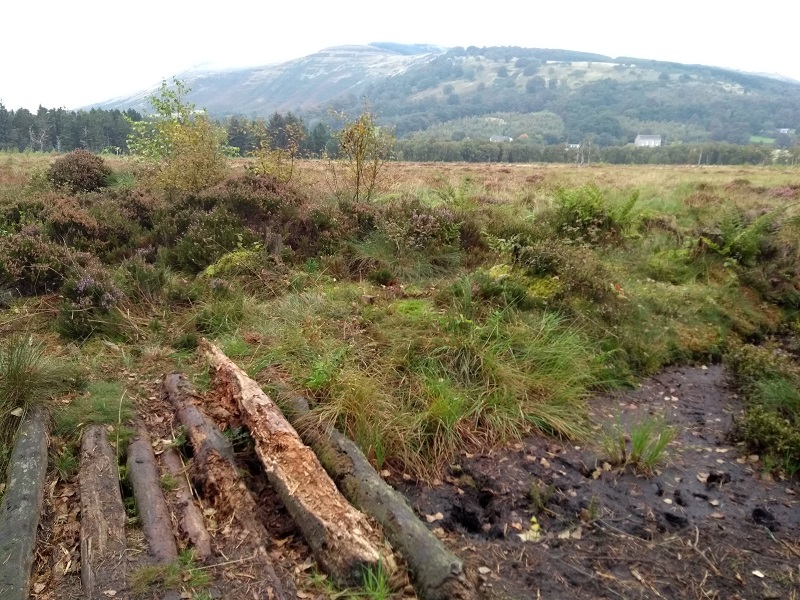 Now the conifers are retreating after the long-forgotten glaciers; the water returns; dragonflies, amphibians and sphagnum once more fill the horizontal expanse between the forest. Heaths and ling guide the trespasser to the dryer paths, and felled branches bridge the bog where water maintains its horizontal sovereignty.
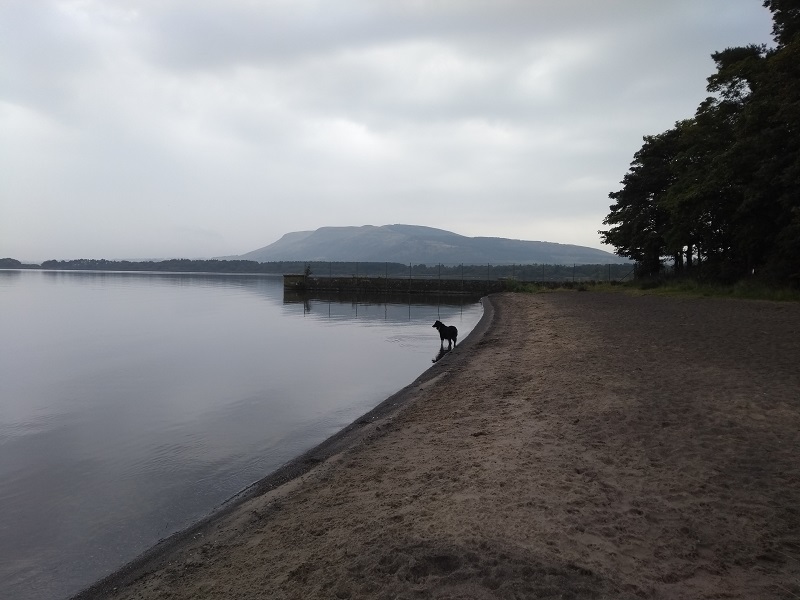
 In fields by the loch, the damp rises in horizontal layers, coating logs and stumps and gate-posts with moist, green mosses and algae. In one field a whole tree fell, years ago. In this damp environment it has not died, but adapted to its horizontal status and continued to grow; a miniature forest of shoots, epiphytes and primitive plants along its horizontal trunk.

 Comments on The Nature of the Universe