
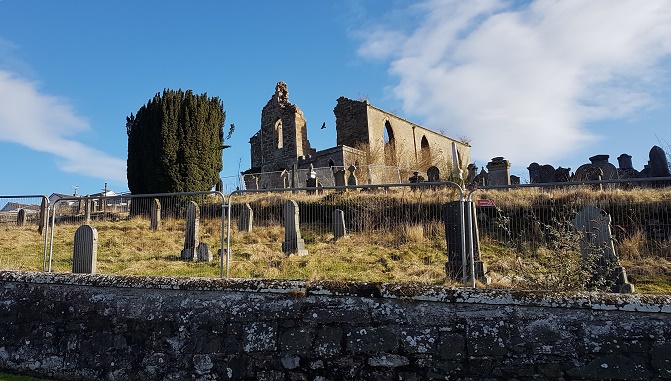
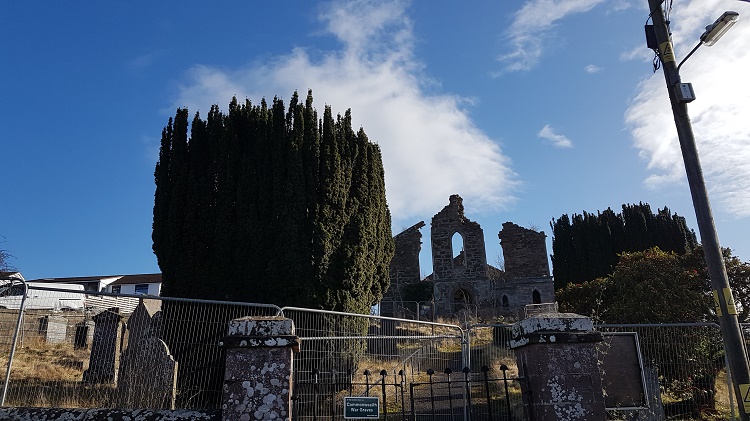
Now the Irish yews are surging skywards, thrusting out dark flames of leaf and stem.
They are slow, but it’s been over a decade now, trickling from flame to flame.
There is a blurred line
where a century of tidy head-height tinkering ended, and a tight sea of brooding, black-edged green foliage has broken through, and swept away order.
The yews erupt, as stone crumbles and falls.
Birds roost in them at twilight in scores, warm, undisturbed, by gale or snow.
Behind the safety fencing, beyond the do-not-pass and danger signs,
is a place where no man goes.
Gravestones lean, tip and tumble; make new, safe alcoves, tunnels and tiny shelters for unregarded lives.
Grass rises, dances with nettle and willow herb, falls, forms dense mats and decomposes slowly.
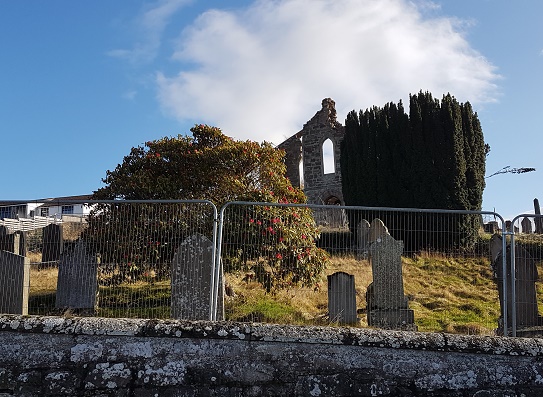
Rhododendron Elizabeth, first red fire of February, sprawls and spreads and flowers on, uncorseted.
But most of the orderly and well-tamed shrubs they planted by the paths and over loved ones shrink and cower now
beneath the onslaught of bird-borne buddleia, bramble and insidious sweet elder.
Secrets are kept here among the dead. Trysts are made
between fungus and flowers, moss and bird, animal, alga, insect, lichen and all
the free flow of life invisible, multiplying, dividing, swarming, with the Irish yews, making universes from perceived dereliction.
Sanctuary now, holy ground, as never before.
 Comments on The Nature of the Universe