
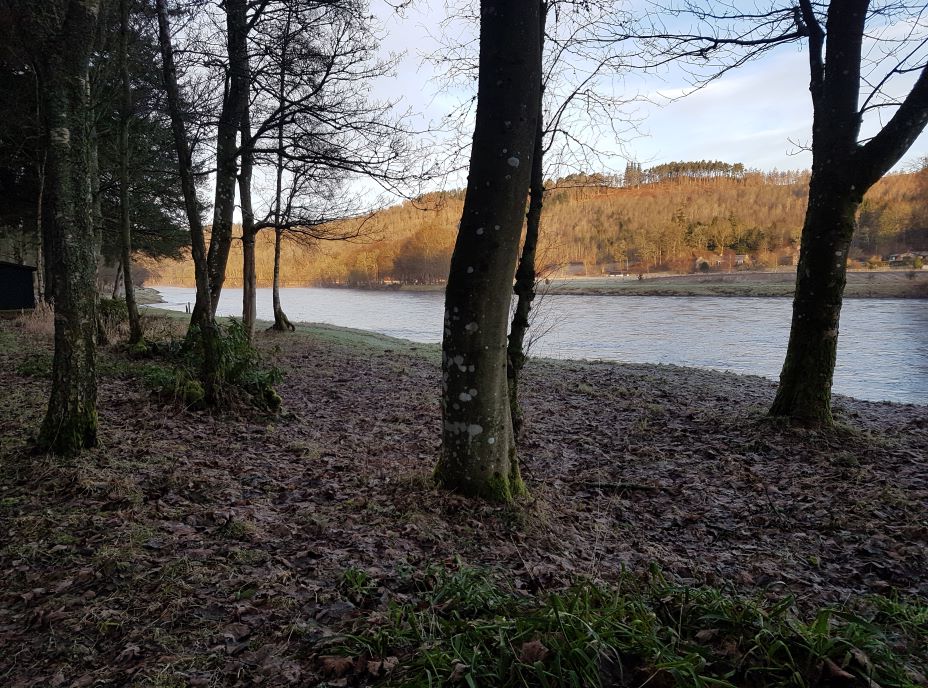
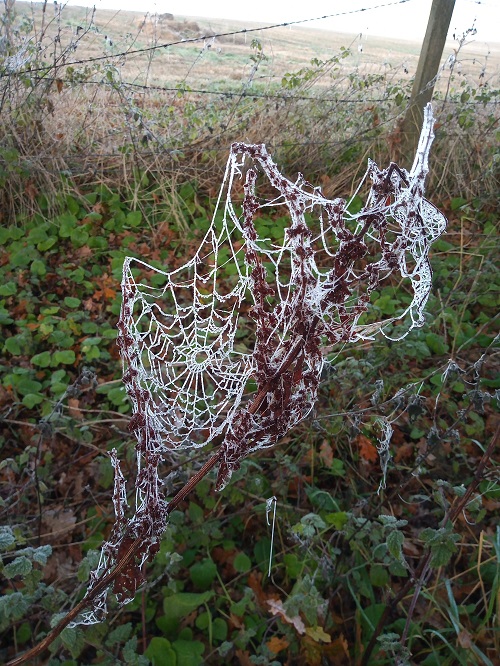
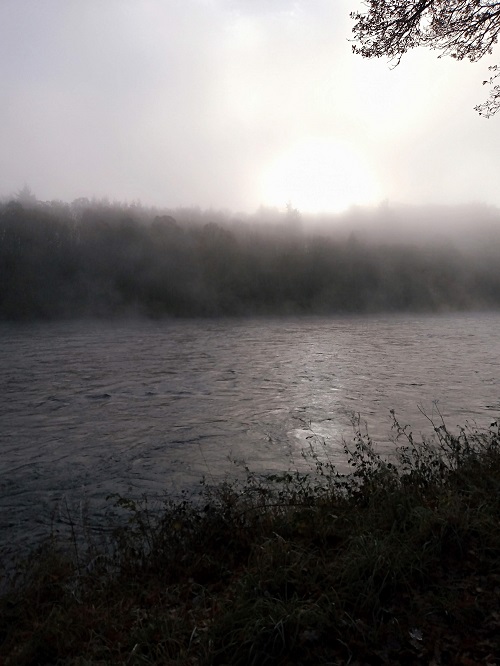
Early morning, sunny and dry. Silence, save for the mutterings of a river almost out of its banks and racing to reach the sea. Ground solid, unyielding – the type of hardness where you trip up on embedded clods and frazzles of vegetation hiding in the whiteness of a fourth consecutive deep frost – on ground already frozen solid by over a week of snow-half-thaw-freeze again.
Walking along the south shore of the Tay on a winter’s morning kind of ensures you won’t be in the sun very much, no matter how it dazzles the eye. In any case, the river has merrily engulfed the lower fishermen’s path that hugs its margin, so we walk, me and the dog, on the higher ground beneath the limes of the castle drive. Where are all the birds? I wonder. Not even the ubiquitous wood pigeons are out braving the cold. We pass an eroded river gulley and went down the steepish bank to the lower riverside path, joining at the point where it rises above water level and becomes what must once have been an elegant stroll for visitors to the castle. Fishing on the Tay is big business, and not affordable by ordinary people (unless you live in Perth and have the right to fish the stretch within the city boundary). We pass fishing huts on both banks that would make acceptable homes for small families. All locked up, today. No one but me and the dog.
Now I’m closer to the water, I start to notice a large number of white birds swimming rapidly downriver. What are they escaping from? Then I realise the white birds are actually lumps of ice, breaking away from the frozen banks and joining the ice and snowmelt that, with extended periods of rain, has made the river so massive today. A couple of gritty black-and-white ducks obstinately battle upriver, against the flow. What strong legs they must have! They veer off into a little eddying backwater on the opposite bank, and I see other water birds lurking there, taking a break from morning chores.
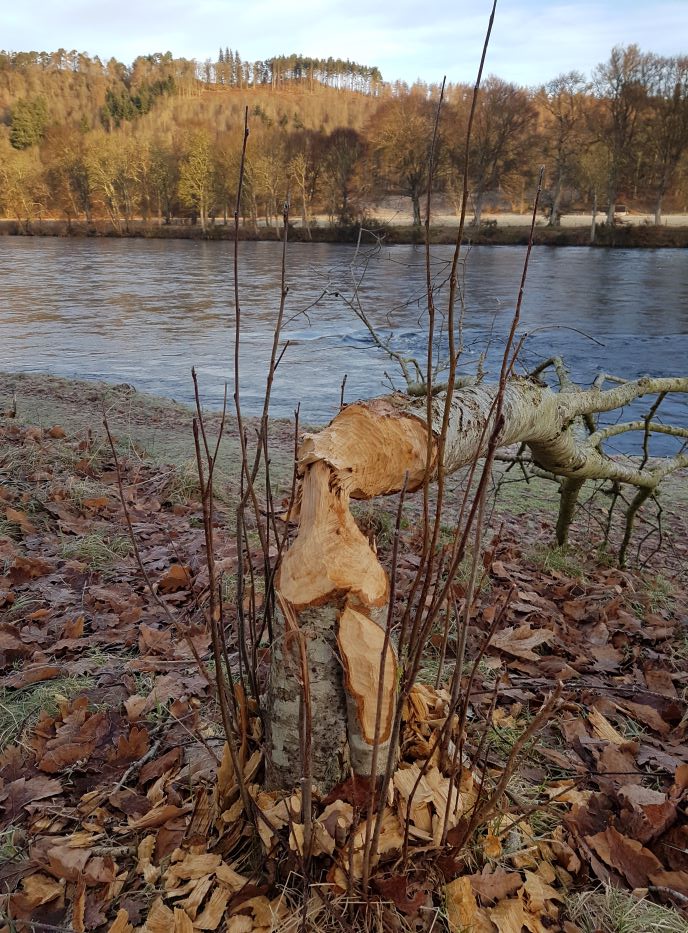
Beaver have been along here recently, but I struggle to fathom their purpose in felling one solitary tree, up the beach from the tumbling water. Maybe just hungry, or doing a bit of coppicing for future regrowth food supplies. I think the water birds could use a few more beavers to create respite backwaters.
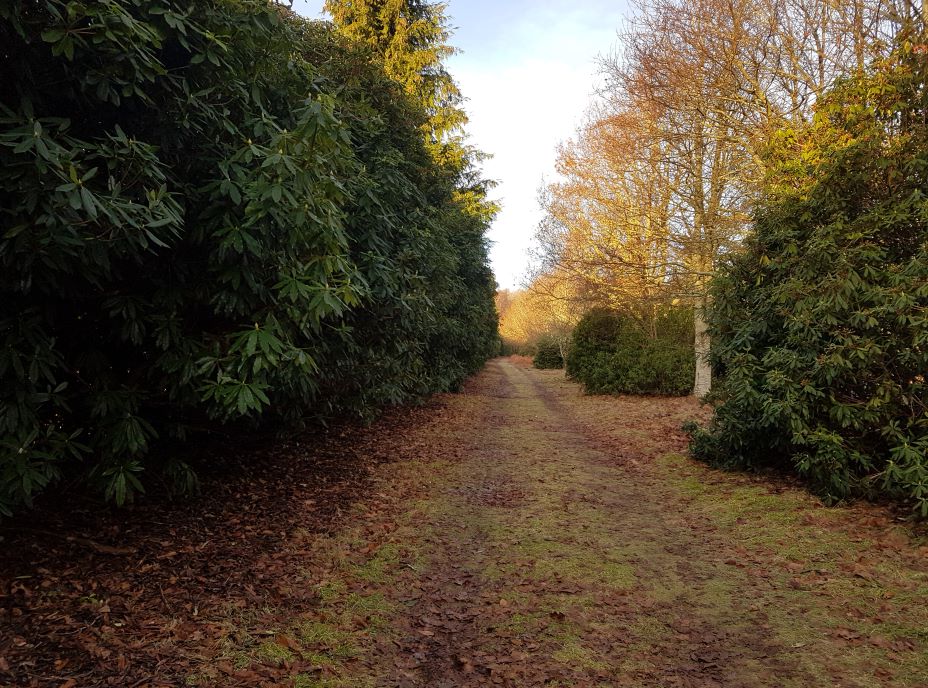
Skirting a long curve round the back of the castle, I pass between forbidding walls of rhododendron bushes. Although they provide some shelter and a small stretch of unfrozen path. they block the view. I spend too much time trying to eliminate them from an ancient oak wood to appreciate their aesthetics. I guess they may provide good roosts for birds, though I still don’t see any.
The core path takes a long, curving route by a bend in the Tay, high above the river and nearly to Birnam before it joins the castle main drive which will take me back to the start if I go left. Closer to the castle, the trees are less scrubby and include many spectacular examples of exotic species, such as Noble Firs, Coast Redwoods and towering Pines. It becomes a landscape of avenues – tottering rows of limb-dropping beeches, stately Sequoias in orderly, sentry-like placings, frowning yew trees in sombre ranks, new avenues planted in recent decades to replace older ones that refuse to lie down and die. Best of all, to me, are the ridiculously shaggy and spreading avenues of old lime trees – each hiding in its own twiggy skirt of epicormic growth. In spring, they provide me with juicy, tender leaves for salad, and intoxicatingly sweet-smelling flowers in summer to dry and make into a sleep-inducing tisane.
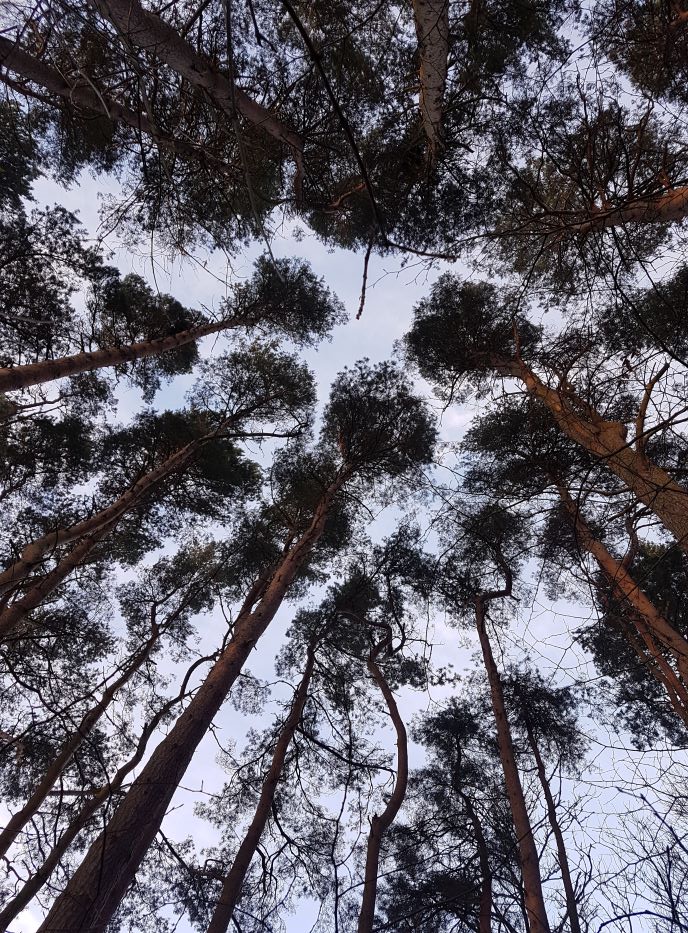
As I walk between and under these vibrant specimen trees, I suddenly realise birds have started to chatter, and mixed flocks of finches, secretive tree-creepers and purposeful, hopping blackbirds are awake and accompanying me. Gazing up through the close pine trees, I can just see avian silhouettes flitting busily.
There are paths that could be taken to make a short-cut through the castle garden. Scottish access laws, some would say, give walkers a perfect right to take them, and no doubt some do. I’ve lived in a tied house on an estate where summer visitors frequently asserted this right to take a short cut to a beach through our garden, where we had small children playing and hens free-ranging – and on at least one occasion, hens were killed by loose, uncontrolled dogs. So personally, while I’m proud of our access laws, I think we should respect the privacy of residents and remember those laws also require the walker or cyclist to act responsibly. I’m fine with taking a long way round. The core path eventually passes in front of the castle at a distance (more avenues!), and I note the large, standing stone nearby, like an iceberg itself in an open, frost-enveloped field. It has no name. Does it link with other, less ancient perhaps but curiously-named stones in the area? One day I’ll hunt down the Witches’ Stone (well, this is Macbeth country!) and the Cloven stone….. but not today.
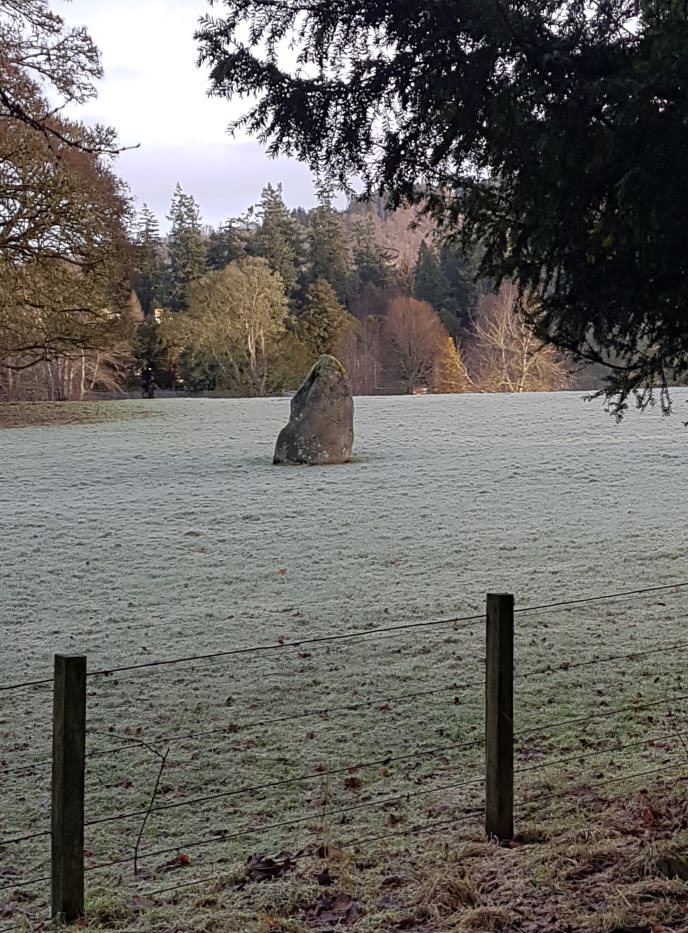
Today, I dawdle back under the limes to the gate, salute the mighty Tay with its miniature ice-packs, and begin to think about breakfast.





 In a fright of frustration and indecision you stream from the house. Too much time alone, too many choices, too many restrictions, too much procrastination – poring over maps in search of something new, too much squinting at Google Satellite to find new paths, no decisions made, no enthusiasm kindled.

 Back at the estuarine beach, nearly under the bridge, you notice the memorial to those killed in the Rail Bridge Disaster. You were in too much of a hurry to see it before. And you stop, and rock to and fro on the tiny jetty, as the dog paddles and sniffs at stones and seaweed.
 By this great river I sit
 Comments on The Nature of the Universe