
I do suffer anxiety about running out of some things. Not toilet rolls, pasta or stuff like that, but spinach, for sure. Before I discovered Giant Winter Spinach, which grows all winter in my polytunnel and then supplies fabulous crops from a January sowing planted out in March, I used to stockpile tinned spinach for the hungry gap. I know that supermarkets have been selling bags of “baby” spinach all winter ever since it became fashionable, but I don’t like the plastic.
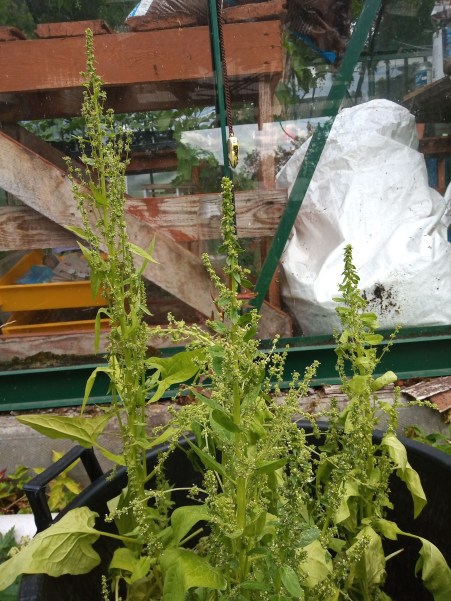
Now I think I have it sussed: home-grown spinach 12 months of the year. The Giant Winter came out a couple of weeks ago when it became obstinately determined to run to seed (seed which will be collected from a choice group of plants transferred to a socially distanced tub where it won’t cross-pollinate with other spinaches). By that time, I’d started using the Leaf Beet, a.k.a. Perpetual Spinach (which isn’t, but it does go on cropping for a long while before it too starts to flower), from another bed.
Meanwhile, there have been pickings ever since February from one of the best perennial spinaches, the wild plant Good King Henry. I keep a couple in the polytunnel for early leaves, but it grows most happily outside and makes a handsome border plant. It can flower as much as it likes, because the leaves just keep on being produced. In mainland Europe, it’s just called Good Henry. This is to distinguish it from Bad Henry (which we call Dog’s Mercury) – a poisonous plant. I suspect most Europeans, republicans or not, would consider it a bad idea to call an innocent and desirable food plant after one of the most rancid monarchs in history.

Swiss Chard is also in the spinach family. There are Ruby, Yellow, Pink Lipstick and Rainbow Chards, but I am growing an old, white-stemmed variety called Fordhook Giant. Last year, my daughter got one off me that became a monstrous triffid, and kept supplying her with stems and greens even after being accidentally felled by the Glasgow gales. She got the last harvest on June 10th! I am determined mine is going to beat that this year….it has a way to go yet!

Talking of giants, Tree Spinach, with spectacular pink shoots, is coming along nicely too…. I once let one grow to 12 feet tall for a laugh, but it’s best to stop them at 6 or 7 feet and let them bush out. Shoots, leaves and young flowers are delicious, cooked or raw in salad. Another good one to try is Huazontle, the Aztec Spinach – not quite so tall but very prolific. They’re both related to the weed of cultivation called Fat Hen or Lamb’s Quarters, which turns up in the stomachs of preserved Iron Age bog bodies. See, spinach has always been an essential!

I’ve had Caucasian Climbing Spinach (Hablitzia tamnoides) in the garden for over 3 years and up till this spring I thought it was a bit of a hype to be honest. But now it’s repaying my patience! Delicious shoots, followed by exuberant twining stems and tasty, bountiful, heart-shaped leaves. It’s another perennial, so it can flower as much as it likes.

Last week I actually got worried I might have more spinach ready than I could cope with. Thanks to a host of digital friends and acquaintances, I now have no concern, with recipes for spinach pies, pestos, sag aloo, soups, pasta, and smoothies all coming my way.
Now, which spinach shall we eat tonight?



 Comments on The Nature of the Universe