Equinox: A Hiatus

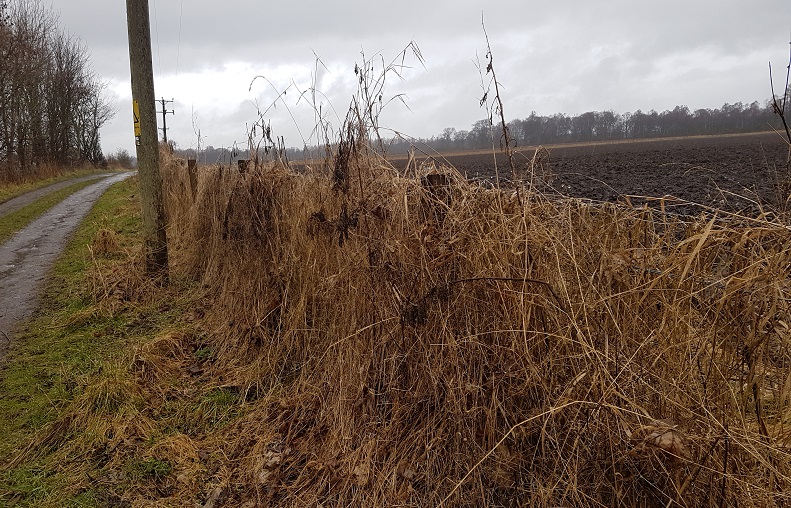
One day to the equinox; officially the first day of spring. It rains, a sullen, dreich miasma and the horizon is drowned in mist and low cloud once again. No cloud of cheery celandines yet line the ditches; no coltsfoot flowers; no green dazzle of new growth erupting from the tired, forlorn and hang-dog leavings of winter stems of grass.

There was a start to spring, a couple of weeks ago, when the sun was gentle and warm and the birds practised their calls. A blue tit inspected a nest box, and rooks set-to in earnest up in the rookery tree. Today, the only sound is the drip-drip-drip of rain. And even that’s muffled.
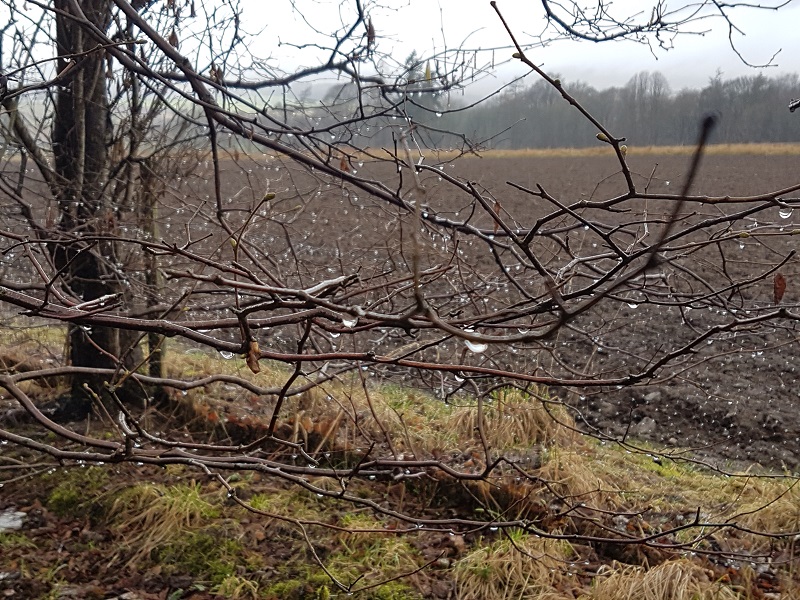
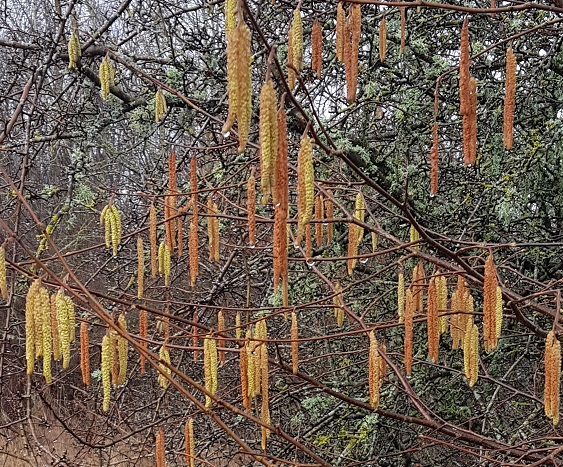
In the soggy brown fields, where the cover crop was optimistically ploughed in a fortnight ago, soil trickles away downhill in the empty furrows. No fuzz of pink from swelling buds tints the distant birch trees, no lighter hues on the sycamores and maples. On the hazels, the merry festoons of bright yellow and cream catkins are turning brown, but no buds are opening to take their place.
Spring’s not here. I rake in the squelching soundscape of a muddy woodland walk for the chiff-chaff, first of the warblers to arrive in March, but he is not here either. I wonder if this is the day I have for so long dreaded and feared – the “what if” day. What if the the birds of summer do not return? What if I never see another swallow? What if the flowers of spring are, finally, poisoned to death? What if nests fail and nestlings starve for want of insects and worms?

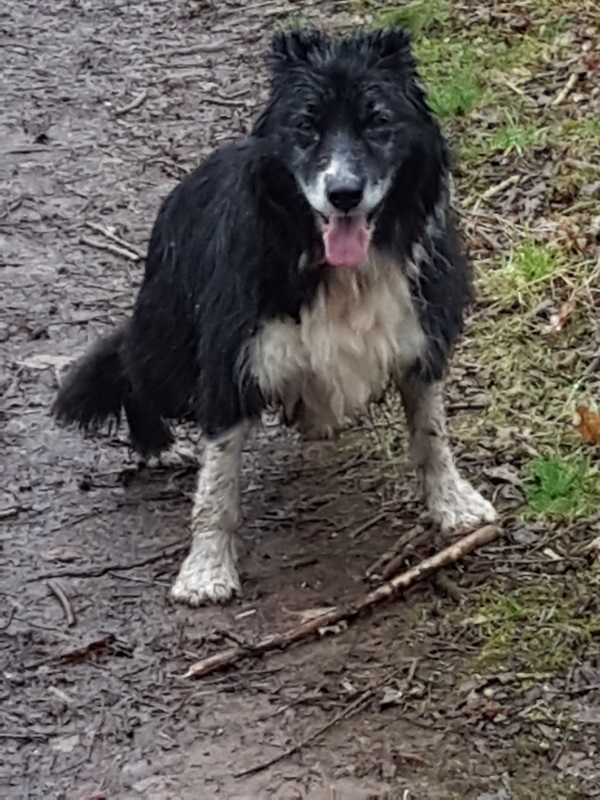
I do not want to follow this thought. Spring is late and it makes me weary and anxious. My elderly dog plods on, keen to get back in the dry, tired, arthritic legs dragging, stumbling at times yet still showing interest in sticks, at least on the way back. I think, will spring come in time for him to enjoy it, to sit in the healing sun and watch the world go by, an old dog at the end of life but still game?
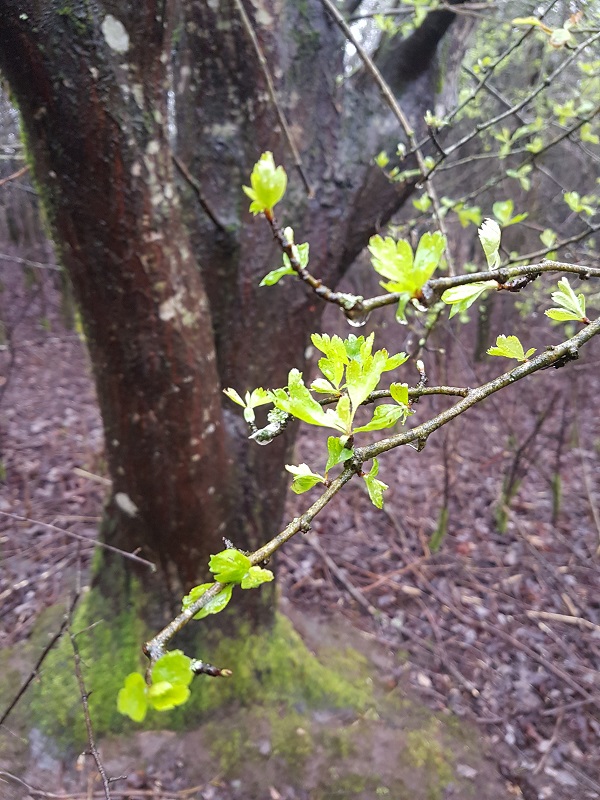
On the way home, I find some of those precocious hawthorns in the depth of the wood which always burst into leaf prematurely and give me my ritual mouthful of hedgerow “bread and cheese”. Today it tastes of even less than usual, but I chew away, get in the door, dry off the dog and put on the kettle.

At least there’s tea.
Circular Walk, Spring Morning

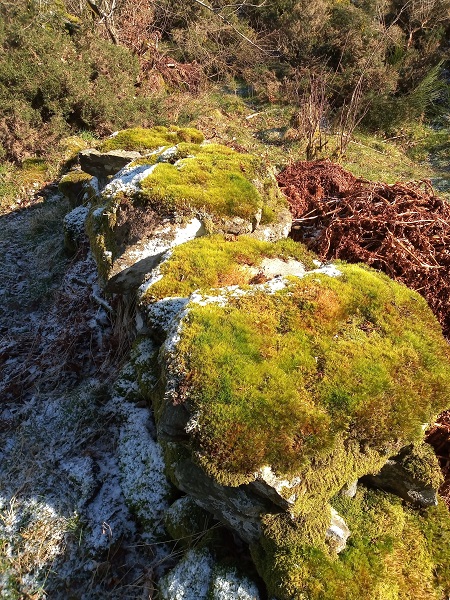
A night of light snow, followed by clear-sky freezing has left
The ground hard and white.
Rapidly the sun, heroic, overcoming all, climbing high,
Melts snow to iridescence at every margin, every edge.

On a single hill, snow is held in thrall. Like a crumpled Mount Fuji, but
No blossom, no art,
The hill holds its ghost-clothes, despite the sun’s triumphal progress.
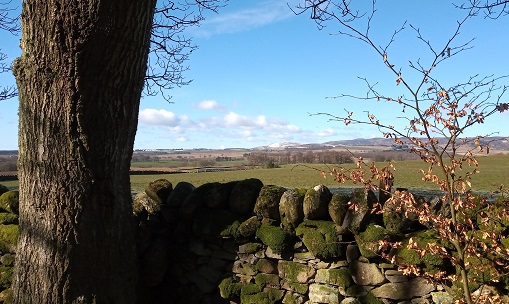
Magisterial old beeches sun themselves among old walls and
Moss-covered stones, dripping, wet, full of temptation.

Birds call, fluting, piping, chameleon-coloured, slipping away like lizards.

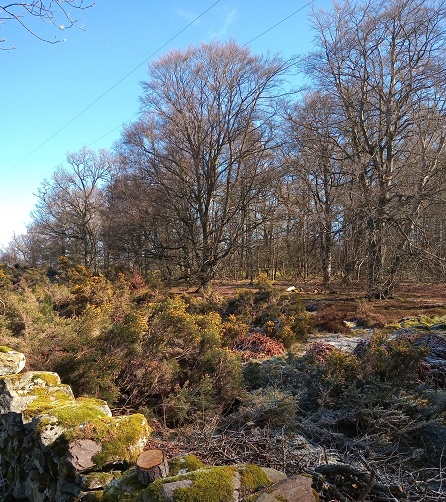
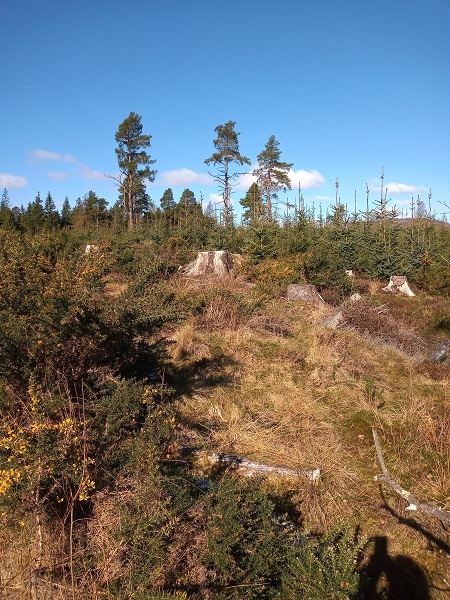
I’ve never understood the detritus of forestry. The wind cuts and dives
In and out of the shambles of stumps and trenches, where startled pines left behind
Look half-naked and vulnerable, hesitantly beginning to stretch arms to the sky,
To each other, united in the icy wind.

I follow the wind. I leave the wreckage, the small shelter
Of self-seeded spruce erupting from glossy gorse and broom. Ahead
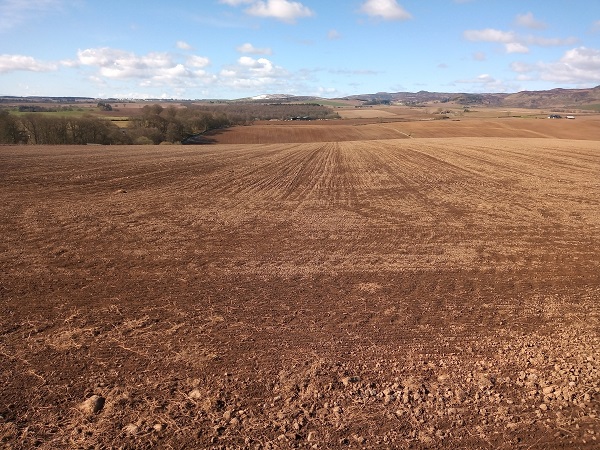
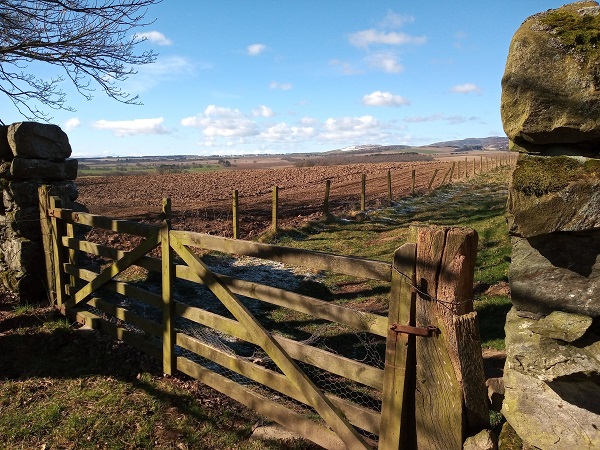
A vast and dreary vista of huge, brown and empty fields,
Unpunctuated by tree or hedge-bank, meticulously ploughed and harrowed.
The dust rises, faintly reeking still of the abattoir, that small, derisory recompense
For decades of soil inevitably lost and life precluded.

Back by road, the first wood anemones
In the deep and shady gulf where children once played canyons,
And a rising stir of sound comes up from behind. Suddenly
A thousand geese are shifting and snaking in the blue, blue sky,
Withering the last frost with their joy.

Here comes the Sun

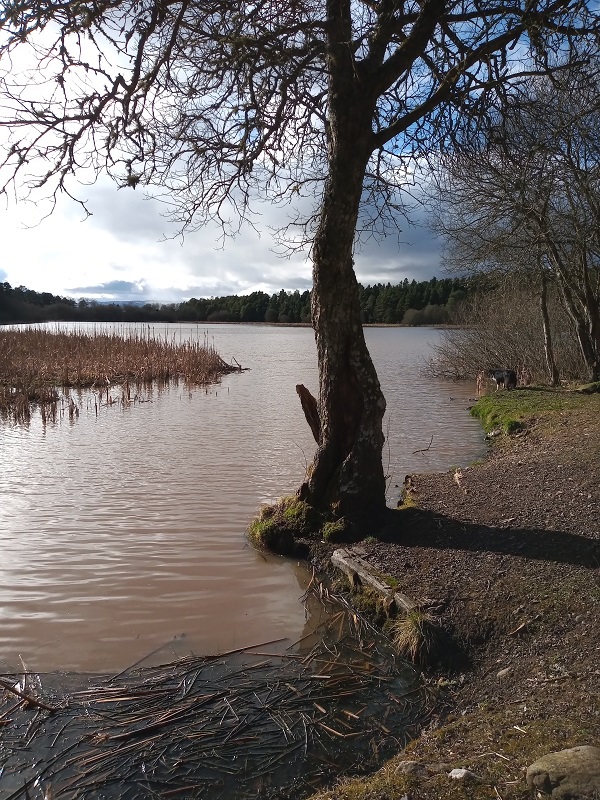
The mute swans stand in the middle of Stare Dam loch, looking at their feet in puzzlement, as meltwater sluices over them. They bend round to look beseechingly at me as I stand by the wooden jetty, as if to ask why this strange divinity has been bestowed on them, and why they cannot swim in water as usual. Then with determination they undertake a rather slippery swan take-off from whatever the surface of the loch is, and wheel around the trees in the reassuring sky.

The sun roars through into the morning like a rocket. Speed of light. It burnishes the bare trees and their wavering reflections in the loch, shrieks and shatters the shards of once indomitable ice. Water trickles unseen, seeps from frozen ground, sings in quiet rivulets.

An old song burrows its way into my head, and will not leave. The ice is slowly melting. I stand, eyes closed to the sun, and feel the breeze that no longer lacerates with coldness. I hear the whirring of the bemused swans, the first territorial song-stakes of the woodland birds. It seems like years since it’s been here.

Back at the house, the speculating rooks are at home, sitting in their parliament in the sycamore and debating which of last year’s nests have foundations sufficiently stable to re-use. Twigs start dropping.  I think there are more rook members than last year.

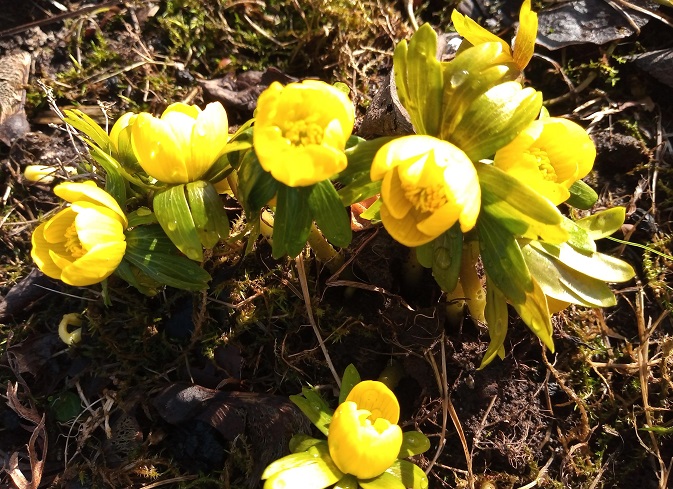
Not all of the calamities and sorrows of the winter will disappear with the snow. But some will diminish, I think, and some will be easier to face. The snow has retreated from bits of lawn. The winter aconites open, and dazzle.

Ambushed by Birdsong in Taymount Wood

“Much laid plans” and all that. I knew exactly what I was going to write about in my second post for West Stormont Woodland Group. It involved walking quickly and without distraction to King’s Myre in Taymount Wood.

But on this sunny, yet briskly chilly morning in March, the birds had other plans for me. We hadn’t got far when the dog was infuriated by an ear-piercing whistling made, apparently, by a bush. Eventually a tiny bit of the bush detached itself and was revealed as the smallest bird with the loudest voice – the wren, bustling ahead of us from twig to twig. The dog hates wrens. They scold, scoff, and shout at him, warning everyone he’s about.

TW scotspine

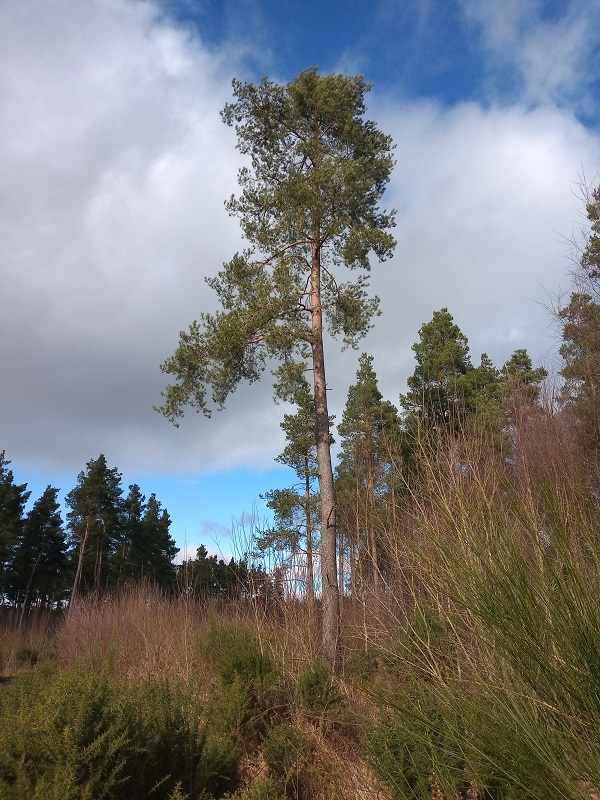
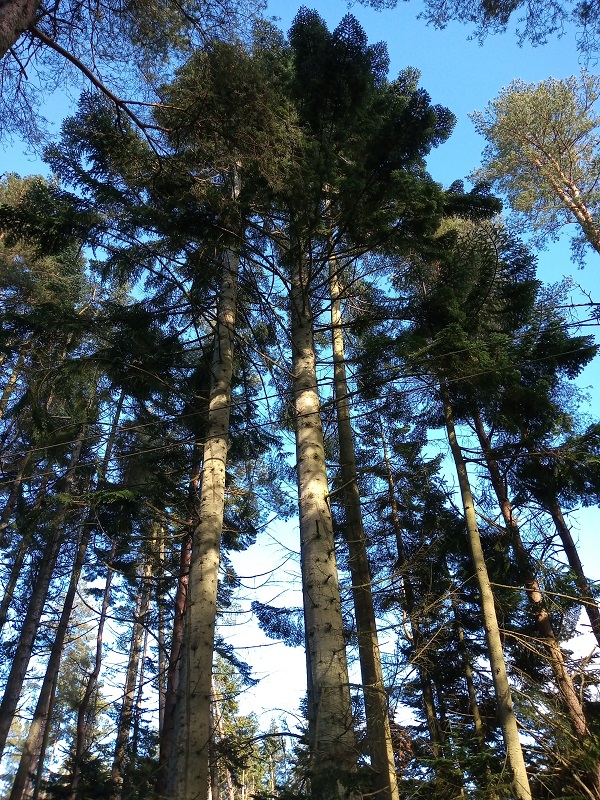
We dawdled on. Taymount contains a fair variety of tree species for a plantation. Tall Scots Pines lifted their crowns to the sun. Here and there, where selective felling had left a pine with elbow room, the narrow confines of its growth could be seen morphing into the mighty spread of the Caledonian pines. Larger clearings now host dense, self-seeded birch, through which a flock of greenfinches scurried. Brown bracken, unusual in this wood, lay beneath, thick enough to bed a herd of beasts.

TW bracken

We were on the cusp of spring. Robins proclaimed territories sweetly, compellingly, from field walls. We saw and heard shrill blue-tits, piping long-tails, busy coal-tits, always on the go. Great tits were most strident, high in the trees. “I’m yours! Look at me!” they seemed to cry in their repetitive, compulsive mating calls. Gazing up focused my attention on the trees, too, as silver firs soared into the blue sky. We fantasised about crested tits, one day, coming here.

TW silver fir

We came to some Sitka Spruce which had evaded felling. Sitka is a splendid, statuesque tree when grown as a specimen. If it has no place in the Scottish ecosystem, tell that to the coal-tits. These spruces were laden with dangling ginger cones and coal tits moved systematically from branch to branch, eating the seeds. Then a spotted woodpecker, who’d been ever-present with his drumming, exploded out of hiding and passed right over our heads, a massive spruce cone gripped in his bill.

By the time we got to King’s Myre, we just enjoyed the sunshine by the loch. Another day for that tale!

TW kingsmyre1