
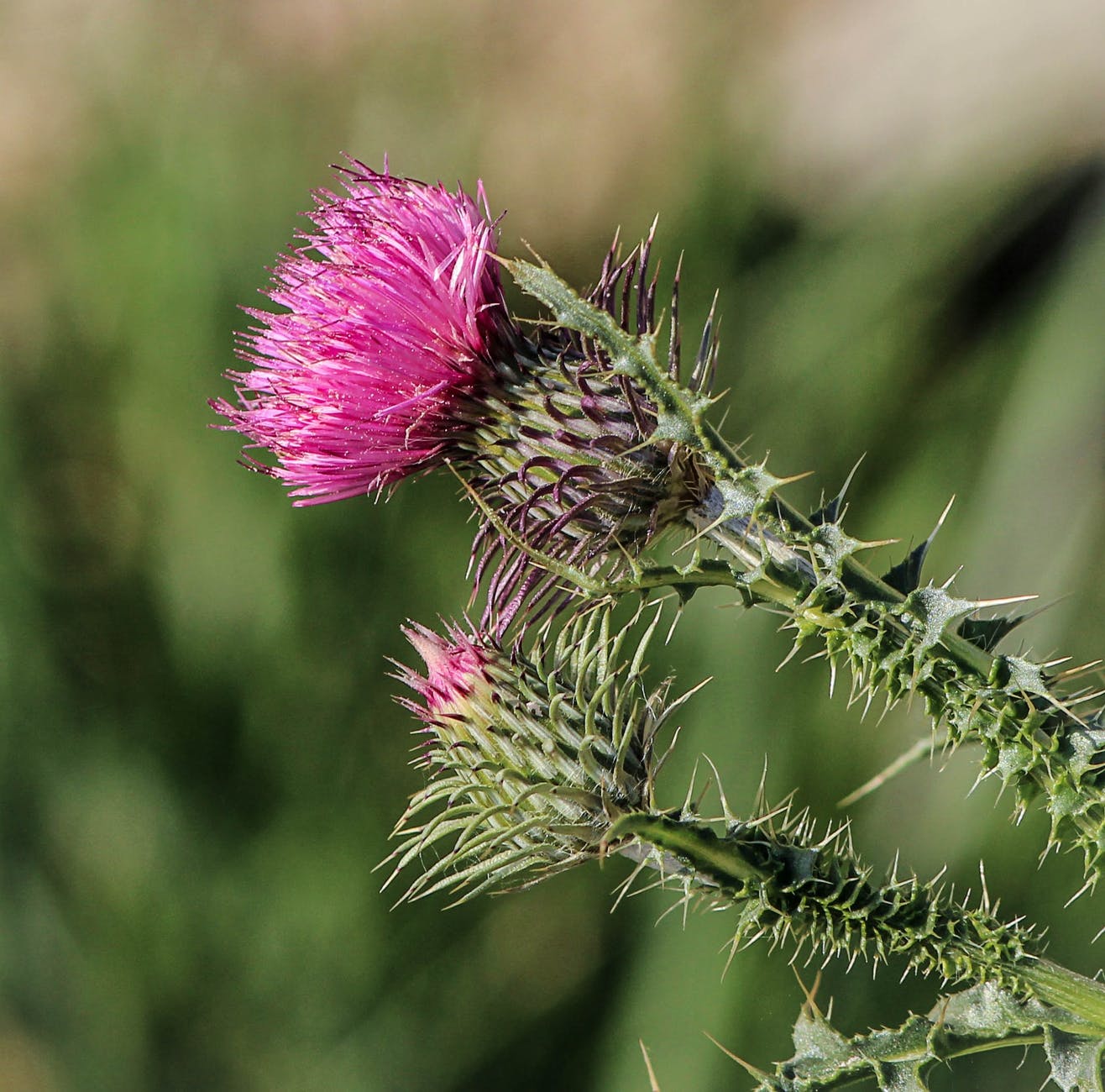
There’s this story in Scottish folklore: A king (Scottish or Pictish) and his army were engaged in a long campaign to repel the Danish invaders who were terrorising the east coast. The Vikings knew that the only way to gain free access to the rich breadbasket lands and the treasures of the religious houses was to defeat the king’s army, which was camped, exhausted, by a river, thinking itself safe for at least a night’s sleep. The Viking spies located the army. and to gain advantage by stealth and secrecy, the warriors began to creep up on foot, swords drawn, and surround them. Thinking their boots made too much noise, the leader ordered his men to go barefoot. Their goal was in sight, until a skull-splitting screech and an unrepeatable Scandinavian oath filled the air. One of the Vikings had trodden on a well-armed Spear Thistle. The kings army were thus warned, and sprang to action to repel the invaders. Since when, the thistle has always been the emblem of Scotland.
*****************************
Last Sunday was the first of the seriously cold days of this winter. It will get colder, but we will have adjusted to it. Nevertheless,it was still warmer outside than in our currently challenged-in-the-heating-department house, so we decided to go for a walk to warm up.
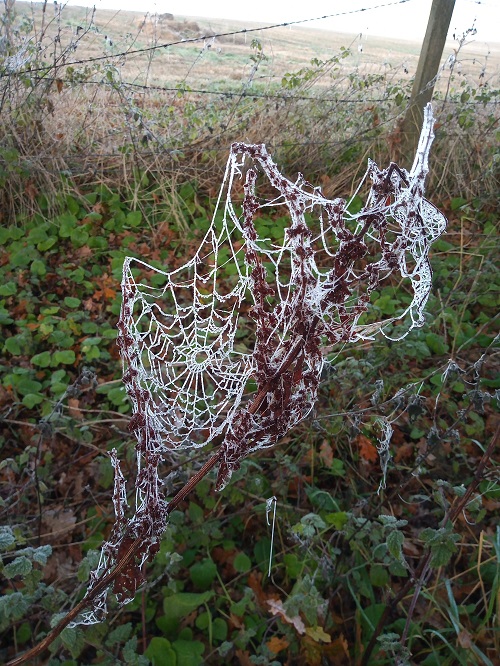
As we sauntered along the footpath from Luncarty to the River Tay, almost a hollow lane, beads of frost and frozen droplets of moisture clung to any material they encountered. Ephemeral, discarded threads pf spider gossamer waved like chilly bunting. Touch one, and it evaporated. Frizzy, curled husks of ice-tipped willow herb seedheads towered as if frozen.


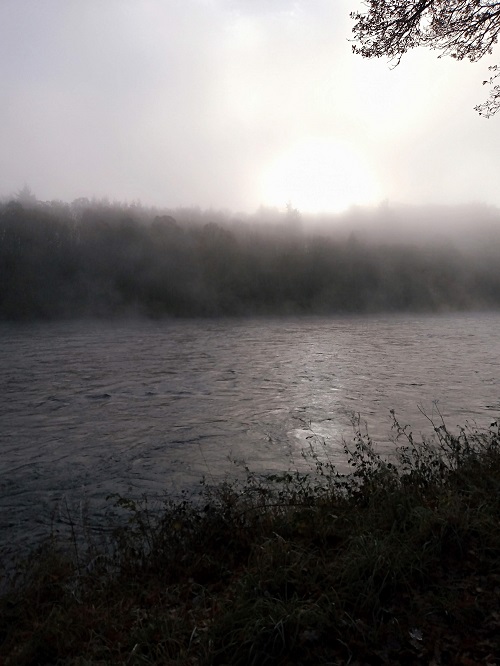
A haar descended. Generally the haar creeps upriver from Perth; today it seemed to come from all directions. Its gloom, exacerbated by the knowledge that somewhere behind it the sun is weakly shining, has the coldest feel imaginable. With wreaths of steam-like fog and mist flowing above the surface, the Tay resembled an Icelandic hot spring.
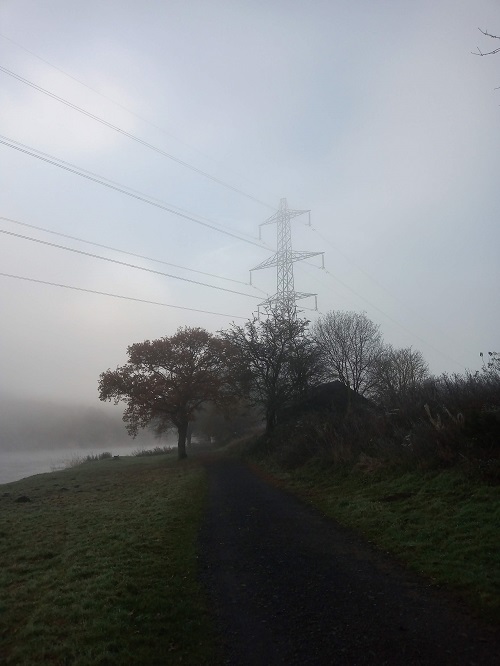
The river path proper starts at the site of the old Waulkmill Chain Ferry – once the only convenient way to cross from one side to the other. It closed as late as 1964, but I think this must have been a crossing point for many centuries before the chain ferry and pontoons were in operation. We headed in the direction of Perth City, watching gigantic pylons loom up from the cold dense air, bringing to mind the Martians from H.G.Wells’ War of the Worlds.
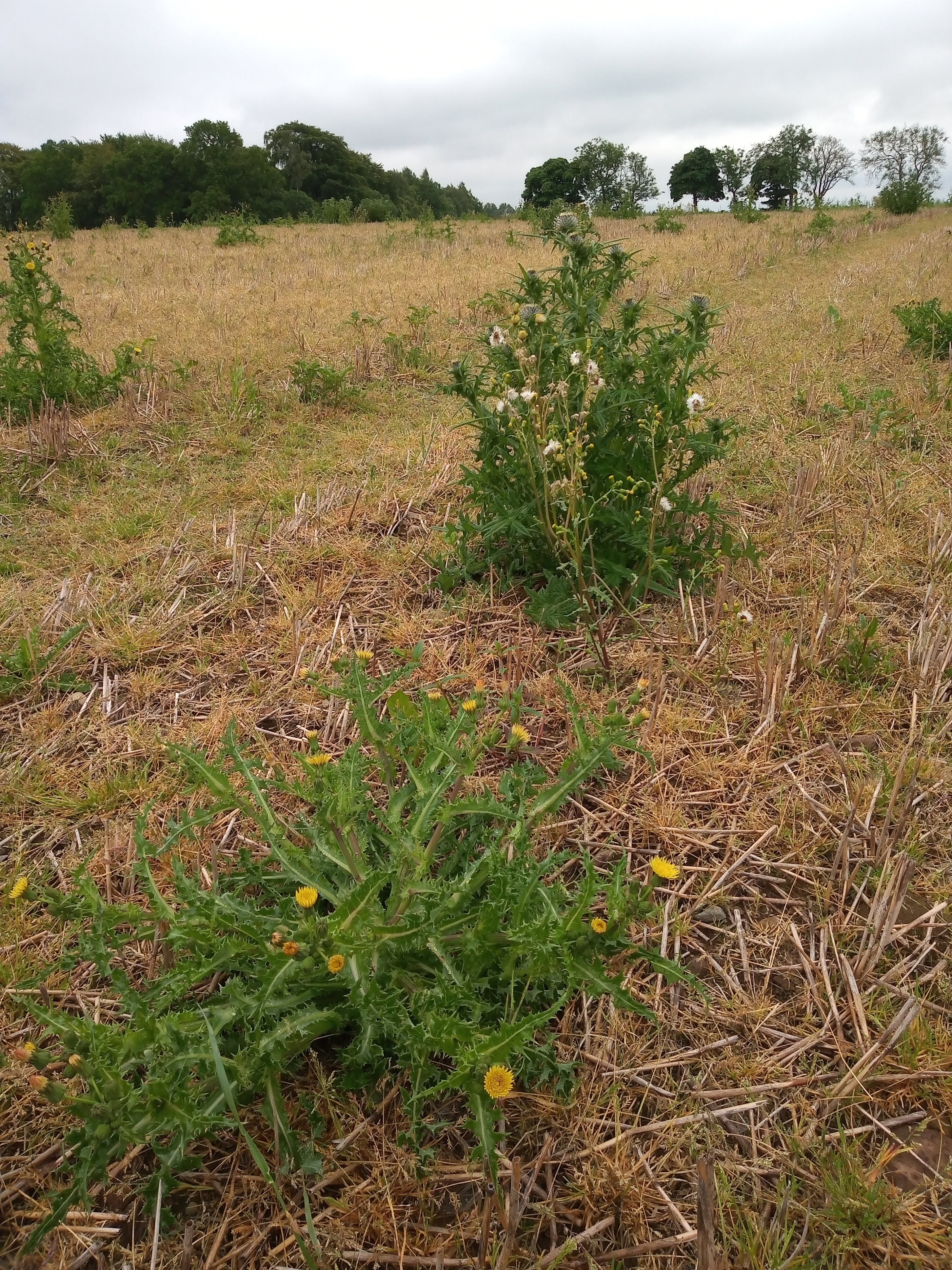
And then we came to the derelict bulk of old buildings beside Denmarkfield Farm, and the unmarked stone that stands in the weedy, thistle-infested ground just above the river. Here, locals say, is the site of that momentous battle that propelled the Scots thistle to prominence, and the stone – called the King’s Stone – marks the spot. That’s why the place, and later the farm, have been called Denmarkfield ever since.
There are plans to build yet another road, the Cross Tay Link Road, from here to Scone on the east bank. The land around the King’s Stone (actually far older than the 10th century) is under a compulsory purchase order. As people speed over the new bridge that will cross the river, congratulating themselves on the ease and convenience, will anyone remember the Waulkmill ferryman, the king who slept by the river, or the Viking with a sore foot?



 Comments on The Nature of the Universe