
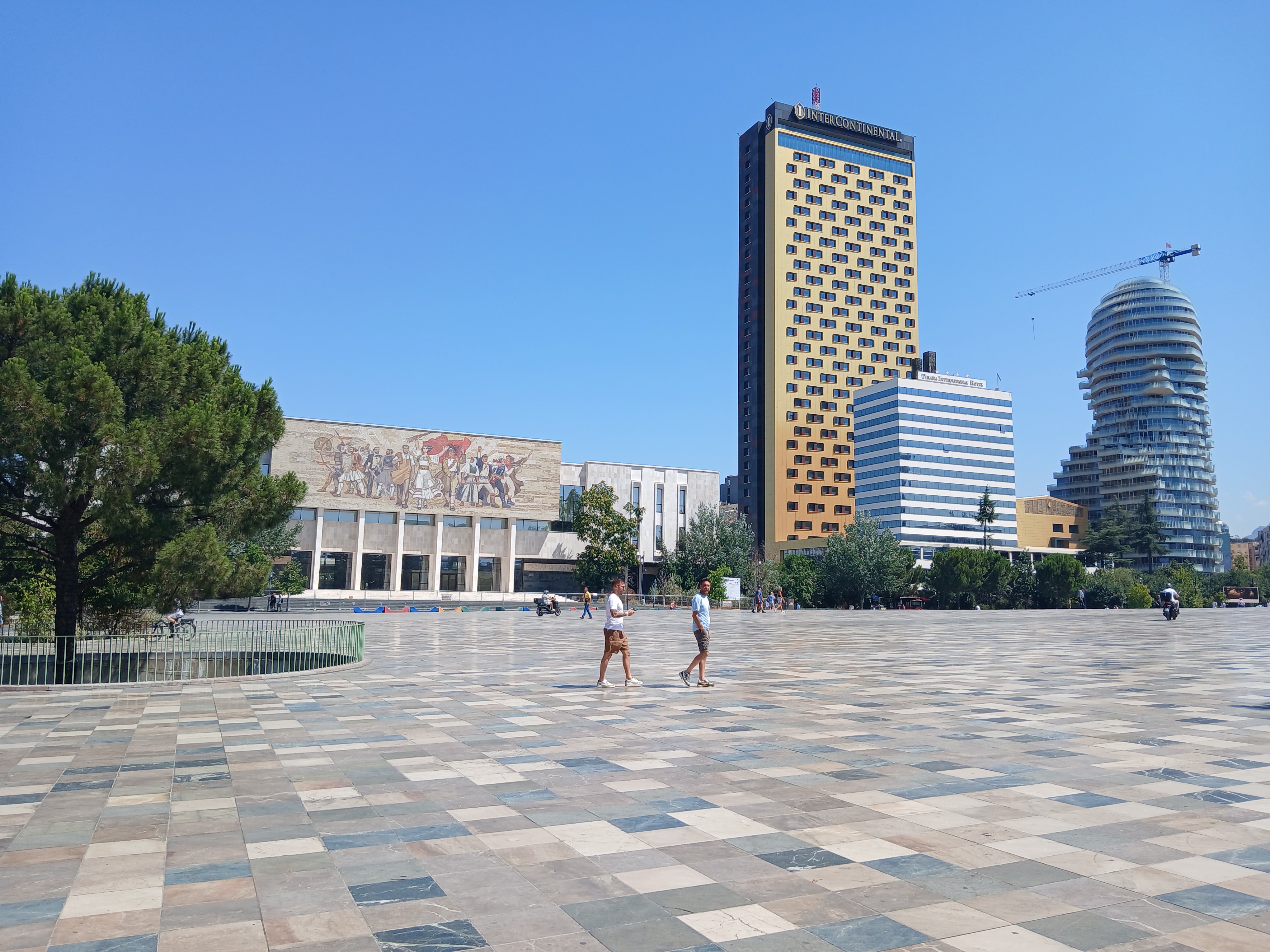
The taxi from the overnight ferry from Bari dropped us in the centre of Tirana, by Skanderbeg Square. Crossing the square, diving from one patch of shade to another, we blinked at the wild cacophony of buildings and a skyscape of tall cranes and construction sites. Traffic seemed to hurtle alarmingly – it was a while before I realised that almost everyone kept to the speed limit, that the second a pedestrian stepped onto a crossing the traffic would stop and wait patiently, that Albanian drivers have a supernatural awareness of every road user and that all the tooting of horns was more about maintaining awareness than road rage.
Those weird new skyscrapers! Not just tall, but with odd bits sticking out here and there, unbalanced looking appendages and twists and crazy changes in level -all sitting side by side with communist-era facades and dishevelled blocks of apartments – and if you delved behind an alley, you might find characteristic traditional Albanian houses, forgotten in the enthusiasms of redevelopment. I learned that the new tall buildings are mostly designed by highly paid foreign architects. Ego plays large. I took a photo of one skyscraper being built overlooking the square. When I reviewed the photo, it was clear that all the indentations create an enormous face – supposedly that of the Albanian hero Skanderbeg the Great. But my daughter-in-law Milena put me right: “Everyone thinks it look too much like Edi Rama,” she said. “He has a big ego.” Edi Rama is the prime minister. More of him later.
Slowly, via museums and air-conditioned cafes, we made our way to our Air BnB in Blloku. Tirana centre is small enough to cross comfortably on foot. Walking along the Lana river, we heard a lot of shouting, and turned off up a road closed by police vehicles to investigate. We found a large gathering outside the police headquarters. The Albanian flag, the two headed eagle on a red background waved wildly, banners demanded the release of someone…. With the help of the internet, I learned that 6 protesters had been detained on the previous evening’s mass demonstration and were still in custody. (They were later released without charge).
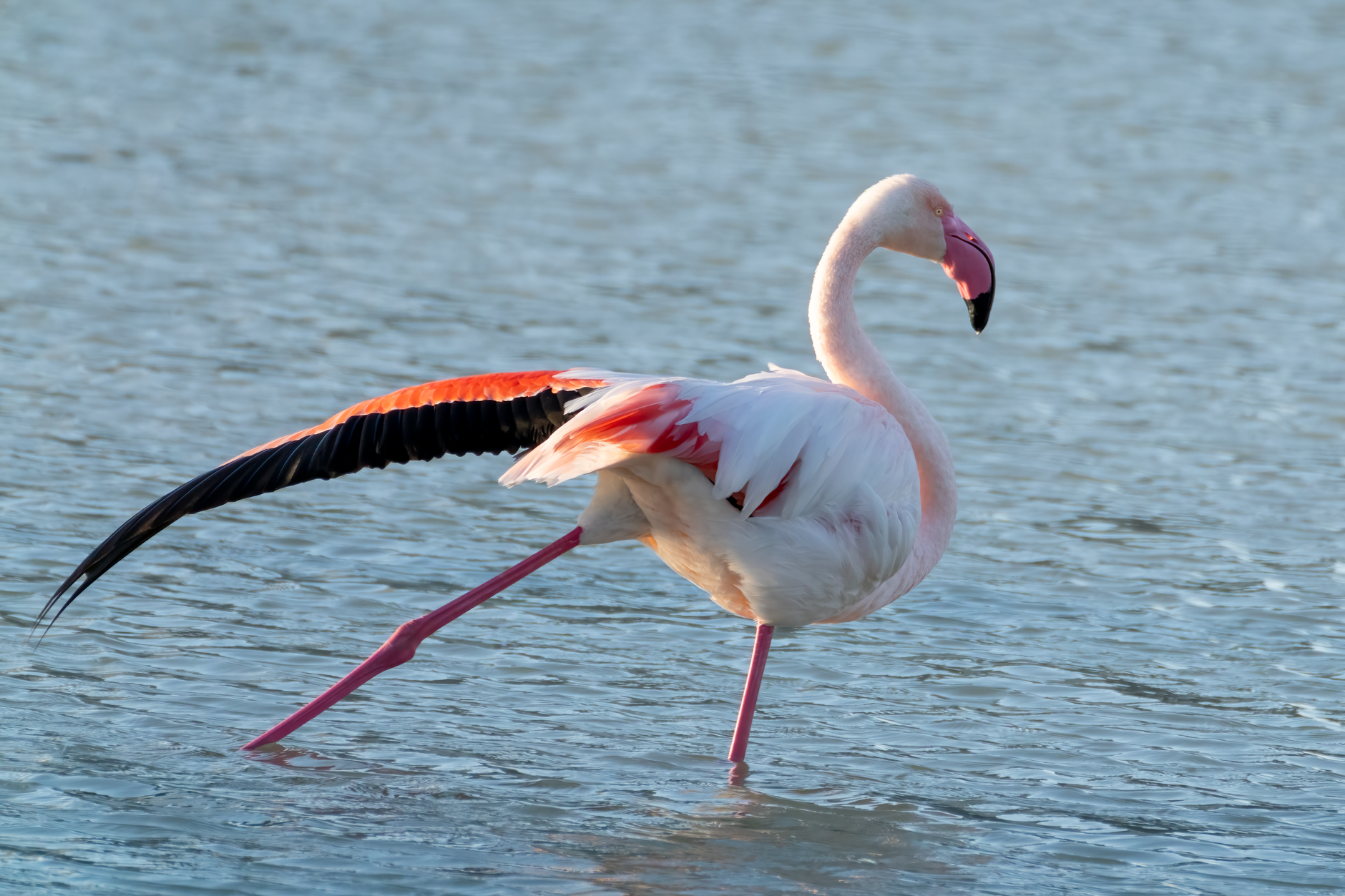
This was our first meeting with the Flamingo Revolution on day 31 of protests. We were hoping to support it while in Tirana. If you haven’t heard of it, now is the time to listen. It began when Edi Rama, he of the ego, decided it was a good idea to allow an American billionaire, Jared Kushner, and his wife, Ivanka Trump (yes, that one) to buy a swathe of protected coastal land and lagoon at Zvernic in southern Albania, and develop it as an exclusive resort. Word got out that Ivanka was boasting that she’d soon own her very own private Albanian island. Environmentalists got angry about the threat to the rich wetland ecosystems, where flamingos and much more breed, and suddenly, Albanians had had enough. Planning permission has not yet been granted, yet fences and private security firms have appeared already. Local people were physically harassed (although somebody managed to push the developers’ offices down a cliff in return).
Nightly protests began in central Tirana, attracting thousands of people, including many ex-pat Albanians who came home specifically to protest. Accusations of corruption in government, and especially at Edi Rama, were hurled. According to Al-Jazeera, the land deeds apparently sold to Kushner and Trump have been proven to be forged. Rama denies it. No-one believes him and the Flamingo Revolution widens to demand his resignation – and more. This is how they describe it on their website:
“Flamingo Revolution is a civic movement dedicated to protecting nature, defending citizens’ rights, and building a fair, transparent and liveable Albania for Everyone.”
(flamingorevolution.org)
It isn’t just about the Vjose-Narta delta, or birds, you see. It’s about corruption in government, the frantic rush to “develop” the country following decades of communist dictatorship, for the benefit of a few and to the detriment of many. The “Albanian Riviera” has become a thing – of course – beaches, endless sunshine, blue skies and an enticingly clear Mediterranean sea perhaps make that inevitable. Resorts are concreted into ripped-away and bulldozed hillsides, promoted (tellingly, in English) with words like “elite”, “private”, “luxury”, “exclusive”….. Each resort or hotel grabs its section of beach and plasters it with sun-loungers and parasols, while the “public” beach gets smaller and smaller. Those skyscrapers – who benefits?

The next night we all went to join the Flamingo Revolution outside the government offices. SHQIPERIA NUK ESHTE NE SHITJE! (ALBANIA IS NOT FOR SALE!), we cried, and DORE HEQJEN! DORE HEQJEN! (RESIGN!). Our granddaughters were still shouting it the next night. It was peaceful, determined and passionate. The people aren’t going away. So far, sadly, neither is Rama.
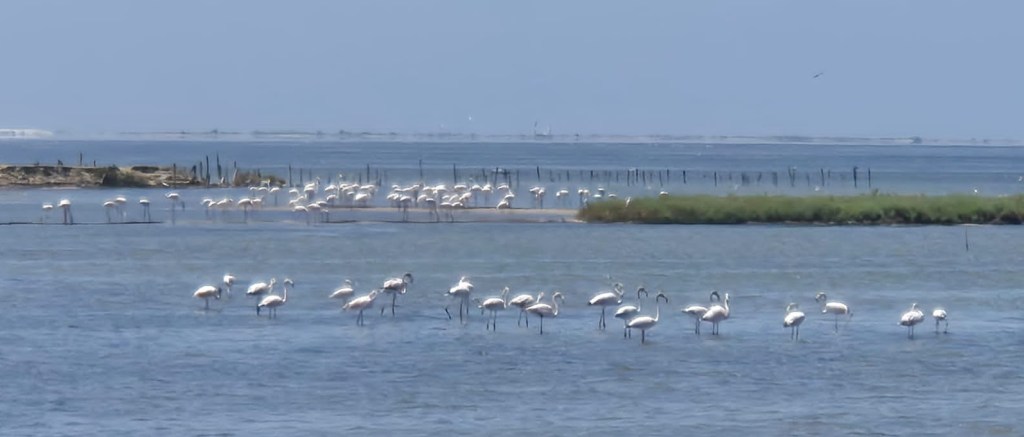
Two days after that, we met the flamingos, themselves, close up, at Divjake National Park where we walked with a brilliant and dedicated guide, (https://guidedivjake.com) across sandy, flat, reclaimed land to the fringes of a massive lagoon. Divjake is the start of this incredible biodiverse stretch of coast. Butterflies, cicadas, solitary bees, grasshoppers and other insects vied with storks, white herons, pelicans, bee-eaters, waders and an off-piste osprey for our attention. This was tourism at its most sustainable – and most enjoyable. Later that evening, we climbed the hill of the ancient city of Apollonia and looked south to Zvernec, and beyond it to pristine Sazan Island that Trump junior has her greedy eyes on.
I’ve seen what’s been lost, what is being lost – and what could be lost. For what? Short term profits for a few – and with Spain on fire and Spanish resorts built for tourists emptying, you’ve got to wonder if anyone in the government is thinking long term. I hope the hospitable, welcoming, generous and courageous people of Albania uphold this revolution and are not lost as well.
It’s significant for all of us, everywhere.
 First seen in early spring, nearly twenty years ago, the beach stretched endlessly around the curve of the bay, a shimmering cream expanse of sand uninterrupted by not much more than a man and a dog, idly kicking at the silvery waves. No sound but those waves, breaking, gathering energy, re-forming, breaking again – and the gulls, plovers and oystercatchers worrying at the interface between water and land. The red stones of a ruined castle tottered in the dunes, crumbling, threatening to fall. Where the river splayed lazily, yet with energy, into the sea, flat, smooth stones in many colours could be harvested for an optical feast, to be drawn and painted, rearranged, and consigned to garden corners.
 But last week I was in Assynt again, and if there were many changes, it was the trees I noticed first. It’s nearly 26 years since the first ever community buy-out of land in the area by the Assynt Crofters Trust, and there have been others in the area since. The first trees I found myself looking at were less than 25 years old. I walked in vibrant young woodland at Little Assynt, above the shores of the great loch. Deer fencing surrounded large tracts of land. Birch, rowan, hazel, Scots pine…… willows, elders, hollies and even aspen…… planted by Culag Community Woodland Trust or regenerated naturally within the fences. Outwith the fences, though, trees were also regenerating, especially birch and willow. Sheep, ironically, seem to have been cleared to the coasts. Deer pose for tourists around townships, but their numbers are controlled. Bluebells and primroses are appearing under the bracken.
 midgies to produce more trees, all from seed they’ve gathered locally. They’re pretty excited that after last summer, the aspens have flowered – a rare event in a species that prefers to clone itself vegetatively – bringing welcome genetic diversity into the local tree stock. At the Falls of Kirkaig, we bumped into a naturalist friend from near home in Perthshire (Scotland being such a gloriously small country), who had observed the same phenomenon. So, there we were, all getting excited about the future of a tree species in a place I’d remembered as treeless.
