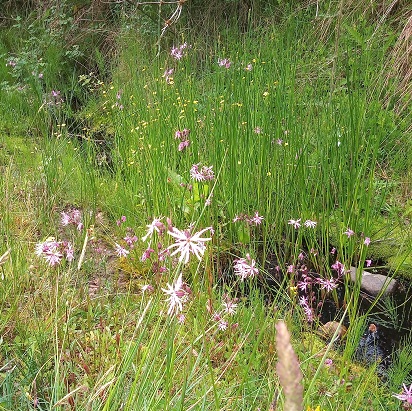
Aliens invade Tayside?

I wanted to walk from Cairnie Pier near St. Madoes west to Inchyra on the Tay estuary. My old map (old being the operative word) said there was a path, but it says that about a lot of stretches of the Tay along the Carse of Gowrie that it would be nice to walk, and it’s often mistaken. Google Maps hinted that if you got really, really close to the ground, there might even be two paths, but it wasn’t committing itself. At Cairnie, the existence of a small car park looked promising, and I found the great river hiding among its own reedbeds as usual, lapping quietly at a little inlet whose stones oozed mud. Fishermen’s paths trailed off in both directions.
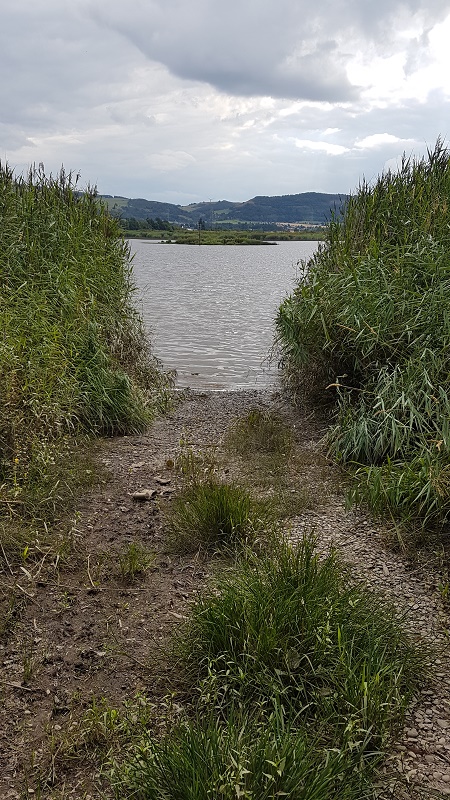
Cairnie Pier

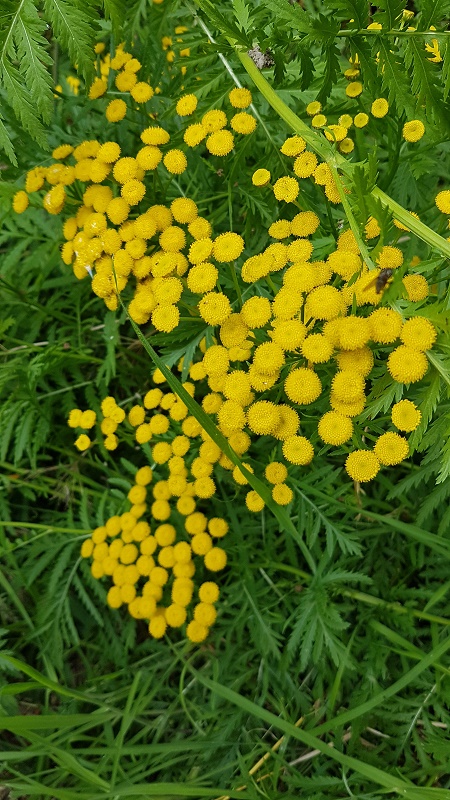
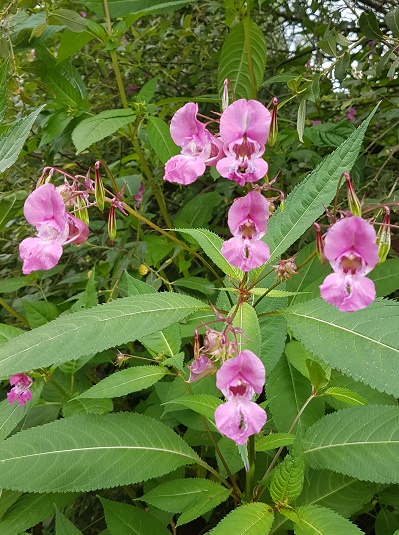
It was drowsy-hot, an afternoon of hoverflies and docile wasps, intent on the many flowers that lined the path. The river is a conduit for all kinds of unexpected vegetation, which thrive in the tidal mud and lovely untidy, unsanitised, hedgebanks and verges. The yellow buttons of Tansy pop up everywhere along the Tay, together with the silvery Mugwort, a long-ago Roman introduction, allegedly a cure for sore feet. Warm and spicy, the scent of Himalayan Balsam over-rode the scents of native flowers, and its spectacular flowers trumpeted a welcome to pollinating insects. This “alien invader” has been around a good while, anywhere near to water, and it’s a Marmite plant. Speak to any beekeeper and she will wax lyrical about the “ghost bees” who return somnolent and satisfied to the hive, covered in its dense white pollen. Speak to most mainstream ecologists and they will say it’s invasive, outcompetes “our” native flora and has no place in “our” countryside. I love its other name – Policemen’s Helmets – does anyone remember when policemen wore helmets? The top and bottom lips of the flower are encased in a helmet-like fusion of the other petals. I’ve happily pulled it out of ancient oak bluebell woodland, but I can’t say it bothers me too much today. I munch a couple of the peppery-pea tasting unripe seedheads, out of duty.
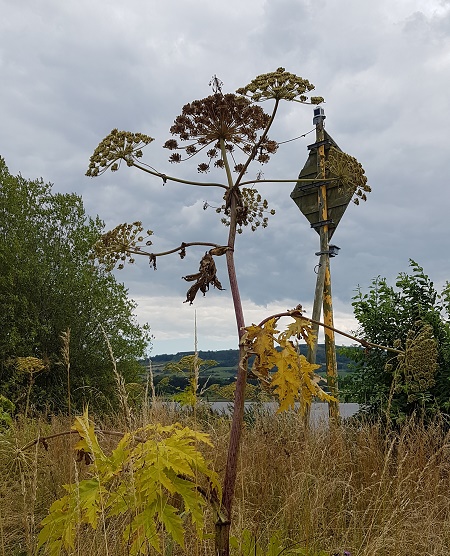
But then arise the forbidding, towering structures of a harder-to-love alien. Giant Hogweed, introduced by gullible and novelty-obsessed Victorians to adorn their fancy gardens. Apart from its spectacular, H.G. Wellsian-Martian structure (still being extolled by lecturers when I learned garden design), it is low on redeeming features. It is truly rampant, flowers and seeds everywhere and delivers serious burns to anyone brushing against it in sunny weather. It’s a property called phytotoxicity, and today the sun was shining and I passed gingerly.
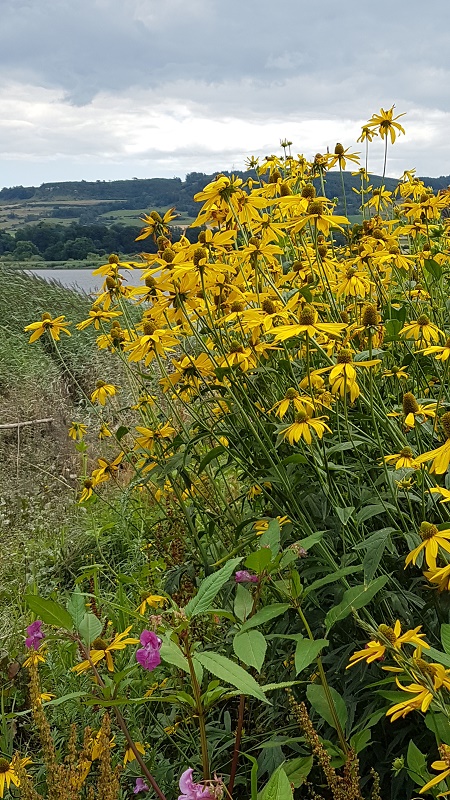
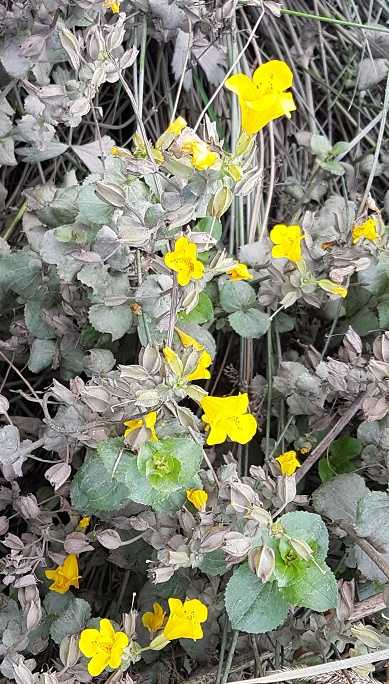
Far more attractive, and indeed glorious were the bright yellow, sunny Monkey Flowers, coated in tidal mud, and the clumps of tall Rudbeckia, both garden escapes, that sway gently in the breeze up the river. They are dotted all along this stretch of the Tay. I remembered another sunny day talking with David Clark of Seggieden – a great botanist and a man who so loved this river – about whether they “should” be there and what exactly was native anyway, since both of us could be labelled aliens ourselves. We agreed that neither of us were fanatical about racial purity in plants or anything else, but weren’t fond of Giant Hogweed, nor the next invasive alien to show its face on my walk, the Japanese Knotweed. This monster would out-compete the miles and miles of Norfolk Reeds themselves…..oh wait, did I say Norfolk Reed?

Yes that’s right, the incredible Tay Reedbeds, home to rare marshland bird species and a complex, life-affirming ecology, are the result themselves of the introduction of a “non-native”.
My fishermen’s path had petered out, and an attempt to reach Inchyra along the edge of a field also met with failure, so I drove back towards St. Madoes and took a side road left. Thus I reached Inchyra, a beautiful little village of low houses, pretty gardens and derelict farm buildings looking, as they always do, as if a quick afternoon’s work would put them back into service. From this hamlet, crouching among tidal lands as if in terror of sea-level rise, I found a wild garden overlooking the estuary and across to Rhynd, and small moored sailing boats bobbing in the rising tide.
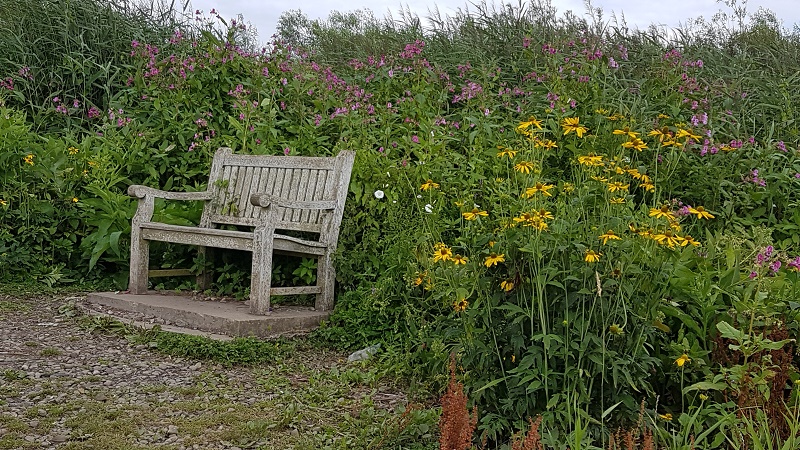
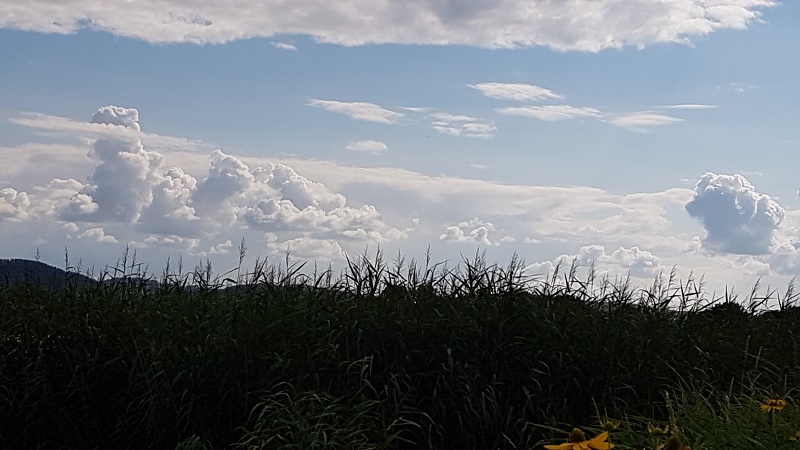
Here was a seat, to the memory of a daughter of a local family, and I sat in complete peace among the reeds, with flowers – native, non-native and all the gradations in between – blessing the air with scent and colour. Even the busy tractor across the water hummed to itself. Rain was forecast; I watched silver-lined thunderclouds pile up on themselves, shift and mutate, and then dissolve again into the blue sky. It was so good to be here.
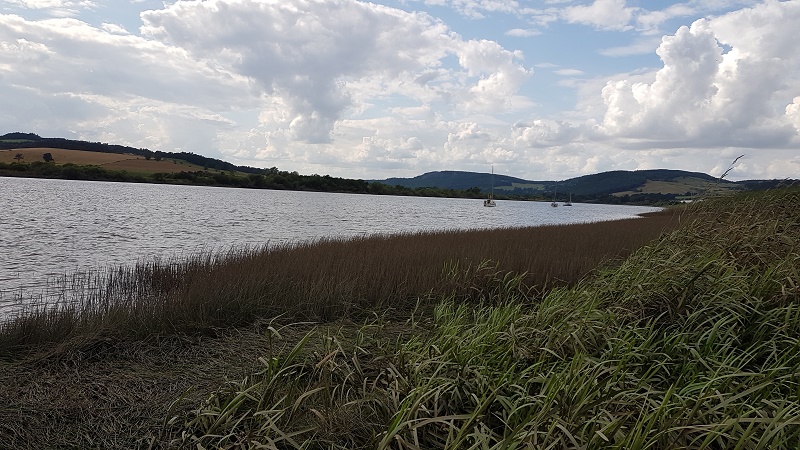
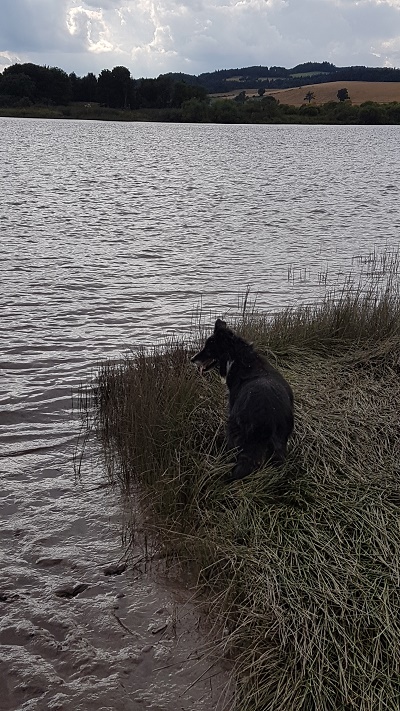
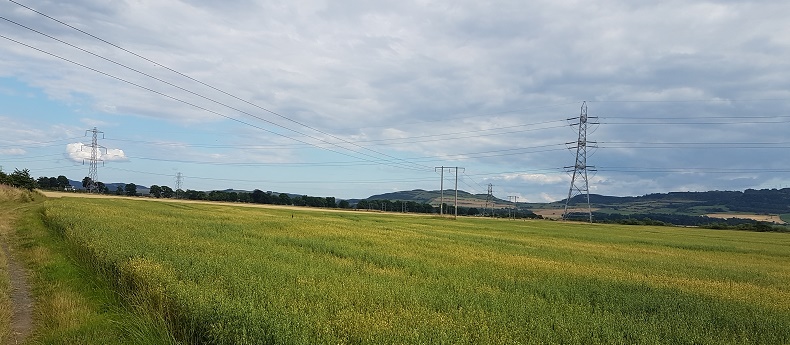
When it seemed the clouds were getting serious, I found a path that ran beside Cairnie Pow, giving me a good circular walk back to the village. The pow is a local name for a drainage channel, often of ancient origin, that was created to free the fertile soils of the Carse of Gowrie from being marshland. They litter the Carse, and give a sense of being neither quite on dry land nor in water. This one tracked parallel to the path I didn’t find earlier from Cairnie Pier, and then swung left at the point I’d almost got to, where a host of overhead power lines had got together for a gathering. They sky darkened, and the air, hot and still full of the damp scents of flowers, smothered the senses. Young trees, planted by the nearby farm, gave welcome shade. A big, old house rose out of the marsh with no obvious gateway or entrance. It looked dark, empty, full of tales and secrets. I wondered, made up stories in my head, began hearing things and holding imaginary conversations with people who did not exist. Perhaps it was as well that heavy, ponderous raindrops deterred me from more exploration that day.
Not Ugly.

Midsummer, June, and roadside verges, hedgerows and path edges are brimming with life and good things to eat. Well, they should be, if you’re lucky, and some fusser hasn’t gone forth with strimmer or spray gun to transform the riot of green and gold, the effusion of flowers, seedheads and shoots to bare brown, sad-looking blankness or close-mown, stressed-out grass. I can never comprehend the small suburban minds of householders who would rather gaze out on monochrome than the living proof of life on earth. It’s one thing to keep your own verge tidy, and occasional cutting can increase the range of flowers, but it’s galling when people attack verges opposite or near their houses but which they don’t actually own. I confess, I get quite bitter about it.

During the 2020 lockdown, I embarrassed my family by taking to task a poor, misguided woman who was wielding herbicide along the route of a long-distance footpath. Granted, it was a stretch bordering her own property, and right enough, as she protested, she wasn’t killing everything…..

No, she was only killing what she called “the ugly, untidy species” that she had no use for. These were Dockens (have you ever looked at the intricacy of the flower structure in the Dock family?), and Hogweed. That’s where I really saw red.

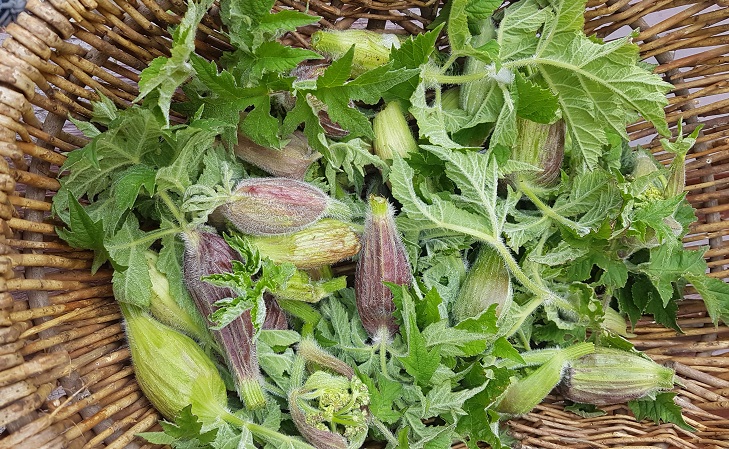
NO!!!! I don’t mean “Giant Hogweed” (Heracleum mantegazzianum), an invasive non-native plant known to cause serious skin burns and out-compete other plant species. Even I acknowledge that’s a nightmare, albeit a spectacular one. I mean Common Hogweed (Heracleum sphondylium ) a soft-leaved, far smaller native plant, with edible leafstalks and, at this time of year, the most delectable “broccoli” or unopened flower heads. Very few people have a skin reaction to this plant (far fewer than do to tomato plants for example), and I look forward to eating the broccoli every June.

“But it’s too tall, too big, too ugly and the bees and butterflies don’t visit it!” I was told. So then, we eradicate all the living things that we personally don’t like the look of, do we? What is ugly, anyway? Do we have to apply our personal prejudices to plants, other animals… humans? Sadly, many people do…..labelling leading to intolerance leading to hate crime leading to… genocide? And if a flower is constructed to be pollinated, not by the human species’ cosy favourites of bee and butterfly, but by beetles, flies or (perish the thought) wasps, does that make them useless, unworthy or ugly?

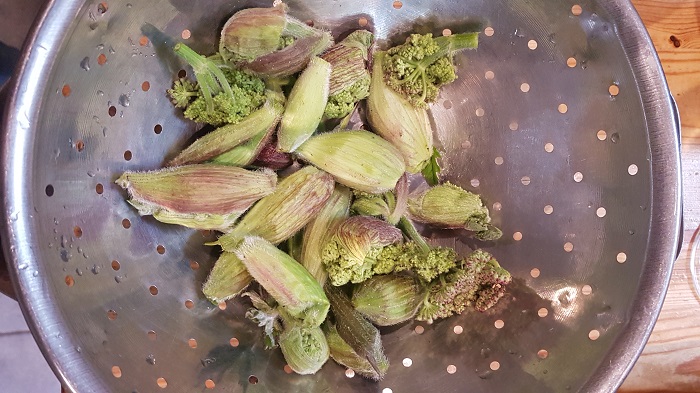
No, it darned well doesn’t. If Hogweed, Dockens or any other species becomes a weed in your carrots or undermines your potatoes, fair enough. It’s not because they’re ugly, they’re just doing what they are supposed to do. But leave them in the waysides that are their habitat. Before anyone gets horticulturally imperialistic ideas locally, I’m gathering hogweed broccoli. Just trim away the leafy shoots to prepare. Sauteed in butter with a little water and sprinkled with lemon juice and salt, they are a summer treat.

All prepared for braising or battering…..

Last night I made hogweed pakoras – coated in spicy chickpea flour batter and deep-fried – to go with the curry. I meant to take a photo for the blog, but suddenly, they were all gone. I need to get some more. Long live hedgerow delicacies!

The Difference a Drop of Rain Makes

A Post for West Stormont Woodland Group

https://www.weststormontwoodlandgroup.org.uk/

Five Mile Wood today is a wood part-forest, part scrub and heath. When the Forestry Commission took out the last tree crop, they left a fragile fringe, largely of Scots Pine, around the north-east side of the circular path that now forms almost the only access to the bulk of the wood. The Benchil burn trickles through and under the path here, on its way to the Tay, and water from the high water table of the central area percolates into a series of pathside ditches and curious water-holes made by a forestry digger. This is the wet side of the wood. While the trees must take up a lot of water, their canopy also prevents evaporation, and after recent heavy rain, the glades and ditches are alive with summer flowers and butterflies.

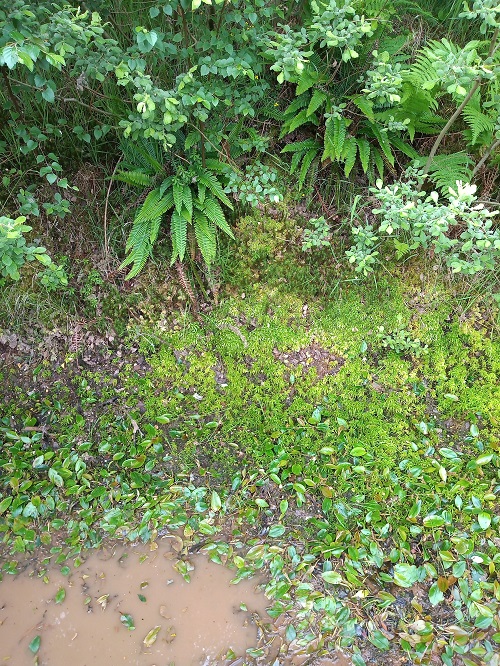
Sphagnum, Lesser Spearwort, ladder ferns and willows congregarte in wet ditches.

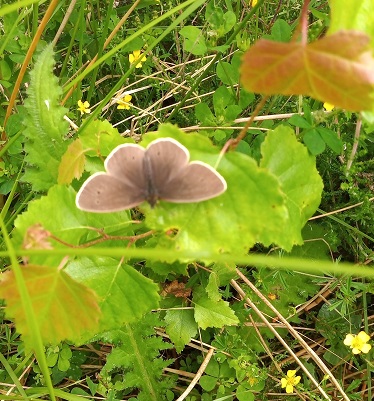
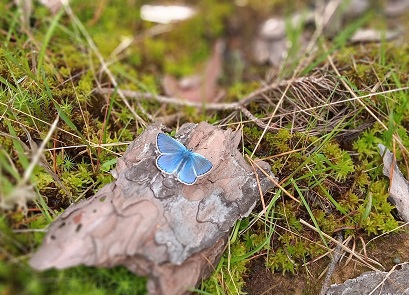
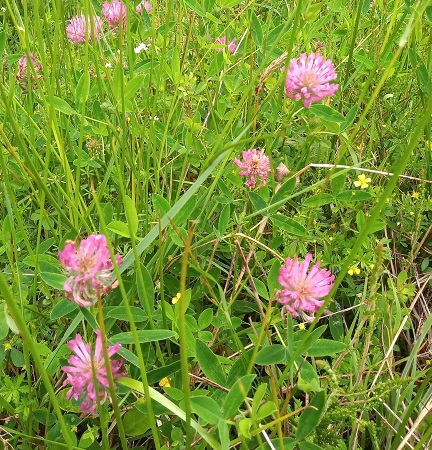
Heath Bedstraw and Tormentil are strewn along the path edges like yellow and white confetti, and red clover flourishes heroically on the banks. Meadow Vetchling and Bird’s Foot Trefoil are visited by brown ringlet, wood white, common blue, and pearl-bordered fritillary butterflies, who pause and spread themselves out infrequently on warm stones and bark shreds on the path.

Ringlet Butterfly

Common Blue Butterfly

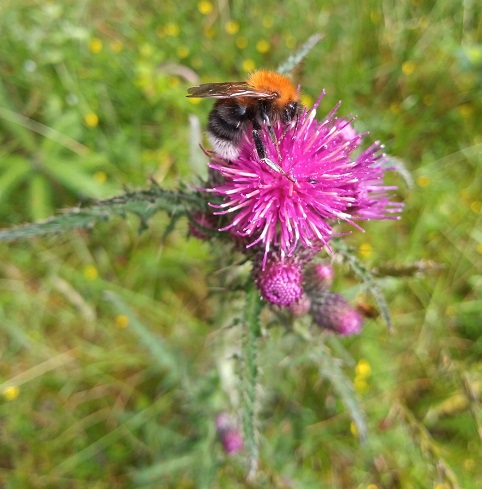
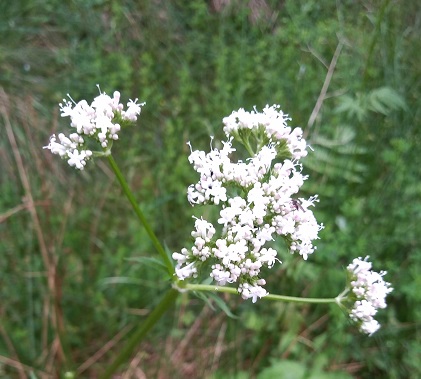
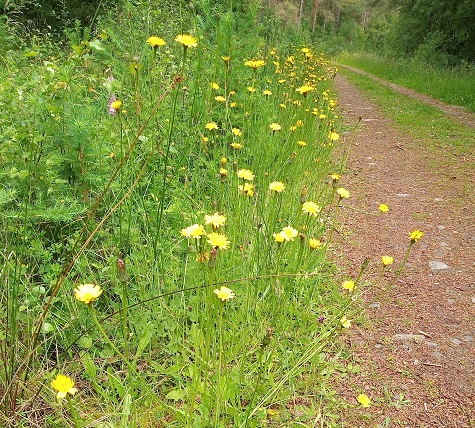
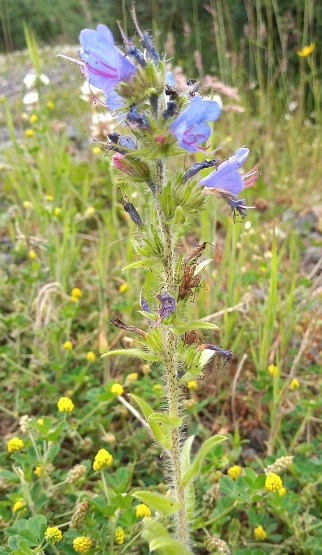
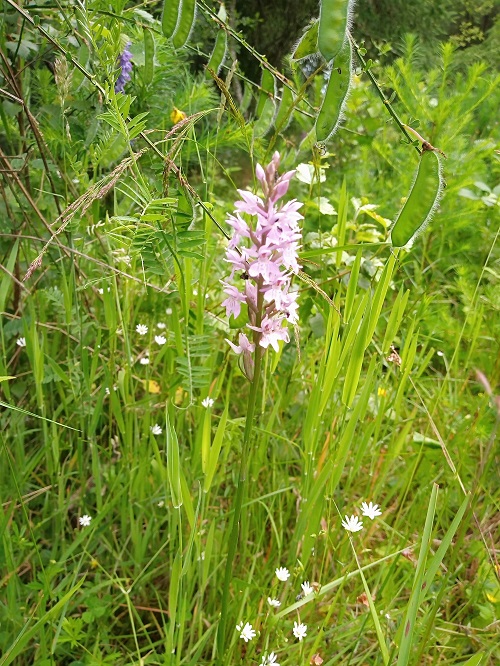
Bright Hawkweeds grow tall and enthusiastic, stretching for the dappled sun that today is scorching whenever the clouds part. In the cooler shade, sweet-scented Valerian grows. It prefers a damp habitat, and its white to pinkish flowers are nectar-rich, a magnet for more butterflies. This plant is widely used in herbal medicine, its roots being a soporific. Common Orchids and Viper’s Bugloss unusually share a habitat. Here and there are thistles, always a good bee-flower, and today a relevant newcomer to central Scotland, the Tree Bumble Bee (Bombus hypnorum) is engrossed with nectar collection.

Tree Bumblebee (Bombus hypnorum)

The true nature of this tract of land gives itself away in the damp bases of ditches and where vague deer tracks can be followed a short way into the springy sphagnum. It is part of a network of raised bog, myre or moss that probably once were joined. King’s Myre in Taymount Wood is another remnant. Damselflies hover over the multicoloured water forget-me-nots in conjoined pairs. The Lesser Spearwort dazzles from many a watery ditch and aptly-named Ragged Robin, dances its frilly pink skirts by the burn. Acid-loving and ubiquitous tormentil abounds, and bell heather is in flower already – another treat for insects.

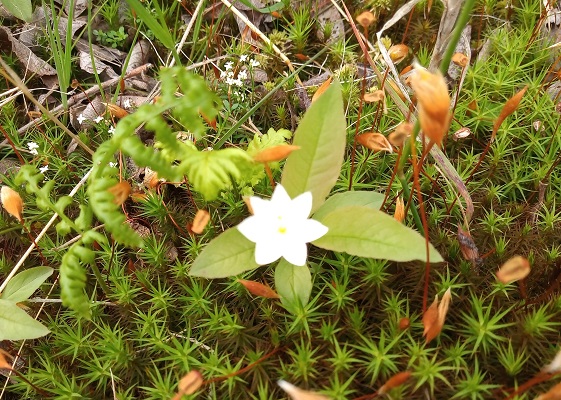
Chickweed Wintergreen peeks out from ferns and sphagnum mosses

We humans are such visual creatures, and it’s the flowers that draw us and grab our attention. But flowers are the tip of the ecological iceberg of the wet side of the wood. Ferns, grasses,  unidentified rushes and reeds are the matrix of this habitat, while unnoticed and unobtrusive, the sphagnum mosses proiliferate, and go on with their work of creating peat, holding onto water – and capturing carbon.

How the woods work to heal us.

Clockwise from top left: Red Clover, Valerian, Viper’s Bugloss, Ragged Robin, Common Spotted Orchid

The Beach, Summer Weekend

beach 1First seen in early spring, nearly twenty years ago, the beach stretched endlessly around the curve of the bay, a shimmering cream expanse of sand uninterrupted by not much more than a man and a dog, idly kicking at the silvery waves. No sound but those waves, breaking, gathering energy, re-forming, breaking again – and the gulls, plovers and oystercatchers worrying at the interface between water and land. The red stones of a ruined castle tottered in the dunes, crumbling, threatening to fall. Where the river splayed lazily, yet with energy, into the sea, flat, smooth stones in many colours could be harvested for an optical feast, to be drawn and painted, rearranged, and consigned to garden corners.

Today the summer sun is hot, but the breeze is cool from the sea. The car park has been extended, a café predictably offers burgers, ice cream, soothing teas and toilets. The waves still break, but the birds have gone elsewhere, or fly over the sea waiting for humans to depart and their time to come. Chattering voices, laughter, cries of anger or delight dominate the soundscape. Dogs bark and race from one human party to another in confused joy. The tide of visitors troops through the dunes on the new boardwalks, and dissipates like the outflow of the river onto the sand. Small parcels of beach are claimed by towels, windbreaks and throw-away barbecues. As more people arrive, the parcels become smaller and smaller, and new claims are struck in between those established an hour earlier.

Hardy men and women swim and lay gasping in the cold, but glorious, water. Someone turns on a small music centre. The breaking waves are silenced by it. Children, many cossetted in protective wetsuits, others bare-skinned and incautious, run in and out of the sea. Their enjoyment – or fear – is lovingly recorded on a dozen mobile phones and instantly broadcast and archived on Facebook. They do little harm, these day-tripping hordes, few leave litter, they pick up their dogs’ excrement. They are out of doors and they are enjoying it. Most look up from their phones from time to time, and see the beach, the waves, the dazzling horizon. Some don’t. Their loss.

Follow the river up from the beach and behind the dunes, and human sounds recede. The wind still lives in the reedbed; the water warbles with life. Crickets grate away in the dry grass, birds can once more be heard calling and chattering in the scrubby pines. All along the riverbank, great sweeps of purple thistle, white yarrow, pink campion and yellow sowthistle dance and shout their presence to the quiet hoverflies and bumblebees. Harebells – the Scottish bluebell – sprawl untidily over sandy banks, lifting their china-blue trumpets to a sun that suddenly feels gentle and kind.

Clouds fly and form and merge and stream away in an endless sky.

One human walks alone.