
If you haven’t read my previous post on Desertification and Horticultural Imperialism, you might want to go back two posts and see what I’m on about!
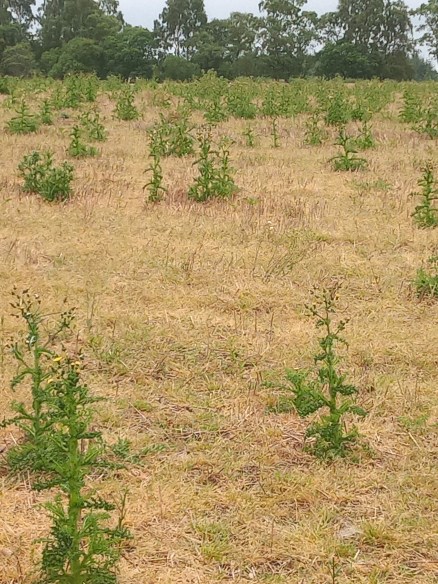
Was crossing the desertified field yesterday as a short cut from a bit of foraging and was struck by the exuberance of certain species not phased by the application of herbicide, at least in the centre which hadn’t been subjected to repeated doses: – groundsel running swiftly to seed, common sow-thistles in full bloom, and monster spear thistles still to come out. At a glance, you’d swear it was a field of Christmas trees!
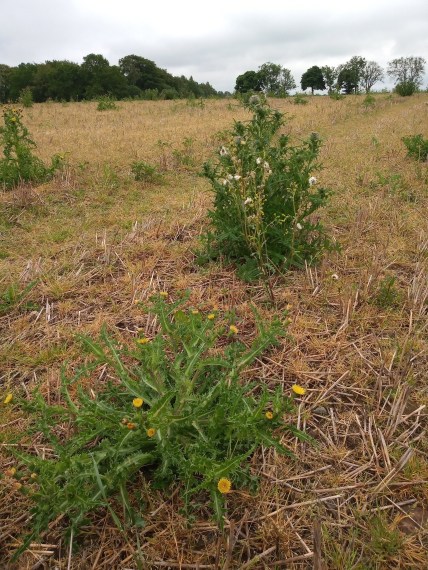
There were gaggles of seedlings, and a remarkable number of potato shores from a previous crop that had emerged since the spray-fest. I’m not saying it makes all the irresponsible spraying in windy weather and the pollution of adjoining land OK… but it is perhaps a study in inevitable failure in “controlling nature”.

Three roe deer in the middle of the field were finding something to graze on, and resented my intrusion. And three pairs of angry peewits squeaked and mewed and circled above my head, until I was safely away from their territory.


I cycle daily (not far and not fast), cycling you have time to observe what is going on around you, yesterday I could not help but notice how quickly the season has changed, this is what I wrote:
The Hawthorn that in May did bloom,
There flowers now passed,
Swollen berries, crimson red in June,
Will feed the birds in Autumn,
Coming all too soon.
LikeLiked by 1 person
Noticed exactly the same thing yesterday, berries already started to ripen yet not a month ago the hawthorns were dazzling white. With you on cycling, and walking!
LikeLiked by 1 person
And how much pesticide is being fed into the lapwing chicks in this poisoned desert?
LikeLiked by 1 person
I wondered the same thing. It’s the first time for years there’s been an empty field round here for a nest site. What do peewits eat?
LikeLiked by 1 person