
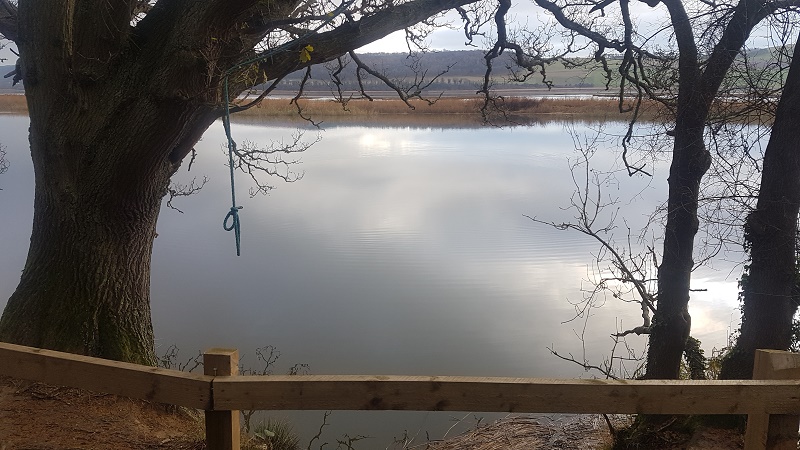
Between the arc of reedbed near to Port Allen in the Carse of Gowrie and the artificial embankment thrown up long ago to prevent the Tay from breaching the land, is a lagoon. Once it was a field subject to a bit of flooding after wet weather. The lagoon, a wide, flat infill of water fed recently by copious rain and sleet and tide and river, has grown immensely in recent years. The field we walked over on a dry, low-tide day of spring fifteen years ago is no longer visible.
Drifting tones of yellow and grey shiver across the winter sky, reflected in the still water, protected by the spur of reeds and unruffled by wind or wave. A hint of watery sun shimmers out, a double, hesitant glow that recedes and approaches. A pair of Mute swans nonchalantly float away between clumps of stark vegetation.
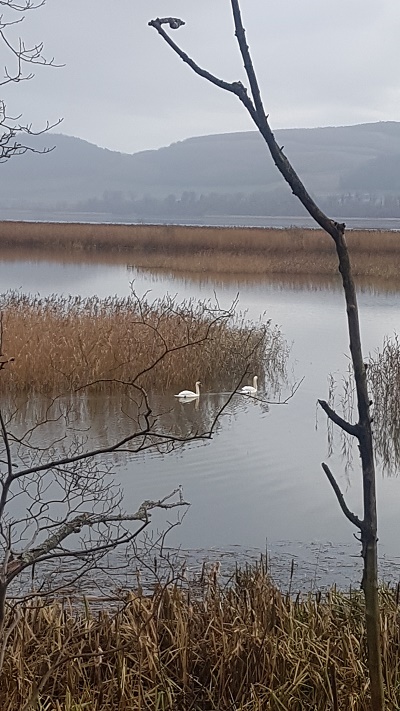
When we walked that field fifteen years ago, we came upon a small but healthy patch of Reed Mace, a plant which is neither a reed nor, despite its other name of Bulrush, a rush. Reed Mace is a spreading, vigorous, semi-aquatic plant, with many uses historically. The starchy roots are roasted, boiled or baked like potatoes. The cigar-like floral inflorescences – called cattails – are edible when green and young, and later full of pollen which can be used as a flour substitute – as can the dried and powdered roots. Being aware of this, and also of the law prohibiting uprooting wild plants, it was the spring shoots, or young buds, that I wanted to try. We cut off a few, cleaned them up and lightly braised them. They were delicious.
Today I am happy to see that the original clump now almost lines the margin of the lagoon nearest the embankment. Reed Mace, Bulrush, Cattails, Typha latifolia – it’s a bit of a thug but beautiful in its way, and so useful no resourceful forager would shun it.
The embankment meanders on, dividing the wide waters of the estuary from the chundering, muddy grey outfall of the Pow of Errol – a man-made channel too. The landowner who stabilised the bank long ago planted trees – incongruous beeches, limes, hornbeams – to hold the metres-deep cliffs of unstable clay and keep them from eroding. Some of the old trees still stand, clinging to the edge of the wetlands, throwing out massive limbs at right angles to counter-balance the sucking pull of water and gravity.
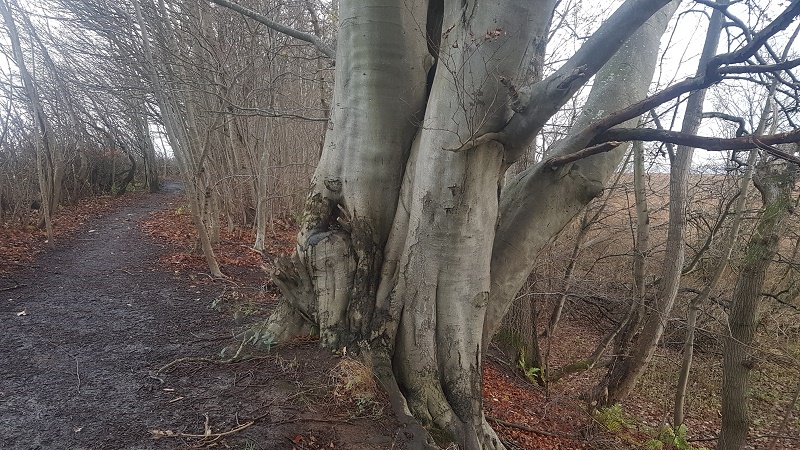
Not all have survived.
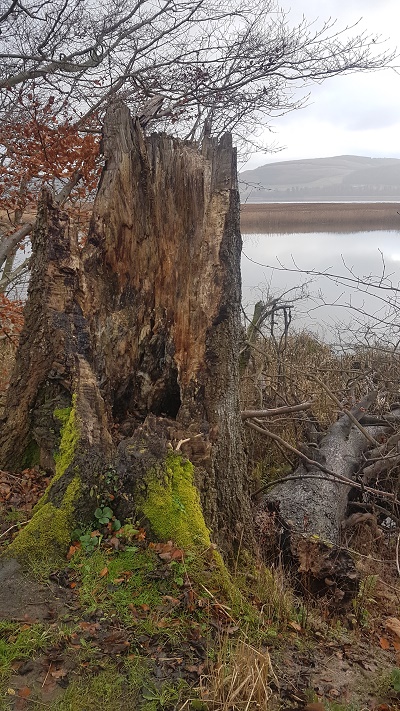
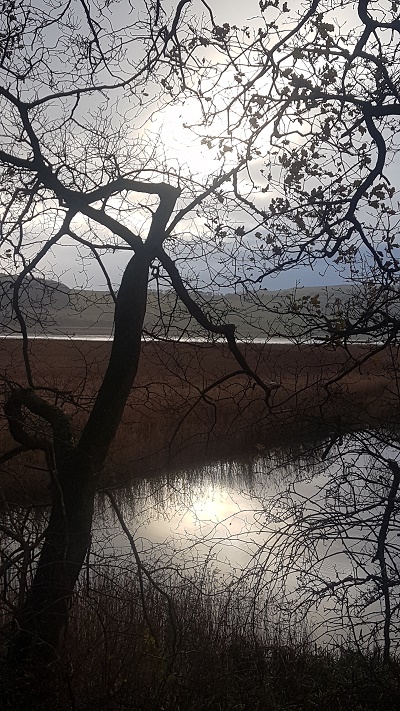
Storm Arwen, the first of winter, tore most of the leaves from this woodland, apart from some of the tenacious oaks and the frivolous young descendants of the old beeches. The seductive webs of branch and twig and shoot weave spells against the fluid skies. Long vistas open – reedmace, water, reeds, river, sky – and are closed again by the tracery of trees. Fallen leaves moulder, curl, betray their origins, are curiously warm and comforting underfoot.
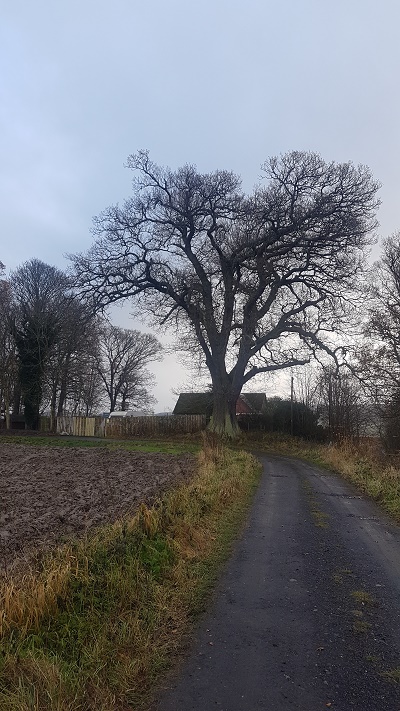
The finest and mightiest of the reed-side oaks spreads proud limbs and proclaims, towering over the cottage that lay empty for so long, and where, in a fantasy that didn’t include sea-level rise, I dreamed of living, pointing skeletal fingers down the watery path into the hushing reeds.
 Comments on The Nature of the Universe
Magical piece of writing Margaret. Thankyou.Evokes so many memories.
LikeLike
Glad you enjoyed it. Always a magnet to me, that place!
LikeLike
A wondrous discovery of the Bulrush world, not only that it has only one ‘l’, but that the ‘cattails’ are edible. You keep on spreading your knowledge in an elegance with words that gives me a smile. Thanks, Margaret.
LikeLike
I think there’s only one l! Thank you Rosie.
LikeLike
Enjoyed the day spent with you, for your writing and photographs places one alongside you. Strange when you think about it the people who lived on the land at that time were willing to put in the effort to dig ditches, build retaining dikes and plant trees to stabilise the land (land improvements) and rarely if ever, would they see the fruits of their labours (thinking of trees) – today this seems to have been turned on its head, we wait until disaster strikes then try to fix it rather than a stitch in time. Have we lost the closeness we once had with the land?
LikeLike
Awful lot of us have lost the connection I think, Walter. But not all. And I see more and more younger ones remaking it. Hope it’s not too late.
LikeLike
Lovely images !! What a lovely part of the world you live in
LikeLike
It is Steve! I’m lucky to have washed up here.
LikeLiked by 1 person
Great writing. You’ve got an eye for detail that reminds me a lot of Annie Dillard, my favorite writer.
LikeLike
Thanks!
LikeLike