When Clouds Don’t Float on High….

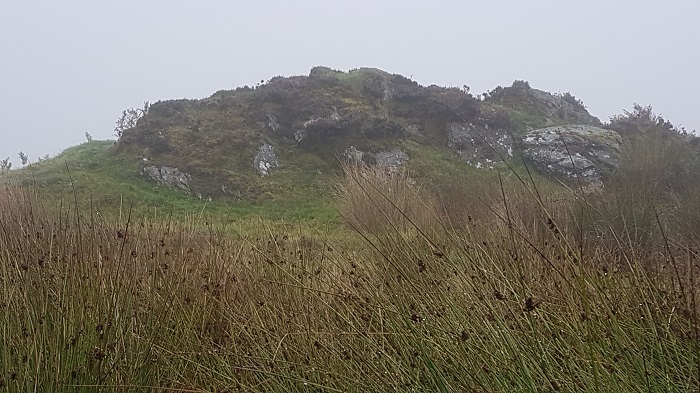
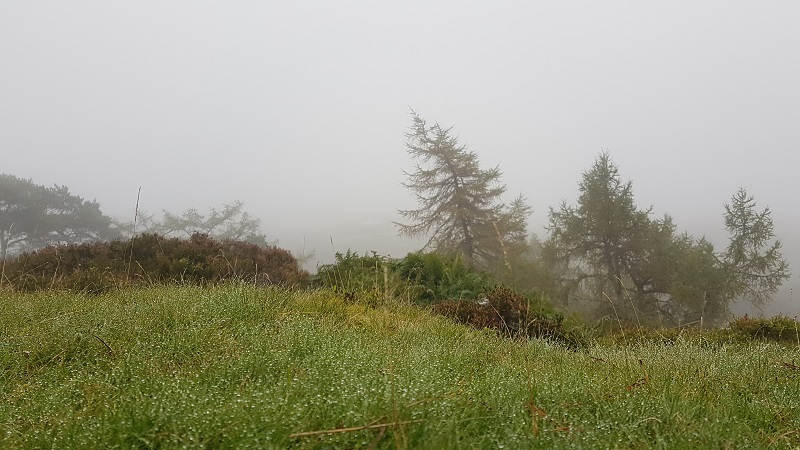
Sunday looked a bit damp from the bedroom window, but we wanted a walk, and we wanted to be in the hills, so with beginners’ minds, not choked with assumptions about walks in bad weather not being enjoyable, we set off to Little Glenshee, to walk the Obney hills to the Obelisk on Craig Gibbon that overlooks Glen Garr. As we neared the ford, we realised we were not going to get any fantastic views from the Highland Boundary Fault over the flatlands of lowland Perthshire. The cloud base, already low, was decidedly sinking like a lead balloon. I wondered where Wordsworth was actually wandering when he spoke about “a cloud that floats on high”. It is not in the nature of any self-respecting cloud to float. Sink, envelop, infiltrate, surround, creep into you…. Not float. Anyway, we donned the waterproofs and walked.

And this is what came of it.
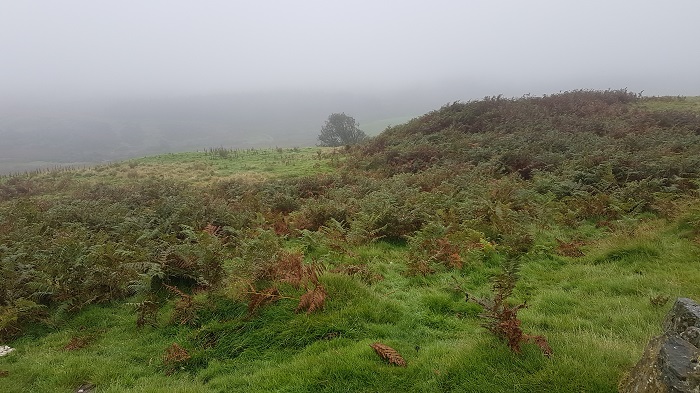
First came the rocks; a stony uphill path;
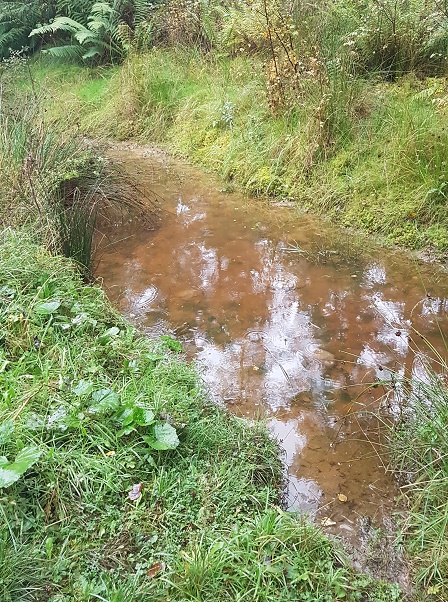
clear water running over
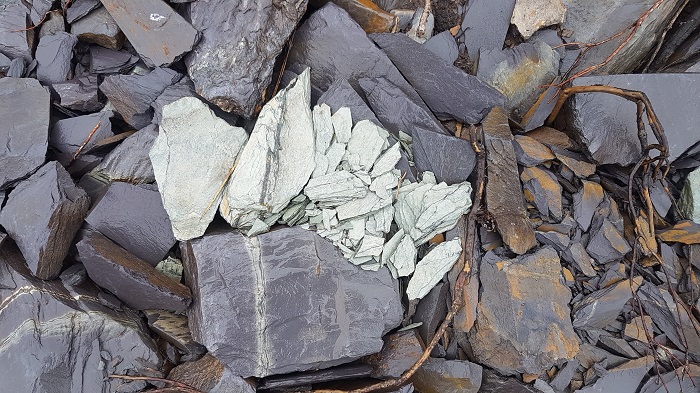
the blue slates, the shambles of old quarries.
Upthrust from the plain, the sudden rise of hills unseen but
felt in thigh and chest, heartbeat thundering in swaddled air;
stones shiny, metamorphic, tale-telling, momentous.

Stones too, marked on the map,
rearing through a drenching mist:
“Cairn (remains of)” – markers, unknown burials or
merely outcrops – “Pile of Stones”: piles which shrink
as you approach across heather and fescue grass.
Then, the little things that lie
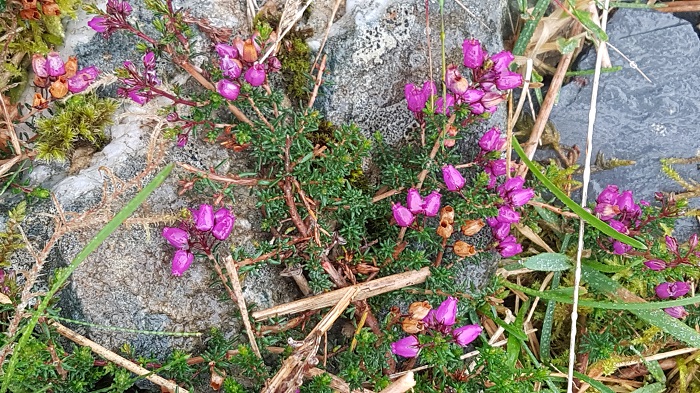
beside the track: startling pink of late-flowering heaths
pounce on you from the greyness of descending cloud;
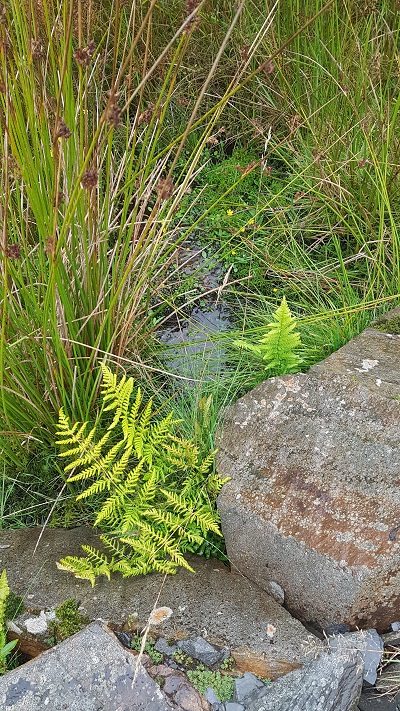
tiny water buttercups, iridescent ferns.
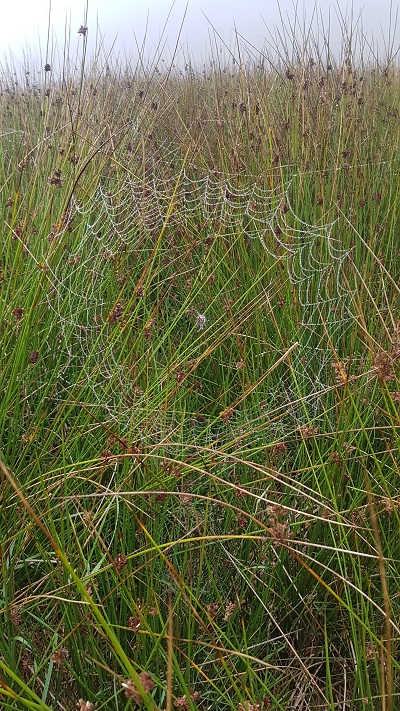
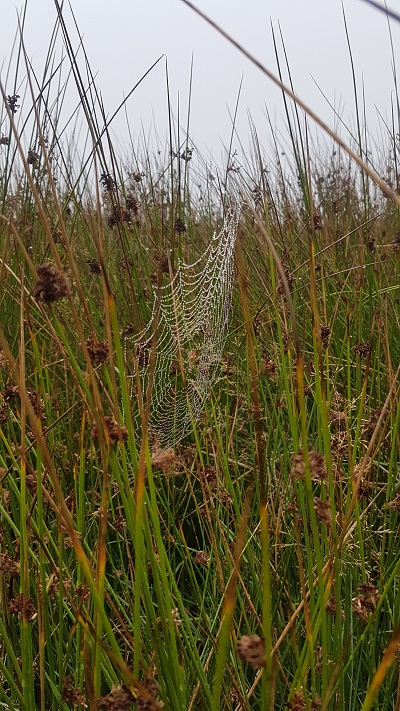
And the spiders! Stalwart and smug in their jewel-encrusted orb webs,
Waiting in pole position even though there’s
Building still to be done. Every stem, every
firework explosion of rush and moor-grass holds a magical web.
Higher up, orb spiders fade away, their places taken
by crowded, ill-designed but functional hammock webs,
their makers hiding from shame or cunning, or just from the rain.
The democracy of glistening crystal water-gems adorns them all.
And so, the water: the cloud paints
every surface, you included, wet without knowing how.
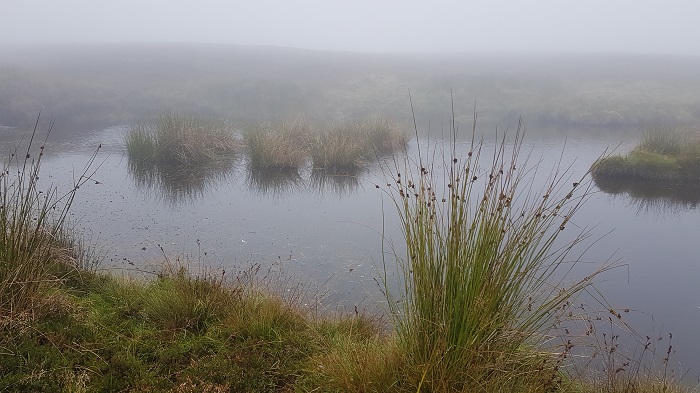
A little pool, no more, stretches in the mind…
Arthurian legend, told by the poet:
“…and fling him far into the middle mere. Watch
what thou see-est, and lightly bring me word….”

No arm today “clothed in white samite, mystic, wonderful”
rises to catch a sword, no lady in this lake.
Just the mist weaving between the rushes and the ripples.
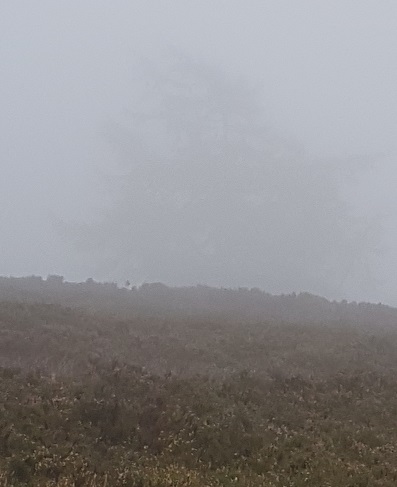
Mist magnifies the shade of a ghostly tree,
Tall as a mountain, shivering in and out of focus
-is it there, or is it just your eyes?
And finally, the Obelisk….

The track seemed to go on forever. We had no way of knowing how much further it was to the Obelisk, since there was no chance of picking out landmarks with visibility only 20m or less, and the risk that the map would dissolve if we got it out. We waved in the direction of the much-vaunted views that weren’t there. But I was happy having my vision curtailed; there was so much to see close by, so much that surprised and intrigued. The cloud muffled sound: occasionally, red grouse materialised and flew off – “go back! go back! go back!” – or a plaintive meadow pipit called damply.

Then on our right, where the view would have been, a monstrous hill seemed to rise sheer from a deep valley we knew wasn’t on the map. But no, it was surely a bank of darker cloud – there are no hills that high here. It faded in and out of sight, until the penny dropped – it was the start of the trees in the midst of which the Obelisk stands. But so tall! And so far away, across a great canyon of a valley. “Not going there,” we said, as the track ended abruptly and we ignored ourselves to head south towards the top of Craig Gibbon. I don’t know how mist and cloud so trick the eye, but the great gulf was actually just a slight dip in the terrain, and the supernaturally gigantic trees were but mature pines and larches clustered on top of the little summit.
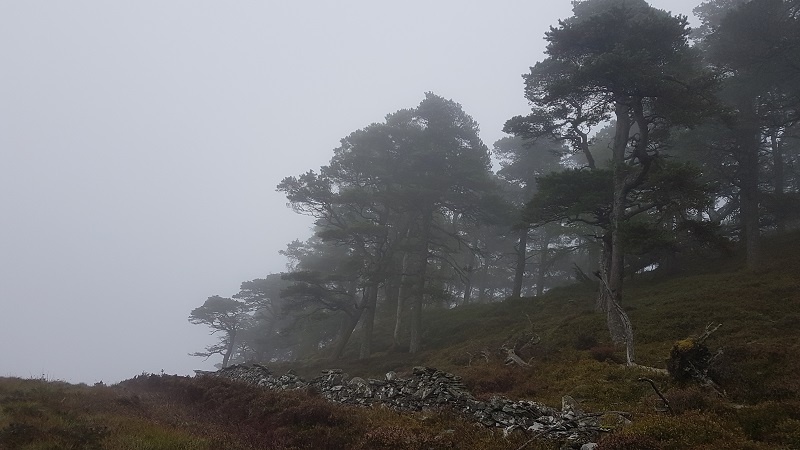
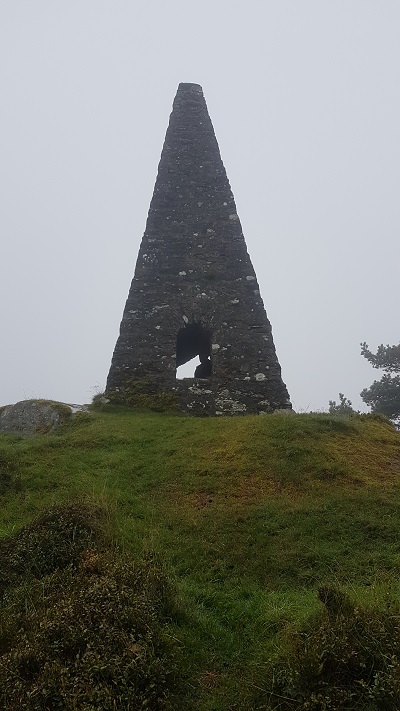
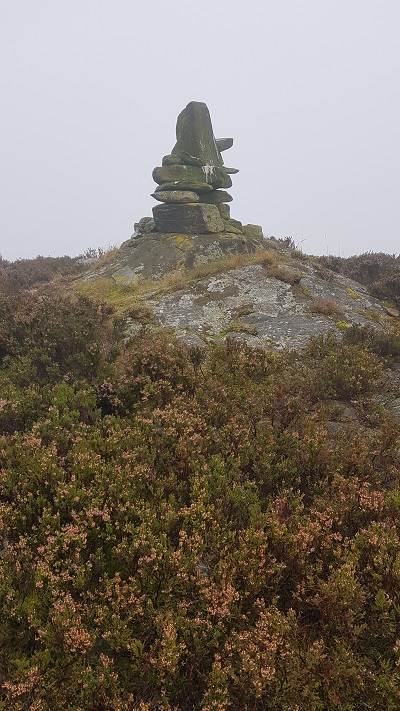
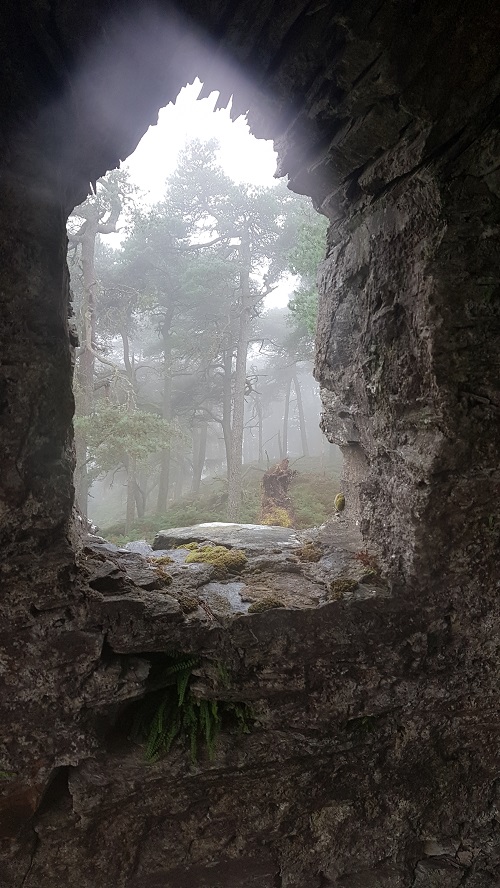
The Obelisk itself, looming like an ancient pyramid from the foggy tangles of tree and heath, was a wonderful thing that day. Its history is rather pedestrian – just an expression of a 19th century landowner’s ego who wanted everyone to see how far his land stretched. But the cloud slithered into its window-spaces; ferns flourished on the wet grey stone. Tiny frogs hopped among the slippery, exposed pine roots, and there were wild blaeberries for lunch.
Equinox: A Hiatus

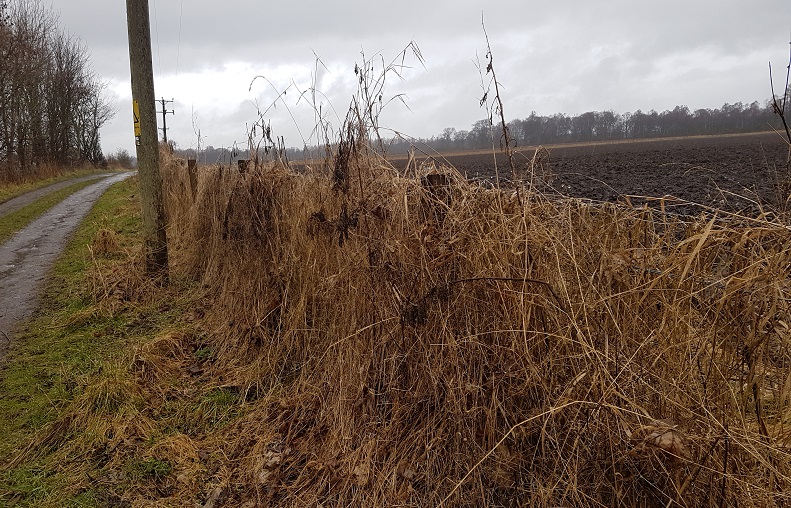
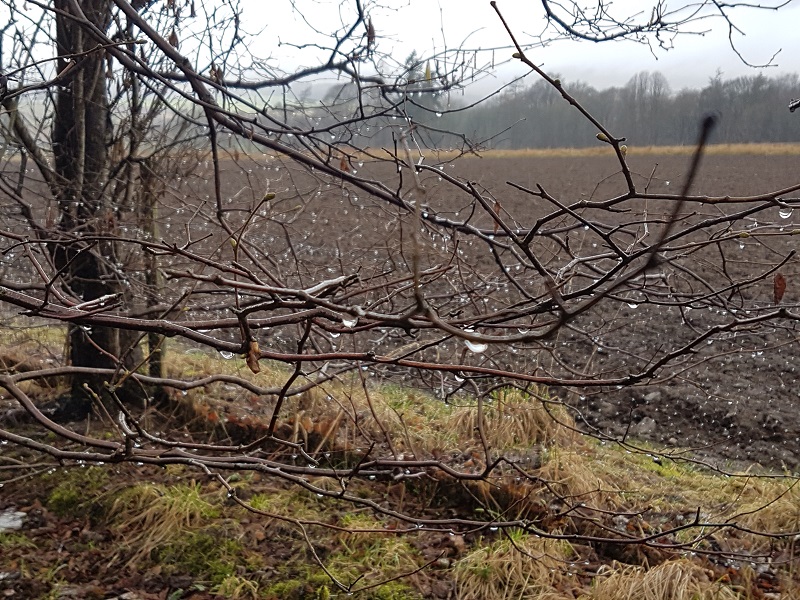
One day to the equinox; officially the first day of spring. It rains, a sullen, dreich miasma and the horizon is drowned in mist and low cloud once again. No cloud of cheery celandines yet line the ditches; no coltsfoot flowers; no green dazzle of new growth erupting from the tired, forlorn and hang-dog leavings of winter stems of grass.

There was a start to spring, a couple of weeks ago, when the sun was gentle and warm and the birds practised their calls. A blue tit inspected a nest box, and rooks set-to in earnest up in the rookery tree. Today, the only sound is the drip-drip-drip of rain. And even that’s muffled.

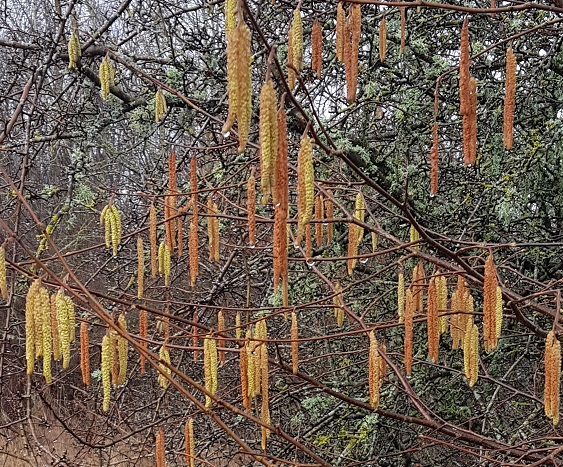
In the soggy brown fields, where the cover crop was optimistically ploughed in a fortnight ago, soil trickles away downhill in the empty furrows. No fuzz of pink from swelling buds tints the distant birch trees, no lighter hues on the sycamores and maples. On the hazels, the merry festoons of bright yellow and cream catkins are turning brown, but no buds are opening to take their place.

Spring’s not here. I rake in the squelching soundscape of a muddy woodland walk for the chiff-chaff, first of the warblers to arrive in March, but he is not here either. I wonder if this is the day I have for so long dreaded and feared – the “what if” day. What if the the birds of summer do not return? What if I never see another swallow? What if the flowers of spring are, finally, poisoned to death? What if nests fail and nestlings starve for want of insects and worms?

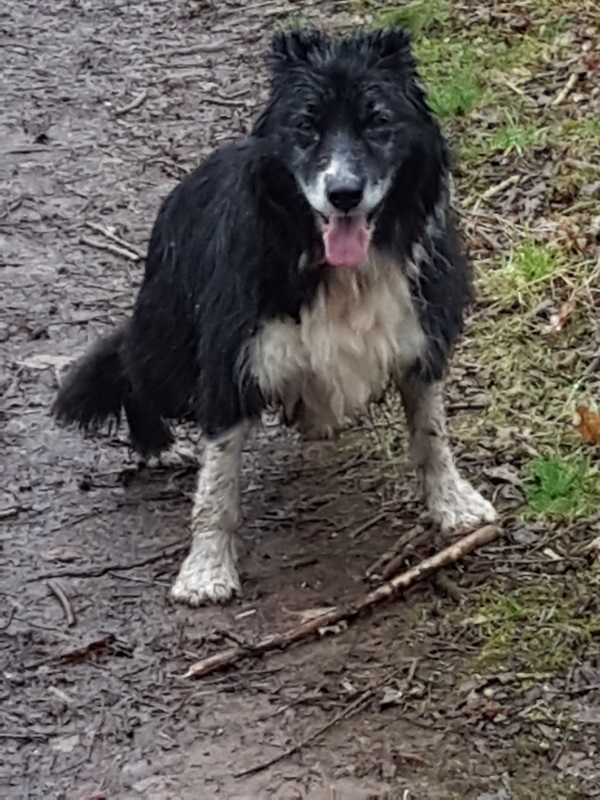
I do not want to follow this thought. Spring is late and it makes me weary and anxious. My elderly dog plods on, keen to get back in the dry, tired, arthritic legs dragging, stumbling at times yet still showing interest in sticks, at least on the way back. I think, will spring come in time for him to enjoy it, to sit in the healing sun and watch the world go by, an old dog at the end of life but still game?

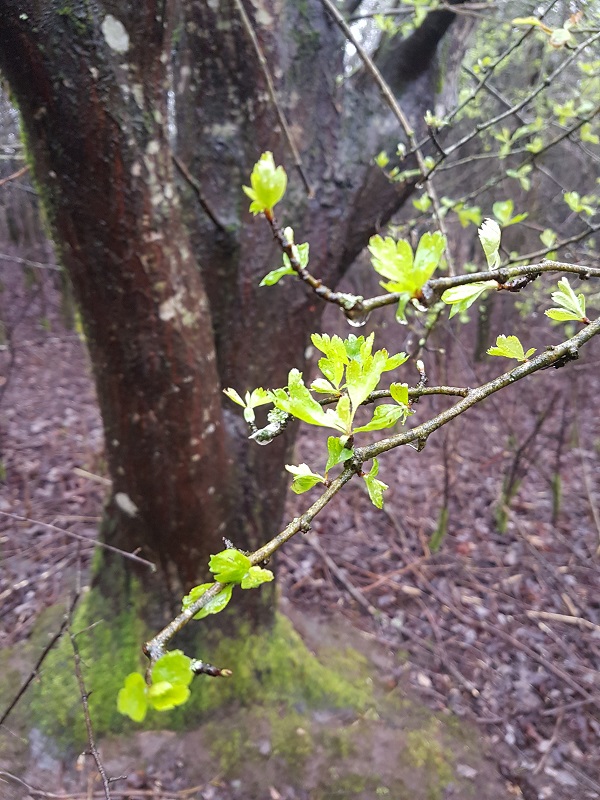
On the way home, I find some of those precocious hawthorns in the depth of the wood which always burst into leaf prematurely and give me my ritual mouthful of hedgerow “bread and cheese”. Today it tastes of even less than usual, but I chew away, get in the door, dry off the dog and put on the kettle.

At least there’s tea.

River Tay, January

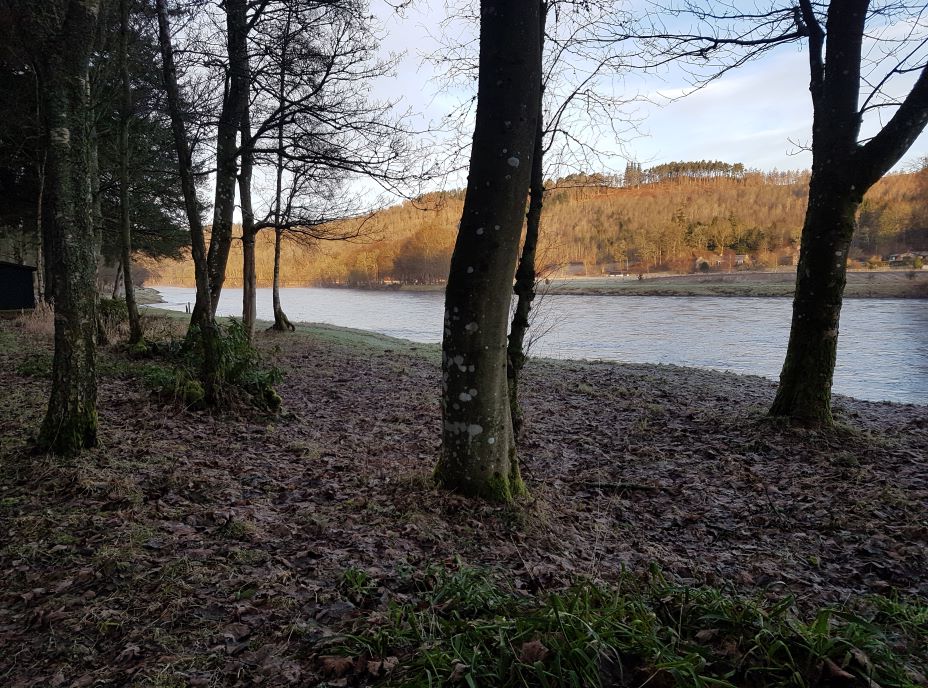
Early morning, sunny and dry. Silence, save for the mutterings of a river almost out of its banks and racing to reach the sea. Ground solid, unyielding – the type of hardness where you trip up on embedded clods and frazzles of vegetation hiding in the whiteness of a fourth consecutive deep frost – on ground already frozen solid by over a week of snow-half-thaw-freeze again.

Walking along the south shore of the Tay on a winter’s morning kind of ensures you won’t be in the sun very much, no matter how it dazzles the eye. In any case, the river has merrily engulfed the lower fishermen’s path that hugs its margin, so we walk, me and the dog, on the higher ground beneath the limes of the castle drive. Where are all the birds? I wonder. Not even the ubiquitous wood pigeons are out braving the cold. We pass an eroded river gulley and went down the steepish bank to the lower riverside path, joining at the point where it rises above water level and becomes what must once have been an elegant stroll for visitors to the castle. Fishing on the Tay is big business, and not affordable by ordinary people (unless you live in Perth and have the right to fish the stretch within the city boundary). We pass fishing huts on both banks that would make acceptable homes for small families. All locked up, today. No one but me and the dog.

Now I’m closer to the water, I start to notice a large number of white birds swimming rapidly downriver. What are they escaping from? Then I realise the white birds are actually lumps of ice, breaking away from the frozen banks and joining the ice and snowmelt that, with extended periods of rain, has made the river so massive today. A couple of gritty black-and-white ducks obstinately battle upriver, against the flow. What strong legs they must have! They veer off into a little eddying backwater on the opposite bank, and I see other water birds lurking there, taking a break from morning chores.

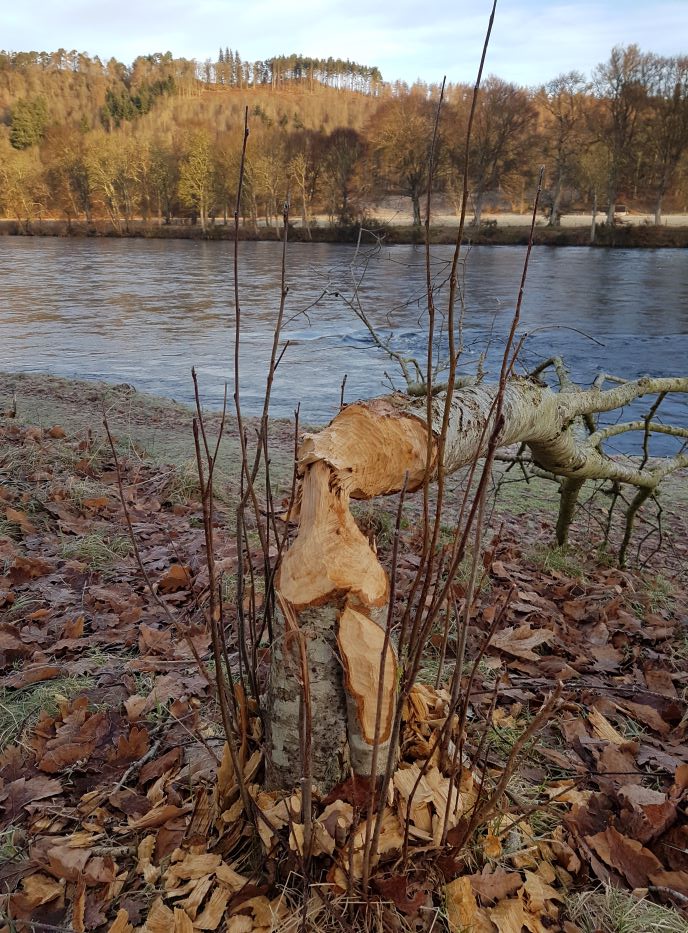
Beaver have been along here recently, but I struggle to fathom their purpose in felling one solitary tree, up the beach from the tumbling water. Maybe just hungry, or doing a bit of coppicing for future regrowth food supplies. I think the water birds could use a few more beavers to create respite backwaters.

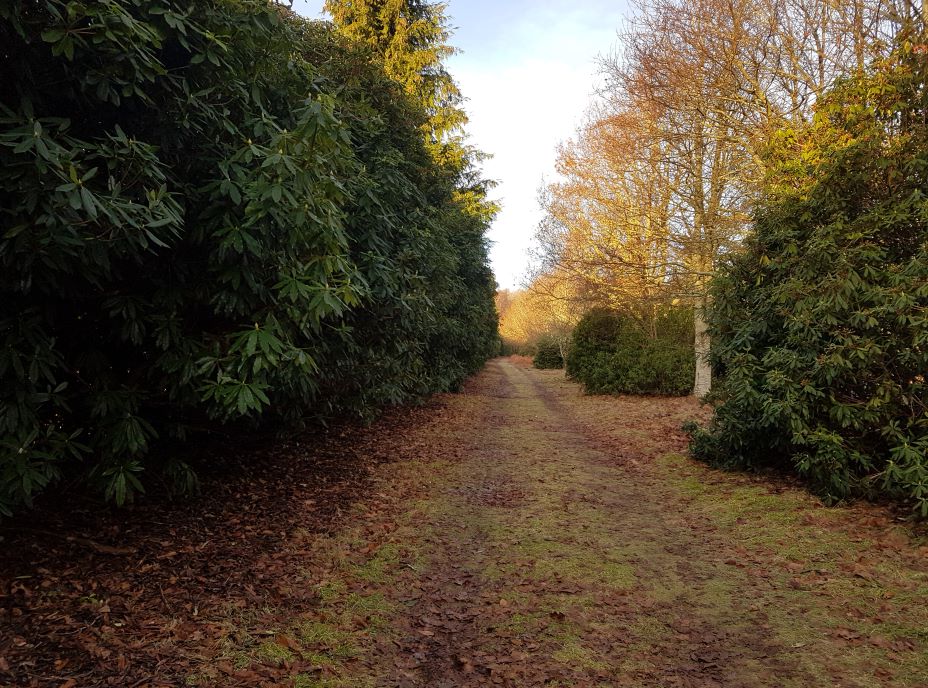
Skirting a long curve round the back of the castle, I pass between forbidding walls of rhododendron bushes. Although they provide some shelter and a small stretch of unfrozen path. they block the view. I spend too much time trying to eliminate them from an ancient oak wood to appreciate their aesthetics. I guess they may provide good roosts for birds, though I still don’t see any.

The core path takes a long, curving route by a bend in the Tay, high above the river and nearly to Birnam before it joins the castle main drive which will take me back to the start if I go left. Closer to the castle, the trees are less scrubby and include many spectacular examples of exotic species, such as Noble Firs, Coast Redwoods and towering Pines. It becomes a landscape of avenues – tottering rows of limb-dropping beeches, stately Sequoias in orderly, sentry-like placings, frowning yew trees in sombre ranks, new avenues planted in recent decades to replace older ones that refuse to lie down and die. Best of all, to me, are the ridiculously shaggy and spreading avenues of old lime trees – each hiding in its own twiggy skirt of epicormic growth. In spring, they provide me with juicy, tender leaves for salad, and intoxicatingly sweet-smelling flowers in summer to dry and make into a sleep-inducing tisane.

As I walk between and under these vibrant specimen trees, I suddenly realise birds have started to chatter, and mixed flocks of finches, secretive tree-creepers and purposeful, hopping blackbirds are awake and accompanying me. Gazing up through the close pine trees, I can just see avian silhouettes flitting busily.

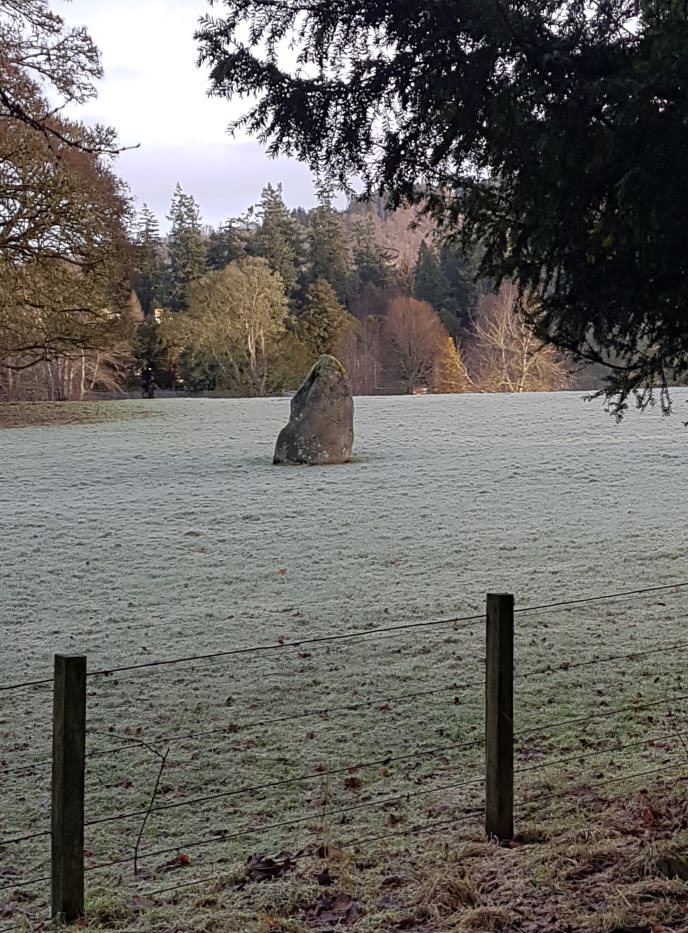
There are paths that could be taken to make a short-cut through the castle garden. Scottish access laws, some would say, give walkers a perfect right to take them, and no doubt some do. I’ve lived in a tied house on an estate where summer visitors frequently asserted this right to take a short cut to a beach through our garden, where we had small children playing and hens free-ranging – and on at least one occasion, hens were killed by loose, uncontrolled dogs. So personally, while I’m proud of our access laws, I think we should respect the privacy of residents and remember those laws also require the walker or cyclist to act responsibly. I’m fine with taking a long way round. The core path eventually passes in front of the castle at a distance (more avenues!), and I note the large, standing stone nearby, like an iceberg itself in an open, frost-enveloped field. It has no name. Does it link with other, less ancient perhaps but curiously-named stones in the area? One day I’ll hunt down the Witches’ Stone (well, this is Macbeth country!) and the Cloven stone….. but not today.

Today, I dawdle back under the limes to the gate, salute the mighty Tay with its miniature ice-packs, and begin to think about breakfast.

Heroes!

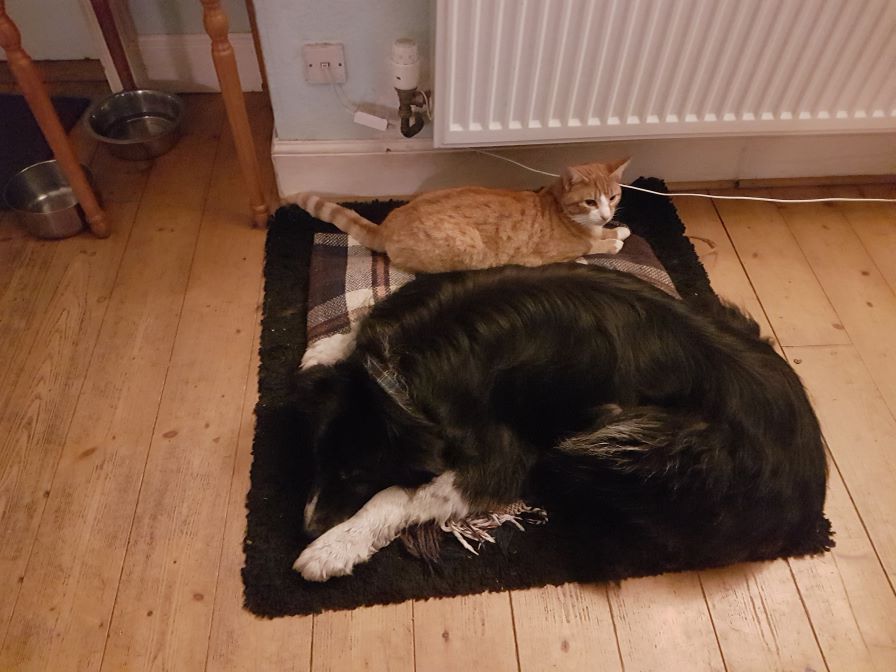
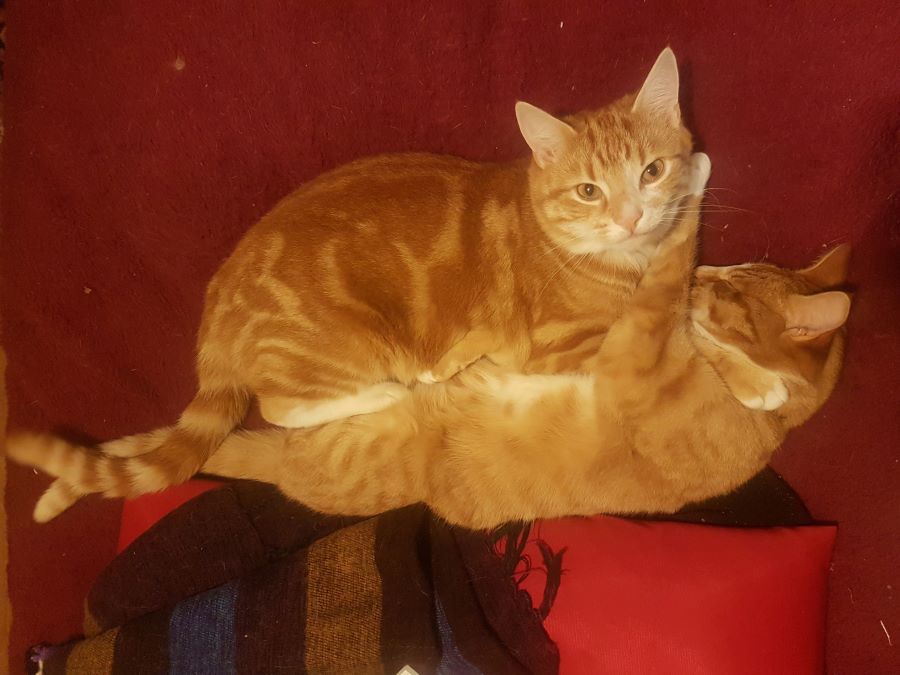
Once again, Jeoffry the ginger cat was determined to help walk Jed the old collie. He has thought for a while that this is his job, and that Jed needs a one year old cat to make sure he is okay. When Jed dawdles and sniffs too much, Jeoffry stops and waits, runs to him to coax more speed, and won’t return home without his dog. Coming out of the little wood on Friday evening as it was getting dark, we met Sam, our neighbour’s bouncy, lolloping pointer, filled with enthusiasm for a snowy evening sledging expedition and wearing a flashing green collar.

Maybe it was the flashing lights that spooked Jeoffry. He leapt back off the track into the little wood – followed by Sammy, who proved he could move with astonishing speed. Sam is trained strictly to point at wild birds and not chase things – his master is a wildlife ecologist and that’s Sam’s job. Quite soon, Sam lolloped back out and continued his evening. Jeoffry didn’t emerge, but he was close to home, with multiple route home options, in familiar territory.

When he didn’t appear for his tea by 9pm, Jed and I went back to the wood with a torch. No sight, no sound, no cat in this wood, I thought. Next morning he still wasn’t home. I should say at this point that Jeoffry is a silly little cat, prone to adventures and worrying people. His twin brother, Lucretius, is a measured stoic, with a kitten face but a wise head, who is more inclined to stay close to home. Nevertheless, I had a strong feeling Jeoffry was in trouble. So Andrew and I spent all morning searching. We both independently searched the little wood again, calling, looking up into the trees the kittens loved to climb and romp in. Then, all the adjacent and nearby fields and the other woods. It was slightly milder than the previous week, but still bitter; all the tracks were frozen solid and stumbling through the snow-buried ruts of old potato fields wasn’t pleasant. When it became clear that old Jed had had enough, and we’d raked the verges of the fast and furious A9 from the bridge through binoculars, I turned to take the dog home. I bumped into Simon and Sarah, friends from the village, who were full of sympathy, having lost two beloved pets this year, and said they’d look out for Jeoffry. Andrew went on to the tangled wood over the dual carriageway.
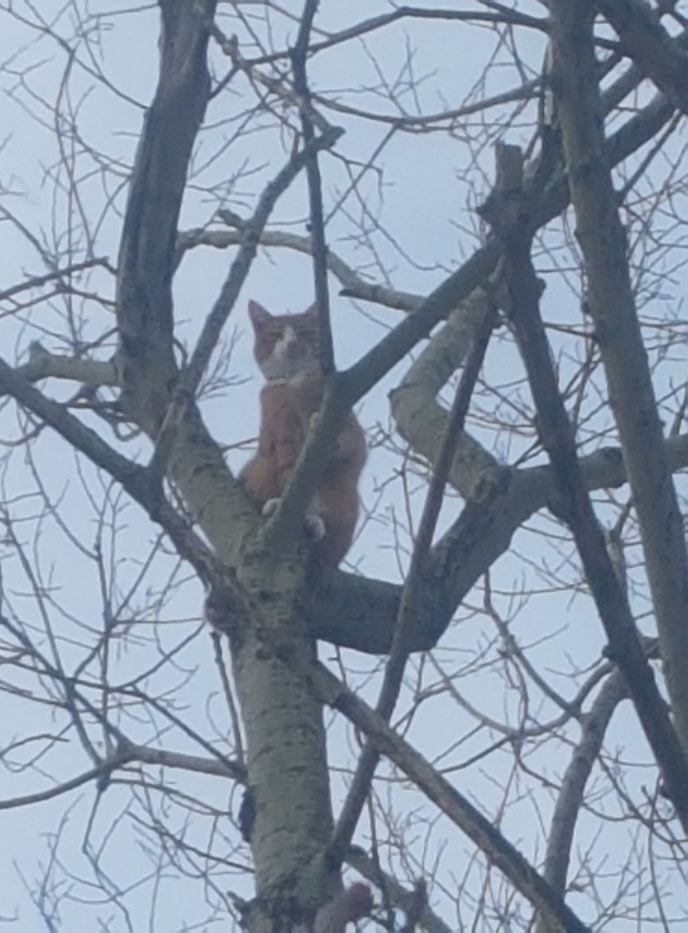
Passing the little wood, I scanned the trees from the track – for the fourth time. And high up – 15 metres up – a spindly tree not far from where he was last seen, was something ginger.

He was watching me, making silent (thus useless) miaows, lifting one paw at a time to relieve the cold. He had been there all night, and was not able or confident enough to find his way down. I called, he looked at me, didn’t move. What to do? The fire brigade tore through my head…. but not only was I uncertain they would respond anyway, the road and weather conditions were bad, and drivers on the A9 can be even sillier than ginger cats. How could I risk diverting the fire service from potential life-endangering incidents? I phoned Andrew. I phoned the vets, who said try the fire brigade. I googled, not an action that often ends in reassurance. I learned that, contrary to widely-held beliefs, cats cannot come down vertically from great heights. Their claws are designed only to take them up. Which Jeoffry’s had so spectacularly done. They can sometimes survive a fall, but cannot remain up a tree indefinitely without food, water or warmth. They grow weak and fall badly, and don’t survive.
That is why you don’t see cat skeletons in trees. They are on the ground.

Andrew returned. Although an ex-tree surgeon, he suffers mild vertigo and doesn’t climb these days. I googled tree surgeons. None of them were local, nor did they offer cat rescues as a sideline. I raked my brains. All I could think of was a long ladder. Our next door neighbours live in a tall, Victorian villa, and have a long extending ladder for maintenance. I trotted home to see if they were in, and if we could borrow it.

John – who I later recalled is very allergic to cats – immediately said, “Oh right, where is he? Give me a moment, I’ll get the ladder and be up there.” There was no hesitation, no question. Help was needed, it would be given. Soon, both John and Catriona joined us gazing up a tree and calling a distressed but immobile cat. John had brought 2 sections of the ladder, but had to go back for the third. The tree had several narrow trunks, some dead branches, and was slippery. Even with the third section, Jeoffry was out of reach, and (being a silly little cat), did not have much of an opinion of jumping down onto the top rung and using the ladder as a human might. “Who knows a tree surgeon?” I asked the air. “Mmm, Simon might know someone,” mumbled John.

I phoned Simon, still out walking, and asked him. Again, there wasn’t a second’s hesitation when I explained the situation. “We’ll just swing by that way, and see what we can do. No, not a problem, be there in a bit.” And in due course, we became six humans and a cat, for Sarah came as well. But in my fixation that we needed a tree climber I had forgotten something. Catriona, John, Simon and Sarah are expert rock climbers (Simon is particularly accustomed to mind-rottingly scary frozen Himalayan precipices. I’ve been to one of his talks and was scared to open my eyes to look at the pictures). Simon and Sarah came with all their lightweight climbing gear, and John went back to the house for his. Politely, all four rejected Andrew’s ancient and long disused heavy tree climbing rope that he’d fetched in case it was useful!

After much testing of surfaces, discussion and planning, a plan was laid. Andrew cut away some dead wood and branches which were in the way, providing the now fully extended ladder with a more secure base. Simon went up and tied-in the ladder itself so that it could not slip away from the tree. Then he went up again, with John on the ground with the rope, and secured himself to the least spindly junctions of the tree. From the very top of the ladder, he could just reach Jeoffry and talk softly to him. Jeoffry began to purr encouragingly. My sole usefulness was to provide a large IKEA type bag with a soft light blanket in, together with a sprinkling of Jeoffry’s favourite cat treats, and to hold Andrew’s tarpaulin with Catriona to catch him if – when – the cat fell. The bag was carabiner-ed to Simon’s belt.

By now, the light was already fading and Jeoffry had been up the tree for nearly 22 hours. I was disturbed by the thought that this operation was putting Simon at risk, and the longer it went on, the greater the risk would be. If this didn’t work, I couldn’t let this go on. In my mind, I formed the final plan – for Andrew to go for the chainsaw and part-saw through the trunk. hoping it would come down slowly enough for the cat to jump clear. There was a strong risk to Jeoffry, but not to my friends – and I was pretty sure from my googling that with temperatures set to go well below freezing again, the cat would not survive a second night anyway.

However, Simon relishes a challenge, and wasn’t to be beaten, even when his first attempt to persuade Jeoffry (normally the most placid and gentle of cats) into the bag was rewarded by a nasty scratch on the cheek. I was horrified by the blood dripping on the snow, but Simon shrugged it off. “I always bleed a lot!” More coaxing, more careful reaching and nudging. Then:

“The cat is in the bag!”

What came next was a careful descent, me hustling a bag of still, silent cat along the frozen track, trying not to slip at this late stage, offering thanks I scarcely knew how to articulate (though bottles of single malt whisky hopefully helped), and the fall off in adrenalin that preceded a long sleep – for Jeoffry and for me. No damage to him – and his big brother Luca soon took charge of sorting the wee ginger so and so out! Jed may or may not have been pleased to have his kitten back – but is very tolerant…..

For me, I am humbled, and set to wondering. It is the season of goodwill, but that doesn’t account for that fantastic, immediate, humane response, unasked for but so, so appreciated, from my neighbours and friends. It made me think that, actually, humans can be pretty wonderful animals themselves sometimes. That there is great goodness to be found, that gratitude is a feeling we should acknowledge and that love should be the tune that plays throughout our days, not just at Christmas.

May all beings – including humans – be well and filled with loving-kindness this festive season.

Tayport, Tentsmuir, & the Dance of Death

Three days of Christmas torpor, punctuated by food, beer and Irish cream liqueurs, two days of damp murk – what happened to the pretty snow that began falling so seasonally on Dunkeld Cathedral at midnight Christmas Eve? – then Tuesday dawned with clear-ish skies and a watery sun. Finally, an opportunity for a decent walk, and a collective itching for sea air drew us like a magnet to Tentsmuir Forest.

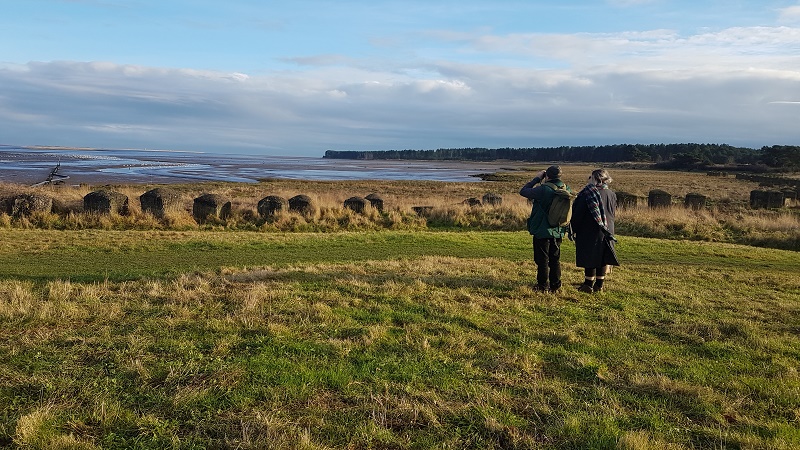
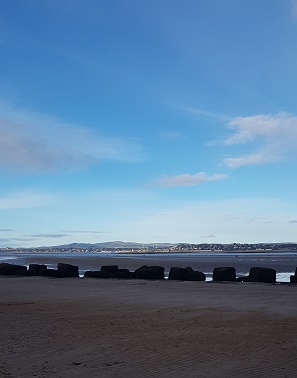
I consulted my knee, which has been challenged by non-specific pain since I fell onto it while raspberry pruning at the end of October. My knee said in no uncertain terms that those strong anti-inflammatories from the doctor had worked miracles in the preceding week, and it was quite sure any torn ligaments, lumps of cartilage etc. were virtually mended. It also said forget the looming possibility of the onset of osteoarthritis, let’s not even go there. The beach calls. So we drove – no, I drove, another possibly poor decision – to Tayport and marched across Tayport Heath with a head-clearing north easterly behind us, and the sun making Dundee all sparkly. Tide was out; wide sands, gleaming waters, massive blue skies splashed with the long brush-strokes of brazen clouds.

Sun always shines on Dundee…

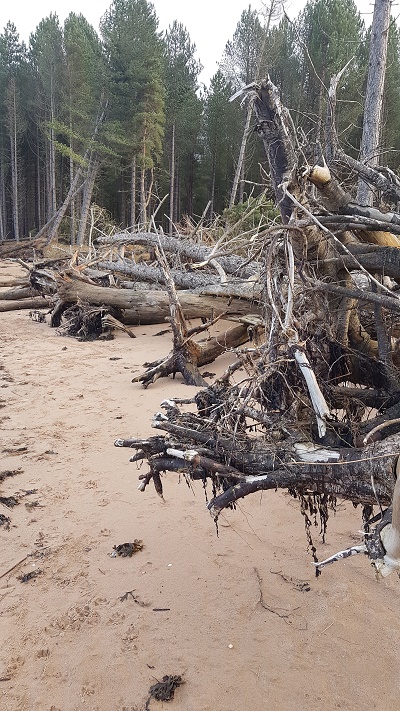
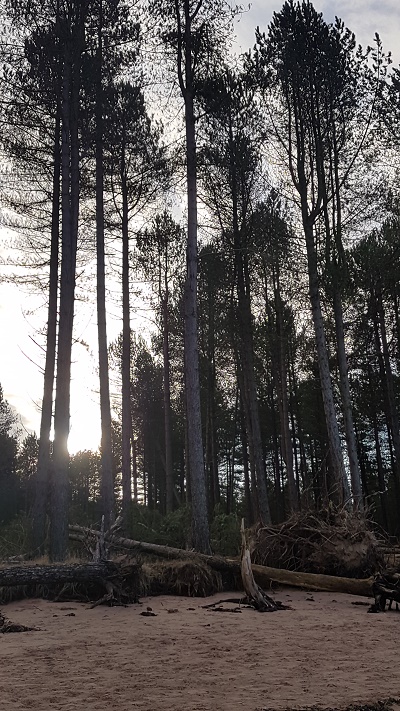
Getting to the forest, we saw many of the pines that cling to the edge of the sand had been toppled by recent storms. In a hollow of dunes, the trees had fallen in to the centre. The upended roots, with the sandy soil washed or blown off them, were a fierce tangle a-top the weathered trunks and skeletal remains of earlier storm victims. It became clear that the parallel forest track  inland, which would have been our easy and shorter return route, was blocked.

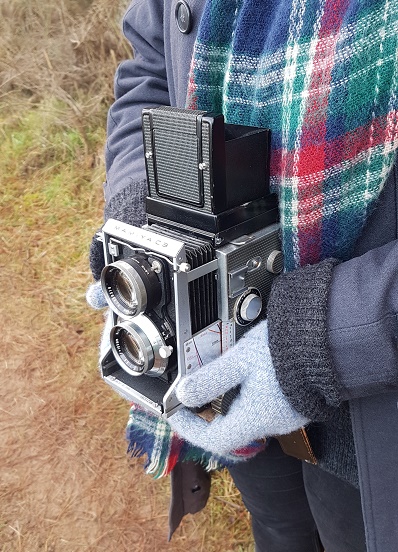
Rowan spent an age taking black and white photos with an antique film camera, unloading the film and loading a new one. I took photos of the camera on my phone in an instant, and was glad to wait and rest a slightly uncomfortable but not yet painful knee, while reflecting on the different mental input and rewards of each method.

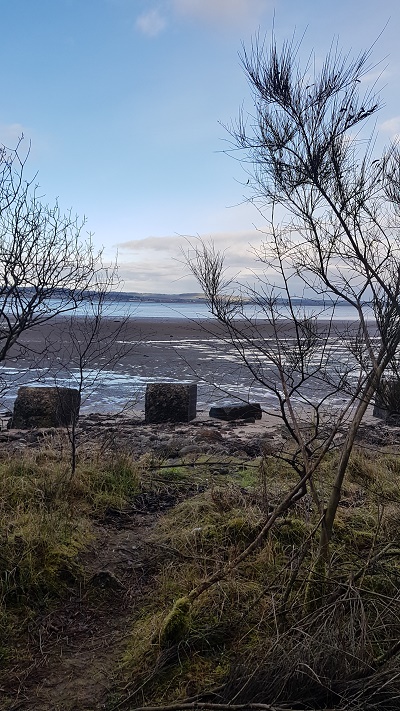
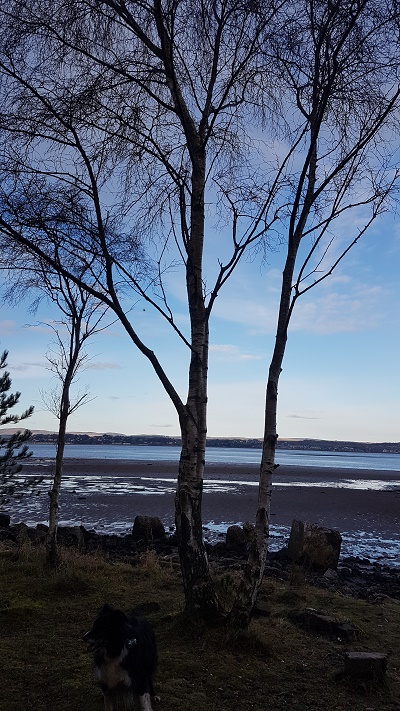
Afternoon light on the estuary emphasized the form and movement of the bare birches and broom in silhouette, as the tide turned. When we reached Tentsmuir Point, the knee was starting to think maybe it should not march on to Kinshaldy Beach as planned, but turn around now. After all, that would still be 5km of exercise and fresh air in total, though I dearly wanted to paddle in the distant, sparkling waves. Pausing to decide, I stepped down a 45cm bank, bad leg first.

There was an audible explosion in the knee, and I was no longer standing up. Actually, I couldn’t. We sat for a while, till I felt the pain might just be away, but that I should definitely head back. When I tried to walk, that became “we should all head back”. Various efforts at walking supported by one or both of my familial companions were not very successful on the uneven, up-and-down path – someone was always either the wrong height or moved at the wrong time, and any sideways movement, flexing or bending of the knee was pretty agonising. We minimised such movement with my new Christmas walking socks and a filthy and disreputable Tay Landscape Partnership buff, belonging to Andrew. (I wash mine.)

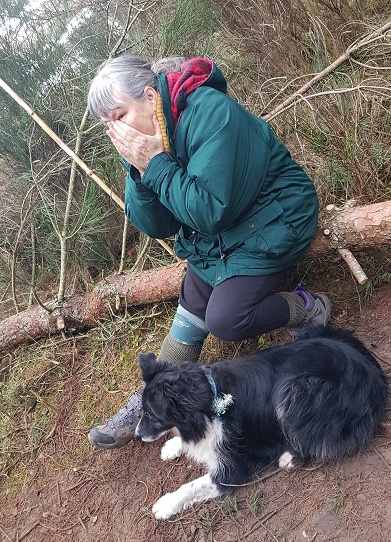
Infinitely helpful collie dog

There were lots of folk out on that path (all others being closed off), and many of them were wonderful. Jolly Fifers and Dundonians with sympathy, but a strong sense of the ridiculous kept my spirits up with their black humour and all kinds of offered help and advice. To the lovely man who had collected a polished peeled pinewood stick and surrendered it to me before going off to see if there was any way he could get his car into the forest to pick me up, my grateful thanks. That stick (pictured above, behind) was a real help and enabled me to avoid the shifting sands of human support. People, so often, are just brilliant, something we forget too easily, confronted as we are by insensitive, heartless, mindless acts – not infrequently by politicians.

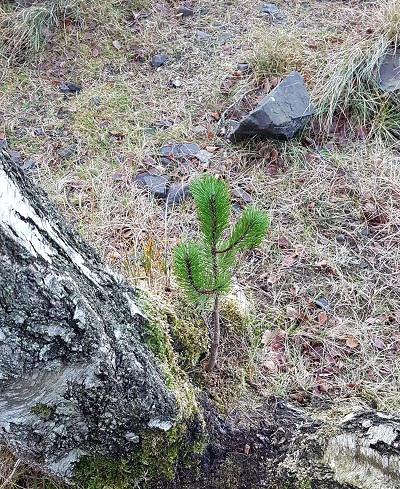
However, light was starting to fade, and progress was slow. I had to keep stopping to recover. One long stop was by a heart-searingly beautiful birch tree on which I leaned. Tucked between its twin trunks was a little pine seedling. I wished it every success, while Rowan rang 999 and Andrew marched off to meet the emergency services back at Tayport.

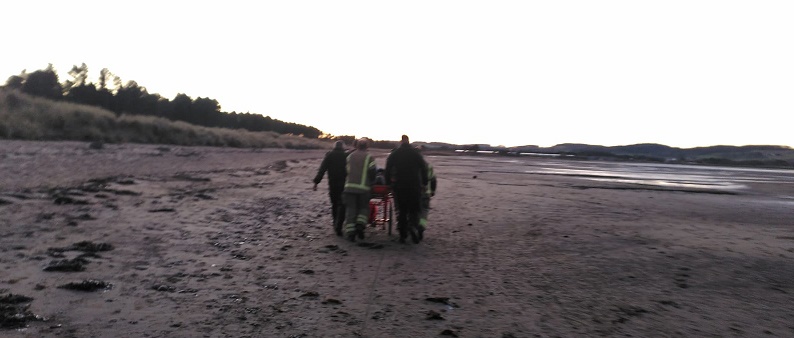
Getting an ambulance in to where I was proved impossible because of the windthrown trees. The ambulance people called on the fire service who have the keys to the gate at Lundin Bridge, and on their colleagues in Edinburgh to come up to Fife with an all-terrain vehicle to get me. Meanwhile, two paramedics and 4 fire-people set off with a narrow-wheeled stretcher trolley, while Rowan kept everyone updated with a brilliant App called Three Words which can pinpoint location accurately.

It took a long time. Wistfully, I dreamed of a helicopter air-lift (which was considered, I learned later, but they said it couldn’t land on the estuarine sands) or a Bond-style speedboat rescue. The tide was visibly rising and although still a way off I knew that at high tide the sea washes the track. And it was getting cold. So, when I could, I kept moving on, in the crab-walk sideways step I’d almost perfected, leaning on the stick for dear life in front of me, dragging the damaged right leg up to join the poor, put-upon left. (It was ever thus.) We noticed that the movement was in waltz time, and tried humming the Blue Danube by Strauss for encouragement. That was too corny, so Rowan found Iron Maiden on her phone and I crab-danced along quite the thing for a good while to Dance of Death…..

“Feeling scared I fell to my knees
As something rushed me from the trees
Took me to an unholy place
That is where I fell from grace”
(lyrics, Iron Maiden)

Appropriate, or what?

Getting carried away…

When we met the brilliant team of combined emergency service people (yes, I know, but they bloody were), I opted to be carried on the jolting trolley (apparently a wheel came off at one point) till we met the ATV. The ATV got lost (“Edinburgh folk” tutted a Dundee fireman, as if he’d not really expected anything better), so didn’t arrive till we were out, but I enjoyed passing under the overhanging pine branches, set against a darkening sky, and the vivid sunset over the flat and increasingly wet estuary. There are worse settings for being a casualty.

The two Edinburgh paramedics transported me to the car and thence off to A&E. Five hours later, and more hats off to the NHS, I left, with a pair of crutches, a fractured or chipped shinbone in the knee joint encased in a massive Velcro-assisted immobiliser, and a probable  torn-asunder lump of cartilage called the medial meniscus. Which came first, and whether one caused the other, I hope to learn next Wednesday at the fracture clinic!

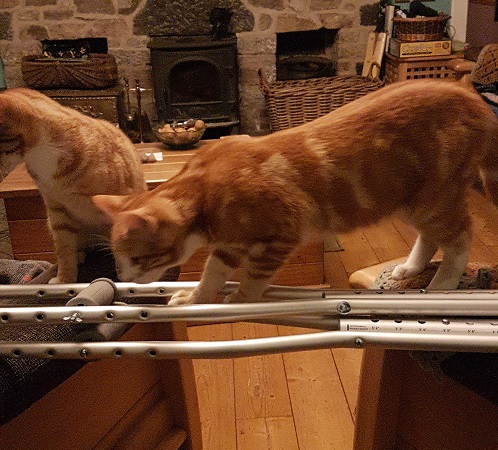
Fringe benefits: 1. Gas and air! Happy memories (?) of childbirth! 2. From the Xrays, my knee “is like that of a young woman” said the doctor. No osteoarthritis yet! 3. The kittens like tight-rope walking on the crutches more than I like using them. 4. Time to write my blog, which I signally failed to do before Christmas. Too late for Christmas greetings, but have a good Hogmanay and new year when it comes…..everyone, but especially two doctors (one of Philosophy with heavy metal expertise), all the happy walkers in Tentsmuir Forest, three firemen and a firewoman, four paramedics, innumerable NHS staff from the reception desk to the porter, one man with a stick (which I’m keeping unless he wants it back), and a partridge in a pear tree……(imagined.)

Kitten appropriates the crutches…

When you know winter is coming…

The turn of the season is felt, not so much as a drop in temperature or the way the need for warm socks and waterproofs creeps up on you, but in the way the woods smell different. Decaying leaves, leaves still on the trees but for whom decay is imminent: the smell, for me, of being 11 years old and at a new school, where our introduction to Biology was the invitation to compile a Biology Scrapbook over the course of a year. Diligently, I collected all those leaves on the point of rotting, pressed them in encyclopedia volumes, and learned, when I next opened the books to mount them, the subtle distinction between the smell of sycamore, poplar and oak leaves in autumn.

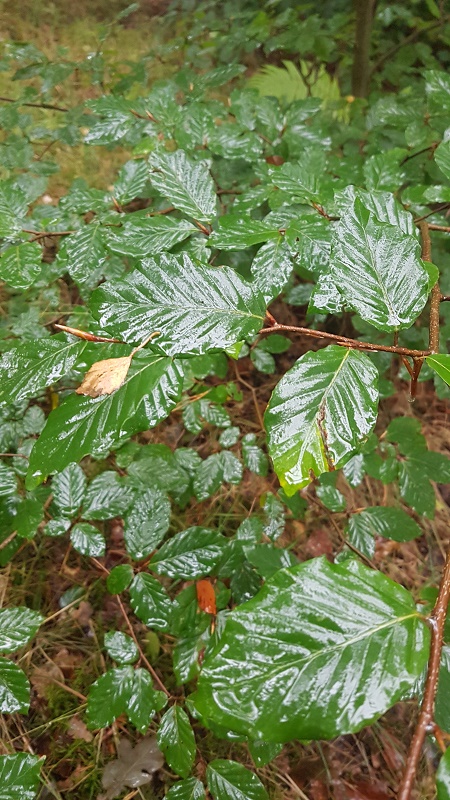
Today, a soggy Saturday in October, Five Mile Wood smells again of the Biology scrapbook. Weaving in and out of the olfactory hamper of autumn comes the odour of wet grass, heavily trodden, and the varied aromas of dozens of species of fungi, seen and unseen. It is raining, softly but insistently, the rain bringing its own subtle influence on how each smell is perceived, like a wash applied over a freshly executed painting. Beech leaves, nowhere near inclined to fall, glisten with rain. I am challenged to keep the rain from running down my neck, challenged by the chill in the air, challenged by the distraction of mushrooms, all of which breathe of magic, and the resulting lack of time that cut this walk a wee bit short.

I won’t bore you with more gratuitous gloating about the basket of edible mushrooms I took home to dry or make into fungus and ale pies, nor with more photos of the ones I can identify! But today, the woods presented me with an excitingly unknown fungus, the likes of which I’d never encountered in decades of mushroom-hunting.

(Actually, the woods do that every time I go foraging, for there are many, many mushrooms I cannot differentiate. But as I know they’re not on the “edible and good” list which is tattooed into my brain, I indolently dismiss them as “small brown jobs”. Which they usually are.)

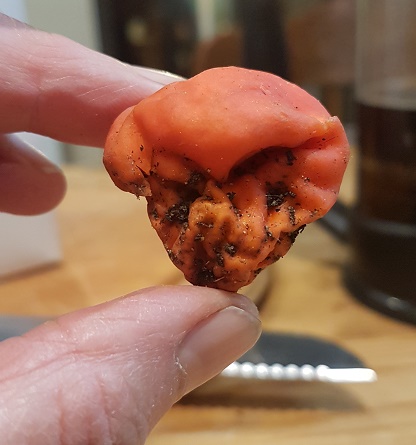
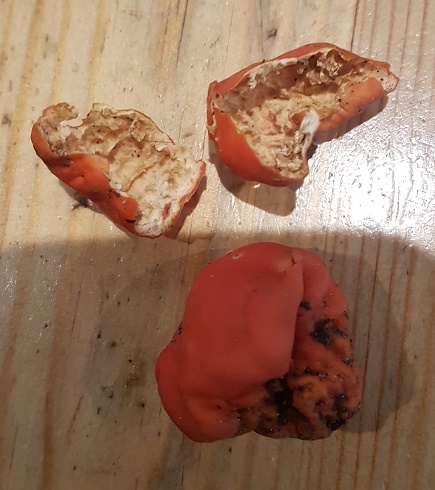
Today’s find was different, a real unknown unknown, to quote Donald Rumsfeld. Bright orange-red balls popping up through the grassy banks between the path and the ditch; I first mistook them for discarded tomatoes. But they were fungi, no question, and when I cut one open to help identify it, it was hollow, with pale coloured ribbing inside. I had never seen anything like it, but as it was so distinctive, I expected identification to be straightforward.

So far, I have not found this species in any of my books, and have drawn a blank from the social media mushroom groups from whom I begged enlightenment. Someone said they’d once seen something similar, but yellow, only got distracted by all the edible ceps nearby. Easily done! I have contacted the Tayside & Fife Fungi Group, and wait in hope. I will find out…. Perhaps someone reading this will have the name, and be laughing at my ignorance?

Inside and out….

Aliens invade Tayside?

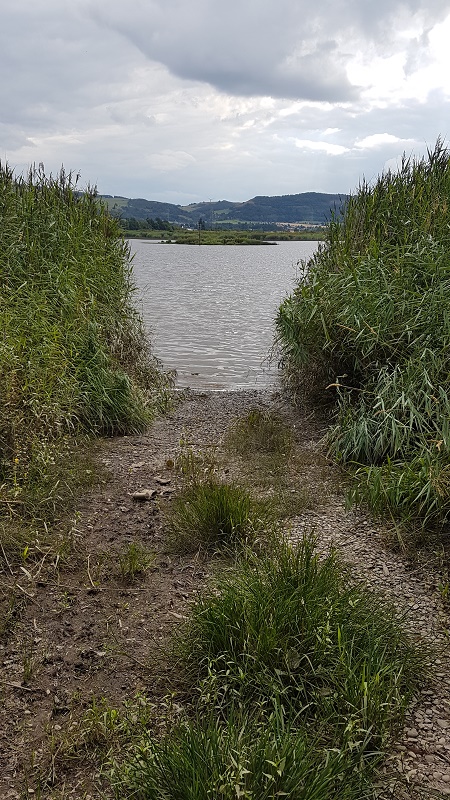
I wanted to walk from Cairnie Pier near St. Madoes west to Inchyra on the Tay estuary. My old map (old being the operative word) said there was a path, but it says that about a lot of stretches of the Tay along the Carse of Gowrie that it would be nice to walk, and it’s often mistaken. Google Maps hinted that if you got really, really close to the ground, there might even be two paths, but it wasn’t committing itself. At Cairnie, the existence of a small car park looked promising, and I found the great river hiding among its own reedbeds as usual, lapping quietly at a little inlet whose stones oozed mud. Fishermen’s paths trailed off in both directions.

Cairnie Pier

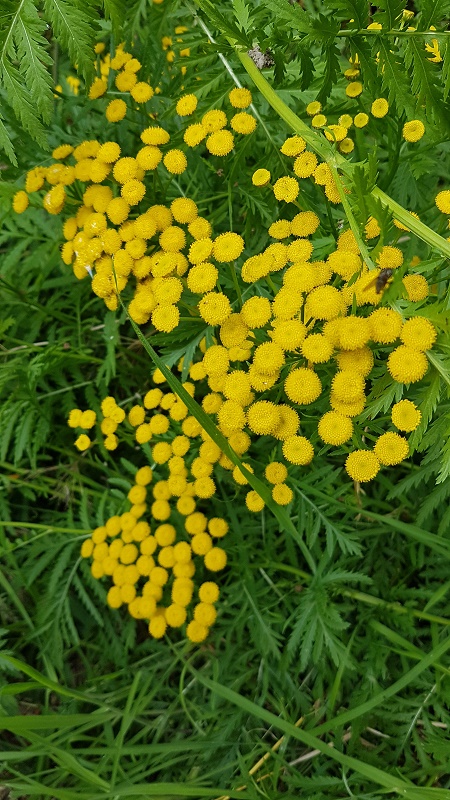
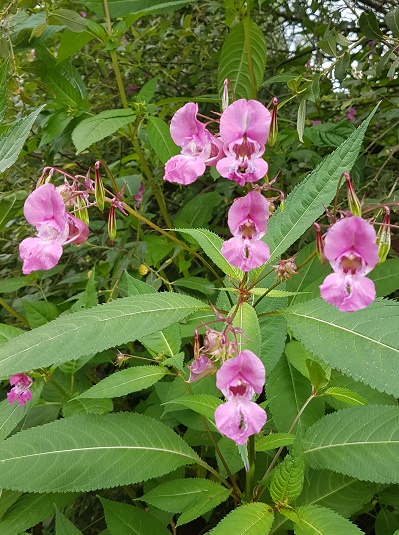
It was drowsy-hot, an afternoon of hoverflies and docile wasps, intent on the many flowers that lined the path. The river is a conduit for all kinds of unexpected vegetation, which thrive in the tidal mud and lovely untidy, unsanitised, hedgebanks and verges. The yellow buttons of Tansy pop up everywhere along the Tay, together with the silvery Mugwort, a long-ago Roman introduction, allegedly a cure for sore feet. Warm and spicy, the scent of Himalayan Balsam over-rode the scents of native flowers, and its spectacular flowers trumpeted a welcome to pollinating insects. This “alien invader” has been around a good while, anywhere near to water, and it’s a Marmite plant. Speak to any beekeeper and she will wax lyrical about the “ghost bees” who return somnolent and satisfied to the hive, covered in its dense white pollen. Speak to most mainstream ecologists and they will say it’s invasive, outcompetes “our” native flora and has no place in “our” countryside. I love its other name – Policemen’s Helmets – does anyone remember when policemen wore helmets? The top and bottom lips of the flower are encased in a helmet-like fusion of the other petals. I’ve happily pulled it out of ancient oak bluebell woodland, but I can’t say it bothers me too much today. I munch a couple of the peppery-pea tasting unripe seedheads, out of duty.

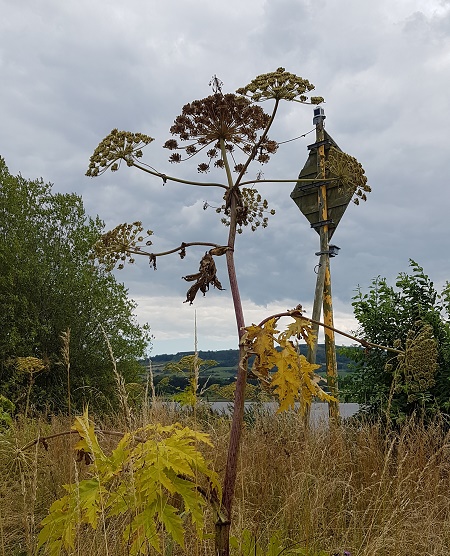
But then arise the forbidding, towering structures of a harder-to-love alien. Giant Hogweed, introduced by gullible and novelty-obsessed Victorians to adorn their fancy gardens. Apart from its spectacular, H.G. Wellsian-Martian structure (still being extolled by lecturers when I learned garden design), it is low on redeeming features. It is truly rampant, flowers and seeds everywhere and delivers serious burns to anyone brushing against it in sunny weather. It’s a property called phytotoxicity, and today the sun was shining and I passed gingerly.

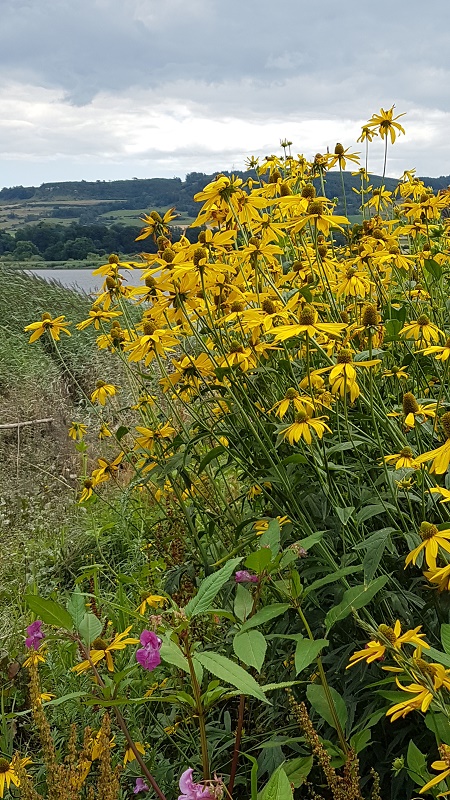
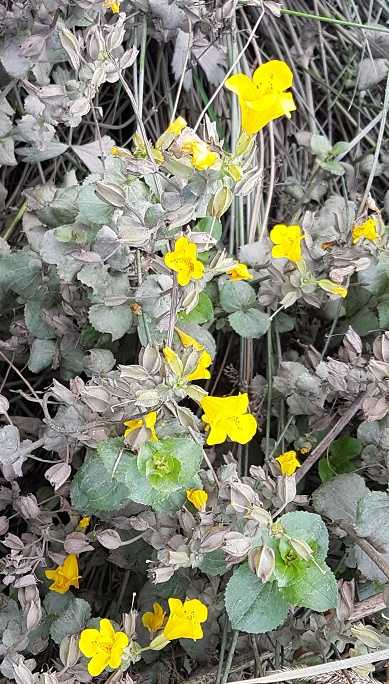
Far more attractive, and indeed glorious were the bright yellow, sunny Monkey Flowers, coated in tidal mud, and the clumps of tall Rudbeckia, both garden escapes, that sway gently in the breeze up the river. They are dotted all along this stretch of the Tay. I remembered another sunny day talking with David Clark of Seggieden – a great botanist and a man who so loved this river – about whether they “should” be there and what exactly was native anyway, since both of us could be labelled aliens ourselves. We agreed that neither of us were fanatical about racial purity in plants or anything else, but weren’t fond of Giant Hogweed, nor the next invasive alien to show its face on my walk, the Japanese Knotweed. This monster would out-compete the miles and miles of Norfolk Reeds themselves…..oh wait, did I say Norfolk Reed?

Yes that’s right, the incredible Tay Reedbeds, home to rare marshland bird species and a complex, life-affirming ecology, are the result themselves of the introduction of a “non-native”.

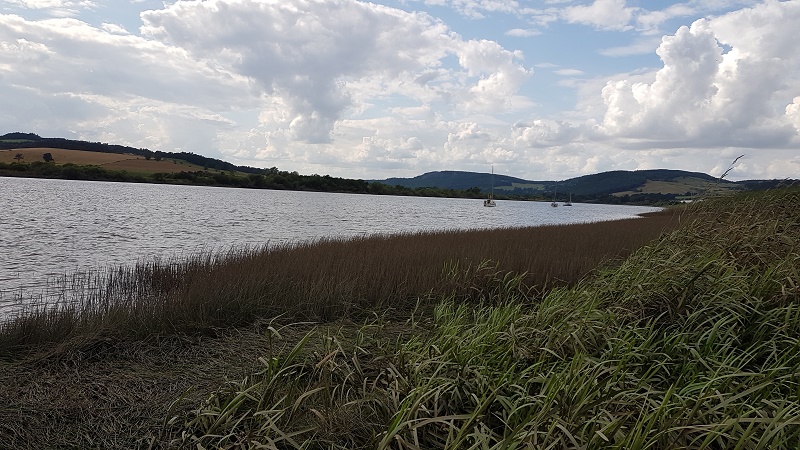
My fishermen’s path had petered out, and an attempt to reach Inchyra along the edge of a field also met with failure, so I drove back towards St. Madoes and took a side road left. Thus I reached Inchyra, a beautiful little village of low houses, pretty gardens and derelict farm buildings looking, as they always do, as if a quick afternoon’s work would put them back into service. From this hamlet, crouching among tidal lands as if in terror of sea-level rise, I found a wild garden overlooking the estuary and across to Rhynd, and small moored sailing boats bobbing in the rising tide.

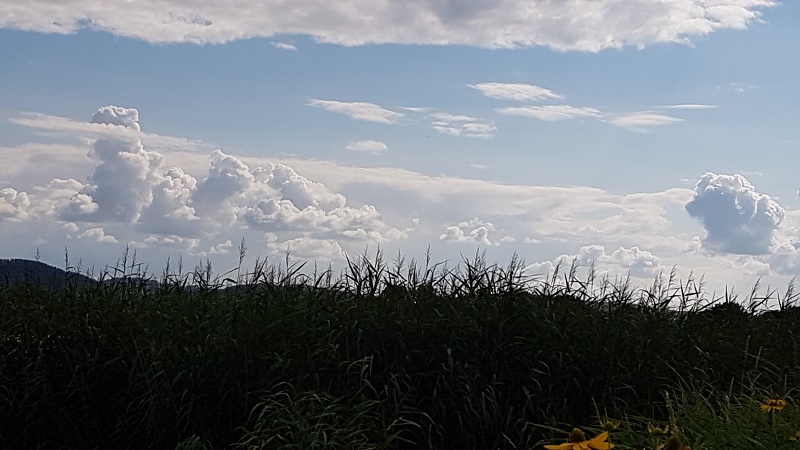
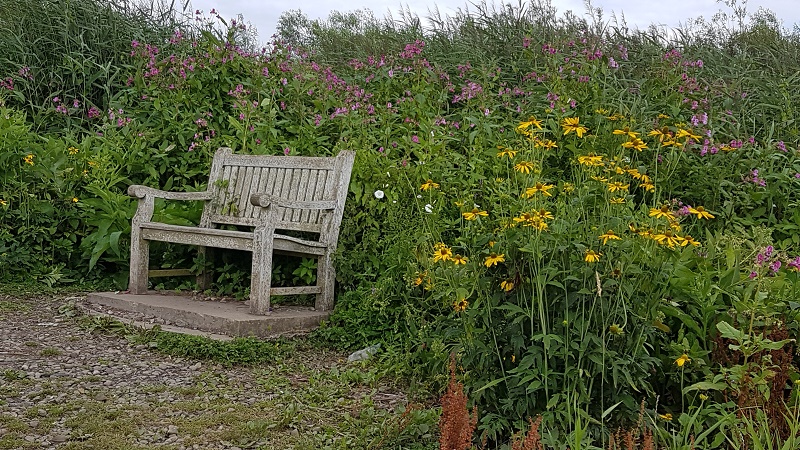
Here was a seat, to the memory of a daughter of a local family, and I sat in complete peace among the reeds, with flowers – native, non-native and all the gradations in between – blessing the air with scent and colour. Even the busy tractor across the water hummed to itself. Rain was forecast; I watched silver-lined thunderclouds pile up on themselves, shift and mutate, and then dissolve again into the blue sky. It was so good to be here.

When it seemed the clouds were getting serious, I found a path that ran beside Cairnie Pow, giving me a good circular walk back to the village. The pow is a local name for a drainage channel, often of ancient origin, that was created to free the fertile soils of the Carse of Gowrie from being marshland. They litter the Carse, and give a sense of being neither quite on dry land nor in water. This one tracked parallel to the path I didn’t find earlier from Cairnie Pier, and then swung left at the point I’d almost got to, where a host of overhead power lines had got together for a gathering. They sky darkened, and the air, hot and still full of the damp scents of flowers, smothered the senses. Young trees, planted by the nearby farm, gave welcome shade. A big, old house rose out of the marsh with no obvious gateway or entrance. It looked dark, empty, full of tales and secrets. I wondered, made up stories in my head, began hearing things and holding imaginary conversations with people who did not exist. Perhaps it was as well that heavy, ponderous raindrops deterred me from more exploration that day.

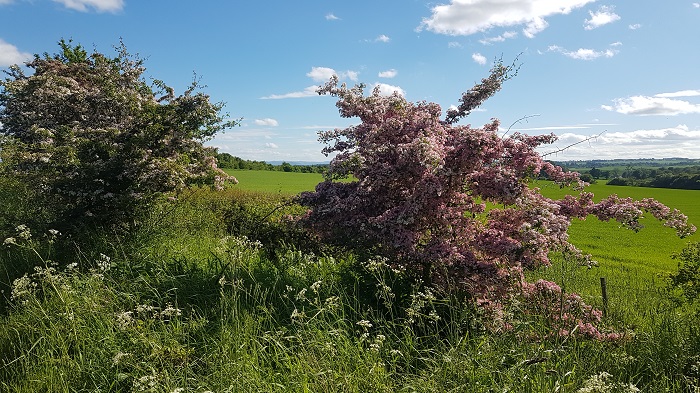
May: Late, but Pink!

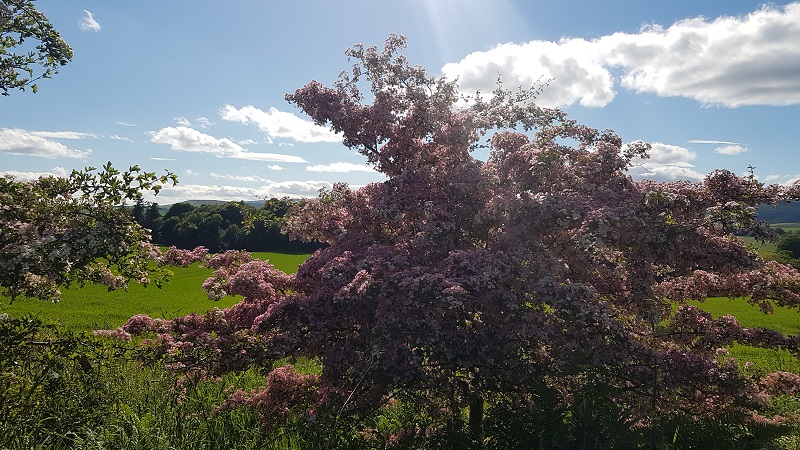
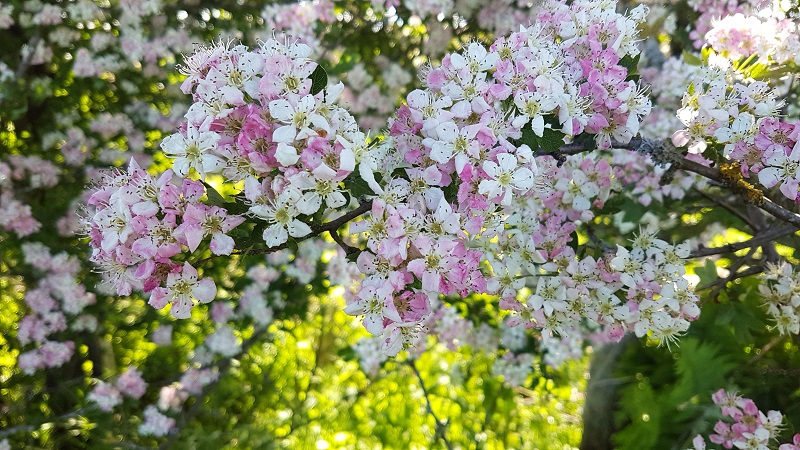
There have always been a few pink ones, tantalisingly rosy in the distance, exquisite in proximity. Hawthorn (Crataegus monogyna), also known as May, the mainstay of the rural hedgerow and the exuberant, wild lace that dominated the countryside in late spring, until money-obsessed agribusinesses ripped out the vast majority of the hedgerows and hammered the rest into stunted wedges that never got a chance to flower – it’s genetically variable when it comes to flower colour. Traditionally pure white – Housman’s “high snowdrifts in the hedge”* – but look closely and the suspicion of pink usually lurks around the outside of the petals.

This year, our local hawthorns stayed tightly in bud all during the cold, frosty and then wet weather of April and most of May. I was despairing of them opening in traditional time and thinking of renaming the shrub “June”. I found a single flower open on 21st May, but it was the end of the month before they felt safe enough to come out of hiding, and already their companion shrub, the broom, was going over. But now….. they astound, they soar, they are alive with insects….and, for whatever reason, they have emerged in all shades of pink. It’s like wading through raspberry ripple ice cream, sneezing with the outrageous amount of pollen and drowning in that pungent, not-quite-nice but not entirely nasty, scent.

What a sight to hold drunkenly in your mind’s eye, until May – or June – comes again!

*’Tis time, I think, by Wenlock Town,
The golden broom should blow;
The hawthorn, sprinkled up and down
Should charge the land with snow.

Spring will not wait the loiterer’s time
Who keeps so long away;
So others wear the broom and climb
The hedgerows heaped with may.

Oh tarnish late on Wenlock Edge,
Gold that I never see;
Lie long, high snowdrifts in the hedge
That will not shower on me.

from “A Shropshire Lad” by A.E. Housman

Circular Walk, Spring Morning

A night of light snow, followed by clear-sky freezing has left
The ground hard and white.
Rapidly the sun, heroic, overcoming all, climbing high,
Melts snow to iridescence at every margin, every edge.

On a single hill, snow is held in thrall. Like a crumpled Mount Fuji, but
No blossom, no art,
The hill holds its ghost-clothes, despite the sun’s triumphal progress.
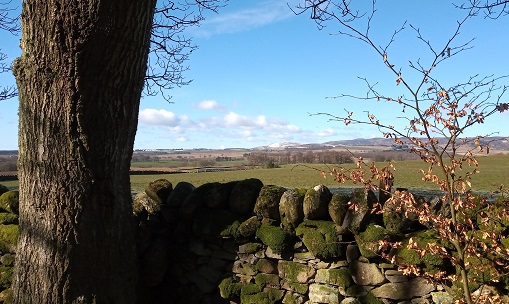
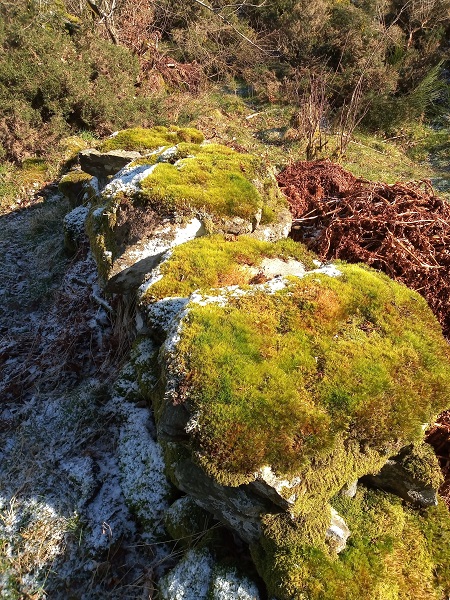
Magisterial old beeches sun themselves among old walls and
Moss-covered stones, dripping, wet, full of temptation.

Birds call, fluting, piping, chameleon-coloured, slipping away like lizards.

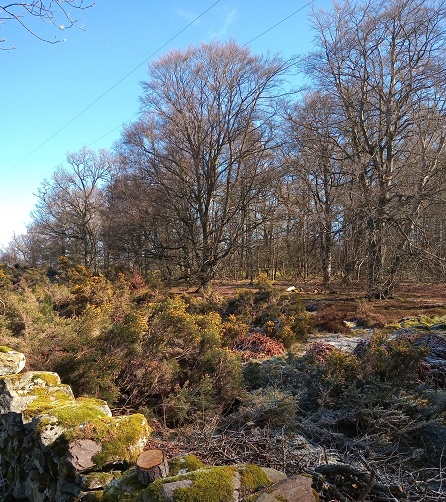
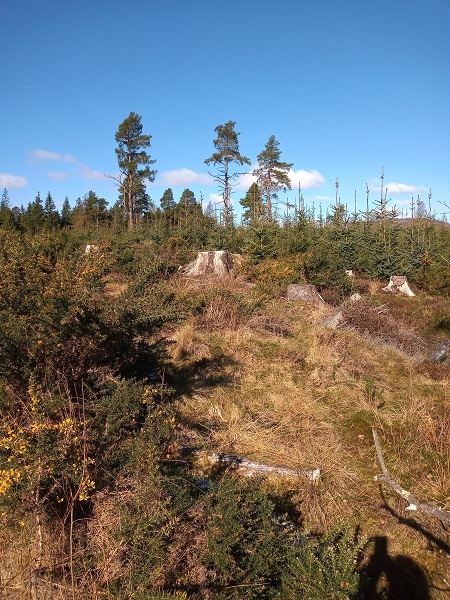
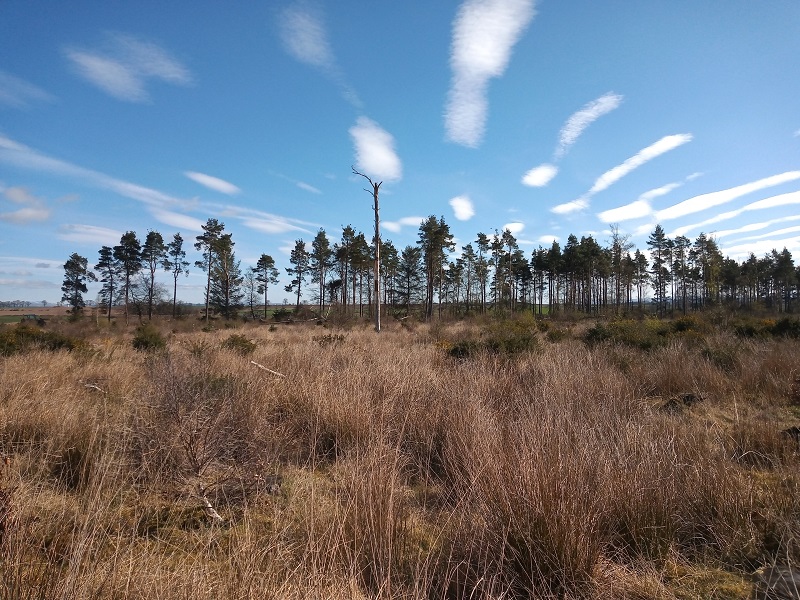
I’ve never understood the detritus of forestry. The wind cuts and dives
In and out of the shambles of stumps and trenches, where startled pines left behind
Look half-naked and vulnerable, hesitantly beginning to stretch arms to the sky,
To each other, united in the icy wind.

I follow the wind. I leave the wreckage, the small shelter
Of self-seeded spruce erupting from glossy gorse and broom. Ahead
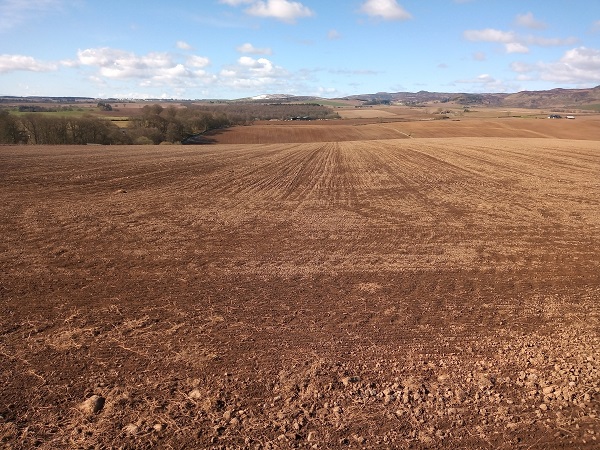
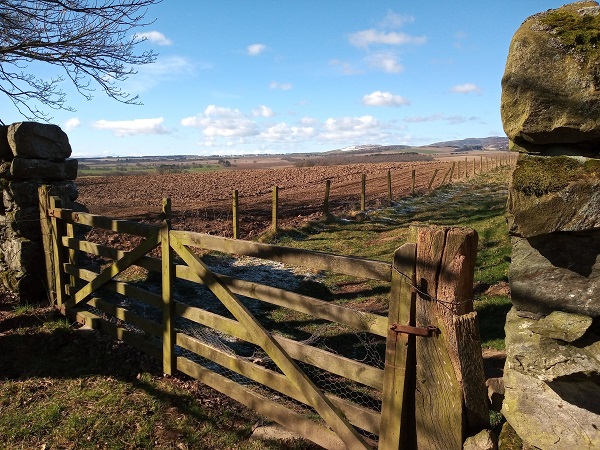
A vast and dreary vista of huge, brown and empty fields,
Unpunctuated by tree or hedge-bank, meticulously ploughed and harrowed.
The dust rises, faintly reeking still of the abattoir, that small, derisory recompense
For decades of soil inevitably lost and life precluded.

Back by road, the first wood anemones
In the deep and shady gulf where children once played canyons,
And a rising stir of sound comes up from behind. Suddenly
A thousand geese are shifting and snaking in the blue, blue sky,
Withering the last frost with their joy.

Gimme Shelter!

This post was written for West Stormont Woodland Group as part of the Gift and a Challenge series. To find out more about WSWG, go to weststormontwoodlandgroup.scot

And the wind whistled over…..

To begin with the challenge – it’s March. The month that can’t decide whether to ally itself with winter or summer, blows literally hot and cold – but blows anyway, more often than not. This March, temperatures have veered spectacularly – almost hot at times when the sun is fully out, only to evoke shivers and a sullen quest for shelter when the sun goes behind the never-far-away bank of clouds.

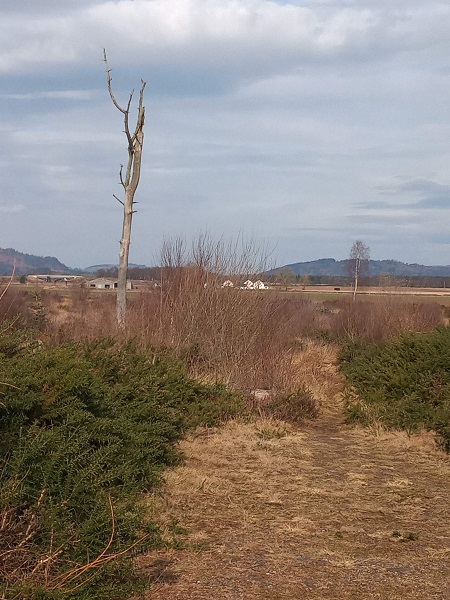
The track in Five Mile Wood is set high around the hill; the clearance of the windthrown central forest has left only bare, angular, dead or dying thin trees, leafless and affording no windbreak. The wind skitters over the gorse; the tall grasses and herbage of summer still skulk in the earth. Between the grey and ghastly yellow of dead wood, last year’s vegetation lies smashed and parched, husky and brittle, desiccated by months of ice, snow and frost.

There is nowhere to hide. Nothing to distract, punctuate or alleviate the March winds and the wreckage of a long winter.

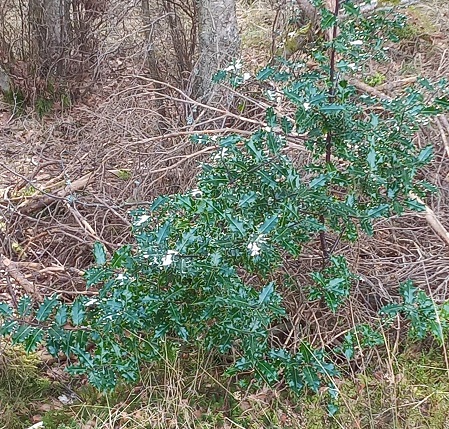
And so to the potential gift from the woods – one that might, with time, give some respite from the challenge of March. We have few native evergreen trees; apart from the magnificent Scots Pine (which can be poor shelter when most of its branches are way above our heads), there are only holly, box and yew. Holly is an important food source for many birds, especially the blackbird family and the robin from the Christmas card, and into any suitable habitat those birds will pass the seeds from all the berries they devour. Thus, holly will start to appear in snatches of clearing or under bigger trees, the seedlings going unnoticed until the taproots are impossible to get out. It was a relief to see, on the margins of the cleared gap in Five Mile Wood, a couple of well-established young holly bushes. They may have grown from seed from a mature tree decked with twining stems of honeysuckle, that grows beside the track, on the edge of the wood.

Baby Holly trees

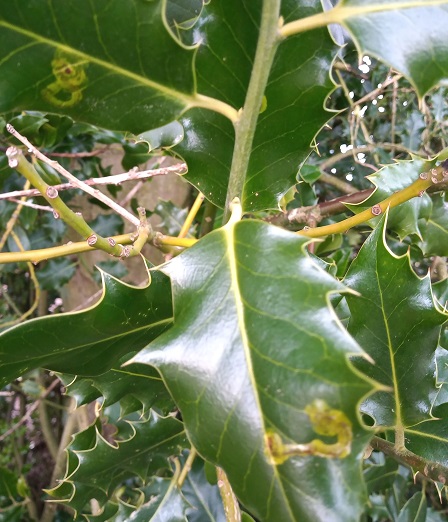
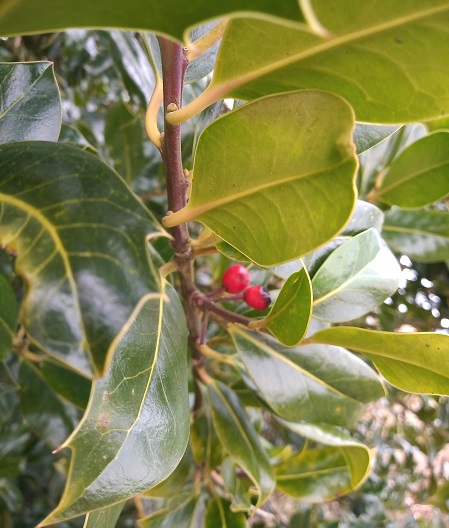
Hollies are dioecious. You get male trees and female trees, and only the females have berries. In March, there are just a few berries left, lurking behind the armoured leaves, while a thrush skulks in the greenery, hunting them out. He is just beginning to try out his repetitious mating call. Aside from shelter from March winds and berries for birds, holly is one of the most valuable wildlife plants and a real gift to have in a wood. Wood mice and other small mammals also feed on the berries, and deer enjoy a prickly snack of holly shoots. The holly by the track is already playing host to the Holly Leaf Miner – an invertebrate recognised by the squiggly patterns of its tunnels, between the upper and lower surfaces of the leaf. They have co-existed with the holly tree for a very long time, and do little real harm to the tree, although the texts of horticultural imperialists will make them sound like the devil incarnate and command the use of an army of chemicals to destroy them.

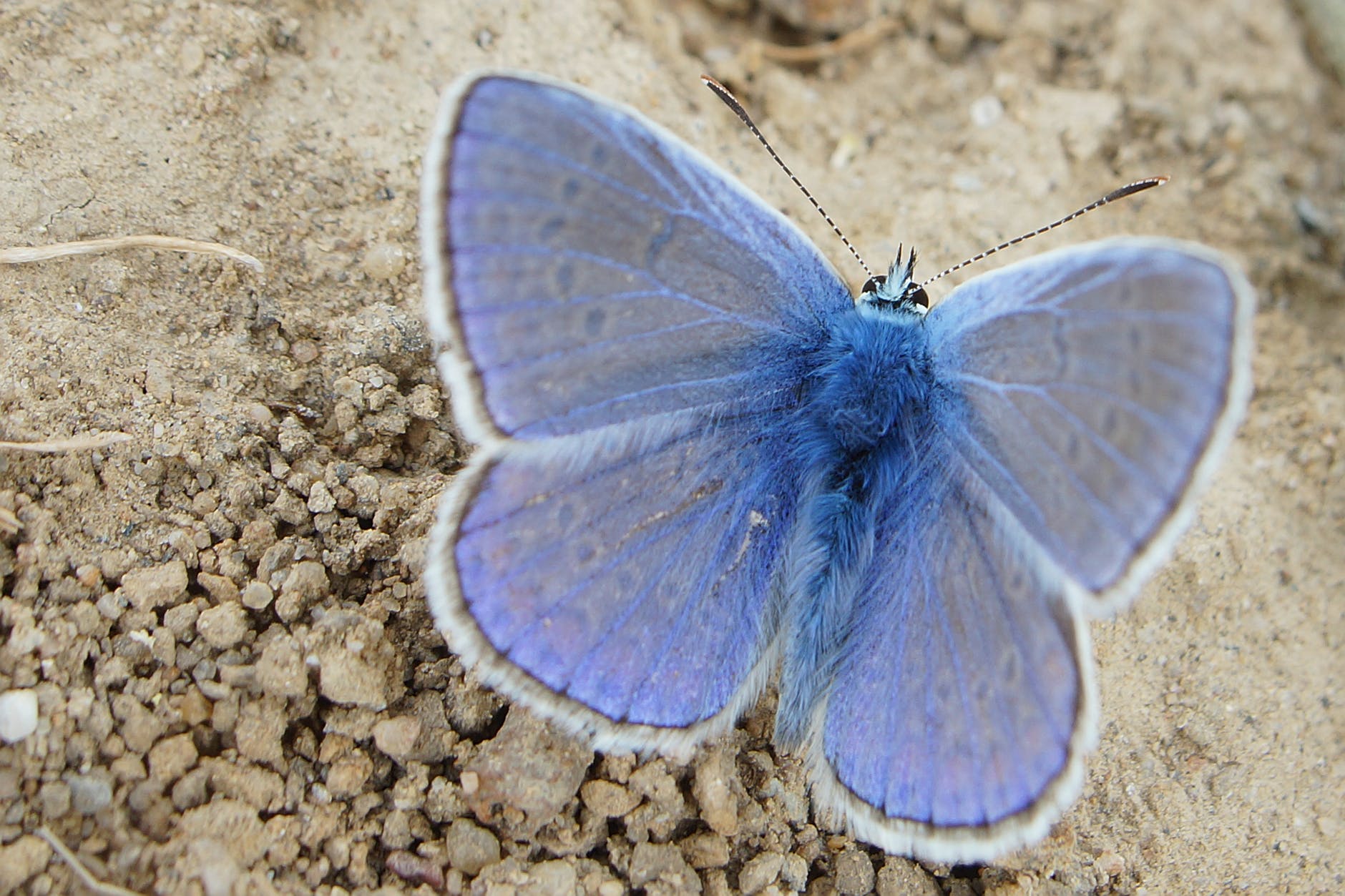
There is a very beautiful butterfly, the Holly Blue, whose caterpillars in spring feed almost entirely on shoots of holly, and later broods move onto ivy. It’s not common in Scotland, although it has been seen dotted around. The looper caterpillars of the holly tortrix moth, as well as many other insect larvae, seek refuge in this prickly tree too.

Photo by Ronald on Pexels.com

And like all evergreens, it provides impenetrable debris for hibernating hedgehogs and is a formidable cosy shelter tree for roosting or nesting birds. Not to mention windblown humans in March.