CONNECTIONS (1)

Photo by Raman Yv on Pexels.com

It seems ironic that this summer, punctuated as it is by heatwaves, record-breaking temperatures and wildfires from Suffolk to Sutherland (and that’s just in Britain) I should be so richly entertained by insects. Not ironic that they like the hot, dry weather – of course they do, so long as they have food and water. It’s as though, at the same time that we are forced to stare climate catastrophe in the face, we are also reminded of what we stand to lose. Nature is shouting at us!
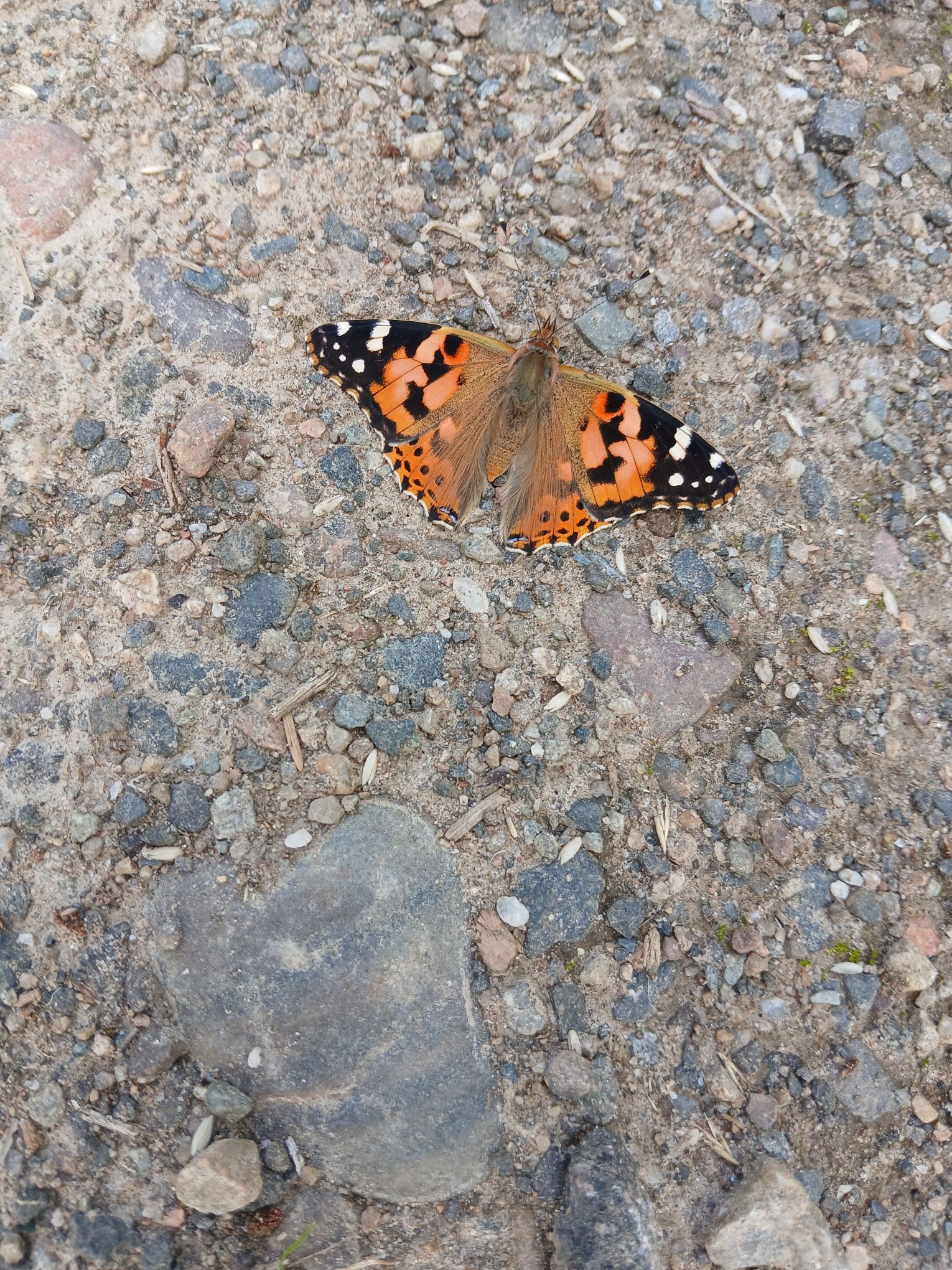
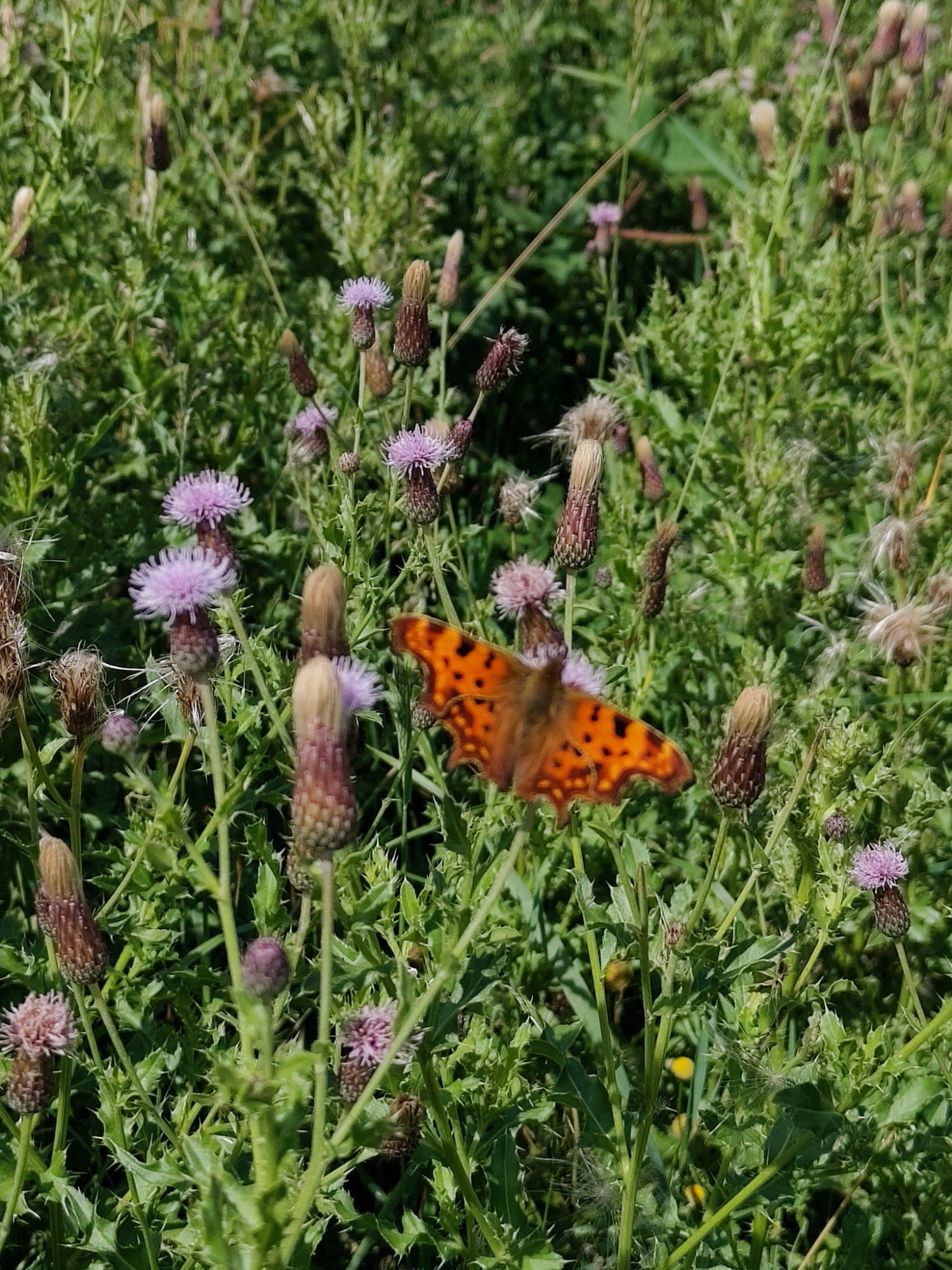
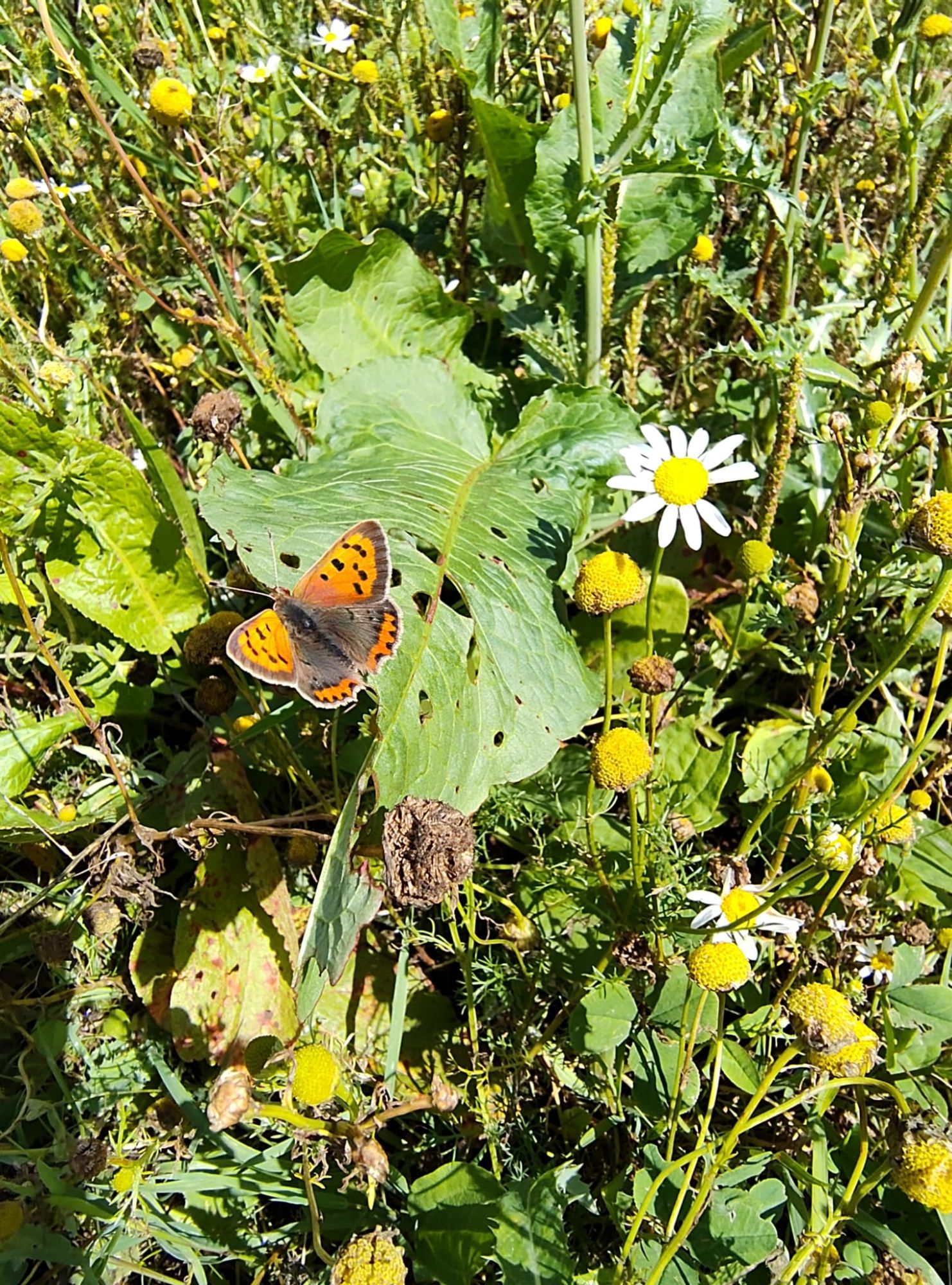
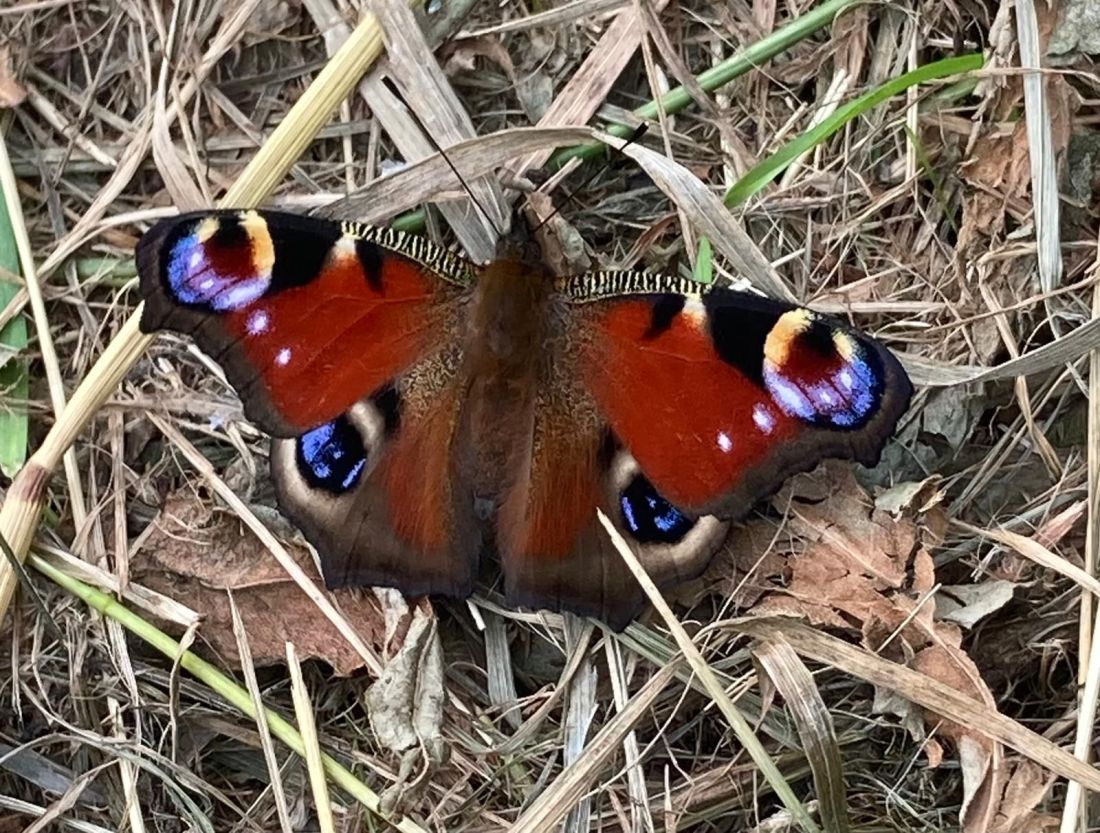
Our local rewilding site (Rewilding Denmarkfield) recorded their highest annual count of butterflies in July, with 3 months still to go, and a wide diversity of bee, butterfly and moth species. In Taymount Wood, a wonderful wild flower walk organised by West Stormont Woodland Group and Perthshire Society of Natural Science culminated in an experience that could only be described as magical – walking through a woodland glade full of knapweed and thistles in flower, where the butterflies and moths were way too many to count, too glorious and moving around us in clouds, to identify. Many were quite common – Peacock, Red Admiral, Meadow Brown – and some less often spotted – Small Copper, Dark Green Fritillary. But identification becomes irrelevant when a Peacock Butterfly is sitting on your arm for ages and you realise just how astonishingly beautiful are those iridescent “eyes”, the sheen of gold and blue and glistening terracotta, the soft hairs around a plump abdomen, the unreal curliness of the nectar-seeking proboscis. In my own garden, where a holiday, a heatwave and a strimmer breakdown caused a dusty meadow of flowering grasses to replace what we used to pretend was a no-cut May & June “lawn”, Meadow Brown butterflies have moved in, and a cloud of micromoths whenever you try to walk through it.
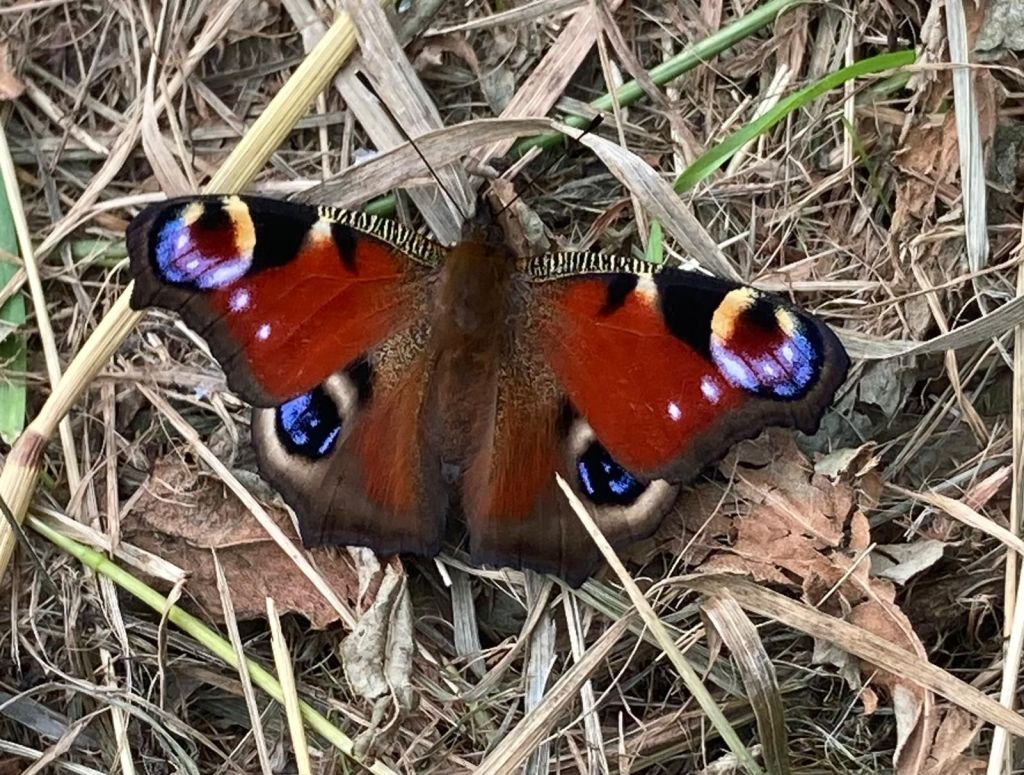
Factors I’d like to think have helped: the careful meadow management regime at Denmarkfield; partly deliberate, partly accidental non-interventions by gardeners like me; WSWG managing to persuade Forest & Land Scotland NOT to cut the path edges just as the knapweed was starting to flower as they’ve done before….

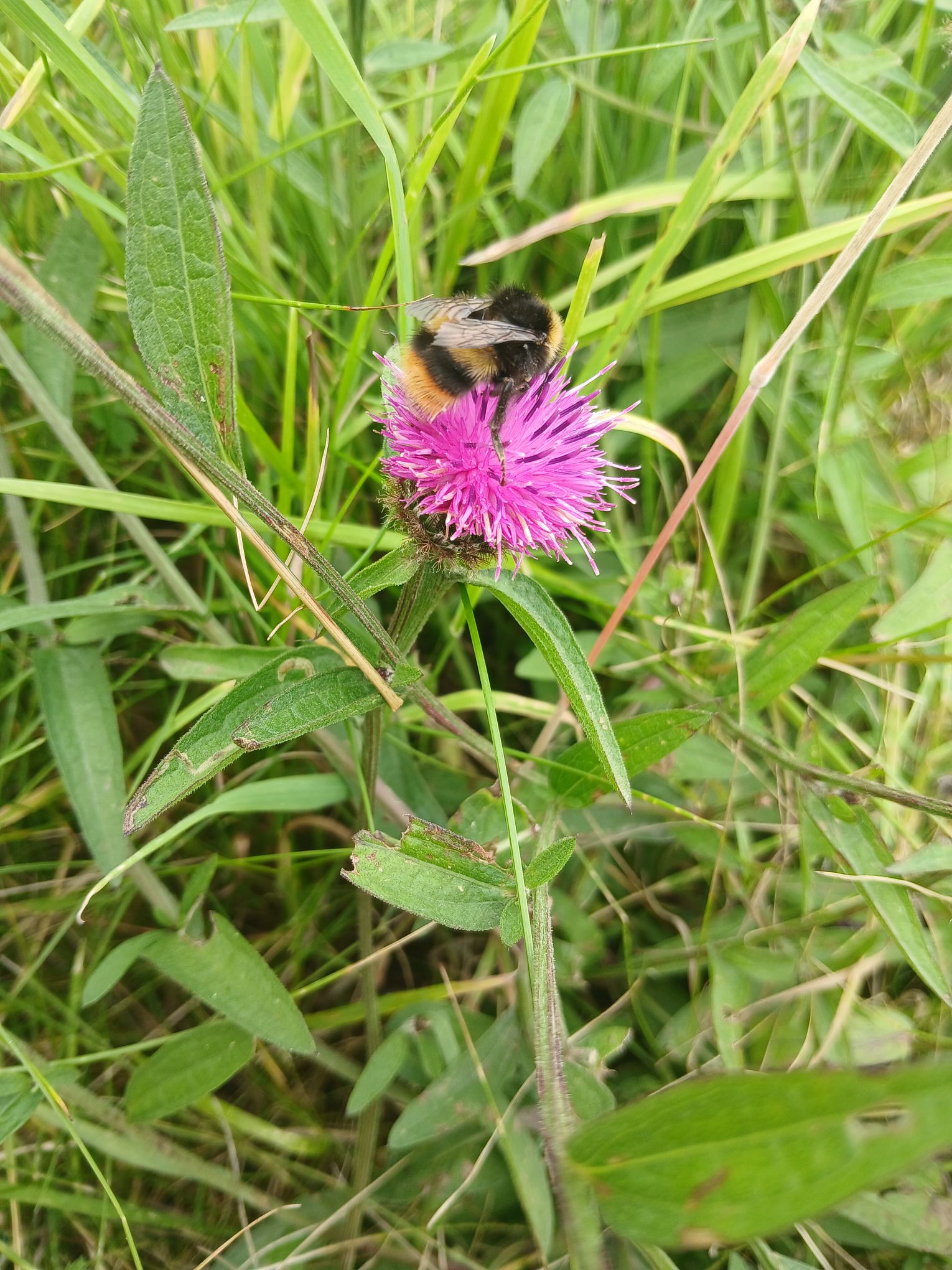
Last week, I did my monthly Bee-walk, for the Bumblebee Conservation Trust. One of my Walks starts conveniently at my front door and this time, I found it hard to get out of the garden! Apart from spotting male Field Cuckoo bumblebees for the first time on the elecampane, there were so many bees on wild oregano and fascinating insects I wasn’t meant to be recording to engage with – as well as an unexpectedly large wasp byke in my comfrey-tea bin to escape from! I nibbled the first blackberries on my way; there has been such a huge crop of Tayberries, currants and gooseberries I haven’t begrudged the blackbirds a share of any of them. And the apple, pear and damson harvest will be spectacular soon.  I continued my Bee-walk, noting, as usual, less insects in general around highly-managed arable landscapes. But the rosebay willow herb in full flow along the verges literally buzzed. It had attracted more Field Cuckoo bees, and all a neighbour’s honeybees. Last month, wild raspberry flowers were the main attraction on this section. Now, most of the raspberries themselves had been eaten, by birds, beasts or humans – although those left, slightly fermenting, were being enjoyed by various shiny flies.
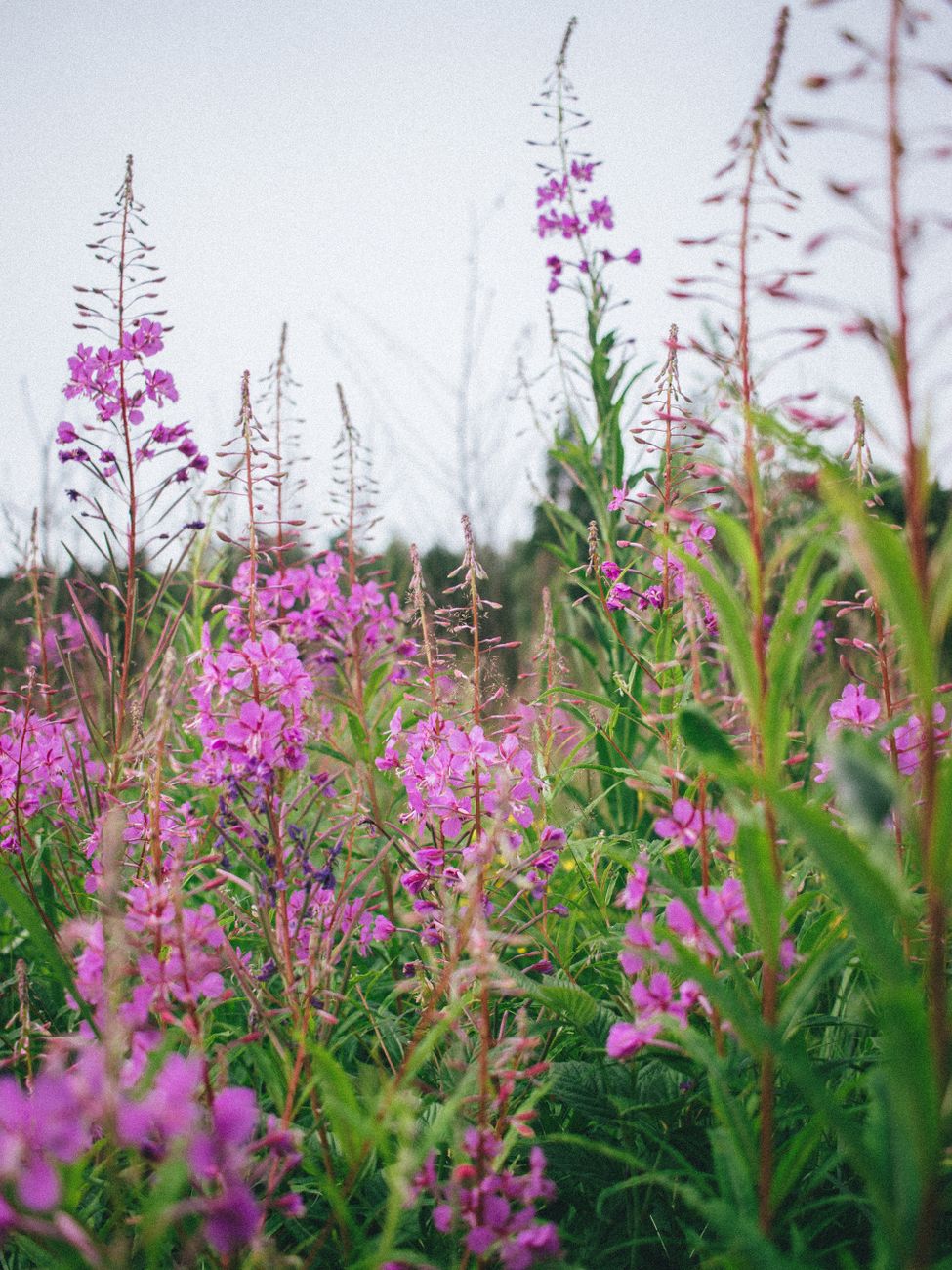
Photo by Kris Mu00f8klebust on Pexels.com

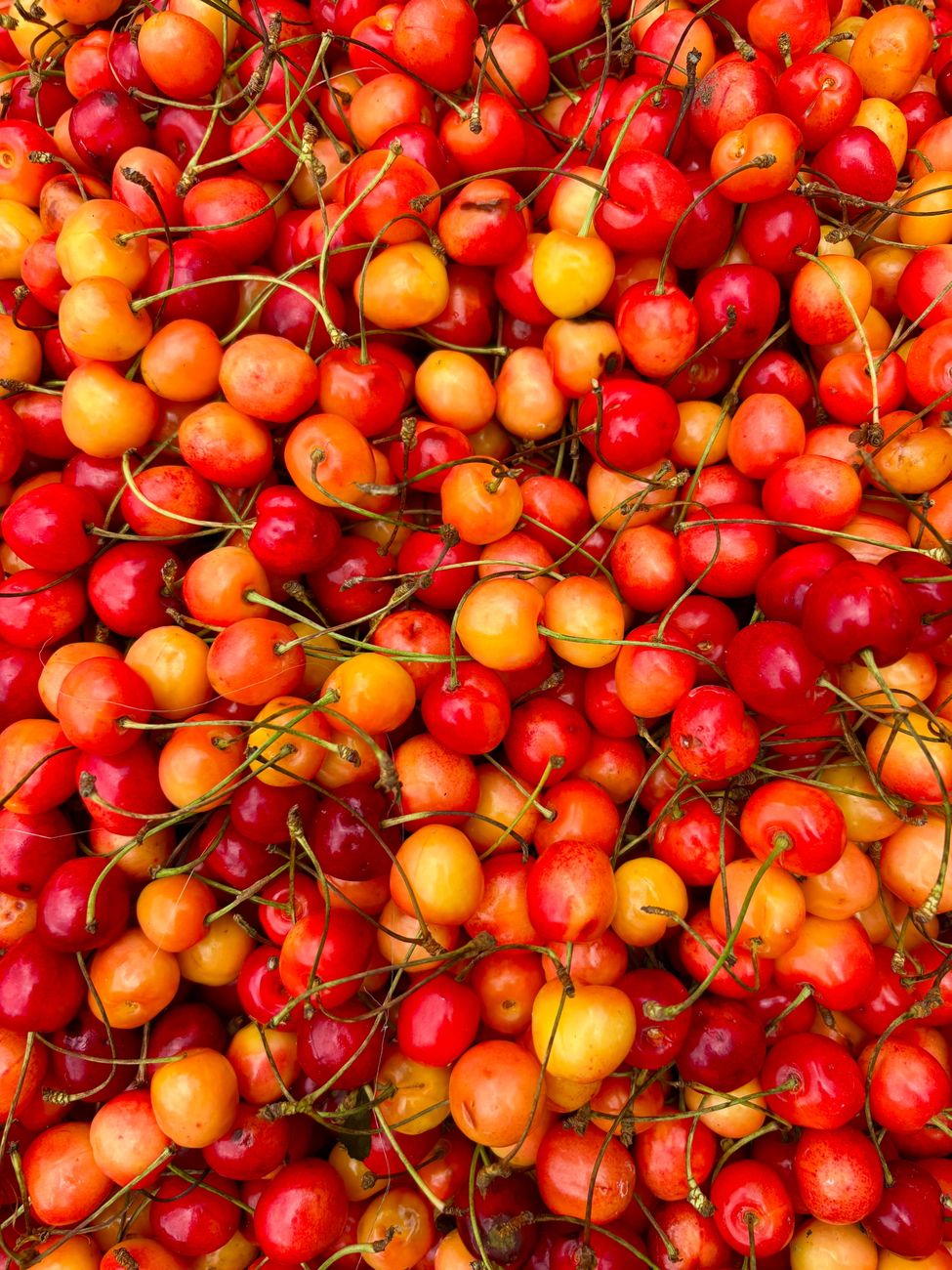
It was a beautiful afternoon, so, bee walk finished, I kept on walking, along the narrow path where I foraged delectable, dripping-sweet gean cherries from the overhanging branches of self-sown wild cherry trees. Gean cherries can occasionally be disappointing – and they are always a quarter of the size of “shop” cherries – but these trees are special. Some produce rich, power packed black fruit, and some crisp, pale red and white ones – all are good. I ate all the ones I could reach by jumping and grabbing a branch, but my high-jumping skills have always been limited. On I went, past stands of feral and wild gooseberries in the hedgerow shade, to hunt speculatively for mushrooms in the wood and sit on my favourite log watching trees grow and fall, and seed swell. There I bumped into Sammy, a neighbouring dog, and his owner, Chris, who luckily is about ten feet tall. We walked back together, exchanging nature notes and helping ourselves to the high-up cherries, spitting out the stones into the hedgerow as we went along.

I thought about connections. Such a buzz-word these days! Do you have a connection? Are you well connected? What kind of connection do they have there? Have you lost your connection? These were the connections I listed:

Between the insects and the flowers, causing fruit and seed
Between the fruit in my garden and the birds who get half of them
Between me and my neighbours, who share the fruit in our gardens, and the jams and jellies we make
Between the animals – squirrels, birds, deer, mice, me and Chris – who eat the fruit and disperse the seed to grow more trees and bushes
Between the trees, bushes and flowers who evolved to survive  through pollination by insects and seed dispersal by animals
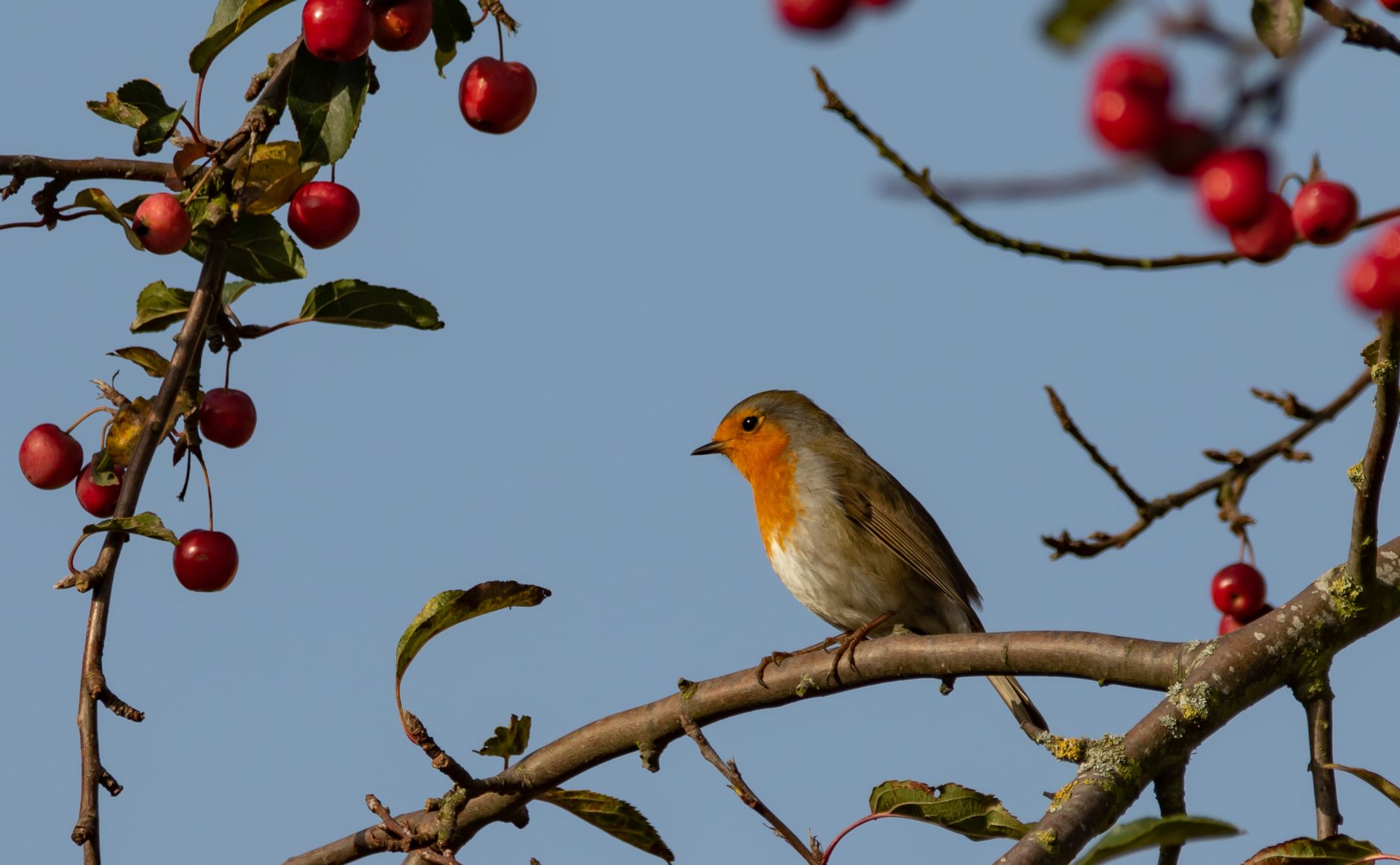
Photo by TheOther Kev on Pexels.com

These are just some of the vital connections we need to enshrine in our consciousness. And, perhaps to a lesser degree, but in a way that has become necessary, even the high-speed broadband and fibre connections that inform, that make citizen science relevant, that create dialogues, promote regenerative ways of thinking, change the mindset of turgid quangos and (maybe) some stuck politicians – and which bring these ramblings to your inbox.

Nature IS shouting – let’s keep listening.
Reeds, Rushes and the Spaces between Trees

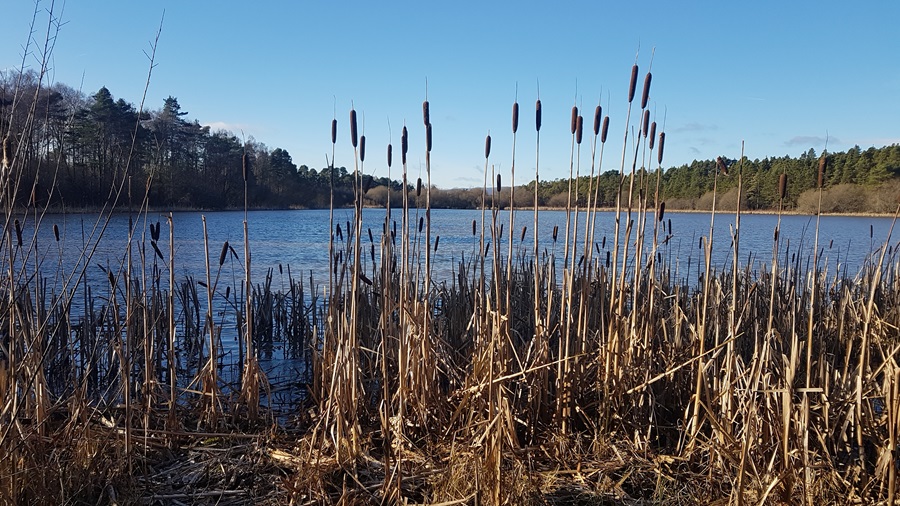
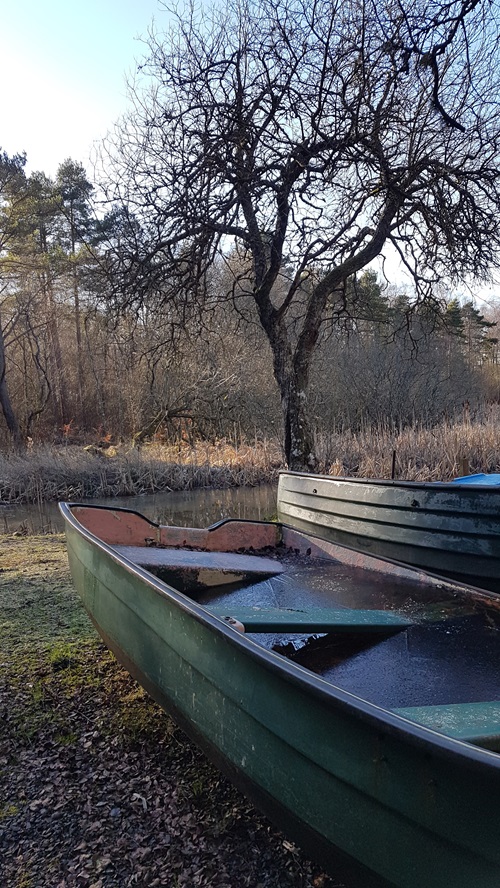
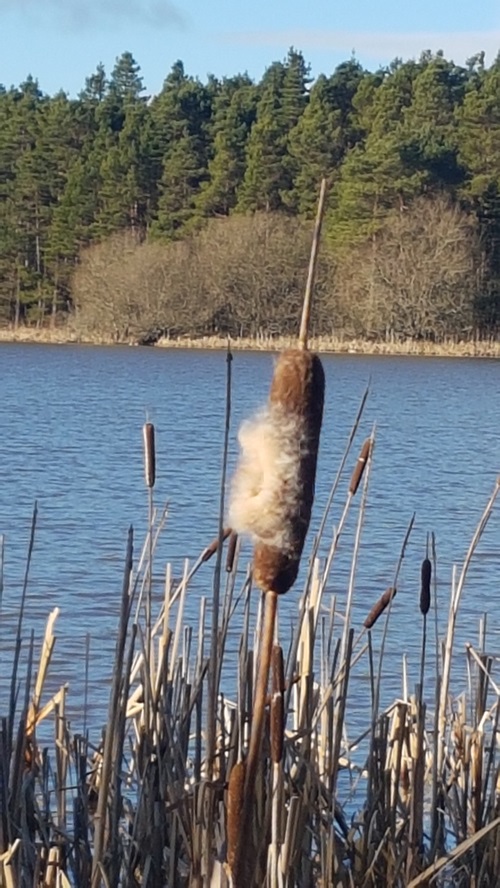
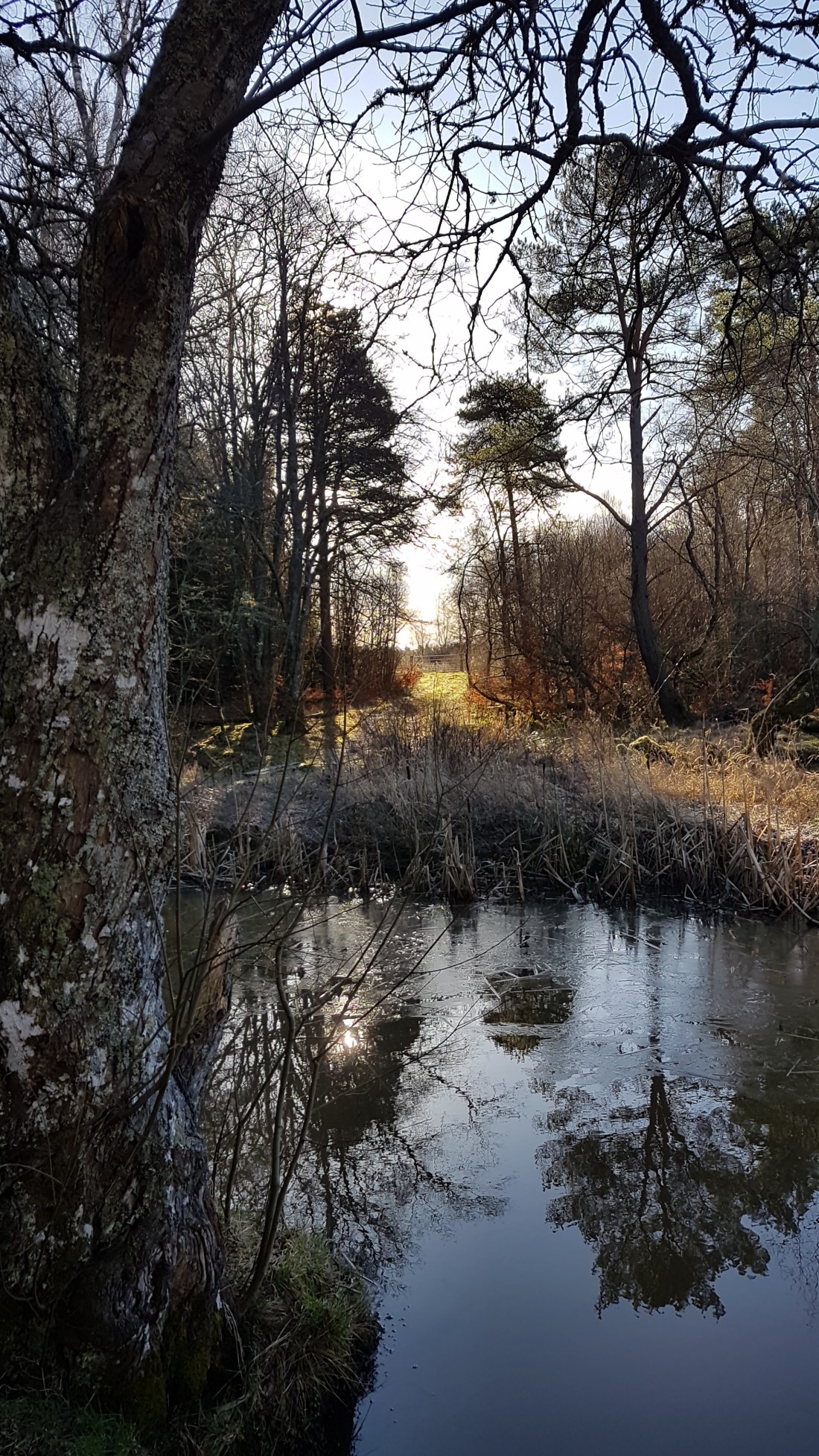
On a quiet day of winter sun and muted activity from woodland birds, I arrive at King’s Myre again. Reed Mace flowerheads from last year cluster around the watery margin, clogging the channel by the little jetty where the boats wait and fill with rain. We used to call them “bulrushes” where I grew up, and it wasn’t till Mr. Illesley, in Rural Studies, enlightened us all about the differences between reeds, rushes, sedges and grasses that I ever learned their proper name– or that Reed Mace is related, but none of these anyway!

It is the same plant known as cattails in America, and valued throughout its distribution for its edibility. The rhizomes – root like underground stems, or underwater ones in the case of this plant – are starchy and filling when baked. They can also be dried and ground into flour, though I never have. The pollen from the male flowers can be used as flour too, or to thicken sauces and soups. It has many medicinal uses. But the best part is the emerging shoot – which will be appearing above water level any time now. Cut, cleaned, steamed, baked, sauteed – it is a lovely spring vegetable to rivals asparagus or bamboo shoots for flavour and versatility. You can keep eating the shoots until the flower spikes start to emerge, you don’t need waders to forage it, and, as Reed Mace is actually quite an invasive plant, it’s pretty sustainable to nibble bits off the clump! Last year’s flowers are starting to burst apart now, revealing the dense, cottony-fluffy seedheads inside.

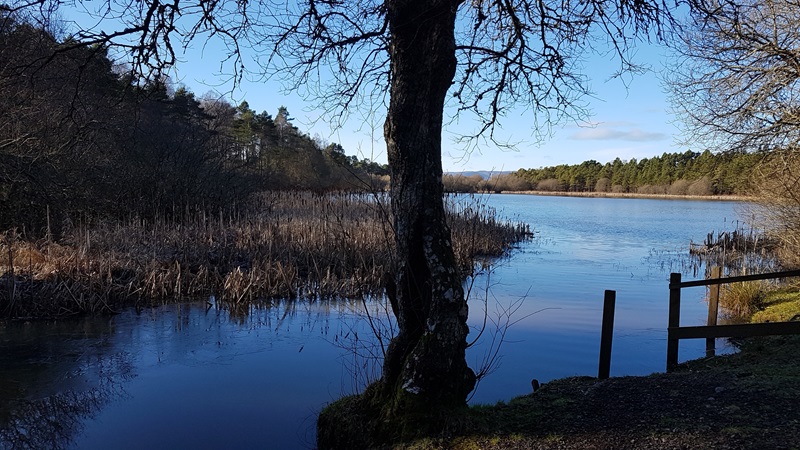
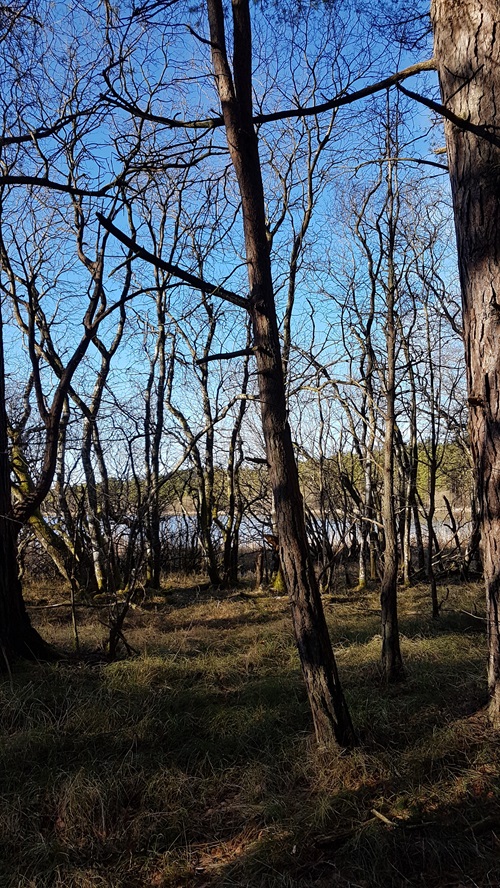
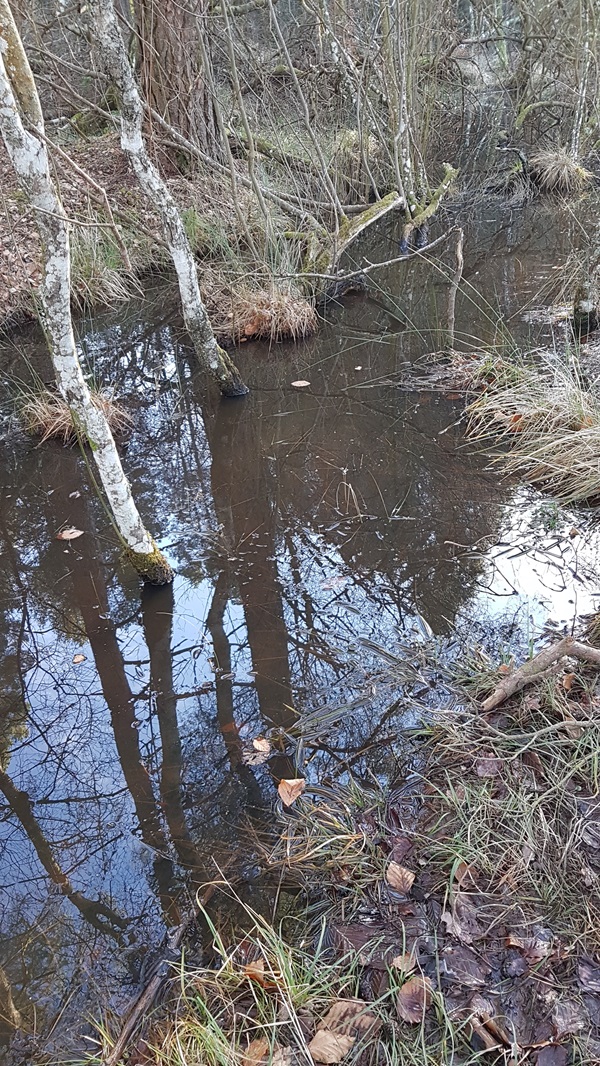
I creep through the spongy, saturated margins of the little loch at the heart of the King’s Myre, to peer through the cattails to see what wintering birds are on it today. Goldeneye, a few gadwall, mallards, a coot, typically swimming against the tide of the rest, intent on his own adventure. No sign of the swans, too early for the osprey to be home yet. In the damp woodland, waterlogged alcoves and scrapes, from which spiky, angular trees grow erratically, wait for frogs and toads to arrive for spawning. Between bare branches, multiple trunks and stems and a storm of tiny twigs, the blue sky seeps as if caught in a vast, arboreal net, reflected in patches of water.

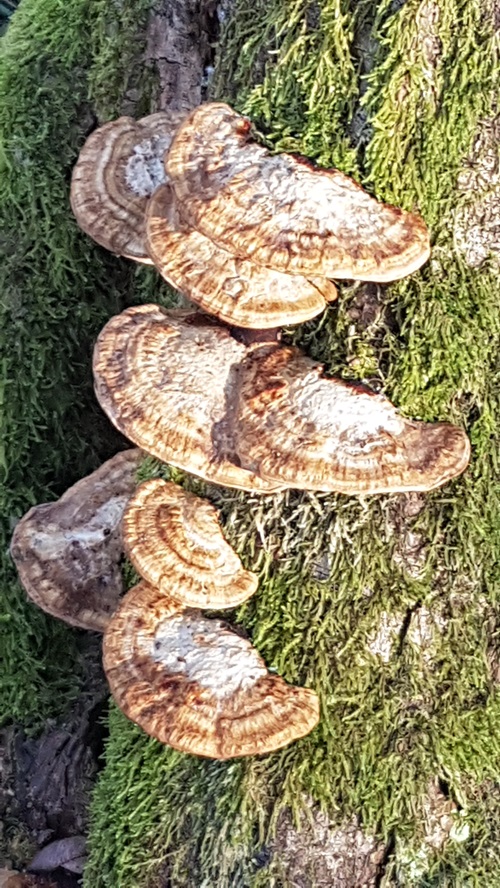
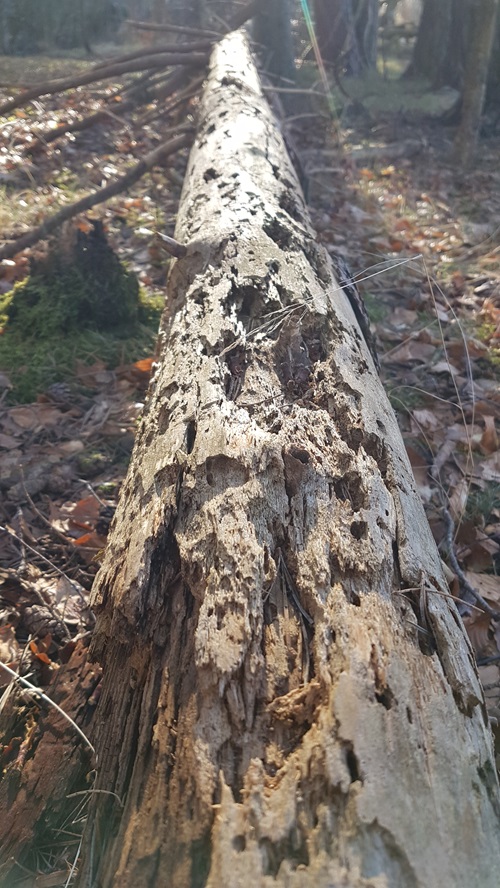
Bracket fungi show off their smug Cornish-pasty smiles of concentric bands, on wood they share with moss and lichen, and a thousand invertebrates. Spread across the leaf-carpeted floor, long-dead logs, un-barked, silvery, yielding, are home to thousands and thousands more, riddled with holes and channels and hidden tunnels in the fungus-softened wood. On cue, somewhere in a dead tree, a woodpecker begins his first tentative drumming and drilling.

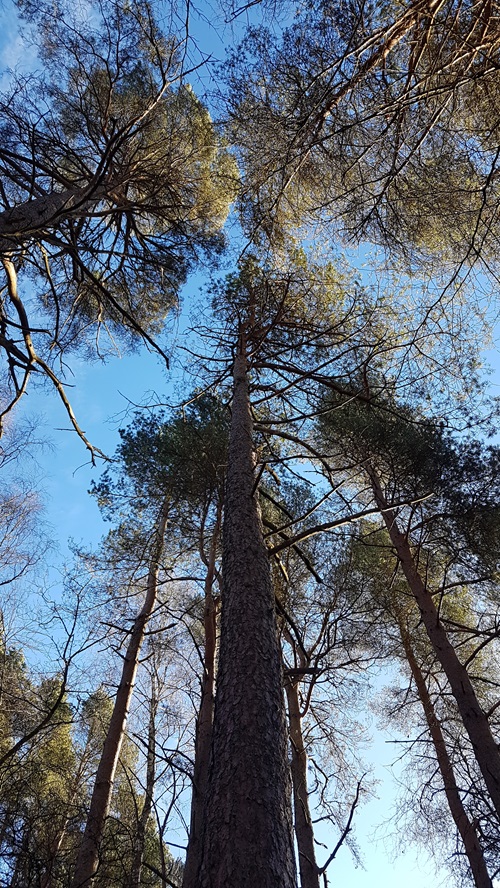
I look up into the Scots Pines, their narrow crowns dancing around each other like polite or nervous teenagers, and see the shapes of jagged sashes of sky, so clear, so blue….

Look up, look through, look between – there is much to see. Or is there only sky?

“Wild Flowers of the Woods” – a small selection from Five Mile Wood!

Although I was born and grew up in a London suburb, awareness of nature was hammered into me, partly by my family, partly by primary school, where the “nature table” was obligatory in every classroom and was always piled high with artefacts, and partly by the nature books that lay around the house. It was while poring over these behind the sofa that I began to learn my flowers.

My favourite was entitled “Spring Flowers of the Woods”. To start, I relished the beautiful hand-painted illustrations, and, later, when I read that the woods were full of flowers in spring BECAUSE leaves were off the trees thus allowing light for the flowers to open and the pollinators to amble in, it was my first glimmer of ecology, and the entangled ways of nature. I came to recognise and seek those exquisite, archetypal spring flowers such as primrose, wood anemone, wood sorrel, mercury and violet.

Wood Sorrel and Violets

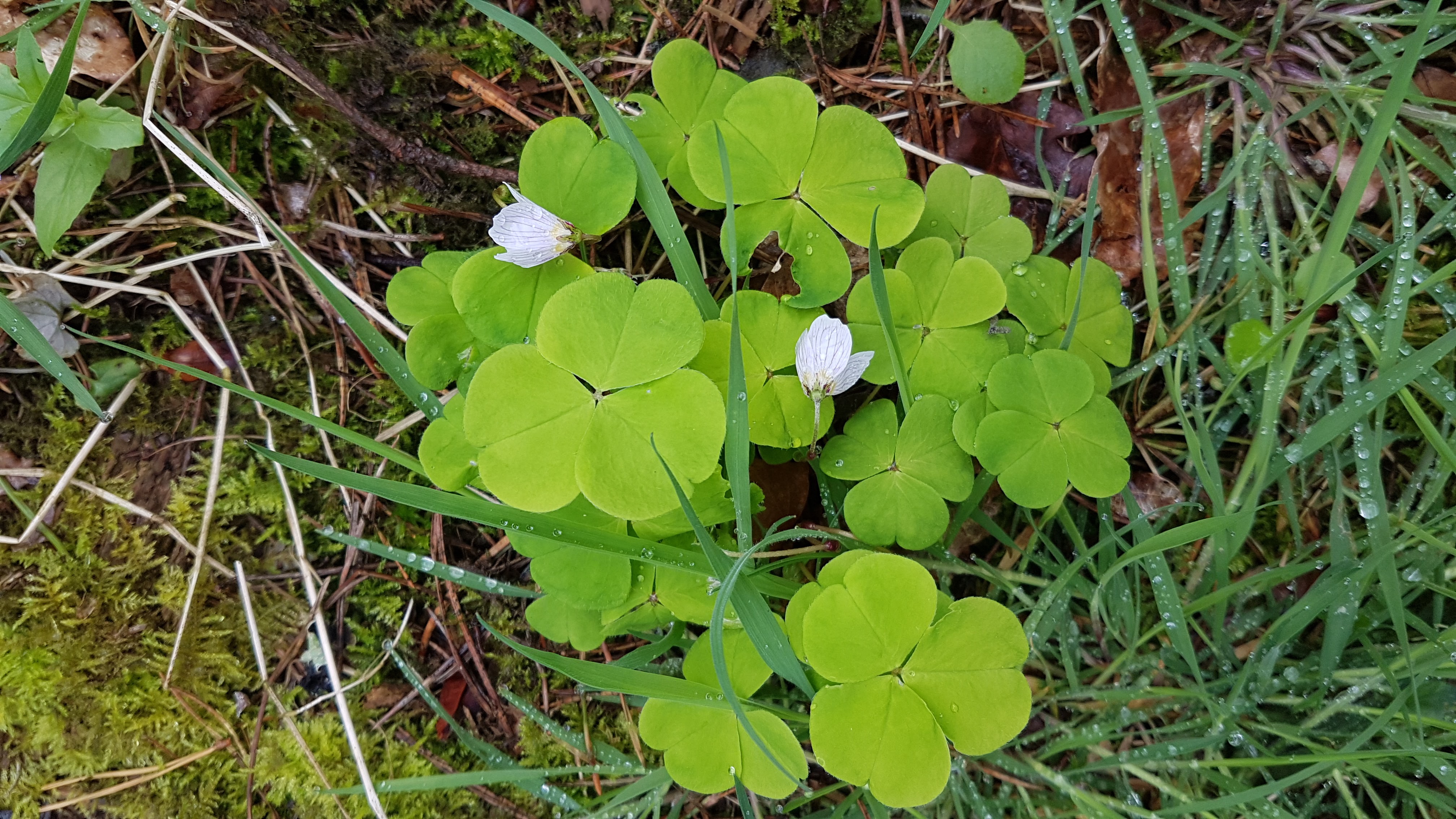
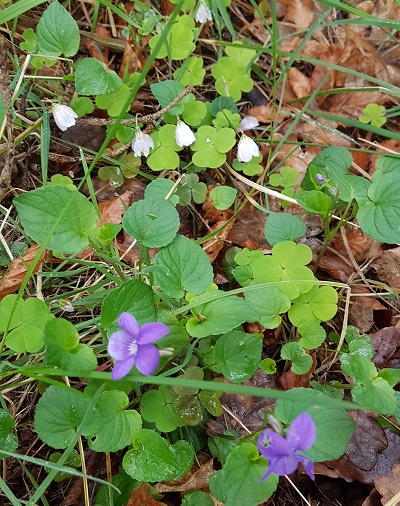
Today in Five Mile Wood, on a damp and overcast day, I greeted some of them. In the broad strip of mixed broadleaved and conifer woodland to the south, violets a-plenty sprinkled themselves over the dead leaves of birch and beech, growing on old stumps and under windthrown trunks. Sometimes they congregate with Wood Sorrel, whose edible, trifoliate leaves draped from spindly stems, and finely-veined, nodding white flowers are one of the (many) most beautiful things on earth. Wood Sorrel grows here only in scattered communities. I have the impression these colonies are networking towards each other, perhaps via the hidden telegraph of soil-fungal communication.

I have not yet found Wood Anemone here, which is surprising, but intriguingly, there is the merest germ of a bluebell wood, if you know where to look, and they are beginning to flower. (photos were horribly blurry, and I shan’t burden you with them. Everyone knows what bluebells look like.) Bluebells are said to be a sign of ancient woodland (which Five Mile probably isn’t) or at least a settled woodland ecology. I do not wish to unsettle them!

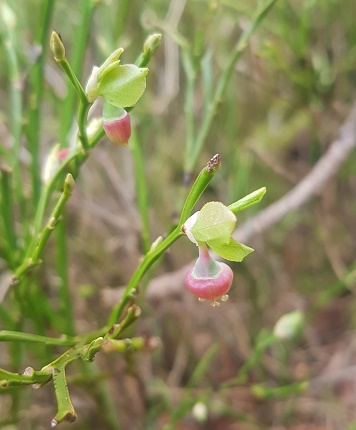
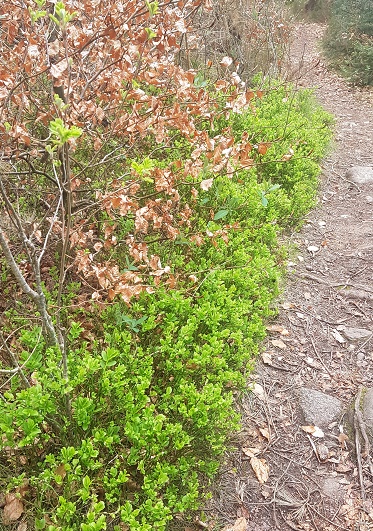
As the ground rises, that ecology morphs into something more akin to acid heath (there are certainly signs that at least part of the central area once held deep peat, signifying raised bog, perhaps). Two flowers in this habitat – not stars of “Spring Flowers of the Woods” – gave me great pleasure. One was the blaeberries that line the paths and snuggle up to trees here. They are now in hard-to-spot flower. Tiny, beautiful dull reddish bellflowers (look closely!) which will turn into the fruit of this our native blueberry and provide good walking snacks in the summer. It’s a treat to see this wild harvest crop doing so well; it was somewhat decimated by the last clear-fell. (Do we understand well enough the changes we force on a landscape by our actions? Do we care enough?)

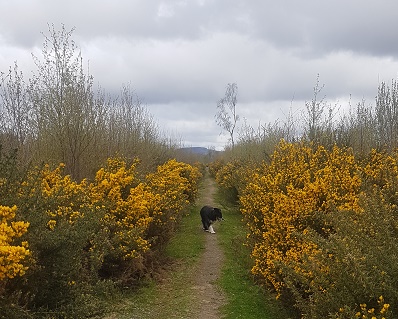
The other is gorse. I have a very soft spot for this riotous, prickly native shrub. So many plus points does it have: nitrogen fixing, baby tree protecting, wild tea providing and a redoubtable habitat for spiders (see here) among others. What’s in a few scratches? A week ago, cycling round the wood at speed (to be honest, anything over 6mph is “at speed” for me even on an electric bike), I did incur a few scratches….. but it was like moving through a mist of warm coconut, the delicious gorse flower smell made powerful by the bright sunshine and muggy air. Today, it was fainter – but thanks to the slightly unnerving vigor with which gorse is spreading across the path, I could still catch it. Divine!

Gorse-intoxicated Border Collie

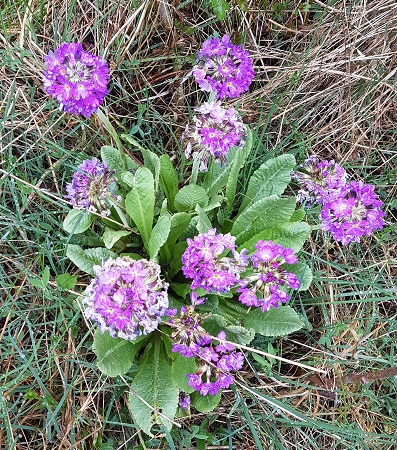
Primroses seem to be absent, as well as the wood anemones, but there was this unexpected relative – Primula denticulata, the Drumstick Primrose or, locally in Angus, the Kirrie Dumpling. Native to Himalaya, this has not, I suspect, got here on its own! If I were a hard-line ecologist, I’d uproot it (and find a home for it in a garden). I’m not, but there might be a good argument for collecting the seed before it spreads itself about. Or not?

Primula denticulata, the Kirrie Dumpling

When you know winter is coming…

The turn of the season is felt, not so much as a drop in temperature or the way the need for warm socks and waterproofs creeps up on you, but in the way the woods smell different. Decaying leaves, leaves still on the trees but for whom decay is imminent: the smell, for me, of being 11 years old and at a new school, where our introduction to Biology was the invitation to compile a Biology Scrapbook over the course of a year. Diligently, I collected all those leaves on the point of rotting, pressed them in encyclopedia volumes, and learned, when I next opened the books to mount them, the subtle distinction between the smell of sycamore, poplar and oak leaves in autumn.

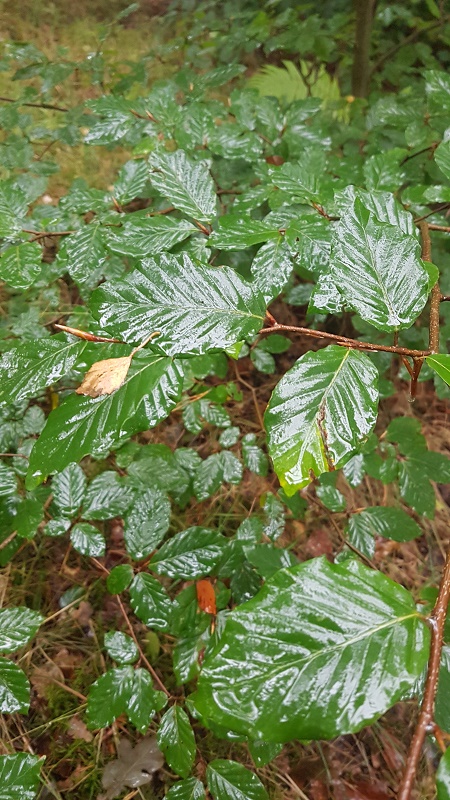
Today, a soggy Saturday in October, Five Mile Wood smells again of the Biology scrapbook. Weaving in and out of the olfactory hamper of autumn comes the odour of wet grass, heavily trodden, and the varied aromas of dozens of species of fungi, seen and unseen. It is raining, softly but insistently, the rain bringing its own subtle influence on how each smell is perceived, like a wash applied over a freshly executed painting. Beech leaves, nowhere near inclined to fall, glisten with rain. I am challenged to keep the rain from running down my neck, challenged by the chill in the air, challenged by the distraction of mushrooms, all of which breathe of magic, and the resulting lack of time that cut this walk a wee bit short.

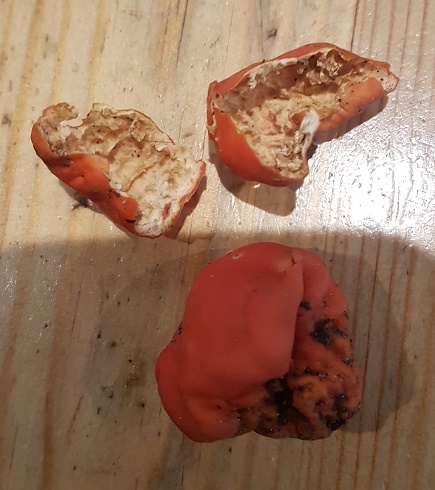
I won’t bore you with more gratuitous gloating about the basket of edible mushrooms I took home to dry or make into fungus and ale pies, nor with more photos of the ones I can identify! But today, the woods presented me with an excitingly unknown fungus, the likes of which I’d never encountered in decades of mushroom-hunting.

(Actually, the woods do that every time I go foraging, for there are many, many mushrooms I cannot differentiate. But as I know they’re not on the “edible and good” list which is tattooed into my brain, I indolently dismiss them as “small brown jobs”. Which they usually are.)

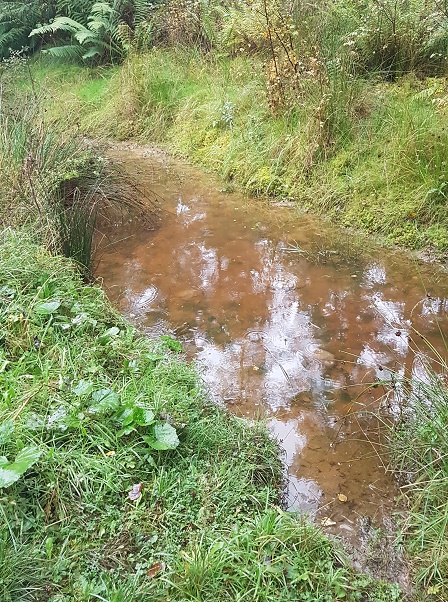
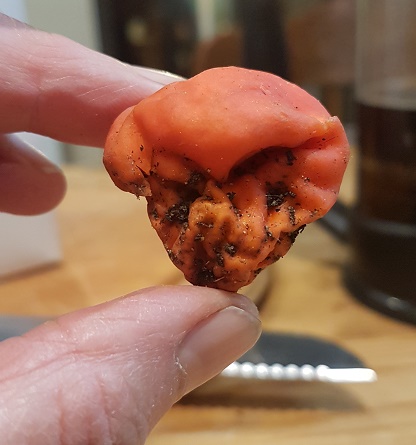
Today’s find was different, a real unknown unknown, to quote Donald Rumsfeld. Bright orange-red balls popping up through the grassy banks between the path and the ditch; I first mistook them for discarded tomatoes. But they were fungi, no question, and when I cut one open to help identify it, it was hollow, with pale coloured ribbing inside. I had never seen anything like it, but as it was so distinctive, I expected identification to be straightforward.

So far, I have not found this species in any of my books, and have drawn a blank from the social media mushroom groups from whom I begged enlightenment. Someone said they’d once seen something similar, but yellow, only got distracted by all the edible ceps nearby. Easily done! I have contacted the Tayside & Fife Fungi Group, and wait in hope. I will find out…. Perhaps someone reading this will have the name, and be laughing at my ignorance?

Inside and out….

The Long Way Round to Taymount Wood

The Pathfinder

We met up at the Taymount Wood car park, Linda and I, put on our boots and turned away, not into the gate. This was to be the long road to the woods, a circular walk via the disused railway line which once ran as a ponderous branch from Stanley across the River Tay to Coupar Angus. The embankment is reached from the Taymount Mains farm track, and you then head towards Kinclaven and Ballathie, across open country, under disused bridges and past a little railwaymen’s shed made of sleepers with a brick chimney still in place. Although today’s challenge for us was to find and walk the narrow path through the northern finger of the wood, the line itself offered a few challenges – a chilly wind and stretches of water where the rains of March hadn’t percolated the poorly-drained soil.

You turn north-west away from the line before you get to the grounds of Ballathie Hotel, crossing the road and continuing north up a rough track beside the Old Smiddy. The track goes past several houses and in the past, we’d stuck to it, until it vanishes at a farmhouse. Then we’d scrambled witlessly through fields and fences and bits of scrub till we arrived, somehow, on a track in Taymount Wood. This time, we were determined to find the “proper” path. So, we left the comfy track when it turned the bend and continued up to the edge of the wood. People had been this way, but not many, and it wasn’t clear how far in we should go before we turned left. Google satellite was remarkably unhelpful.

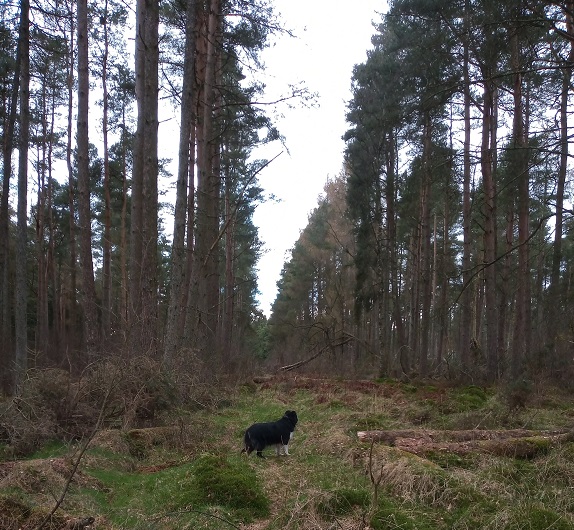
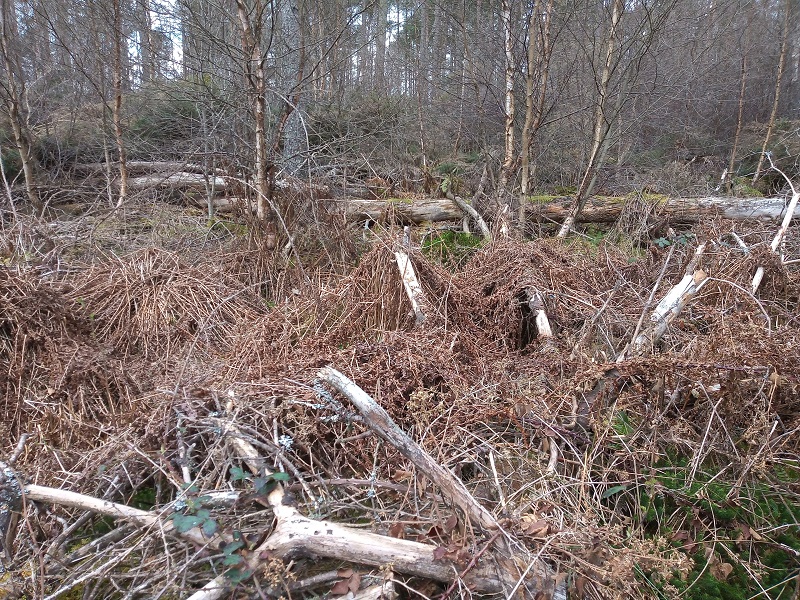
Dogs have many uses. Everyone thinks of companionship, protection and exercise machine, but an intelligent dog is a wonder at Finding the Path. While we stood wondering and wafting around, Jed set off into the unruly herbage with a look of collie dog purpose, nose to the ground. Sure enough, when we followed, there were the vestiges of a footpath. It doesn’t take many human footprints – and barely one canine print – to inform Jed this is The Way to Go. We continued, scrambling after him, and he didn’t lead us into any blind alleys. At times, we were on the point of losing faith, but then the path would reappear, on the other side of a boggy stretch or a tangle of bramble and brushwood.

There is a path here somewhere….

Wind-throw had put up many of the barriers that challenged us. I discovered I’m at an age where I’m a bit stiff for limbo-dancing under fallen trees, and my sense of balance (never my strong point) for climbing over them was precarious to say the least. There were points when we even doubted the dog, but then to our great surprise we encountered someone going the other way – an ecologist doing a survey of small mammals for West Stormont Woodland Group no less – who assured us that a. we were on the path and b. it was passable, if a tad wet in places. Well, we certainly found the wet places and finally stumbled out onto the hard forestry track that would eventually take us through the main wood and back to the car park. The challenge wasn’t quite over – several metres of scratchy, mean-minded gorse had colonised the track to meet in the middle, and we suffered quite a few scratches and tears before we were through it – noting jealously how impervious the coat of a collie dog is just about anything.

Common Chiffchaff (photo Bishnu Sarangi, Pixabay)

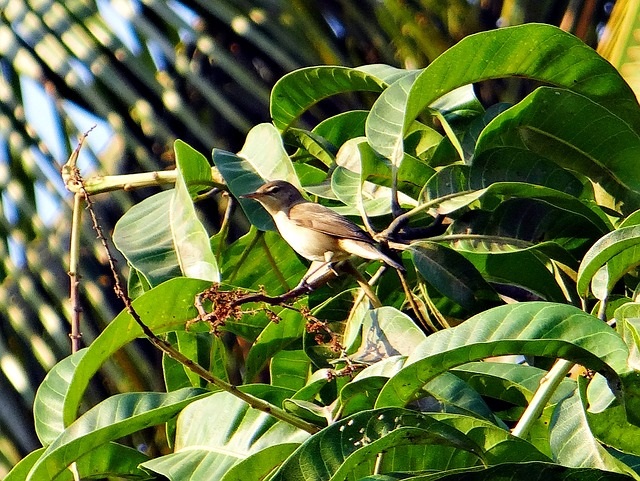
And the gift from today’s walk? There were lots – newly unfurling larch leaves, frogspawn in a drowning bit of track, skeletons of last year’s ferns, the beautiful vertical grandeur of the trees that hadn’t blown down, some chestnut brown bracket fungi left from the autumn. But as soon as we entered the wood on our optimistically rediscovered path, we heard the chiff-chaff call nearby. The earliest of our summer warblers to arrive, this is a small brown job of a bird, indistinguishable from willow and wood warblers unless it keeps still and stays a metre away from you. This one didn’t – they never do – but the call, exactly like the bird’s name, sets it apart. We never saw our little warbler, but the mocking “chiff-chaff-chiff-chiff-chaff” was never far away. It was, I am sure, laughing its little head off, but we chose to find it encouraging. When we found ourselves safely “out of the woods” and into the wood, it went off to scoff at something else. It made us appreciate all over again the wide range of habitats the woods provide for many bird species, residents and summer or winter visitors. I look forward to more birdsong in Taymount Woods this spring.

Find out more about WSWG and out hopes for community ownership of the woods at weststormontwoodlandgroup.scot