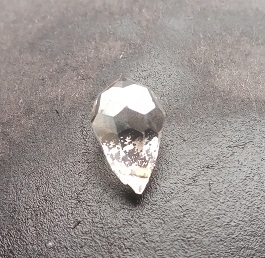
When I was at primary school, the all-consuming craze among the girls was collecting beads. Everyone had a collection, and everyone brought their bead stash to school for swapping and gloating over in the playground. Beads were sometimes acquired from the broken necklaces of aunts, older sisters’ discarded best dresses (sequins were in vogue), theft from mothers and through swapping. Crystals and glass beads were everyone’s favourite, which we called diamonds (or rubies, emeralds or amber, depending on the colour of the glass). I had (oh my god, I still have) a “diamond” dropped by the Queen. Well, I found it in the Mall, when my sister Barbara took me to see Buckingham Palace. She assured me the queen must have dropped it from her coach when waving from an open window. To avoid being hustled for it by the Bead Bullies, I left it at home on schooldays. Most usually, beads were collected by going round the streets and playgrounds picking up those dropped by others. There seemed to be no shortage, but some girls made certain of it. My best friend Pamela (who had a nasty, vicious streak) would run about, “accidentally” barging into gaggles of girls peering into their open bags or boxes of beads. She’d even help to pick them up – but pocketed the choicest, and there were always plenty no-one spotted rolling away. Keep your eyes to the ground long enough, you’d soon build a collection.
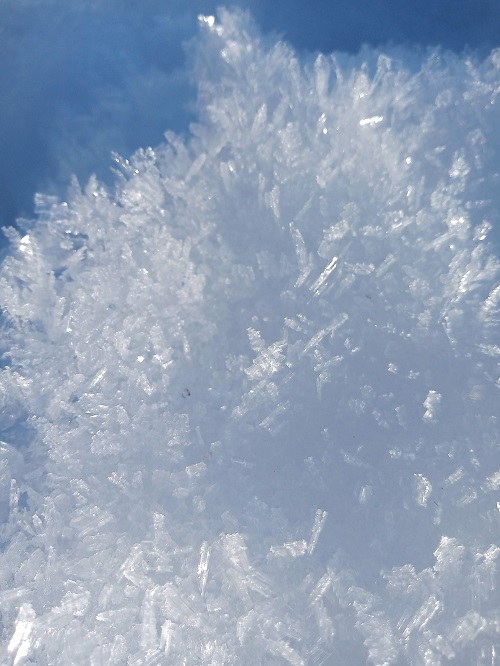
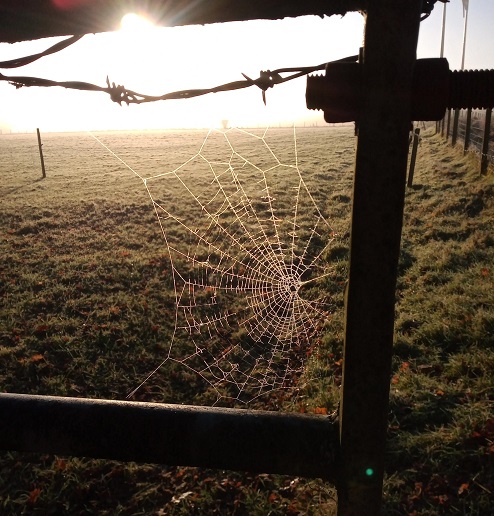
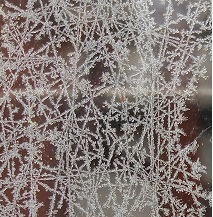
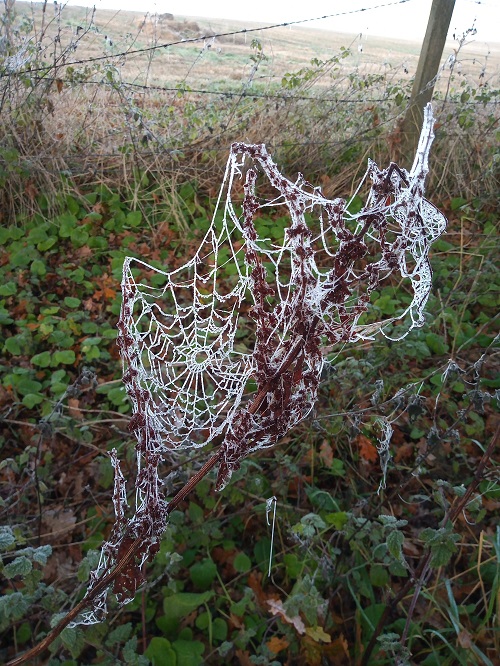
I don’t know at what point I decided to look up at the stars rather than down at my feet, but when I did, I realised the most precious jewels were the intangible ones that faded or shape-shifted before your eyes. Recent falls of snow, melting, re-freezing and glittering in cold, rare sunlight have reminded me of the times as a child when I ran across dew-covered lawns, chasing the rainbows in the water drops. If I stopped running, and swayed gently from side to side, the colours of these so-precious gems changed. But if I touched them or moved toward them, they vanished. Then there were the frosty mornings when my mother got me up early to go round the garden with her, finding exquisite frost patterns on leaf and glass and stone, shimmering in the early sun. Or the first foggy morning of autumn, when every spider’s web was be-jewelled and bewildering in its complexity and simplicity.
Diamonds are famously said to be “forever”. What a nonsense. They’re fairly nice to look at, and they collect rainbows in the same way glass or water does, but I wouldn’t pay money for them.
Collecting snowflakes and making mental snapshots of them before they melted. The fractal patterns of ice creeping over a cold surface. The world viewed through a dripping icicle. The vanishing, slippery uncertainty of the Merrie Dancers, green and rose, across northern skies. Sun on a breaking wave. These precious sparkly things, along with the now-you-see-me-now-you-don’t twinkling of stars as they emerge at dusk or retreat into cloud, these are the jewels of value, the real pearls-beyond price. Ephemeral, transient, temporary. I can’t buy them, own them, hoard them, swap them or sell them, and I never want to try.
I still have most of my schoolgirl hoard! I am sure one day I’ll find a use for them. I’ve strung some onto the Christmas tree or hung them round the garden before now, and forgotten about them. Maybe they’ll be archaeology for someone, some day. Me, I’ll stick to rainbows in the dew. If you see me swaying about in a meadow on a spring morning, you’ll know what I’m doing!
“Diamond” cast my way by QE1 (of Scotland) aka QE2 (of England etc), circa 1964
The mute swans stand in the middle of Stare Dam loch, looking at their feet in puzzlement, as meltwater sluices over them. They bend round to look beseechingly at me as I stand by the wooden jetty, as if to ask why this strange divinity has been bestowed on them, and why they cannot swim in water as usual. Then with determination they undertake a rather slippery swan take-off from whatever the surface of the loch is, and wheel around the trees in the reassuring sky.
The sun roars through into the morning like a rocket. Speed of light. It burnishes the bare trees and their wavering reflections in the loch, shrieks and shatters the shards of once indomitable ice. Water trickles unseen, seeps from frozen ground, sings in quiet rivulets.
An old song burrows its way into my head, and will not leave. The ice is slowly melting. I stand, eyes closed to the sun, and feel the breeze that no longer lacerates with coldness. I hear the whirring of the bemused swans, the first territorial song-stakes of the woodland birds. It seems like years since it’s been here.
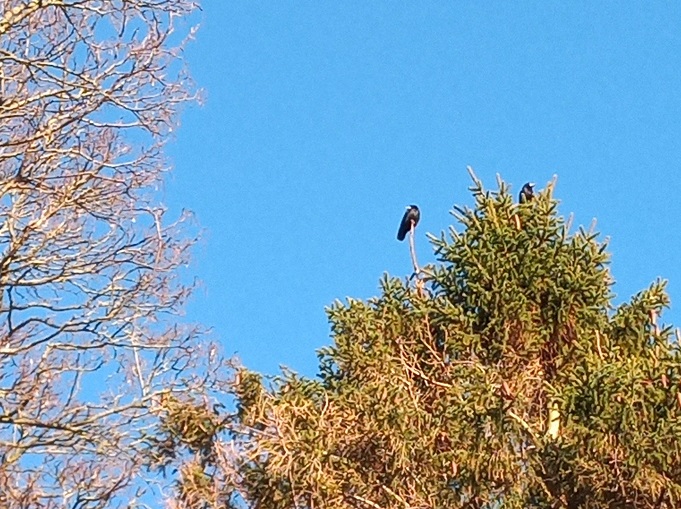
Back at the house, the speculating rooks are at home, sitting in their parliament in the sycamore and debating which of last year’s nests have foundations sufficiently stable to re-use. Twigs start dropping. I think there are more rook members than last year.
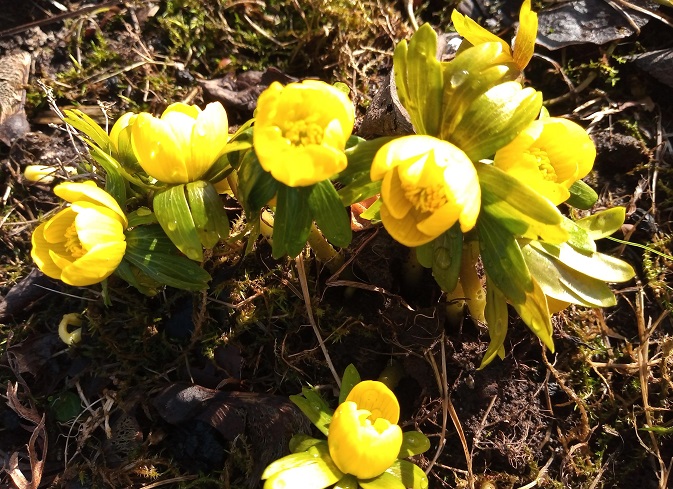
Not all of the calamities and sorrows of the winter will disappear with the snow. But some will diminish, I think, and some will be easier to face. The snow has retreated from bits of lawn. The winter aconites open, and dazzle.
I don’t hate snow, really. It’s just different. It invites us to be indoors, to exclude the cold air, the blinding whiteness, the threats of slip and slide and sink and fall. If it’s around too long, it starts to bug me. Last Friday while reading, I got frustrated by the pinprick of light that seemed to obliterate whatever word I was looking at. Then the pinprick became a ball-bearing, then an expanding ring. A migraine aura. Perhaps going outside earlier when sun on snow had dazzled me caused it. An hour of lying, eyes closed, listening to a dark and frighteningly funny play about the erstwhile president of the USA saw it off but left me uneasy. The sun was gone, and greyness encroached, but I needed exercise, daylight and an antidote to foreboding.
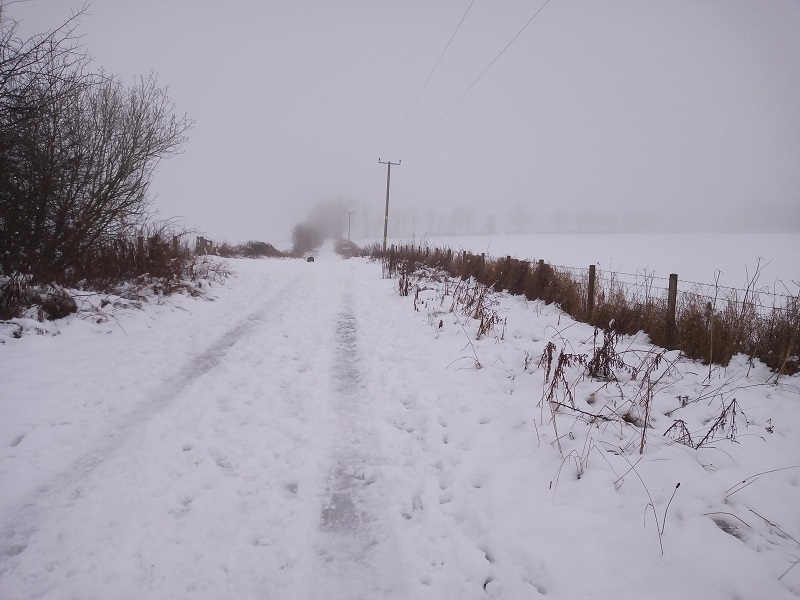
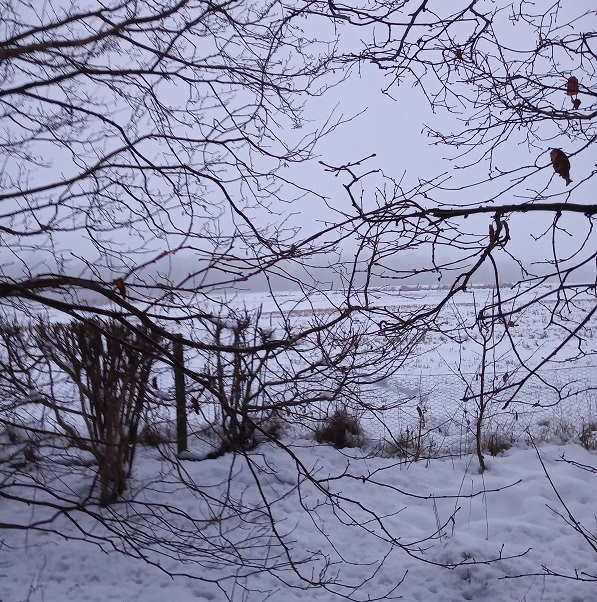
Snow lay thickly on the ground, with an intensity and doggedness that bludgeoned the senses. Dense, white cloud merged into white fields, but it was not easy to know if I was looking at land or air, except where snatches of stubble or deer-scuffed soil peered through a thin, white fog. There were no distant views; everything seemed close, oppressive, heavy and inert.
Vision impaired, a mild headache bleakly persisting, and the opacity of the veil of snow deadening all sound. Small flocks of monochrome birds passed over, silent and anonymous. Solitary grey figures slipped soundlessly across the edges of fields or emerged from woods; we did not acknowledge that we’d seen each other. The sounds I could hear were only in my head; ringing of tinnitus, a faint roaring; result of a year of being virtually locked down and unwilling to self-treat blocked ears after causing an infection with my last attempt.
Seeking light, I went into an open field. The snow immediately came over the tops of my boots and slid down to my heels. I looked for patches of exposed stubble, and followed deer, humans and dog prints to avoid drifts, but they confounded me. The effort of trudging uphill took concentration. I could only see the spot where I would place my next mark on crusty, half-frozen snow.
When I got home in the dim, shrouding dusk, I was surprised to see the hens still out. I stepped into the polytunnel to knock snow off the top from inside. The sight of green, growing plants, brown soil, terracotta pots and little piles of compost waiting to be spread filled me with strange relief. I sat for a few minutes in a garden chair, relishing the last remnants of colour before nightfall. Then I punched the thick layer of snow from the top and sides. It slid off with a rushing sigh. And I saw then that it was not yet dark – the hens were right. Night had not yet fallen, and into this small green space came a brief shudder of light, clarity and hope.
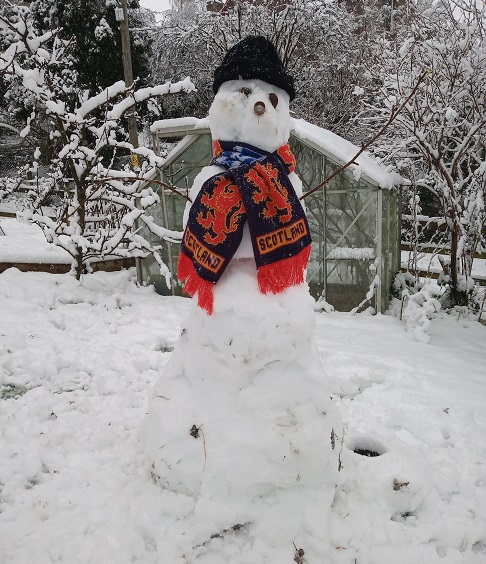
(When I open the curtains onto the first serious snow of January, I am just like any other child.)
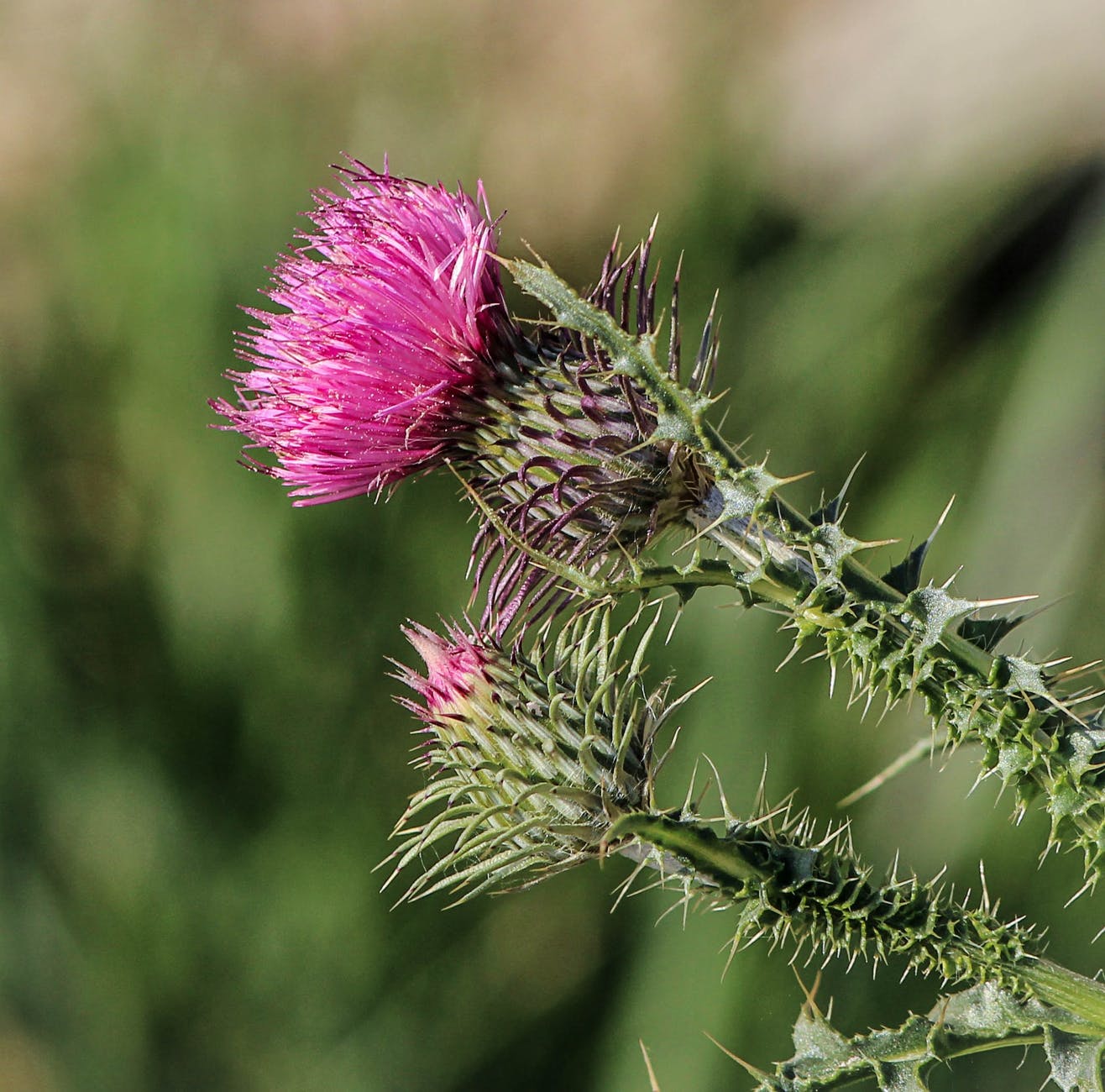
There’s this story in Scottish folklore: A king (Scottish or Pictish) and his army were engaged in a long campaign to repel the Danish invaders who were terrorising the east coast. The Vikings knew that the only way to gain free access to the rich breadbasket lands and the treasures of the religious houses was to defeat the king’s army, which was camped, exhausted, by a river, thinking itself safe for at least a night’s sleep. The Viking spies located the army. and to gain advantage by stealth and secrecy, the warriors began to creep up on foot, swords drawn, and surround them. Thinking their boots made too much noise, the leader ordered his men to go barefoot. Their goal was in sight, until a skull-splitting screech and an unrepeatable Scandinavian oath filled the air. One of the Vikings had trodden on a well-armed Spear Thistle. The kings army were thus warned, and sprang to action to repel the invaders. Since when, the thistle has always been the emblem of Scotland.
*****************************
Last Sunday was the first of the seriously cold days of this winter. It will get colder, but we will have adjusted to it. Nevertheless,it was still warmer outside than in our currently challenged-in-the-heating-department house, so we decided to go for a walk to warm up.
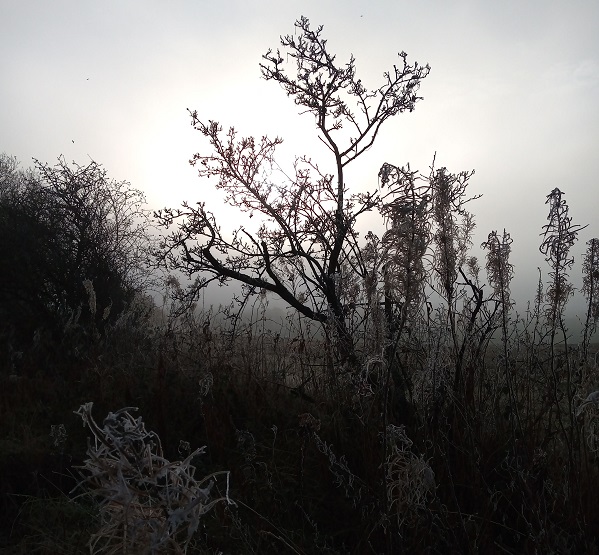
As we sauntered along the footpath from Luncarty to the River Tay, almost a hollow lane, beads of frost and frozen droplets of moisture clung to any material they encountered. Ephemeral, discarded threads pf spider gossamer waved like chilly bunting. Touch one, and it evaporated. Frizzy, curled husks of ice-tipped willow herb seedheads towered as if frozen.
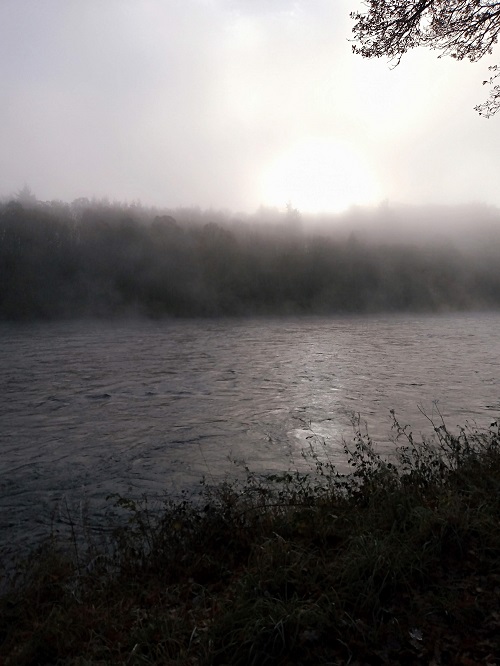
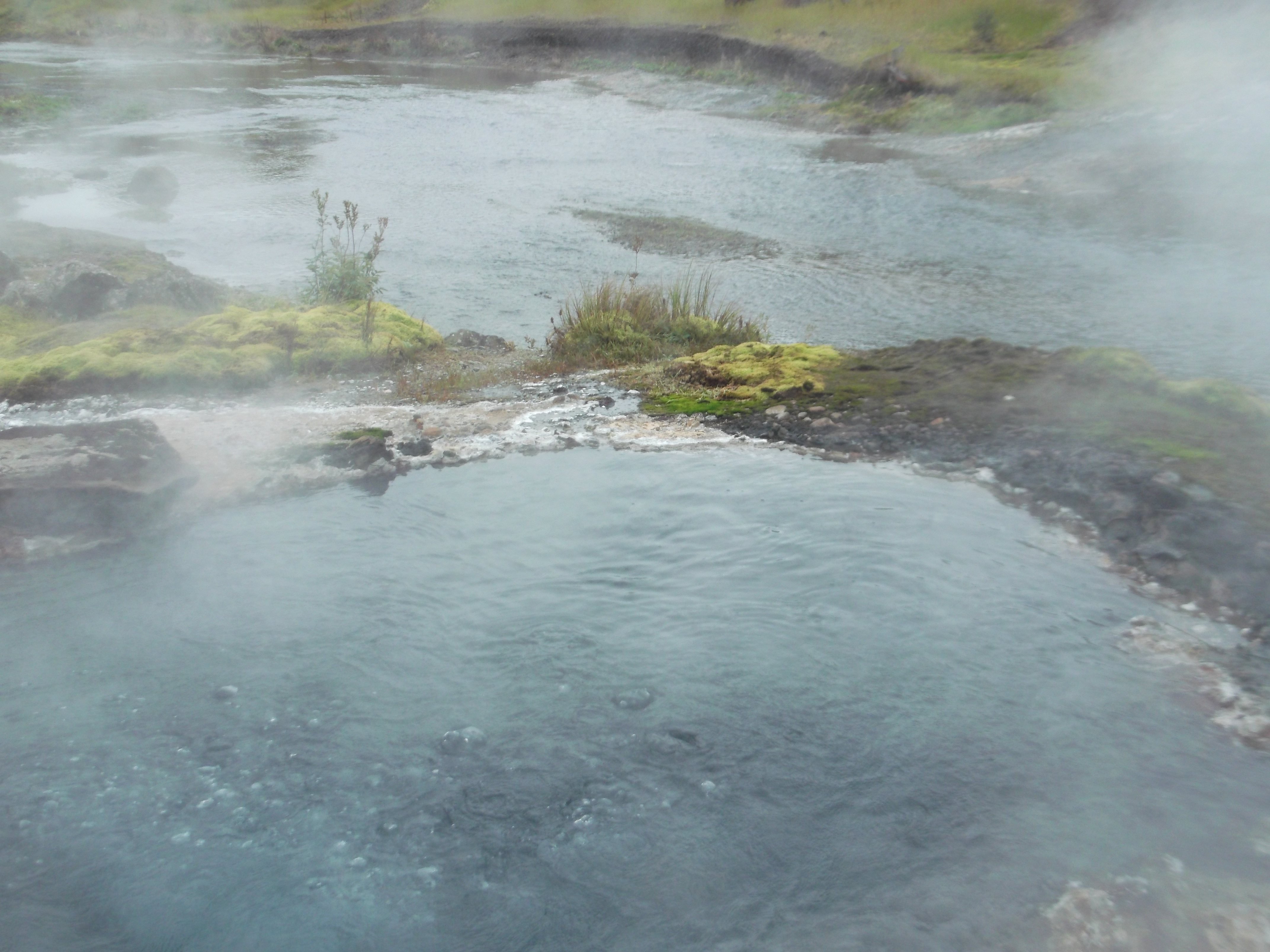
A haar descended. Generally the haar creeps upriver from Perth; today it seemed to come from all directions. Its gloom, exacerbated by the knowledge that somewhere behind it the sun is weakly shining, has the coldest feel imaginable. With wreaths of steam-like fog and mist flowing above the surface, the Tay resembled an Icelandic hot spring.
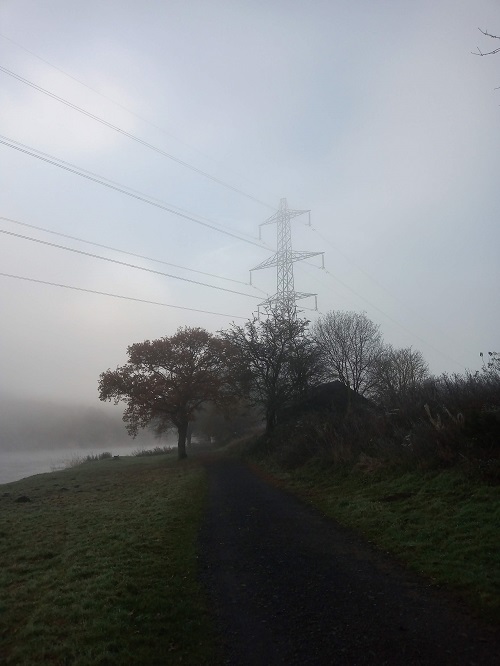
The river path proper starts at the site of the old Waulkmill Chain Ferry – once the only convenient way to cross from one side to the other. It closed as late as 1964, but I think this must have been a crossing point for many centuries before the chain ferry and pontoons were in operation. We headed in the direction of Perth City, watching gigantic pylons loom up from the cold dense air, bringing to mind the Martians from H.G.Wells’ War of the Worlds.
And then we came to the derelict bulk of old buildings beside Denmarkfield Farm, and the unmarked stone that stands in the weedy, thistle-infested ground just above the river. Here, locals say, is the site of that momentous battle that propelled the Scots thistle to prominence, and the stone – called the King’s Stone – marks the spot. That’s why the place, and later the farm, have been called Denmarkfield ever since.
There are plans to build yet another road, the Cross Tay Link Road, from here to Scone on the east bank. The land around the King’s Stone (actually far older than the 10th century) is under a compulsory purchase order. As people speed over the new bridge that will cross the river, congratulating themselves on the ease and convenience, will anyone remember the Waulkmill ferryman, the king who slept by the river, or the Viking with a sore foot?
I had thought my days of being torpid and uncomfortable in a cold house were a thing of the past. But an unfortunate tangle with a renewable energy company apparently having major hiccups and losing the plot – at least of our contracts – have found us without heating or hot water for a month and contemplating, in early December, whether this was as bad as other cold houses I have known and loved (in summer)?
First there was the single-brick construction of a bungalow called Berberis, in rural Essex. It boasted single glazed windows in rotting, leaking frames, a total absence of insulation and a rickety “hot” water cylinder perched above a bath, where humans, clothes, linen and everything else had to get washed. There was, of course, no heating – but there was a tiny fireplace in each of the four rooms. The first winter I spent there (1985-6, one of the coldest of the century), I didn’t have the slightest idea how to light a fire in a grate, having been raised as a gas-fitter’s daughter. I was also completely skint, a student, and alone.
I decided I could afford a calor gas heater, which did wonders for increasing the condensation and mould on the walls. As the winter progressed, good friends and relations rallied round, taught me how to light fires, brought me logs (which I cut up with my father’s carpentry saw), and helped rig up clingfilm double glazing over all the whistling windows and their holey frames, draught-proofing for the doors, and thick material for curtains. I slept in the warmest of the bedrooms (the one which didn’t have rattling French doors), in a woolly hat, under a mountain of inherited blankets, with an axe by my side and a tiny fire in the grate.
The second winter, after a summer of falling in love with the house and with my own self-sufficiency, I wasn’t alone, and we spent a good deal of it roasting chestnuts and making babies in front of a roaring fire of logs scavenged from local woods.
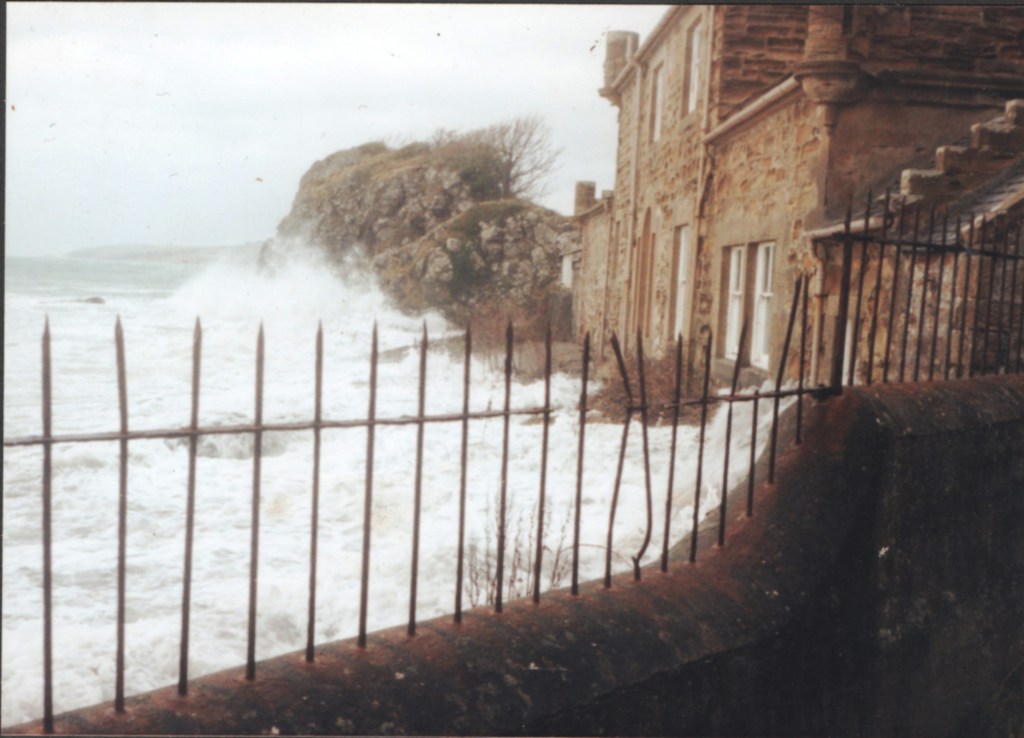
Berberis was certainly challenging, but perhaps the challenges were easier to combat than those of the huge, high-ceilinged “tied house” that was our first home in Scotland a few years later. Did I mention that it literally sat on the beach? And that at spring tides, the waves actually broke onto the walls and windows? It was an impressive building, designed by Robert Adam, and an incredible joy to move to in April from the claustrophobic and embittered south east of England, and to live in with our two babies all through the summer. But Adam never intended it to be a home. It was a rather ornamental, converted laundry. Most of the massive, single glazed windows looked onto the sea (amazing views of sea otters and Arran). There was one wood burning stove in the cavernous living room, and a couple of gravity fed radiators up stairs by the lukewarm-and-no-more water tank.
The house on a beach
As winter approached, the shortcomings of the stove became apparent. The biggest problem was fuel. Part of the tied-house deal was that the estate foresters supplied all the tenants with wood for burning. They weren’t our biggest fans on several counts. One, we had English accents, full stop, and were seen to be in cahoots with the higheidyins (also English). This wasn’t justified, but hey. Two, said higheidyins had asked my partner to put forward his ideas on the ornamental trees on the estate. He took them at their word and (never the best diplomat) incensed the head forester who saw all trees as under his sole jurisdiction. Three, and worst of all, to accommodate the arrival of a family of four, one of the forestry team had been moved out under protest from this house where he’d lived alone for several years. Thus, it was that, when we asked for logs, they took a long time to arrive and were the wettest, greenest, least calorific bits of spruce that could be found. Whereas everyone else got them ready split and chopped, we had to process them ourselves (reasonable enough, given we had the equipment – but they were also impossibly knotty).
Appealing to the Trust for help with heating led to the delivery to the kitchen of a second-hand solid fuel range. It turned out to be cobbled out of an oil fed system, and wouldn’t work. The kitchen floor was concrete, with no floor coverings, and we couldn’t afford to buy any. With only one of us earning a gardener’s wage, and the occupancy of a tied house being reckoned to make our income double what it was, thus making us ineligible for any benefits, we were snookered. I began to get chilblains, and had to stand on a pad of old newspapers when washing up or cooking. For a while I tried cutting the dead meadowsweet stems from by the burn for floor coverings, but though they smelt nice, they didn’t really help. Our small daughter wet the bed. Our son, eighteen months old, developed sleep problems and would wake us all every night. For some reason, we didn’t connect it with the fall in temperatures, but did notice he was kicking off his cot blanket. So, we got him used to a proper bed where the blankets could be tucked in, and moved him into a downstairs bedroom which had smaller windows not facing the Atlantic gales. It also got the morning sun. He still woke most nights to start with, and I’ll never know if the eventual improvement was down to location or the weather just improving.
Meanwhile, I raged at the impossible range and the recalcitrant stove, wore gloves indoors, and spent as much of each day as I could tramping the estate with the babies to keep warm. My partner in a fit of temper one day threw a shovelful of coal into the stove. I assumed the stove would blow up, being a wood-burner, but instead it actually grew quite hot for once. Right enough 90% of said heat disappeared immediately five metres up to the ceiling. For another day, we fed it bits of coal, like feeding an addict tiny amounts of a drug to control its habit.
And guess what? The chimney breast began to roar, loudly, and became too hot to touch. Then flames issued from the 18th century chimney. The days were icy, even at sea level, and the track down the cliff to the house was too dangerous for the fire engine to use, because the estate team had overlooked our track when gritting. The fire-persons (the leader was a woman) descended on a sledge with the firehose and some equipment, and put the fire out in three hours. To do so, they broke a huge hole into the flue, rendering it unusable. It hadn’t occurred to us that the chimneys might not have been swept for years. Who knows, the ineffectiveness of the stove may not have been solely down to the logs.
After that, grudgingly, a better range (still recycled from another property) and a rudimentary heating system were put in by the Trust. By then it was spring, of course. The joys of tied houses. But we left there the following winter, for a remote, off-grid smallholding with a working solid fuel range and a pot-bellied stove where we put up a wind generator and often got snowed in a week at a time. It was positively toasty!
I really hope our energy company’s problems get sorted, that at some point we move up on their list of priorities, and we can achieve, again, carbon neutral hot water and a warm house. I know there are worse positions to be in. In that Adam laundry, ten degrees celsius was a good temperature – not that my study is even achieving that on cold mornings at present. Now, at least, we have a brilliant woodburning stove that never goes out, even when you need it to, to empty the ash. We can afford to put on temporary convector heaters, although it still goes against the grain. Never, ever, undervalue the bliss and luxury of hot water in the tap.
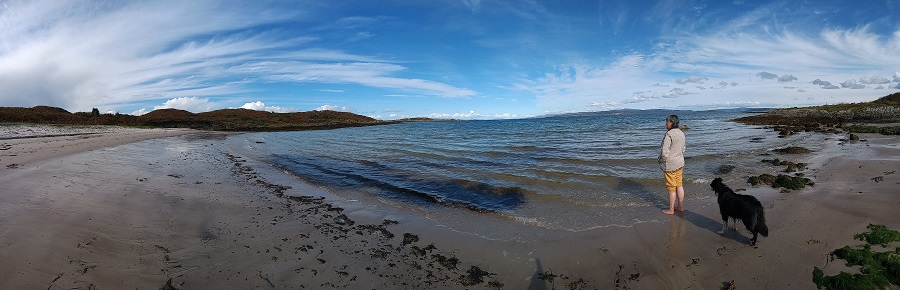
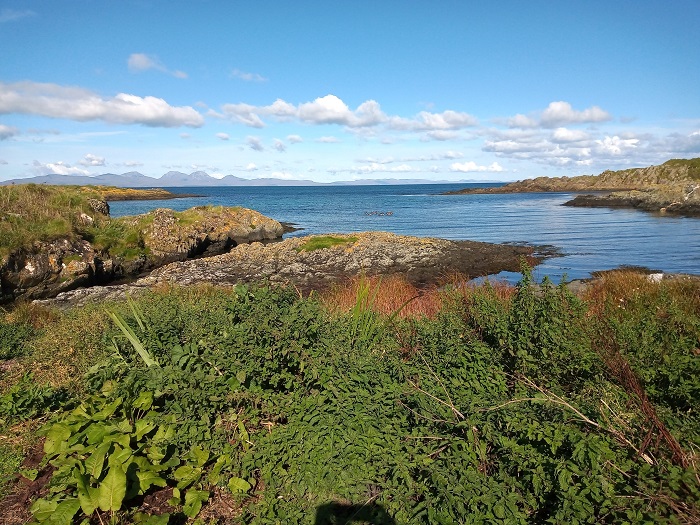
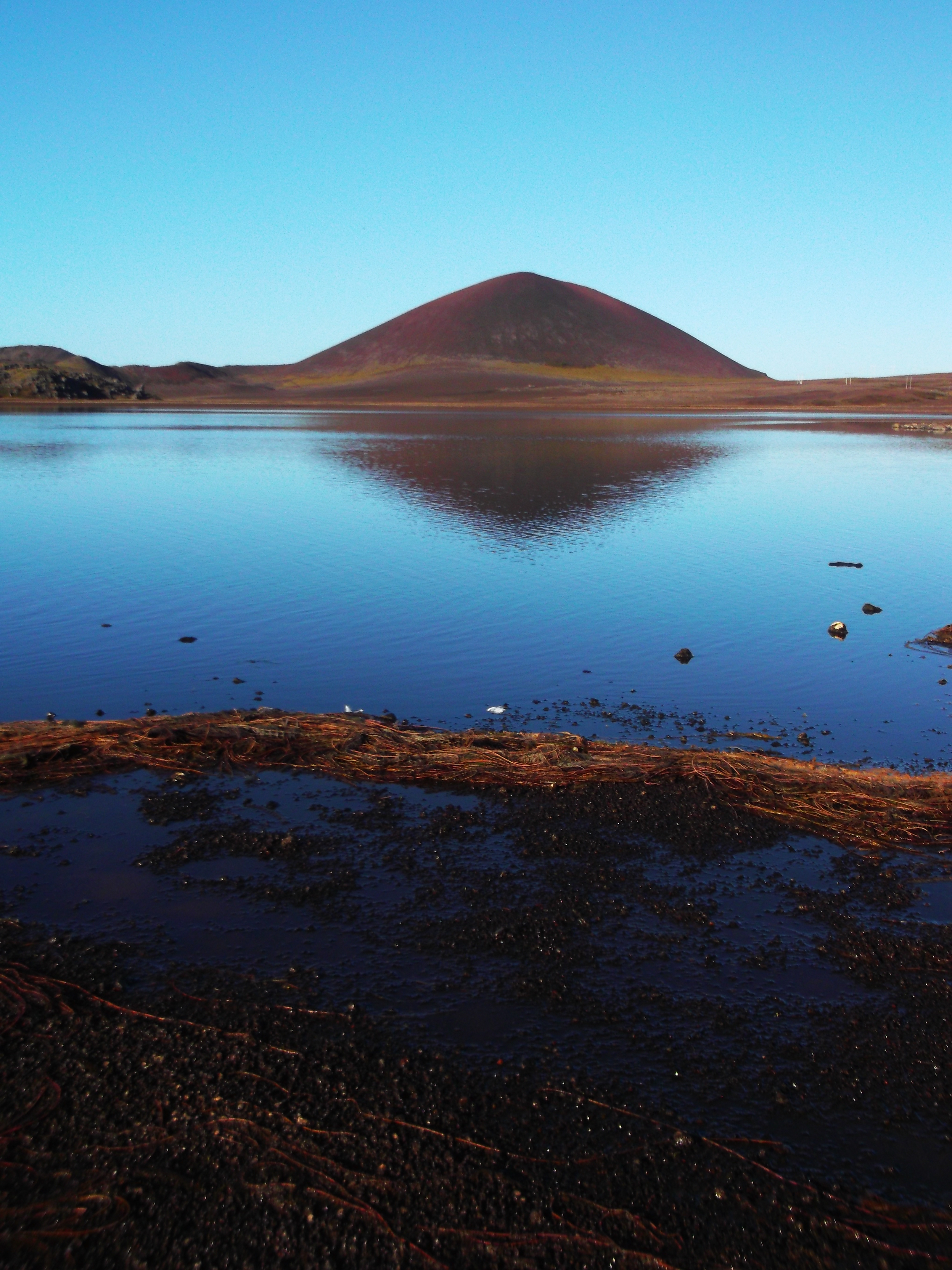
Small island of benign cattle, quartz-veined rock-pools, exotic trees and runaway rhododendrons: A chameleon island, shape-shifting as the weather pirouettes.
Truly Hebridean with its small, hand-moulded fields and slow pale meadows, and the flashes of white sand as the tide goes out.
But in a chiselled sky, it hardens to shoulder the wind-borne rains of Shetland. As sea-rocks darken and clouds come low, sand blackens. I taste metallic air of a sea-bound nation, far across a cold, uncompromising, northern sea.
Then, in a flash, a rainbow erupts: Sun-dazzled waves and sweet, warm, blackberry-festooned tracks through deep, lush valleys, recall Penwith, and sun-drowned, southern afternoons.
But this island holds its own keys; makes its own future; decides what to be and to be what it chooses.
Radio voices infiltrate Birdsong, and the low murmur of bees. They demand our patience, Promise clever plans, speak wistfully of Getting back to normal.
Cold winds Have blown the smog from the skies, Hushed the traffic, sombrely Slowed the world down. With neighbours and friends afar, We swap and share: seeds, favours, produce, Recipes, ideas and goodwill.
Oh, but, the radio voices cry, That won’t be forever. The economy Will erupt again amid chattering smokescreens, Rise and fill the air with busy-ness, Drown out birds and kindness. Don’t despair. The economy Will get back on its rotten track.
We’re not to worry. There’s no need For co-operation, self reliance or hope. They’ll feed us bread and circuses again. Meanwhile,
Have some crumbs From the great loaf of capitalism.
No need for questions, but they’ll give us answers, anyway; Answers we don’t need to understand, Data to depress, figures to make us fear Those cold winds of change.
Let’s not go back to that normal Of duped dependency, petrified inequality And the averted gaze. Swallows have returned. With eyes wide open We can see the season changing.
I’m infatuated with the much-maligned Corvidae, or crow family. There’s a stag-headed oak at the top of the Brae where they hang around as winter drags on, reminding me always of the poem “February” by Edward Thomas:
Over the land freckled with snow half-thawed The speculating rooks at their nests cawed And saw from elm-tops, delicate as flower of grass What we below could not see, Winter pass.
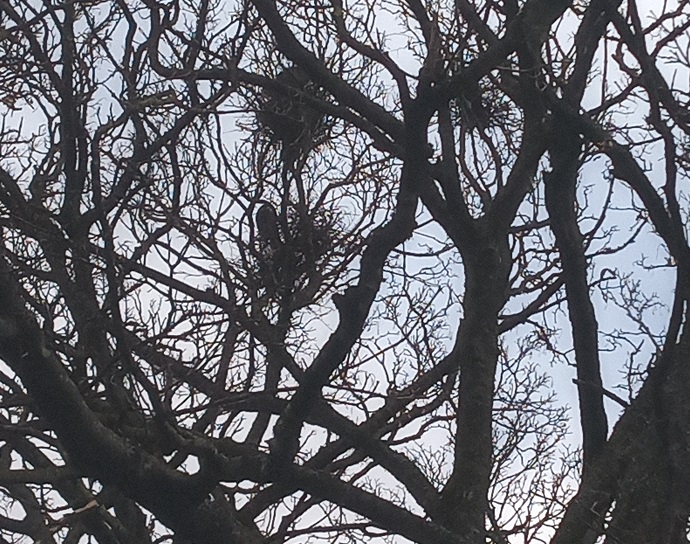
A couple of years back, a pair of crows made a nest in the big sycamore tree that dominates the top end of my garden. In 2019, they returned with their pals. There were five nests under construction before my bird expert neighbour confirmed that I was wrong, Andrew was right, and these were not crows, but rooks. I had a rookery! Seven pairs nested last year, and the cacophony of feeding and fledging times was a raucous delight.
Last month, the rooks came on a visit. It was shortly following one of those weirdly named storms that have been the scourge of late winter here, and there was very little evidence left of last year’s colony. The rooks, about ten or a dozen of them, sidled about all day from branch to branch, engaged in some heated debate. Bits of twig were moved about, for no apparent reason. Several birds were seen bearing off the last remnants of a nest to some other location. Then they all flew off.
The collective noun for a group of rooks is a parliament. I can see why. That day, the debate went round and round in circles, no consensus was reached, and the parliament was either adjourned or illegally prorogued while certain individuals went off, presumably to feather their own nests. Although the odd rook came back to cark dismally during the next week or two, I thought that was the end of my rookery. A decision had been clearly made that the cost of rebuilding and renovation was too high and too risky, and they’d be better together with the big rookery at the other end of the village, established as long as humans here can remember, and probably longer still.
(I’m really, really trying not to be allegorical here, but it just keeps happening.)
However, last week they returned, and resumed the debate with alacrity and much carking and cawing, retiring into the division lobbies in the neighbouring fir tree whenever the wind blew. Samples of twigs were brought in for inspection, passed around and tested for strength and engineering capacity. Rook nests are built near the top of a tree, and construction is meticulous, more complex than it looks, and uses only the right materials. Fortunately, rooks are among the most intelligent birds on the planet. In hopeful enthusiasm, I pruned the remaining pear and apple trees and left the twigs lying under the sycamore for the parliament to debate. They ignored them.
I could see the parliament was beginning to divide on party lines – lots of parties, each consisting of only two birds. Rooks are monogamous and mate for life. If this parliament consisted largely of last year’s babies, they were choosing their partners. Older birds were teaming up with theirs, and after a year of (presumed) abstinence, were making up for lost time. The branches rocked and see-sawed. Loud carking was sometimes interrupted by a melodious burble like a badly-tuned harp. The debate sounded more purposeful, and a nest began to appear.
I’ve been trying to fathom whether a parliament of rooks works collectively on one nest at a time. I can find no reference to such behaviour, so probably it’s just my fond imagination that sees the construction of a rookery as a kind of avian barn-raising. But there seemed to be twigs coming in from all directions, borne tenderly in those heavy grey bills and placed on or near the nest.
Yesterday, a second nest was well under way. This morning, there were the beginnings of a third. I met four of the construction team in the stubble field as I was walking the dog. They were gathering bills full of short pieces of straw and flying directly to the building site. So much for the basket of dog hair I put out for them to line nests with! Maybe the blue tits will make use of it. I went out to check on progress just now, and counted ten birds in the tree, at least another ten supervising from the air, plus two fat wood pigeons fornicating aimlessly as they do. I’m pretty certain there’s at least one nest in the fir tree too, as two rooks dived in there, trailing long bits of stick behind them.
The other collective noun for these birds is a Building. I think my small (but fiercely independent) parliament has assessed the weather damage and consequences of climate change, has debated in full its response, has gone out to build or retrofit its housing stock using the best materials for energy conservation and the best techniques for sustainability. It’s stopped jabbering about targets and is now a Building of Rooks.
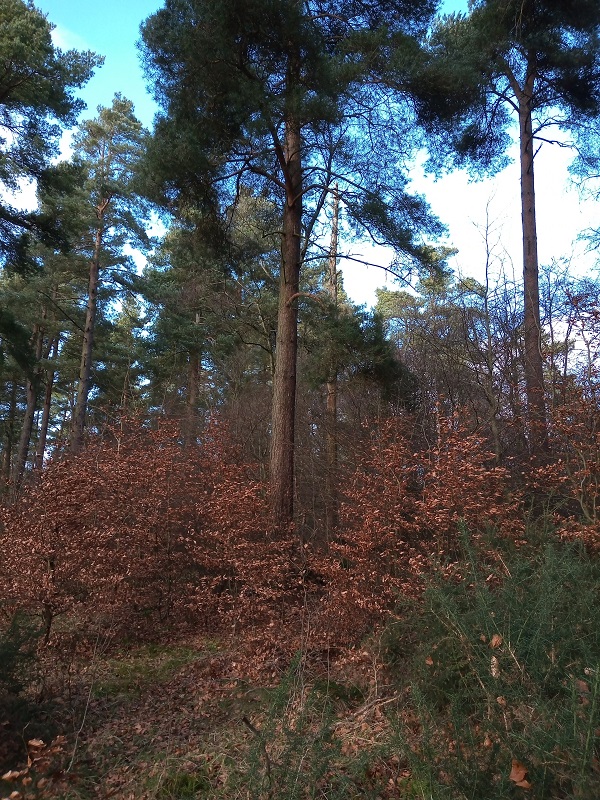
Dreich doesn’t begin to cover it. Weeks of rain, sleet or snow, and the wood is wet, dank, chilly. One storm has passed, another is forecast, and a group of multi-stemmed birches, green with lichen and algae, droop and wait despondently.
I take the rutted cycling path that skirts the woodland edge. Under the tall, fiendishly straight Scots Pines, many scattered beech saplings nestle in their winter boleros of retained leaves. Beech mast is everywhere, but I do not see the older tree from which it has fallen. Beech seedlings tend not to come up near a parent tree, but somewhere there must be a Mother.
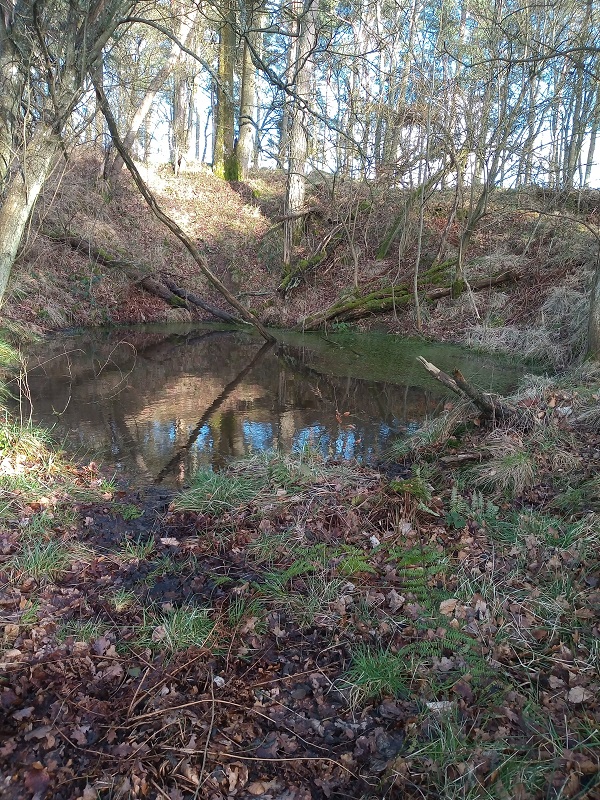
Snow lingers crystalline along the clay-bottomed ditches where black, cold water lurks and trickles. There’s a pond under the pines which so looks like it was formed by an explosion I call it the bomb crater. No signs of frog spawn yet. Several tracks and paths meander where animals come down to drink. Duckweed covers a third of the surface; in the increasing rain thousands of ripples intersect and make diffraction patterns over the other two thirds.
Birds – except for a robin – are silent and glum. A flock of pigeons clatters off towards the field; freshly ploughed, it offers them nothing but the stones that lie heaped in the field corner. How many decades or centuries of cultivation have contributed to this pile? This side of the fence, someone a long time ago arranged stones round a favourite tree, where they remain, moss-covered and half-buried. Larger rocks with wavy patterns etched onto their surface erupt in groups from the forest floor, scarcely distinguishable from the stumps of felled trees. Moss, lichens, algae democratically envelop all.
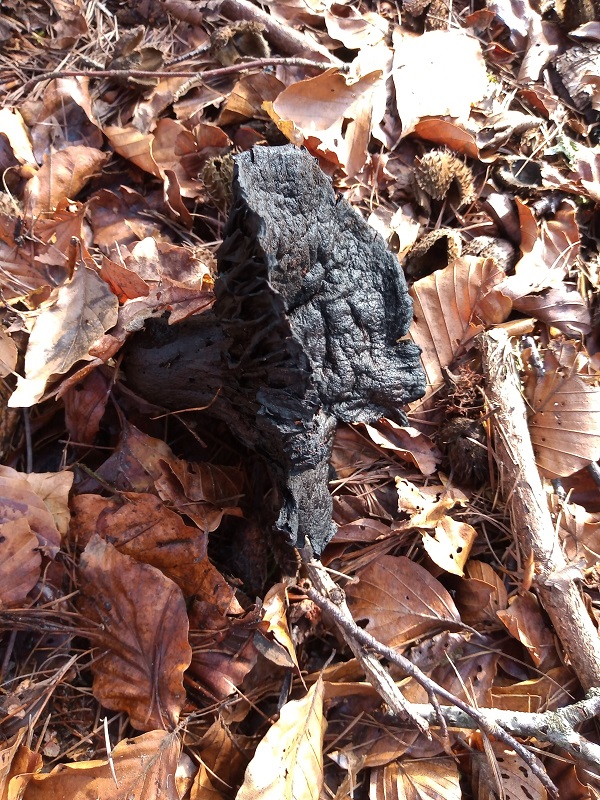
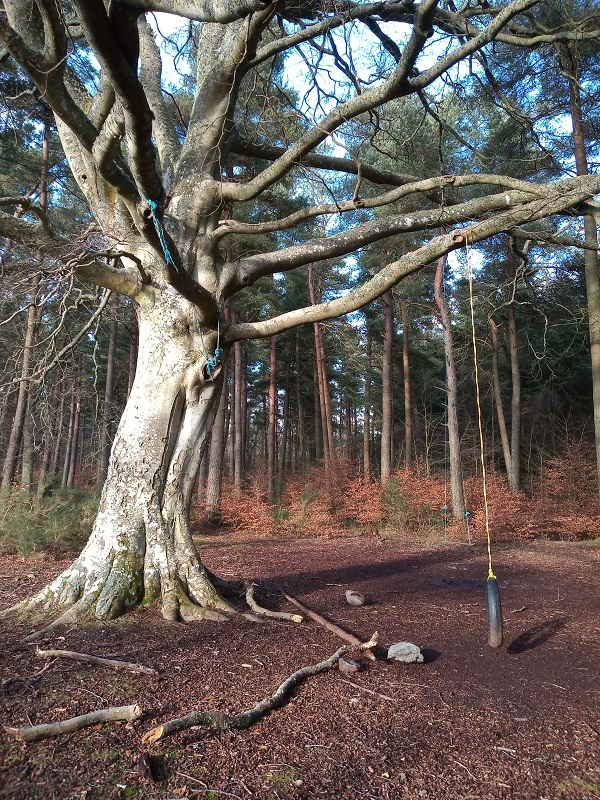
There are charred-looking remains of mushrooms by the path. I think they were Blackening Russulas, an abundance of them. I follow their orbital trail and suddenly find myself under a towering old beech tree, with many spreading branches and a hollowing trunk that makes a chimney of dead wood and fungal rots. Swings hang from two branches; insects and other invertebrates burrow into the soft core of the tree and make their homes. The woodpecker will soon come calling for her dinner, other birds will nest and shout from the canopy. I have found the Mother of Beeches, and of much else besides.
Five Mile Wood and Taymount Wood are former Forestry Commission plantations just north of Perth. They have for a while been transitioning from industrial timber production to a subtle integration with the wild, and people are part of that wild change. The Commission have put them up for sale, and local people have formed West Stormont Woodlands Group. We are hoping to implement a community buy-out. You can find out more about the plans and group activities at http://www.weststormontwoodlandgroup.org.uk Over the coming year, I intend to write a monthly blog post “Words for Our Woods”about the wildness of the woods, in support of WSWG. This is the first.













 Comments on The Nature of the Universe