Bees, Butterflies and an Old Straight Track

5mile wood1

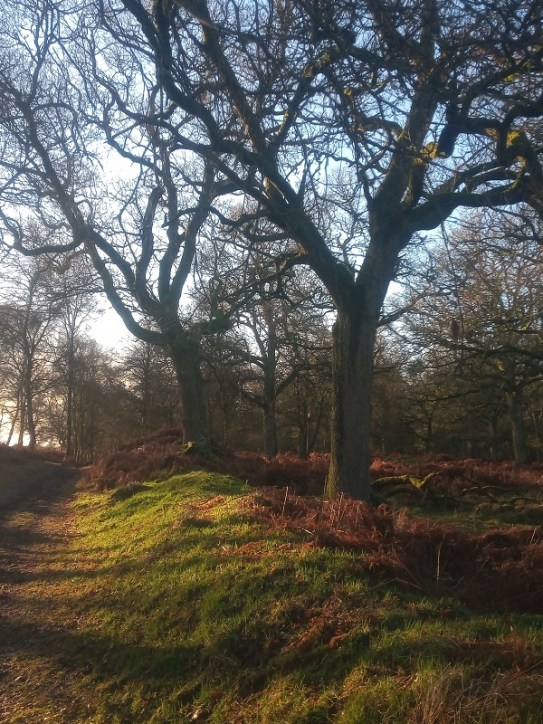
The things you do in a lockdown. I wouldn’t normally walk from the house to Five Mile Wood, I’d call in on my way to somewhere else, parking the car. It’s not an especially long walk, but since they felled most of the trees on the Bankfoot side, cavernous ditches and hollows have made the entrance to the wood treacherous, wet and debateable, and the track to get there goes on a bit and is not especially interesting.

Or so I thought.

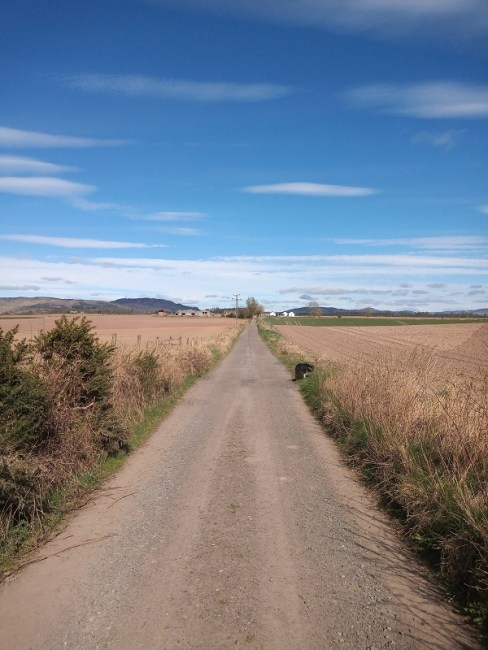
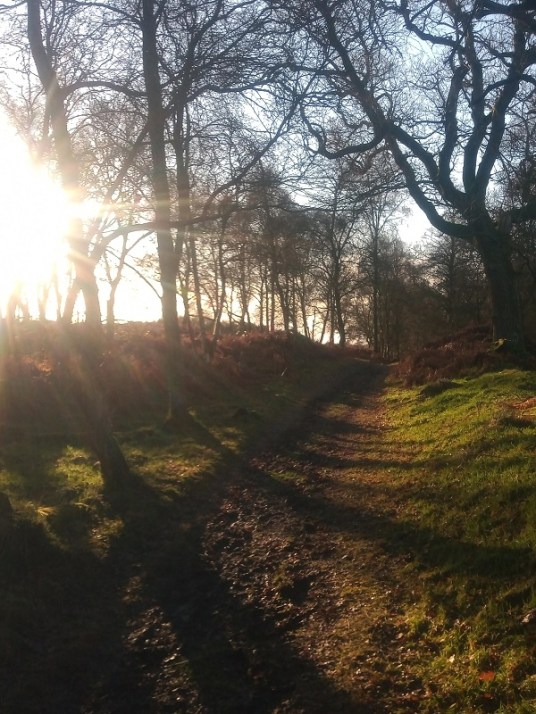
I marched out from Bankfoot on one of those dazzling, sun-struck mornings of which we’ve seen so many this April. We crossed the pleasantly deserted A9 and the field to the edges of Cairnleith Moss and turned right along the track to North Barns. The path stretched ahead in a tediously straight line, the wood in the far distance looking nearer than it actually was. At some point, I turned round to let the dog catch up.

5mile track1

It was a VERY straight track. North, it pointed directly at Birnam Gap, the space between the hills where every Great North Road is forced to pass. Ahead of me, beyond Five Mile Wood, the conical East Lomond Hill in Fife lay in a direct line. Suddenly, it fell into place. With these landscape markers aligned, this was the ancient route north – preceding the drovers’ track above my house, which preceded the winding old A9 through Bankfoot village, which went before the current A9. They all run roughly parallel, and all have to go through Birnam Gap. (Later I consulted the maps: this old straight track seems to have continued beyond the wood to meet the Tay at Waulkmill, then probably followed the straight road through Stormontfield, and on to Perth or beyond).

5mile track2

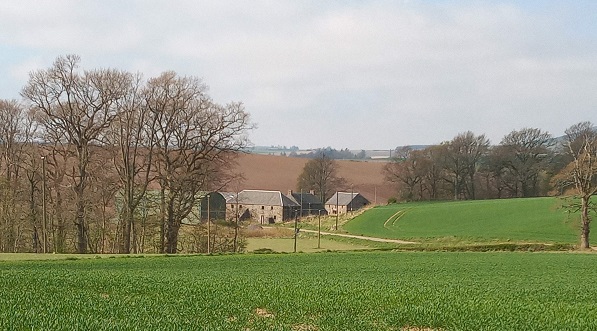
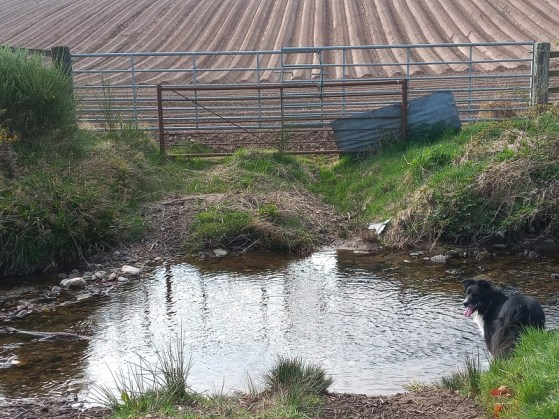
On either side, vast, treeless fields stretched forever, brown, homogenous, dusty and devoid of hedges. In a hollow beside the track were a dozen beehives. I realised the field I’d just passed did contain a crop – oil seed rape, yet to flower. That’s why the bees were there. A farm vehicle traversed the horizon on the other side, trailing an enormous boom sprayer. Dust and chemicals billowed behind it. The smell in my nostrils was like an airport runway. How on earth, I thought, did the bees keep going, while waiting for the rape to flower? There were no wild flowers in this agricultural desert.

5mile entrance           5mile gorse

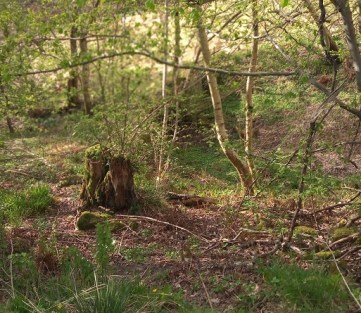
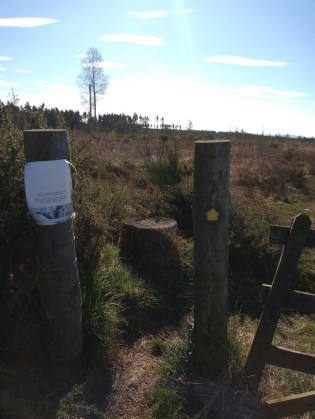
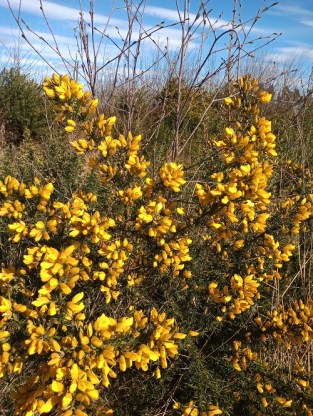
Reaching the edge of Five Mile Wood, I crossed the gate into the ravaged landscape of felled trees. The footpath sign directed me, and I could see where I needed to be, straight ahead on the old track, but a new route had to be picked to get there. Others had succeeded; makeshift log bridges across water-filled ditches, meandering paths that skirted the boggy areas. I reached the main path which circles the interior of the wood amid the heady coconut-scent of gorse – and there I found the bees, working the flowers sprung up in the new heathland created by felling. Beautiful birches, freed from forest, leaves just opening against a vivid sky. A border of dandelions edged the path, dancing golden and perfect in the sun of noon. Goat willows, pioneer trees of clearings, still in flower, had attracted a small swarm of peacock butterflies. In the new landscape of a one-time forest the bees and butterflies and all the creatures of the heath found sanctuary.

5mile birch     5mile peacock

Returning home, I thought about how important this chameleon landscape is, set against modern farming. I thought, too, about the old straight track that entered the woods, and how its purpose was muddied by activities that had made it so hard to follow. I thought how approach and access is so important, in any plans we may have for these woods in the future.

5mile dandelion

Statutory Exercise into Prehistory

It’s a favourite cycle ride, a circuit of under an hour, with all the hills at the start and you can almost freewheel home, if you go clockwise. A bright, sunny Easter day and a chilly wind; dusty ploughed fields and the great pleasure of almost empty roads, as the pandemic lockdown disrupts the “joys” of motoring.

tullybeltane2

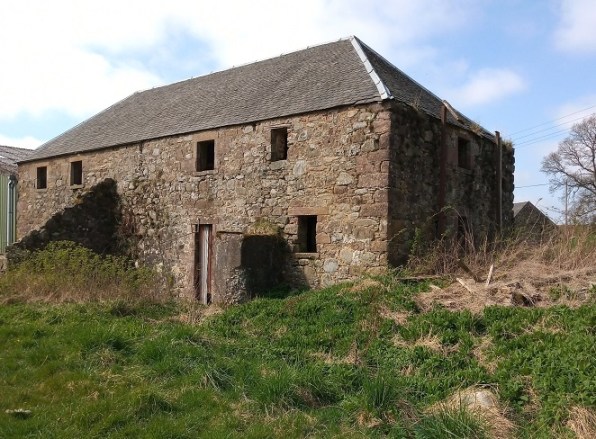
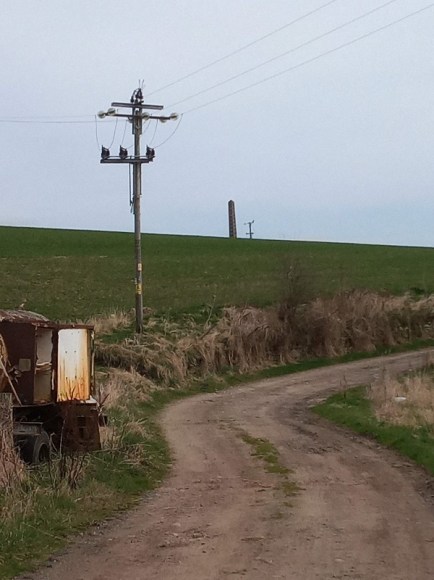
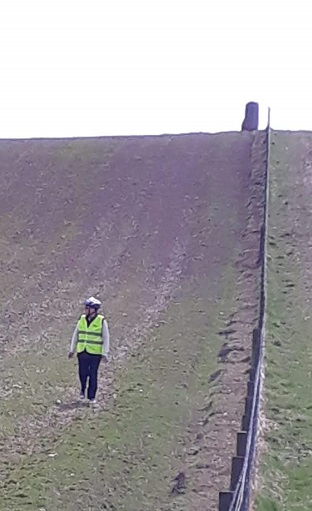
We cycle up through forest research sites and broad swathes of farmland towards Tullybelton, the hamlet whose name may derive from being the field where Beltane (May Day) fires were lit when older and more nebulous gods were remembered. We detour to Little Tullybeltane Farm, where a tall pillar points incongruously at the blue sky, and a buzzard mews and hovers. The track to the farm is neglected and lined with abandoned pieces of rusting metal; there is no plaque, no sign, no clue why it warrants such an imposing monument – and no invitation to explore.

Yet here – allegedly – the ruins of a turnip shed are all that’s left of the birthplace of one Robert Nicoll. From here he walked to school in Bankfoot, stopping to write poetry on the way. He was a peasant lad, a precocious child, the “boy poet” of Auchtergaven who died way too young, the one whose genius may have surpassed that other more famous bard, Robert Burns, with whom he had much in common – had he lived longer. But Nicoll was also a firebrand, a radical advocate for reform, a passionate speaker and fighter in the cause of human rights. Here is his monument, and not enough people know why it’s there.

He was 23 when he died.

tullybeltane3

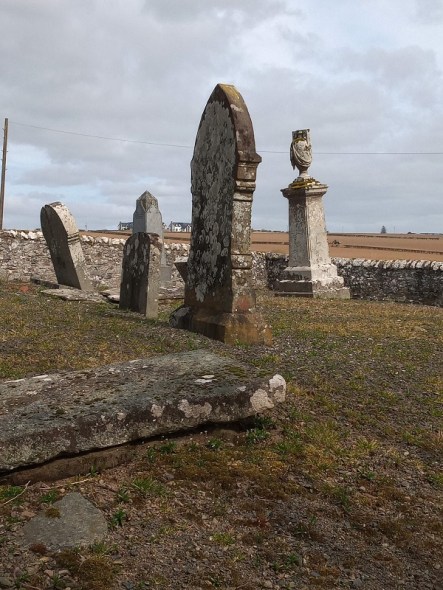
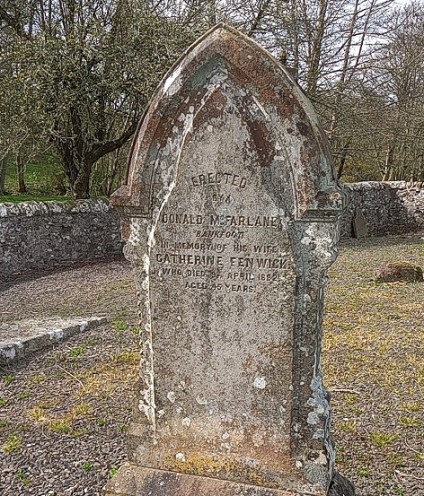
Leaving Tullybeltane behind, we coast along the Ordie Burn, where wood anemones shimmer in the sun and the wind’s behind us. Bumblebees career in and out of gorse flowers and dive between us. A determined walker out on her statutory exercise waves hello from the proscribed distance as we whizz by. We stop at the old graveyard at Kirkbride – though there is no kirk now and the headstones are in a sorry way. The names are all familiar, local ones: Nicolls and Fenwicks, Petries, Dows, Wylies and McFarlanes. I’m caught by the name Catherine Fenwick on a 19th century stone.

tullybeltane4

A Catherine Fenwick once lived in our house. She inherited or was gifted the feu from James Wylie of Airleywight (another reformer in his day – though did he “sell out” when he became a gentleman landowner?). Later, I check the deeds – we hold the parchment originals – and this Catherine Fenwick died seven years later than ours. Our Catherine lived longer…is it her shadow we constantly see flit by the kitchen window? Strange to think that both of them probably knew Robert Nicoll, whose mother was a Fenwick…. How intertwined we all are.

Kirkbride…. The church of St. Bridget, or just Bridget, or Bride, or Brigid…..Celtic Goddess of water. I can almost feel the Beltane fires. Nearby was St. Bride’s Well, said to have healing properties causing people to drink from it on the first Sunday in May (Beltane flames again) and “walk sunwise round it with joined hands, and lay down branches of rowan”.

tullybeltane5

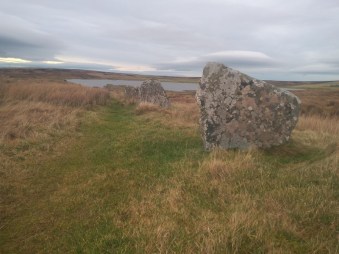
We find no well, but up on a rise is the standing stone of Pitsundry, said to mark the place. There was within living memory a water trough under a hedge there, supposedly fed by the well. No hedge today, just barbed wire; it’s dry as dust and hard to imagine why there’d be a well on top of the hill. But when I check the maps later, I find a spring marked very close by.

tullybeltane 1

While I’m exploring, another lockdown cyclist tells Andrew (from a social distance of course) that the Pitsundry stone lines up with others on the Muir of Thorn, the other side of the A9. That checks out on the map too, more or less. When we freewheel back into the boundaries of our village, it feels like our journey was further, deeper, more entangled with ghosts, than the quick exercise circuit we set out upon.

Caithness: an Unexpected Corner

So, you drive over the bridge and leave Inverness behind. Soon, you will turn roughly left, as usual, heading for the dramatic shores and the magnificent mountains of Scotland’s fabulous north west.

What if you turned right instead, and carried on up the A9, zig-zagging drunkenly the path north? What will you find, towards the end of the road?

caithness4

The wind will get up, and rage in your ears with little to stop it from laughing at you. You will leave behind the stately coastal towns of Easter Ross and Sutherland. The land lies down, prostrates itself, subsides. Over to the west, distant peaks rise black and pointed. But they are far away. Dull green acres race the miles that separate you from the hills, and the sky stretches, yawning enormous and flinty in a weak January sun.

You will pass through flatlands, a ruinous landscape of low-slung byres, falling one-storey houses and cowering caravans, where anything bigger than a molehill becomes precious shelter. A few trees – always spruce – courageously cling to life by the homes where they were planted. Above them tower pylons like alien invaders, and armies of wind generators, powering Scotland relentlessly.

caithness3

In this exposed, stripped-down county of Caithness, there is no hiding the immense batteries and substations that convert the lacerating wind to warmth and light and send it on its way to town and steading alike. Birds balance on wires, feathers licked by gales, gripping fiercely.

caithness 2

It is not monotonous, this unexpected journey. The winter-bleached grasslands break up periodically into even flatter expanses – the peatland flows, sombre and dark and secret, clouds reflected like pewter from glimpsed water. Stones begin to dominate; low circles and horseshoes like the one at Achavanich, where each hewn stone follows the one before, face-on round the curve as if seeking shelter in its neighbour’s shadow. Then great flagstones upended become the very boundaries of land; a pattern of smaller fields is hinted at, somehow warmer, friendlier than those whose demarcation arises from cold wire.

caithness1     caithness7

The town, Thurso, erupts on the northern coast, unapologetic, in a mix of serviceable old stone and cold-looking blocks that seem to have been dropped from the edges of a disintegrating city. But Thurso has its Banksy, or a Banksy disciple at least, and that’s unexpected too, and oddly appreciated.

caithness8

And you will find yourself drawn, at the end of the day, to the great surfing beach at Dunnet, deserted in January but for a galloping horse and its rider in the distance, to a Viking vision of the northern isles and a sky that mesmerises like one of the sagas of old.

caithness5


Ambushed by Birdsong in Taymount Wood

“Much laid plans” and all that. I knew exactly what I was going to write about in my second post for West Stormont Woodland Group. It involved walking quickly and without distraction to King’s Myre in Taymount Wood.

But on this sunny, yet briskly chilly morning in March, the birds had other plans for me. We hadn’t got far when the dog was infuriated by an ear-piercing whistling made, apparently, by a bush. Eventually a tiny bit of the bush detached itself and was revealed as the smallest bird with the loudest voice – the wren, bustling ahead of us from twig to twig. The dog hates wrens. They scold, scoff, and shout at him, warning everyone he’s about.

TW scotspine

We dawdled on. Taymount contains a fair variety of tree species for a plantation. Tall Scots Pines lifted their crowns to the sun. Here and there, where selective felling had left a pine with elbow room, the narrow confines of its growth could be seen morphing into the mighty spread of the Caledonian pines. Larger clearings now host dense, self-seeded birch, through which a flock of greenfinches scurried. Brown bracken, unusual in this wood, lay beneath, thick enough to bed a herd of beasts.

TW bracken

We were on the cusp of spring. Robins proclaimed territories sweetly, compellingly, from field walls. We saw and heard shrill blue-tits, piping long-tails, busy coal-tits, always on the go. Great tits were most strident, high in the trees. “I’m yours! Look at me!” they seemed to cry in their repetitive, compulsive mating calls. Gazing up focused my attention on the trees, too, as silver firs soared into the blue sky. We fantasised about crested tits, one day, coming here.

TW silver fir

We came to some Sitka Spruce which had evaded felling. Sitka is a splendid, statuesque tree when grown as a specimen. If it has no place in the Scottish ecosystem, tell that to the coal-tits. These spruces were laden with dangling ginger cones and coal tits moved systematically from branch to branch, eating the seeds. Then a spotted woodpecker, who’d been ever-present with his drumming, exploded out of hiding and passed right over our heads, a massive spruce cone gripped in his bill.

By the time we got to King’s Myre, we just enjoyed the sunshine by the loch. Another day for that tale!

TW kingsmyre1

February: Five Mile Wood


beech saplings

Dreich doesn’t begin to cover it. Weeks of rain, sleet or snow, and the wood is wet, dank, chilly. One storm has passed, another is forecast, and a group of multi-stemmed birches, green with lichen and algae, droop and wait despondently.

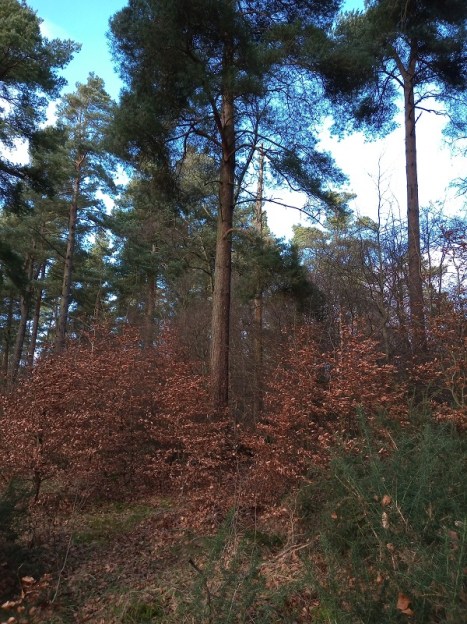
I take the rutted cycling path that skirts the woodland edge. Under the tall, fiendishly straight Scots Pines, many scattered beech saplings nestle in their winter boleros of retained leaves. Beech mast is everywhere, but I do not see the older tree from which it has fallen. Beech seedlings tend not to come up near a parent tree, but somewhere there must be a Mother.

Snow lingers crystalline along the clay-bottomed ditches where black, cold water lurks and trickles. There’s a pond under the pines which so looks like it was formed by an explosion I call it the bomb crater. No signs of frog spawn yet. Several tracks and paths meander where animals come down to drink. Duckweed covers a third of the surface; in the increasing rain thousands of ripples intersect and make diffraction patterns over the other two thirds.

bomb crater

Birds – except for a robin – are silent and glum. A flock of pigeons clatters off towards the field; freshly ploughed, it offers them nothing but the stones that lie heaped in the field corner. How many decades or centuries of cultivation have contributed to this pile? This side of the fence, someone a long time ago arranged stones round a favourite tree, where they remain, moss-covered and half-buried. Larger rocks with wavy patterns etched onto their surface erupt in groups from the forest floor, scarcely distinguishable from the stumps of felled trees. Moss, lichens, algae democratically envelop all.

blackening russula

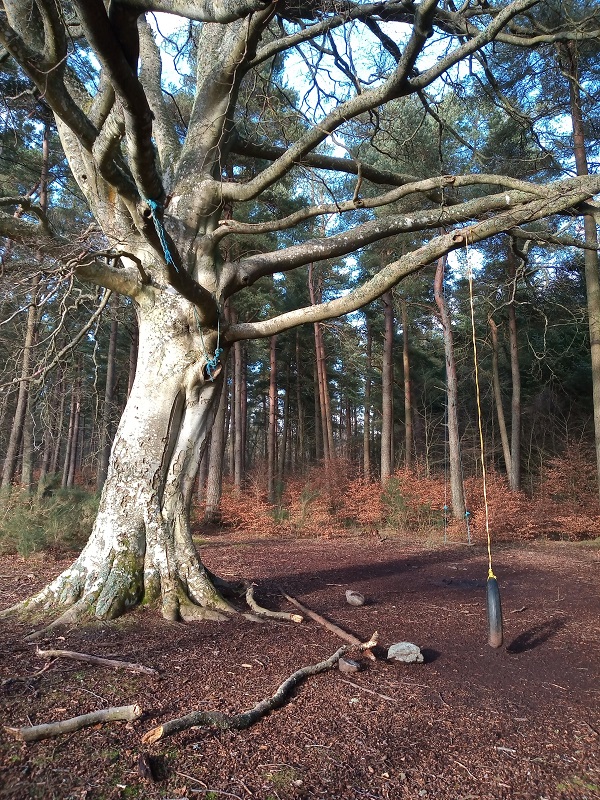
There are charred-looking remains of mushrooms by the path. I think they were Blackening Russulas, an abundance of them. I follow their orbital trail and suddenly find myself under a towering old beech tree, with many spreading branches and a hollowing trunk that makes a chimney of dead wood and fungal rots. Swings hang from two branches; insects and other invertebrates burrow into the soft core of the tree and make their homes. The woodpecker will soon come calling for her dinner, other birds will nest and shout from the canopy. I have found the Mother of Beeches, and of much else besides.

mother of beeches

Five Mile Wood and Taymount Wood are former Forestry Commission plantations just north of Perth. They have for a while been transitioning from industrial timber production to a subtle integration with the wild, and people are part of that wild change. The Commission have put them up for sale, and local people have formed West Stormont Woodlands Group. We are hoping to implement a community buy-out. You can find out more about the plans and group activities at http://www.weststormontwoodlandgroup.org.uk Over the coming year, I intend to write a monthly blog post “Words for Our Woods”about the wildness of the woods, in support of WSWG. This is the first.

A Dear, Green Place

qpcampsies1

I wake up under the ridiculously high ceiling of my daughter’s flat in Govanhill (honestly, you could fit a whole other floor between me and that ceiling), and it’s that not unheard-of, but always slightly surprising thing: a Fine Day. In January. In Glasgow.

So I go down to Queen’s Park under the low sun, and join all the people, taking shortcuts to Shawlands or Battlefield, grimly jogging, exercising a cacophony of canines, or gathering to hold deep discussions on the slithery paths where the morning’s frost has turned to melting ice.

I look for wildlife. There’s plenty, but until you tune in, you’d think it was all rainbow-hued, pouting pigeons intent on fornication and the many opportunist members of the crow family. Magpies bustle under municipal shrubs and into rampant ivy (arguably the park’s most significant contribution to wildlife habitat), and busy themselves with piles of beech leaves, pretending to have a purpose.

qpivytrees    qpcrows1

Crows loiter in trees with intent, fingering – or beaking – sticks and twigs, considering their suitability for Lovenest 2020.

I skirt the wildlife pond, where coots, moorhens, mallard and the remaining cygnets of the Mute Swans entertain small children. Up a green slope, and a sunken track, so deep in mud and the soggy consequences of the previous weekend’s torrential rain that had some of us dancing in puddles, it could double as a Devonshire hollow road. Fallen trees accrue fungi and insects; Queen’s Park here has shed its Paxton municipality.

qpgreenlane      qpgreenlane2

In the wilder, scarcely managed woodland, I hear birdsong – the noisy robin, the piping and sawing of blue and great tits. I know there are long-tailed tits – they visit my son’s bird feeders – but they taunt me shrilly, staying out of sight. A treecreeper works her way up a lime tree trunk. Dunnocks and wrens flit, silent and absorbed. Huddled among the trees on the Camp Hill slopes, the Queen’s Park Allotments make a city within a city, a shanty town of sheds and frames and variously glazed or translucent edifices where lush crops are started early by proper gardeners, and foxes – I can smell them -.find food and sanctuary.

qpfort camp

Higher, and I reach the Iron Age fort that crowns the hill, where grey squirrels scamper among the beech-mast, and humans have lived for centuries. The big stones in the middle of the ramparts may be what’s left of the Camp that named the Hill – during the Battle of Langside in 1568, famously lost by Mary Queen of Scots’ army and which sent her to to seek, and not find, refuge in England. But Glasgow named the park for her.

qpwassailed3

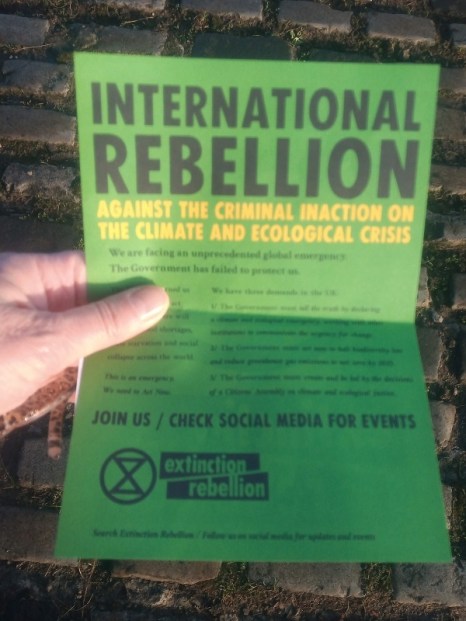
A grove of young fruit trees just below the viewpoint with its flagpole are decorated with dark tartan ribbons, the remnants of last year’s wassailing. I wonder if they will get wassailed this year. The Philosophists of the Flagpole converse earnestly, perched on the backs of the frost-wet seats. Someone hands me a leaflet. It is from Extinction Rebellion.
qpXR

The day before, Glasgow City Council had announced its intention to be carbon-neutral by 2030, despite the challenges of its transport system and heating those high-ceilinged, big-windowed tenements. That’s 15 years before the target set by the Scottish Government. Will they do it? They will give it their best shot, and count the benefits before the costs. XR will say there’s no choice.

qpchimney

We look out over this beautiful city, this dear, green place, bounded and made human-scale by its surrounding hills, dotted with parks and humming with energy that comes from its people. Smoke gushes from a single factory – I think its the brewery opposite Glasgow Green – and a motorway crashes through. They’ll need to sort that. I think, that if anywhere can do it, Glasgow will.

qp1


The Bluebell Wood in Winter

bluebell8

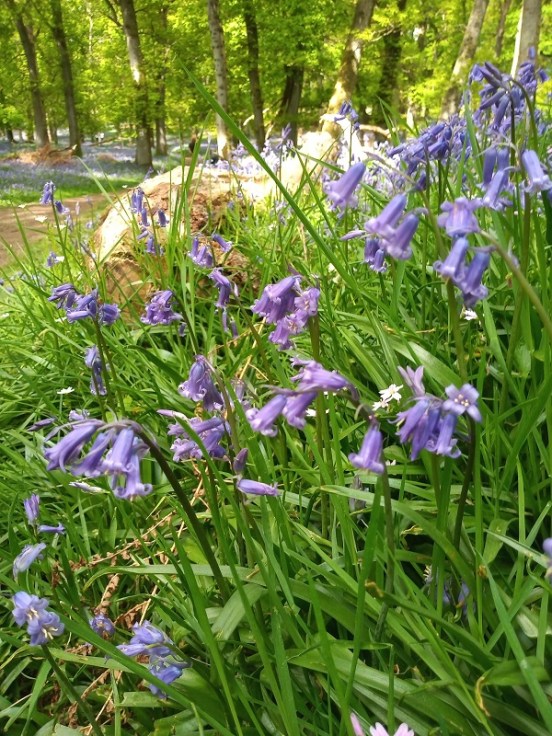
We’ve always felt a sense of ownership of our local bluebell wood. It’s the place we take visitors, a secret to share with loved friends and relations. Over the years, it’s become quite renowned, at least in May, when the ancient oak woodland is carpeted with bluebells. People have always flocked to it then, to capture images on camera, to bring children and grandchildren, or just to stare in amazement, breathing in the scent of bluebells that stretch far and wide.

bluebell4

Maybe not so picturesque, but it’s equally magical in other seasons: when the bracken grows up fresh and green, or in its autumn gold, and in winter, when the silence is tangible, the bracken is tawny-brown and the shoots of bluebells lie just below the soil.
bluebell1
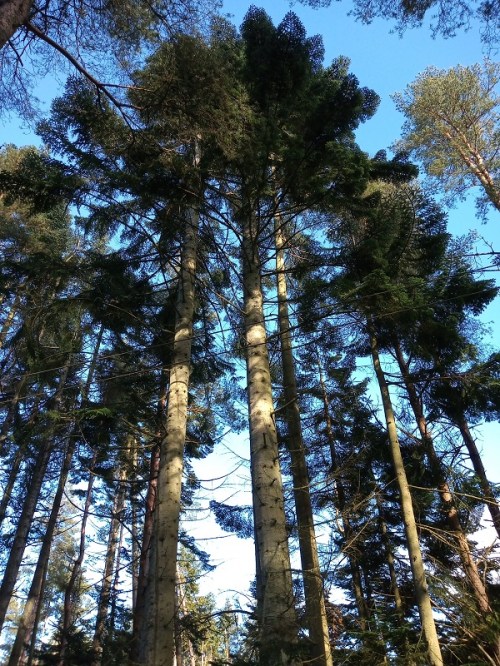
The sun is low and carries no warmth; it pierces the sweet sculpture of bare branches and paints the carpet of mosses under the fir trees with iridescent green and gold. It lights up the crumpled and disordered fern fronds as if with fire.
bluebell5

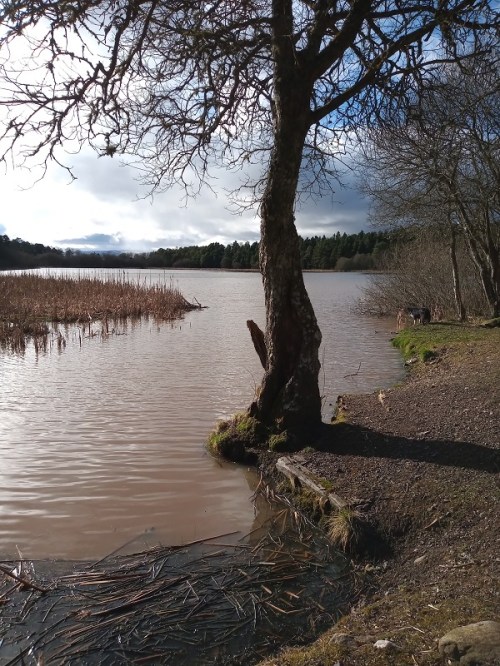
Every oak tree is adamantine and statuesque, posing in naked dignity. The scattered ancient, crumbling beeches also look invulnerable – but that’s an illusion. Every so often, one of them keels over or dumps half a split trunk. Dark, ponderous yew trees here and there are enigmatic about life and death.

bluebell6

At the top of the rise, my favourite tree is a multi-stemmed silver birch, which stands against the sky as if it were painted there. For me, this is Stephen Hawking’s tree. I was on my way up that hill in March 2018 when I heard that he’d died. I sat by the tree and digested the news, sad, but making a mental salute to a brilliant mind. I don’t have many heroes, but Professor Hawking was probably one.

bluebell7

A few years ago, the landowners put the bluebell wood up for sale. That’s when all the folk who’d felt ownership and connection came out of the woodwork. Suppose it was bought by someone who respected neither its status as ancient woodland, nor the long-established right of access? In the end, although a community buy-out would have seemed fitting,  it was bought by the Woodland Trust, thanks to a fortuitous legacy. Sighs of relief were followed by the formation of an enthusiastic volunteer group.

bluebell3

There have been changes, of course. Re-routing of paths to avoid visitors being knocked out by a falling beech branch, a hard line on invasive non-native species that threatened to engulf the bluebells themselves, the eviction of the deer from inside the deer fences to permit oak tree regeneration are just some examples. A car park – inevitable, perhaps, but no ornament… but at least it’s been surrounded by fruit trees.

And a massive planting project of new trees in the adjacent fields that formed part of the sale – thousand of trees, safely behind new deer fencing but accessible via solid gates. Work in spades for the volunteers, for years to come.

bluebell2

It’s rhododendron-bashing day tomorrow.

Last Flight

pexels-photo-210172.jpeg
Photo by Pixabay on Pexels.com

I said I chose not to fly again , except in an emergency. This race to see and speak seems to be emergency enough. I look for the quickest way south. I choose to fly. As the little propellor-plane taxis along, I suppress thoughts of Indiana Jones films and think, this may be my last flight.

It turns out to be a flight like none I’ve had before, a child’s magical birds-eye flight, skimming over a clear, unusually cloud-free landscape at a height where details can readily be identified, and anything not visible is imaginable. I note the snow on the Stirlingshire hills as they retreat behind me. Snow puffs and scrapes across the highest hills of Galloway, and streaks the mountains of England’s lakeland.

I watch the strange, human patterns of fields and settlements. It all looks so much older from the air, like something that has grown organically; haphazard, unplanned. It is the random cracked glaze made by fire on an ancient cauldron, imprinted on glacial landscapes by millenia of human occupation.

I see how nearly bare native trees and unplanned woods snake along river valleys, and cluster beside routes that connect only in a roundabout way; wandering paths and roads that go round things. By contrast, the dark plantation forests of Sitka spruce are bald and angular and the reparations of modern forestry design have done little to alleviate their awkwardness. They still do not fit.

When I next look out, we are passing over Wales. Snowdon and its consort peaks are proud, triumphal, dazzling white and icy, but dark hills lie all around. An extinct Welsh volcano, crimped with snow, broods over a green plain of farms and fields. Its crater hides a cache of snow from all bar those who fly over it. On the Black Mountains, the snow seems to trace the contour lines. It’s like looking at a giant 3D map or one of these models you find in landscape interpretation centres.

Here is an Iron Age landscape, a Celtic domain. Hillforts rise above farmland, the timeless strongholds of Arthur, Merlyn, Caractacus and those who went before. This one has six ditches and ramparts, etched in snow. Its neighbour has only three. And there, quarries and open-cast mines with their working terraces create an optical illusion of hillforts turned inside out.

How green are the valleys, with their wandering rivers and the streams of towns and villages that run along them, made silver by the sun shining on roofs and streets, their buildings,  estates and conurbations making swirling patterns of dots and squares. Way off, Swansea nestles in hard among its cockles and laverbread and all its lovely words, and below lies the black, coal-rippled sand of the South Wales coast.

Crossing the Severn Estuary, the bird’s-eye landscape fades. Features become shadows, obscured, hazy. Cloud lies over Devon and Somerset, a ponderous, doubtful fog. But beyond the unknown, to the west, another landscape beckons. I cannot tell if it is sea or sky, dark streams of cloud or a distant land; lost Lyonesse or the islands of the blest.

aircraft airplane aviation dawn
Photo by Christine Renard on Pexels.com

(I didn’t take any photos on the flight. Even if I had, they’d not be of any use, since I’ve left my phone on a bus!)


Among the Caledonian Pines

IMG_20191020_153320607

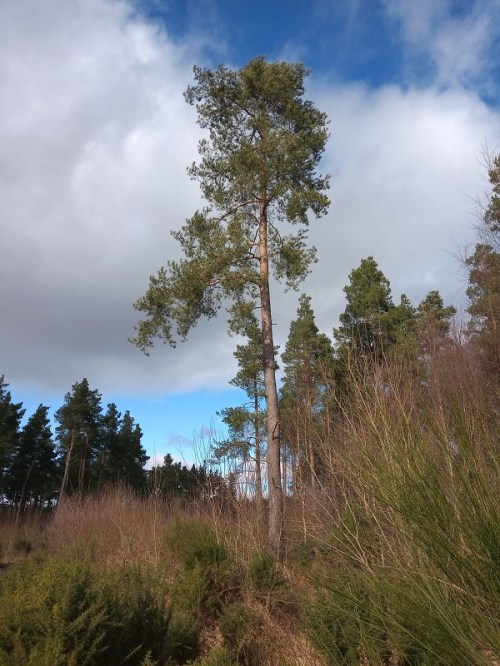
These are free-range pine trees, the Scots Pine, Pinus sylvatica. Not the heavy, lowering plantation evergreens erroneously referred to as pine forest, but which are more likely to be spruce, fir or sometimes the non-native black pine, Pinus nigra nigra. Recognise the Scots Pine by the gingery red of the bark on the upper trunk. Black pines stay grey.

IMG_20191020_102144753.jpg

These pines do not grow in battery-cage rows. They give themselves space to expand, to stretch out to unseen horizons; they live with dignity and grandeur; they are splendid and heroic in their dying. The Caledonian Pine Forest is multi-aged, thanks to decades of careful management to reduce deer predation and facilitate natural regeneration – seed from local trees giving rise to progeny that fits the landscape that made it like a glove. Because of age diversity in the trees, there’s also diversity in height, spread, form and density. That means greater biodiversity. And beauty.

IMG_20191020_102836016.jpg


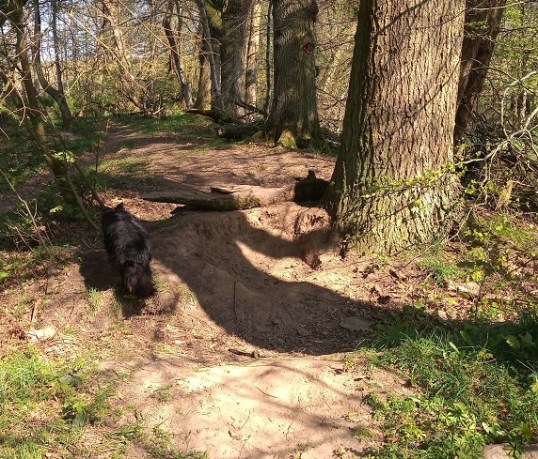
The forests made by the spreading Caledonian pine are light and airy. The ground is soft with layers of needles, kind to the dog’s arthritic paws, so he bounces puppy like full-tilt along meandering paths and up and down banks and ridges, grinning like a mad thing to encourage his slow, plodding humans.

Look up.

The overground network of branches, which look too heavy for the boles to support, whispers with  the quicksilver flow of red squirrels. Titmice flicker from bough to bough – coaltits in pairs, long-tailed ones in squeaky flocks. There may be crested tits in pursuit of pine nuts, for the Caledonian pinewoods are home to species rarely seen elsewhere. Shy and secretive, many of them, like the Pine Marten; or striking like the Scottish Crossbill -possibly the closest we have to a native parrot. Or the Horse of the Woods,  the iconic, pied Capercaillie, whose shyness vanishes embarrassingly during the mating season, when you really, really don’t want to bump into a male bird.

IMG_20191020_103754987.jpg

Look down.

Roots lie just below the surface; barely visible but easy to trip over. Mosses cover them; the translucent yellows, greens and pinks of sphagnum are almost luminous in the wetter areas. The smell of peaty soil mingles with the soft fragrance of resin and bark. Fringing the shallow bogs are ling and heaths, the former still in flower, blaeberries and ferns. Throughout, fallen twigs and branches, last year’s needles and crackling debris of fern make a thousand homes for maybe a thousand life forms; plant, animal,  invertebrate, bird, fungus and bacterium.

Onto these worlds within worlds, light rain emerges; rain so light, so like to air the raindrops are quantum particles which move and spin, randomly, beyond the realms of gravity. This is light-rain, on a world shrunk to infinitesimally small or seen from afar, from where the Scots pine woods become mere fractal patterns on the margins of time.

Once the Caledonian Pine Forest was the dominant vegetation type of much of Highland Scotland. It lightly brushed the sides of tall mountains; it thrived on islands in linear lochs, it swept through the glens. Farmers and crofters cleared some of it, but also made homes among the trees, for shelter and because it was a lovely land. Then came the changes, borne of greed, fear and hatred, that nearly pushed the Caledonian Forest and all it nurtured to extinction. Both sheep and the deer on the “sporting” estates which displaced poor or powerless people ate the succulent young trees, preventing regeneration – the story’s well known. Then there was the snatching of the big trees for the war effort. They were cut down to make boxes to store ammunition. Doubtless someone made a lot of money from that.

Now, thanks to hard work, vision and the dedication of many unsung heroes and heroines, the all-embracing arms of old Caledonian Pines are spread wide, young trees erupt vertically, baby trees get underfoot and choose odd places to grow. The trees are back on the  mountainsides. Long may they flourish and grow.

IMG_20191020_151639342

When Leaves Fall

leaffall3

New pictures are drawn on hillside and in hedgerow; the leaves
now start to drop away.

Trees emerge naked
– shy, hesitant, proud, unafraid, with dignity –
sculpt riots against steely skies.

Finely etched tracery of birch; yellow clouds of leaves
flutter, discarded, on winds grown icy.

leaffall1

Brown-cloaked oaks, stubbornly clinging to summer
angular knees and elbows showing through threadbare fabric.

Sombre sycamores statuesque on the skyline,
Leaves already shed, yet fuzzy with progeny:
Seeds in clusters wait the November storms.

leaffall2

Needles of larch whisper away on water
Lie silent and still on forest paths.

When leaves fall
Tiny buds of spring curl dormant in leaf axils, and wait.