
Loch Leven in Kinross-shire, along with Clunie Loch and Loch of the Lowes (and the ospreys) in Perthshire, and Scotland’s only Lake, the Lake of Menteith in Stirlingshire, was scraped out by glaciers in the Ice Age, then filled with sand and gravel as the glacier retreated – and hence is shallow, broad, wreathed in strange mists, and horizontal in tone. Wide enough to be a honeypot for thousands of wildfowl in winter, secret enough for a Queen to be imprisoned on one of its islands, shape-shifting and elusive enough for ghosts and rare species.
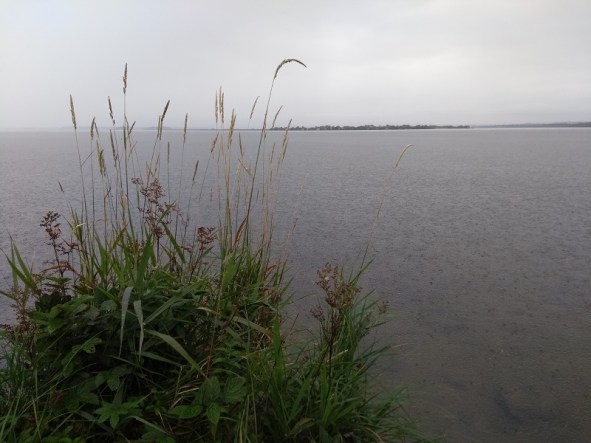
Walk around its margins; there will be places from which the opposite shore can barely be discerned. Go on a grey autumn day when the rain in the air seems suspended in horizontal bands, and upsurging clumps of grass and reeds appear discordant, almost angry in their violation of the horizontal.

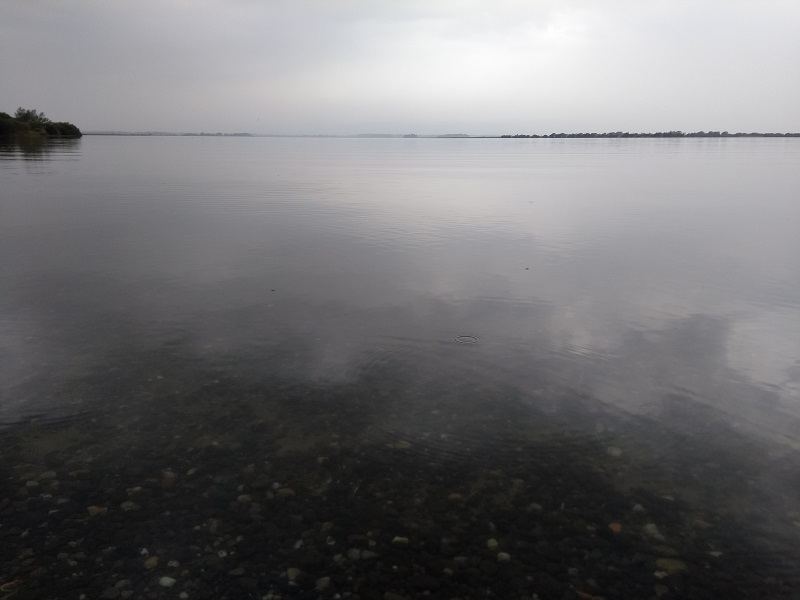
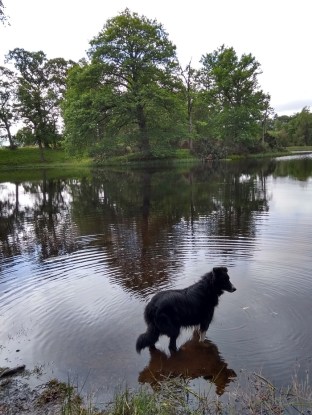
Here and there you’ll find beaches, sandy from the glacier’s retreat; the wind makes small glacial waves that smell of no sea but fool the dog – and then it becomes still. Bands of horizontal clouds are reflected in the mirror surface of the water; subtle stripes of cream and grey and black and white, settling on the horizontal tops of the surrounding hills.
 Pockets of peaty marshland, studded in autumn by vivid blue sheeps’ scabious and emphatically solitary flowers of the Grass of Parnassus, spiral around flat pools of oily water, reflecting snatches of sky. Larger raised bogs, pillaged in previous centuries for their peat, lie flat and sullen. When the peat was no longer wanted, they grew conifers on the “useless” land.
 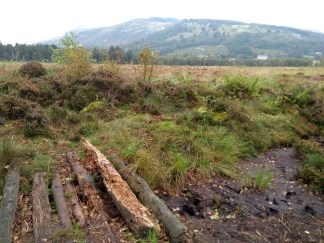 Now the conifers are retreating after the long-forgotten glaciers; the water returns; dragonflies, amphibians and sphagnum once more fill the horizontal expanse between the forest. Heaths and ling guide the trespasser to the dryer paths, and felled branches bridge the bog where water maintains its horizontal sovereignty.
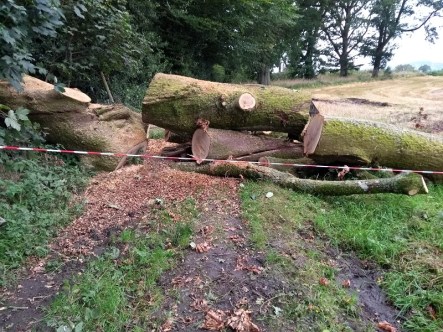
 In fields by the loch, the damp rises in horizontal layers, coating logs and stumps and gate-posts with moist, green mosses and algae. In one field a whole tree fell, years ago. In this damp environment it has not died, but adapted to its horizontal status and continued to grow; a miniature forest of shoots, epiphytes and primitive plants along its horizontal trunk.
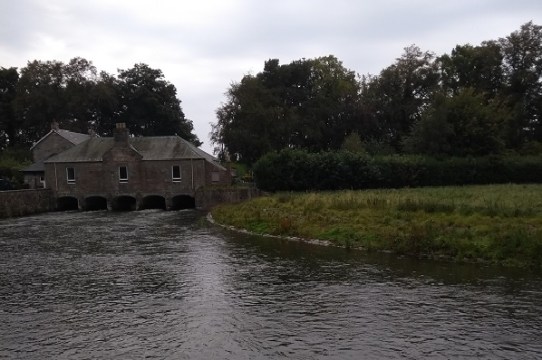
The old river, the Leven, first to score a path through the glaciated landscape, tears out of the loch at the Sluice House, which straddles it, flat and low, and flows out to feed Fife, rural and industrial. Its lines are also straight and keenly defined; kingfishers dart horizontally beneath overhanging branches. Ripples march in military formation downriver.
Quiet, grey, the glacial loch behind you retreats into its bands of mist, its unseen wild occupants, its secrets and loveliness.
 In a fright of frustration and indecision you stream from the house. Too much time alone, too many choices, too many restrictions, too much procrastination – poring over maps in search of something new, too much squinting at Google Satellite to find new paths, no decisions made, no enthusiasm kindled.

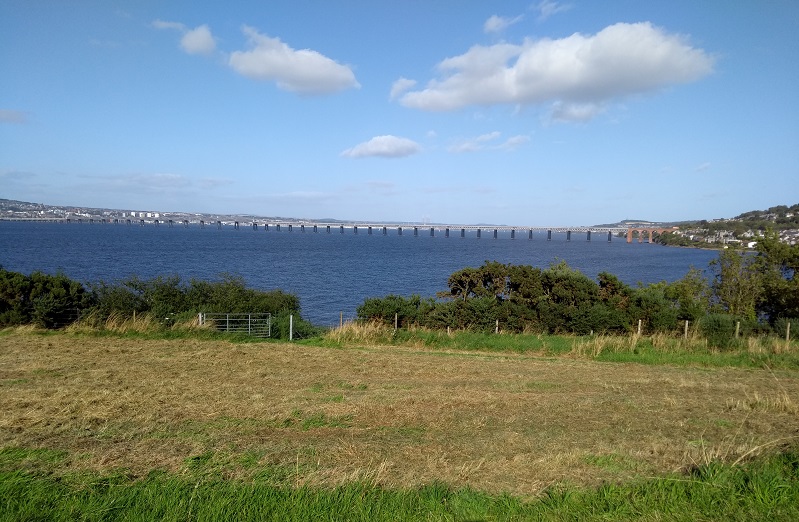
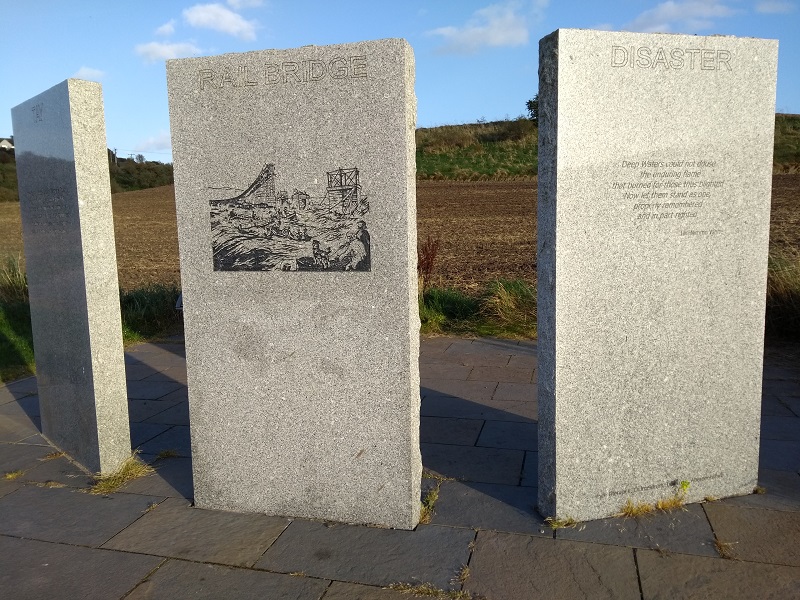 Back at the estuarine beach, nearly under the bridge, you notice the memorial to those killed in the Rail Bridge Disaster. You were in too much of a hurry to see it before. And you stop, and rock to and fro on the tiny jetty, as the dog paddles and sniffs at stones and seaweed.
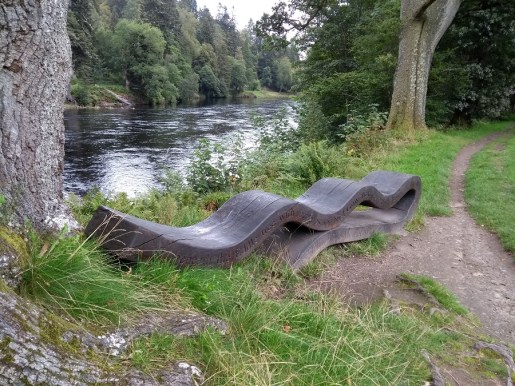 By this great river I sit



 A full evening, two nights and two days of rain. Humidity hangs in the air, the soil beneath my feet pulses damply, the mosses are full and green. Raindrops still coat every flower of grass and frond of bracken, but the sun is shining. The timing is right.
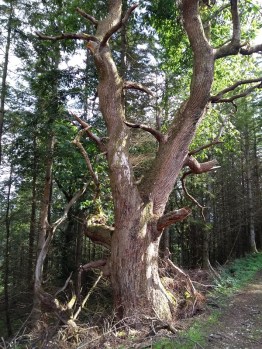 surviving the metallic blundering of the foresters’ vehicles, harvesters and forwarders, along the track. How did it get here? Not a native tree, so planted a long time ago, when this haphazard forest was occupied in a different way. Who planted it? Did they hope for chestnuts to roast on autumn fires?
 ever seen, tucked into the side of a rugged bank that oozes water. Was this path made by a human who knew where to look, or by another animal? Someone told me yesterday that the best chanterelles are on banks and slopes because the deer can’t graze them there.

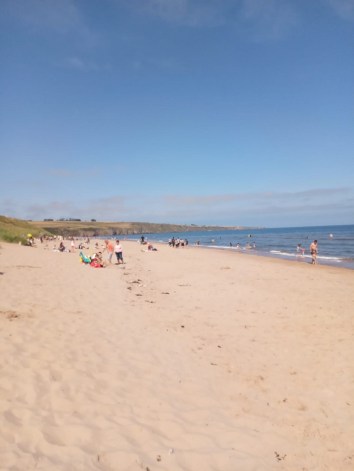 First seen in early spring, nearly twenty years ago, the beach stretched endlessly around the curve of the bay, a shimmering cream expanse of sand uninterrupted by not much more than a man and a dog, idly kicking at the silvery waves. No sound but those waves, breaking, gathering energy, re-forming, breaking again – and the gulls, plovers and oystercatchers worrying at the interface between water and land. The red stones of a ruined castle tottered in the dunes, crumbling, threatening to fall. Where the river splayed lazily, yet with energy, into the sea, flat, smooth stones in many colours could be harvested for an optical feast, to be drawn and painted, rearranged, and consigned to garden corners.
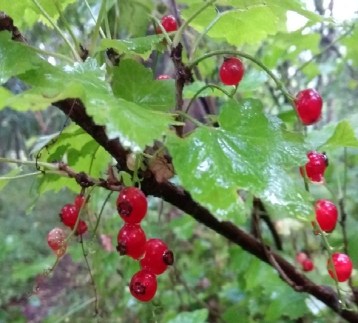 In the dense shade of a triumphant elder spinney, a smattering of redcurrant bushes blooms and fruits, scant rich redness catching the eye as the berries ripen. They are small and sour, yet somehow incandescently flavoursome. Where the track narrows to a muddy path, wild gooseberries make a wee thicket. Their fruits are also tiny, and round. Are they genuinely wild?
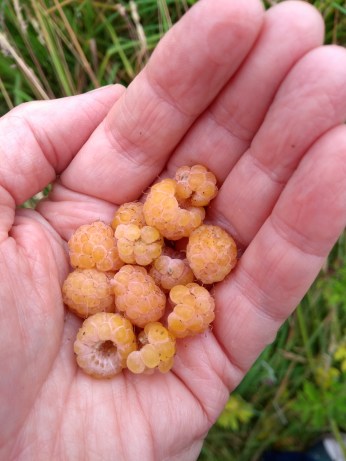 diminutive rasps are a pale golden yellow. They hide behind fiercely protective stands of nettle, and amid the jaggy stems of the hawthorn. These are the sweetest, most succulent of the feral berries. They melt in the mouth and almost dissolve in the hand. Any attempts to gather a large quantity fail; they are nought but juice by the time they get home. Those who know about them keep a close eye, and say nothing, then give the game away when it’s picking time by beating narrow paths through the grass and nettles to get at this choice fruit.
 Comments on The Nature of the Universe