The Undefeated Willow

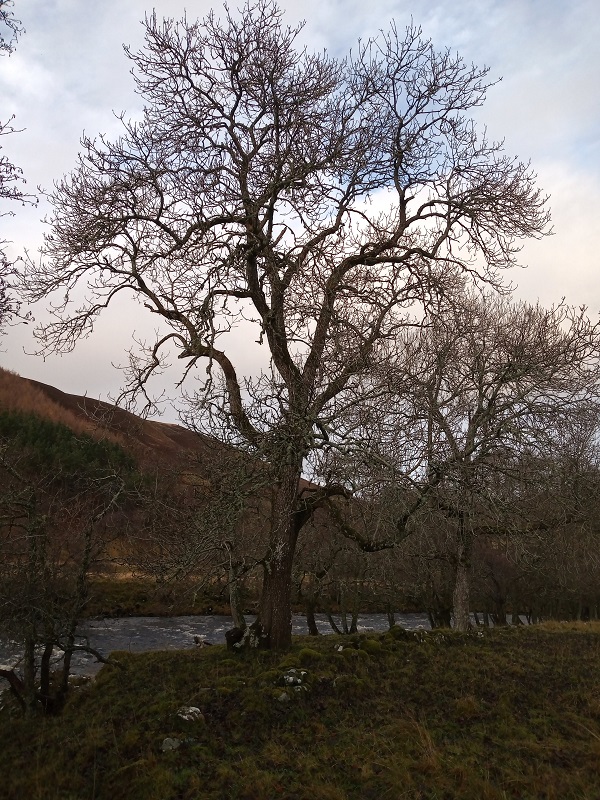
Willows are the most curious trees. For a start, there are well over 300 species worldwide, with eyebrow-raising common names such as Eared, Goat, Cricket Bat and Crack, or casually colour-hinting names (black, white, grey, violet, red and purple). The colours usually refer to the young stems, and that’s why willows have long been valued everywhere to make beautiful baskets, hurdles and sculpture – along with their wonderful flexibility which makes them capable of being woven without snapping. A well-made willow basket is strong and lasts a lifetime.

Those hundreds of species readily hybridise promiscuously, making identification a chore, to say the least – even in Britain where only nineteen species are considered native. I think it’s unlikely humans really know just how many species and hybrids there are. Willow – or sallow, or osier (even the names are slippery) just won’t be pinned down.

Willow won’t be kept down either, even when it falls. Put a bunch of willow stems in the rain-butt to soak for basketry, and the next thing you know, they’ve all grown roots. They grow quickly, ferociously fast. Two metres a year is not uncommon for new growth. Coppice them, and they’re back up the next year. Their Lazarus impersonations are all the more improbable given the mind-boggling number of diseases the genus is prone to – black canker, blight, powdery mildew, scab, watermark disease, root rot, heart rot and willow anthracnose, to name but a few. They are pioneer trees, kicking off the cycle of colonisation in open ground that is damp or downright boggy, and no one fairly expects them to last for centuries.

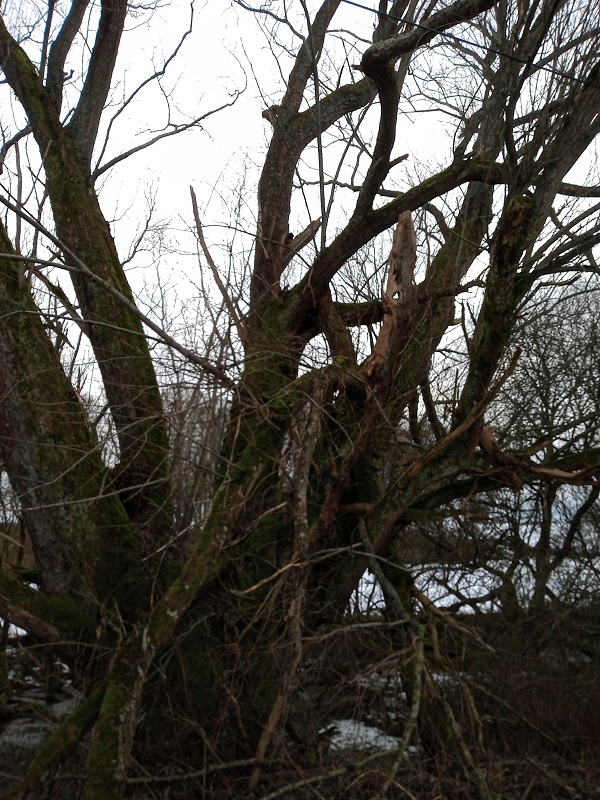
By what remains of the old Back Mill millpond in Bankfoot, there are some death-defying willows. I don’t know the species. One monster of a tree, often pollarded in the past, still stands erect – outrageously enormous, ancient, decrepit. As the millpond has steadily drained of its water and silted up, the roots of these massive willows have been exposed. A flood of heavy rain then washes away the soil, until eventually the whole tree comes crashing down.
Old Man Willow

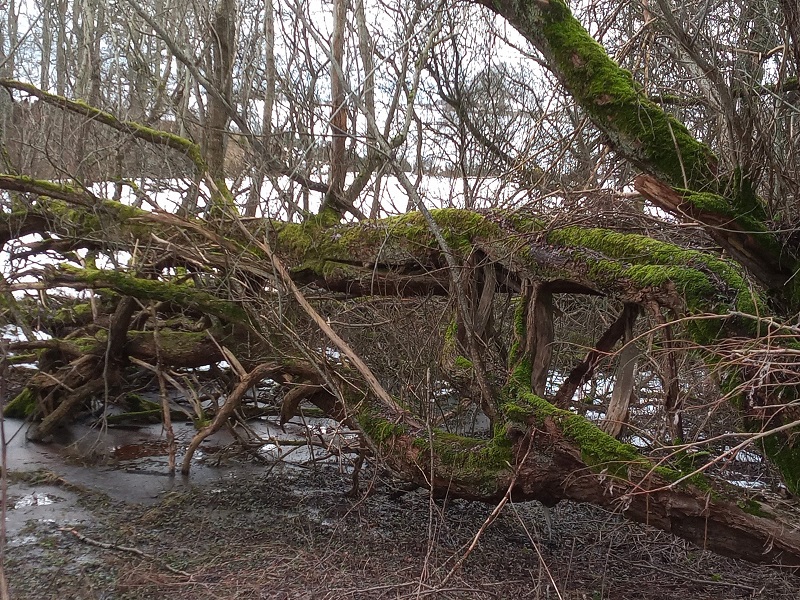
End of story? No way. In falling, the wood, being watery willow, ripped asunder, cracking and splitting in a hundred fibrous places. Some trunks, now horizontal, appear shredded and mashed. Branches poke up out of the devastation akimbo, some dry and decayed, some clinging to life.

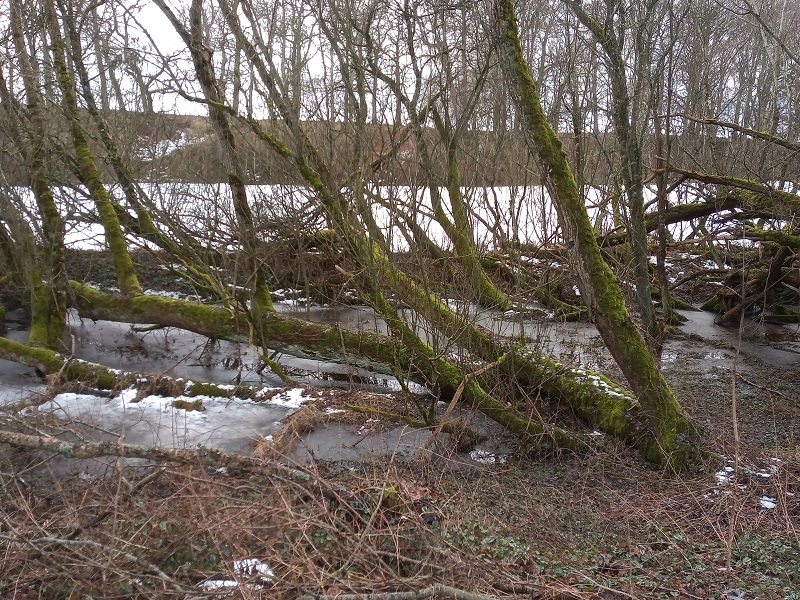
Make no mistake, these willows fell a long time ago, Birds have nested in the crevices where they toppled onto each other. Mosses, algae, lichens, ferns have been succeeded in places by other woody plants, growing out of, and contributing to, the accumulation of soil and organic matter. The trees are alive, but they are a substrate for life also.

From the felled boles and wrecked structures, arrow-straight, insolent shoots clamber skywards. They are making new trunks from the old,even where the original tree has scarcely more than a twisted root in soil or water. A veritable willow plantation arises from the un-dead.
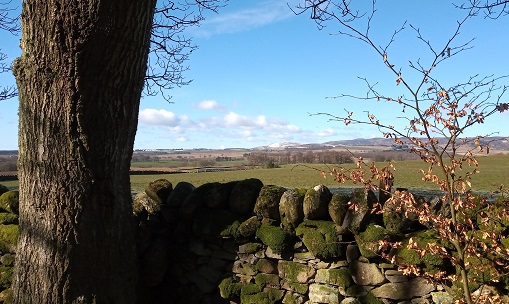
Circular Walk, Spring Morning

A night of light snow, followed by clear-sky freezing has left
The ground hard and white.
Rapidly the sun, heroic, overcoming all, climbing high,
Melts snow to iridescence at every margin, every edge.

On a single hill, snow is held in thrall. Like a crumpled Mount Fuji, but
No blossom, no art,
The hill holds its ghost-clothes, despite the sun’s triumphal progress.
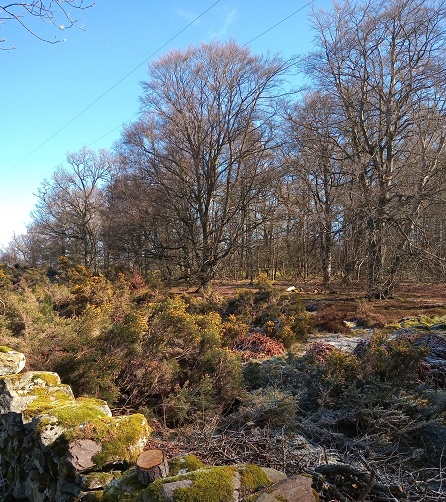
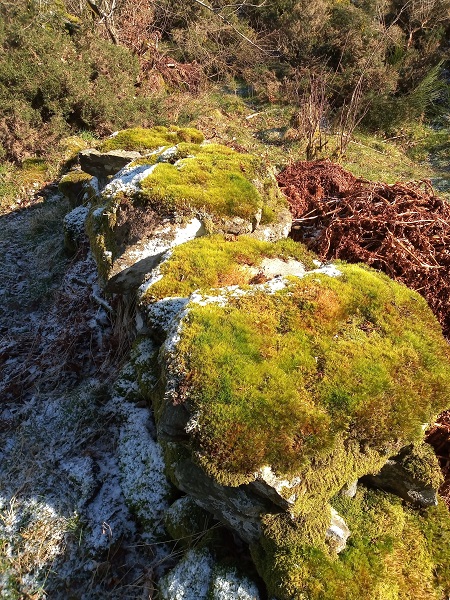
Magisterial old beeches sun themselves among old walls and
Moss-covered stones, dripping, wet, full of temptation.

Birds call, fluting, piping, chameleon-coloured, slipping away like lizards.

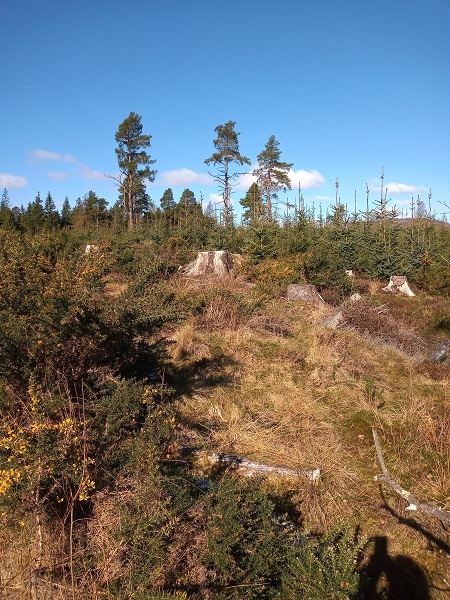
I’ve never understood the detritus of forestry. The wind cuts and dives
In and out of the shambles of stumps and trenches, where startled pines left behind
Look half-naked and vulnerable, hesitantly beginning to stretch arms to the sky,
To each other, united in the icy wind.

I follow the wind. I leave the wreckage, the small shelter
Of self-seeded spruce erupting from glossy gorse and broom. Ahead
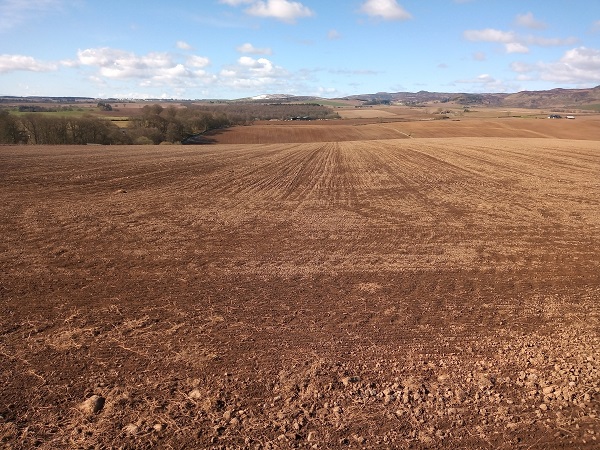
A vast and dreary vista of huge, brown and empty fields,
Unpunctuated by tree or hedge-bank, meticulously ploughed and harrowed.
The dust rises, faintly reeking still of the abattoir, that small, derisory recompense
For decades of soil inevitably lost and life precluded.

Back by road, the first wood anemones
In the deep and shady gulf where children once played canyons,
And a rising stir of sound comes up from behind. Suddenly
A thousand geese are shifting and snaking in the blue, blue sky,
Withering the last frost with their joy.

Bankfoot Church is Falling Down

In February 2004, workmen were burning rubbish on a demolition site. It was a day of gusty winds, when safety procedures should have never allowed a bonfire to be considered. At some point, sparks whirled viciously into a neighbouring building, caught hold, and within minutes a blaze ensued that could not be extinguished before the building was lost.

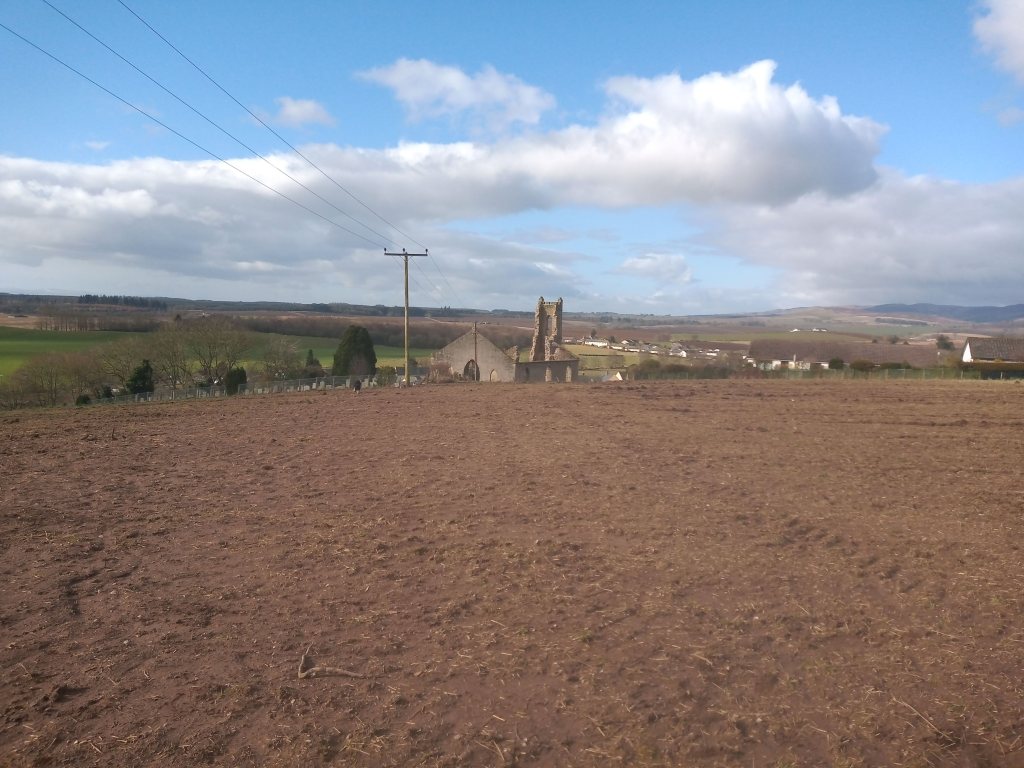
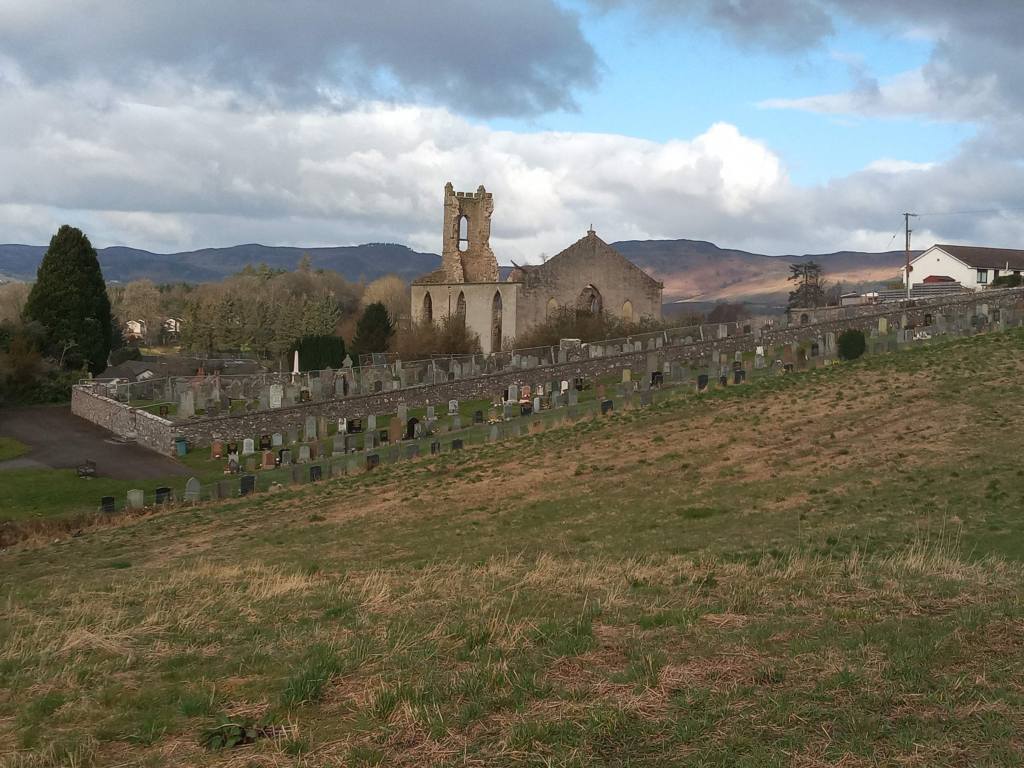
The building was Auchtergaven & Moneydie Parish Church, sited on almost the highest point in the Perthshire village of Bankfoot. It had stood, glowering over the village, for 207 years, its timbers dry, warm and perfect for burning. Not a regular churchgoer, I’d nontheless been there a few times in the seven years I’d lived in Bankfoot, panting my way up the steep path to the entrance, and I’d enjoyed the simple, uncluttered warmth of the wood-lined interior and the sincerity of the congregation. It was a bonnie church, and a landmark for miles around. That day, horrified drivers on the nearby A9 slowed to a crawl, as flames shot to the sky.

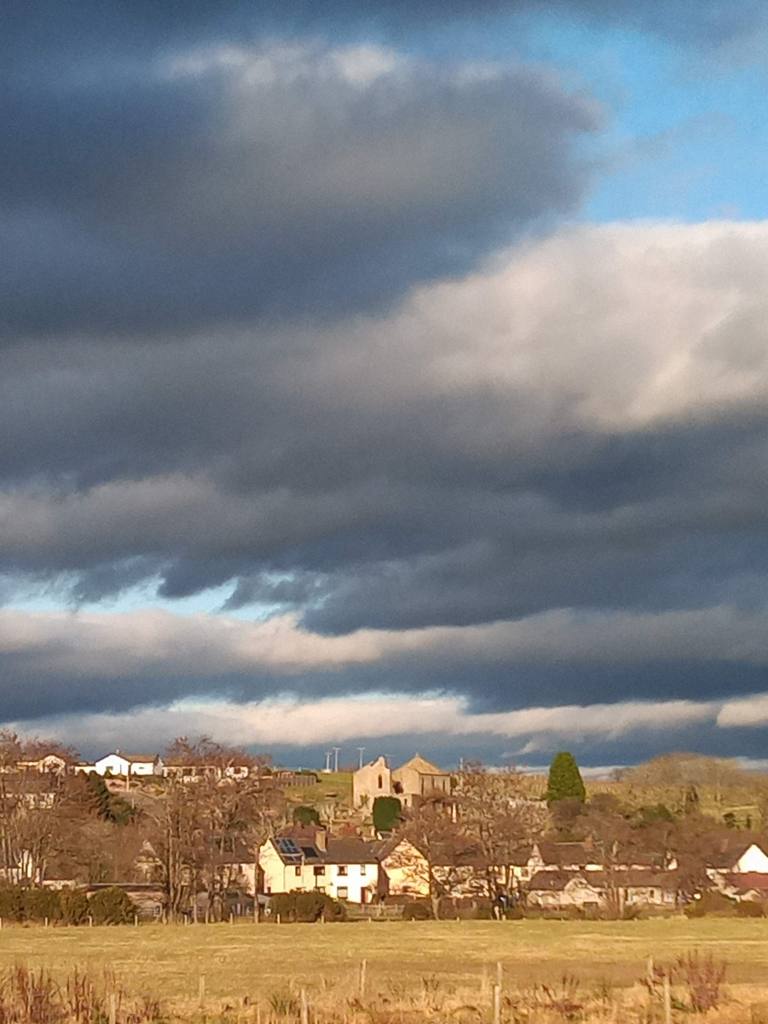
In the aftermath, the old church was not “burnt to the ground” – but it was certainly gutted. From a distance, there were many years when at first glance, you’d never know it was a ruin. The tower still stood, majestic – maybe more so than before – defiant, presiding over a landscape of haphazard hamlets congealed into one village, farmland, people and beasts. After considerable deliberation and assessment of the building’s condition and fitness for purpose, the Church of Scotland, advised by the will of the congregation, opted to build a new church on flat land it owned in the centre of Bankfoot, complete with community facilities and a low carbon footprint. It was a brave and right decision, I think, which offered accessibility and possibilities the old church never could. The original bell, cracked by fire to tonelessness, was rescued and installed as the new font.

But it left little in the coffers to do anything with the remaining structure. Disputes and debates went to and fro for years, between the culprit building firm, insurers, the Kirk, local residents, fundraisers, historians and those with an interest in the surrounding graveyard. Meanwhile, safety fencing went up around the site, the grass grew, and saplings appeared in the smoke-blackened walls. Stone crumbled unnoticed. Blocks occasionally fell; still the tower stood, indomitable. Saplings grew into trees; buddleia, that great exploiter of devastation and demolition, proliferated in the nave and drew in butterflies. Wild flowers and ferns took hold of crevices in outer and inner walls, solitary bees visited and maybe nested in crumbling mortar. Jackdaws and pigeons were regular inhabitants in spring. A garden began to grow in the sanctuary. Who knows what wild creatures found refuge among the piles of fallen rubble? No-one could get in to disturb or identify them.

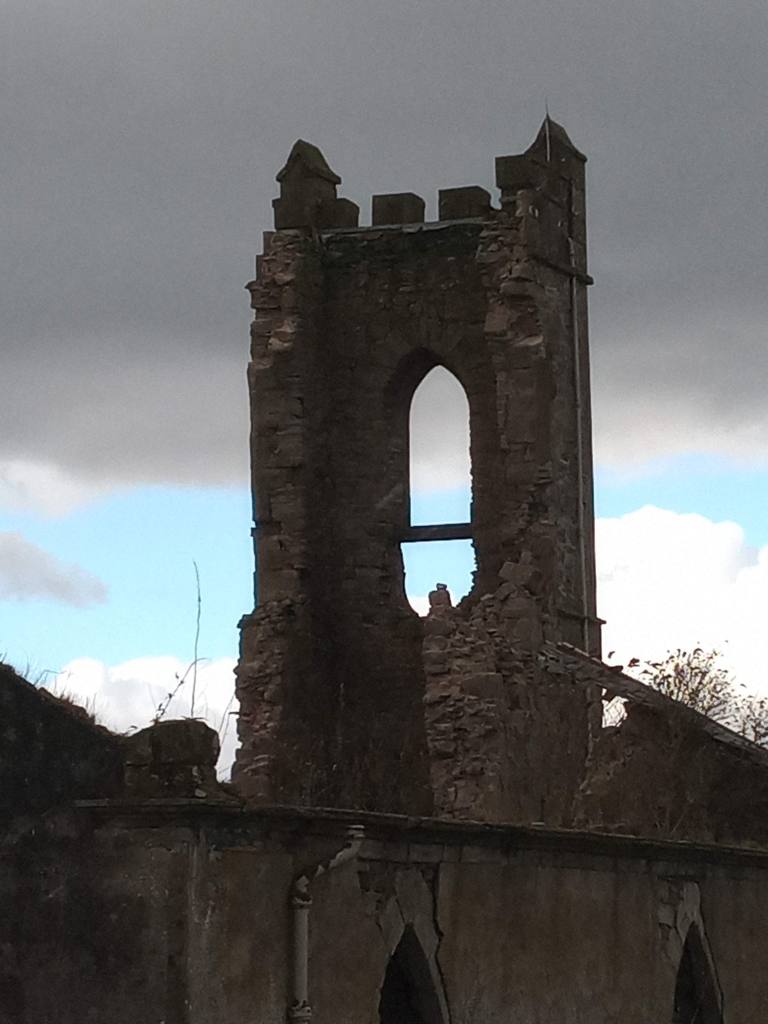
I know many people found it heart-wrenchingly sad. For me, with an ambivalent attitude to organised religion at best, it was more a change in emphasis. I felt the human-centred heart of the building died with the fall of the final clock-face, never to chime again and remind us of the days and hours. One day, out walking in early spring 2020, I noticed that the tower looked a bit odd. I went closer to see if I was imagining things, and discovered that although the front facade still held fairly intact, most of the sides of the tower had fallen in. What was left looked more precarious than ever, but it hadn’t stopped the jackdaws from building warring nests on each remaining pinnacle, or the collared doves gossiping lovingly in hollowed alcoves. Chaffinches and sparrows bustled about purposefully, hopping between the seed heads, roosting on bits of masonry.
I wondered what God – by any name or none – would make of it all. Inevitably St. Francis came to mind, who would surely be quite at ease to see wildlife frequenting a religious building. I thought of the early saints who taught that Celtic version of Christianity which reveres all life, not just the human kind. Jesus himself (despite an unfortunate show of spite to a certain fig tree) counselled his followers on the great value of seeds and sparrows, and the lilies of the field.

Well, I’m no theologian. Who knows? But now the rest of the tower has finally gone, with a crash in the night that woke up the residents of Cairneyhill. The skyline will never be quite the same. I hope the jackdaws and all the other members of Auchtergaven’s wild congregation hadn’t started to build their nests.

Gimme Shelter!

This post was written for West Stormont Woodland Group as part of the Gift and a Challenge series. To find out more about WSWG, go to weststormontwoodlandgroup.scot

And the wind whistled over…..

To begin with the challenge – it’s March. The month that can’t decide whether to ally itself with winter or summer, blows literally hot and cold – but blows anyway, more often than not. This March, temperatures have veered spectacularly – almost hot at times when the sun is fully out, only to evoke shivers and a sullen quest for shelter when the sun goes behind the never-far-away bank of clouds.

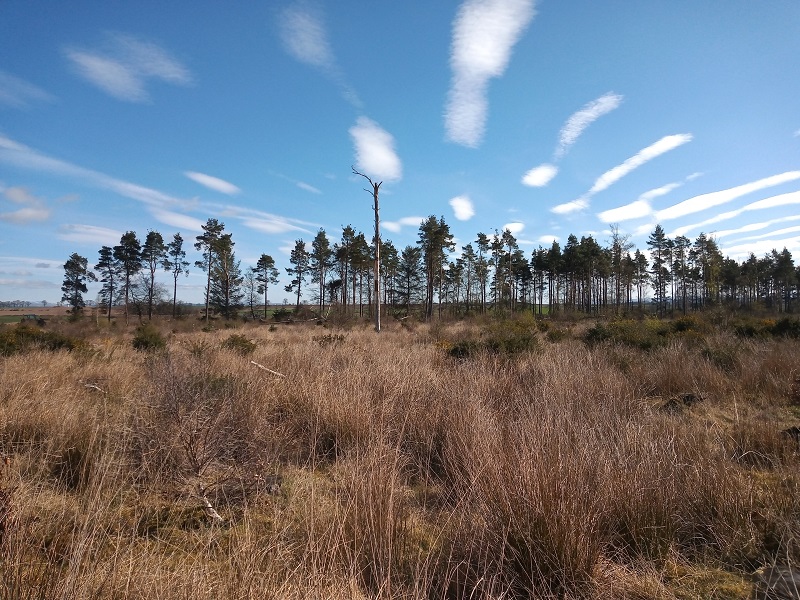
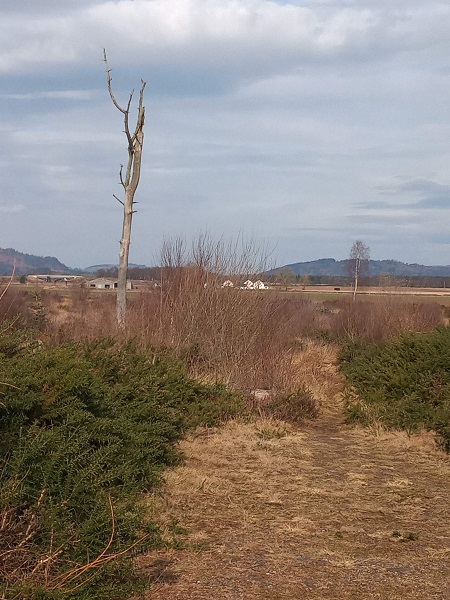
The track in Five Mile Wood is set high around the hill; the clearance of the windthrown central forest has left only bare, angular, dead or dying thin trees, leafless and affording no windbreak. The wind skitters over the gorse; the tall grasses and herbage of summer still skulk in the earth. Between the grey and ghastly yellow of dead wood, last year’s vegetation lies smashed and parched, husky and brittle, desiccated by months of ice, snow and frost.

There is nowhere to hide. Nothing to distract, punctuate or alleviate the March winds and the wreckage of a long winter.

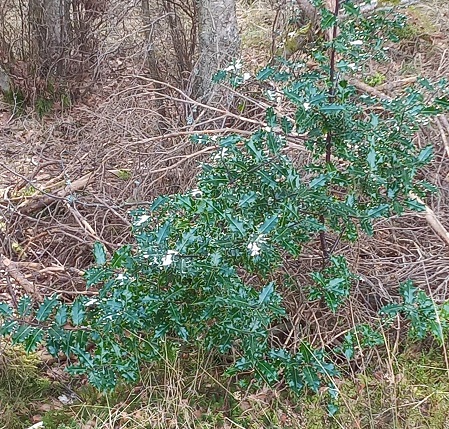
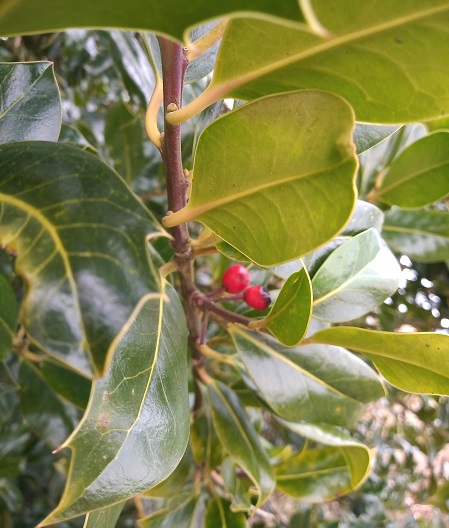
And so to the potential gift from the woods – one that might, with time, give some respite from the challenge of March. We have few native evergreen trees; apart from the magnificent Scots Pine (which can be poor shelter when most of its branches are way above our heads), there are only holly, box and yew. Holly is an important food source for many birds, especially the blackbird family and the robin from the Christmas card, and into any suitable habitat those birds will pass the seeds from all the berries they devour. Thus, holly will start to appear in snatches of clearing or under bigger trees, the seedlings going unnoticed until the taproots are impossible to get out. It was a relief to see, on the margins of the cleared gap in Five Mile Wood, a couple of well-established young holly bushes. They may have grown from seed from a mature tree decked with twining stems of honeysuckle, that grows beside the track, on the edge of the wood.

Baby Holly trees

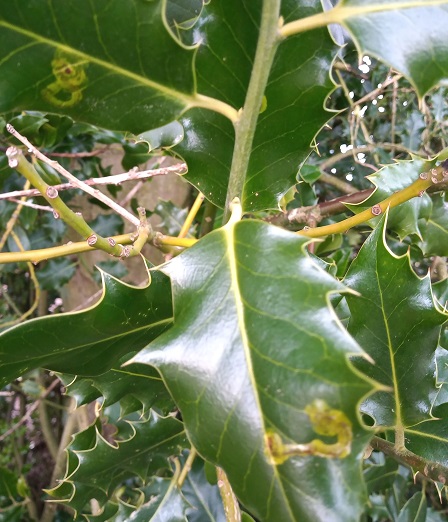
Hollies are dioecious. You get male trees and female trees, and only the females have berries. In March, there are just a few berries left, lurking behind the armoured leaves, while a thrush skulks in the greenery, hunting them out. He is just beginning to try out his repetitious mating call. Aside from shelter from March winds and berries for birds, holly is one of the most valuable wildlife plants and a real gift to have in a wood. Wood mice and other small mammals also feed on the berries, and deer enjoy a prickly snack of holly shoots. The holly by the track is already playing host to the Holly Leaf Miner – an invertebrate recognised by the squiggly patterns of its tunnels, between the upper and lower surfaces of the leaf. They have co-existed with the holly tree for a very long time, and do little real harm to the tree, although the texts of horticultural imperialists will make them sound like the devil incarnate and command the use of an army of chemicals to destroy them.

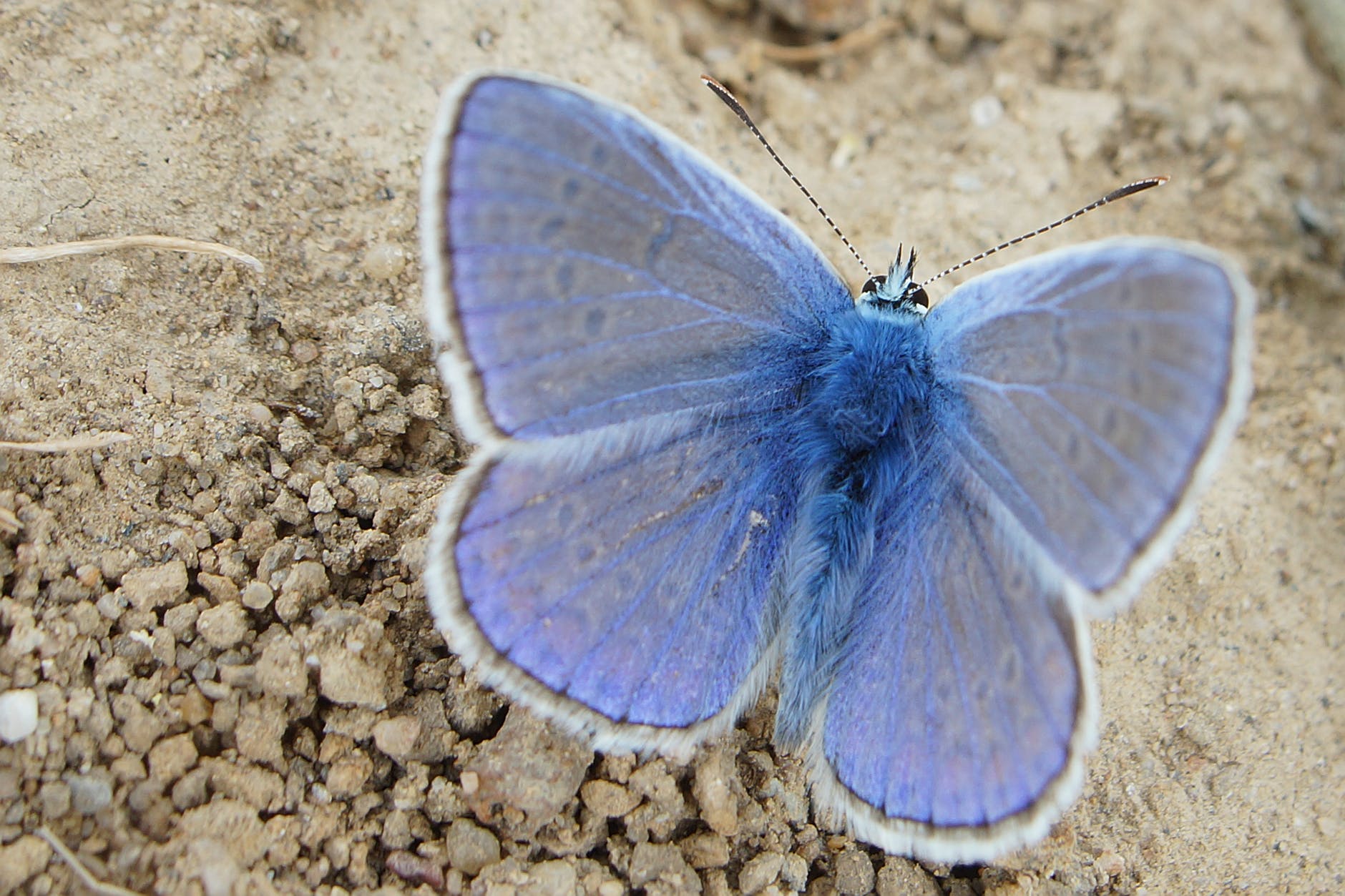
There is a very beautiful butterfly, the Holly Blue, whose caterpillars in spring feed almost entirely on shoots of holly, and later broods move onto ivy. It’s not common in Scotland, although it has been seen dotted around. The looper caterpillars of the holly tortrix moth, as well as many other insect larvae, seek refuge in this prickly tree too.

Photo by Ronald on Pexels.com

And like all evergreens, it provides impenetrable debris for hibernating hedgehogs and is a formidable cosy shelter tree for roosting or nesting birds. Not to mention windblown humans in March.

Diamonds and Opals and Precious Sparkly Things

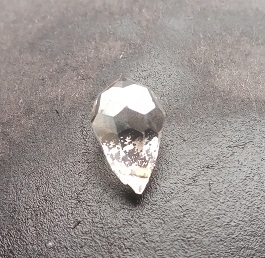
When I was at primary school, the all-consuming craze among the girls was collecting beads. Everyone had a collection, and everyone brought their bead stash to school for swapping and gloating over in the playground. Beads were sometimes acquired from the broken necklaces of aunts, older sisters’ discarded best dresses (sequins were in vogue), theft from mothers and through swapping. Crystals and glass beads were everyone’s favourite, which we called diamonds (or rubies, emeralds or amber, depending on the colour of the glass). I had (oh my god, I still have) a “diamond” dropped by the Queen. Well, I found it in the Mall, when my sister Barbara took me to see Buckingham Palace. She assured me the queen must have dropped it from her coach when waving from an open window. To avoid being hustled for it by the Bead Bullies, I left it at home on schooldays. Most usually, beads were collected by going round the streets and playgrounds picking up those dropped by others. There seemed to be no shortage, but some girls made certain of it. My best friend Pamela (who had a nasty, vicious streak) would run about, “accidentally” barging into gaggles of girls peering into their open bags or boxes of beads. She’d even help to pick them up – but pocketed the choicest, and there were always plenty no-one spotted rolling away. Keep your eyes to the ground long enough, you’d soon build a collection.

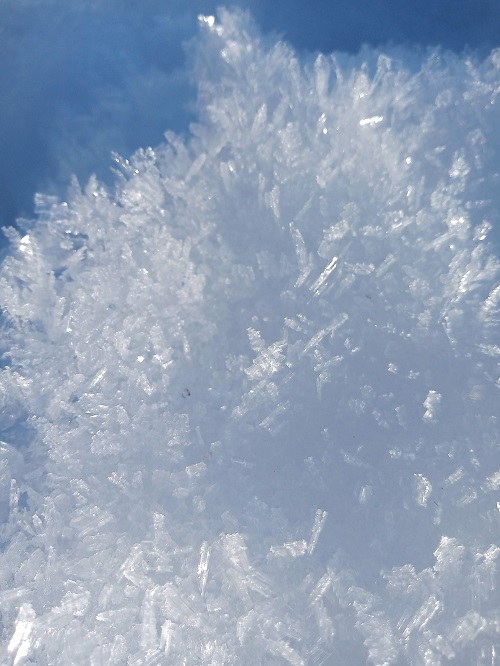
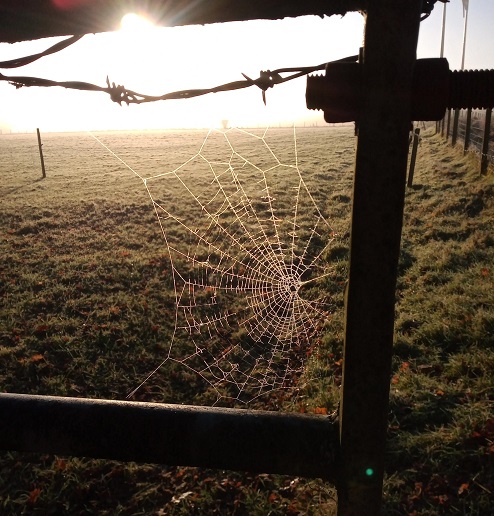
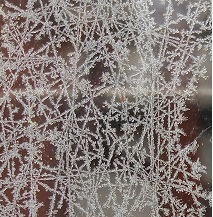
I don’t know at what point I decided to look up at the stars rather than down at my feet, but when I did, I realised the most precious jewels were the intangible ones that faded or shape-shifted before your eyes. Recent falls of snow, melting, re-freezing and glittering in cold, rare sunlight have reminded me of the times as a child when I ran across dew-covered lawns, chasing the rainbows in the water drops. If I stopped running, and swayed gently from side to side, the colours of these so-precious gems changed. But if I touched them or moved toward them, they vanished. Then there were the frosty mornings when my mother got me up early to go round the garden with her, finding exquisite frost patterns on leaf and glass and stone, shimmering in the early sun. Or the first foggy morning of autumn, when every spider’s web was be-jewelled and bewildering in its complexity and simplicity.

Diamonds are famously said to be “forever”. What a nonsense. They’re fairly nice to look at, and they collect rainbows in the same way glass or water does, but I wouldn’t pay money for them.

Collecting snowflakes and making mental snapshots of them before they melted. The fractal patterns of ice creeping over a cold surface. The world viewed through a dripping icicle. The vanishing, slippery uncertainty of the Merrie Dancers, green and rose, across northern skies. Sun on a breaking wave. These precious sparkly things, along with the now-you-see-me-now-you-don’t twinkling of stars as they emerge at dusk or retreat into cloud, these are the jewels of value, the real pearls-beyond price. Ephemeral, transient, temporary. I can’t buy them, own them, hoard them, swap them or sell them, and I never want to try.

Photo by Visit Greenland on Pexels.com

I still have most of my schoolgirl hoard! I am sure one day I’ll find a use for them. I’ve strung some onto the Christmas tree or hung them round the garden before now, and forgotten about them. Maybe they’ll be archaeology for someone, some day. Me, I’ll stick to rainbows in the dew. If you see me swaying about in a meadow on a spring morning, you’ll know what I’m doing!

“Diamond” cast my way by QE1 (of Scotland) aka QE2 (of England etc), circa 1964

Whose Woods are These? I think I know….*

(This is the first in a new series of posts for West Stormont Woodland Group. From fear or repeating myself, I thought I’d write about the fact that each month, the woods have a Gift for us. And every month, there is at least one challenge that faces us – whether physical, philosophical or organisational – in contemplation of owning woodland as a community.)

FEBRUARY’S GIFT: GORSE FLOWER TEA

Of course, there are gorse bushes in flower in February in Five Mile Wood. There are gorse bushes in flower in the woods every month of the year, providing pollen and nectar for insects out too early or too late in the season. Some ancient lecher noticed this and spawned the saying “When gorse is not in flower, then kissing’s out of season.”

Gorse in flower in a cold and clenching winter such as this of 2021 is a real gift. It’s too cold to detect the rich coconut smell from them which can be almost overpowering in high summer, but the gold dazzles against the grey landscape of February or keeks through the smothering snow. Gorse has been used for many purposes, from feeding tough-mouthed horses in winter to sweeping chimneys. It’s a nitrogen fixing plant, like all the pea family, and imparts fertility to the soil. Burn it, and the alkaline ash is good for cleaning soiled linen.

The flowers themselves are used to make a yellow dye, and whether it worked or not, some dairies insisted that feeding gorse to milking cows made for a rich yellow butter. I don’t use gorse for any of these, but I do make gorse flower tea. It looks wonderful swirling around a glass teapot and you might catch a breath of that coconut smell. Don’t expect to taste it; it’s a very subtle (or absent!) taste. If you look hard you may find early shoots of nettle in the woods to give the tea some substance.

But don’t pass the gorse on to anyone else – allegedly, making a gift of gorse guarantees you’ll end up fighting. It’s the woods’ gift to me in February, and I will have no quarrel with the woods.

A CHALLENGE FOR FEBRUARY: WHOSE WOODS ARE THESE?

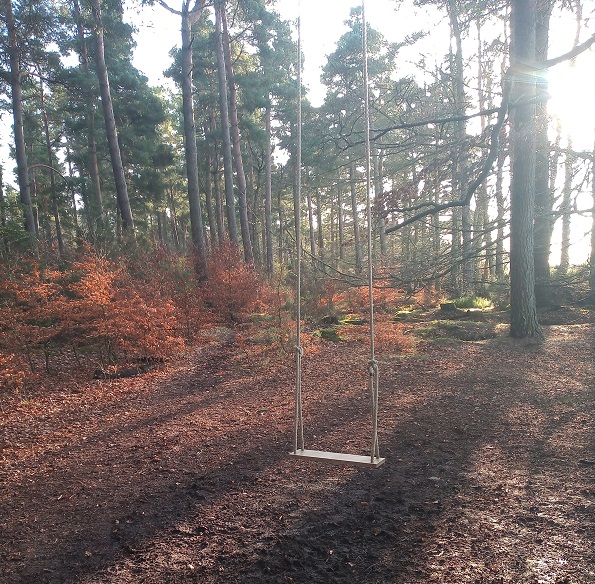
I think the woods are used more now than I remember in over twenty years, Evidence for that lies not just in who you meet, but in new tracks veering off, in small acts of clearance, in scattered pieces of art, in well-maintained articles of recreation like the new swing in the picture. Using the woods implies a sense of ownership, a vested interest, a certainty of relationship. A future.

But are we all buying into this? And will that feeling of belonging translate into an actual belonging? If Five Mile and Taymount Woods are to be taken into community ownership, it’s essential that community identifies itself, makes itself heard and provides the evidence of its existence that will count.

This month, West Stormont Woodland Group will begin a Community Consultation on the proposals the group has been working on for the two woods (or, as it’s widely seen, the one wood with a gap in the middle). Of course, Covid restrictions have forced the consultation to be mostly online, but this shouldn’t be seen as a problem – taking an event online in my recent experience amplifies and multiplies its reach and scope. There is a new website dedicated to the consultation, which launches on 22nd February; details can be found at http://www.weststormontwoodlandgroup.scot ,on Facebook, or by emailing contact@weststormontwoodlandgroup.scot

The challenge is to get you, me, all members, all non-members local to the communities around the woods, all of us starting to think these woods might be ours, to contribute to the consultation. Spread the word!

*Quoted from the opening lines of “Stopping by Woods on a Snowy Evening” by Robert Frost.

Here comes the Sun

The mute swans stand in the middle of Stare Dam loch, looking at their feet in puzzlement, as meltwater sluices over them. They bend round to look beseechingly at me as I stand by the wooden jetty, as if to ask why this strange divinity has been bestowed on them, and why they cannot swim in water as usual. Then with determination they undertake a rather slippery swan take-off from whatever the surface of the loch is, and wheel around the trees in the reassuring sky.

The sun roars through into the morning like a rocket. Speed of light. It burnishes the bare trees and their wavering reflections in the loch, shrieks and shatters the shards of once indomitable ice. Water trickles unseen, seeps from frozen ground, sings in quiet rivulets.

An old song burrows its way into my head, and will not leave. The ice is slowly melting. I stand, eyes closed to the sun, and feel the breeze that no longer lacerates with coldness. I hear the whirring of the bemused swans, the first territorial song-stakes of the woodland birds. It seems like years since it’s been here.

Back at the house, the speculating rooks are at home, sitting in their parliament in the sycamore and debating which of last year’s nests have foundations sufficiently stable to re-use. Twigs start dropping.  I think there are more rook members than last year.

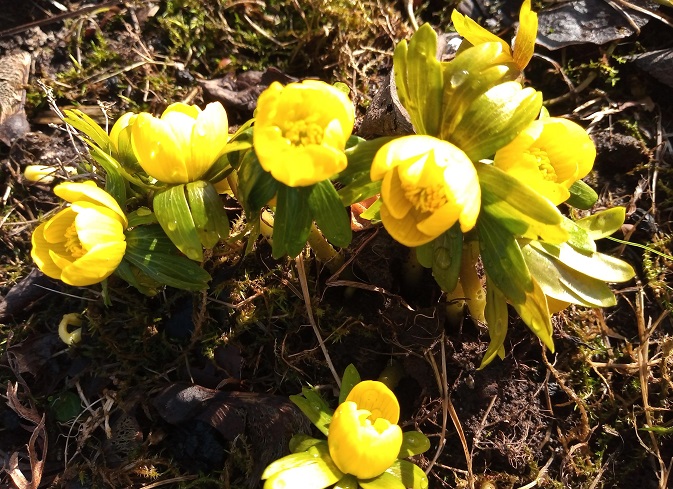
Not all of the calamities and sorrows of the winter will disappear with the snow. But some will diminish, I think, and some will be easier to face. The snow has retreated from bits of lawn. The winter aconites open, and dazzle.

Muffled in Monochrome

I don’t hate snow, really. It’s just different. It invites us to be indoors, to exclude the cold air, the blinding whiteness, the threats of slip and slide and sink and fall. If it’s around too long, it starts to bug me. Last Friday while reading, I got frustrated by the pinprick of light that seemed to obliterate whatever word I was looking at. Then the pinprick became a ball-bearing, then an expanding ring. A migraine aura. Perhaps going outside earlier when sun on snow had dazzled me caused it. An hour of lying, eyes closed, listening to a dark and frighteningly funny play about the erstwhile president of the USA saw it off but left me uneasy. The sun was gone, and greyness encroached, but I needed exercise, daylight and an antidote to foreboding.

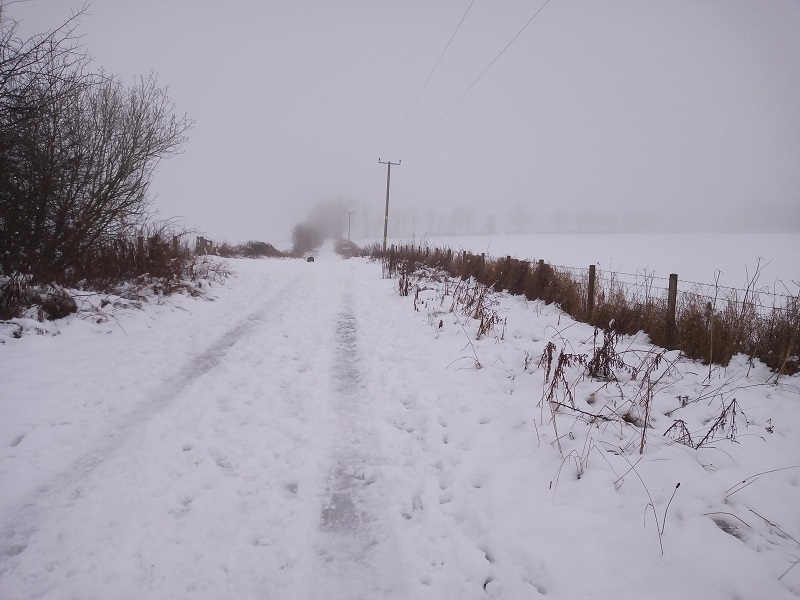
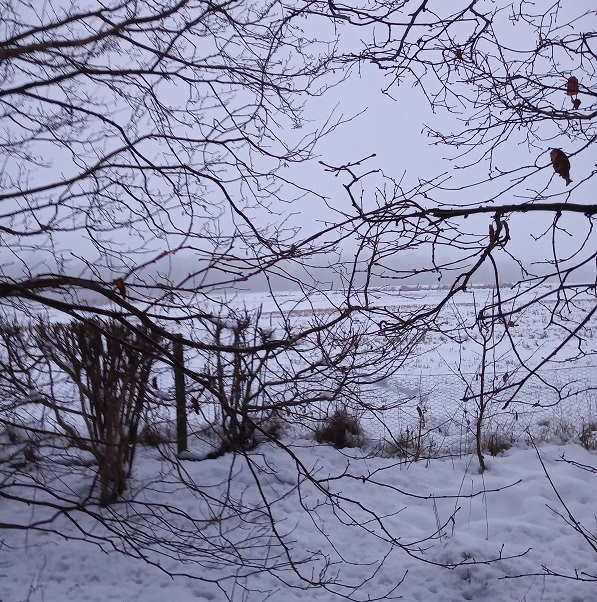
Snow lay thickly on the ground, with an intensity and doggedness that bludgeoned the senses. Dense, white cloud merged into white fields, but it was not easy to know if I was looking at land or air, except where snatches of stubble or deer-scuffed soil peered through a thin, white fog. There were no distant views; everything seemed close, oppressive, heavy and inert.

Vision impaired, a mild headache bleakly persisting, and the opacity of the veil of snow deadening all sound. Small flocks of monochrome birds passed over, silent and anonymous. Solitary grey figures slipped soundlessly across the edges of fields or emerged from woods; we did not acknowledge that we’d seen each other. The sounds I could hear were only in my head; ringing of tinnitus, a faint roaring; result of a year of being virtually locked down and unwilling to self-treat blocked ears after causing an infection with my last attempt.

Seeking light, I went into an open field. The snow immediately came over the tops of my boots and slid down to my heels. I looked for patches of exposed stubble, and followed deer, humans and dog prints to avoid drifts, but they confounded me. The effort of trudging uphill took concentration. I could only see the spot where I would place my next mark on crusty, half-frozen snow.

When I got home in the dim, shrouding dusk, I was surprised to see the hens still out. I stepped into the polytunnel to knock snow off the top from inside. The sight of green, growing plants, brown soil, terracotta pots and little piles of compost waiting to be spread filled me with strange relief. I sat for a few minutes in a garden chair, relishing the last remnants of colour before nightfall. Then I punched the thick layer of snow from the top and sides. It slid off with a rushing sigh. And I saw then that it was not yet dark – the hens were right. Night had not yet fallen, and into this small green space came a brief shudder of light, clarity and hope.

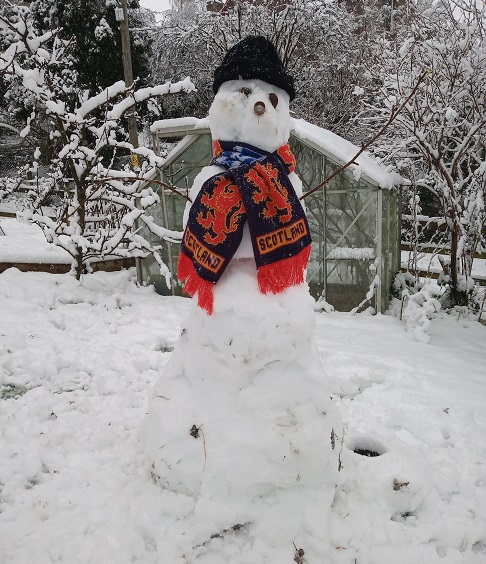
(When I open the curtains onto the first serious snow of January, I am just like any other child.)

Just round the next corner….

How often in the past year have you heard someone say, “You never know what’s around the corner”? Or felt anxiety because you really, really don’t know what is happening or going to happen to you, and the future is obscure? We got caught in the Christmas Covid Car Crash, and are just mentally reeling from a close encounter with coronavirus. We emerge, cautiously and with reluctance from tests and self isolation, while our close family recover from the virus. We emerge into another lockdown, and feel relieved. Self-isolation, let me tell you, can be addictive when you’ve been scared, and realised how ill-prepared you are for dying.

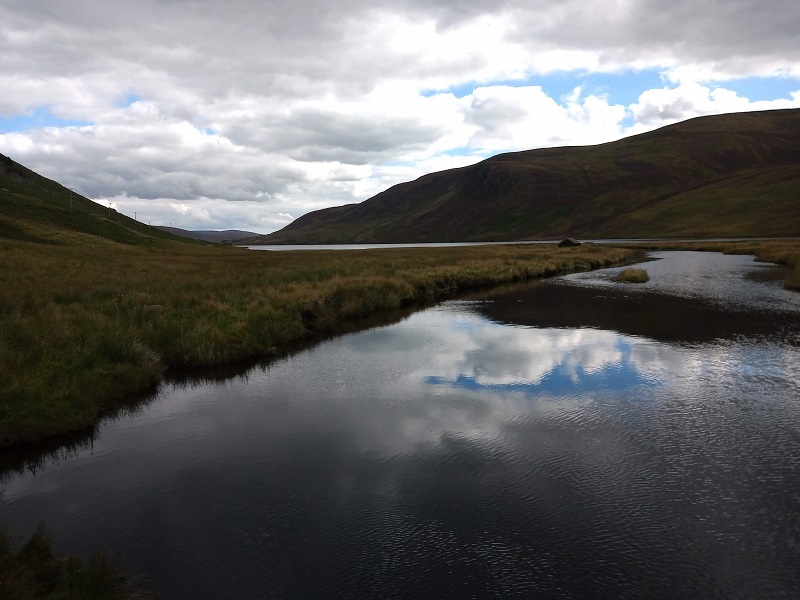
Back in late summer, when such things were still possible, we had a two day camping trip to Glen Esk. On the second day, we decided to take a short and easy walk up Glen Lee. Short, to give us plenty of time to enjoy a cycle down Glen Esk as well. At first, we decided, we’d just go to the start of Loch Lee and turn around. But just beyond the point where the Water of Lee calmly enters the loch, we could see the ruins of a church or chapel by the waterside. “We’ll just go to that and explore.”

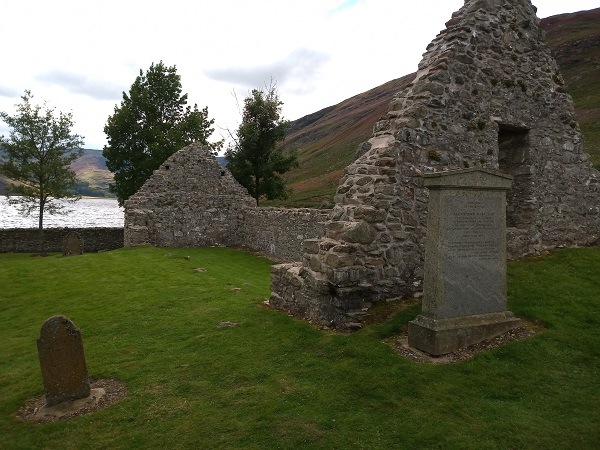
The tiny old parish church of Glenesk had not been used in a good while, but the ancient gravestones, carved with faces and bones and what look like crossed spades, suggested a long history. In fact, a church of some kind is believed to have stood here since at least the 8th century. The sun on the well-tended grass invited a long dawdle and a picnic, and then we ambled along the track by the loch. The other end of the loch wasn’t quite visible, so we thought we’d “just go round the next corner” to see it.

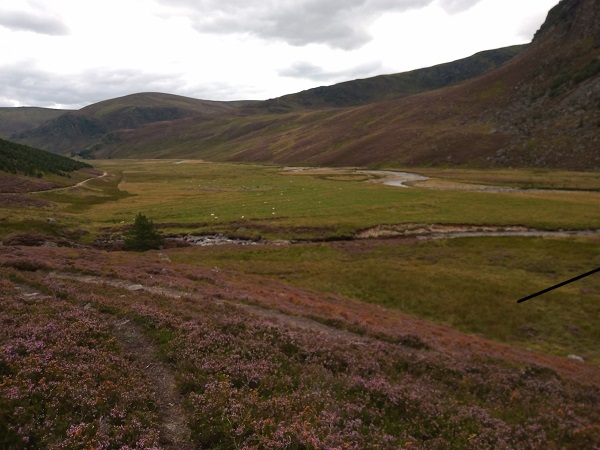
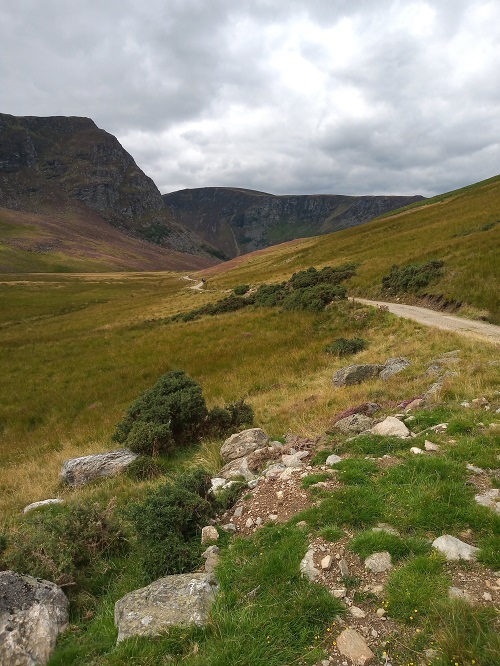
And so we began the inevitable daunder-of-curiosity which besets all walkers in new territory – the drive to see what’s round the corner, or over the next hill. Round and past the far end of the loch, skirting the flat plain where we looked for the signs of ancient habitation, past deserted farmsteads and into the steep-sided valley, up into the purple heather. Every crag we rounded gave us sight of another; we had to know what came next.

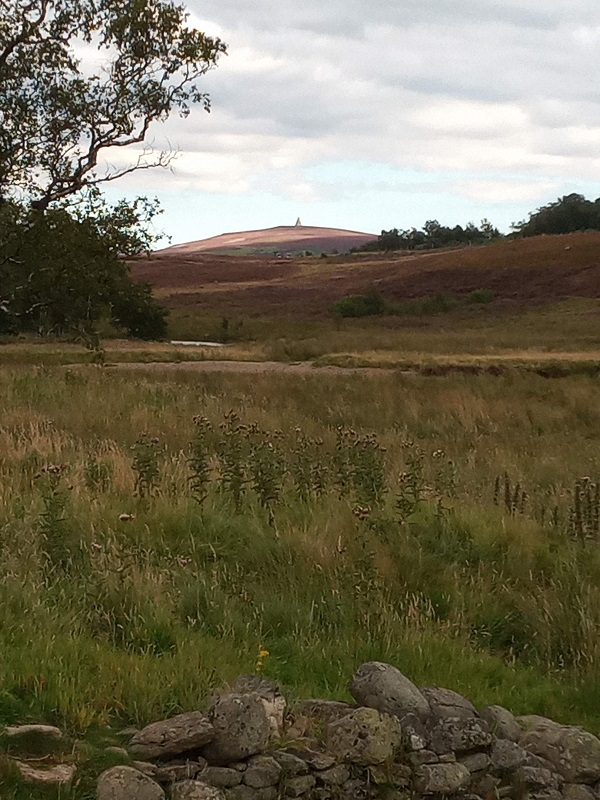
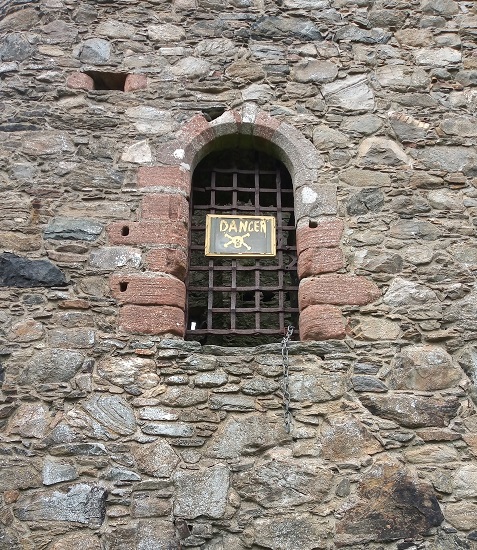
Eventually, we saw the Falls of Unich, where tracks to right and left might have given us a circular walk. But we didn’t have a good enough map, and still wanted a cycle. So we returned the way we came, marvelling lazily at the carnivorous sundews and butterworts in the ditch by the track, stopping to watch a hen harrier swooping low over the crags and rising again, while we, in turn, were closely observed by ravens, shouting harshly at our passing. Before we got the bikes out, we had time to admire the forbidding Invermark Castle and the tempting Hill of Rowan, surmounted by the imposing Fox Maule-Ramsay monument.

On this short walk, we left many corners not turned. Maybe we’ll go back. Maybe we won’t. Truth is, none of us knows, or ever has known, what’s around the corner, even when we succeed in deluding ourselves that we can plan ahead and things will always turn out as we planned. The future’s the un-turned corner, and we can only know for sure about the corner we’re standing at.

A warning from Invermark Castle

Yggdrasil: The World Ash Tree

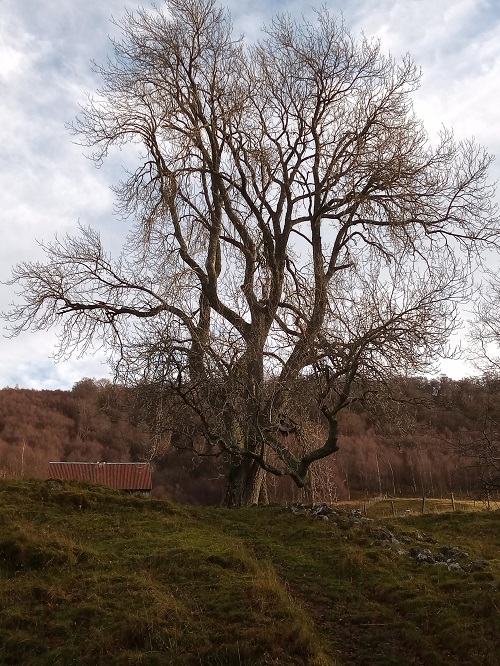
The ash tree, with its distinctive black, pyramid-like winter buds that sit defiantly opposing each other, was the first native tree I learned to recognise in winter. From the grey, ebony-tipped twigs I stood back to take in the whole glorious form of this tree at maturity: the grace and strength of the downward-sweeping branches, the solidity of trunk and main frame, and the artistic flourish with which the ends of each branch skip briefly skywards following their downward plunge.

Like all deciduous trees, the beauty of its structure is revealed annually at leaf-fall. We may love and appreciate our trees in summer, but in winter, we can truly see them. I never tire of looking at trees in winter.

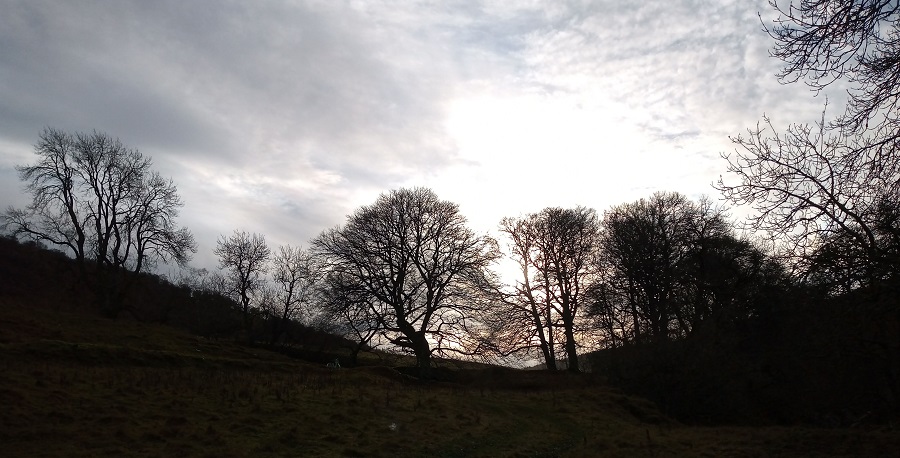
Sadly, the monumental frozen-motion glory of the mature ash is a sight less and less available to us. Ash die-back disease is caused by a fungus (Hymenoscyphus fraxinea) which attacks and infests the bark, leading to wilting of leaves and die-back of those optimistic, sky-seeking terminal twigs. Jaggy, stunted branch-ends and lesioned bark are more often what we see today. The spores are wind-blown, and so it has spread inexorably through Europe. There seems to be little point in felling affected trees, since the fungus spends part of its life cycle proliferating in leaf litter. In pockets where old ash trees are isolated from larger populations, such as Glen Tilt in Highland Perthshire, the majesty of the winter ash can still be seen.

There will be resistant trees, and much is being done to find these, identify their genetic codes, and breed from them. We can only hope the ash tree’s absence from the landscape is temporary.

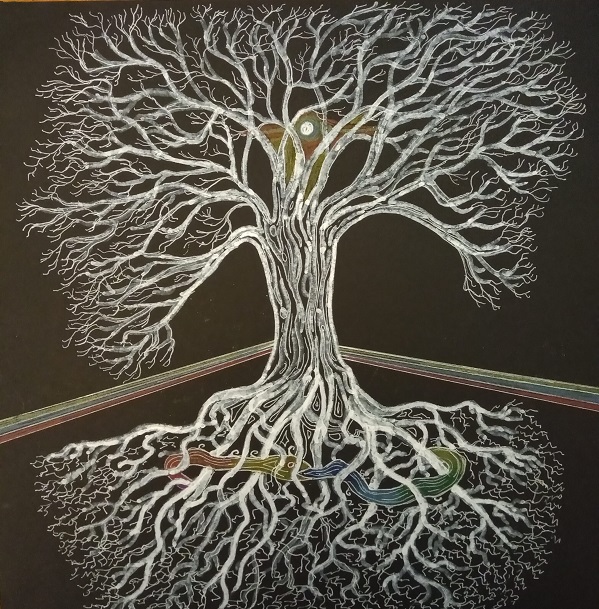
But the Ash Tree has an existence outside the biological. It is – and long has been – a symbol, a magical entity, a talisman. In Norse and Germanic mythologies it is Yggdrasil, the World Ash Tree. Its branches reach into and hold up the heavens; its roots delve deep into the dark caverns of the underworlds, where the serpent-dragon Nidhogg gnaws at its roots. Between the two lies everything we know, and much that we don’t. Three women, the Norns, sit below its mighty branches, tending the World Tree and spinning, spinning, spinning the fates of gods and humans.

The Tree of Life and the Tree of Knowledge are other expressions of Yggdrasil. Odin, father and chief of the Nordic pantheon, presents as a seriously flawed, doubtful and often misguided god. (To be fair, they all do.) Maybe that’s why he disguised himself as the Wanderer, with his wide-brimmed hat (echoed in the character of Gandalf in Lord of the Rings?) and ash staff cut from Yggdrasil, roaming the Earth in search of knowledge and enlightenment. Ultimately, the tale goes, Odin had to hang himself from the Tree, wounded by the ash spear, for nine days and nights, to find the wisdom to save humankind.

Should the Norns cease to care for Yggdrasil, or malevolent forces overtake it, like our blighted ash trees, it will die, and the rooster Gullinkambi will crow from its withering canopy, proclaiming Ragnarok – the Twilight of the Gods.

Will we save our earthly ash trees? Who are the gods whose twilight we would seek in return?

May 2021 bring a sea-change in our relationship with nature, may we all be safe, may Yggdrasil bear new shoots of hope, and may the ash tree survive.