Mr. Standfast

The little wood has become tangled, and the paths vague and meandering in the past few years, since Jed our collie died. Few people walk them, and even when it was a regular walk for me and Jed, they tended to shift and change, as blackthorn grew to block one route, or trees, felled by the wind or growing with vigour, made another way more attractive.

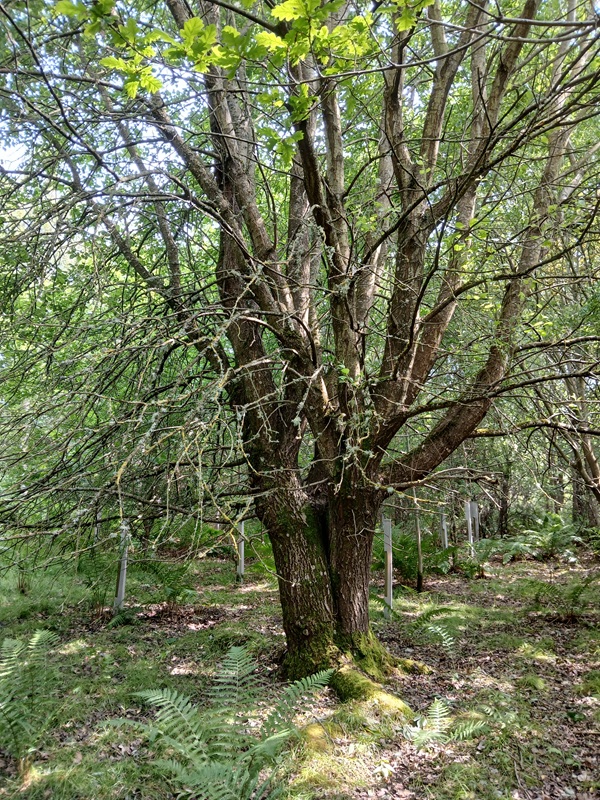
But always, there have been certain way-markers:- the overgrown guerrilla-planted Christmas tree, the gap in the field boundary where the wire’s trampled down, a patch of brambles, the fallen birch that still produces shoots…. Today, alone, I beat the path out again, lost in thickets of gorse and thorn, disoriented by the sound of traffic, unsure of distances among an understory of fern and broom. As so many times before, when coming from diverse directions, my brain unconsciously looks for you to reset my compass. I know I must pass you on my left to regain the path downhill and out of the wood.

You are the biggest, broadest, in the wood, though perhaps not the tallest or the oldest, and certainly not as old as me. With two feet firmly planted, you stand fast and firm among the rest who bend and break in the wind, and you spread your many solid arms in all directions, and to the sky.

Here you are. Now I know my way way. But wait – have we ever truly met? Have I ever really seen you, Mr. Standfast? Today I approach with awareness, pausing in stages, taking you in. A rush of warmth, of joy… joy or recognition, joy at being recognised. When I reach close enough to touch, my gardener’s – my orchardist’s – eye notes dead, stiff and black lower branches and itches, for a second, for loppers. But then I watch the beetle’s progress through the moss and lichen upon them; the moist droplets of old rain sustaining the beings on the branch, and recognise, it’s none of my damned business.
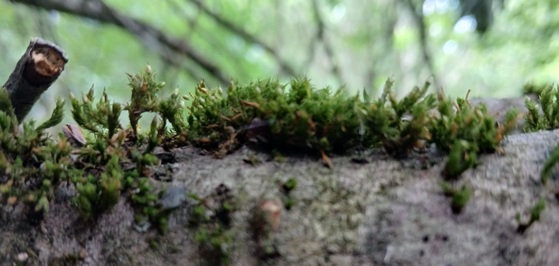
We are together for a good while, without words, unified by our alikeness, as your very own warbler comes to join us, bursting into that fitful exhuberance of song that wears itself out in a twittering, grumpy-sounding mutter, then kicks off a few minutes later to try again. I feel the healing nature of your skin, the questing stability and strength of your roots, the air you breathe, I breathe, we breathe. For a moment, I know we are one, with the lichens and beetles and warblers and the things unseen.

I know my way now. As I rejoin the ghost of a path, my palms carry the imprint of willow bark, like a memory, like a gift.
Reeds, Rushes and the Spaces between Trees

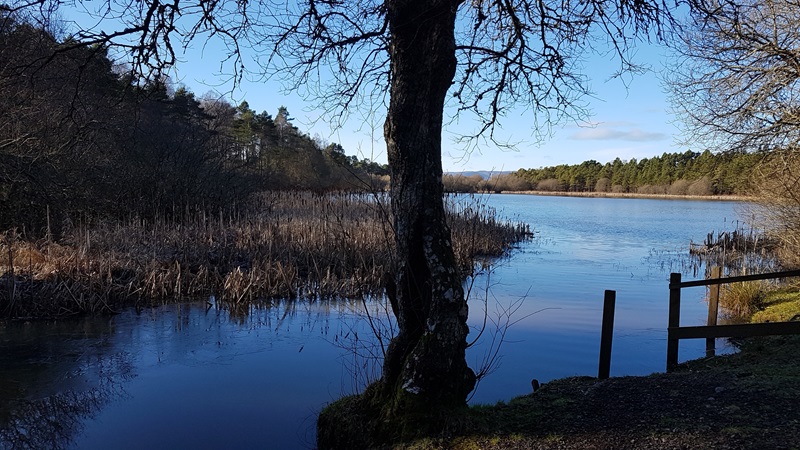
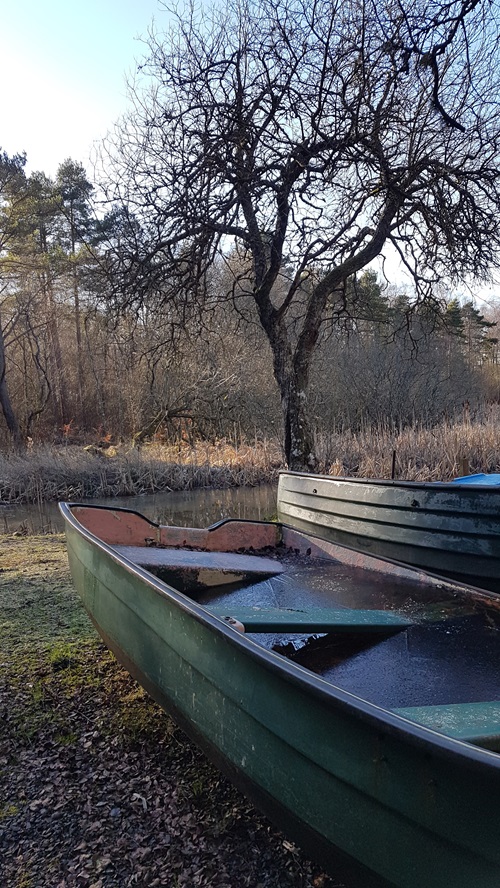
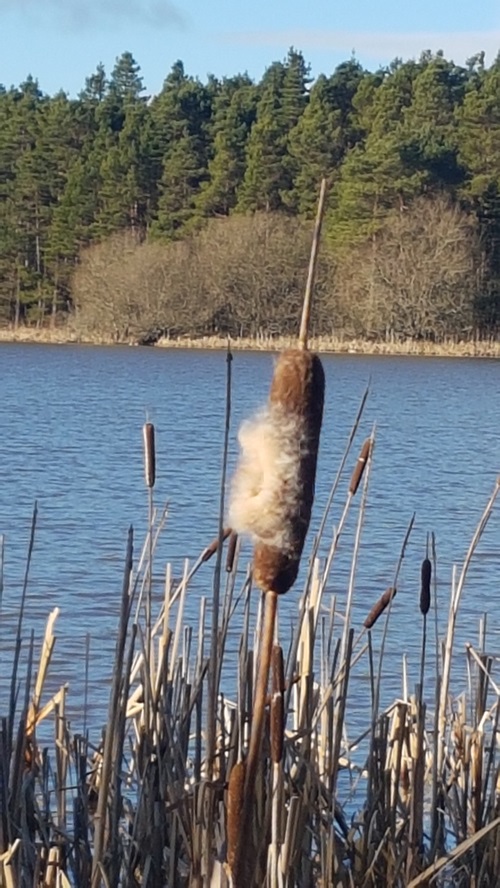
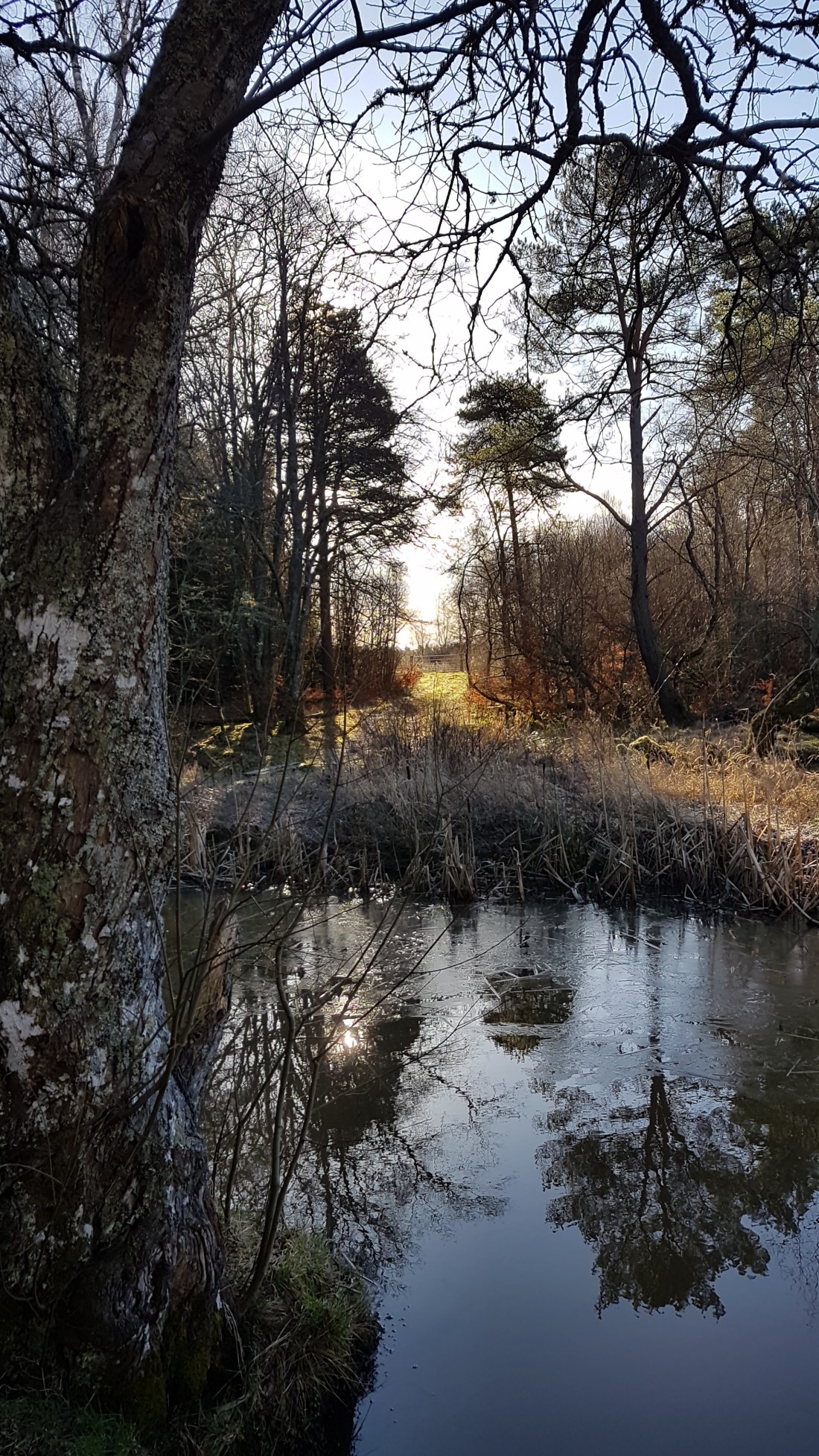
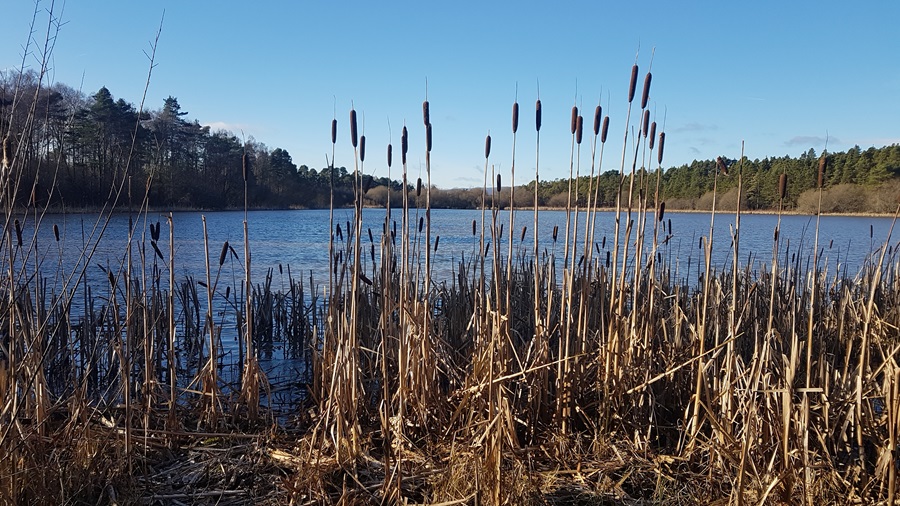
On a quiet day of winter sun and muted activity from woodland birds, I arrive at King’s Myre again. Reed Mace flowerheads from last year cluster around the watery margin, clogging the channel by the little jetty where the boats wait and fill with rain. We used to call them “bulrushes” where I grew up, and it wasn’t till Mr. Illesley, in Rural Studies, enlightened us all about the differences between reeds, rushes, sedges and grasses that I ever learned their proper name– or that Reed Mace is related, but none of these anyway!

It is the same plant known as cattails in America, and valued throughout its distribution for its edibility. The rhizomes – root like underground stems, or underwater ones in the case of this plant – are starchy and filling when baked. They can also be dried and ground into flour, though I never have. The pollen from the male flowers can be used as flour too, or to thicken sauces and soups. It has many medicinal uses. But the best part is the emerging shoot – which will be appearing above water level any time now. Cut, cleaned, steamed, baked, sauteed – it is a lovely spring vegetable to rivals asparagus or bamboo shoots for flavour and versatility. You can keep eating the shoots until the flower spikes start to emerge, you don’t need waders to forage it, and, as Reed Mace is actually quite an invasive plant, it’s pretty sustainable to nibble bits off the clump! Last year’s flowers are starting to burst apart now, revealing the dense, cottony-fluffy seedheads inside.

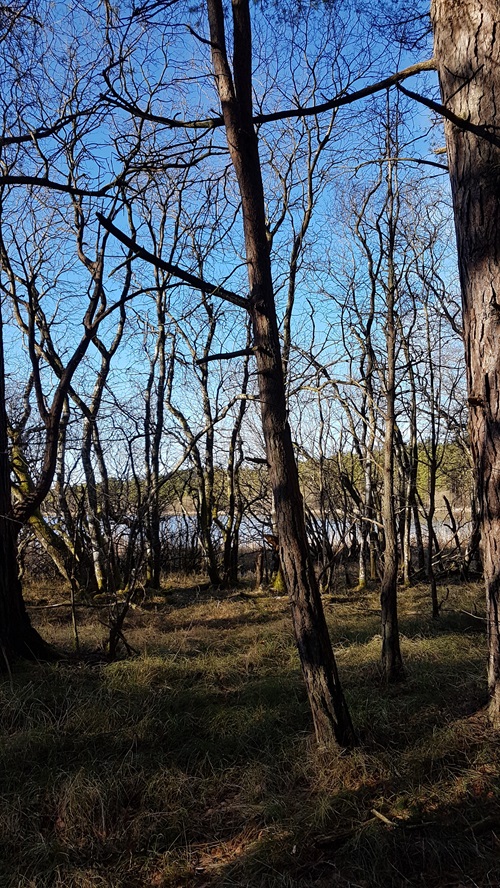
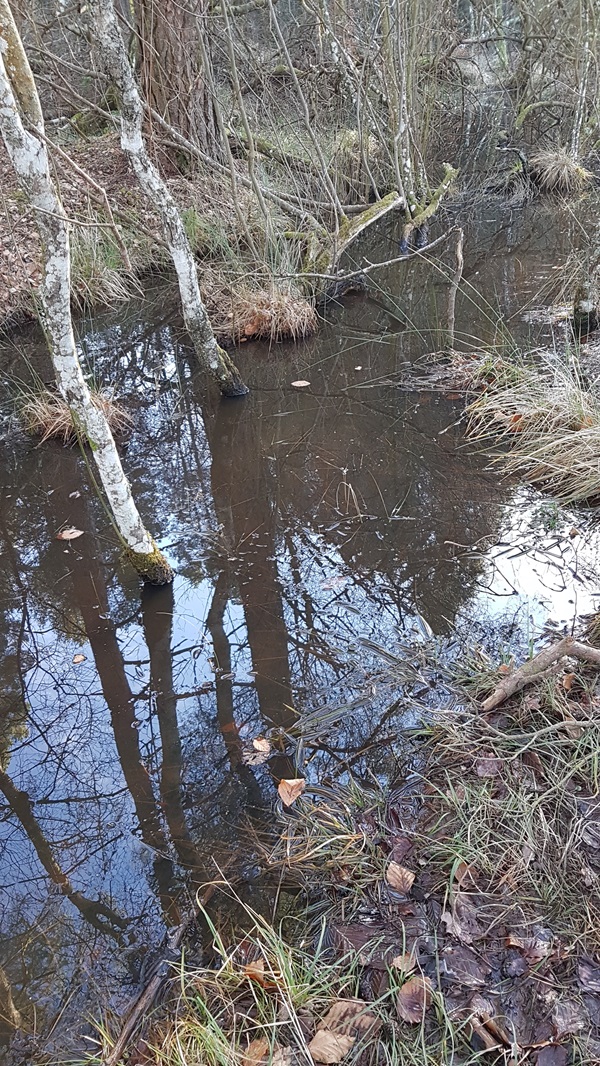
I creep through the spongy, saturated margins of the little loch at the heart of the King’s Myre, to peer through the cattails to see what wintering birds are on it today. Goldeneye, a few gadwall, mallards, a coot, typically swimming against the tide of the rest, intent on his own adventure. No sign of the swans, too early for the osprey to be home yet. In the damp woodland, waterlogged alcoves and scrapes, from which spiky, angular trees grow erratically, wait for frogs and toads to arrive for spawning. Between bare branches, multiple trunks and stems and a storm of tiny twigs, the blue sky seeps as if caught in a vast, arboreal net, reflected in patches of water.

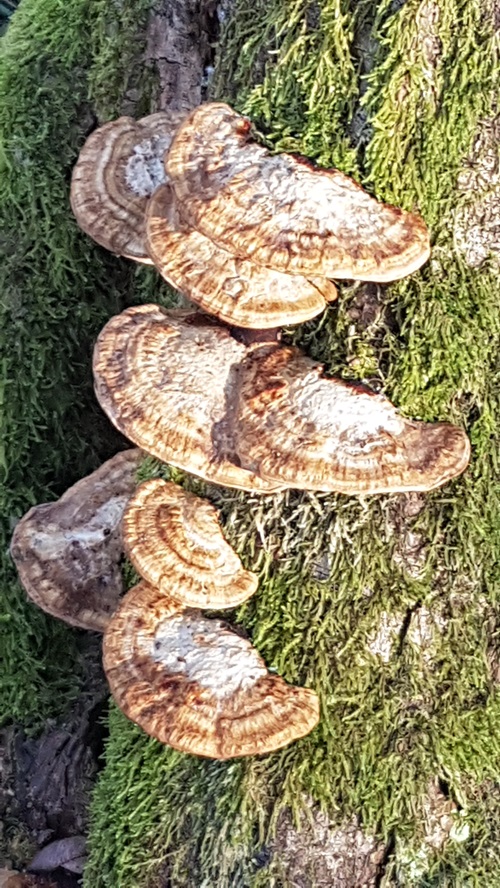
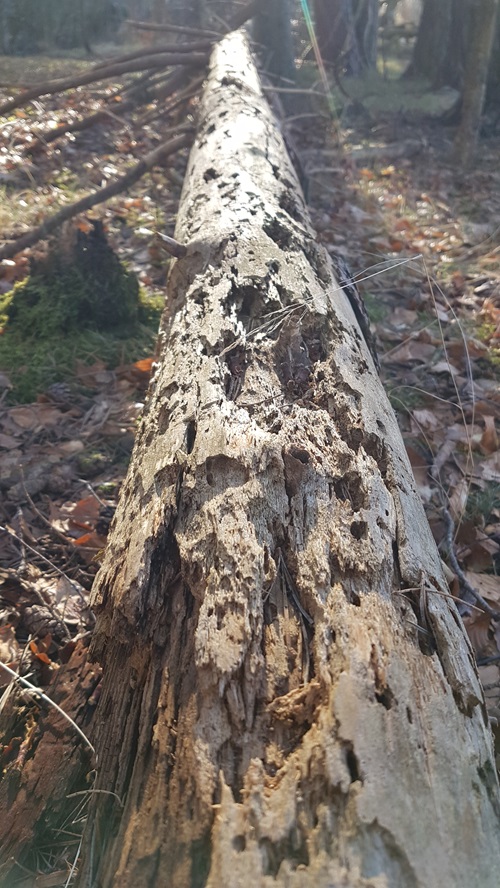
Bracket fungi show off their smug Cornish-pasty smiles of concentric bands, on wood they share with moss and lichen, and a thousand invertebrates. Spread across the leaf-carpeted floor, long-dead logs, un-barked, silvery, yielding, are home to thousands and thousands more, riddled with holes and channels and hidden tunnels in the fungus-softened wood. On cue, somewhere in a dead tree, a woodpecker begins his first tentative drumming and drilling.

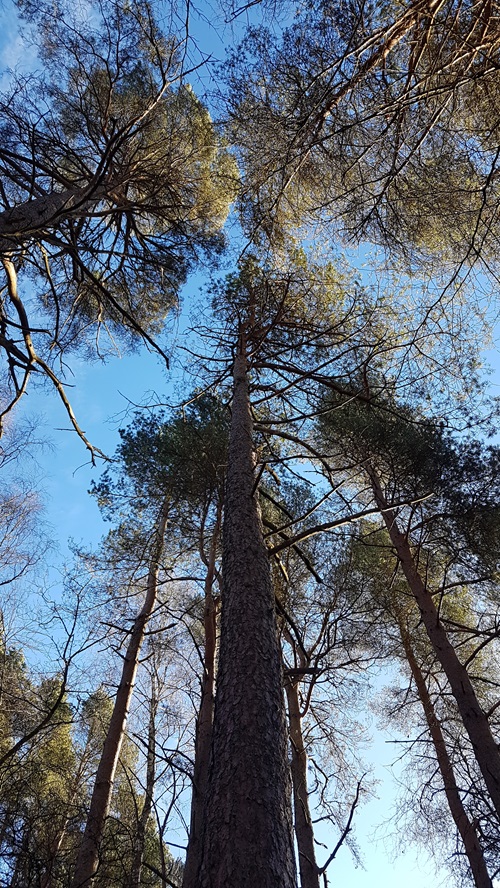
I look up into the Scots Pines, their narrow crowns dancing around each other like polite or nervous teenagers, and see the shapes of jagged sashes of sky, so clear, so blue….

Look up, look through, look between – there is much to see. Or is there only sky?

Bankfoot Church is Falling Down

In February 2004, workmen were burning rubbish on a demolition site. It was a day of gusty winds, when safety procedures should have never allowed a bonfire to be considered. At some point, sparks whirled viciously into a neighbouring building, caught hold, and within minutes a blaze ensued that could not be extinguished before the building was lost.

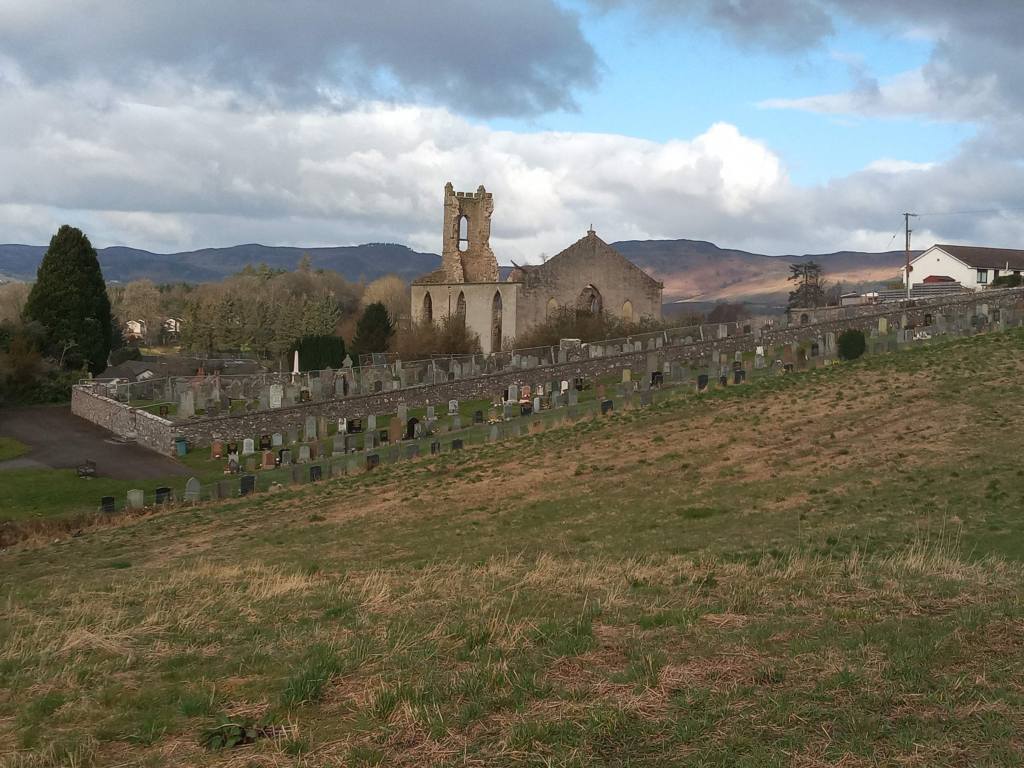
The building was Auchtergaven & Moneydie Parish Church, sited on almost the highest point in the Perthshire village of Bankfoot. It had stood, glowering over the village, for 207 years, its timbers dry, warm and perfect for burning. Not a regular churchgoer, I’d nontheless been there a few times in the seven years I’d lived in Bankfoot, panting my way up the steep path to the entrance, and I’d enjoyed the simple, uncluttered warmth of the wood-lined interior and the sincerity of the congregation. It was a bonnie church, and a landmark for miles around. That day, horrified drivers on the nearby A9 slowed to a crawl, as flames shot to the sky.

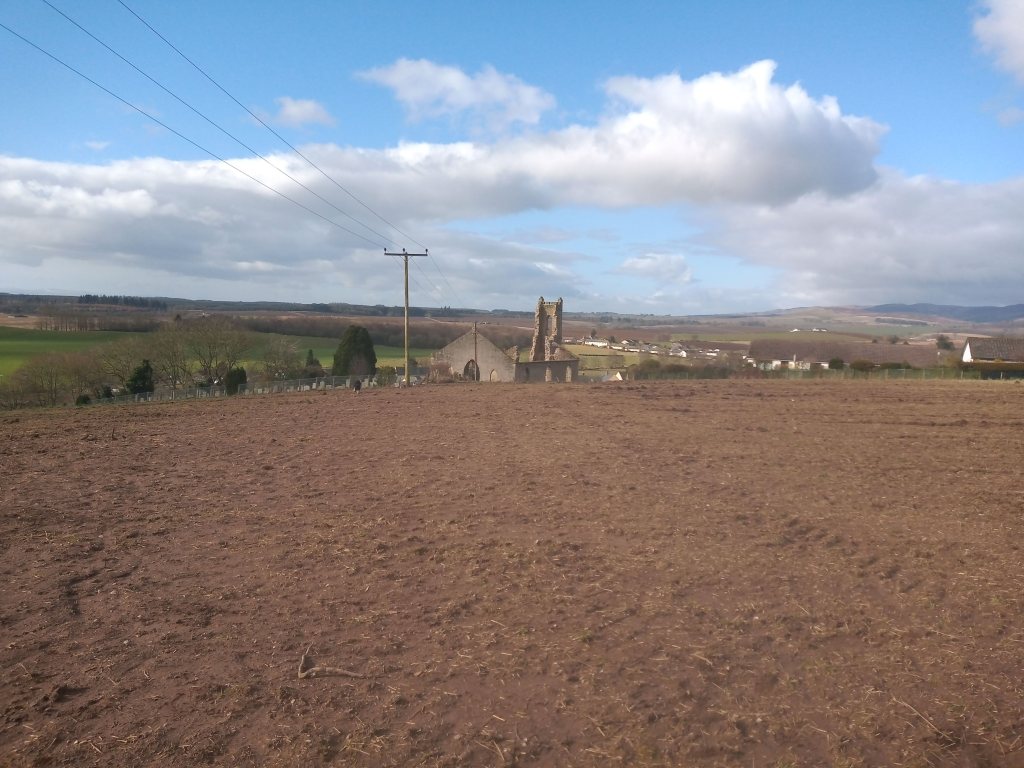
In the aftermath, the old church was not “burnt to the ground” – but it was certainly gutted. From a distance, there were many years when at first glance, you’d never know it was a ruin. The tower still stood, majestic – maybe more so than before – defiant, presiding over a landscape of haphazard hamlets congealed into one village, farmland, people and beasts. After considerable deliberation and assessment of the building’s condition and fitness for purpose, the Church of Scotland, advised by the will of the congregation, opted to build a new church on flat land it owned in the centre of Bankfoot, complete with community facilities and a low carbon footprint. It was a brave and right decision, I think, which offered accessibility and possibilities the old church never could. The original bell, cracked by fire to tonelessness, was rescued and installed as the new font.

But it left little in the coffers to do anything with the remaining structure. Disputes and debates went to and fro for years, between the culprit building firm, insurers, the Kirk, local residents, fundraisers, historians and those with an interest in the surrounding graveyard. Meanwhile, safety fencing went up around the site, the grass grew, and saplings appeared in the smoke-blackened walls. Stone crumbled unnoticed. Blocks occasionally fell; still the tower stood, indomitable. Saplings grew into trees; buddleia, that great exploiter of devastation and demolition, proliferated in the nave and drew in butterflies. Wild flowers and ferns took hold of crevices in outer and inner walls, solitary bees visited and maybe nested in crumbling mortar. Jackdaws and pigeons were regular inhabitants in spring. A garden began to grow in the sanctuary. Who knows what wild creatures found refuge among the piles of fallen rubble? No-one could get in to disturb or identify them.

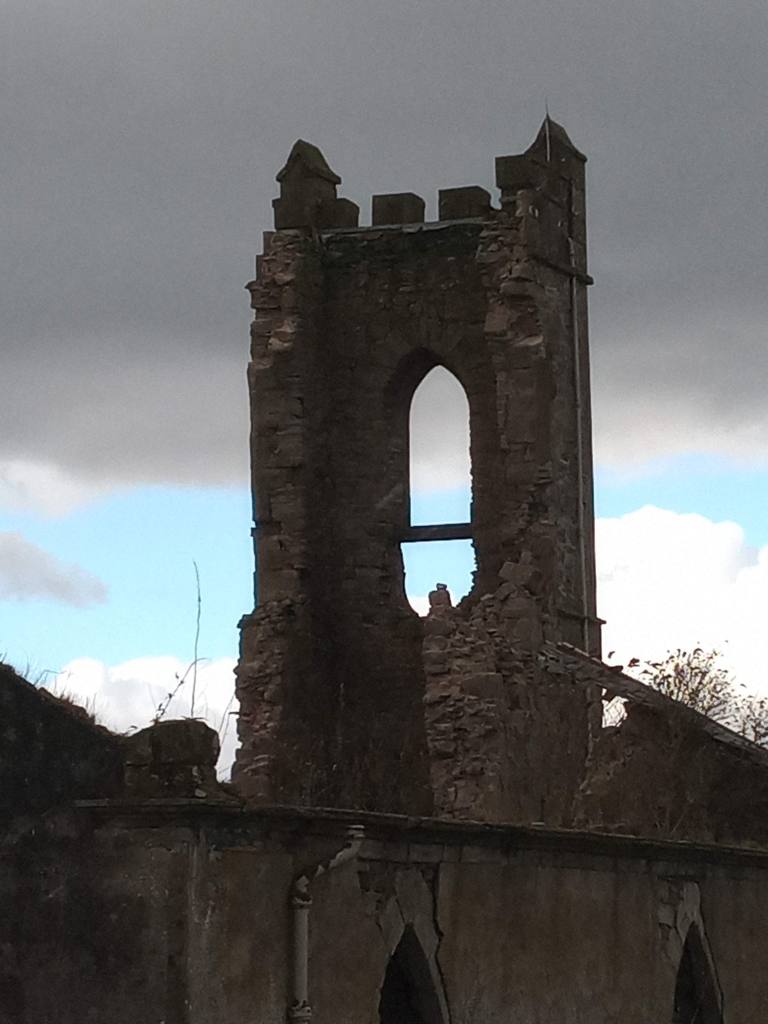
I know many people found it heart-wrenchingly sad. For me, with an ambivalent attitude to organised religion at best, it was more a change in emphasis. I felt the human-centred heart of the building died with the fall of the final clock-face, never to chime again and remind us of the days and hours. One day, out walking in early spring 2020, I noticed that the tower looked a bit odd. I went closer to see if I was imagining things, and discovered that although the front facade still held fairly intact, most of the sides of the tower had fallen in. What was left looked more precarious than ever, but it hadn’t stopped the jackdaws from building warring nests on each remaining pinnacle, or the collared doves gossiping lovingly in hollowed alcoves. Chaffinches and sparrows bustled about purposefully, hopping between the seed heads, roosting on bits of masonry.

I wondered what God – by any name or none – would make of it all. Inevitably St. Francis came to mind, who would surely be quite at ease to see wildlife frequenting a religious building. I thought of the early saints who taught that Celtic version of Christianity which reveres all life, not just the human kind. Jesus himself (despite an unfortunate show of spite to a certain fig tree) counselled his followers on the great value of seeds and sparrows, and the lilies of the field.

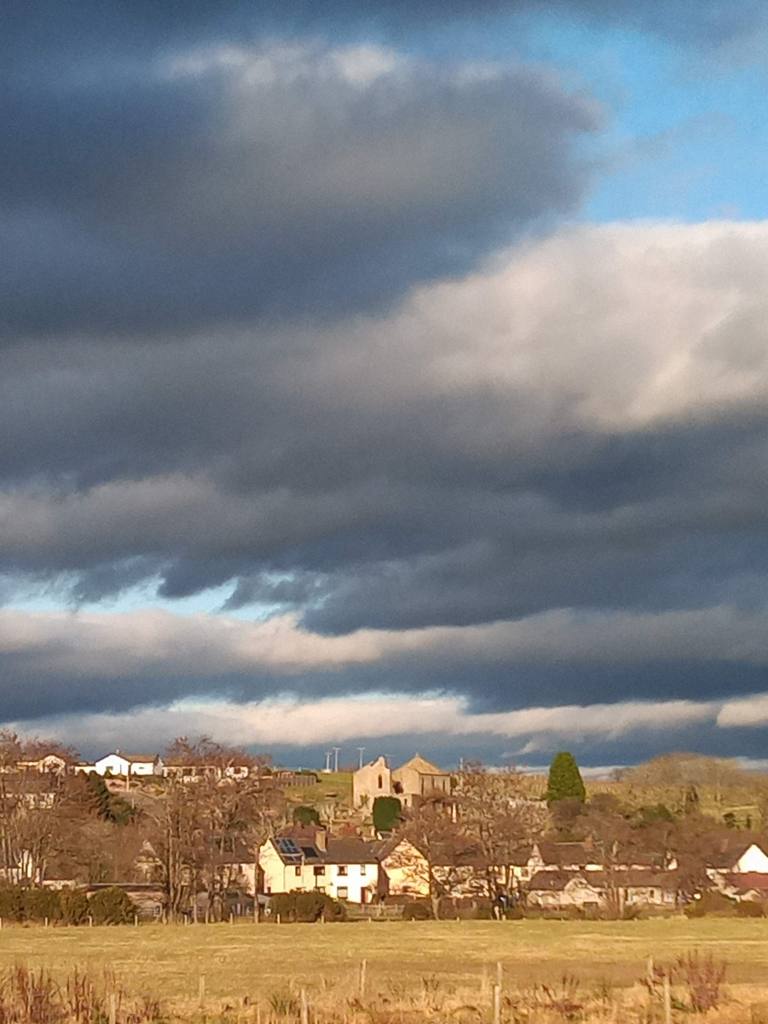
Well, I’m no theologian. Who knows? But now the rest of the tower has finally gone, with a crash in the night that woke up the residents of Cairneyhill. The skyline will never be quite the same. I hope the jackdaws and all the other members of Auchtergaven’s wild congregation hadn’t started to build their nests.

Winter Geese

geese

Breathing in, the air is clean and cold, that sharp tang
That preludes winter, edging around frost and ice
But not there yet.
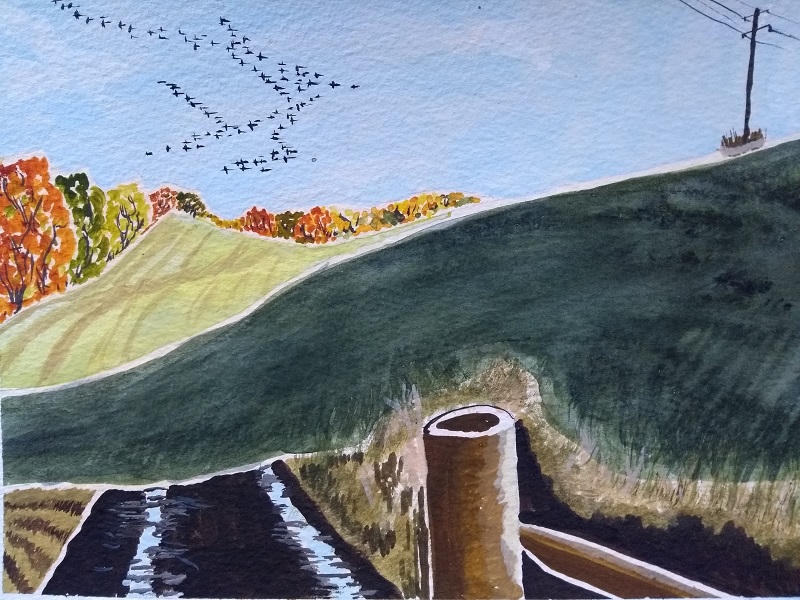
Horizon endless, sky that translucent pale blue – a trail of smoke
Distant, wavering,
Moves towards the watcher in the field.

Earthbound, crows prod lugubriously at the stubble,
Clumsy pigeons clatter from tree to tree, voracious,
After each other. High above, the smoke separates,
Cries out exultant, forms streamers and ribbons,
Waves in and out of formation, as the winter geese pass.

In the marshes and seawalls of Essex, long ago,
I watched through binoculars the arrival of the little Brent geese,
Who stayed with us all winter, sweeping up and down the estuaries,
Squabbling and crying for joy in multitudes in reclaimed fields.
Here, Greylags and Pink-foots (I can never tell which) mark the season:
The harvest-home, the burning leaves, the smell of turned soil.

Once a Pink-foot landed, exhausted in my garden, left behind,
Confused maybe by the demands of Goose and Gander for their breakfast.
We fed and watered her, marveled
how small she was
Against our farmyard geese. The next day she was gone,
As the morning skeins’ urgent calls measured her pace and purpose.

Solid yet ephemeral; never to be held;
An instant of joy in an ever-changing and darkening sky;
Winter geese, this moment, here and now.