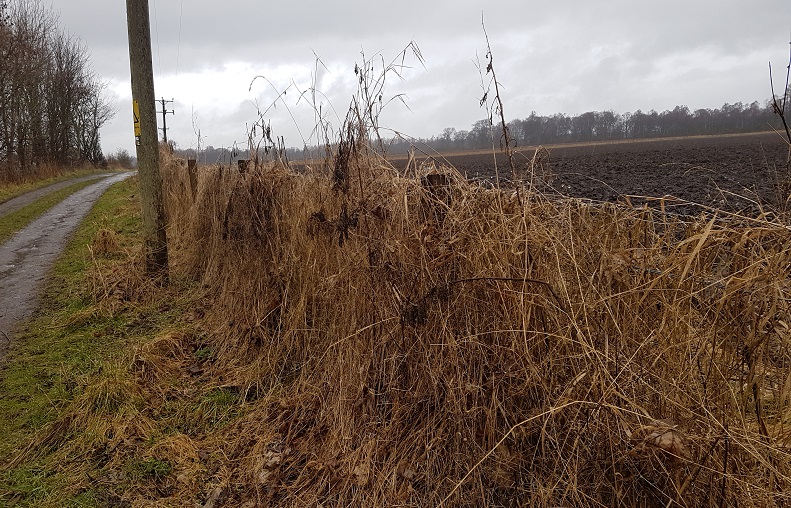
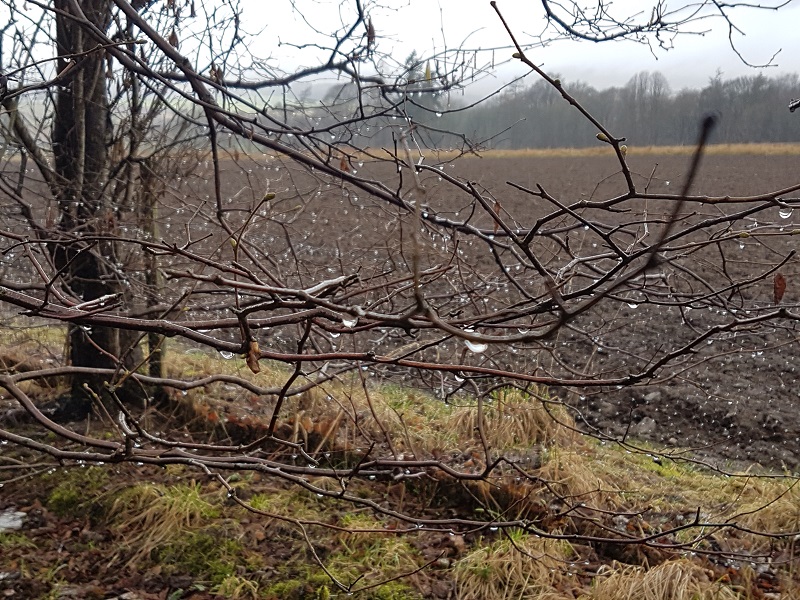
One day to the equinox; officially the first day of spring. It rains, a sullen, dreich miasma and the horizon is drowned in mist and low cloud once again. No cloud of cheery celandines yet line the ditches; no coltsfoot flowers; no green dazzle of new growth erupting from the tired, forlorn and hang-dog leavings of winter stems of grass.
There was a start to spring, a couple of weeks ago, when the sun was gentle and warm and the birds practised their calls. A blue tit inspected a nest box, and rooks set-to in earnest up in the rookery tree. Today, the only sound is the drip-drip-drip of rain. And even that’s muffled.
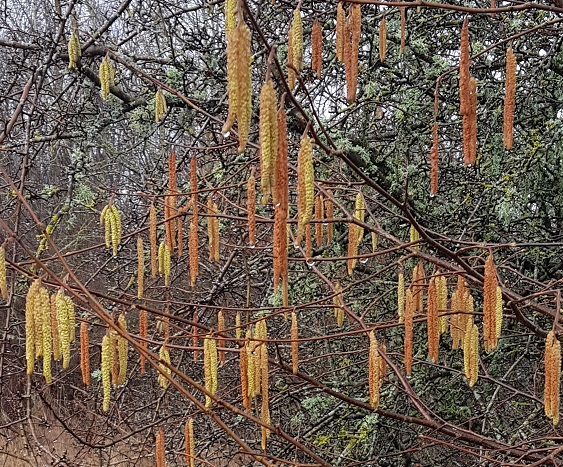
In the soggy brown fields, where the cover crop was optimistically ploughed in a fortnight ago, soil trickles away downhill in the empty furrows. No fuzz of pink from swelling buds tints the distant birch trees, no lighter hues on the sycamores and maples. On the hazels, the merry festoons of bright yellow and cream catkins are turning brown, but no buds are opening to take their place.
Spring’s not here. I rake in the squelching soundscape of a muddy woodland walk for the chiff-chaff, first of the warblers to arrive in March, but he is not here either. I wonder if this is the day I have for so long dreaded and feared – the “what if” day. What if the the birds of summer do not return? What if I never see another swallow? What if the flowers of spring are, finally, poisoned to death? What if nests fail and nestlings starve for want of insects and worms?
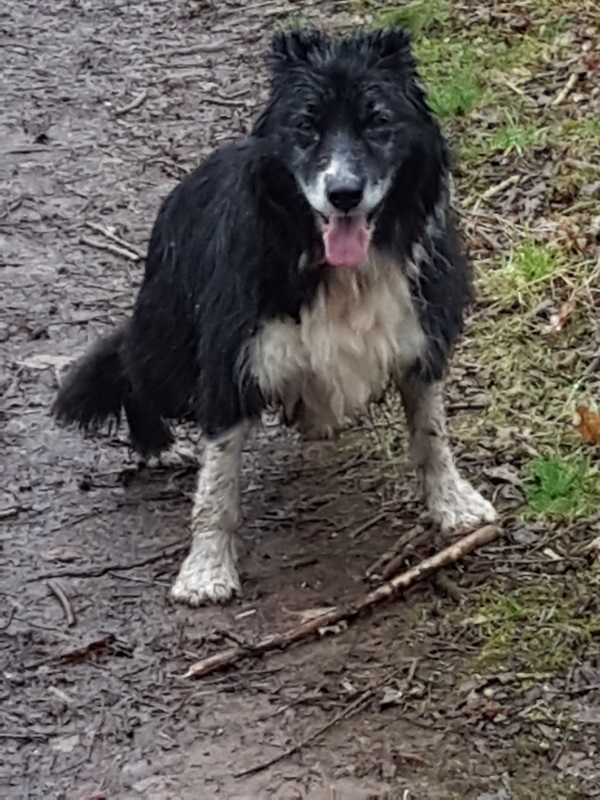
I do not want to follow this thought. Spring is late and it makes me weary and anxious. My elderly dog plods on, keen to get back in the dry, tired, arthritic legs dragging, stumbling at times yet still showing interest in sticks, at least on the way back. I think, will spring come in time for him to enjoy it, to sit in the healing sun and watch the world go by, an old dog at the end of life but still game?
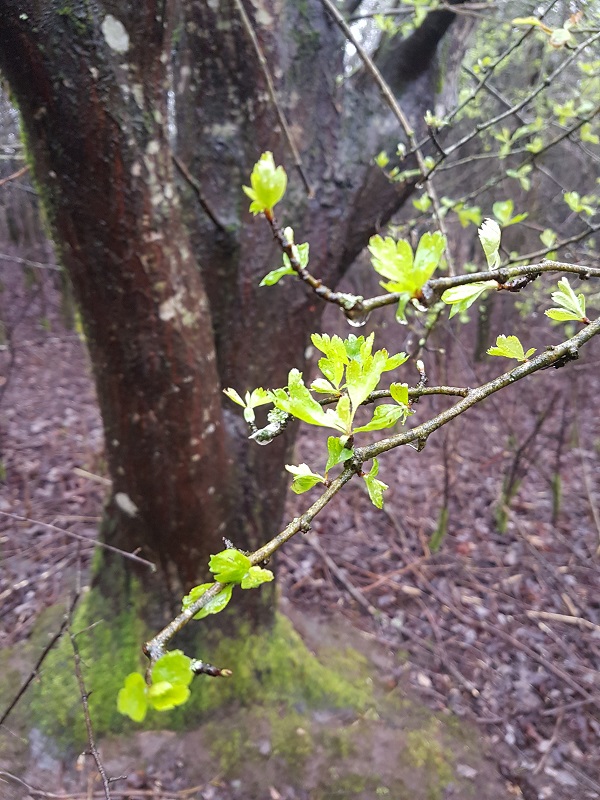
On the way home, I find some of those precocious hawthorns in the depth of the wood which always burst into leaf prematurely and give me my ritual mouthful of hedgerow “bread and cheese”. Today it tastes of even less than usual, but I chew away, get in the door, dry off the dog and put on the kettle.
We met up at the Taymount Wood car park, Linda and I, put on our boots and turned away, not into the gate. This was to be the long road to the woods, a circular walk via the disused railway line which once ran as a ponderous branch from Stanley across the River Tay to Coupar Angus. The embankment is reached from the Taymount Mains farm track, and you then head towards Kinclaven and Ballathie, across open country, under disused bridges and past a little railwaymen’s shed made of sleepers with a brick chimney still in place. Although today’s challenge for us was to find and walk the narrow path through the northern finger of the wood, the line itself offered a few challenges – a chilly wind and stretches of water where the rains of March hadn’t percolated the poorly-drained soil.
You turn north-west away from the line before you get to the grounds of Ballathie Hotel, crossing the road and continuing north up a rough track beside the Old Smiddy. The track goes past several houses and in the past, we’d stuck to it, until it vanishes at a farmhouse. Then we’d scrambled witlessly through fields and fences and bits of scrub till we arrived, somehow, on a track in Taymount Wood. This time, we were determined to find the “proper” path. So, we left the comfy track when it turned the bend and continued up to the edge of the wood. People had been this way, but not many, and it wasn’t clear how far in we should go before we turned left. Google satellite was remarkably unhelpful.
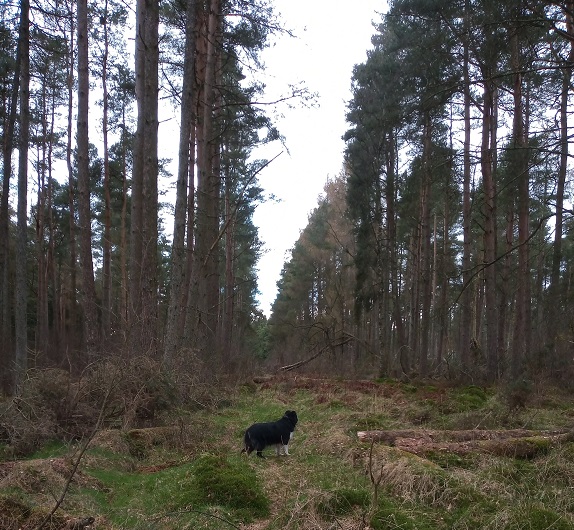
Dogs have many uses. Everyone thinks of companionship, protection and exercise machine, but an intelligent dog is a wonder at Finding the Path. While we stood wondering and wafting around, Jed set off into the unruly herbage with a look of collie dog purpose, nose to the ground. Sure enough, when we followed, there were the vestiges of a footpath. It doesn’t take many human footprints – and barely one canine print – to inform Jed this is The Way to Go. We continued, scrambling after him, and he didn’t lead us into any blind alleys. At times, we were on the point of losing faith, but then the path would reappear, on the other side of a boggy stretch or a tangle of bramble and brushwood.
There is a path here somewhere….
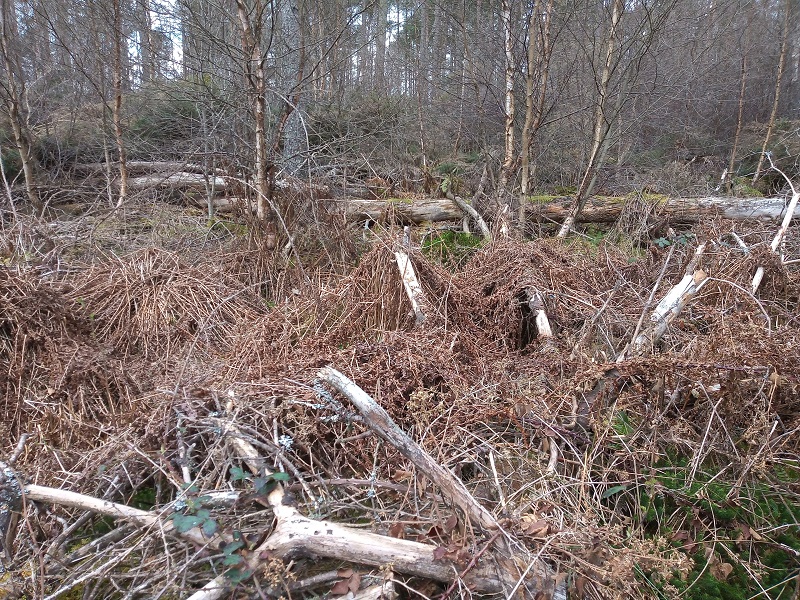
Wind-throw had put up many of the barriers that challenged us. I discovered I’m at an age where I’m a bit stiff for limbo-dancing under fallen trees, and my sense of balance (never my strong point) for climbing over them was precarious to say the least. There were points when we even doubted the dog, but then to our great surprise we encountered someone going the other way – an ecologist doing a survey of small mammals for West Stormont Woodland Group no less – who assured us that a. we were on the path and b. it was passable, if a tad wet in places. Well, we certainly found the wet places and finally stumbled out onto the hard forestry track that would eventually take us through the main wood and back to the car park. The challenge wasn’t quite over – several metres of scratchy, mean-minded gorse had colonised the track to meet in the middle, and we suffered quite a few scratches and tears before we were through it – noting jealously how impervious the coat of a collie dog is just about anything.
Common Chiffchaff (photo Bishnu Sarangi, Pixabay)
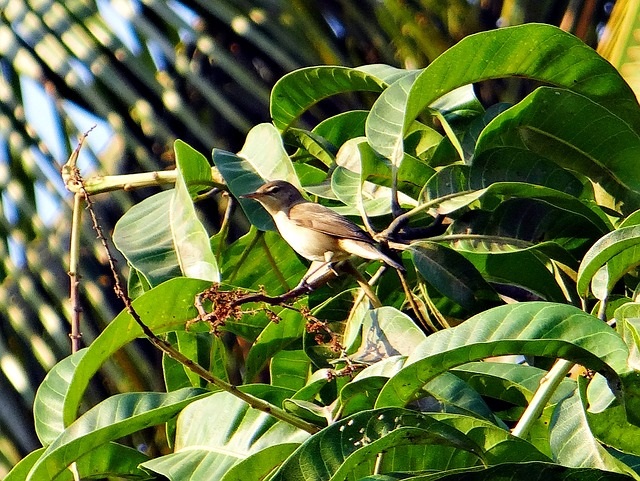
And the gift from today’s walk? There were lots – newly unfurling larch leaves, frogspawn in a drowning bit of track, skeletons of last year’s ferns, the beautiful vertical grandeur of the trees that hadn’t blown down, some chestnut brown bracket fungi left from the autumn. But as soon as we entered the wood on our optimistically rediscovered path, we heard the chiff-chaff call nearby. The earliest of our summer warblers to arrive, this is a small brown job of a bird, indistinguishable from willow and wood warblers unless it keeps still and stays a metre away from you. This one didn’t – they never do – but the call, exactly like the bird’s name, sets it apart. We never saw our little warbler, but the mocking “chiff-chaff-chiff-chiff-chaff” was never far away. It was, I am sure, laughing its little head off, but we chose to find it encouraging. When we found ourselves safely “out of the woods” and into the wood, it went off to scoff at something else. It made us appreciate all over again the wide range of habitats the woods provide for many bird species, residents and summer or winter visitors. I look forward to more birdsong in Taymount Woods this spring.
The morning after the march I went mushrooming again. There were no mushrooms of any kind left in the fridge. I nearly didn’t bother, because I was dog tired, and, after all, I would pass at least three supermarkets in the afternoon.
But something about the air that morning was irresistible. Cool, zinging with the promise of sunshine; light, ethereal and just a little autumnal; dust motes and electrons dancing a jig. The dam and the woods and clearings energised and soothed simultaneously – an antidote to the adrenaline that had kept me up and awake till gone 2am, head birling with ideas and reflections and hope no anxiety could dampen.
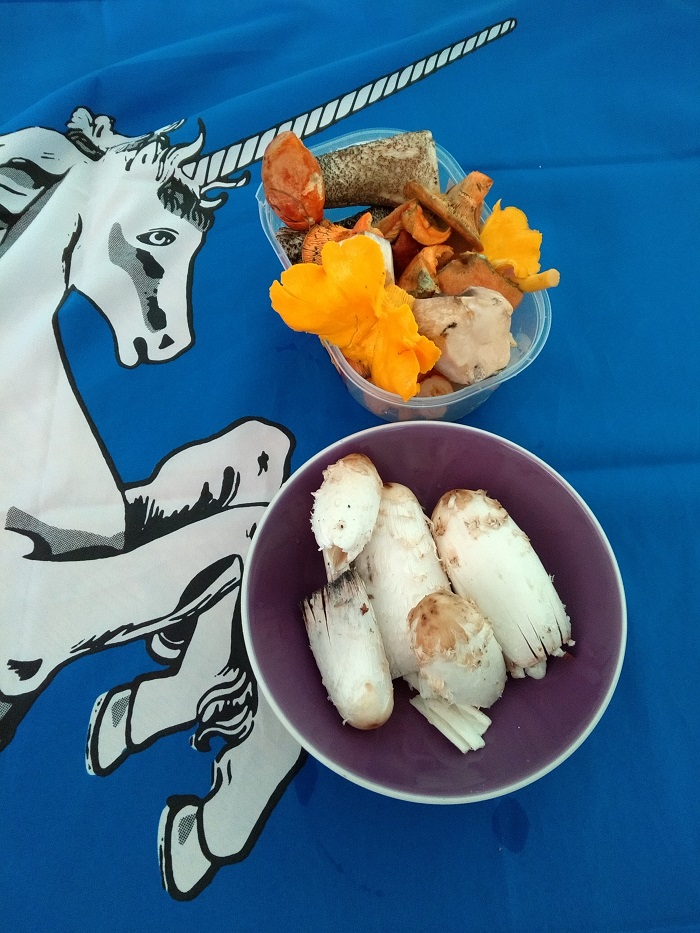
Every secret hollow, bank and bog in my regular itinerary yielded something edible. Shaggy Inkcaps standing like soldiers, Hedgehog Mushrooms like tiny undercooked loaves, spiny as urchins beneath, chunky Orange Birch Boletes that go alarmingly black when you cut the flesh but taste divine. And a few late Saffron Milk Caps, only slightly infested.
The sunny gold of Chanterelles glistened like the yolk of a happy hen’s egg. Deer came skipping coquettishly out from the wood and crossed in front of me, one of them practically pirouetting in her glee – anticipating perhaps, the rutting season nearly upon us.
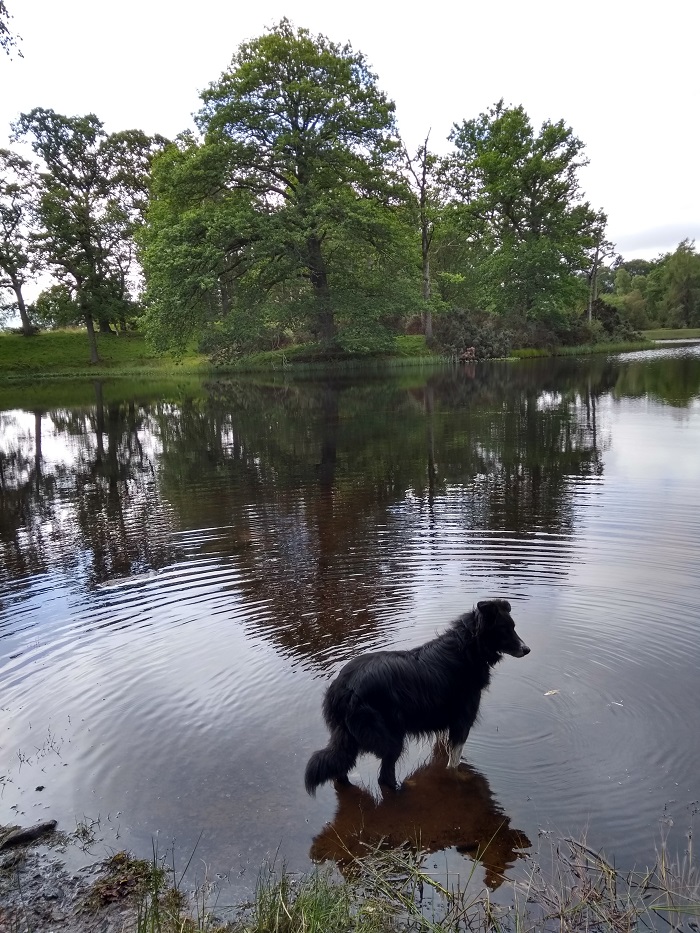
From my dog gazing lovingly at his stick floating away on the loch to the shafts of sudden sun on the ripples he makes, from the happy brown collie and his owner to the mute swans and their big grey babies – the morning after, all of Scotland seems to be smiling at me.

 Comments on The Nature of the Universe