Reeds, Rushes and the Spaces between Trees

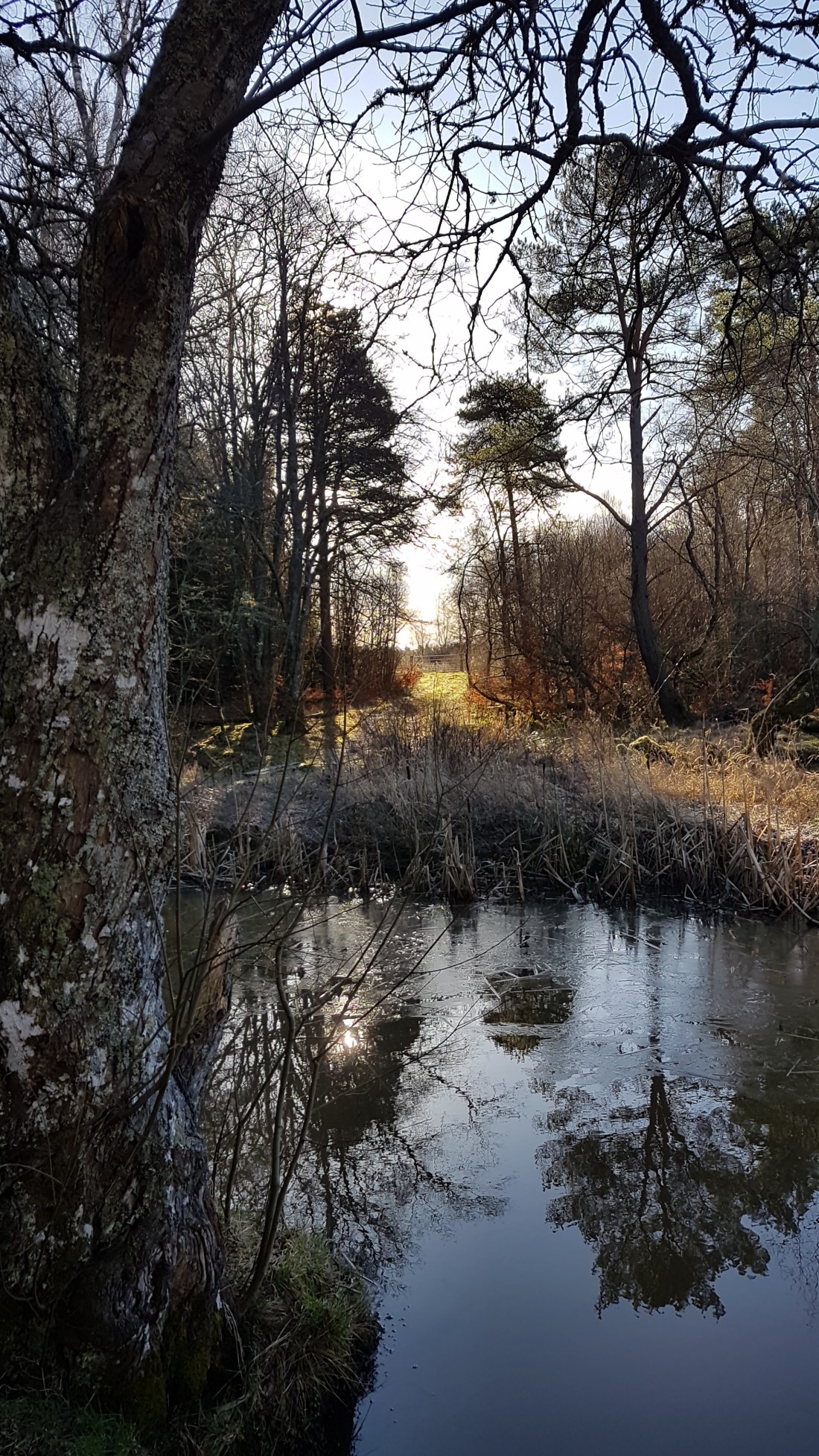
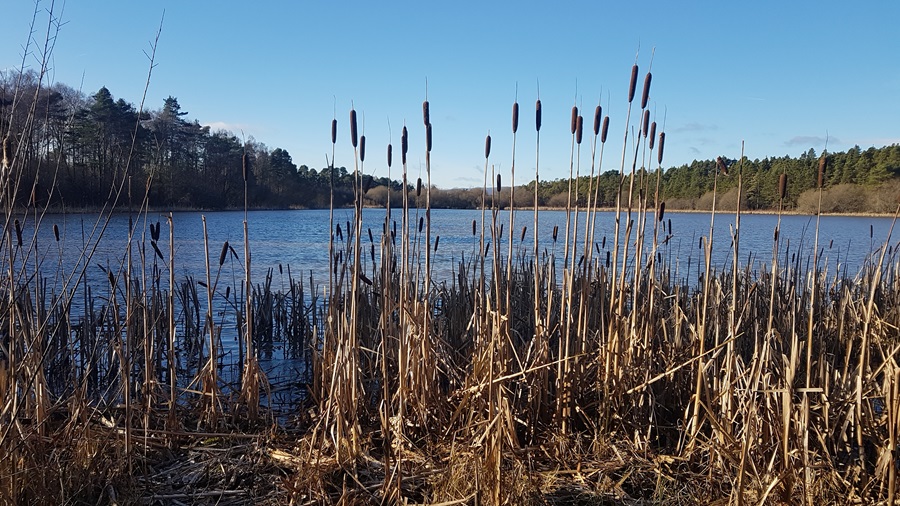
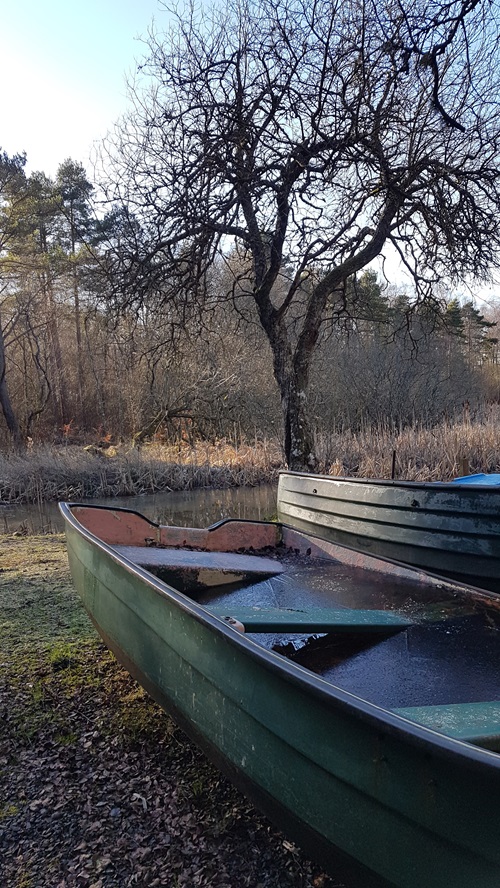
On a quiet day of winter sun and muted activity from woodland birds, I arrive at King’s Myre again. Reed Mace flowerheads from last year cluster around the watery margin, clogging the channel by the little jetty where the boats wait and fill with rain. We used to call them “bulrushes” where I grew up, and it wasn’t till Mr. Illesley, in Rural Studies, enlightened us all about the differences between reeds, rushes, sedges and grasses that I ever learned their proper name– or that Reed Mace is related, but none of these anyway!
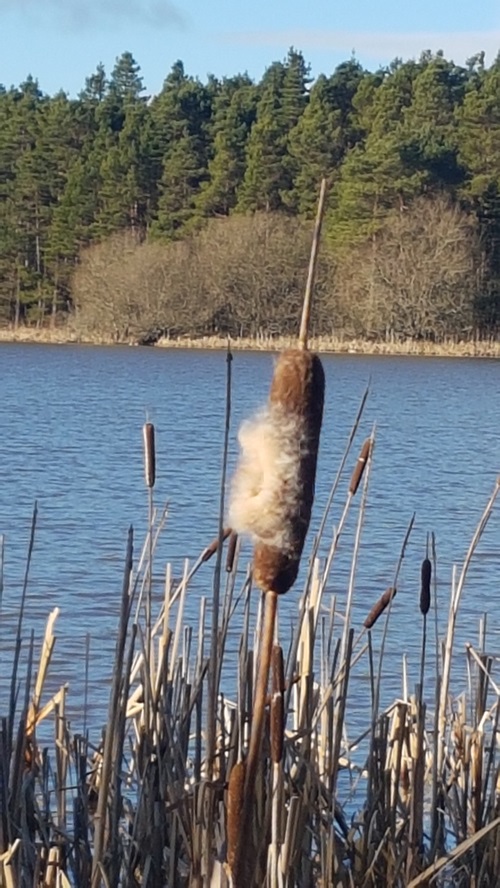
It is the same plant known as cattails in America, and valued throughout its distribution for its edibility. The rhizomes – root like underground stems, or underwater ones in the case of this plant – are starchy and filling when baked. They can also be dried and ground into flour, though I never have. The pollen from the male flowers can be used as flour too, or to thicken sauces and soups. It has many medicinal uses. But the best part is the emerging shoot – which will be appearing above water level any time now. Cut, cleaned, steamed, baked, sauteed – it is a lovely spring vegetable to rivals asparagus or bamboo shoots for flavour and versatility. You can keep eating the shoots until the flower spikes start to emerge, you don’t need waders to forage it, and, as Reed Mace is actually quite an invasive plant, it’s pretty sustainable to nibble bits off the clump! Last year’s flowers are starting to burst apart now, revealing the dense, cottony-fluffy seedheads inside.
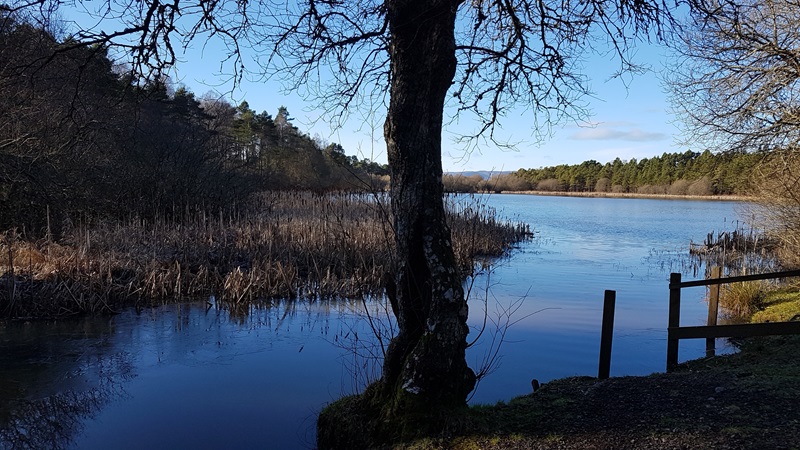
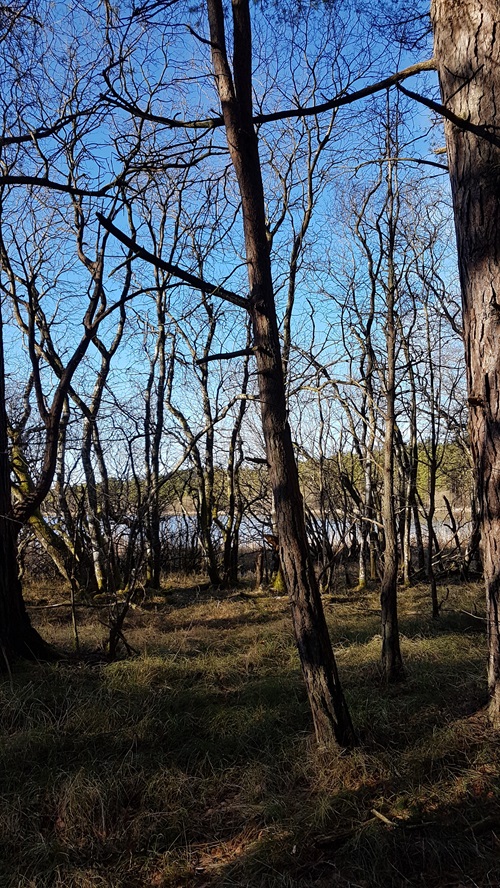
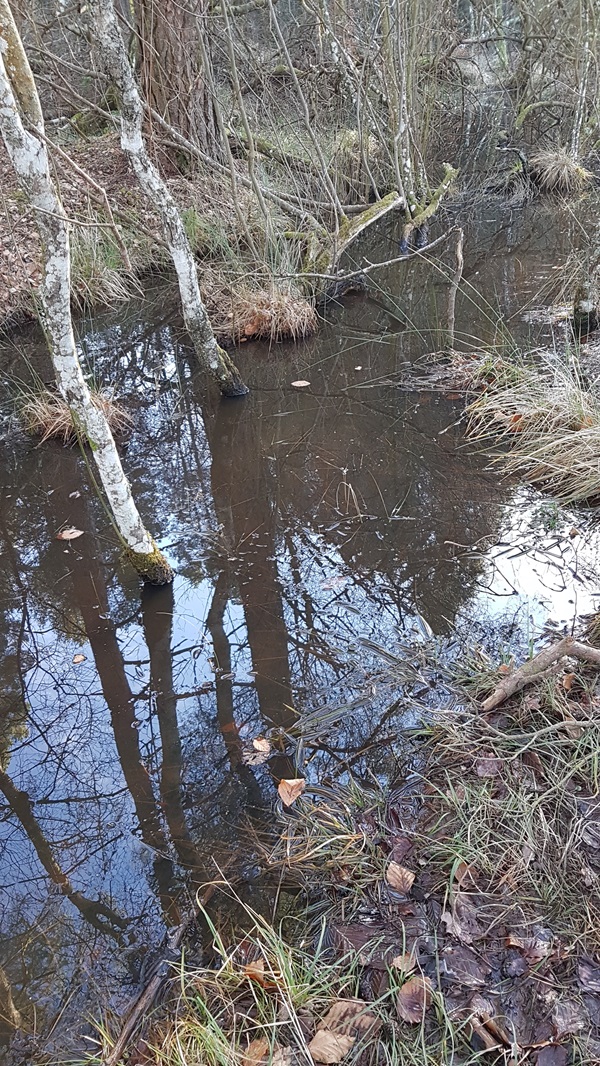
I creep through the spongy, saturated margins of the little loch at the heart of the King’s Myre, to peer through the cattails to see what wintering birds are on it today. Goldeneye, a few gadwall, mallards, a coot, typically swimming against the tide of the rest, intent on his own adventure. No sign of the swans, too early for the osprey to be home yet. In the damp woodland, waterlogged alcoves and scrapes, from which spiky, angular trees grow erratically, wait for frogs and toads to arrive for spawning. Between bare branches, multiple trunks and stems and a storm of tiny twigs, the blue sky seeps as if caught in a vast, arboreal net, reflected in patches of water.
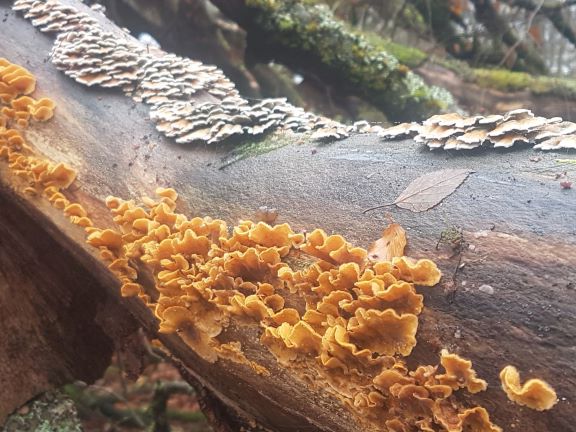
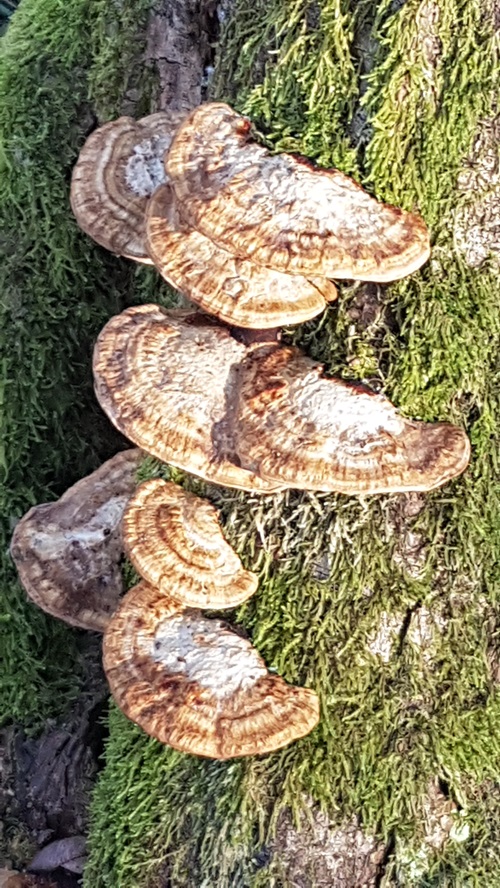
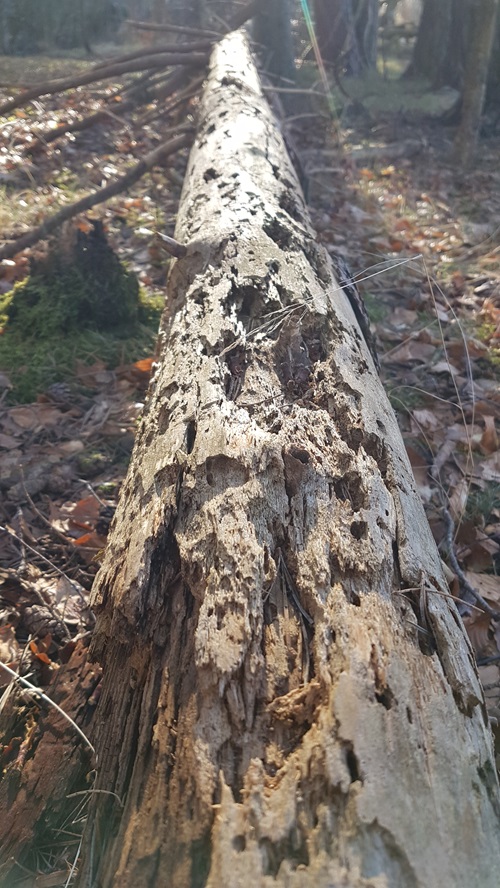
Bracket fungi show off their smug Cornish-pasty smiles of concentric bands, on wood they share with moss and lichen, and a thousand invertebrates. Spread across the leaf-carpeted floor, long-dead logs, un-barked, silvery, yielding, are home to thousands and thousands more, riddled with holes and channels and hidden tunnels in the fungus-softened wood. On cue, somewhere in a dead tree, a woodpecker begins his first tentative drumming and drilling.
I look up into the Scots Pines, their narrow crowns dancing around each other like polite or nervous teenagers, and see the shapes of jagged sashes of sky, so clear, so blue….
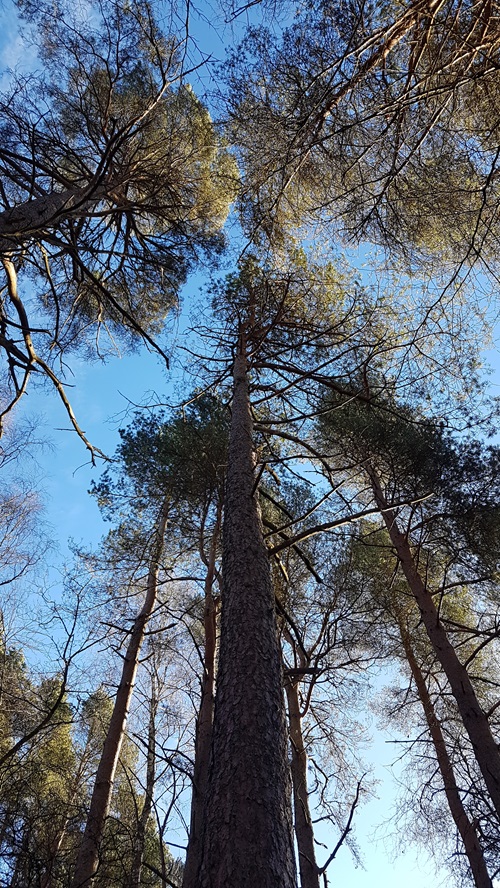
Look up, look through, look between – there is much to see. Or is there only sky?
Scene of Construction

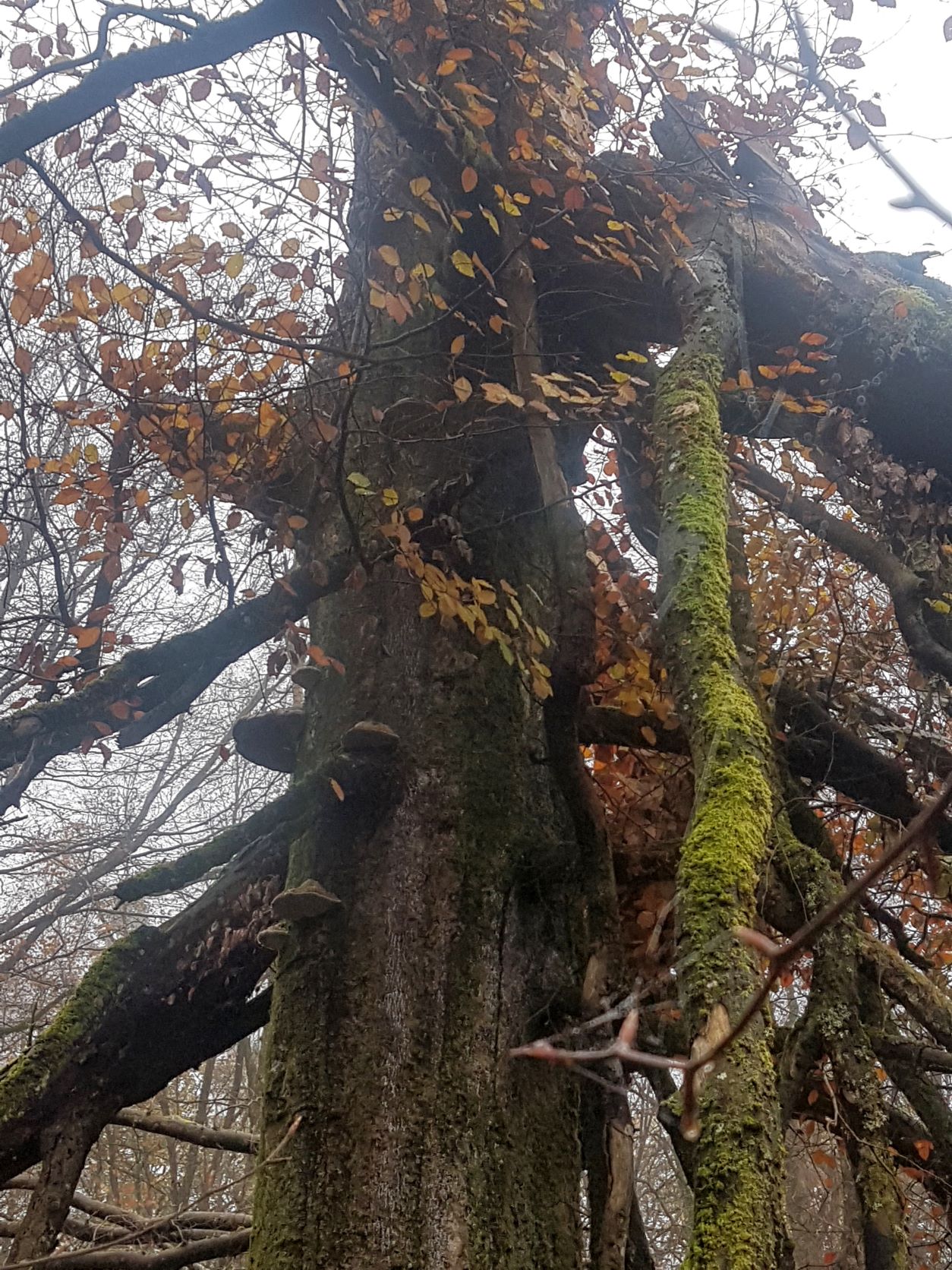
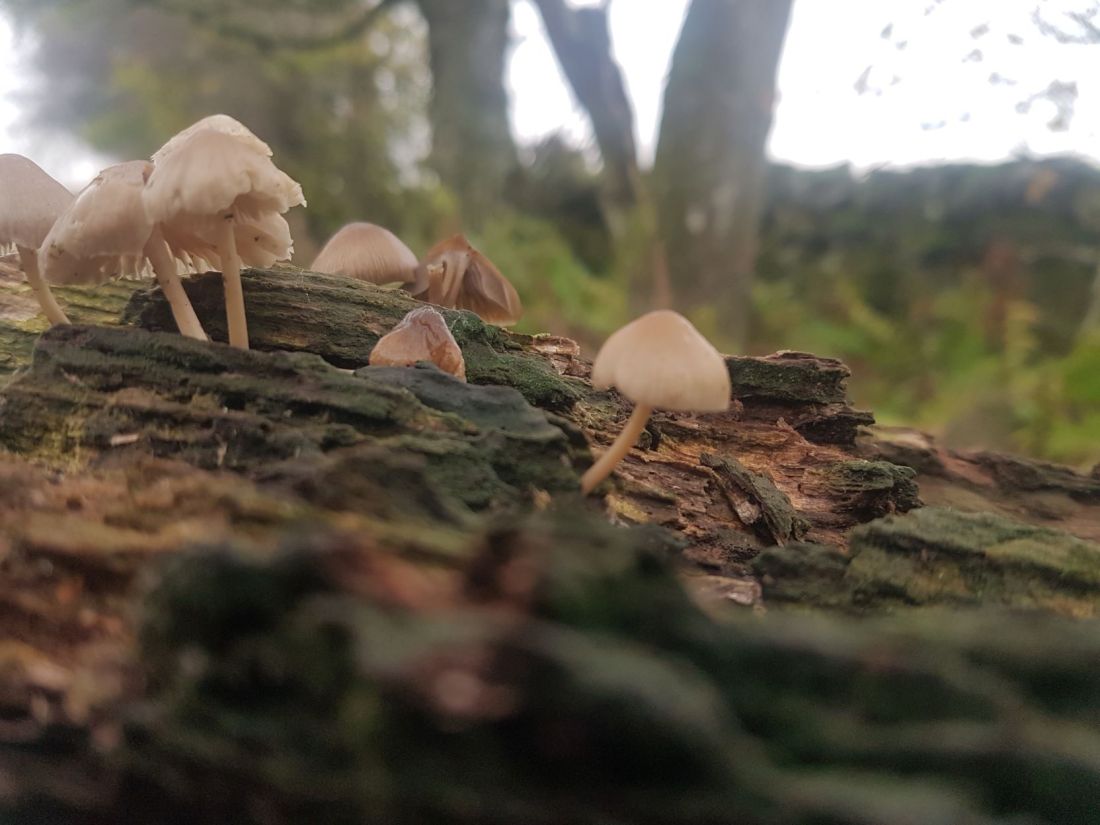
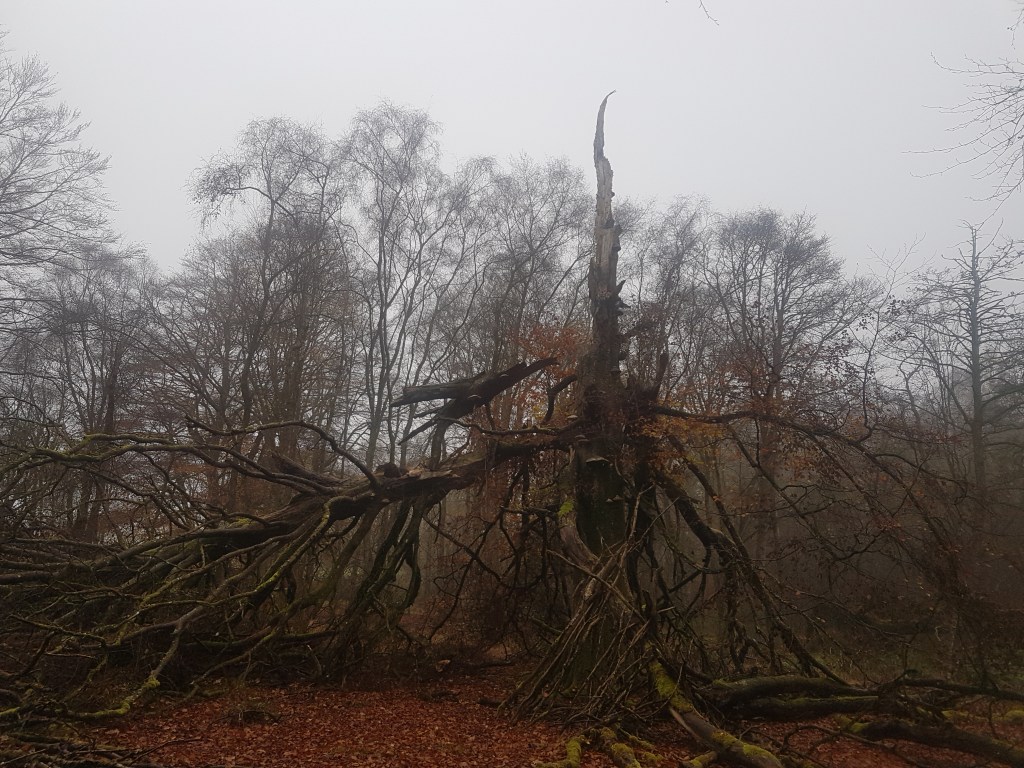
It began by shedding branches in every storm, this multi-stemmed beech tree. Being a beech, whose toxic leaf-litter successfully manages to put off any tree or shrub (even its own offspring) from growing under its canopy, there is plenty of space for the branches to lie. For a few years, it was my go-to place to harvest the beech-specific, edible, incredibly slippery Porcelain Mushroom in late autumn. This year, the fungus appears to have exploited all the suitable fallen branches and moved elsewhere.

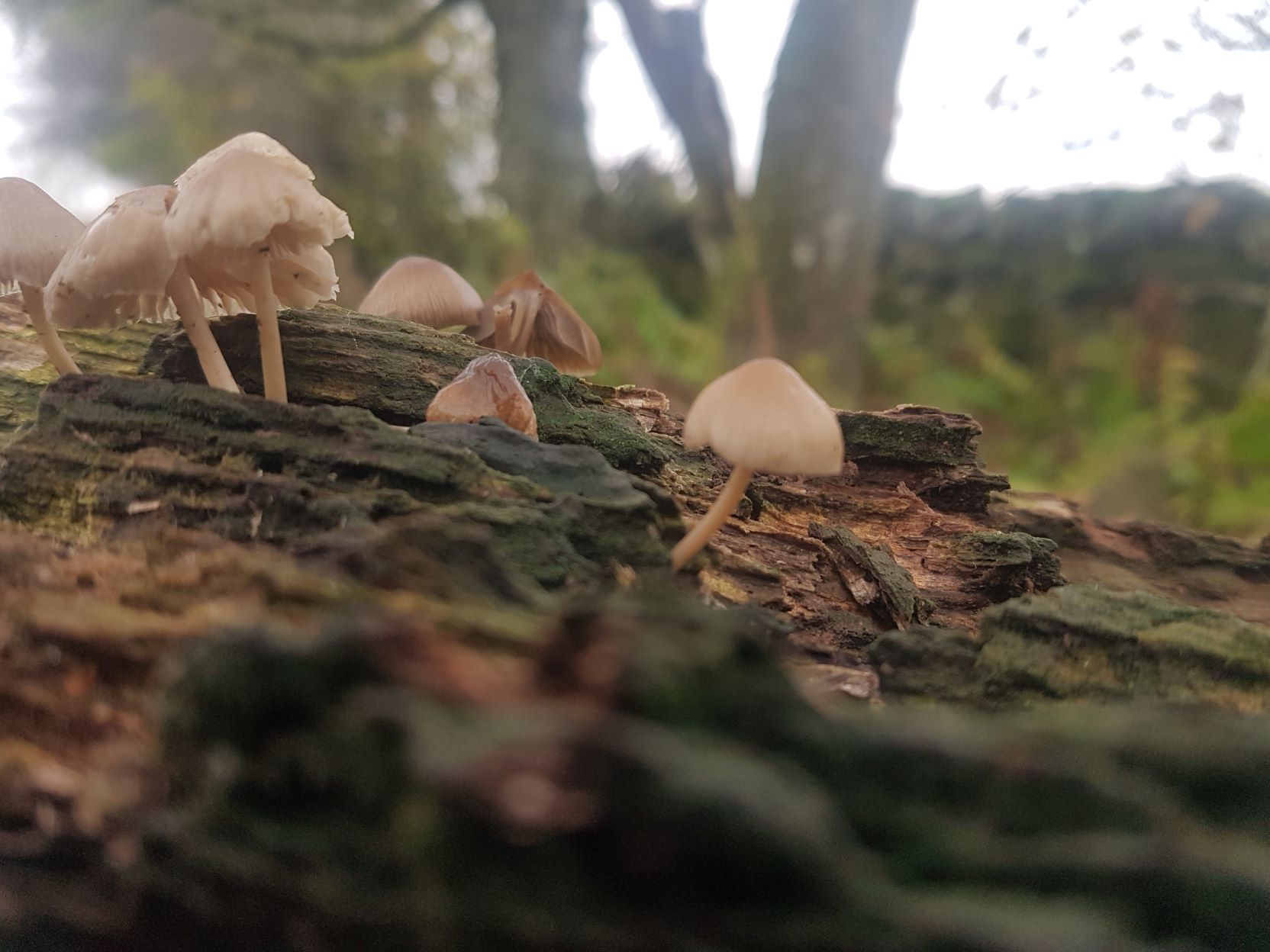
No shortage, though, or other fungi. They peer from behind the remnants of bark, congregate on dead wood, splash colour over the domain of the doomed beech tree. Now, whole trunks are falling, large brackets appear near the snaggy top of the one remaining trunk, piles of branches and fallen debris cover the ground. Meanwhile, leafy twigs still emerge from parts of the tree – it’s not dead yet!

Is a tree ever dead? Though branches crash down, timber decomposes, bark is shed, these are all the signs of a massive construction programme. The mushrooms and bacteria are building soil. The mosses, lichens, ferns and flowering plants are taking hold and creating gardens. Invertebrates in their thousands are moving in, chip-chipping away, getting in, getting under, uprooting, making a tree metropolis. Birds and small mammals home in on the seething busy-ness as if to an urban food-market, finding homes in the piled deadwood and tree-openings. Human foragers like me, and other large animals such as roe deer, visit for breakfast mushrooms. In spring, chickweed wintergreen and wood sorrel will cautiously return to woodland lighter and less toxic.

As the tree slowly, and apparently, dies, it shouts louder and louder with life,

Before the Chanterelles

In the misty dampness of a cool May morning, the tangled and decaying woodland holds its breath. Falling trees prop up shattered branches and each other, precariously leaning, hanging on by brittle twigs to some semblance of the vertical. Elsewhere, the long archaeology of those that have already succumbed to gravity make the woodland floor uneven, precarious, unpredictable. Some are half-sunken: indistinct mounds of mosses and soft, cushion-like wood, sprouting ferns and small plants – wood sorrel, purslane, chickweed wintergreen – from every crevice. Others, newly crashed in last week’s gale, still carry their leaves, shrivelling, poignant. Between the two extremes, lie trees and logs in every stage of decomposition.

The walker in this wood must learn these stages, and recognise which logs will still make good rafts to lay across the boggy places and ditches she would cross, and which will just crumble when stepped on. She must be aware of what lies overhead and if it would be wiser to go around, rather than under, the hung-up branches. Familiar paths are blocked every month and must be re-routed. New ground is created, explored, and lost again.

Out of the decomposition, new worlds are also born. What is decomposition if not the beginning of opportunity? Spiders re-align their webs in the remaining dead branches of a leaning tree. The breakdown of bark releases nutrients; tree becomes soil, soil claims tree. Single-celled organisms work their way through a sea of bacteria, laying the foundation for others to thrive.

Opportunities are made for beetles that feast on the rot in wood and bark, and the birds and small mammals that home in on the beetles. Shelter, food source, songpost, tunnel, bridge – the creatures of the wood utilise the fallen and falling trees in many ways. On their bodies they bring more soil, seeds, and the elements of fertility to this garden of decay.

And oh, how the garden grows.

It is not death that the walker witnesses, but birth and life. Is this decomposition, or composition? Is it both?  Is this the end of the wood, or the beginning of a new landscape? No human cares much for this wood. Children sometimes come and make fires, camp or build twiggy shelters, but you never see them. There is an old tyre swing, hanging neglected. Someone – no-one knew who – used to make sculptures out of stones in the heart of the wood, but not anymore. Dogs are walked, but usually led straight past the wood now that access is trickier. No-one “manages” it. Change, then, seems rapid. Whole trees crash down, leaving soggy craters and towering cliffs of root-ball, but transformation in nature is incremental, and constant. Each year, the populations dwelling on those bare root-cliffs are slightly different. Ground living fungi give way to aerial brackets, rabbits exploit entrances to potential burrows, liverworts, lichens and ferns take hold.

And underground, fungal mycelia move like whispers within subtle, shape-shifting parameters. Today, a downpour of the night is percolating under the moss-covered banks and logs. Soft spring rain, scarcely visible except when the smirr catches a shard of sunshine, seeps into the soil cauldron, fermenting, bringing new elements, new conditions.

Things move unseen.

Everything waits.

The walker in the woods has seen no mushrooms yet. But even a human animal can smell the contents of the cauldron, the warm, damp changes happening unseen below the wreckage of an unmarked wood. When all the boxes have been ticked, the harvest will be rich and golden.